Wisdom of the West by Bertrand Russell
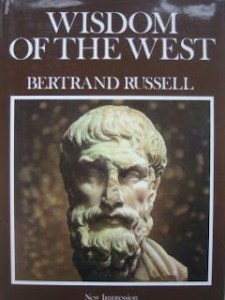
Intro: aim is > further inquiry > History of Western Philosophy
Prologue
philosophy? asking questions
a speck of dust or Hamlet – or a combination
exploratory process
Before Socrates Greeks – curiosity
Thales of Miletus
6th century BC
Egypt and Mesopotamia > Crete – Knossos
Ionians 2000 BC- Home of Agememnon > stories of Homer
Aecheans 1700 BC
Cretan Earthquake 1400 BC
Cretans called Peliset by Egyptians
settled “Palestine” > “Philistines”
Dorian Invasion 1100 BC
Phoenician trade/alphabet
Tension of Greek soul > orderly & rational vs. unruly & instinctive
former: art philosophy & science
latter: primitive religion/fertility rites
Dionysus = Bacchus
Orpheus > torn limb from limb by intoxicated Bacchus
Orphic doctrine > asceticism & mental ecstasy
enthusiasm i.e. union with god > mystical Knowledge
Greek Tragedy – catharsis/purging of emotions
two elements of Greek Character:
Dionysian/Appollonian
scientific schools of Ionia
2.5 thousand years ago > Miletus
Logos: word & measure
“man is a political animal” – Aristotle
social society
ends organization
communication > discussion
the way of science and philosophy
dualism > still topics to write or argue about
basis is Truth / Falsehoods
Dualisms
truth / false
good? evil
harmony / strife
appearance / reality
mind / matter
freedom / necessity
thus:
Epistemology > Theory of Knowledge
Logic
cosmological questions
Ontology > Theory of Being
one / many
simple / complex
chaos / order
boundless / limit
instructive / argumentative
led to Hegel’s theory of “dialectic”
Thales
Miletus on Ionian coast
“all thing are made of water”
Philosophy of Science began
-cornered the olive oil market
“philosophers can make money”
Pythagoreus 532 BC
Orphic – rebellious – aesthetic
three kinds of people –
buyers and sellers – participators
and spectators (philosophy)
don’t be afraid to ask questions
rational numbers /irrational numbers = scandal
Music – deduced by math
power in number
2:4/ 3:1
“All things are numbers”
numerical structures = control
The Tetraktys 1 + 2 +3 + 4 = 10
“for the sake of inquiry”
Herodotus
in Latin calculation means “handling of pebbles”
Pythagorean thought leads to theory of Ideas / universals
minds eye
distinction between intelligible / sensible world
intelligible world alone is the real: perfect and eternal
whereas sensible is apparent: defective & transient
dominated philosophical & theological thought ever since
Pythagoreanism / Apollonism
distinguishes western rationalistic theology from Eastern mysticism
Pythagorean Theorem:
c2 = (a – b) 2 + 4 x 1/2 ab
= a2 +b2 = c2
or a2 + b2 = c2
Heraclitus
real world consists in a balanced adjustment of opposing tendencies
“nature loves to hide”
-“the hidden attunement is better than the open”
“all things are in a flux”
“you cannot step twice into the same river for fresh waters are ever flowing in upon you”
contrast- “We step and don’t step into the same river, we are and we are not”
Plato rephrased it “our being is a perpetual becoming”
-good and ill are one
upward and downward
cant have one without the other
nature conforms to measure
injustice is the disregarding of measures
oscillation of measures;
boundaries may occur
-wisdom can be achieved by
grasping the underlying principle of things
formula is ‘Harmony of Opposites’
Heraclitus’ view is opposed: “man is the measure of all things”
Protagoras
Anaximander
Anaximedes
Parminedes
poem “On Nature”
two sections “the Way of Truth” and “the Way of Opinion”
“It is”
what is not cannot even be thought of, for one cannot think of nothing.”
it leads to “substance “of materialists.
Empedocles
what is the world made of?
democratic, mystic
the “roots” of things later “elements” of Aristotle
water, air, fire, and earth
*dominated chemical science for 2000 years
wet / dry
hot / cold
what causes them to mix
love / strife
life cycle
-survival of fittest
Xerxes invasion 480 BC
idiot in Greek – “given over to private interests”
776 BC 1st Olympiad – Greek time starts there
5th century BC – Greek Genius
Anaxagorus
in Athens
a rebel
said, “matter is infinitely divisible”
a 1st
Nous = Intelligence
possession of it sets apart the living and inanimate
thought (like the Ionians) that there were many worlds
perception – contrast i.e. values light and dark
imprisoned for impiety
escaped
Sophists
fringe philosophers
taught for money
training for practical success
“Custom is King of All”
opinions
success
eristic (debate) to win
dialectic discussion
Protagoras ” Man is the measure of all things, of things that are that they are, and of
things that are not that they are not.”
Protagoras is originator of Pragmatism
Athens
warriors – defeated Darius & Xerxes
secured mainland & later Aegean Islands
center of shipping and trade
meeting place of artists & thinkers
Parthenon built
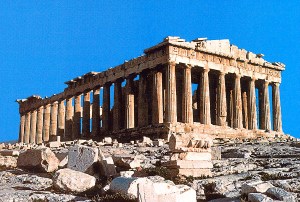
“the Acropolis” city on the peak
Greek Tragedy -Aeschylus “Persae”
Sophocles
Euripedes
Aristophanes
Thucydides- “Peloponnesian War”

Pericles
leader of Athens
Democracy
Peloponessian War 431-404 BC
ends in total defeat of Athens
Pericles died in it 429 BC (of Plague)
Socrates (470-399 BC)
amazing individual
warrior, courageous
though absent-minded and laughed at
made fun of in Aristophanes, “The Clouds”

Plato’s “Symposium” tells of him
also Xenophon the general
he was the forerunner to Stoicism and Cynicism
questions of Socrates what is “Good” ethical terms
in Plato’s “Charmides”
he asks, “What is moderation”?
in the “Lysis” “what is friendship”?
& in “Laches” “what is courage”?
we should try to seek knowledge
i.e. ask questions
he holds that what makes a man sin is lack of knowledge
if only he knew, he would not sin
the overriding cause of evil is ignorance
link between Good/ Knowledge
to reach good we must have knowledge
Christian ethics is opposed to this
Pure Heart is important there: likely to be found more among the ignorant
clarify by discussion
“dialectic”
Plato’s “Parminedes”
“Irony” -understatement
Plato’s “Apology” tells of Socratic trial
God alone is wise- man’s wisdom is paltry
Socrates condemned
no fear of death
discusses “immortality” in “Phaedo”
drinks the hemlock
his execution
Plato (428-348 BC)
aristocrat
grew up during Peloponessian War
father’s lineage to Athenian royalty
(Ariston)
-mother: Perictone (family of politicians)
after Ariston dies, marries Pyrilampes friend and partisan of Pericles
Socrates had been old friend of the family
-Plato travels
founds school: “The Academy” after Academus
survived 900 years
Aristotle -student of Academy for twenty years
Plato had the greatest influence on philosophy than any other man
Platonic Socrates
central role of Mathematics in Plato
theory of Ideas
beauty-knowledge-awake
not opinion but knowledge
particulars – point of view
idea is perfect and real
the particular is deficient & only apparent
connection between the “ideal” forms and particulars is Participation
Third Man argument
forms belong to an order of existence
different from that of sensible objects i.e. the geometrical triangle
“Thaetatus” & “Sophist” more about ethics and aesthetics
The Republic
Ideal State – township = polity
three classes > the guardians
the soldiers
the common people
guardians task is to see that the lawgivers will is done
educated in body and mind
music, gymnastics
dignity, grace and beauty
strict censorship of books
poets banned
Gods created not the whole world but only what is not evil in it
when young they are sheltered from what is nasty – at a certain age they are
to meet both terrors & temptation only if they resist them are they fit to be guardians
socially and economically life is to be rigid communism
small houses & income
eat together
simple fare
equality of sexes
all women are common wives to all men
chosen coupling to form (produce) sound offspring
Republic (cont.)
children are taken away at birth & brought up together so no-one knows
who his physical parents or children are.
deformed or inferior stock are “done away with”
Thus: -private sentiments will grow weak and public spirit strong
best are chosen for training in philosophy.
those who master it are at last fit to rule.
government has the “right to lie” if public interest demands it.
it will inculcate the “royal lie”
Justice
justice reigns when everyone minds his own business
Justice, in Greek sense is linked with Harmony
Ideal State is just a “model ”
much derived from observing Sparta
& from Pythagorean ideas
not suggested as a practical plan
for setting up an actual city
later dialogues – ” The Statesman”
“The Laws” his last work
best is to combine the Rule of One & the Rule of Many
Education – dialogue, criticism
“Meno“- learning is called a remembering of things learnt in a previous
existence and since forgotten.
remembering -“anamnesis”
embodied / disembodied souls
transmigration of souls
the teaching of Meno’s slave boy
interplay between student and teacher
“Euthyphro“- discussion of the logical problem of
definition
attempts to define “Holy”
genus & difference – age old dilemma
divided loyalties
relation between law and justice
obey the law with blind obedience
even if our political masters threaten to plunge the world
into total 7 irreparable destruction?
Socrates feels that the law is not static but
alterable: an empiricist
“Crito” – Socrates attitude to “laws” of Athens
a martyr of free thought
“Phaedo”
A masterpiece of Western Literature
question: “Is the soul immortal”?
Hypothesis – groundwork, foundation
then deduce consequences
do they square with the facts?
this is “saving appearances”
hypothesis remain unproved
Socrates “an unexamined life is not worth living.”
“Enquiry is Good” Pythagoreus
method of hypothesis & deduction
“there is no such thing as the logic of invention”
in Socrates knowledge is of the FORMS
senses give rise merely to OPINIONS
“Thaetetus” and “Parminedes”
Platos own mature philosophy
begins to dispel the Socratic theory of ideas
what is knowledge?
aesthesis = perception of any kind
anaesthetic is blotting out of perception
sense perception
Heraclitian flux – “nothing really is, things are always in a state of becoming”
using two or more senses requires some overall sense to make
connection = the soul or mind (no distinction in Plato)
the soul approaches such general predicates as identity, difference
existence, number as well as general predicates of ethics and art
Hence knowledge is not just sense perception
Function of soul is to conduct dialogues with itself
on reaching a settlement we say it has made a judgement
*no satisfactory account of false judgement at this stage
Birdcage
Knowledge is true judgement supported by argument.
In the absence of argument there is no knowledge.
neither sense perception nor ratiocination can on its own
account for knowledge.
problem of definition – question –
“What is a Sophist”problem of “not being”
classification – “genus”
Being
Motion and Rest both exist, but are opposites: cannot be combined
three possibilities for combination
starting point for what later developed into
theory of categories
To judge truly is to judge something to be as it is
‘if we judge something to be as it is not, we judge falsely,
and so we commit error.’
there is no formal criterion which ensures us against error.
“Timaeus” later Plato
theory of change
dialogue
Plato’s geometrical or mathematical “Atomism”
threefold distinction between
forms, basic matter, and corporeal reality of
the sensible world
material world, physical and biological made up of two
elementary (basic) triangles
Theory of Transformation
Tetrahedron – Fire
Cube – Earth
Octahedron – Air
Icosahedron – Water
modern science – “everything can be reduced to geometry ” BR
view held by Descartes & in a different way by Einstein
Thus a mathematical model for physical explanation
no place for Dodecahedron
made up from pentagons-
one of mystical symbols of Pythagoreans and its construction involves the
irrational number
0 is now start
lines generated by motion of a point leads to Newton’s
theory of fluxions early form of differential calculus
“made for a unification of arithmetic & geometry
in the spirit of dialectic”BR
Aristotle (384-322 bc.)
born in Thrace
classification of animals
at Academy for twenty (20) years
taught Alexander the Great
founded his own school “The Lyceum”
biologist of note
disagreed or didn’t understand Plato’s math Philosophy
“views on physics & astronomy were hopelessly muddled” – BR
‘Logis‘ his most famous contribution
Metaphysics means “after’ physics
matter & form
actuality & potentiality
Aristotle’s ‘Logic‘
notion of proof
general account of formal logic
taken for granted that all proposition
are of subject – predicate type
-universals or individuals
affirmative or negative
according to whether it is asserted or denied
of a subject
premises – syllogism: “fundamental type of all argument”
Aristotle
axioms- Science must begin with statements that stand
in no need of demonstration
starting points
study of language important to Aristotle
Logos variously means Word, Measure, Formula, Argument, and Account.
Logic derived from it.
Study of languages an important philosophical pursuit
Organon : Logic
Categories
Substance
Quality
Quantity
Relation
Place
Time
Position
State
Action
Affection
later Kant, Hegel
“On Nature”
“Physics”
causality
material & formal efficient & final aspects
teleology
“The Unmoved Mover” God
virtue
composure
choice
Alexandria
Euclid
pure mathematics
no royal road to mathematics
treated on it’s own merits
scientific exercises
Eudoxes – method of exhaustion
Archimedes – used method of exhaustion to square
parabola and circle
use smaller and smaller triangles
for circle use the number 22/7 (pi)
the ratio of circumference to diameter
inscribed and circumscribed approximations
smaller and smaller as sides grow in number
Appollonius of Alexandria
invented theory of conic section
a pair of straight lines, a parabola, an ellipse
hyperbola and circle now appeared all as spread sections of a cone
Astronomy
heliocentric theory
Aristarchus of Samos
earth and planets
revolve around sun
which along with the stars remain fixed
the earth revolving on its axis
while it runs through the orbit
upset moral standards
like Gallieo when he upheld Copernican theory
Copernicus merely revived the theory from Samos
Eratosthenes – calculated diameter of earth to within 50 miles
“aesthetics” – term attributed to Baumgarten
truth is beauty
geometry of Grecian Urn or mathematical proofs
“elegance and economy”
Alexander The Great (334-304 BC.)
Great empire
from gates of Hercules to the Ganges men could
speak Greek
Greeks took to Babylonian astrology
the Hellenistic age more superstitious than
Classical times
Diogenes the Dog
Cynic
Sceptics – Pyhrro & Timon
denied that first principle of deduction could ever be attained
asceticism
taken up by Academy
“bunch of half baked scoffers” BR
Epicurus-central aim is undisturbed condition of Peacefulness
Pleasure and the good life Body/Mind
greater control over mental
affections of body are largely imposed on us
only “advantage” of Mind
tendency away from activity and responsibility
aloof
notion of laws is in the first place divided from social sphere
and only later came to be applied to happenings of the physical world
Democritus
materialism. atomism
not bound by laws
soul – kind of Material
Lucretius (99-55 BC)
“De Revum Naturis” sets forth Epicurean Doctrine
STOICISM
Zeno
(4th cent. BC)
span of five centuries
endurance and detachment
courage in face of danger and suffering
indifference to material circumstance
determinism and free will?
Questions still ahead
nature is ruled by law
original substance is fire
theory of cycles
Large bon-fires
conformity
emanate from a supreme authority which governs history in all its details
runs through it like moisture runs through sand
God is an ‘Immanent Power’
part of lives in each human being (influenced Spinoza)
Foremost- Good is Virtue
involves Will
to blend with Nature instead of oppose it
Virtue is an inalienable possession
if one loses one’s self-respect; one becomes less than human
Chrysippus (280- 207 BC)
works lost
interested in Logic and Language
material implication
grammar
Cicero
studied under Poseidus
spread Stoicism
Seneca
senator of Spanish ancestry
Epictetus
Greek slave gained freedom under Nero
Marcus Aurelius
Emperor 2nd century AD
Rome
great social organizers- administrators
social cohesion
dreamt of universal (catholic) government
Roads!

Neo-Platonism
In Alexandria
Plotinus
Theory of Trinity
One Nous and Soul
It is
Mysticism- better to be silent
clashed with Greek theory of Logos
Summary
Greeks-puzzlement, wonderment of world
language, scientific, technical, philosophical,
all from little or nothing
EARLY CHRISTIANITY
Graeco-Roman like today were philosophically independent
of religion i.e. Church
though they did ask religious questions
from fall of Rome until the end of the Middle Ages
philosophy becomes an activity which flourished under patronage of the Church
Christianity becomes State religion under Constantine
Emperor Gods split into
Emperor – Temporal
Church – Religion
Authority of Church gradually declined until Reformation
after that a tool of Nation States
clerics (clerks) preserved past traditions
old Rome & New German secular philosophies did not challenge the Church
neither had properly worked out social philosophy-BR
DUALISMS
Pope Emperor
Latin Teutonic
Clergy Laity
Church Holy Roman
Heaven Earth
Body Flesh
Christian Asceticism arises because of this
Catholicism
-from St. Augustine to Thomas Aquinas
Christianity – offshoot of Jews with Greek and Eastern admixtures
God has His Favorites
Yahweh – protected Jews
captives by Assyrians and Babylonians
Nebuchadrezzer destroyed Temple
Dispersion
some returned to Palestine
Alexandria
Septuagint
Hellenization of text & attempt to “Hellenize” Jews
revolt by Maccabean Brothers
became High Priests “Maccabees”
the Hasmonean Dynasty governed ’til the time of Hesod
Primitive Christianity is reformed Judaism
revolts against Judea and Jerusalem
temple destroyed again 70 AD
2nd and final dispersion
Paul of Tarsus
-removed circumcision & food rites & thus made Christianity accessible to all
Gnosticism
strange Mystic mix of Yahweh as fallen god redeemed by Mortal
severe ethics – no sex, etc.
docetics – Jesus wasn’t crucified but a ghost-like substitute
Christianity becomes more theological
Origen (185-254)
Alexandria
The Word back through Stoics to Plato to Heraclitus
apologetic strain of argument – insists on divinely inspired nature of “The Book”
Council of Nicea
Arius Sabellius
God (Father) had priority over son merely two aspects of one and the same person
Two being distinctly different
The “Orthodox” View which won:
same level; they are alike in substance but different as persons.
Arianism, however continued to flourish as did other heresies.
On Thomism, The philosophy of St Thomas Of Aquinas, ,Russell said, “no other Philosophy today enjoys so prominent a status, a such powerful backing, except Dialectical Materialism the official doctrine of Communism.” Russell said this in 1959.
Aquinas’ most important works:
“Summa Contra Gentiles
“Summa Theologian.”
Reason vs. Revelation
Revelation i.e. faith is considered greater;
One must first believe>then one can reason.
Thus Philosophy and Theology are put on equal footing.
Grace, Salvation a dogmatic theory
Prime Mover as God
God is the fount of all existence
Not like Aristotle’s detached architect
Aristotelian: Existence, essence, potentiality, &actuality
The “Unmoved Mover”
The “Uncaused Cause”
Teleological: The argument from design
“It is assumed that order must be accounted for.”
“We might equally say that Disorder needs explanation & the argument runs the other way.”
The Aquinas God is a kind of incorporated High Priest set over and above the created world
Roger Bacon – contemporary of Aquinas more akin to empirical thinking.
A Franciscan-Neo Platonist- god was more intermingled
a mathematician
opposed to thomists-they were ignorant of mathbanished, exiled, then imprisoned for fifteen years
died two years after release
Duns Scotus- (1270-1398) Scottish
a Franciscan
a student at Oxford – taught at twenty-three
breach between faith and reason
rejected Thomism & St, Augustine
for Duns Will rules Reason vs. Platonic Reason rules Will
Supreme power lies with Gods will
So: within human soul Duns holds that it is the will which rules the intellect.
William of Occam(1290- 1394)
Greatest of Fransiscan scholars
an Empiricist
excommunicated fled to Munich
“It is vain to do with more what one can do with less”
singular experience
an anti-metaphysician
anti-ontology of Plato, Aristotle & Aquinas
“Entities should not be multiplied beyond necessity”
came to be known as “Occam’s Razor”
Beings belong to individuals
logi (words) general knowledge of meaning
matter of abstraction
“a thorough going nominalist” -BR
‘logis’ must be regarded as a verbal instrument
concepts, terms are entirely the product of the mind.
If they were not verbalized they are called natural universals or signs.
In contrast with words which are conventional signs
to avoid absurdities we must be careful not to confuse statements about things with statements about words.
Miester Eckhart- a mystic & heretic (1260-1321)
Dante (1265-1321) sums up medieval outlook
Wrote in local dialect of Italian instead of Latin-rise of vulgar tongues
Chaucer wrote in English shortly after French and German followed
Independant languages
Descartes first Philosopher to write in his native tongue
Vulgar languages & local writings spread thus as the papal superiority declines
14th century Papal Power sees a rapid decline
John Wycliffe- heretic & critic of Church
calls pope antichrist
Pope seated in Avignon-
became an instrument to King Of France
German Emperors/ French Kings
feuds
Modern Philosophy
Feudal Structures became unstable because of rise of merchant class
better weapons- gunpowder
armed peasants
four (4) great movements mark the transition from middle (Dark Ages)
to the seventeenth century.
Italian Renaissance 15th & 16th centuries
Dante paved the way-not by medieval thinking – but by writing in “vulgar tongue” i.e. Italian.
Bocaccio and Petrarch-return to secular ideas
more interested in man than god. > named Humanism.
Lutheran Reformation
Empirical Inquiry – i.e. Copernicus b.1543
“the Dialectic” in Socratic terms
In Philosophy- emphasis on man leads to inward slant to speculation. Diametrically opposed to philosophies of power
thus man becomes a critic of his own faculties; nothing is allowed to stand unchallenged except certain experiences. This Subjective attitude leads to an extreme form of skepticism which in its own way is just as overwrought as the tendency to ignore the individual altogether. “some intermediate solution, evidently must be found.” BR.
two especially important inventions (developments)
(1) The Printing press
using movable types
Chinese had used it 500 years before
(2) Voyages- due to advances in shipbuilding &navigation & a return to ancient astronomy.
Renaissance
Florence: Dante, Michelangelo, Leonardo
Ruled by the Medicis
despite revival of Plato & humanist advance
Superstition & astrology & witchcraft were still widely believed
Machiavelli
political philosopher
“Prince” & ‘Discourses‘
“to rule by love or fear”
A ruler must and can break all rules
rules yet appear to be virtuous
this is known as “Duplicity”
North of the Alps -similar yet different
Renaissance
no imperial (Rome) past / or connection with Papacy
Erasmus of Rotterdam
greatest of Northern Humanists
joined monastery
Bishop of Cabrai appointed him secretary
visited More
wrote “In Praise of Folly”
man stands in direct relation to God & that theology was superfluous
left lasting impression on Education
until recently it was his humanist approach by which Westerners abided
Thomas More, “Utopia”
Henry the Seventh and eighth figured in
executed by Henry the Eighth
Martin Luther
Protestant reformer
95 Thesis nailed to the door
of castle church of Wittenburg
Translated New Testament into vulgar tongue
John Calvin of Geneva
Puritan Ideals
salvation is a matter of Pre destination
last half of sixteenth cent. saw France torn by wars between Huguenots & Catholics
Jesuit Order
St. Ignatious Loyola
Roman Catholics
concerned with missionary work, education and the rooting out of heresy
thus became main organizers of the Spanish Inquisition
Italian Humanists
less concerned with religion
already part of their daily lives
renewed emphasis on mathematical traditions of Plato & Pythagorous
Vitruvious 1st century architect said, “beauty consists in the harmony of proper proportions.”
Alberti

proportions
perspective
based on intervals as of a tuned string
art partaking in number- God as the Great Mathematician
emphasis on man’s power
Optimism
deeply rooted in revival of Pythagoreanism
number as king may have gone too far (mysticism)
restricts genius of Designer
20th century rebellion against those notions
SCIENCE
Copernicuspolish (1473-1543)
arose from Greek Revivalism
Platonic Tradition
Revived Aristarchus’ theory of Heliocentricity
Tycho Brahe
Extensive records of planetary motions
Kepler
Orbits were all ellipses with sun in one focus
Galileo (1564-1642)
how forces work upon a body
32 ft. per second bodies fall accelerated
Gravity
Perfected telescope
Sir Isaac Newton
general theory of dynamics
Three (3) laws of motion
!) All bodies, if unimpeded, move at a constant speed, in a straight line, In technical terms, with uniform velocity
2) force is the cause of non-uniform motion, stating that force is proportional to the product of mass and acceleration
3) to ever action there is an equal and opposite reaction
advances in science:
Gilbert (Magnetism)
Harvey (circulation)
Boyle (Atomism)
Francis Bacon, “The Advancement of Learning”
saving appearances
Montaigne
“The Advancement of Learning”
Novum Oganum- New Treatise on Scientific Method
Thomas Hobbes (1588-1679)
lived during Plague and Great fire
Hobbes, “The Leviathan”
tutored aristocrats
knew Charles II in France
British Empiricist
Rene Descartes (1596-1650)
scientific method
called founder of modern philosophy
Descartes, “Discourse on Method”
I think therefore I am” Cartesian Basic Principle
Principle of doubting and skepticism
Cartesian dualism “mind and matter”
Spinoza (1632-1677)
Monism
Portuguese Jew moved to Holland to escape Inquisition
Liberal
freedom of thought
ethics
theological
“It is of the nature of mind to perceive things from a certain timeless point of view
Axioms in metaphysics
attempts to systematically prove his theories that God & Nature are One.
World as an intelligible whole BR
Leibniz (1646-1716)
met Spinoza
Monads
Leeuwenhoek(1646-1716)
Discovered spermatozoa and also that a drop of water contained small
organisms
Vico (1668-1744)
“truth is dead ”
“practice makes perfect”
history is more truthful than mathematics
studied language as a fluid system
poetic as opposed to systematic
British Empiricism
Holland and England
Liberalism
tolerant- good for business
individualism
three mains: Locke Berkeley and Hume
emphasis on element of sense -experience
doesn’t prejudge scope of human knowledge
Locke’s, “Essays Concerning Human Understanding”
a springboard for others
mind is a clean sheet
Sensation and reflection are the only means to gain knowledge- this is New
Lockean Liberalism was based on English Cromwellianism
led to French and American Revolutions
“Self evident that all men are created equal
Berkeley
Perception is the key
Senses
Abstractionist – language is Abstract (drift)
David Hume (1711-1776)
not wealthy
wrote “Treatise on Human Nature”
“the science of man”
agrees with Lockean theory of ideas
though terminology is different
cause and effect ideas
Enlightenment & Romanticism
Rise of Prussia
Frederick the Great
second half of 18th cent. Germany finally begins to pull away from its subservience to French culture BR
Romantics relied on aesthetic standards
overemphasis on Reason: “we need only apply our minds a little more intensely to the
problem in hand and all our difficulties will be permanently solved
figures in work of German Idealists
& later in philosophy of Marx
believe man is infinitely educable
Byron the Poet
rebellion, defiance, contempt for established convention, recklessness and noble
deeds- BR
died in the swamps of Missolonghi for the cause of Greek freedom
perhaps “the greatest Romantic gesture of all time
Group of writers & scientists assemble encyclopaedia 18th cent
Dalembert & Voltaire
Voltaire said “if God did not exist we should have to invent Him.”
Ridiculed Leibnizian view that “ours is the best of all possible worlds.”
fierce and bitter struggle against conventional religion
L’avoisier – founder of modern chemistry
Jean- Jaques Rousseau (1712- 1778)
Autobiography “Confessions”
poetic license
“Discourse on Equality”
comes out against the arts and sciences
the noble savage is the one who is really in possession of virtue
favored Sparta as against Athens
“civilised man is corrupt”
“Emile” – a treatise on education
“The Social Contract” both were condemned-in the end quarreled with everyone & developed a “persecution mania”
in ethics he contends that our “natural feelings point in the right direction, whereas reason leads us astray”
this is diametrically opposed to Plato Aristotle and Scholasticism
“it is a most dangerous theory” -“in the manner of Occam it cuts itself loose from reason at the very start.” BR
Kant (1724-1804)
lived in Konsberry in Eastern Prussia
taught at U. of Konisberg.
critical philosophy
set out to explain experience in terms of “concepts”
“all knowledge arises from experience, but we must distinguish between what actually produces knowledge, and the form that such knowledge takes
The sense- experience is necessary, but not sufficient for knowledge
concepts of reason or “categories”
classification of propositions
Subject- predicate logic
“all bodies are extended’ (defined)
all bodies have weight
Knowledge independent of experience is called”a priori”
For the rest whatever derives from experience is called “a posteriori”
both classifications cut across each other
” The Critique of Reason”
Aim is to establish how a priori synthetic judgements are possible
possibility of “pure” mathematics
for they are “a priori synthetic judgements i.e. 5+7+12
also principal of causality- also a priori
Why? principle of cognition-
Kantian theory of categories
a priori concepts of the understanding other than those of mathematics
sought in form of “propositions”
Quantity, Quality, relations of modality
“noumenon- phenomena
volition
moral law-internal law (autonomous)
“do unto others……”
denies justice of “special pleading”
impossible to establish the existence of God by argument
Perpetual peace proposed
Representative Government
and World federation
Fichte (1762-1814)
poor
helped through school by generous patron
“addresses to the German Nation”
to resist Napoleon & German Nationalism
Politically foreshadows Marx
Socialist economy with state control over production
and distribution
Doctrine of the Ego
Schelling (1775-1854)
Suabin origin
friend to Hegel & Holderlin
Professor at twenty-three
‘Philosophy of Nature’ before twenty-five
Hegel (1770-1831)
very systematic also (German Idealist)
“Phenomenology of the Mind”
“Science of Logic”
“Encyclopaedia of the philosophic science”
Hegelian dialectic leads to the “absolute Idea”
is “the idea which thinks itself”
development of spirit in History
freedom is bound up with law
freedom of citizen is to “do as he’s told”
dialectic greatly values Strife so far as to suggest that war is
morally superior to peace.”
“If nations have no enemy to fight against they become morally weak and decadent”
dialectic > compromise solutions
Citizens vs. Taxes
works in discourse not in fact
Gives dialectic account of nature. This kind of nonsense taken up by Marxists. BR.
Hegel’s predilections for number three (3)
Universe as a whole: divine science
Everything is connected to everything else
Scientific Optimism
the answer to everything was just around the corner- proved to be an illusion
“Rationalism is to Empiricism…..
..as a jigsaw with inseparable parts is to an isolated piece.”
Idealist system is thus a spurious concept” BR
Hegelianism and Lockean Liberalism are diametrically opposed.
Hegel is for the state (whole) & individual is just a piece of the puzzle
In Locke the individual is the key element on which the basis of the whole
(puzzle) exists; State ministers to the individual as opposed to vice versa
Liberal principle fosters tolerance, consideration and compromise.
Kierkegaard (1813-11855)
Critic of Hegel
founder of existentialism
Christian
“a muddled Romantic conception.” -BR
presupposes realism over idealism
Schopenhauer (1788-1860)
“The World as Will and Idea”
wrote this when he was Thirty years old
opposed Hegel
Indian Mysticism
misogynist
suffering was the will
pessimist
mystic – Buddhism-escape into “nothingness”
Nietzsche (1844-1900)
optimist about the will
father was a pastor
not about escape as Schopenhauer
Aristocratic humanist
wanted to promote the supremacy of the man who was best
that is healthiest and strongest in character
served as a medical orderly in Franco- Prussian War
Laid low with dysentery
never fully recovered
professor of classical philology at Basel (24 yrs old)
resigned in 1879-lived on pension
spent next ten years in Italy and Switzerland
continuing literary work, mostly in solitude and without recognition
in 1889, as a delayed result of a venereal infection contracted during his student days
he became insane and remained in this state until his death
his work inspired by pre-Socratic Greece
particularly Sparta
“The Birth of Tragedy” his first major work
Appollonian vs. Dionysian modes of Greek soul
similar to Aristotle
conception of “Tragic Hero”
positive acceptance of life as it is.”
an aggressive acceptance of the harsh and cruel realities of life, BR,
recognizes. like Schopenauer, the primacy of the will
“pre-emminent feature of the good man
two types of persons- Masters and Slaves
“Beyond Good and Evil”
master morality good connotes
independence, generosity, self-reliance and virtue like Aristotle’s great souled man
opposites are subservience, meanness and timidity and so on and these are bad
slave morality “kind of a pervasive reticence’ -BR.
morality of hero or “Superman” is beyond good and evil”
“Thus Spake Zarathustra”
“more like poetic prose” – in the manner of the Bible
Aristocratic “Ideal” State power of the few
like “Republic” of Plato
Free man must recognize that ” God is Dead”
Must strive not for God, but for a higher type of man
slave morality- Christianity.
hero worship accompanied by anti-feminism
regarded women as Orientals did, as chattel
Neitzche (cont.)
much to be said for the exercise of a certain ruthlessness- if applied to oneself
“less convincing is notion of total indifference to the suffering endured by the many in te interest of a few,”BR
J.S. Mill, “Utilitarianism”
Industrial Revolution
textiles industry
steam engine- relied on coal and therefore coalmining
gruesome period
country folk uprooted due to land enclosures by Nobility
mass movement towards city
badly paid and exploited
slums
interplay of science and technology
thermodynamics > better engines
railways steamships
“on the whole man seems to be a conservative animal. His technical prowess has therefore a tendency to outpace his political wisdom, thus creating a lack of balance from which we have not recovered yet.” BR
Adam Smith (1723-1790)
Political Economist
Fellow countryman of Hume’s
Professor of Philosophy
also wrote on ethics (Humean)
“The Wealth Of Nations” (1776)
question of division of labor
Specialization e.g./
dehumanizing effect
revolution of 1848
influenced Dickens and Zola
Jeremy Bentham (1748-1832)
influenced by Hutcheson’s utilitarian doctrine of balance of pleasure over pain is greatest
Jurisprudence derived from
Helviticus and Baccaria
leader of the “Philosophical Radicals
Concerned with social reform and education and opposed to Church and the Restrictive
privileges of the ruling class
interested in education
helped found University of London
complete break with religion
principle of “association”
taken from Hartley & Hume’s theory of causality
influenced field of Psychology
also- maxim of “greatest happiness
became a justification for the liberal economists “laissez faire” and free trade
function of punishment not revenge but “prevention of crime”
“equality and security “are overriding considerations
“liberty is less important”
J.S. Mill (1806-1873)
father James a contemporary of Bentham
wrote “logic” discussion of induction
“utilitarianism”
Epicurean( the first Utilitarian) & Benthian
“Essays on Liberty”
Malthus (1766-1834)
problem of Population due to vaccination
“Essay on Population”
preached restraint-had 3 children in 4 yrs.
ardently against birth control- likened it to prostitution
Darwin (1809-1882)
Principle of natural selection and notion of struggle for existence
“Origin of Species”
“survival of the fittest”
unfortunately inspired some of the dictators of the 20th century
theory of evolution goes back to Anaximander
bitter struggle between Darwinists and orthodox Christians of all denominations
T.H. Huxley
Ricardo (1772-1823)
“Principles of Political Economy & Taxation”
Friend of Bentham’s and James Mill
Led to Socialism and Marx
Karl Marx (1818-1883)
Jewish born at treves on Moselle river like St. Ambrose
strongly influenced by Hegelianism
wrote “Communist Manifesto” in 1848
met Engels
Prussian gov’t sent him into exile
he took refuge in London
wrote with zeal paving the way for the social revolution he felt immanent
Marx’s thinking molded by 3 major influences
1) Philosophical Radicals
opposed to romanticism
pursues social theory which claims to be scientific
Ricardo- labor theory with a different twist
2) Hegelianism
what counts is the whole system rather than the individual
(diametrically opposed to the Radicals)
historical view of social development
final aim is “classless state” where and when Dialecticism can be put to sleep
3) Materialism
doctrine of activity (practice)
“philosophers have only interpreted the world in various ways, the real task
is to change it.”Marx
Vico
influenced by
thus Marx’s Dialectic Materialism
if you do not agree with Marx you are a reactionary not on the side of the
progress thus: He who is not with us is against us
Thus Marx was not only a political theorist but also an agitator and revolutionary pamphleteer BR-
hard to understand why as Lenin later put it ” If, the state is
going to wither away, it is pointless to make a fuss about it before the event.”
Preaches overthrow of existing order
by violent means
Auguste Compte (1798-1857)
successor to encyclopaedia
respect for science opposed to religion
set out to provide comprehensive classifications of all sciences
Positivist
The Comptian List
1) Math
2) Astronomy
3) Physics
4) chemistry
5) biology
6) Sociology
considers himself founder of sociology though Hume had the science of Man.
Three phases of development:
Animism
divine Status to all objects
Polytheism
Monotheism
tendency towards greater unification
away from individual towards Humanity as a whole (Hegelian)
ruled by moral authority of scientific elite
Republic
C.S. Pierce (1839-1910)
commonly regarded as the founder of Pragmatism
William James (1842- 1910)
interpreted Pierce’s pragmatism to suit his own words
Professor of Psychology at Harvard
“Principles of Psychology” remains one of the best accounts of this field.
“Does consciousness exist?”
traditional view of Dualism between subject/object is a hindrance to Epistemology
influential role in spreading Pragmatism:
a method with empiricist attitude
a way of “dealing with the World”
Frege
Advanced Peano’s methods
Contemporary
tremendous growth of technical power
specialization makes communication increasingly difficult
Latin no longer central language of the intellectual
one must now know three or more languages
until something takes the place of Latin
Break between scientific and artistic pursuits
laboratory to confusing for artists
divergence between science and philosophy
mainly due to German Idealism
didn’t affect the French. only English and German.
discoveries concerning atomic structure have shattered the complacent outlook
that had developed by the turn of the century.”BR
some Optimism, nevertheless survives.
it seems that inquiry is limitless
“In themselves, the discoveries and inventions of the Scientist are ethically neutral
“an indiscriminant character of modern scientific sources of modern power and
control when used for destruction. We have indeed come a long way from the time of
the Greeks
“One of the most heinous crimes that a Greek could commit in times of war was to
cut down olive trees.”
In the last one hundred years the west has
undergone a material change unprecedented in history” BR
reaction of science against philosophy is an outcome of the positivism of Compte
Comte’ was intent on ruling out the setting up of Hypothesis.
Natural processes were to be described but not explained
E. Mach-“Science of Mechanics”
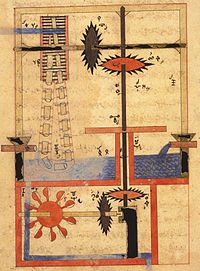
provides a “positivist”
account of mechanics
force- bodies move in certain ways.
Mach eliminates force and defines it in terms of the purely kinetic concept
of acceleration
“the positivists are wrong in holding that you cannot
explain anything at all” BR
Myerson (1859-1933)
Outspoken critic of positivism
metaphysics refuted by scientific philosophies
yet could not begin without such theories
A causality
scientific statements become highly
mathematical manipulation of signs-reminiscent of Pythagorean
mysticism & their followers in the late Renaissance
Philosophy has generally tended away from science
Idealist strains or continental largely linguistics philosophy of
Great Britain
F. H Bradley(1846-1924)
“Appearance and Reality”
In the process of thinking we must inevitably
entangle ourselves in contradictions”
Benedotto Croce’ (1846-1952)
“La Critica“-literary journal that he edited
emphasis on aesthetics because of “the concrete experience the mind is involved in when
it contemplates a work of art.”
critic of Hegel’s & idealism
modified form of Vico’s theories
yet remains very “dialectic ” in his own essays
Henri Bergson (1859-1941)
French
Irrationalist tradition
emphasizes action above all
certain impatience with “dispassionate exercise of reason in philosophy and scientific inquiries
trying to uphold the reality of flux a la Heraclitus.
dualist vision of world
one is matter the other is ‘some sort of vital principle different from the “mental” portion
of the rationalists world.” BR
“Of Creative Evolution” his best work
analogy to artistic creation “life force”
“Man’s intellect has tended to stifle his instincts and thus has
robbed him of his freedom.”
highest form of instinct is “intuition”
psychological trend
Watson, “Behaviorism”
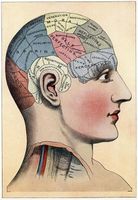
offshoot from Positivism
“only what people are observed doing counts”BR
Pavlov (1849-1936)
salivating dogs
conditional reflex
connections that can be altered
through enforced habits
uses associationist psychology in Humean manner
Sigmund Freud (1856-1939)
opposite approach
psychoanalysis
embraces hidden entities “without a stint.”
the subconscious mind
by its very nature is not directly observable.
Sigmund Freud, “The Interpretations of Dreams” 1900
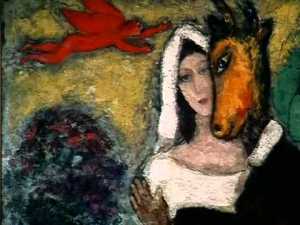
dreaming allows for a kind of freedom and phantasy
more apparent than real.
Freud’s general hypothesis: “in dreams we attain the fulfillment of wishes and desires
which in ordinary life are repressed for a variety of reasons.” BR
task of interpretation is to unravel meaning
John Dewey (1859-1952)
American
modified form of pragmatism
New Englander
educator
professor of philosophy at Chicago
three central notions link it with the past-
1) Pragmatism
-inquiry is all important a la Russia
2) Emphasis on Action a la Bergson
3) strong measure of Hegeleanism:
insistence on organic or unified “wholes”
warranted assertability
A N. Whitehead (1861-1947)
mathematical logician
professor of philosophy at Harvard
became a metaphysician
Since World War I
end of an era
no longer faith in “progress”
mass slaughter
League of Nations
led to German dictatorship & World WWII
atomic bomb
increase in electronic communication
suspicion
travel around the world in eighty hours.
Existentialism
puzzling business
irrationalist revival
life has no meaning
live it as interestingly as possible. Ulterior purposes are “chimerical”
Karl Jaspers (1883-
existentialist humanist
psychologist
1) Objective world -being there
being – existence or I.
transcendence
denies reason yet needs to reason. This leads to silence.
refuted science because it is “interpretive”
“statements” are inadequate because they are about “something else”
being in itself
being there ruled by reason
being – I – ruled by moods
Heidegger (1889 –
highly eccentric
language gone rampant
insistence that nothingness is something positive
J.P.Sartre (1905-
man continuously chooses his destiny
atheism
theoretical sciences as well as theology are rejected
mainly “an emotional protest on psychological grounds.”
from a mood of feeling oppressed.
“the rationalist sees his freedoms in a knowledge of how nature works;
the existentialist finds it in an indulgence of his moods.
The Vienna Circle
Mach’s Positivism & Shlicts Symbolic Logic came to be known as “Logical Positivism”
principle of verifiability
“the meaning of a proposition is its method of verification.”
moved to America mainly because of Nazism
published the “international Encyclopaedia of Unified Science
shared contempt for metaphysics
reverence for science
member of Vienna Circle
positivist movement gave rise to the British school of linguistic analysis
“Philosophy, when properly employed is thus to be regarded as some kind of linguistic therapy.”
Ludwig Wittgenstein (1889-1951)
was in Vienna circle
moved to Cambridge
Professor at Cambridge
“Tractatus Logico-Philosophicus”

tautology analysis
logic
turned from logic to linguistic analysis
Logic
the meaning of a word is its use
the “language games”
the “grammar” or logic of a word.”
“the unexamined life is not worth living for man.”
– Apology (38a)
 tomreading
Leave a comment