Birth of Tragedy ‘Out of the Spirit of Music” by F. Nietzsche
Introduction
sui generis
a weird hybrid
perspicacious
Schopenhauer’s pessimistic world view
Tristan and Isolde
a mystical almost maenadic soul
Appoline and the Dionysiac
Rausch
wisdom of Silenus
the illusion of illusions
sublime
comedy
turgitities
knowledge (wissenschaft) was preferred to wisdom(weisheit)
simulacrum
Aristen –Metaphysic
witches’ sabbath of existence
lunatic exaggerations
the ‘Attempt’
medium appears to dictate the message
ipissima verba
art derives its continual development from the duality of Apolline and Dionysiac
vertiginous
instill in us a sense of the primal chaotic oneness of being
Beauty, in Neitsche’s early view is both an intimation of the horror of life and consolation for it
‘Without music life would be a mistake’
Nietzsche, “Twilight of the Idols’
Stravinsky’s “Le Sacre du Printemps”
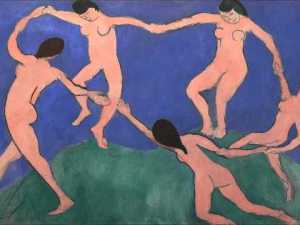
“Attempt at Self Criticism”
Music and Tragedy?
Is there pessimism of strength?
saccharine sweet
it should have been singing this new soul not speaking
Dionysiac
craving for beauty
craving for ugliness
a neuroses of health
greatest blessings upon Greece
Was Epicurus a pessimist – precisely because he suffered?
What, under the lens of life, is Morality?
in the preface to Richard Wagner-art– and not morality is presented as the properly metaphysical activity of man
amoral artist god
pessimism beyond good and evil
Christianity
As the most extravagant elaboration of the moral theme that humanity has ever heard
Hatred of the world
might morality not be a ‘will to the denial of life’?
purely artistic and anti-Christian
Dionysiac
German spirit; German music
this-worldly consolation
Preface to Richard Wagner
Shelley, “Prometheus Unbound”
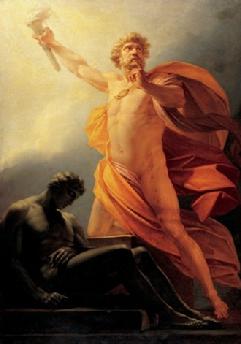
the seriously German problem we are dealing with
I am convinced that art is the supreme task and the truly metaphysical activity of this life in the sense of that man
Nietzsche, The Birth of Tragedy
……that art derives its continuous development from the duality of the Appoline and Dionysiac; just as the reproduction of species depends on the duality of the sexes, with its constant conflicts and only periodically intervening reconciliation.
…….all poesy and verification
is merely dream interpretation
the beautiful illusion of the dream
an illusion
Apollo, the deity of all plastic forces, is also the soothsaying god.
the ‘shining one’
the deity of light
holds sway over the beautiful illusions of the inner fantasy world
boatman sits in his little boat
principium individuationis
analogy of intoxication
Dionysus’ urges are awakened
subjectivity becomes a complete forgetting of the self.
‘Do you bow low, multitude? Do you sense the Creator world?’
artistic powers which spring from nature itself, without the mediation of the human artist
a symbolic dream – image
savage beasts of nature
Mixture of lust and cruelty that I have always held to be a witch’s brew
It was in Doric art that Appollo’s majestic repudiating stance was immortalized comparison with the Babylonian Sacea
principium individuationis
the destruction of the veil of Maya
Appoline culture
Olympian figures
this fantastic exuberance of life
magic potion
Helen
King Midas
Silenus Apollo’s companion
The best of all things
not to be born, not to be, to be nothing.
second best thing for you is to die soon
Prometheus
family curse of the Atreides
forcing Orestes to matricide- in short the entire philosophy of the gods of the woods, along with its mythical examples
the original Titanic order of the gods of fear to the Olympian order of the gods of joy
the only satisfactory form of theodicy
short-lived Achilles
Schiller applied the artistic word ‘naive’
Rousseau’s “Emile”
we should recognize that we are in the highest impact of the Apolline culture
Homer
the wisdom of suffering, and as a monument of its triumph stands Homer, the naive artist
a deep inner delight in the contemplation of dreams
time space causality p.25
Oneness created in a moment, then we must see the dream as the illusion of illusions
Raphael’s “Transfiguration”
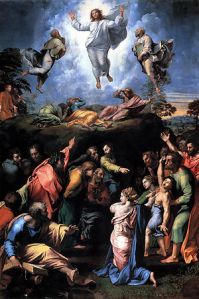
terrible wisdom of Silenus
thus the admonitions “Know thyself” and “nothing to excess!’ coexist with the aesthetic necessity of beauty
psalmodizing Appolline artist, with his phantom harp-notes
Attic tragedy
Antigone and Cassandra
Dionysiac-Appoline genius
gaining a sense of mystery of that union
Schiller
a musical mood
allegorical dream –image
as Euripedes describes it in “The Bacchae”

Schopenhauer
singer’s consciousness
satisfied willing (joy)
hampered willing (sorrow)
the genuine song is the copy or impression of the whole of this mingled and divided state of mind
only as an aesthetic phenomenon that existence and the world are eternally justified
comedy of art
he is at once subject and object, at once poet actor and audience
Melody then is both primary and universal
the strophic form of the folk song
a collection of the folk song, then, we see language doing it’s utmost to imitate music. orgiastic flute melodies of Olympus
drunken enthusiasm
How does music appear in the mirror of imagery and concepts? It appears as will in Schopenhauer’s sense of the word
eternally willing, desiring, yearning
interprets music in images
lies amidst the peaceful waves of Appoline contemplation
does not require images
tolerate both
phenomena are mere symbols: hence language, the organ and symbol of Phenomena
origin of Greek Tragedy
that tragedy arose from the tragic chorus
the truly Germanic predilection for everything that is called “ideal”
the realm of the wax museums
the Dionysiac man shares with Hamlet
they have understood
Understanding kills action, depends on a veil of illusion
True understanding, insight into the terrible truth, outweighs every motive for action, for Hamlet and Dionysiac man alike
sublime
comedy
the satyr
Nature
was here that the true man revealed himself, the bearded satyr celebrating his god. Before him, the man of culture shriveled up into a mendacious caricature.
Modern man’s idyllic shepherd is nothing but a counterfeit of the sum of cultural illusions that he takes to be nature; the Dionysiac Greek wanted truth and nature at the summit of their power – and saw himself transformed into a satyr
an abandonment of individuality by entering another character
dithyramb
Enchantment is the precondition of all dramatic art
a vision
votaries
Dionysius
light patches, we might say to heal the glaze seared by terrible night
a higher magic circle of effects is drawn
a passively suffering man is confronted by a superterrestrial cheerfulness that descends from the gods
Oedipus
solved the riddle of the Sphinx
prevalent in Persia, that a wise magus can only be born from incest
a monstrous crime against nature – incest in this case
father’s murderer and mother’s lover, transgress the sacred codes of nature. Indeed, what the myth seems to whisper to us is that wisdom, and Dionysiac wisdom in particular, is an abominable crime against nature, that anyone who, through his knowledge, casts nature into the abyss of destruction, must himself experience the dissolution of nature
‘ the blade of wisdom is turned against the wise, wisdom is a crime against nature
a race which shall be like me
………..and to ignore you”
Aeschylus’ “Prometheus”
The Greek artist in particular felt an obscure sense of reciprocal dependency with these gods
the story of Prometheus is the indigenous property of all Aryan peoples
same characteristic meaning for the Aryan spirit as does the myth of the fall for the Semitic
dignity
curiosity, mendacious deception, susceptibility lasciviousness – a whole series of predominantly feminine attributes – were seen as the origin of evil
sacrilege
It is an uncontested tradition that the Greek tragedy in its oldest form dealt only with the sufferings of dionysius, and for a long time Dionysius was the only theatrical hero
Prometheus, Oedipus and so on – are merely masks of that original hero, Dionysius
the one real Dionysius appears in a multiplicity of figures, in the mask of warrior hero and we might say entangled in the net of individual will.
he was dismembered by the Titans
that dismemberment the true Dionysiac suffering
the condition of individuation as the source and origin of all suffering and hence something reprehensible
a dismembered god Dionysius had the dual nature of a cruel, savage daemon and a mild gentle ruler
Demeter, sunk in eternal grief, who rejoices once more only when she is told that she can give birth to Dionysus again
In these ideas we already have all the components of a profound and pessimistic view of the world
the mystery doctrine of tragedy
Herculean force of music
pragmatic youthful history
veracity of myths
New Attic Comedy
Euripedes brought the spectator to the stage
“Frogs” of Aristophenes
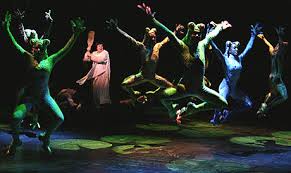
very opposite of the Christian attitude
the vision of Greek antiquity that survived for centuries, with almost unconquerable resilience
pandemonium
incommensurability
the second spectator
tremendous battle against the works of Aeschylus and Sophocles – not only by means of polemics, but as a dramatic poet confronting conceptions of tragedy with his own (Euripedes)
the very origin and essence of Greek tragedy the expression of two interwoven artistic impulses, the Appolline and the Dionysiac
the rebuilding of tragedy on non-dionysiac art, morality and philosophy – this is he intention of Euripedes, now revealed to us clear as day Cadmus – into a dragon p.60
Socrates
Socratic intention
an Appolline sphere of art in which tragic effects were impossible
these stimuli are cool paradoxical thoughts rather than appolline contemplation’s, fiery emotions rather than dionysiac ecstasies – and these thoughts and emotions are highly realistic counterfeits, by no means immersed in the ether of art
into intrinsic naturalism
aesthetic socratism, the chief law of which is, more or less, “to be beautiful everything must first be intelligible” – a parallel to the Socratic dictum: ‘ only the one who knows is virtuous’
the Euripidean prologue
necessary
the poetic beauties
pathos of exposition
just as Descartes could only prove the reality of the empirical world by appealing to the veracity of god and his inability to lie
As a poet therefore Euripedes was first and foremost the echo of his conscious knowledge; and it is because of that he has such a remarkable place in the history of Greek art
vous
Anaxagorus
a chaotic primal soup
The divine Plato, too, generally speaks ironically of the poet’s creative power. as so far it is not a conscious insight, and places it on a par with the gift of a soothsayer and oneiromancer, since the poet is capable of writing only once he is unconscious and all reason has left him
Euripedes like Plato set about showing the world the opposite of the ”irrational’ poet his aesthetic axiom that ‘everything must be conscious before it can be beautiful, is as I have said a counterpart to Socrates
Socrates was the ‘second spectator who did not understand the older tragedy
we may call Socrates the opponent of Dionysius, the new Orpheus who rose up against Dionysus
Socrates used to help Euripedes with his writing
Socrates appeared in the plays of Aristophanes as the chief of the Sophists
Socrates an enemy of the art of tragedy. only ever attended of tragedies when a new play of Euripedes was being performed
the two names is to be found in the Delphic Oracle which describes Socrates as the wisest of men, but also awarded Euripedes second prize in the contest of wisdom
Sophocles – -he did the right thing because he knew what the right thing was
three ‘ ones who knew’
Socrates, when he found that he alone admitted too himself that he knew nothing
the simulation of knowledge
Socrates’ daimonon
admonishes
instinctive wisdom
hinder conscious knowledge of certain points
instinct is the power of creativity
Socrates might be described as the very embodiment of the non-mystic
But Socrates himself seems to have insisted upon the pronouncement of a sentence of death rather than exile
the dying Socrates
the typical Hellenic youth, Plato, prostrated himself before the image with all the fervent devotion of a fanatic soul
the great Cyclops eye of Socrates – that eye that had never glowed with the sweet madness of artistic inspiration – turned upon tragedy
the only poetic genre he understood was the Aesopian fable
Gelert sings praise of poetry in the fable of the bee and the hen:
(You see in me what it can do
In images it tells what’s true
To those without much wit.)
with success that the young tragedian, Plato, burnt his writings in order to become a pupil of Socrates
Plato…. In his condemnation of tragedy and art in general he did not lag behind his masters’ naive cynicism
the counterfeit of an illusion and hence belonged to a sphere yet lower than the empirical world
the cynic
Plato gave posterity the model of a new art form – the novel. This might be described as ‘an infinitely enhanced Aesopian fable”
ancilla
philosophical thought overgrows art and forces it to cling tightly too the bough of the dialectic
We need only to consider Socratic maxims ‘Virtue is knowledge, all sins arise from ignorance, the virtuous man is the happy man.” In these three basic optimistic formulae lies the death of tragedy.” p.69
an anti-Dionystic tendency at work
Socrates was simply its most magnificent expression
Socratism and art, whether the idea of the birth of an ‘artistic Socrates is itself a contradiction of terms’
Might art even be a necessary correlative and supplement to science
it has continually led to the regeneration of art- in the broadest and deepest, metaphysical sense – and by its own infinity guarantees the infinity of art
we had to do to the Greeks what the Athenians did to Socrates
the Greeks are the charioteers of our own and all other cultures
Socrates as one of these charioteers
the prototype of the theoretical man
Lessing, the most honest of theoretical men, dared to say that he took greater delight in the quest for truth than in truth itself. He thus revealed the fundamental secret of science
illusion
correcting being
the image of the dying Socrates
the myth
Socrates, the mystagogue of science, waves of philosophical schools emerged and vanished one after the other; how a thirst for knowledge hitherto unimagined throughout the educated world, the true task for everyone of superior intelligence, led science on to the high seas from which it has never been entirely banished: how that universality first established a common network of rational thought across the globe, providing glimpses of lawfulness of an entire solar system.
the astonishingly high pyramid of knowledge of the present day’ we cannot help[but see Socrates as the turning point, the vortex of world history.
Fiji Islanders
Sophrosyne
with the aim of finally producing genius p.74
how logic twists around itself and finally bites itself in the tail, there dawns a new form of knowledge, tragic knowledge, which needs art as both protection and remedy, if we are to bear it.
a need for art
we have seen in the battle between Aeschelyean tragedy and Socratism
music making Socrates?
waged between insatiable optimistic knowledge and the tragic need for art. I shall ignore the hostile impulses which work against art in general and tragedy in particular so much so that only farce and ballet have flourished…..
most illustrious antagonist of the tragic view of the world, science which is optimistic to the core with its ancestor Socrates at its head
a rebirth of tragedy
Apollo and Dionysus
two worlds of art
the transfiguring genius of the principium individuationus, the sole path to true redemption through illusion. While in the mystical triumphal cry of Dionysus the spell of individuation is broken and the path is opened to the Mothers of Being, to the innermost core of things. This tremendous opposition, this yawning abyss between the plastic arts and Dionysiac music …………..complimented everything physical in the world
the metaphysical
Schopenhauer
Richard Wagner
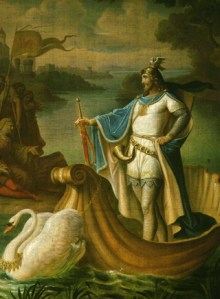
Beethoven
that music obeys quite different aesthetic principles from the visual arts, and cannot be measured according to the category of beauty; although a false aesthetic, hand in hand with a misdirected and degenerate art, has grown used to demanding, on the basis of the concept of beauty that prevails in the world of the visual arts, that music should provide an effect similar to that of works of visual arts – the arousal of pleasure in beautiful forms.
work side by side
Schopenhauer
consider the phenomenal world, or nature, and music as two different expressions of the same thing
a universal language
geometrical figures and numbers, which are the universal forms of all possible objects of experience, a prori applicable to them all…. impression of a symphony
it is not a copy of the phenomenon
is directly a copy of the will itself
the metaphysical to everything physical in the world
the thing –in-itself to every phenomenon
it is because of this we are able to set a poem to music as a song
abstracta
according to Schopenhauer’s theory, the, we see music as the immediate language of the will
symbolic intuition of Dionysiac universality
highest level of significance
the myth
the tragic myth
tragic
principium individuationus
Metaphysical delight in the tragic is a translation of the images of the hero, the supreme manifestation of the will, is negated to our gratification….”We believe in eternal life’ is tragedy’s cry; while music is the immediate idea of that life
eternity of the phenomenon
the ceaseless flux of phenomena
Dionysiac art too
behind phenomena
we are happy to be alive, not as individuals but as the single living thing, merged with it’s creative delights
spirit of music
astounding significance of the chorus
Hamlet
the play as a whole
The Greeks are, as the Egyptian priests say eternal children, and even in tragic art they are only children, ignorant of the sublime plaything which has come into being in their hands, and which will soon be shattered
there is a never-ending struggle between the theoretical and the tragic philosophies
We might employ the symbol of music making Socrates
the myth
New Attic Dithyramb
New Dithryambic poets

an imitative counterfeit of phenomena – of battle for example, or a storm at sea – and thus robbed it of all its mythopoeic power
analogies
character portrayal
verisimilitude
artist’s mimetic power
endings of the new dramas
Oedipus at Colus
degenerate form of a secret cult
This cheerfulness is opposed too the glorious naiveté of the earlier Greeks. the flower of the Apolline culture that rose from the gloomy abyss, the triumph of the Greek will, won by its reflection of beauty, over suffering and the wisdom of suffering.
a deux machina of it’s own – the god of machines and crucibles, the powers of the sprit of nature acknowledged and employed in the services of the higher egoism; it b3elieves in the rectification of the world through knowledge, and in a life guided by science, and it an also truly confine the individual within a limited circle of soluble problems, from which he can cheerfully say to life: ‘I want you. You are worth knowing.”
18
It is an eternal phenomenon: the voracious will always finds a way to keep its creations alive and perpetuate their existence, by casting an illusion over things.
the seductive veil of beauty, art that floats before his eyes
… more powerful illusions that the will keeps constantly in readiness
who must always be deluded away from their distress with special stimulants. That which we call culture is made entirely of those stimulants
Alexandrian, Hellenic, or Indian (Brahman)
Socrates
In an almost frightening sense, the man of culture has long existed in the form of the scholar
Fast
devoting himself to magic and the devil because of his thirst for knowledge
“Yes my friend there is also a productivity is deeds”
Socratic culture- optimism, imagining itself boundless
It should be noted: Alexandrian culture needs a slave class in order to exist in the long term……’the dignity of man”
‘the dignity of labor has worn off, it slowly drifts towards terrible destruction
Myth the prerequisite for all religions, is already thought paralyzed, and even theology is dominated by that very optimistic spirit that we have just described as the germ of destruction of our society. The tremendous courage and wisdom of Kant and Schopenhauer carried off the most difficult victory; victory over optimism that lurked within the essence of logic, which in turn forms the basis of our culture.
aetenae veritates. and had treated space, time causality as utterly unconditioned and universally valid laws, Kant revealed how therein fact only served to transform mere phenomenon, the work of Maya, into the sole essence of things, and thus render true knowledge that essence thoroughly impossible.
to send the dreamer into an even deeper sleep (World as Will vol. 1)
undeceived by the enticing diversions of the sciences; that it turns a steady eye on the world as a whole, and seeks to grasp, with a sympathetic love, eternal suffering as its own.
art of metaphysical consolation
unique
the principle of science must perish once it begins to become illogical
as Adam named the animals. HE remains eternally hungry, the ‘critic’ without pleasures or strength, Alexandrian man, at bottom a librarian and a corrector of proofs, wretchedly blinded by the dust of his tomes and by printing errors.
the culture of opera
stilo rappresentativo
Orpheus, Amphion truly modern genre; opera
The ‘noble savage’ is claiming his rights. A paradisiacal prospect indeed.
idyllic tendency in opera
Renaissance
as Dante and Virgil to reach the gates of paradise
face of opera
cheerfulness of eternal rediscovery
Alexandrian cheerfulness
has rather crept across a half-moral sphere to the realm of art the metamorphosis of Aescheylean man into the cheerful man of the Alexandrians
the opposite process the gradual awakening of the Dionysiac spirit in our contemporary world
Kant and Schopenhauer the spirit of German philosophy
Dionysiac wisdom
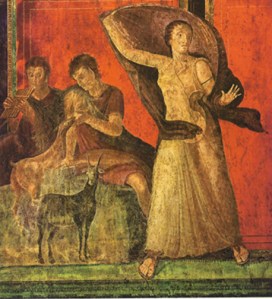
freed from the apron strings of Roman civilization; if it can only learn constantly from one nation, the Greeks
Goethe, Schiller and Winckelmann
core of Hellenism
journalist, the paper –slave of the day, has emerged victorious over the academic in all cultural areas
‘as a cheerful and cultured butterfly”
the German spirit through the fire-magic of music
Durer
One such knight was our own Schopenhauer; he lacked all hope, but sought the truth. He is peerless
…the Mothers of Being, whose names are Delusion, Will, Woe. p.98
hortatory notes
Apollo, founder of the states
the genius of principium individuationus
Indian Buddhism
the greatest but also the most frightening expression of which is the Roman Empire
classical purity
‘an immutable truth that those whom the gods love die young
impulses of the Romans
a fine wine, which both fires the blood and turns the mind to contemplation
as the quintessence of all prophylactic remedies, the mediating force between the most intense and fatal qualities of the people
Tragedy absorbs the highest musical ecstasies
a state of true perfection
Tristan and Isolde
‘wide space of the worlds night
which music alone can speak directly convulsive paroxysm of all
essential jubilation
deception
the actual idea of the world, drama a mere reflection of that idea, an isolated silhouette of it
but music speaks from the heart
beyond all Apolline artifice
the sculptor and the epic poet, the truly Apolline artists
the tragic myth only as visualization of Dionysiac wisdom by means of Apolline artifices Lust
In the sea of rapture
joy
Dionysiac impulse then devours this whole world of phenomena, in order, behind it and through its destruction, to give a sense of a supreme artistic primal joy within the womb of the primal Oneness
supreme art
primal phenomenon of the tragic
aesthetic listener
cult of tendentiousness
parable of the porcupines
Beethoven and Shakespeare
“Lohengrin”
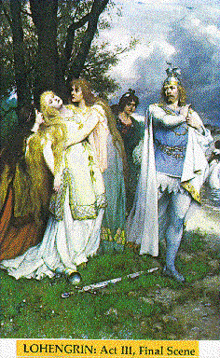
miracles
scrabbling for roots
German spirit
the great advantage of France and it tremendous superiority
the German Reformation
The Lutheran Chorale
the rebirth of German myth!
The decline of tragedy was also the decline of myth
desecularized
inner conviction of the relativity of time and the true, metaphysical meaning of life
Alexandrian-Roman antiquity
after a long interlude that is barely describable
all sub specie saeculi
call of the Dionysiac bird
the contemplation of the tragic myth
glorifies the struggling hero
the exemplification of the wisdom of Silenus
ugly and discordant elements
‘reality’ of this world
‘Look! Take a close look! That is your life! That is the hour-hand of your existence!”
musical dissonance
dark Heraclitus compares the force that builds worlds to a child placing stones here and there, and building sandcastles and knocking them down again
the inartistic, parasitical spirit of Socratic optimism is revealed in opera as well as in the abstract character of our own mythless existence, in an art that has sunk to the level of mere entertainment
Then it will slay dragons, destroy the wicked dwarfs and awaken Brunnhilde- and Wotan’s spear itself will not be able to bar its way
If we could imagine dissonance becoming man- and what else is man?
Happy race of Greeks!”
how much did this people have to suffer to become so beautiful! But now follow me to the tragedy, and sacrifice with me in the temple of both deities!
 tomreading
Leave a comment