The World as Will and Representation
Schopenhauer
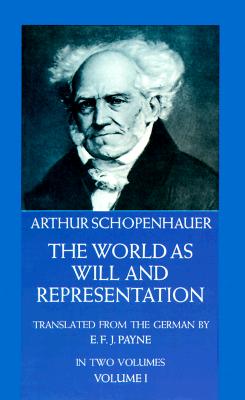
Book I
The world is my representation: this is a truth valid with reference to every living and knowing being, although man alone can bring it into reflective, abstract consciousness.
The world is representation.
….sages of India
…. the fundamental tenet of the Vedanta school consisted not in denying the existence of matter…
– ignus fatuus
…existence and perceptibility are convertible terms.
These words adequately express the compatibility of empirical reality with transcendental ideality.
The world is my will
Kant’s thing in itself has degenerated in his hands..
That which knows all things and is known by none is the subject
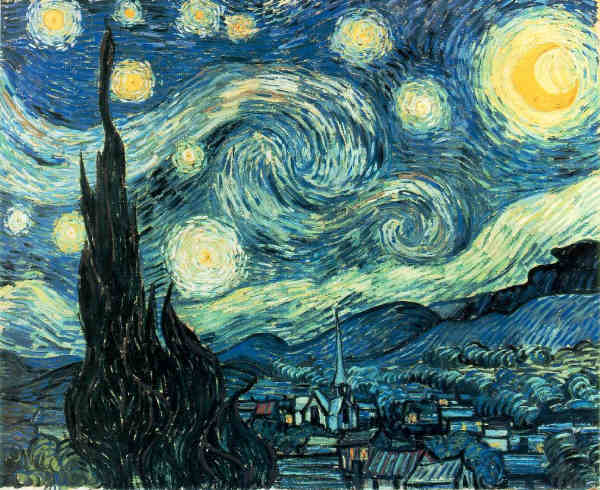
…The subject…
. object….
apriori
On the principle of sufficient reason
A necessary relation to other objects….
…determining
relative
intuitive and abstract
The capacity for these which distinguishes him from all animals has at times been called reason
…mathematics
ground of being
time
it is Maya, the veil of deception
Vedas and puranas
…counting and calculating
Succession
Position
Cause and effect….relative…
space
time
here
there
simultaneously
consequently, causality unites space and time
coexistence
permanence or duration
matter
a priori
at this time and in this place
a posteriori
Kant, “Metaphysical Rudiments of Natural Science”
Understanding
Therefore all perception is intellectual
Immediate objects
Mere data
“Vision and Colors”
Perception
Pure knowledge through the understanding of the cause from the effect
Hume
…only between immediate and mediate object. And hence always only between objects
dogmatism and skepticism
realism and idealism
Fichte
Action
Being
Recollection
Long
Short
Hobbes, ‘Leviathan‘
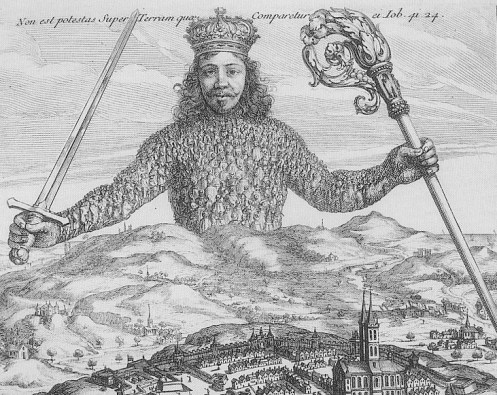
Web of Maya
“We are such stuff
As dreams are made on, and our little life
Is rounded with a sleep”
Life is a dream
If we express it objectively
In abstract
….good sense or prudence…..
stupidity..
just dullness in applying the law of causality
Buffon
Lack of understanding was called stupidity deficiency
Foolishness; deficiency in power of judgement as silliness
Lack of memory as madness
That which is correctly known by understanding is reality
Error is opposed to truth as deception of reason; illusion is opposed to reality as deception of understanding.
Schopenhauer’s essay “On Vision and Colors”
Illusion
Representation
Absolute
…. transcendental idealism, that is Fichte’s doctrine of the ego
….it must be to me like a book with seven seals
humbug
matter
…..Thales and the Ionians, Democritus, Epicurus, Giordano Bruno, and the French materialists
Spinoza
Eleatics
The Pythagoreans and the Chinese philosophy of the “I Ching”
Namely from time and consequently from numbers
Veritas aeterna
..a sudden fit of inextinguishable laughter of the Olympians
petito principle
objective
matter
thought
substance
..machinery and fabrication of the brain
qualitative
quantitative
Epicurus
Antinomy
“No object without subject”
materialism forever impossible
Suns and planets with no eye to see them and no understanding to know them can of course be spoken in words, but for the representation these words are a sideroxylon an iron-wood.
“Thus we see on one hand, the existence of the whole world necessarily dependent on the first knowing being, however imperfect it be; on the other hand, this first knowing animal just as necessarily wholly independent on a long chain of causes and effects which has preceded it, and in which it itself appears as a small link.
Chronos the youngest of the Titans
Fichte
..valid only in phenomenon
….setting out from the subject.
Relativity
Aeterna veritas
Materialism
Representation illusion error cannot refrain from adding here that so long as truth does not exist, error can play its game, just as owls and bats do at night
reflection
in abstracto
The animal feels and perceives; man in addition, thinks and knows; both will
…Greek and Italian speech and reason are expressed by the same word il discorso
Vernunft
Voluntary rectitude and nobility of feeling
Locke in his “Essay on the Human Understanding”
Leibniz
Few men think; yet all will have opinions
Class
Language
Signs
Only in single cases do we pass from concepts to perception, or form phantasms as representatives of concepts in perception
Ad infinitum
Abstracta
Concreta
All combinations of concepts may be referred to these cases, and from them can be derived the whole theory of judgements
…for logic can never be of practical use, but only of theoretical interest for philosophy.
…no one ever became an artist by studying aesthetics
…we do not need to be masters of thorough-bass in order to detect discords
…one who has learned logic for practical purposes is like a man who should seek to train a beaver to build its lodge
…. perfectly safe branch of knowledge
…pleasure of debate…
the scholastics
…art of persuasion
..mentiens, velatus, cornutus(lying, veiled, horned)[dilemma] p.49
…traveling
certainty
judgements are to be established, in what knowledge and science consist, for together with language and deliberate action, we extol these as the third great advantage conferred on us by the faculty of reason.
Reason is feminine in nature; it can give only after it has received. . Of itself alone, it has nothing but the empty forms of its operation. There is absolutely no other perfectly pure rational knowledge than the four principles to which I have attributed metalogical truth, the principles of identity, of contradiction, of the excluded middle, and of sufficient reason of knowledge.
A priori
To know
True
(Wisssen)-rational knowledge
consciousness (Bewusstsein)
feeling(Gefuhl)
“The concept denoted by the word feeling has only a negative content, namely that something present in consciousness is not a concept, not abstract knowledge of reason. However
Not being abstract concepts (Empfindung)[sensation]
…the Greeks called other men barbarians
…to the student all others are Philistines
….the same crude ignorance from pride
…. rational knowledge…
This necessity for space with its three dimensions to be translated into time with only one dimension p54
….the perception of curves with their analytical calculation
How time, we might say, within its one dimension must torture itself, in order to reproduce the three dimensions of space!
…..many minds find complete satisfaction only in what is known through perception
Other minds on the contrary want abstract concepts of use solely for application and communication
The latter seek preciseness, the former intuitiveness. The difference is characteristic.
Billiard player
signature rerun
physiognomy
mosaic
asymptote
genuine art virtue and holiness
depth of will
laughter
Ludicrous
wit folly
…to mask wit as folly, is the art of the jester and clown
the calembour
l’equivoque
(smut, filth)
pun
power of judgement
silliness
explicitly implicitly
Kepler’s second law
(universal gratification)
mathematics, as it was laid down in the form of a science by Euclid
We must look upon this as being like a man who cuts off his legs in order to walk on crutches p69 The deception of the senses
The stick broken in the water
He was therefore necessarily compelled to found the axioms alone on the evidence of perception and all the rest on syllogisms
“For only after we have learnt from this great mind that intuitions or perceptions of space and time are quite different from empirical perception, entirely independent of any impression on the senses, conditioning this and not conditioned by it, i.e. are a priori and hence not in any way exposed to sense-deception – only then can we see that Euclid’s logical method of treating mathematics is a useless precaution, a crutch for sound legs…mistaking at night a bright firm road for water
…but immediately from the form of all knowledge, of which we aware a conscious apriori
qualitas occulta p.72
the ‘That’ and the ”Why”
analytic path
prefers indirect knowledge to direct knowledge that is just as certain; which further separates the knowledge that something is the form of why it is, to the great disadvantage of science
Instead of this, it directs him to be satisfied with a mere historical knowledge that a thing is as it is
Exerts
Agreement and consistency
Suspicion that perception was only empirical, and hence subject to illusion, disappeared in arithmetic
…..so that they are no longer performed only symbolized.
…..like a cowardly soldier who gives another wound to an enemy killed by someone else, and then boasts that he himself killed him.p.76
….this endows it with a complete certainty and infallibility, for in it the consequent is known from the ground
On the other hand, all empirical perception and the greater part of all experience proceed only conversely
From the consequent to the ground
Induction
…the truth here is never unconditionally certain. Yet all knowledge through sensuous perception and the great bulk of experience have only this kind of truth.
Illusion, which is deception of senses, is possible and often actual…
Pure (or as Kant calls it metaphysical) part. Here also the causes are known from the effects; therefore all natural philosophy rests on hypotheses which are often false, and then gradually give way to others that are more correct. Only in the case of intentionally arranged experiments does knowledge proceed from the cause to the effect
‘….but it required and requires the collected and compared experiences of many other centuries
perfect exactness of the logarithm
infinite fractions
knowledge of the ground from the consequential human beings have their heart on their left side.
….right side….
A priori
Error
Wrong pigeon is caught
The deception of the faculty of reason, is possible
That every error is a conclusion from the consequent to the ground
…..error therefore is wholly analogous to illusion
The illusion of the senses
“If money is missing from my safe, the cause is always that my servant has a skeleton key.
Content o
Relation of the phenomena of the world to one another according to the principle of sufficient reason
Why
Explanation is the establishment of this relation.
Qualitas occulta p80
Space and time
Matter, qualities, original forces, laws of nature;
It is the difference of species and of life itself
The human race with all it’s characteristics of thought and will
Philosophy has the peculiarity of presupposing absolutely nothing as known
Principle of sufficient reason itself, to which the other sciences are content to refer everything
Most universal rational knowledge (Wissen)
The most perfect development of practical reason
Stoic sage
“We must procure either understanding or a rope (for hanging ourselves)
It is not poverty that pains, but strong desire
No attained wish can permanently satisfy
(“It is not things that disturb men, but opinions about things”)
“We must live according to the experience of what usually happens in nature
Zeno
But the moral principle of Zeno – to live in harmony with oneself –
Morphology
Etiology explanation
Natural force
A law of nature
From without
Facades
He finds himself in it as an individual
Will
Immediate object
Objective of the will
It is called pain when it is contrary to the will, and gratification or pleasure when in accordance with the will
…..very reason that it itself the most direct knowledge
objectivity
individual representations
theoretical egoism
….the objectivity of the will
Knowledge of the identical in different phenomena and of the different in similar phenomena
Inferred
Force principium individuationus
Plurality
Stimuli (On diseases of the nervous system)
Voluntary involuntary
Necessity
The will
Fathomed qualitaes occultae
Etiologically
Phoronomy
……geometry can be resolved into arithmetic, which by reason of its unity of dimension is the most intelligible, comprehensible and completely fathomable form of the principle of sufficient reason. Proofs of the method generally indicated here are the atoms of Democritus, the vortex of Descartes, the mechanical physics of Lesage which towards end of the eighteenth century……
“thing in itself”
Goethe, “Theory of Colors”
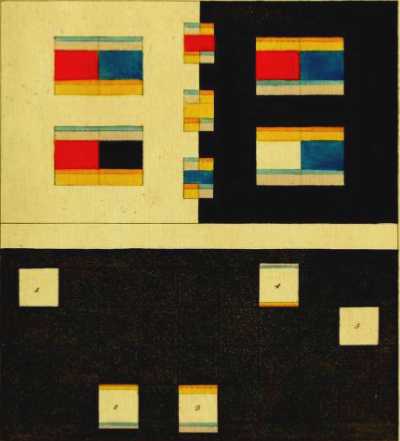
“ I know God cannot live a moment without me;
If I should come to naught, He too must cease to be”
Men have attempted in various ways to bring the immeasurable greatness of the universe nearer to the power of comprehension of each one of us, and have then seized the opportunity to make edifying observations
…. grades of the objectification of the will are nothing but Plato’s Ideas
Idea
Plato teaches that the Ideas exist in nature so to speak as patterns or prototypes and that the remainder of things only resemble them, and exist as their copies.
…law of nature…..
morphology…
“form and combination” of its parts
heat and electricity
Yet these forces in no way constitute vital force, any more than a hammer and an anvil constitute a blacksmith
One and the same
..enters objectivity
polarity Yin and Yang
“I Ching”
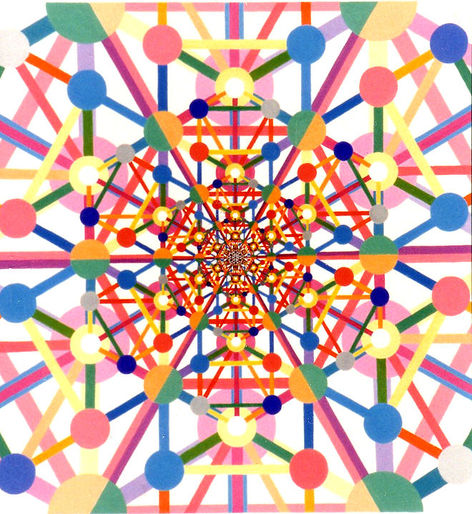
Vital force
More or less
Nearer to or farther to
Ideal
Animal kingdom
Homo homini lupus (man is a wolf to man) p. 147
Many insects (especially the ichneumon flies) lay their eggs on the skin, and even in the body, of the larvae of other insects, whose slow destruction is the first task of the newly hatched brood
…The bulldog –ant of Australia, for when it is cut in two, a battle begins between the head and the tail
as Empedocles says, if strife did not rule things, then all would be as unity.
Acid of a salt
Alkalis
Rigidity or as elasticity
…the pressure and resistance
reason as a faculty for forming abstract concepts
Agamemnon
…thus knowledge in general..
knowledge can withdrawal from this subjection, throw off it’s yoke, and, free from all aims of the will, exist purely for itself, simply as a clear mirror of the world; and this is the source of art
….salvation from the world
We have considered the great multiplicity and diversity of the phenomena in which the will objectifies itself; indeed we have seen their endless and implacable struggle with one another p153
…magic lantern….
Pyramid
A hungry will
Hence arise pursuit, hunting, anxiety, and suffering.
External
Inner suitability
….the crystal
intelligible character
Thus, for example, it is not essential; whether a man plays for nuts or for crowns; but whether in play a man cheats or goes about it honestly, this is what is essential.
The Idea lies outside time
Consensus naturae phenomena
Adequate objectivity
I must refer once more to the larva of the male stag-beetle which gnaws the hole in the wood for its metamorphosis twice as large as does the female, in order to obtain room for its future horns
The phenomena of the nature of unity on the will so far in agreement with itself
..continuance
the microcosm
the macrocosm
endless striving
Third book
Objectivity of the will
What Plato called the eternal Ideas or unchangeable forms
Plato says: “ The things of this world, perceived by our senses, have no true being at all; they are always becoming, but they never are.
Progenitor
One
Immanent
Transcendental….
…..therefore Plato says that time is the moving image of eternity
Apollo Belvedere
Idea
Subject of knowledge
Attributed to Thomas Paine, that du sublime au ridicule il nay a qu’un pas
Pure subject of knowing
…. from the sublime to the ridiculous is but a step….
The mind is eternal in so far as it conceives things from the standpoint of eternity
For we look entirely away from that true world as representation, there is nothing left but the world as will
Byron:
‘Are not the mountains, waves and skies, apart?
Of me and of my soul, as I of them?’
Essential
Phenomenon
Homer set up a whole Olympus full of gods to guide the events of time, as he will, with Ossian, regard the figure of the clouds as individual beings
…its immaterial whether they are set in motion by nuts or by crowns
earth-spirit
“The whole source from which the individuals and their powers flow is inexhaustible, and as bound less as are time and space; for just like these forms of every phenomenon, they too are only phenomenon, visibility of the will
It is art, the work of genius
Sculpture, painting, poetry, or music p.184
For it plucks the object of its contemplation from the stream of the world’s course and holds it isolated before it. This particular thing, which in that stream was an infinitesimal part….
It stops the wheel of time
….the way of considering things independently of the principle of sufficient reason
genius consists….
…contemplation
gift of genius
the objective tendency of the mind
state of pure perception
pure knowing subject, the clear eye of the world
…even men with little or no touch of genius may have much imagination
…dreamer….
…readers fancy themselves in the position of the hero, and then find the description very “nice”(gemutlich)
..a pure knowing
…no man was ever distinguished in both at the same time (art & math)
Qu’est-ce que ce la prouve? (What does all that prove?)
..in general may exhibit several weaknesses that actually are closely akin to madness
…even poetic inspiration has been called a kind of madness; amabilis insania
“Great wits to madness sure are near allied,
And thin partitions do their bounds divide”
Pope
Rousseau, Byron and Alfieri
…genius is a phenomenon rare beyond all ordinary estimation and appearing in nature only as the greatest exception
Therefore it seems o me that they’re madly specially concerns memory. P192
…a fixed mania or melancholy
or folly (fatuitas)
only a thought
memory
Ajax, King Lear, and Ophelia
….the Idea he has grasped
Fulfillment
Wish fulfilled
Thus the subject of willing is constantly lying on the revolving wheel of Ixion, is always drawing water in the sieve of the Danaids, and is the eternally thirsting Tantalus.
It is the painless state, prized by Epicurus as the highest good and as the state of the gods; for that moment we are delivered from the miserable pressure of the will. We celebrate the Sabbath of the penal servitude of willing the wheel of Ixion stands still.
…all the same whether we see the setting sun from a prison or from a palace.
Dutchmen
Ruysdael
..from the thralldom of the will
nature most men…..entirely lack objectivity i.e., genius
Platonic Idea
Sublime
…fact that light is the correlative and condition of the most perfect kind of knowledge through perception, of the only knowledge that in no way directly affects the will. For sight, unlike the affectations of the other senses, is in itself, directly, and by it’s sensuous effect, quite incapable of pleasantness or unpleasantness of sensation in the organ; in other words, it has indirect connection with the will.
..sublime…
…the plant world in particular invites one to aesthetic contemplation and, as it were, obtrudes itself thereon
beautiful
consciousness
…Just as man is simultaneously impetuous and dark impulse of willing (indicated by the pole of the genitals as its focal point), and eternal, free, serene subject of pure knowing (indicated by the pole of the brain), so in keeping with this antithesis, the sun is simultaneously the source of light, the condition for the most perfect kind of knowledge, and therefore the most delightful of things; and the source of heat, the first condition of all life, in other words, of every phenomenon the will at its higher grades. Therefore what heat is for the will, light is for knowledge. p.203
….the will that is always in need of strife and attainment…
…..the torture and misery of boredom…
…conduct himself in his respect rather as a knower than as a sufferer.
Censured
..purely objective spirit filled with ideal beauty…..
…disturbs purely aesthetic contemplation
excites
abhorrent
inadmissible in art
beautiful
Human form and human expression are the most important object of plastic art, just as human conduct is the most important object of poetry.
…forma accidentalis
phenomenon of the Idea
architecture
Gothic
Demands of necessity and utility
…in Venice, on Monte Cavallo, in the Elgin Marbles
Venice Arsenal; in the Vatican there
“Tat tvam asi” which means “This living thing art thou”
Goethe says that “Whoever beholds human beauty cannot be infected with evil; he feels in harmony with himself and the world
…the times have become so degraded and crude through the stupifying influence of Hegel’s sham wisdom
“Grace is the peculiar relation of the acting person to the action”
character par excellence
character
in Apollo
Bacchus, Hercules, Antonious. Drunken Silenus, the Faun & so on
Laocoon does not cry out…
Secundum naturum
Virgil
Propylaen
…the wag who, for a joke, stopped up with wax the horn of the sleeping watchman, and then woke him up with the cry of fire, and amused himself watching the man’s fruitless efforts to blow.
Raphael’s violinist
Beauty with grace p.229
Historical painting
Genre painting
Moses found by the Egyptian
Quieter
…spirit of Christianity as of Indian wisdom
Idea or concept
Unitas post rem
As unitas ante rem
Imitatores, servum pecus
“Imitators , the slavish mob”
vice versa
allegory
hieroglyphics
the “Genius of Fame” of Annibale Carraci

the “Goddesses of the Seasons” of Poussin
”The Night’ of Corregio
shield of Achilles
“Time discloses the truth”
symbolism’
emblems
aesthetic symbolical
poetry
Cervantes, ‘Don Quixote’
Swift’s, ‘ Gulliver’s Travels’
‘Revelation’ of John
Poetry
“Where gentle breezes from the blue heavens sigh,
There stands the myrtle still, the laurel high”
[Goethe, Mignon]
rhythm and rhyme
concatenation
profligacy
Dissimulatio
….depicter more or less conceals himself behind what is depicted and finally altogether disappears
..voluptuousness as of mysticism
…tragedies or comedies
“I live not in myself, but I become
Portion of that around me; and to me
High mountains are a feeling.”
` [Byron, ‘Childe Harold’s Pilgrimage’]
…hydraulic engineer
dramatic poet
Thus poetry objectifies the Idea of man, an Idea which has the peculiarity of expressing itself in highly individual characters
It sees through the form of the phenomenon, the principium individuationus
Qui“Faust”
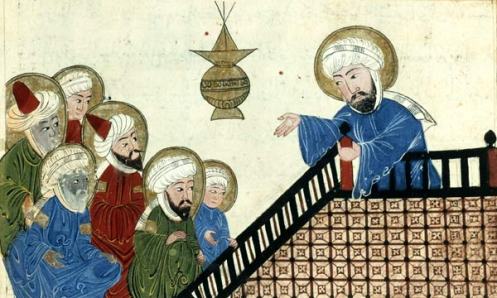
Voltaire’s “Mohammed”
Dr. Samuel Johnson
….demand for poetic justice
…. original sin
(“For mans greatest offence
is that he has been born,”)
Calderon
….extraordinary wickedness of a character
Iago
King Oedipus
Music
Far more serious and profound significance
Copy to the original
Infinitely true
Certain infallibility
Principium individuationus
Immediate
Copy of the will itself
Sons harmonique
Ripienos
In fact, the impure discords, giving no definite interval, can be compared to the monstrous abortions between two species of animals, or between man and animal
Language of feeling and of passion, just as words are the language of reason
“The movement of the melody which imitates, when the soul is stirred by passions
“How is it that rhythms and melodies, although only sound, resemble states of our souls
allegro maeatoso
adagio
minor and major
themselves
abstracta
universalia post re, universalia ante rem, universalia in re
vaudeville
“The Seasons” by Haydn
Music is an unconscious exercise in metaphysics in which the mind does not know it is philosophizing
Pythagoras
The ‘I Ching’
Teleological view
All things are similar to number
The camera obscura
It is the play within the play, the stage on the stage in Hamlet
The serious side
Fourth Book
The last part of our discussion proclaims itself as the most serious for it concerns the actions of men
…daemon…
his intelligible character
unconditoiones ought
ought
absolute infinite supersensuous
cloud-cuckoo-land p.273
historically
historical philosophizing
web of Maya
without end or aim like a squirrel in it’s wheel
…about the what
alone
“the will to live”
principium individuationus
Shiva
….the necklace of skulls, but also the lingam, that symbol of generations which appears as the counterpart of death
…prompted the Greeks and Romans to adorn the costly sarcophagi, just as we still see them, with feasts, dances, marriages, hunts, fights between wild beasts, bacchanalia, that is with presentations of life’s most powerful urge.
…..intercourse between Satyrs and goats
transitoriness
imperishableness
It ascend to the complete satisfaction of this impulse by means of the gradation of metamorphosis, finally to the blossom and the fruit
It appears just as foolish to embalm corpses as it would be carefully to preserve our excretapresent
-present
…the will to live, or the thing in itself p. 279
Therefore whoever is satisfied with life, as it is, whoever affirms it in every way, can confidently regard it as endless, and can banish the fear of death as an illusion
…all life is the present
If therefore a person fears death as his annihilation, it is just as if he were to think that the sun lament in the evening and say: Woe is me! I am going down into eternal night.
Only by a false illusion does the cool shade of Orcus allure him as a haven of rest
..from eternity to eternity. It is similar to the sun which seems to set only to our earthly eyes, but which never really sets; it shines on incessantly
…transitoriness
external world
“Here sit I, form men
In my own image’
A race that is like me,
To suffer, to weep,
To weep and to rejoice,
And to heed you not,
As I!”
Goethe, ‘ Prometheus‘
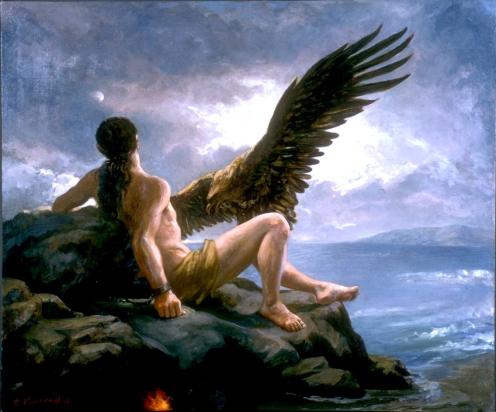
-affirmation of the will to live
…quieter
..freedom
Free
Concatenation
Free will
“Doctrine of Philosophical Necessity”
Must do and cannot leave undone
Dogma of predestination
Gordian Knot for the word (character) has its name from (custom); for ethics has its name from being customary
The followers of Zeno declare figuratively that ethos is the source of life from which individual acts spring
Senca says admirably: velle non discitur
Willing cannot be taught
Mohammed’s paradise
…pilgrimage to Mecca
Repentance
But it is to be noted that, in order to deceive themselves, men prearrange apparent instances of precipitancy which are really secretly considered actions
Pangs of conscience
Elective decision (Wahlentscheidung)
In abstracto Descartes and Spinoza
…case of intense mental suffering
It is not things that disturb men, but opinions about things
There are more things that terrify us than there are that oppress us, and we suffer more often in opinion than in reality [Seneca]
Man in general, not what the individual who feels……
By means of knowledge of the Ideas, sees through the principium individuationus. An actual appearance of the real freedom of the will….
……….as is expressed by the word self-renunciation, in fact the in-itself of its real nature ultimately abolishes itself
theory of inevitable fate
Turkish or Mohammedan
Cicero
Concatenation
unwarrantable tendencies
a priori
a posteriori
acquired character
know
Although, on the whole, he must remain true to himself and run his course drawn by his daemon, he will not describe a straight line, but a wavering and uneven one
What we will and what we can do
Path by hard blows from outside
We have obtained what in the world is called character, the acquired character
The latter is humiliation
…..greatest of mental suffering
…. entrapped elephants
Ovid’s verses admit……
Optimus ille animi vindix laedentia pectus
Vincula qui rupit, dedoluitique semel
See clearly how the will in all its phenomena is subject to necessity, while in itself it can be called free and even omnipotent
He helps the mind best who once for all breaks the tormenting bonds that ensnare and entangle the heart
Quieter
Gravity
No body is without relationship, i.e., without striving or without longing and desire, as Jacob Boehme would say. Electricity transmits its inner self discord to infinity, although the mass of the earth absorbs the effect
Suffering
Satisfaction
Consciousness is enhanced, pain also increases
Human existence
‘All life is suffering’
57
The human individual finds himself in endless space and time as finite….
When and where
His real existence is only in the present, whose unimpeded flight into the past is a constant transition into death, a constant dying. For his past life, apart from its eventual consequences for the present, and also apart from the testimony regarding his will that is impressed in it, is entirely finished and done with, dead and no longer anything
Future is
…. know our walking too be only a constantly prevented falling, so is the life of out body only a constantly prevented dying, an ever deferred death
…. we struggle with it every second, and again at longer intervals through every meal we eat, every sleep we take, every time we warm ourselves, and so on
….a soap -bubble as long and as large as possible, although with the perfect certainty that it will burst
Willing and striving are its whole existence, and can be fully compared to an unquenchable thirst
Pain
Pain and boredom
…. after man had placed all pain and torments in hell, there was nothing left for heaven but boredom
…. living body with the iron command to nourish it
…nothing but the objectified will-to -live itself
….for a thousand accidents and a thousand enemies lie in wait for him
….no security for him
in what gloom of existence, in what great perils, this life is spent as long as it endures
Life itself is a sea full of rocks and whirlpools that man avoids…..
…inevitable and irremediable shipwreck
….namely death
even death, in the flight from which the whole of life consists becomes desirable
..to kill time
card playing
every human life is tossed backwards and forwards between pain and boredom
stoical equanimity
powerful control of the faculty of reason over directly felt suffering is seldom or never found in fact
grief is…p318
vessel of the Danaides, and we hasten to ever fresh desires
Remember always to preserve equanimity when in adversity, and guard against overweening joy when in luck
For so long as we lack what we desire, it seems to us to surpass everything in value, but when it is acquired, it at once appears like something different; and a similar longing always holds us fast, as we thirst and hanker after life
Ad infinitum
Negative only
Satisfaction of a wish…it is a joy to us to observe evils from which we ourselves are free
Beauty of nature
…life of the genius (Sattva-Guna)
…empty longing, life benumbing boredom (Tama-Guna)
…..partly for help and support, partly for occupation and diversion…. but the absurd and perverse in the realm of thought, the dull and tasteless in the sphere of art, and the wicked and fraudulent in the sphere of action, really assert a supremacy that is disturbed only by brief interruptions.
“Hamlet”
“to be or not to be”
Dante
Vanita
optimism
Wicked way
….in the Gospels world and evil are used almost as synonymous expressions
The affirmation of the will is…p326
Affirmation of the will to live
Prosperine
Pomegranate
..they abstain from the world
amor
focus
phallus
lingam
eternal justice
ego is microcosm and macrocosm
“bellum omnium contra omnes” (War of all against all) which Hobbes admirably described In the first chapter of his (Hobbes) ‘De Cive’
“On the Basis of Morality”
Eris
War
62
voluntary
motive
quieter
self-affirmaation
denial
wrong committed wrong cannibalism murder property
just and lawful seizure of a thing, but only a lawful appropriation or acquired possession of it
detention with formation doing offering
violence cunning
fictitious motives on the strength of which he follows my will while believing that he is following his own
lie
broken contract
wrong
right of compulsion
right to lie p340
“the words of men are to be esteemed as nothing; hardly are their deeds to be trusted”
Queen Christina of Sweden
The white lie
Moral
Inner significance of this conduct in itself
Natural right
Conscience
Do no wrong suffer no wrong
Moral concepts
Principium individuationis
Hobbes
The suffering of wrong
State contracty
Republic
Horde
Of savages
(anarchy) (despotism)
Republics tend to anarchy, monarchies to despotism
….hereditary monarchy
theory of legislation suffering of wrong
The object of the State is that men may live well, that is, pleasantly and happily
Universal welfare must be the first law
….a carnivorous animal with a muzzle is as harmless as a grass-eating animal
right
enforced
The pure theory of right or natural right, better moral right , though always by inversion, is the basis of every just positive legislation
wrong and right
…the deviation of the right t o property
the derivation of the moral validity of contracts
right to punish
future
punishment from revenge
Wrong inflicted on me by someone does not in any way entitle me to inflict wrong on him
In fulfillment of a law
No sensible person punishes because a wrong has been done, but in order that a wrong may not be done
Utopia
Temporal justice
Future eternal justice
…. tablet of Jove p351
dread
For example p353
Beggar’s dream
Only a fleeting illusion had separated him from the suffering of his life
Tormenter and tormented are one p354
“Pues el delito mayor
Del hombre es haber nacido”
(“For man’s greatest offence
Is that he has been born”)
Calderon
Christian dogma of original sin
Vedas
Upanishads
“Tat tvam asi”
“This art thou”
transmigration of souls
in a following of life
Nirvana, in other words, to a state or condition in which there are not four things, namely birth old age disease and death
….the ancient wisdom of the human race will not be supplanted by the events in Galilee. On the contrary, Indian wisdom flows back to Europe, and will produce a fundamental change in our knowledge and thought
amphiboly
(“Vengeance is mine; I will repay, saith the Lord.” Rom. xii, 19)
Spaniards
Good and bad
Solemnity
Fitness or suitableness of an object to any definite effort of the will
Agreeable to the will….
Is just as we want it to be
Bad
Which therefore denotes everything that is not agreeable
Retention
Bose mechant(spiteful, malicious, unkind)
Inquisition
Inquisition in three hundred years put three hundred thousand human beings a painful death at the stake, on account of matters of faith. All fanatics and zealots should be reminded of this whenever they want to make themselves heard
…. essentially relative
…. all fulfilled wishes and all attained happiness, are only palliatives, anodynes
The thirst for revenge is closely related to wickedness
Neros Domitians, Robespierre
Pangs of conscience
veil of Maya
The prayer, “Lead me not into temptation” means “Let me not see who I am” p367
Comprehend
Conduct
Willing cannot be taught p368
Opera operata
…of not injuring
Pascal
Pure idleness
Inherited property
Can be regarded as morally wrong, even though it must remain right according to positive
Laws
philanthropy
Tat Tvam Asi (This art thou!)
All love is compassion or sympathy
Principium individuationis
Socrates
Spinoza
Pieta
Weeping
Benevolence is nothing but a desire sprung from compassion
Weeping is sympathy with ourselves
Egoism
Quieter
The will now turns away from life; it shudders at the pleasures in which it recognizes the affirmation of life. Man attains to the state of voluntary renunciation, resignation, true composure and complete willlessness.
…. Jesus says,”It is easier for a camel to go through the eye of a needle, than for a rich man to enter into the Kingdom of God”
asceticism
renouncesa
chastity
Sacrifice
Meister Eckhart
Bible, Rom. Viii, 21-24
Buddha
ignominy
Thus he resorts to fasting and even to self castigation and self torture in order that by constant privation and suffering, he may more and more break down and kill the will that he recognizes and abhors as the source of his own suffering existence and that of the world’s
…. in consequence of the impulse previously given to it. Only when the inspired soul separates itself from the body and nature cease for it, does it complete salvation take place. Colebrooke, “On the Philosophy of the Hindus”
denial of the will-to-live
great sculptor
Spinoza
St. Francis of Assisi
“For all that is excellent and eminent is as difficult as it is rare”
theistic or from an atheistic religion
Spinoza
De Emaendatione Intellectus
Stilling the storms of the passions
Overcomer of the world
Plutarch and Livy
Apostles
Meister Eckhart
Luther ‘Theologica Germanica’

Inner cheerfulness and true heavenly peace
Resignation on the other hand is like the inherited estate; it frees its owner from all care and anxiety forever
Rid of ourselves
…..as craving, fear, envy, and anger drag us here and there in constant pain
Phantasmagoria
Carnival night
Can no longer deceive
“Everything is different to me; I cannot will anything anymore; often I do not know whether I exist or not”
penitent and hard way of life
asceticism
deliberate
…by refusing the agreeable and looking for the disagreeable
…. universal love of mankind
…recognizes as their own all the sufferings of the world.
For this reason all those alluremants have in this respect been personified as the devil
Salvation
Goethe, “Faust”
The sufferings of Gretchen
That remarkable, catholic, transcendental change
Kings, heroes, or adventurers
Trappist
Benvenuto Cellini
Transcendental change
“Phaedo”
Cardinal Beaufort in Shakespeare
Hell con cat nation of circumstance
Has been raised from the particular to the universal
Petrarch
Daphne
Immortal laurel
“the joy of grief”
sentimentality
quieter of the will
Indian myth expresses this by saying that they are “born again”
The happy dream of a beggar
Suicide p398
Shiva
Vishnu
Brahma
Unity of Trimurti
Release me
Voluntary chosen death by starvation
…effect of grace the new birth
freedom of the will
hungry wolf buries
Necessities the kingdom of nature; freedom is the kingdom of grace
Natural man
Adam
Augustine and Luther
Pelagian plain common sense
Works
Faith
Deliverance
Dogmas proper
Subject and object
No will: no representation, no world
Raphael and Correggio
Nothing :
This is also the Prajna- Paramita of the Buddhists, the “beyond all knowledge,” in other words the point where subject and object no longer exist.
Appendix
Criticism of Kantian Philosophy
C’est le privilege du vrai genie, et surtout genie qui ouvre une carriere, de faire impunement de grandes fautes.
Voltaire [Siecle de Louis XIV, ch.32]
[“It is the privilege of true genius, and especially of the genius who opens up a new path, to make great mistakes with impunity” Tr.]
…..(like the serpent in Hercules cradle) p415
…led on this path by Locke
In this way distinction between the phenomenon and the thing in itself obtained an even greater significance
A priori
A posteriori
Preface to ‘Prolegomena’
…grosser nonsense of the ponderous and witless Hegel
seventh book of “The Republic”
Plato and the Indians
The all-pulverizer
The work of Maya,
the shadow-world of Plato
to the one highest reality
To send the dreamers still more soundly to sleep
Conditioned by the subject’s manner of knowing
…like a squirrel in his wheel
…and consequently that we never know the essential nature of the world, namely the thing in itself
Critique of Pure Reason
Metaphysics is the science of that which lies beyond the possibility of all experience
Know prior to
Farther than possible experience
Subjective origin
…as a riddle
“begging of the question”
brilliant dryness
Higher appreciation of philosophical madness in the professor’s chair, and of poetical madness in the theatre
Symmetry
The table of judgements
Berkeley
Transcendental Aesthetic
“not gained on the path of experience, and hence not come into us from without
reason (Vernunft)
given
absolute object
perceived object
Aesthetic
Analytic
Physiognomy
Locke’s Empiricism
Continuum
Concepts
Schematism
Psychological
Multifarious
Ecypte of all perceptions
Puppet – show
The abstract concept
“All oaks bear gall-nuts’ -a metalogical truth
form
content
categorical judgement
quality
quantity
distinctive judgements
Matter
Permanence
Sequence of time
Modality
Contingency
architectonic symmetry
petito principii
modality
apodictic
hypothetical
categorical
problematical
(a law of nature)
physical, logical, mathematical, and practical
from the general to the particular
disregarding all causal connection
right-angled, obtuse-angled, or equiangular
must have three angles amounting to two right angles.
Thus here we arrive at the possible only by passing from the perceptible to the abstract. P469
Union of time and space
Flux of time
Abstract
Material
Leibniz
Give
Whether with or without understanding
Eleatics
Forms
Not in the lexicon
Partes orationisWhat are the forms of thinking?
Judging
Whenever we use a verb we judge
Judgement consists in recognizing the relation between a subject and a predicate
Caius ages
Concurritur
Speech
Its
Form
Thought-forms
Their function is to express these forms of thought
They are the instruments the clothing of the forms of thought which must be made to fit their structure accurately, so that that structure can be recognized in it
Logical table of judgements
Quality copula
Quantity
-all Socrateses
Modality
excluded middle
Relation
Hypothetical
Disjunctive
Parts of speech
Judgement
Just enumerated
Language could be imagined in which adjective and verb were always amalgamated
Subject
Predicate
exception of esse (to be)
the thought forms
..distinguishable.
Thus abstract knowledge is related to intuitive as the shadow is to real objects
multiplicity
(Vernunft)
contradicts
the immediate perceptible
sufficient reason
abstract concepts
meaning only through
totality
series
nearest
causal
condition is again
operatioon begins
never be a real succesive series
removed
or next conditioon completeness is
series
sufficient
suficient
ground
grounds
effects
completeness of the condition
first becomes sufficient
series
antinomies
critique
descending
definiteness
(Vernunft)
unconditioned
knowledge
a parte ante
“why”
a priori
philosophies p484
proof incognito
Kant
longer appear in its true form p484
disguises
intuition
vagabond, half-beginning halfdemanding
philosophemes
concipittur
quod per se est
Are ye not like women who ever
Return merely to their first word
Though one has talked reason for hours?
Schiller, ‘Wallenstein’ Tod, ii, 3 [tr.]

Buddhism
Buddhism
(vernunft)
conditioned that we…. P484
apply and appropriately
knowledge
survey
animal
universal
between animal
grounds of knowledge
and thus our faculty
a priori
a posteriori
Sufficient Reason
unconditioned
expresssioon
grounds
of knowledge
contrary
it wishes
justificatioon
Kant
reason (Vernnunft)
(Vernunft)
architectectonic symmetry
syllogism
unconditioned
unconditionedness
experience
influence of Christianity
creation
Hindustan
Brahma
“God”
Greeks
Egyptians
England
Oxford
Jews
Numenius
Eusebius
Clement
Moses
Greek philosophers
Babylonians
Plutarch
Lactatinius
Gabete der Juden
Jews
sophistication’s
illusions
Ideas of Reason
Ideas
fleeting things
visible
Middle ages
Englishmen
Frenchmen
Platonic significance
rational psychology
Kant’s love
Accordingly
(Vernunft)
Kant’s
Kant corporeal
willing
dogmatists prove
Phaedrus
substance
representations
ruling in that class
substance
matter
substance
under itself
genera
(Vernunft)
substance
reason
concept
subspecies
impenetrability
immaterial substance
a Procrustean
concerning the universe
object-in-itself
hypothetical
sufficient
sophisms
cosmological Ideas
Quantity quality
quality
quality
hypothetical form
principle
ground
love of symmetry
freedom here
antithesis
the weakness of the subtlety reasoning individual p.493
the deeply imprinted prejudices
the proof of the thesis
a priori
sustain the thesis
nervus argumentationis
isolated, bare
speculative
Kant
Kantian
absurd
thought
thought
possibility
reettrogresion
spatial limits of the world
a given whole
Totality
a priori
no empty space]
world in space the ancient philosophers
Hindus
Vedas
Maya
365
appeared
Del Infinito Universo
compound
existence
possibility of splitting
divisibility
a parte ante
extent
“Space should really not be called a compositum, but a totum…….
Kant, ‘Metaphysical Rudiments of Natural Science’
Kant spoils
Atoms
Dynamics
sufficient
simultaeously
state B
A Itself
A no longer
already shown p498
of reason (Vernunft)
effrontery
series of conditions
petito principii
the first
…. exceedingly paradoxical doctrine
sixth trick
series
thesis
reason (Vernunft)
the world
universe
only through regresses, not before it
inconsistent
antithesis
entirely, endless
Aristotle
A mediator
before
objectively
Kant
before the regressus
Through
determination
Kant
transcendental identity
knowledge
Kant himself
Kant’s mind
Idea of Freedom
Kant’s concept of nature
‘Prolegomena’
Kant
Kant
Kant’s
Kant has
Kant here
vece versa
merely a posteriori
toto genere
freedom
of freedom
phenomena
philosophy
Precisely
– the stone
(Vernunft)
‘Critique of Practical Reason”

cultured
Idea of an unconditioned base
will
a definitte
“On Freedom of the Will”
Kant, “Critique of Pure Reason”
Kant
Pure Reason
Vernunft
phenomena
knowledge
phenomena
of inanimate
also exhausts the innermost essence…..
conception of it
phenomena
presupposes it
is toto genere
Therefore
spite of
objectification
explained
in the world
point in question
with the third
reason
Scholasticism
Anselm himself
Kant was…
Descartes
in itself
God
Leibniz
de Dieu
perfectio it
procedure
disjunctive
certainly speak
matter that exists
Cleanthes
Dialectic
Aesthetic
Kant’s time
philosophy
principal
heartily glad
Hume’s, ‘Natural History of Religion’
Kant
worthy of esteem
intellectual intuitions
performance of the task
Aristotle, “Organon”
cosmological proof
Schopenhauer, “On The Will in Nature”

feeling
inclination
Primus in orbe Deos fecit timor
Kant
Christian Government’s p512
God is a matter…
…..and physico-theological proofs
….and theism
a person who really could…..
osteologie comparee
connaissance
5 September 1853
These gentlemen do…
confreres
theism
existence and inner nature
ultimate aims of the natural dialectic
Kant
Cabanis
“Critique of Pure Reason”
King Kant
Kantian philosophy
love for architectonic symmetry
(Vernunft)
However all
German savants
….the most rational of all men
rational life
rightly respects
reasonableness
rational deed
how to procure for himself
arrogance
humiliation
is rational
to riches, honors
accordance with
not allow himself to be led astray
misery
rational way
reason
practical reason
irrational
Machiavelli
…of Coriolanus
Romans who p516
Princess Isabella
Nevertheless
Kant
Aristotle,’ Ethica Magna’
Reason deceives
us
Reason deceives us
My natural feelings spoke in favour of the common interest but my reason referred everything to myself…we try in vain to base virtue on reason alone, but what solid foundations can we give it
dictates of conscience
….part belong magnanimity, prudence, sagacity, wisdom, docility, memory and the like…..
faculty of reason
reason to be the faculty of concepts
(Vernunft)
he does is done with
self-conscious willing
mirrors himself
prudentia
deteriora sequor
practical
necessary in the connection
reason shows…
disposition and…
momentary impression
happens
background of conscioousness
opinion
admirari Christian Philosophers
Kant’s Exposition
(Vernunft)
‘Critique of Pure Reason’
established thing
Knowledge of principles
a priori
practical
while overlooking
imperative that lies
‘Critique of Pure Reason‘
Thus Kant starts
Perfectly right
ought
unconditioned ought
contrasdictio in adjecto
…..this world
the Stoics and the Epicureans
philosophers of modern times
Republic
Christianity
Libertate Christiana
In his highest good
cannot live
We can convince
“Critique of Practical Reason”
any way practiced for the sake…..
ought the fundamental
same time
principle gives
myself alone
object and aim
egoism of others
This however is the only ground on account
universal law
influences this alone
Kant himself
Morals
fieree non vis, alteri
passive
suffering or wrong
doer of the action
Kant’s satisfaction
alteri ne feceris
content
epigram by Schiller
benevolence
maxims
genuine spirit
But, what
constitute its meritorious element
affection
regard
law, cold
art
dealt with by Plato and Seneca
Christian Doctrine
certain extant innate
anyone the capacity
of art
ethical system
race
by means of abstract
knowledge(effect of grace)
Kant
necessary combination
ethical system
renunciation
fundamentally irreconcilable
Kantian view regarding positive exposition
Kant’s love of architectonic
symmetry
Jurisprudence
weakness
nagative method
Legal obligation
concept of law
second place
negative
consistent with the coexistence
individuals in juxtapositioon
universal law
coexistence
property
the natural
law
acquisition through
reason (Vernunft)
a pattern of attained perfection
art remained p529
Goethe
beautiful
artistic beauty from
the spurious
genuiness
the object
Home
a priori
perfection of knowledge
knowledge of perception
beautiful in order
camera obscura
“Critique of Aesthetic Judgement”
suitableness or…
power of judgement
‘Critique of Pure Reason’
representation
prolixity and repetition
organic bodies
further explanation
if we leave this province
chemistry, electricity, magnetism, crystallization
“Teleological Judgement”
“On the Will in Nature”
Schopenhauer, “Parega and Paralipomena”

Accordingly, it cannot be expected that all I have said on a subject will appear all together in one place. p534
end of part 1
 tomreading
Leave a comment