Knowledge: ‘Its Scope and Limits’ Bertrand Russell
– In describing the world, “subjectivity” is a vice.
– Kant spoke of himself as having affected a “Copernican Revolution”, but he would have been more accurate if he had spoken of a “Ptolemaic counter-revolution”, since he put man back at the center from which Copernicus had dethroned him.
– Semiplatinsk Kazastan
– Protagoras “Man is the measure of all things”
Part I
The World of Science
Chpt. 1:
Individual and Social Knowledge
– Scientific Knowledge aims at being wholly impersonal, and tries to state what has been discovered by the collective intellect of mankind
– ‘I can never convey the horror on seeing Buchenwald’, or “no words can express my joy at seeing the sea again after years in a prison camp”.
– the chief purpose of language is communication
– verbal
– ostensive
– Definiens
– Even your inmost thoughts are suitable for the encyclopedia, but you can no longer be a poet, and if you try to be a lover you will find your depersonalized language not very successful in generating the desired emotions. You have sacrificed expression to communication and what you can communicate turns out to be abstract and dry.
– It is an important fact that the nearer we come to the complete abstraction of logic, the less is the unavoidable difference between different people in the meaning attached to a word.
– The reason is that they deserve nothing from the senses, and that the senses are a source of privacy.
– Human beings differ from the theologian’s “God” in the fact that their space and time have a “here” and “now”
– All our knowledge of events radiates from a space-time center, which is the little region that we are accepting at the moment
– Science professes to eliminate “here” and “now”
– All determinations of latitude and longitude are infected with the subjectivity of “here”
– The common world in which we believe ourselves to live is a construction partly pre- scientific.
– Throughout this journey there is one constant purpose: to eliminate subjectivity of sensation, and substitute it a kind of knowledge that can be the same for all percipients.
Chapter II
The Universe of Astronomy
Pythagoras, toward the end of the fifth century B.C. discovered that the earth is spherical.
Heraclitus of Pontus, 4th cent. Maintained that the earth rotates once a day and that Venus and Mercury describe orbits around the sun
Aristarchus of Samos 3rd cent B.C. advocated the complete Copernican System, and worked out a theoretically correct method of estimating the distances of the sun and moon (wildly wrong)
But Poseidonus made an estimate that was about half the correct figure
Plotinus finds faults with the Gnostics for believing that, in the created universe, there is nothing more worthy of an admiration than the human soul. The beauty of the heavens, to him, is not only visual; but also moral and intellectual.
Manicheans
Christianity cosmos – angels and archangels more or less took the place of the polytheist’s celestial divinities
Galileo
Copernicus
gunpowder, mariners compass, discovery ofAmerica, the telescope, science of dynamics, law of gravitation, completed the triumph of the scientific outlook.
Newton – the sun, not the earth, in the center of the solar system
ellipses, and that no action from outside is necessary to preserve their motion
Newton, Descartes – attempted theory of origin of universe
Kant and Laplace invented the nebular hypothesis
– by some mechanism the planets came out of the sun
– the nearest of the fixed stars –Alpha Centauri is 4.2 light years (25 x 10[to the twelfth power]) (light travels 186,000 miles a second)
– 1835 – First determination of a distance of a star
– the sun takes about 225 million years to complete its orbit round the Milky Way
Hubble “The Realm of the Nebulae”

– Eddington “New Pathways to Science”
– the earth is estimated at about 3,000 million years
– H. Spencer Jones “Worlds Without End”
– universe according to Eddington 90,000 million B.C.
-raises old puzzles as to what was going on before that date
Chapt.III
World of Physics
– physics
– Galileo
– The Scholastics
– Aristotle
– Everything living according to Aristotle had some kind of soul
– Four elements – earth, water, air and fire
– Also, in the highest heaven, a fifth element, a kind of sublimated fire
– Galileo and Descartes
– Galileo: “Law of Inertia” and “Parallelogram Law”
– Newton’s first law: “Every body preserves in its state of rest, or of uniform motion in a straight line, unless it is compelled to change that state by forces impressed thereon”.
– ‘force’
– ‘acceleration’
– Newton’s law of gravitation
– Leibniz
– The fundamental importance of acceleration is perhaps the most enlightening of all Galileo’s discoveries
– Equations are linear
– Question of projectiles in which Galileo was professionally interested
– Planck’s introduction of the constant (h) in the year 1900.
– Newtonbelieved that in addition to matter, there is absolute space and time
– Einstein, showed how to avoidNewton’s conclusions and make spatio – temporal position purely relative
– “interval”
– four dimensional “manifold of events”
– There will be three co-ordinates to fix the position of the event in space and one to fix its position in time.
– ‘Cosmical constant’
– So it is held – the straightest possible line in the universe will ultimately return to itself
– E. A. Milne

– 19th century it was found that different elements could be placed in a series starting with hydrogen and ending with uranium. The place of an element in this series is called it’s “atomic number’
– 1-92 (Two missing …90 elements so far)*
– In general, but not always the atomic number increases with the atomic weight
– The ‘Rutherford– Bohr atom’
– Nucleus of the hydrogen atom is called a “proton”
– A Proton has about 1,850 times the mass of an electron
– Positrons, neutrons
– Planck – by studying radiation; proved that in a light or heat wave frequency the energy must be h. v or 2hv or 3hv or some other integral multiple of h. v when
– ‘h’ is Planck’s constant….of which the value in C.G.S. units is about
– 6.55 x 10(-27) and the dimensions are those of action, i.e. energy x time . Before Planck, it had been supposed that the energy of a wave could vary continuously, but he showed conclusively that this was not the case. The frequency of waves is the number that passes a given point in a second. In the case of light the frequency determines the color. Violet light has the highest frequency, red light has the lowest. There are other waves of just the same kind as light waves but not having the frequency that cause visual sensations of color. Higher frequencies than those of violet light are in order: ultra-violet, x-rays and y-rays; lower frequencies:
infra –red and those used in wireless telegraphy
– Quantum theory: 1925 Heisenberg and Schrodinger
– Huygens –particle (photons)
– De Broglie –waves
– Shown that everything in physics can be explained by either the
”particle hypothesis’ or the ‘wave hypothesis’
– Heisenberg’s ‘uncertainty principle’
– Quantum equations: they are not ‘linear’
– Joule
– The sun is held to be losing mass at a rate of four million tons a second
– Four hydrogen atoms from one atom of helium occurs in the interior of stars (hydrogen bomb)
– Energy
– Atoms
– Frequency
– Eddington’s “New Pathways to Science”
gives the following list of primitive constants of physics:
– E: the charge of an electron
– M: the mass of a proton
– me: the mass of an electron
– h: Plank’s constant
– c: the velocity of light
– G: the constant of gravitation
– the cosmical constant
– in a sense it may be said that the discovery and measurements of these constants is what is most solid in modern physics
Chpt. IV
Biological Evolution
– more parochial matters
– the earth’s parasites
– mankind have found it more difficult to be scientific about the heavenly bodies; in the time ofNewton, such biology as existed was still deeply infected with superstition
– 4004 b.c. or thereabouts
– Adam and Eve
– Scripture
– Plato or Aristotle
– Man alone was rational; that is to say he could do sums and understand syllogisms
– Darwin “The Origin of Species”

– Evolution
– At some period there must have been vast clouds which gradually condensed into clouds (Nebular Hypothesis)
– What distinguishes living from dead matter?
– Primarily its chemical constitution and cell structure
– Assimilation and reproduction
– The evidence, though not conclusive, tends to show that everything distinctive of living matter can be reduced to chemistry, and therefore ultimately to physics. The fundamental laws governing living matter are, in all likelihood, the very same that govern the behavior of the hydrogen atom, namely the laws of quantum mechanics
– The “Mendelian” theory
– Heredity
– Genes
– Sports
– Mutants
– It is the sports that give the best opportunity for evolution i.e. for the development of new kinds of animals and plants by descent from old kinds
– The general idea of evolution is very old – Anaximander (6th cent. B.C.)
– held that man descended from fishes.
– But Aristotle and the Church banished such theories until the 18th century
– The power of altering genes
– Experimenting by x-ray gives hope of progress in this direction
– “Organism”
– Julian Huxley’s “Evolution- A Modern Synthesis’
– The ‘Mechanistic’ view p. 49
– Life, therefore, is almost certainly a very rare phenomenon
– Spencer Jones “ Worlds Without End”
– Beginning of earth 3,000 million yrs.
– ‘Of life’ 1,700 million yrs
– ‘Of mammals’ 60 million yrs.
– ‘Of anthropoid apes’ 8 million yrs.
– From unicellular organisms
– Considerable reason to believe that everything in the behavior of living matter is theoretically explicable in terms of physics and chemistry p.50
Chpt. V
Sensation and Volition
– Sensation
– Volition
– mind and matter
how does matter effect mind in sensation, and how does mind affect matter in volition?
– Adrian’s books “The Basis of Sensation’
“The Action of the Sense Organs”
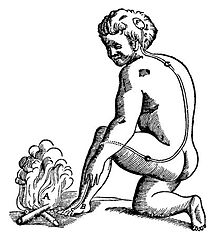
nerve fibers
220 miles an hour (100 meters a second)
Afferent
Efferent
– The messages that reach the brain, as Adrian put it like a stream of bullets from a machine gun, not like a continuous stream of water p. 53
– Conditional reflexes suffice to explain a great part of human behavior
– Maxwell’s demon
Chpt. VI
The Science of Mind
– the distinction between mind and matter
Plato
Christianity
– soul and body were different substances
Divine justice
Divine mercy
Christ’s body was required for transubstantiation
– only a few metaphysicians who dare to question it
Cartesians
– Leibniz’s monadalitiy
– Denied the existence of matter
– Materialists
– Hume denied substance altogether. Modern discussions of the distinction between the mental and physical
– What have the psychologists to teach?
– “This suggests a possible definition of psychology, as the science of those discoveries which, by their very nature can only be observed by one person.’
– Psychology is the science which deals with private data and with the private aspects of data which common sense regards as public.
– ‘Robinson Crusoe‘
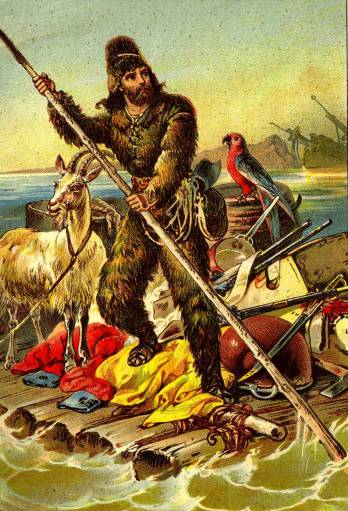
– For what a man says is public, but what he thinks is private
– To attempt as Freud did – to make a science of dreams is a mistake; we cannot know what a man dreams; but only what he says he dreams.
– Public datum
– Chinese lady
– What she had dreamed was just as definitely such and such as much as it was so and so
– Then physics must be supplemented by laws connecting stimulus and sensation
– Now such laws belong to psychology
– Psychology accordingly, is an essential ingredient in every part of empirical science
– The association of ideas
– Conditioned reflex, laws of habit
– Psychoanalysis
– Claustrophobia
– Past experience
– But many people will have had the same experience without the same result
– The experience in question, accordingly, though it may well be part of the cause of the phobia, cannot be its whole cause. We cannot, this being the case, find in psychoanalysis any example of purely psychical causal laws.
– Precise mental causal laws
– If you tell a man he is both a knave and a fool…
– Swindler and bloodsucker
– Advertising and political propaganda supply a mass of materials for the psychology of belief
– I conclude, that while some psychological laws involve psychology, others do not
– Riding a bicycle
– Such experiences throw much light on the psychology of volition
– “There’s a cat’
– By studying such occurrences we become aware that a very large part of what we think we perceive consists of habits caused by past experience
– A surprise, which would be almost unendurable
Pavlov
Dinner
Shock
– The dog’s progress in geometry was amazingly rapid
– Ellipses less and less eccentric
– Reduced to 8:9
– when the poor beast had a nervous breakdown, the utility of this experiment in connection with schoolboys and criminals is obvious
– The connection of pleasure and pain and desire with habits
– A large proportion of our beliefs are based on habit conceit, self-interest or frequent iteration, the advertiser relies mainly on the last of these but if he is clever he combines it skillfully with the other three.
– It is hoped that by studying the psychology of belief, those who control propaganda will in time be able to make anybody believe anything. Then the totalitarian State will become invincible
First what do we know?
Second how do we know it?
– But in relation to our second question mainly, how do we come to our knowledge, psychology is the most important of these sciences
– Inference
– It turns out that all the data upon which our experiences should be based are psychological in character; that is to say, they are experiences of single individuals.
Part II
Language
Chpt I
The Uses of Language
– Language, like other things of mysterious importance, such as breath, blood, sex, and lightening, has been viewed superstitiously, ever since men were capable of recording thoughts
– Savage fear
– Pagan sorceress
– thou shalt not take the name of the Lord in vain
– In the beginning was the Word
– Philosophers, being bookish and theoretical folk, have been interested language chiefly as a means of making statements and conveying information, but this is only one of its purposes and perhaps not the most primitive.
– What is the purpose of language to a sergeant major?
– To state facts or t convey information?
– There is a continuous gradation from animal behavior that of the most precise man of science, and from pre-linguistic noise to the polished diction of the lexographer
– Much of the importance of language is connected with delayed response
– Language has two primary purposes, expression and communication
– Communication does not consist only of giving information; commands and questions must be included
– There’s a puddle there; the command ‘don’t step in it’, is implicit.
– 3.14159 – the ratio of the circumference of a circle to the diameter
– Symbols have (1) a certain degree of permanence in time (2) considerable degree of discreteness in space
– The name, accordingly, makes it much easier then it would otherwise be to think of Mr. Jones as a single quasi – permanent entity;
– Which, though untrue, is convenient in daily life.
– Language appears from the above discussion of Mr. Jones though a useful and even indispensable tool is a dangerous one, since it begins by suggesting a definiteness, discreteness and quasi-permanence that they do not possess.
– Art for arts sake
– From the inquiry upon which we are about to embark aesthetic motives must however reluctantly, be relentlessly banished.
Chpt. II
Ostensive Definitions
– Ostensive definition may be defined as any process by which a person is taught to understand a word otherwise than by the use of other words.
– Pain = Bread in French
– There are two stages in the acquisition of a foreign language. The first that in which you only understand by translating, the second, that in which you can ‘think’ in other foreign language
– Knowing a language has two aspects, passive and active: a passive when you understand what you hear, active when you can speak yourself.
– Bottle of milk
– Mill’s canons
– Association or the conditioned reflex
– When an experience causes violent emotion, repetition may be unnecessary,
– “hot’
– habits
– once bit, twice shy
– burnt child dreads fire
– process of recognition
– Recognition
– First stage – repetition
– Learnt reaction
– A given stimulus
– Ostensive definition:
– There are no definite limits to what can be learned by cross, crescent swastika can be learnt in this way but not chiliagon
– ‘meaning’
– indicative
– we have not inquired as how learners acquire the correct use of such words as ‘than’ or ‘of’
Chpt III
Proper names
– A proper name applies essentially to only one object
– It will be observed that a proper name is meaningless unless there is an object of which is the, but a class name is not subject to ant such limitation
– What is the precise definition of proper names? Second: is it possible to express all our empirical knowledge in a language containing no proper names? This question. …takes us to the heart of some of the most ancient and stubborn of philosophical disputes
A) Metaphysical
-substance
-persons
-things
-proper names, or as ordinarily understood, are ghosts of substances
B) Syntactical-
-Syncategorismatical
C) Logical
– pure logic has no occasion for names
– variables
– apply logic. Every application of logic or mathematics consists in the substitution of constants for variables
D) Physical
-Carnap (Logical Syntax)
-co-ordinates… replace such words as “Napoleon or “Vienna”
E) Epistemological
1) Not all words can have verbal definitions 2) It is largely arbitrary which words have only ostensive definitions
-it as interpreted the proper names of ordinary language as disguised predicates
– Hamlet
– Peano reduced the vocabulary of mathematics to three words
– ‘pfui’
– We are accustomed to think that the relation ‘precedes’ is assymetrical and transitive
chpt IV
Egocentric Particulars
– four fundamental words of this sort are ‘I’, ‘this’, ‘here’, and ‘now’
– the word ‘this’ is, in a sense a proper name, but it differs from true proper names in the fact that its meaning is constantly changing.
– The word is more satisfactory in speech then in print
– ‘who are you’? P.101
– He was a furious red-faced tramp
– A benign old gentleman in evening dress
– The result of this state of affairs is that our knowledge ‘seems’ to extend much further beyond our experience than it actually does
– But although it does not matter in practice, it matters greatly in the theory of knowledge. For in fact everybody except myself is to me in the position of Mrs. B.
– All are known to me by description not by acquaintance
– this is the sharp point in language, of the essential privacy of each individual’s experience. Like Leibniz’s monads, we each mirror the world from our own point of view.
‘here – now’- is what is fundamental in our present problem
– But from this pin-point, this tiny camera obscure, if (as we all in fact believe) the astronomer really knows what he is thought to know, we can throw the light of knowledge over vast stretches of time and space, and discover the unreality if the walls if our supposed subjective prison. In this process of escape, the interpretation of egocentric particulars is a very essential step.
– ‘there is one public space, namely the space of physics…..
– There is one public time, p. 106
– Where are you
– Before and after
– It is to be observed that ‘here’ and ‘now’ depend upon perception
– This is one reason why physics in its endeavor to eliminate privacy of sense, has grown progressively more abstract.
– And that the intellect liberates while the senses keep us in a personal prism
– Element of truth
– Except where logic and pure mathematics are concerned, for in all empirical knowledge liberation from sense can be only partial. It can however be carried to the point where two men’s interpretations of a given sentence are nearly certain to be both true and both false.
– The securing of this result is one of the aims (more or less unconscious) governing those developments of scientific concepts.
Chpt. V
Suspended Reactions: Knowledge and Beliefs
– Xenophon’s 10,000 claimed “Sea!, Sea!”
– mirage
– suspended reaction
– Knowledge
– Preparations for such delayed reactions, beliefs
– Knowledge when they prompt ‘successful’ reactions
– Distinguishes them from preparations that would be called ‘errors’
– Language immensely increases the number and complexity of possible beliefs and ideas but is hot; I am convinced, necessary for the simplest ideas and beliefs.
– What is meant by the word ‘idea’: It should define an idea as a state of an organism appropriate (in some sense)
– To something not sensibly present. All desire involves ideas in this sense, and desire is certainly pre- linguistic. Belief also in an important sense, exists in the cat watching the mouse hole, a belief which is true if there is a mouse down the hole and ‘false’ if not!
– Command, desire, and narrative all involve the use of words describing something not sensibly present.
– What would commonly be called a man’s “mental” life is entirely made up of ideas and attitudes towards them.
– They are like explosives waiting to be exploded
– The similarity of language to explosives lies in the fact that a very small additional stimulus can product a tremendous effect. Consider the effects, which flowed from Hitler’s pronouncing the word ‘war’!
“thinking of”
William the Conqueror 1066.
Words and Ideas are in fact, interchangeable
Physiological process
– Knowledge
empirical verification
– immediate memory
– sensation
“I am dying, Egypt dying”
-Shakespeare’s Anthony
– one difference between poetry and bald statement is that poetry seeks to take the reader behind the words to what they signify.
– verification
– ‘Knowledge’ is a vague concept for two reasons.
– First because the meaning of a word is always more or less vague except in logic and pure mathematics, and second because all that we count as knowledge is in a greater or less degree ‘uncertain’
– belief
– I think the primitive reaction is belief, and that understanding without belief involves inhibitions of the impulse to belief.
– Booth
– Macbeth
– Something distracted from
– Words are public permanent (when written)
– Verbal knowledge must have some relation to sensible experience
Chpt. VI
– “here is” , “I want” , “is this” we need such words
– Respectively present, past future, interrogative, optative, and negative
– indicative
– But as a rule statements about the future are inferences
– damp haystack fermenting
– “There is” we assert this idea whereas when we preface them by”is there” we actually consider them
– outward reference
– “Fire –here – now’
– inductive
– Assertive, interrogative, or negative
– expressed, asserted
– belief, doubt, desire, disbelief
– “not”
– for the understanding of language it is essential to realize that, while some necessary words mean objects, others do not.
– “indicative” words
– if Wilson had been more tactful, America would have joined the League of Nations
Chpt. VII
– external reference
– “seeing a table”
– part of my mental life
– “of” “in”
– process of ostensive definition
– “of”
– Images occur in two ways; as imagination and as recollection
– whatever counts as a memory consists of images or words which are felt as referring to some earlier experience
– “prototype”
– form a vague image
– this has a “prototype”. In the absence of such a belief (which, when it exists, is usually a somewhat vague feeling) although time may be in fact a “prototype”. There is no external reference. This is the case of pure imagination
– reference external
Chpt. VIII
– Truth and falsehood, in so far as they are public, are attributes of sentences, either in the indicative or in the subjunctive or conditional
– “indicative’
– graphs, maps
– device for reducing a sentence to one essential word, as is done in telephone books and railway timetables
– confine ourselves to fully expressed sentences
– “signification”
– This is the property which is preserved in an accurate translation. “Two and two make four. has the same signification as deux at deaux font quatre.”
– whatever distinguishes truth from falsehood is to be sought rather in the signification of sentences than in sentences themselves
– “Necessity is the mother of invention”
– “procrastination is the thief of time”
– a very important part of logical syntax consists of rules for avoiding nonsense in constricting sentences.
– signifies
– actor says “this is I, Hamlet the Dane”
– No one believes him, but no one accuses him of lying. This shows that the subjective side in the analysis of signification is essential.
– “Belief” as I wish to use the word, denotes a “state of mind”, or body or both, in which an animal acts in reference to something not sensibly present.
– When I go to the station in expectation of finding a train, my action expresses a belief. So does the action of a dog excited by the smell of a fox,
– Or a bird in a room, which flies against the window panes in the hope of getting out. Among human beings, the only action by which a belief is expressed is, very often, the pronouncing of appropriate words.
– Words like balances and thermometer are instruments of precision, though often not very good ones.
– schematically
– and “if” the trail was made by a fox, your belief was true. (p. 130)
– That which has external reference.
– overt behavior, including speech, it is private when it consists of “images” or “thoughts.”
– causal one
– representational occurrences
– remembered
– onomatopoeic
– therefore verbal beliefs from what they assert.
– The dog scratching at the rabbit’s hole
– structural resemblance
– Wittgenstein’s “Tractatus”
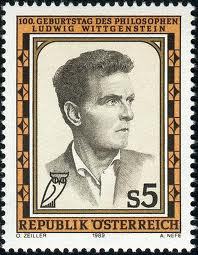
– memory
– derivative
– a puma
– delirium tremors
– This is social error, not intellectual error, what I am believing is true, but my words are ill chosen.
– Thus the statement “this is blue” is true if it is caused by what
”blue means”. This in fact is “tautology”
– Isaac when he mistook Jacob for Esau.
– A sentence of the form “this is A” is called “true’ when it is caused by what
”A” means.
– “or” and “all”
– “Falsehood” remains to be dealt with later.
– Meaning and Truth , and that is that both depend on the interpretation of “cause”
– “cause” is a rough and ready notion belonging to a certain age of science, not a fundamental category…. (p. 135)
– If human behavior could be calculated by the physicists, we should have no need of such concepts as meaning, “belief” and “truth”.
– The concept of “cause” is indispensable.
Chpt. IX
Logical Words and Falsehoods
– “indubitable”
– “general words”
– “molecular”
– Perhaps
– What we mean by “ false”
– Imagine a person who knows everything that can be stated without using the word “not” or some equivalent (p. 137)
– Perception
– What then is meant in the way of objective fact, by a true negative judgment?
– matter of degree
– “differing” is a positive relation that might be called “dissimilarity”
– True or False
– “not”
– Prima facie possible
– Liebniz
– a constituent “not – A”
– incompatible
– therefore we cannot eliminate “not’ from the objective world if we suppose red and blue to be logically incompatible
– the incompatibility of the two kinds of stimuli
– we may towards its two attitudes belief and disbelief
– the “truth” of a disbelief is not quite the same the as that of a belief.
– disbelief
– the truth of a disbelief
– “not – p” must be defined by what it expresses.
– perception of shape
– “or”
– that was a stoat or a weasel
– in fact, my statement expresses partial knowledge combined with hesitation; the word “or” expresses hesitation, not something objective.
– “stosel”
– in navy-blue, aquamarine, peacock-blue and so –on.
– meaning of “or” is subjective.
– “That is a stoles”, this addition is absent, though it might still be true if I made it. In fact, “or” expresses conscious partial ignorance, although in logic it is capable of other uses.
– There is in this respect, a difference between the standpoint of logic and that of psychology. In logic we are only interested in what makes a sentence true or false; in psychology we are also interested in the state of mind of the person uttering the sentence with belief.
– Fallacious
– There are two sentences “today is Tuesday’ and ‘today is Wednesday’
– A state of mind
– “verifier” or “falsifier” of the sentence
– Hesitation
– A sentence containing no logical words can only express belief
“atomic sentences”
Chpt, X
General Knowledge
– In “general Knowledge” I mean knowledge of the truth or falsehood sentences containing the word “all” or ‘some’
– Or logical equivalents of these words
– The negation of” all men are mortal” as some men are mortal’ Thus any person who disbelieves a some-sentence” must believe in an all sentence, and vice –versa.
– “all negroes are of African descent”
– a complete enumeration is necessary
– But as a rule a class cannot be completely enumerated
– It also makes it evident that there are difficulties in disproving “some-sentences and correlatively in proving “all-sentences”
– “all men are mortal”
– fully understand
– all primes other than 2 are odd
– Only intensions need be understood, the cases in which extensions are known are exceptional.
– 3 chief methods of arriving at general propositions. Sometimes they are tautologies such as “all widows are female”; sometimes they are the result from induction; sometimes they are proved by complete enumeration. E.g. “everybody in this room is male.”
– “Through the Looking Glass”

– “I see nobody”, I mean “I see, but I do not see somebody”, which is prima facie evidence that there is not a somebody.
– Genghis Khan
– Gestapo (p.148)
– we must therefore somehow find a place in our theory of knowledge for universal negatives based on perception.
– facts
– independent of perception and generally of the existence of life
– “first order omniscience”
– The relation of “and” and “or” is peculiar.
– Thus “and” and “or” are interdependent; either can be defined as terms of the other plus “not”. In fact “and” “or” and “not” can all be defined in terms of “not-p” ‘or’ “not-q”, and also in terms of “not-p” “and” not-q”.
– It is obvious that all sentences are analogous to conjunctions, and some sentences to disjunction.
– what precisely does he not know in not knowing “P”?
– may be men on a planet of some other star, but how about “all men in this room”?
– What do I not know in not knowing “Q”?
– Do you hear a pip?
– between the time T1 and T2
– The enumerative judgment “in the whole period I saw just six planes
– enumerative empirical judgments depend upon universal negative judgments logically inferable from negative perceptive judgments concerned with single qualities
– What is involved in the possibility of complete enumeration?
– Tautologies and inductions
– Tautologies are primarily relations between properties, not between the things that have properties. Pentagonality is a property of which polytonality is a constituent
– complexes of which “pippiness” is a constituent
– Caligula
– Extirpate
– “Now I know all men are mortal”
– “Copper conducts electricity”
– Each element has a characteristic behavior as regards the conduction of electricity
– If we now define copper as “what has a certain atomic structure; there is a relation between the intension “copper” and the intension “conductivity”
– “Dogs bark”
– relations of “class inclusion”
– 1+3= 2², 1+3+5 =3², 1+3+5+7=4²
– And be led to conjecture that the sum of the first odd numbers is always squared. When you have found this hypothesis, it is easy to prove it deductively. How far ordinary scientific deductions such as “copper conducts electricity” can be reduced to tautologies, is a very difficult question and a very ambiguous one.
– “The statement “some A is B” is the negation of “some A is not-B” all deductive inference
– No one knows who Napoleon III’s father was, but we all believe someone was.
– Everyone has a father; therefore Mr. Jones has a father.
– There is a school of which Brouer is the founder, which holds that a some-sentence may be neither true nor false. The stock example is “there are three consecutive 7’s in the decimal of Pi. So far as it has been worked out, no three consecutive 7’s have occurred. If they occur at a later point, this may in time be discovered. but if they never occur, this can never be discovered. I have discussed this question in the “Inquiry into Meaning and Truth” where I came to the conclusion that such sentences are always either true or false if they are syntactically significant*. As I see no reason to change this view, I shall refer the reader to that book for a statement of my grounds, and I shall assume without further argument, that all syntactically correct sentences are either true or false.
– “all syntactically correct sentences are either true or false”. –BR
Chpt. IX
Fact, Belief, Truth and Knowledge
– An inquiry into Meaning and truth
– “Fact” as I Intend the term can only be defined ostensively. Everything that there is in the world I call a fact. The sun is a fact. Caesar’s crossing of the Rubicon was a fact; if I have a toothache, my toothache is a fact. The butcher says “I’m sold out and that’s a fact, immediately afterwards, a favored customer arrives and gets a nice piece of lamb from under the counter. So the butcher told two lies, one in saying he was sold out and the other in saying that his being sold out was a fact.
– facts are what make statements true or false.
– I mean by “fact” something which is there, whether anybody thinks so or not.
– most facts are independent of our volitions; that is why they are called “hard”, stubborn, or “ineluctable”
– “The whole of our cognitive life is, biologically considered, part of the process of adaptation to facts. This process is one which exists in a greater or lesser degree, in all forms of life, but it is not commonly called “cognitive” until it reaches a certain level of development.
– profound philosopher
– environment of “fact”
- Belief. (p.160)
– “Belief” which we have next to consider, has an inherent and inevitable vagueness, which is due to the continuity of mental development from the amoeba to homo sapiens.
– after sniffing for a time you exclaim, “Good Heaven’s, “the house is on fire”
– We are so accustomed to the use of words for expressing beliefs that it may seem strange to speak of “belief” in cases where there are no words.
– I believe that the angles of a polygon add up to twice as many right angles as the figure has sides diminished by four right angles, but a man would need super-human mathematical intuition to be able to believe this without words.
– I propose therefore to treat belief as something that can be pre-intellectual, and can be displayed in the behaviour of animals.
– For example, if you walk into a room in the dark, and someone has put a chair in an unusual place, you may bump into it, because your body believed there was no chair there.
– A belief, as I understand the term, is a certain kind of state of body or mind or both. To avoid verbage, I shall call a state of an organism and ignore the distinction of bodily and mental factors.
– external reference
– A belief we may say, is a collection of states of an organism bound together by all having in whole or in part, the same external reference.
– Belief” therefore is a wide generic term, and a state of believing is not sharply separated from cognitive states which wood not naturally be described as believing.
– they are not what is believed, anymore than a man is the name by which he is called.
– Outside of pure logic and pure mathematics there are no words which the meaning is precise, not even such words as centimeter and second.
– William the Conqueror 1066 – True?
– I should have to add: truth is purely pragmatic: a sentence is true if the consequences of uttering it in the presence of a master are pleasant, if they are unpleasant, it is false.
– technique
– partly by improved verbal analysis, partly by more delicate techniques in observation.
– This is the essence of what may be called ‘static’ belief, as opposed to belief
shown by action: static belief consists in an idea or image combined with a yes feeling
C. Truth
– I am now to the definition of ‘Truth” and “Falsehood”.
– Certain things are evident. Truth is a property of beliefs, and derivatively of sentences which express beliefs. Truth consists in a certain relation between a belief and one or more facts other than beliefs. When this relation is false, a sentence may be called True or False.
– A sentence may be called ‘true’ or ‘false’ even if no one believes it, provided that if it were believed, the belief would be true or false as the case may be.
– So much, I say, is evident in the relation between belief and the fact that is involved, or the definitions of the possible fact that will make a given belief true, or the meaning of “possible’ in this phase. Until these questions are answered we have no adequate definition of ‘Truth”
– “fire” (p.165)
– incendiarism
– and if there was not such a fact, his belief remained false even if all his friends assured him that there has been a fire
– the difference between a ‘true’ and ‘false’ belief is like that between a wife and a spinster: in the case of a true belief there is a fact to which it has a certain relation, but in the case of a false belief there is no fact.
– ‘verifier’ of belief
– What is fundamental in this relation between sensations and images, or in Hume’s terminology between impressions and ideas.
– “significance”
– Significance is a characteristic of all sentences that are not nonsensical, and not only of sentences in the indicative, but also of such as are interrogative, imperative, or optative.
“there are mammoths in North America”
-Thomas Jefferson
– “the father of Adam
– the significance of a sentence results from the meanings of its words together with the laws of syntax
– “there is a winged man”
– “the significance of a sentence may always be understood in some sense a description. When this description describes a fact, the sentence is ‘true’, otherwise it is false.
– in paint not in words
– That is what I expected to see
– The case of expectation is the simplest from the point of view of defining truth and falsehood, for in this case the fact upon which truth or falsehood depends is about to be experienced. Other cases are more difficult.
– Memory, from the standpoint of our present problem, is closely analogous to expectation.
– ‘you have a toothache’
– The resemblance being
– Structural similarity
– Qualitative similarity
– Spatio-Temporal relations
– Certain facts about the physical world
– Which consist of space – time structure, are such as which we can imagine. On the other hand, facts as to occurrences are presently such as we cannot imagine.
– Facts
– Beliefs
– But it is self – contradictory to propose such propositions established by giving instances of their truth,
– ‘All men are mortal’
– We need only to understand the concepts “man” and “mortal” and what is meant by being an instance of them
– Words and the syntax
– The statement is therefore intelligible whether it is true is another matter
– I say we can understand such sentences, I mean that we can imagine facts which would make them true.
– Whatever value I give to “n” my statement becomes false by the very fact of my giving that value. But I can quite well imagine the general truth which gives truth to the statement: “There are numbers which will never have been thought of.” The reason is that general statements are concerned with intentions and can be understood without any knowledge of the corresponding extensions.
– Yes – feeling
– Truth and falsehood
- a. Knowledge
– Knowledge
– certain inevitable vagueness and inexactitude in the conception
It is clear that knowledge is a sub-class of true beliefs, but not vice-versa
– you cannot claim to have known merely because you turned out to be right
– evidence
– evidence consists, on the one hand, of certain matters of fact that are excepted as indubitable, and on the other hand of certain principles by means of which inferences are drawn from matters of fact.
– vicious circle or endless regress
Traditionally the matters of fact are those given in perception and memory, whole the principles of inference are those of deductive and inductive logic
– deduction has turned out to be much less powerful than was formally supposed.
– Three (3) ways that have been suggested for coping with the difficulties in defining ‘knowledge’. The first, an oldest, is to emphasize the concept of ‘self evidence’. The second is to abolish the distinction between premises and conclusions and to say that knowledge is constituted by the coherence of a whole body of beliefs. The third and most drastic is to abandon the concept of “knowledge’ altogether and substitute ‘beliefs that promote success’- and here ‘success’ may perhaps be interpreted biologically. We may take Descartes, Hegel and Dewey as protagonists of these points of view.
– Descartes
– Empiricism has made such a view impossible, we do not think that even the utmost clarity in our thoughts could enable us to demonstrate the existence of Cape Horn.
– If you slip on a piece of orange peel and hit your head with a bump on the pavement, you will have little sympathy with a philosopher who tries to persuade you that it is uncertain whether you are hurt.
– Self- evidence also makes you accept the argument that if all men are mortal and Socrates is a man, then Socrates is mortal. I do not know whether self- evidence is anything except a certain firmness of conviction; the essence of it is that, where it is present, we cannot help believing.
– it is only for the highest degree of self evidence that we should claim the highest degree of certainty.
– Hegel
– coherence theory of knowledge for ourselves
– Leibniz’s multiplicity of possible worlds.
– prima facie
– pure coherence theory
– concept: “beliefs that promote success”
– What beliefs promote success?
– very difficult to know what beliefs promote success, even if we have an adequate definition of success.
– The conclusion to which we seem to be driven is that knowledge is a matter of degree The highest degree is found in facts of perception, and is the cogency of very simple arguments. The next highest degree is “vivid memories”
“What do we mean by “knowledge”?
– Is not one to which there is a definite and unambiguous answer, any more than to question “What do we mean by baldness”?
Part III
SCIENCE and PERCEPTION (p.175)
– Inquiry
– inevitably anthropocentric
– climax of insignificance
– lords of creation and the end and aim of the whole vast cosmos.
– man again occupies the centre as on the Ptolemaic astronomy
– In power he is nearly as feeble as his minuteness suggests, but in contemplation he is boundless; and the equal of all that he can understand
– the relation of science to the crude material of experience
– the data from which scientific inference proceed are private to ourselves. ”seeing the sun”
– it is the process from private sensation and thought to impersonal science that will now concern us.
– “Probable” in some sense and degree
– except in mathematics, almost all inferences upon which we actually rely are of this sort.
– in some cases the inference is so strong as to amount to “practical’ certainty. A page of transcript which makes sense is assured to have been typed by someone, although as Eddington points out it may have been produced accidentally by a monkey walking on a typewriter.
– and generally: why should we believe things asserted by science but not verified by present perception? The answer if I am not mistaken is by no means simple.
– three questions typical of those I wish to investigate:
1) that the world existed yesterday
2) That the sun will rise tomorrow
3) that there are sound – waves
Chpt 1
Knowledge of Fact and Knowledge of Laws
– matters of fact
– I am somewhat less certain about Hengist and Horsa, and much less certain about Zarathustra,
– In many countries at many times teachers have been paid to teach the opposite of facts
– “data”
– Causes of other beliefs rather than premises from which other beliefs are inferred
– Data are more nearly certain than beliefs
– Long history of discussions as to what was mistakenly called ‘skepticism’ of the senses”. Many appearances are deceptive.
– The rainbow seems to touch the ground at some point, but if you go there you do not find it.
– Most noteworthy in this connection are dreams.
– Or to speak more exactly there are illusions of the senses.
– “His Master’s Voice”
– “dog’s bark”
– Generalizations, in the form of a habit of expectations
– Usually persist
– Scientific doctrine of the indestructibility of matter, and is itself antedated (p. 184)
– Mr. McKenzie King
– Somewhat question begging name of ‘perception’ is obviously only trustworthy in so far as our habits of association run parallel to processes in the external world.
– There is no obvious limit to the invention of ingenious apparatus capable of deceiving the unwary. We know that people we can see on the screen in cinema are not really there, although they move about and behave on a manner having some resemblance of human beings.
– deceptive
– only sensations and memories are truly data for our knowledge of the external world. We must exclude from our list of data not only the things that we consciously infer, but all that is obtained by animal inference.
– if we define ‘data’ as ‘those matters of fact of which, independently of inference, we have a right to feel most nearly certain.”
– ‘events in my mind’
– British Empiricism
– I dreamed I was in Germany in a house which looked out on a ruined church (p. 186)
– As in Calderon’s play “La Vida es Sueno”

– I do not believe that I am now dreaming, but I cannot prove that I am not.
– Locke
– Even in normal perception interpretation plays a larger part than common sense.
– And the difference between the nebula and the furniture is only one of degree. (p.187)
– Dr. Johnson
– Kicked a stone
– If his toe had been amputated..
– Descartes
– “I think therefore I am”
– Hume’s skepticism
Chpt. 2
Solipsism
– The doctrine called ‘solipsism’ is usually defined as the belief that I alone exist.
– instead of saying ‘myself is the whole universe’, we must say ‘data’ are the whole universe”
– here ‘data’ may be defined by enumeration. We can then say: this list is complete: there is nothing more.’ Or we can say: ‘There is not known to be anything more.’
– dogmatic
– skeptical
– just as difficult to disprove existence as to prove it.
Lapses of memory
Buddha
– he would have held that the noise of roaring ceased as soon as he ceased to notice it.
– ‘A’ occurs
– as Empiricists maintain ‘all our knowledge is based on experience.
– some principle or principle by means of which it is possible to infer events from other events at least with probability.
– I shall call ‘empiricist hypothesis’ namely that what we know without inference consists solely of what we have experienced (or more strictly, what we are experiencing) together with the principle of deductive logic.
Empiricism may be a true philosophy, but if it is it cannot be known to be true; those who assert that they know it to be true contradict themselves. There is therefore no obstacle ‘ab initio’ to our rejecting the empiricist hypothesis.
– ‘Solipsism’ is psychologically impossible to believe.
– Berkeley
Chpt. 3
Probable Inference in Common Sense Practice
– a “probable’ inference
– not certain but only probable in a greater or lesser degree
– ‘substantial’
– Kepler’s Law
– ‘animal inference’
– an occurrence ‘A’ causes a belief ‘B’ without any conscious intermediary. When a dog smells a fox…. (p.198)
– ‘conditioned reflex’
– ‘A’ perception ‘B’ behavior
– signs
– ‘no smoke without fire’
– subjective sign’
– believed
– intertwined
– active
– suspended
– Error is only connected with ‘active’ ideas
– there is error when a bird flies against a pane of glass
– ‘A’ causes ‘B’ when “A’ and ‘B’ are classes of occurrences
– in a good deal more than half the cases in which “A’ occurs, ‘B’ occurs simultaneously or soon afterwards.’ This makes ‘B’ probable whenever “A’ has occurred.
– This law is inevitably vague
– the conjunction of 54 and 6 times 9 for most children is of little emotional interest; hence the difficulty of learning the multiplication table.
– once bit twice shy
– Science starts and must start from rough and ready generalizations which are only approximately true, many of which exist as animal inferences before they are put into words
– “A’ is a sign of ‘B’, and only then when multitudes of such judgments already exist
– can science exact.
– ‘A’ is a sign of ‘B’
– ‘recognize’
– Belief in persistent common –sense objects
– results from intellectualizing the animal inference involved in recognition
– I come now to memory
– when Macbeth’s witches vanish he doubts whether he ever saw them
– assign lower degree of credence to them than we do.
– a recollection is a present fact
– We have to seek consistent system embracing as many of their statements as possible
– testimony
– if twelve people, each of whom lies as often as he speaks the truth, independently testify to a certain occurrence the odds are 4095 to 1 that they are testifying truly
– unanimous testimony
– A matter for lawyers rather than philosophers
– the animal inference from word or sentence to what it signifies
– ‘tiger’
– A practical joker
– tiger survived subconsciously
– It is this primitive credulity about testimony which causes the success of advertising
– “dog”. sometimes ‘cow’ sometimes ‘crocodile’ – you could never learn to speak correctly is a testimonial to the habitual veracity o parents.
– Testimony is very important in one respect (p.207)
– Dreams have not this public character; no more do most ‘thoughts’
– There are various stages toward meaninglessness
– ‘I have supped full with horrors’
– “Once I was a hap- hap-happy but noooo I am miserable, which turns out to be a rusty spit
– the question arises why should we accept it at all?
– Why should not everything that seems to us to be testimony be like either the creaking of a rusty spit or the conversation of people in dreams?
– we cannot rely on induction
– In the case of testimony we depend upon analogy
– Analogy differs from induction – at least as I am using the words
– Analogical inference
– We cannot enter into the minds of others to observe the thoughts and emotions which we infer from their behavior. We must therefore accept analogy.
– The principle of analogical inference (p. 209)
– not only when there are observers but also when there are none
– Principle spatio-temporal continuity in causal laws
– If we deny this our world becomes altogether too staccato to be credible
– of elementary scientific inference
– animal inference
– ‘A’ is always (or usually) followed by ‘B’
– in particular it includes the understanding of language
Another pre-scientific belief which survives science is the belief in more or less permanent objects such as people and things
The progress of science refines this belief, and in modern quantum theory not very much remains of it, but science could hardly have been created without it.
– spatio- temporal causal continuity
Chpt IV
PHYSICS and EXPERIENCE
– there have from earliest times; been two types of theory as to perception, one empirical, the other idealist.
– the idealist theory has its origins in Plato, but reaches its logical culmination in Liebniz.
– the world consists of Monads which never interact
– we are both deceived
This theory is fantastic and has few adherents; but in less logical forms portions of the idealist theory of perception are to be found even among those who think themselves most remote from it
– Philosophy is an offshoot of theology, and ,most philosophers like Malvolio, think “Nobly of the soul” They are therefore disposed to endow it with magical powers , and to suppose that the relation between perceiving and what is perceived must be something utterly different from physical convention.
– “corresponds”
– Do not see
– We are under an anesthetic we perceive nothing
– As having to do with prejudice
– Knowledge of external objects
– The problem’s further complicated by the fact that physics has been inferred from perception
– Thus their conclusion contradicted their premises, though no one except a few philosophers noticed this
– If physics is true, is it possible that it should be known?
– The ‘practical’ difference between Einstein’s theory of gravitation and Newton’s is very minute, though the theoretical difference is very great.
– Einstein’s substitution of space-time for space and time represents a change of language for which are the same sort grounds of simplicity as there were foe the Copernican change of language.
– The view that the universe is a three- dimensional sphere of finite diameter remains speculative
– Light travels at a rate of roughly 300,000 kilometers per second
– Wave? Or particles called ‘photons’
– In the case of sound , I the other hand, the wave theory may be accepted as firmly established
– Not as certain, but as more probable than any philosophical speculation and therefore proper to be accepted by philosophers as a premises in their arguments
– Matter and motion
– ‘Physics’
– Concerned with a different subject called ‘chemistry’. During the present century, however, the modern theory of the atom has reduced chemistry theoretically to physics
– Does this hypothesis apply also to physiology, or is the behavior of living matter subject to laws different from those governing dead matter?
– Not explicable by these laws, it is therefore the best hypothesis that physiology is reducible to Physics and Chemistry
– Homogeneity of matter
– Hypothesis of the independence of causes; it is embodied in the ‘Parallelogram Law”
– It is the basis of the mathematical methods employed in traditional physics
– In quantum theory of the atom it has had to be abandoned though this is perhaps not definitive
– It holds ,at least approximately over a wide field but there is no good ground for believing it holds universally
– Statistical distributions
– Microscopic phenomena
– Macroscopic
– The supposed difficulties have their origins in bad metaphysics and bad ethics. Mind and matter, we are told , are two substances, and are utterly disparate – Mind is noble, matter is base
– Knowledge, being one of the noblest of mental activities, cannot depend upon sense, for sense marks a form of subjection to matter, and is therefore bad. Hence, the Platonic objection to identifying knowledge with perception. All this, you may think is antiquated, but it has left a trail of prejudices hard to overcome.
– The brain is in the head, but thoughts are not – so at least, philosophers assure us. This point of view is due to a confusion between different meanings of the word ‘space.’ (p. 217)
– Naïve realism
– There is a rough correlation between physical space and visual space, but very rough
– The place where the sun seems to be now corresponds to the place where the physical sun was eight minutes ago.
– Clouds, telescopes squinting or closing the eyes. The correspondence between the percept and the physical object is therefore only approximate.
– The 93,000,000 miles that separate it from the moon are not identical with the spatial relation between the physical sun and the visual moon when I happen to see both at once.
– “outside of me”
– Two things I mean
– generally there is a rough correspondence between these two
– I mean that the physical source of the sound that I experience ‘is’ ‘in’ my ear as a physical object in physical space.
– P.218
– Generalizing we may say that my percept of anything other than my body is ‘outside’ the percept of my body in perceptual space and if the perception is not misleading the physical object is outside my physical body in physical space
– ‘ percept’
– Properties of the sun resemblances which
– ‘seeing the sun’
– Perceiving the object
– We cannot therefore identify the physical sun with what we see; nevertheless, what we see is our chief reason for believing in the physical sun.
– But if its laws are not concerned with percepts how can percepts verify them?
– The Cartesians
– Afferent nerves
– Efferent nerves
– The dualistic view of perception hat is my brain at the time of the seeing
– Physiology
– of course no causal chain really has either a beginning or an end
– That is what stars have no measurable apparent magnitude
– By squinting I can see two suns but I do not imagine that I have performed an astronomical miracle
– ‘seeing the sun’
– Formalizing inference from perceptual to physical objects
– One of the difficulties which have led to confusion was a failure to distinguish between perceptual and physical space
– Afferent nerves (stimulus) efferent nerves (reaction)
– Science consists largely of devices for overcoming this initial lack of precision on the assumption that perception gives a first approximation to the truth
Chpt. V
TIME in EXPERIENCE
– there are two sources of belief in time’ the first is the perception of change within one specious present, the other is memory
– Ah! Yet doth beauty , like a dial hand steal from his figure and no pace perceiev’d
– no sensation , not even that caused by a flash of lightning , is strictly instantaneous
– when a movement is sufficiently rapid we do not perceive change, our memory, in fact is not a heap of events, but of a series.
– The time-order of the past events, in so far as I can know it by means of memory, must be connected with a quality of my recollections; some must feel recent and others remote.
– ‘the dark backward abysm of time’
– St Augustine, whose absorption in the sense of sin led him to excessive subjectivity, was content to substitute subjective time for the time of history and physics.
– Bishop of Hippo’s expectations
– ….when I wake up I think with inexpressible relief ‘this did not occur….’
– Remembering
– In dreams, as in waking life, there is a difference between perceiving and remembering
– ‘that occurred’
– Occurred
Chapt. VI
SPACE in PSYCHOLOGY
– psychology is concerned with space perception, if we could accept naïve realism
– but in fact naïve realism cannot be accepted, percepts are not identical with material objects, and the relation of perceptual to physical space is not identity.
– It is clear that experience is what has led us to believe in the existence of spatial relations
– Inferences
– Construction
– Since a great part of the process occurs in the early infancy….
– …..chickens on the other hand can do this from birth
– An orange….you do not have merely a visual experience, but also expectations of touch, smell and taste
– Macbeth’s dagger
– Expectation of non-visual sensations are part of what spontaneously happens to you when you have a visual sensation of a familiar kind. In the chicken apparently such expectations are in part due to it’s innate constitution
– By experience
– Frequent collocations
– The penumbra of expectations
– And the same is true of the other senses
– It follows that the unitary space of common sense is a construction, though not a deliberate one
– Aware of the steps
– Experience teaches us to connect sensations of touch with the visual sensations of seeing different parts of the body.
– Movement is essential in enlarging our conception of space beyond our own immediate neighborhood
– In which distance is between events, not bodies, and is a space-time distance not a purely spatial distance. But such considerations take us beyond the scope of common sense
– Such spatial relations are within the realm of sensation, and are not least by experience
– -correlation
– What is accurate is that they are correlated places in two different spaces, visual and tactical. It is true that in physical space only one place is involved, but this place lies outside our direct experience and is neither visual nor tactical
– Construction of one space
– Its merit lies in its convenience not n any ultimate truth that it may be supposed to possess
– Is in error
– Correlation
– Part is perceived while the rest is inferred
– Occupy a continuous series of positions; and since the physiological terms of the senses begin and end inn the brain, the mental terms must begin and end in the brain
– Manifold of events
– ‘mental’ , our feeling to the contrary is only due to the obstinate adherence to the mind-matter distinction
– If the philosophy of space is to avoid hopeless confusions, these different correlations must be kept carefully disentangled
– Is closely analogous to the twofold time of memories. In subjective time memories are in the past; in objective time, they are now. Similarly, in subjective space my percept of a table is over there, but in physical space it is here.
Chapt. VIII
Mind and Matter
– abstractness
– can will to do something
– will to abstain
– every mental event happens ‘to’ some person, and is an event in his life
– ‘physical’
– Inferences to what is not perceived
– The thoughts of our friends
– This common –sense view while on the whole acceptable as regards mental events, requires radical alteration where ‘physical’ events are concerned. What I know without inference when I have the experience called ‘seeing the sun’ is not the sun but a mental event in me.
– External
– The private space of psychology
– Models of the regular solids
– Dodacehedron
– Temporal publicity
– I can see St.Paul’s at any time
– It is true that there are some extreme psycho-analysts who maintain that accidents only happen to people who have grown tired of life through reflecting on their sins, but I do not think such a view has many adherents. Consider the inhabitants ofHiroshima, when the bomb burst: it cannot be that they had all reached a point in their psychological development which demanded disaster at the next step. To explain such an occurrence causally, we must admit purely physical causes; if they are rejected we must acquiesce in causal chaos.
– When a physiologist examines a brain he does not see thoughts , therefore the brain is one thing and the mind is another
– Just as no one supposes that the nebula has any close resemblance to a luminous dot, so no one should suppose that the brain has any close resemblance to what the physiologist sees
– Totally unknown like Kant’s ‘things in themselves’
– Brightness is not a structural property
– Concerning a property which is not structural , such as brightness we must remain completely agnostic
– Is there any reason , and if so what , for supposing that physical events differ in quality from mental events
– Ellipsis
– The qualities that compose such events are unknown – so completely unknown that we cannot say either they are or they are not, different from the qualities that we know as belonging to mental events
PART IV
SCIENTIFIC CONCEPTS
Chapter 1
Interpretation
– bull’s eye
– interpretation
– arises in pure mathematics and in mathematical physics
– precise a meaning as possible
– 2 + 2 = 4
– The last of these assumptions is the principle of mathematical induction
– Peano showed that by means of these five assumptions he could prove every formula in mathematics
– 1) 0 is a number
– 2) if ‘a ‘ is a number , the successor of ‘a’ (i.e. a +1) is a number;
– 3) if two numbers have the same successor, the two numbers are identical
– 4) 0 is not the successor of any number
– 5) if ‘s’ be a class to which belongs 0 and also the successor of every number belonging to ‘s’, then every number belongs to ‘s’.
– empirical
– glossed over
– approximately
– calculation vague and unsatisfactory
– the problem of the exactness of mathematics and the inexactness of sense is an ancient one, which Plato solved by the fantastic hypothesis of reminiscence
– to find ways, or a way of doing one or other of these things is the problem of the empirical interpretation of geometry
– in mathematical physics; times is treated as consisting of instants, though the perplexed student is assured that instants are mathematical fictions.
– Degree of fictiveness
– Useful fictions
– High degree of ‘reality’ (whatever that may mean)
– In classical physics , the technical apparatus consists of points , instants and particles
– ‘particle’
– Assumption that no harm will come of treating it as a ‘fact’.
– ‘matter’ in the old sense is no longer needed; what is needed is ‘energy’
– More especially the relation of frequencies to color perceptions
– Basically speaking, we may say that the fundamental technical apparatus of modern physics is a four – dimensional manifold of events ordered by space-time relations, which can be analyzed into a spatial and a temporal component.
– ‘complete complex of compresence’
– We often have both in pure and applied mathematics, collections of formulae which may be called “axioms”
– These “axioms” may be regarded as hostages for the whole system, and we may concentrate our attention exclusively upon them,
– A known definition
– Variables
– Acquire definitions when the ‘axioms’ are ‘interpreted
– True
– an ostensive definition derived from sensible experience
– but it is the presence of terms derived from experiences that makes an interpretation empirical
Chapt. II
Minimum Vocabularies
– linguistic technique which is very useful in the analysis of scientific concepts
– minimum vocabulary
– calculus of proposition
– ‘not this or that’ or ‘not this and not that’
– Greenwich
– North Pole
– It is to be observed that these two words are involved whenever latitude and longitude are mentioned
– Earth is a spheroid
– New York, Moscow, or Timbuctoo
– Some place must be included in any vocabulary for geography
– That is where
– With laws
– Astronomy
– Cosmic geography
– Application of physics
– “that’ is Sirius
– Plato:
– Those who were interested in the actual heavenly bodies that happen to exist would, he said, be punished in the next incarnation by being birds
– To describe some part or aspect of the universe
– ‘that is the sun’
– Copper conducts electricity
– Electrons, positrons, neutrons and protons
– Mass and electric charge
– Since mass is a form of energy, it would seem that energy, electric charge, and space-time co-ordinates are all that physics needs
– When physics is brought to this degree of abstraction it becomes a branch of pure mathematics
– Planck’s constant ‘h’
– Magnitude of which is 6.55 x 10 -27
– And as we introduce experimental reasons the whole picture is changed
– Space-time continuum
– Energy
– The most important part about energy is its constancy, and the chief step in establishing its constancy was determination of the mechanical equivalent of heat
– Observation for example of the thermometer
– ‘heat’
– The physicist means a rapid agitation of the bodies
– Joule
– Or take the fact that friction causes heat
– All the non- mathematical terms used in physics considered as an experimental science have their origin in our sensible experience.
– Minimum vocabulary for physics must be such as to enable us to maintain the experiences upon which our physical beliefs are based. We shall need such words as ‘hot’, ‘red’, and ‘hard’
– Red
– Hot
Chpt. III
Structure
– ‘structure’
– To exhibit the structure of an object is to mention its parts and the ways in which they are interrelated
– Anatomy
– Bones are composed of cells and cells of molecules and each molecule has an atomic structure which is the business of chemistry to study
– Atoms in turn have a structure which is studied in physics
– At this point orthodox science ceases its analysis, but there is no reason to suppose further analysis is impossible
– Sentences
– A sentence is a series of words arranged in an order by the relation of earlier and later if the sentence is spoken and of left to right if it is written
– A class of noises
– Phonetician
– Words have meaning and sentences have significance
– To define meaning and significance in not easy, as we saw in discussing the theory of language
– Identity of structure
– Didactic- relation sentences
– Logic is concerned with sentences that are true in virtue of their structure, and that always remains true when other words are substituted, so long as the substitution does not destroy significance
– But there are logical words and their purpose is to indicate structure
– If all ‘a’s’ are B’s and x is an ‘a’, then ‘x’ is a ‘B’.
– The inferences are possible owing to identity of structure between the map and the district
– Gramophone record to the music that it plays
– Very similar considerations apply to telephones, broadcasting etc.
– Same cause, same effect
– Different effects, different causes
– Neighboring causes have neighboring effects
– The formal definitions of ‘structure’
– It is to be observed that structure always involves relations: a mere class, as such, has no structure.
– A ‘field’
– Consists of all the terms that have the relation to something or to which something has the relation
– Thus the field of ‘parent’ is the class of parents and children and the field of husband is the class of husbands and wives.
– Such relations have two terms, and are called ‘didactic’
– ‘triadic’, ‘tentratic’, pentatic’
– No theoretical limit
– It is the consequence of this identity of structure that spoken and written sentences can be translated into each other
– Piece of music
– Harmonics
– The question of waves versus particles
– The theory of scientific inferences
Chpt. IV
STRUCTURE and MINIMUM VOCABULARIES
– A minimum vocabulary is defined as one having the two properties
– (1) that every proposition in the given body of knowledge can be expressed by means of words belonging to the minimum vocabulary
– (2) that no word on this vocabulary can be defined in terms of other words in it
– the first thing to notice is that a minimum vocabulary cannot contain names for complexes of which the structure is known
– take (say) France
– constituents
– without names
– in this way analysis simplifies systematizes , and diminishes your initial apparatus
– the words required in an empirical science are of three sorts
– First – proper names
– “Socrates”
– “Wales”
– “The sun”
– logical words such as “or’, “not’, ‘some’ and ‘all’
– Adjectives
– ‘Well – attired’
– ‘famous’
– There are many shades of ‘red’
– Adjectives are often complex in their meaning
– Stuff (to use William James word)
– Relative simplicity
– Denotive
– Most people would admit that, if a man is not bald, the loss of one hair will not make him so; it follows by mathematical induction that the loss of all his hairs will not make him so, which is absurd.
– It follows from these considerations that any definition of ‘red’ which professes to be precise is pretentious and fraudulent
– ‘I am nearly certain that that is red’, and end by saying ‘I am nearly certain that that is not red’
– ‘loud’
– ‘hot’
– ‘centimeter’
– ‘second’
– There is no precise point in the spectrum where you are sure that you become uncertain
– You have merely adopted one of the innumerable techniques which diminish the area of vagueness without ever wholly abolishing it
– The light from Mars is red
– Verified
– The wave-lengths grow shorter as we travel along the spectrum from red to violet
– Topological
– ‘centrality’
– Degrees of remoteness
– Difficulty in conception of time which in a sense, is wholly now, and a space which in a sense is wholly here.
– Leibniz’s monads (p. 281)
– Definition of things not experienced, must be denotation
CHPT. V
TIME PUBLIC and PRIVATE
– Concerned to interpret the word ‘time’
– most people will be inclined to agree with St. Augustine:
“What then is time? If no one asks of me, I know; if I wish to explain to him who asks, I know not.”
– Sir Isaac Newton
– Book of Daniel

– Called duration
– He goes on to explain that days are not all of equal length
– Sir Isaac Newton’s “Absolute time”
– Possibility of absolute space-time
– Mathematical time
– There are a number of periodic motions – the rotations and revolutions of the earth and the planets, the tides , the vibrations of a tuning fork the heartbeats of a healthy man at rest – which are such that , if one of them is assured to be uniform, all the others are approximately uniform
– Approximately uniform
– Only approximate
– Tidal friction
– A measure of time is conventional like the choice between the Christian and Mohammedan eras
– Newton’s independent variable ‘t’
– ‘instant’
– Newton’s ‘absolute’
– This problem of the interpretation of ‘t’ is the one that concerns us in this chapter
– Particulars
– Whatever is earlier or later than something else I shall call an ‘event’
– ‘instant’
– If the world were to remain without change for (say) five minutes….
– Be unchanging for more than an instant and when I say impossible I mean logically impossible
– 55 years
– 11 years
– 20 when started , 31 when arrived
– The extension of cosmic time
– An ‘event’ is something which precedes or follows or overlaps something
– ‘biography’
– ‘instant’
– A time series of a given instant
– ‘time – series’
– Values of ‘t’
– Earlier and later
– The variable ‘t’
– Definitions are of two sorts
– Denotational
– Structural
– Octagon: ‘a plane figure having eight sides’ : “Structural” definition
– Or a “polygon of which all known examples are in the following places” ; then giving a list…this is the “Denotational” definition
– Variable ‘t’
Chpt. VI
SPACE in CLASSICAL PHYSICS
– with space as it appears in classical physics
– an interpretation
– for Newton space like time was absolute
– ‘physical reality’
– Technique of minimum vocabularies
– Three areas
– Copunctual
– This is an explanation , not a definition
– Dimensions
– Four volumes
– In ‘n’ dimensions
– ‘n’ + 1 regions
– Analysis of matter
– ….if so….the vastness of the universe is not a fact, but a convenience….
– To disentangle the element of convention in measurement is by no means easy.
– Terrestrial measurements start with the assumption that certain bodies may be regarded as approximately rigid
– Baseline on Salisbury Plain
– The one length having been determines directly, the rest proceeds by the measurement of angles and by calculation.
– That measurement presupposes geometry
– ‘straight’ lines
– Common sense assures, roughly speaking that a body is rigid if it looks rigid
– Given absolute space this conviction has a memory, but without absolute space, it is prima facie meaningless
– Slightly less in warm weather than in cold
– Apparently rigid bodies expand with heat
– Similarity between the behavior of my thermometer and that of other bodies
– Measurements of different quantities are interdependent, as we have just seen in the case of length and temperature
– ‘Michelson-Morley experiment’
– Measurement of distance
– ‘accuracy’
– A is not really equal to B
– Magnitude
– …..obscurely influences common sense in its conception as to what is obvious
– The principality of abstraction
– The ‘straight’ line
– Some lines look straight
– Sense of touch
– Blind men become almost as good at judging shapes as men who can see.
– ‘straightest line between the two is the one that makes this sum a minimum
– Geodesics
CHPT VII
SPACE-TIME
– simultaneity
– Michelson – Morley
– Velocity of light is the same for all observers, however they may be moving
– Chronometers
– About eight minutes
– Ambiguity of simultaneity
– There is a kind of subjectivity about measurements of time and space separately
– ‘interval’
– Have to substitute the one concept of space-time for the two concepts of space and time. Although we can no longer separate space and time, there are still two kinds of intervals – one
– One space-like the other time-like
– The special theory of relativity the definition of ‘interval’ is simple; in the general theory it is more complicated
– Time –like c² t² – r²
– Space-like r² –c²
– (p.307)
– In a geodesic i.e. chooses the shortest or longest route from any one point to a neighboring point
– Four- dimensional
– Motion
– Particle
– It is energy , not matter that is fundamental in physics
– The number of space-time points is finite and that space time has a granular structure, like a heap of sand
– The theory of relativity does not effect the space and time of perception
– It is only when we compare two sets of axes in rapid relative motion that the problem arises which the theory of relativity solves
– Since no two human beings have a relative velocity approaching that of light, comparisons of their experiences will reveal no such discrepancies as would result if airplanes could move as fast as beta particles.
– In the psychological study of space and time, therefore, the theory of relativity may be ignored.
Chpt. VIII
THE PRINCIPLE of INDIVIDUATION
– much discussed by scholastics
– problem: “How shall we define the diversity which makes us count objects as two in a census?
– We may put the same problem in words that look different e.g. “What is meant by a particular?”
– Or “What sort of objects can have proper names?”
– Three views have been influentially advocated:
– 1) a particular is constituted by qualities; when all its qualities have been enumerated, it is fully defined. This is the view of Leibniz.
– 2) a particular is defined by its spatio-temporal position. This is the view of Thomas Aquinas.
– 3) numerical diversity is ultimate and indefinable; this I think would be the view of most modern empiricists, if they took the trouble to have a definite point of view.
– An ‘instance’ of ‘C’
– Is each instance an unanalyzable particular of which ‘c’ is a quality? Or is each instance a complex of qualities of which ‘c’ is one?
– The former is the third of the above theories, the latter is the first.
– ‘this is red’
– And to allow grammar to dictate out metaphysic is now generally recognized to be dangerous.
– ‘complex of qualities’
– Compresence
– Complete complex of compresence’
– Is not logically impossible , but is empirically so exceedingly improbable that we may assume its non-occurrence
– No total momentary experience of ‘A’ is ever exactly like some total momentary experience of ‘B’
– This complexity must be physical, not merely physiological or psychological
– ‘experienced’
– Also can be shown by cameras and Dictaphones
– Compresence
– One person experiences them simultaneously – for example between high C and vermillion when you hear one and see the other
– Total momentary experience
– Moreover as we have seen they are not true if ‘A’ and ‘B’ and ‘C’ are qualities
– ‘instance’
– Every man in fact, is defined by such an assemblage of qualities of which humanity is only one.
– ‘centrality’, sinister, superior , inferior
– Objection advanced by Arnauld as against Leibniz
– Leibniz held that
– 1) every proposition has a subject and a predicate
– 2) a substance is defined by the total of its predicates
– 3) the soul is a substance.
– ‘this is red’
– ‘Caesar crossed the Rubicon’
– I give the name ‘A’ to the person who had the property ‘P’.
– In this case the name ‘A ‘ is an observation for ‘the person who had the property ‘P’
– I am hot
– Gestalt
– It is only a ‘complete complex’ when it cannot be enlarged without ceasing to be a complex of compresence.
– Complete complex of compresence is one whose constituents have the two properties:
– A) that all of them are compresent
– B) that nothing outside the group is compresent with every member of the group
– ‘I- now’
– ‘event’
– This is another way of saying that we cannot in practice define a place or date exactly
– Granular like that of a heap of shot
– ‘recurrence’
– Ordinary period of time
– History may be cyclic, as some Stoics thought – too
remote to be taken into account
– Exactly similar remarks apply to methods of determining latitude and longitude
– Like a class as a mere logical construction
– Such complex, or a string of such complexes causally connected in a certain way, is the kind of object to which it is conventionally appropriate to give a proper name
– The need for proper names , therefore is bound up with our way of acquiring knowledge, and would cease if our knowledge were complete
Chpt. IX
CAUSAL LAWS
– The practical utility of science depends on its ability to foretell the future
– Like subject Dijiins in the’ Arabian Nights’

– The power of science is due to its discovery of causal laws
– Causal Law:
– A general principle in virtue of which , given sufficient data about certain regions of space-time it is possible to infer something about certain other regions of space-time
– Embryology
– ‘fire burns’
– ‘bread nourishes’
– ‘dogs bark’
– ‘lions are fierce’
– cease to be fierce
– approximate regularities
– causal laws are of two sorts, those concerned with persistence and those concerned with change
– first law of motion
– persistence of matter
– all matter is indestructible
– what appears to be more exactly true is the persistence of energy
– the ‘law of gravitation’
– according to which every particle of matter causes every other an acceleration directly proportional to the mass of the attracting particle and inversely proportional to the square of the distance between them
– those bodies always take the easiest route, which is what is called ‘geodesic’. There is a law of cosmic laziness called the principle of least action
– quantum theory
– probability
– we do not actually see physical objects any more than we hear electromagnetic waves when we listen to the wireless
– to close the account
– gamblers at Monte Carlo practice induction which no man of science would sanction
– induction
– prima facie probable
– ‘faith’ of science
– ‘faith’
– Keynes principle of ‘limited variety’
– The barometer has ceased to have any effect on the weather
– ‘A’ is caused by ‘B’
– Necessary controversy about ‘free will’ and ‘determinism’
“There was a young man who said ‘Damn’
I learn with regret that I am
A creature that moves
In predestinate grooves
In short not a bus, but a tram”
– as against this view most empiricists have held that ‘cause’ means nothing but ‘invariable antecedent.’
– All laws of the form ‘A causes B’ are liable to exceptions , since something may intervene to prevent the expected result
– Differential equations
– Vector sum
– Result after a finite time
– Interpolation and extrapolation
– ‘simple’ is a vague conception
– Approximately right
– We should be amazed if a cat began to bark
– Pythagorean fashion, in which models are derived from analogy with a heap of shot
– A finite a priori probability and induction is less precarious than other problems
– Keynes ‘principle of limited variety’
Chat. X
Space-Time Causality
– physical events are arranged by physics in a four-dimensional manifold called space-time
– naïve realism
– perceptual space is a common sense construction, composed of diverse raw materials
– experienced correlations
– correlation of sight and touch
– such as the interior of the earth
– for instance, we assume that the furniture of our room continues to exist, when we do not see it.
– Perceptions
– The heavenly bodies
– Eclipses and occultations soon led to the view that they are not equi-distance from the earth, though it was a long time before differences of distance among the fixed stars was admitted
Three polar co-ordinates r, Θ, Ø
– A great deal of astronomy has been concerned with computing ‘r’.
– The Θ and Ø of astronomical space
– Thus observation and theory interact.
– Buttercup is yellow and the bluebell is blue. Physics says that electromagnetic waves of many different frequencies start from the sun and reach the two flowers…(p. 339)
– We hold that the cat exists when it is secretly stealing the cream as well as when we are punishing it for doing so
– Modern physics
– Has dispensed with matter,
– Has abandoned continuity in microscopic phenomena
– Substituted statistical averages for strict deterministic causality affecting each individual occurrence
– There is still matter
– There are two specifically important chains of events:
– 1) those which constitute the history of a given piece of matter;
– 2) those which connect an object with the perception of it.
– – To be the sun
– Broadly speaking the former set of events consists of quantum transitions, the latter of radiant energy
– Something seen in a mirror or heard as a wireless
– This suffices to cause us to put in a separate category of dreams, mirages etc. which contradict our elementary physics so as to include the exceptional phenomena
– For instance, a perfectly good physical theory of mirages.
– Form the concept of a’ trained observer’
– Name of percepts; gradually as physics improves a closer and closer harmony between percepts and laws is established
– The mirage
– Hypothesis that tables, whenever one is not looking, turn into kangaroos; this would make physics very complicated
– As an abstract system, physics, at present says something like this:
– Manifold of events.
– System of relations by means of which it acquires a certain four-dimensional geometry
– Energy
– Total energy is constant
– Laws as to the change in distribution of energy
– Laws: two kinds of regions
1) empty
2) those that are said to contain matter
– atoms
– discrete denumerable amounts of energy
– sometimes emits or absorbs a finite amount of energy from environments
– only statistical
– calculable number of transitions
– ‘frequency’
– Geometry of space-time
– Position can be determined by four real numbers called co-ordinates
– Number of positions in space-time is the same as the number of real numbers which is called ‘C’
– Must be a relation defined in terms derived from experience
– Contiguity of compresence
– Contiguity is a property given in sight and touch
– Contiguous
– Comprecence
– Compresences is not the same thing as simultaneity, though it implies it.
– Having only an ‘ostensive’ definition
– ‘experience’ is a vague word
– A habit
– ‘between’
– The analysis of matter
– Eddington says….( p. 349)
– Causes are always earlier than effects
– Thr relation of compresence, the relation of earlier and later, some elements of structure, and differences in certain circumstances, i.e., when we experience different sensations belonging to the same sense, we may assume that their causes differ. This is the residue of naïve realism that survives in physics. It survives because there is no positive argument against it
– Prejudice causes us to cling to naïve realism
– Whether there are any better reasons than those for accepting physics remain to be examined
Part V
Probability
Introduction
– it is generally recognized that the inferences of science and common sense differ from those of deductive logic and mathematics in a very important respect, namely that, when the premises are true and the reasoning correct, the conclusion is only probable
– we have a right to expect what is usual, though not with complete confidence.
– If a man is throwing dice, it very seldom happens that he throws double sixes ten times running
– Tinged with doubt
– Mathematical probability
– Two propositions
– One may be completely KNOWN
– The other completely UNKNOWN
– If I draw a card from a pack, what is the chance it will be an ace?
– “probably Zoroaster existed”?

– ‘Zoroaster existed’
– This is quite a different concept from that of mathematical probability although in many instances the two are correlated
– Science is concerned to infer laws from particular facts
– Experience of particular men dying has caused us to believe that all men are mortal
– i.e. a statement that the actual universe has a certain character which would be possible for it not to have
– Contend that induction by simple enumeration is not such a principle, and unless severely restricted is demonstrably invalid
– We infer, in science, not only laws but also particular facts
– Synthetic inference
– Prolegomena
Chpt. 1
Kinds of Probability
– attempts to establish a logic of probability have been numerous, but to most of them there have been fatal objections
– ‘probability’
– A complete argument
– Mathematical symbols
– Entire absence of agreement as to the interpretation of the mathematical formula
– All arithmetic can be deduced from five axioms enumerated by Peano.
– Peano’s five axioms:
– We may say : probably Zoroaster existed
– Probably Einstein’s theory of gravitation is better than Newton’s
– Probably all men are mortal
– Bishop Butler’s maxim that ‘probability is the guide of life’
– The second is the maxim that all our knowledge is only probable which has been specially emphasized by Reichenbach.
– “I am like the Scotchman who died the day after completing his insurance , remarking with his last breath, “ I always was a lucky fellow”
– ”Oh, I expect you’ll live to be 90”
– “intrinsic doubtfulness”
– This is what is relevant when it is said that all our knowledge is only probable
– Doubtfulness in the mathematical way, for in the compiling of statistics it is assumed that we know whether or not this “A” is a “B”, e.g. whether this insured person has died.
– “degree of doubtfulness”
– “degree of credibility”
– Degree of credibility that rational men will give
– When I add up my accounts
– If I get it a third time
– This increase of conviction goes with an increase of evidence, and is therefore rational
– The connection between credibility and the subjective conviction is one that can be studied empirically
– Conjurer
– Acquire data to how to cause untrue convictions
– Likely to be useful in advertising and propaganda
– ‘degree of credibility’
Chpt. 2
Mathematical Probability
– pure mathematics
– the probability of ‘P’ given ‘H’
– ‘conjunctive axiom”
– “disjunctive axiom”
– What concerns us is only that they are sufficient.
– ‘principle of inverse probability”
– Proportion to the antecedent improbability of ‘Q”
– Discovery of Neptune, “Q” = ……….(p. 365)
– Bazes theorem
– P, (q and h) = [ q /(p and h)
Pr/ h]. Σ [q/ (p and h) pr/ h
– Laplace’s pretended ‘proof of induction”
– Bernoulli’s “law of large numbers”
– In view of this fact, I want to know two things:
– 1) what is the chance that I have chosen the bag that has only white balls?
– 2) what is the chance that the next ball I draw will be white?
Chpt III
The Finite –Frequency Theory
– ‘the finite frequency theory’
– Obvious that a probability so defined must be a rational fraction or 1 or
AXIOMS
– 1) there is only one value of p/h. this will be true unless h is null, in which case p/h = 0/0. We shall therefore assume that h is not null.
– 2) the possible value of p/h is all the real numbers from 0 to 1.
– In our interpretation, they will be only the rational numbers, unless we can find a way of extending our definition to infinite classes. This cannot be done simply; since division does not yield a unique result when the numbers concerned are infinite.
– 3) if h is contained in p, then p/h =1.
– In this case , the common part of h and p is h, therefore the above follows from our definition
– 4) if h is contained in not-p then p/h =0. this is obvious on our definition, since in this case the common part of h and p is null.
– 5) the conjunctive axiom
– This states , on out own interpretation, that the proportion of members of h which are merely of both p and q is the proportion of members of h that are members of p multiplied by the proportion of members p and h that are members of q. suppose the number of members of h is a, the number of members common to p and h is b , and the number of members of h that are members of both p and q is c/a; the proportion of members of h that are members of p is b/a, and the proportion of members of p and h that are members of q is c/b, thus our axiom is verified, since c/a = b/a . c/b
– 6) the disjunctive axiom
– This says on our present interpretation, keeping the above meanings of a, b, and c and adding that d is the number of members of p or q or both, while e is the number of members of h that our members of q, that
– d/a = b/a =e/a – c/a, i.e. d = e – c
– Which again is obvious
– what is the chance that the tallest man in the Unites States lives inIowa?
– The language of properties
– It will be found that we can interpret all elementary theorems in accordance with the above definition
– This p oscillates about the limit ½
– When the chance that an a is a b is strictly zero, we can infer no a is a ‘b’ but when the chance is infinitesimal we cannot make the inference.
– Hume: is inductive procedure valid, or is it merely a habit which makes us uncomfortable?
– Of these three levels, the first is that of common sense, the second that of science, and the third that of philosophy (p. 377)
– Mill’s four methods
– Scientific method consists largely of rules by means of which p (as tested by the past results of past inductions) can be made to approach nearer to 1.
– ‘degree of credibility’
– There is a high probability that Zoroaster existed
– Bishop Butler “it is probable that the universe is the result of design on the part of a creator”
– Here we start with such subsidiary arguments as that a watch implies a watchmaker
– ‘Episcopal logician’
– So far, therefore, it would seem that doubtfulness and mathematical probability 0 the latter in the sense of finite frequency – are the only concepts required in addition to laws of nature and rules of logic.
Chpt. IV
The Mises – Reichenbach Theory
– Reichenbach’s work is a development of that of Mises, and is in various ways a better statement of the same kind of theory
– I’ll confine myself to Reichenbach
– Question is: whether a man is predisposed to suicide by having a nagging wife?
– The classical logic is at fault because it classifies propositions as true or false, not as having this or that degree of probability
– Include it in a series
– ‘Mr. Brown was officially certified to have died but turned out to be still alive.
– Probability will have to be interpreted as ‘degree of credibility’
– With some interpretations of probability a statement containing the word ‘probable’ can never be an empirical statement.
– Reduction ad Absurdum
– Probability as elsewhere, we like the simplest hypothesis, which approximately fits the facts
– Probably
– Distinguishes more sharply than he does between probability and doubtfulness and in holding that probability –logic is not logically the fundamental kind, as opposed to certainty logic.
Chpt. V
Keyne’s theory of Probability
– ‘a/h = a’
– Rational belief, he says, is a derivative from knowledge
– ‘principle of non-sufficient reason’; or as he prefers to call it ‘principle of indifference’
– He first defines ‘irrelevance’
– Roughly speaking an added premises is ‘irrelevant’ if it does not change the probability
– White men in general, but we should not say that being a teetotaler who lives in the tropics was irrelevant
– Keynes’s theory
– If’ it is true that ‘probability is the guide of life’ then there must be in any given state of knowledge, one probability which attaches to ‘p’ more vitally than any other, and the probability cannot be relative to arbitrary premises
Chpt VI
Degrees of Credibility
– doubt that the stars are fire,
doubt that the sun doth move
-Shakespeare
– It is clear that some things are almost certain while others are matters of hazardous conjecture. For a rational man, there is a scale of doubtfulness, from simple, logical and mathematical propositions and perceptive judgments, at one end, to such questions as what language Mycenaean’s spoke or what song the Sirens sang, at the other.
– Thus the rational man, who attaches to each proposition the right degree of credibility, will be guided by the mathematical theory of probability when it is applicable.
– Datum
– Different sources, a man who wishes to prove his innocence of a crime may argue both from an alibi and from his previous good character
– That in which premises are certain and the argument, if valid, is demonstrative.
– In part argument from authority
– Even the best mathematicians sometimes make mistakes
– As Hume pointed out, the conclusion of a long argument has less certainty than the conclusion of a short one, for at each step, there is some risk of error.
– ‘seen’
– The relation between data and inferences, however, remains important, since the reason for believing no matter what must be found, after sufficient analysis, in data, and in data alone.
– Transit of Venus
– Epistemology
– Diminution
– The intrinsic credibility is like a fortune acquired by a man’s own efforts; while credibility as the result of an argument is like inheritance. The analogy holds that in a man who has made a fortune can also inherit one, though every fortune must owe its origin to something other than inheritance.
– B. Credibility and Frequency
– Hence all the derived frequencies of the mathematical theory can be interpreted as derived degrees of credibility.
– So long as we confine ourselves to the calculations of frequencies, i.e. to the mathematical theory of probability, we can take any class as our fundamental class, and calculate frequencies in relation to it.
1) most A is B
This is an A
Therefore this is probably a B
2) Probably all A is B
This is an A
Therefore this is probably a B
– C. Credibility of Data
– In this present section, I propose to advocate an unorthodox opinion: namely, that a datum may be uncertain.
– two views
– 1) that in a proper articulation of knowledge we start from premises which are certain in their own right and may be defined as ‘data’
– 2) since no knowledge is certain, there are no data but our rational beliefs form a closed system in which each part lends support to every other part
– Russell’s compromise
– More akin to ‘Traditional’
– I define ‘datum’ as a proposition which has some degree of rational credibility on its own account independently from other propositions.
– If there is such a thing as a rational belief, there must be rational beliefs not wholly based on an argument.
– Keynes’s “Treatise on Probability”
– By means of the perceptive of some probability relation
– I propose to convert this view.
– 1) Faint perception (p. 410)
– – occasional doubtful itches
– 2) uncertain memory
– In the Tempest (Act 1, Scene 2) Prospero asks Miranda to look into ‘The dark backward and abyss of time;
– She says ‘had I not four or five women once that tended me?”
– And Prospero confirms her doubtful recollection
– 3) Dim awareness of logical connection
– Consider a syllogism in “Barbara”
– Socrates is a man – you agree all men are mortal- you agree therefore Socrates is mortal – I don’t see how that follows…..
– Question of Russell’s:
– “What, then can I do?”
– A pupil who could follow this but not the original syllogism would be a psychological monstrosity
– Even the best mathematicians make mistakes
– The edifice of knowledge may be compared to a bridge on many piers, each of which not only supports the roadway but helps the other piers to stand firm owing to interconnecting girders
– In like manner it is intrinsic credibility that supports the whole edifice of knowledge
D. Degrees of Subjective Certainty
– Subjective certainty is a psychological concept, while credibility is at least in part logical. The question whether there is any connection between them is a form of the question whether we know anything. Such a question cannot be discussed on a basis of complete skepticism; unless we are prepared to assert something, no argument is possible.
Three kinds of certainty
1) A propositional function is certain with respect to another when the class of terms satisfying second in a part of the class of terms satisfying the first. E.g. ‘x’ is an animal is certain in relation to ‘x’ is a rational animal. This meaning of certainty belongs to mathematical probability. We call this kind of certainty ‘logical’.
2) a proposition is certain when it has the highest degree of credibility, either intrinsically or as a result of an argument. Perhaps no proposition is certain in this sense i.e. however certain it may be to a certain person’s knowledge further knowledge might increase its degree of credibility. We will call this kind of knowledge ‘epistemological’
3) A person is certain of a proposition when he feels no doubt whatsoever of its truth. This is a purely psychological concept and we will call it
“Psychological certainty’
– Napoleon existed
– existence of Zoroaster
– Eddington got the number of electrons exactly right
– there was a king called Agamemnon at the siege ofTroy.
– Some people feel no doubt that Churchill was good and Stalin bad, others think the opposite. Some people are utterly certain that God was on the side of the Allies, others thought that he was on the side of the Germans. Subjective certainty therefore is no guarantee of credibility.
– A man who is quite convinced that a certain horse will win theDerbyis in error even if the horse does win.
– If there were no relation at all between credibility and subjective certainty, there could be no such thing as knowledge.
– On this basis, it is a generally held that judgments of perceptions on one hand, and logic and mathematics on the other, contain what is most certain in our knowledge.
– Induction has (I think mistakenly) been the most generally recognized.
Probability and Conduct
– Bishop Butler’s statement that ‘probability is the guide of life’ is very familiar
– Most ethical theories
– 1) good conduct is conduct obeying certain rules
– 2) it is conduct designed to realize certain ends
– First exemplified by Kant in ‘the Decalogue”
– It is easy of course to find reasons against murder and theft, but none are given in the ‘Ten Commandments’
– If reasons are given there will be exceptions. (p.416)
– Maximizing pleasure
– It would have been a good thing if Hitler’s mother had killed him in infancy, but she could not have known this
– So far as knowledge goes, will probably maximize pleasure.
– The kind of probability that is involved is obviously ‘degree of credibility.
– The probability concerned are to be estimated by the rules for computing ‘expectations’
– Amount px
– this justifies the practical man in usually confining his attention to the less remote consequences of his actions
– the rules of action
– felicific character
– the rules are not absolute. Currency reform usually involves something like theft, and war involves killing. The statesman who has to decide whether to reform the currency or to declare war has to go behind rules and do his best to estimate probable consequences.
– We should in practice, treat as certain whatever has a very high degree of probability
Chpt. VII
Probability and Induction
A) Statement of the Problem
– the problem of induction is a complex one
– to begin with Hume
– B) Induction by Simple Enumeration
– a) particular induction
– b) general induction
– a fact
– induction is not valid as a logical principle
– intentions
– ‘what in fact usually happens; that is to say, we must interpret a probability as a frequency
– Induction in arithmetic
– Every even integer is the sum of 2 primes
– Nonetheless there remains a reasonable doubt as to whether it is always true.
– Gauss’s conjecture
– The theory of numbers
– 1+3 = 2², 1+3+5= 3², 1+3+5+7= 4²
– You will conjecture:
– 1+3+5+…….+(2n-1)= n²
– And this conjecture can easily be proved correct.
– 1³ +2³+3³ +4 ³=10²
– Mathematical intuition is by no means infallible, as regards such inductions, but in the case of good mathematics it seems to be oftener right than wrong.
– ‘manufactured’ class i.e. one defined partly by extension
– …..obviously, but they would not be fallacies if induction was a purely logical principle.
– It is essential to the enunciation of particular induction that there should be a next instance, which demands a serial arrangement
– Intensions, e.g. between ‘human’ and mortal, or between ‘ruminant’ and ‘dividing’ the hoof.
– ‘dogs bark’
– Correlation
– If the universe is finite complete enumeration is theoretically possible, and before it has been achieved…..(p. 423)
– C. Mathematical Treatment of Induction
– if inductive arguments are to be valid, it must be in virtue of some extra-logical characteristic of the actual world.
– Laplace
– Finite frequency theory
– Keyne’s “Treatise on Probability”
– “all swans are white’
– Discovery of Neptune….
– Newton’s theory of gravitation remains true of planetary motions.
– Even if before the discovery of Neptune, the law of gravitation was as impossible as double sixes with dice…..it had afterwards odds of 1000 to 1 in its favor
– Reichenbach’s theory
– Concepts
– Featherless bipeds are mortal
– Hume
Part VI
Postulates of Scientific Inference
Chpt. I
Kinds of Knowledge
– ‘prima facie’
– Known
– What passes for knowledge is of two kinds; first: knowledge of facts, second: knowledge of the general connection between facts
– ‘mirroring’
– Knowledge which consists in capacity to handle
– Leibniz’s monads “mirror” the universe, and in this sense ‘know’ it (p.439)
– Logical extreme of one conception of knowledge
– Pragmatism
– Marx in his “Thesis on Feuerbach’ (1845):” Philosophers have only interpreted the world in various ways, but the real task is to ‘alter’ it.
– Both these conceptions, that of Marx and that of Leibniz, are, I suggest, incomplete.
– Each case is non-inferential knowledge
– Sensation and Memory
– A source of knowledge, not knowledge itself
– Connection between the pure sensation and the rest of the mental state called a ‘perceiving’
– Certain connections among facts, e.g. between the visual appearance of iron and hardness
– Memory is the purest example of ‘mirror’ knowledge
– Capacity of handling present and future facts may be confirmatory in certain circumstances, but can never define what we mean when we say that a certain memory is “knowledge”
– When we come to knowledge expressed in words, we seem inevitably to lose something of the particularity of the experience that we seek to describe, since all words classify
– ‘cat’ does not ‘presuppose’ classification’
– A child, seeing a mole, may say ‘mouse’ this is an error in convention, like being rude to an aunt.
– All ostensive definitions, and therefore all definitions, are somewhat vague
– Scientific technique is largely concerned to diminish this area of uncertainty
– Uranium 235
– If we are justified in this very complex belief, there must be in the outer world connections between facts similar to the connections between the visual sensation and the belief that it causes.
– In this way connections between facts are relevant in judging the truth or falsehood of what might pass as judgments of perception
– A cinema
– I think we may say that an object perceived normally arouses two sorts of response, on the one hand certain more or less subconscious expectations, and on the other hand certain impulses to action, though the action may consist only of continued observation
– Often expectation is much more definite than it is in such cases as we have been considering
– A very large part of daily life is made up of expectations, if we found ourselves in an environment so strange that we did not know what to expect, we should be violently terrified. (see photos of herds of elephants at the first sight of an aeroplane)
– The desire to know what to expect is a large part of the love of home, and also of the impulse to scientific investigation
– ‘there’s no place like home’
– Expectations, when reflected upon involve belief in causal laws,…..
– The passage from the second stage to the third is by no means easy; uneducated people find great difficulty in a hypothetical of which the hypothesis is not known to be true
– ‘B’ may happen
– Knowledge, I maintain, is a matter of degree. We may not know certainly ‘a’ is always followed by ‘b’ but we may know “probably ‘a’ is usually followed by ‘b’, where ‘probably’ is to be taken in the sense of ‘degree of credibility’
– We must first consider what we are to mean by ‘expectation’
– Expecting is a form of ‘believing’
– ‘quite so’, ‘ how surprising’
– ‘true’ , false
– Belief in a certain sentence in the future tense, as e.g. ‘there will be an eclipse of the moon to-morrow night’
– My own view is that , in such a case…(p. 447)…..the dog’s expectation should be considered ‘knowledge’
– Arsenic
– In the traditional conception, knowledge is at its best in an intimate and almost mystical contact between subject and object, (p. 447) of which some may hereafter have complete experience in the beatific ‘vision’
– Believing, in fact, has a complex and somewhat vague relation to what is believed, just as perceiving has to what is perceived.
– Complete complex of compresence
– I mean not only that they are true in such a large majority of instances that in each particular case there is a high degree of credibility in the absence of evidence to the contrary as regards that particular case.
– You will point to your dog and say ‘dog’ , you will then excite him till he barks and say ‘bark’
– The psychology is what does take place when we believe them; the logic is perhaps what ought to take place if we were logical saints.
– Xerxes’ army
– And I myself, though I find it hard to imagine the world without me, I shall die, but not just yet, I hope…..and so on, with whoever you like to mention
– ‘and so on’….
– ‘yes, mortal’….
– All men are mortal
– Every instance (or nearly every instance) of ‘A’ is followed (or accompanied) by an instance of ‘B’. that is to say, the animal believes what this form of words signifies.
– If this is granted, it becomes obvious that animal habit is essential to the understanding of the psychology and the biological origin of general beliefs
– 1) the animal has had repeated experience of “A” being followed by “B”
– 2) this experience has caused the animal to believe in the presence of “A” more or less as it previously believed in the presence of “A”
– 3) “A” is in fact usually followed by “B”
– 4) “A” and “B” are of such a character or are so related, that, in most cases, where the character or relation exists, the frequency of the evidence of the probability of a general in not invariable law of sequence
– it is evident that the fourth condition raises difficult problems
– these will be dealt with in subsequent chpts.
Chpt. II
The Role of Induction
– the form of inference called ‘Induction by Simple Enumeration’
– from Francis Bacon to Reichenbach
– like the hangman, necessary but unpleasant
– Hume
– Believing innumerable generalizations such as ‘dogs bark’ or ‘fire burns’ which have been caused by past experience though the mechanism of the conditioned reflex and habit formation
– Conditioned reflex, or ‘animal induction’
– The inductions of animals and savages in regard to matters that virtually concern their welfare are extraordinarily rash; proness to generalization is much diminished by education
– On the look out for an induction
– He is still limited
– For instance, you want to prove that all copper conducts electricity
– We may subsume this induction
– Keyne’s ‘h’
– Our problem , therefore is to find principles which will make suitable generalizations probable in advance of evidence
– A census officer
– But such complete enumeration is usually impossible, as a rule, “A” will be a class of events which keeps on happening and cannot be observed until they do, so that “A” cannot be completely enumerated until the end of time (p.454)
– Two diseases, one common, one rare, similar symptoms in early stages
– A medical man comes across these symptoms, will do right to conclude that he probably has to deal with a case of the commoner disease.
– And obviously less evidence is required to establish that of all ‘A’ is ‘B’.
– This suffices for rational expectation, and therefore guidance in practice
Chpt. III
The Postulate of Natural Kinds or of Limited Variety
– two desiderata
– a common causal antecedent
– Zoological illustration: say a cow…..
– a cow is an animal that looks like a cow
– extensionally equivalent
– all ruminants divide the hoof
– we may call a character ‘specific’ when it belongs to all members of some species, a ‘species’ being a class having a variety of common properties which are found together for no known reason.
– Spatio- Temporal position
– Marsupials
– Manx cats are cats in spite of having no tail
– A natural kind is like what in topology is called a neighborhood, but an intensional, not an extensional neighborhood. Cats for example are like a star cluster: they are not all in intentional places, but most of them are crowded together close to an intentional centre. Assuming evolution, there must have been outlying members so aberrant that we should hardly know whether to regard them as part of the cluster or not.
– Advanced science
– Ninety- two elements
– Electrons, protons, neutrons, and positrons
– Biology since Darwin
– I conclude that the doctrine of natural kinds, though useful in establishing such pre-scientific inductions as ‘dogs bark’ and ‘cats mew’, is only an approximate and transitional assumption on the road towards fundamental laws of a different kind. Both on this ground and because of its arbitrary character, I cannot accept it as one of the postulates of scientific inference.
Chpt. IV
Knowledge Transcending Experience
– some modern empiricists , in particular the majority of logical positivists, have in my opinion, misconceived the relation of knowledge to experience
– Berkeley’s god
– We all believe there was a time before there was life on earth
– Sometimes a proposition is regarded as ‘verifiable’ if there is any empirical evidence in its favour. That is to say all ‘A’ is ‘B’ is verifiable if we know of one that is not ‘B’. this view however leads to logical absurdities.
– How do you know that some quadruplets have no tail?
– I may reply ‘because I once had a Manx cat, and it had no tail.
– Can anyone seriously maintain that the planet Neptune or the Antarctic continent did not exist until it was discovered?
– “there was once a world without life’. This cannot mean : “if I had been alive then, I should have seen that nothing was alive”
– A. Meaning and Variation
– Social matter
– ‘Verification is often defined very loosely’
– It may be that on Feb. 9, 1991, an immortal man was born
– The part played by verification is seen to be subsidiary and derivative
– B. Inferential Existence Propositions
– an undetermined invariable i.e. “x” is a man is called a “propositional function”
– besides giving a value to ‘x’ there are two other ways of obtaining a proposition from a propositional function
– property f(x)
– ‘some’ , ‘a’, and ‘the’ (in the singular) indicate existence-propositions
– By means of instances if I know ‘f(a)’, where ‘a’ is some known object, I can infer ‘f(x)’ sometimes
– Non-deductive inference
– Induction when valid, gives another method
– If ‘A(n)’ +1 is the next observed member of ‘A’…..
– The whole practical utility of scientific inference consists in giving grounds for anticipating the future…..
– We must therefore, find grounds for trusting the inference before it is verified
– Futile
– We must have reasons, in advance of experience, for experience for expecting something, and exactly similar reasons may lead us to believe in some things that we cannot experience, for example: the thoughts and feelings of other people. The plain fact is that much too much fuss is made about ‘experience’
– Ostensive definition
– Mr. A had a father is completely intelligible, even if I have no idea who Mr. A was.
– Understand ‘there was a winged horse’ I assert “fx sometimes”
– In fact ‘x’ means nothing, that is why beginners find it so hard to make out what it means
– ‘a priori’
Chpt. V
Causal Lines
– The concept ‘cause’
– cause
– J. S. Mill
– ‘cause’ , ‘effect’
– When we have discovered a causal relation, we can, given ‘A’, infer a ‘B’
– His famous ‘four methods’
– Antecedently probable
– Every event is a member of some invariable causal sequence
– Interpret
– One conchologist….
– “all nineteenth century conchologists whose name began with ‘X” married their cooks”…..
– Ximenes
– Empedocles was (as far as I know) the only man who leapt down the crater of Etna
– Geulinex’s two clocks
– Belief in causation whether valid or not, is deeply embedded in language
– Belief in external causation of certain kinds of experience is primitive, and is, in a certain sense, implicit in animal perception
– Involved in the concept of perception
– If you think you are perceiving an object which is in fact not there, you are dreaming or suffering a hallucination or misinterpreting a sensation
– A lunatic
– ‘cause’
– ‘causal laws’
– Acorns cause oaks
– Pigs may eat the acorns
– Our law therefore becomes: “A” will cause ‘B’ if nothing happens to prevent “B’ or more simply ‘A’ will cause ‘B’ unless it doesn’t. This is a poor sort of law, and not very useful as a basis for scientific knowledge
– There are three ways which science overcomes this difficulty; they are those of
– (1) differential equations
– (2) quasi – permanence
– (3) statistical regularity
– 1. the use of differential equations is necessary whenever a certain set of circumstances produces a ‘tendency’
– Gravitation affords the most familiar example
– ‘curve of pursuit’
– What will be the dog’s course? Obviously only differential equations will enable us to answer this question since the dog’s direction is continually changing
– This interpretation of causal laws is a commonplace of classical dynamics, and need not detain us
– 2. The law of quasi-permanence
– ‘causal line’
– 3. On statistical regularity
– Present problem
– Macroscopic phenomena
Chpt. VI
Structure and Causal Laws
– concentration on induction has very much hindered the progress of the whole inquiry into the postulates of scientific method
– ‘structure’
– You may very hear the ‘C minor Symphony’ many times, sometimes well performed, sometimes badly
– Any competent person who hears a piece of music while following the score is perceiving the identity of structure between what he hears and what he sees
– Sentient beings
– Leibniz
– Monads
– In this view we may be said to be all dreaming, but the dreams that we all have are identical in structure.
– I don’t think any of them can be disproved, on the other hand, none of them can be proved, and what is more, none of them can be believed, not even by their advocates
– You need not, however, rely upon memory of other people, which is fallible
– Both light and sound have this publicity
– ‘observer’
– Milne’s, “Relativity, Gravitation and World Structure”
– A certain ‘neighborhood’
– Projective properties of the shadow and your own silhouette
– Brides in the bath murders
– Origin was found to be Mr. Smith- who was duly hanged
– In the one case the structural units are material objects and in the other case they are events
– ‘event structures’ and ‘material structures’
– ‘common causal ancestor’
– Hippocrates ‘Apostolos’

– Eddington used to suggest as a logical possibility that perhaps all the books in the British museum had been produced accidentally by monkeys playing with typewriters
– Consequently, the chance that all the letters will be the same in two copies of a book of 700,000 letters is the 700,000th power of 1/26 …..p. 485
– ‘any complex event tends to be followed by other complex events identical, or approximately identical with it in structure, and distributing themselves from next to next throughout a certain region of space-time
– Broadcasting
– Ingenuity
– Broadcasting was thought a wonderful invention, but in fact, it is only slightly more complex than ordinary hearing
– In each case there is a series of occurrences…
– Then there must be some degree of identity of structures between ‘A’ and ‘B’
– If you see something hexagonal….
– Given two identical structures, it is probable that they have a causal connection of one of two kinds
– 1) a common causal ancestor
– 2) composed of similar ingredients and there exists a causal law leading such ingredients to arrange themselves in a certain pattern….atoms, molecules, crystals….
– A common ancestry
– A spatio-temporal contiguity
– It would be extremely difficult to give a plausible account of echoes, either on a solipstic basis or on the assumption that other minds exist, but lifeless physical objects do not, since mountains give much more resounding echoes than persons do.
– Velocity of sound
– Similar considerations to those applying to echoes apply to the reflection of light
– When you see yourself in a mirror it would be preposterous to suggest that the mirror chooses at moment to look like you without there being any causal connection; and in fact, the mirror only reflects you when you are in a suitable position and reflects any movements that you make while in front of it…..(p. 489)
– Structures that can be reflected are much more complex in the case of light than in the case of sound
– Empirical Laws (p. 489)
– I. When a number of similar structures of events exist in regions not widely separated, and are ranged about a center, there is an appreciable probability that they have been preceded by a central complex having the same structure and that they have occurred at times differing from a certain time by amounts proportional to their distance from this central structure
II. Whenever a system of structurally similar events is found to be connected with a center in the sense that the time when each event occurs differs from a certain time by an amount proportional to the distance of the event from this center there is an appreciable probability that all the events are connected with an event at the center by intermediate links having spatio-temporal contiguity with each other
III. When a number of structurally similar systems, such as atoms of this or that element, are found to be distributed in what appears to be a random manner without reference to a center, we may infer that there are probably natural laws making such structures more stable than others that are logically possible, but that are found to occur rarely or never.
– The conduction of electricity
– Terrestrial objects
– Distance, keenness of vision, etc.
– When white light is passed through a prism and separated into the colors of the rainbow, there is change of structure, and so there is when a drop of ink falls into a glass of water.
– Atoms: when an atom bomb explodes, even the atoms change
– Some form of persistence
– Persistence is illustrated by ‘things’, light rays, and sound waves. Synthesis is illustrated by the presumed building up of heavier elements from hydrogen, by chemical combination, and by fertilization. Dissolution is illustrated by radioactivity, chemical analysis, and decay of an animal body after death. In synthesis and dissolution structure changes; in persistence structure remains in some degree constant
Chapt. VII
Interaction
– we have been chiefly concerned in recent chapters with a kind of causation that may be called ‘intrinsic’
– interpreted as the ‘persistence’ of a thing or a process
– given an event at a certain time and place, it usually happens that, at every neighboring time, a closely similar event occurs at some neighboring place.
– ‘Interaction’ e.g. collision between billiard balls. It is causal process of this kind that are to be considered in this chapter.
– Consider two billiard balls……p. 494
– Velocity
– Position
– 1/nth of a degree
– 360n
– 1/360n
– But as this is constant it can be ignored
– Intrinsic laws are to be held to apply not only to position and velocity, but also to other matter p. 495
– Further – change in the direction of change is much more apt to be sudden (more or less) than change of position or quality; this is the case with collisions of billiard balls
– Dynamics
– A savage can say ‘probably the moon will be full tomorrow.’
– An astronomer can say ‘almost certainly, the moon will be full tomorrow between 6h. 38m and 6h. 39m in G.M.T. but the advance is one of degree, not of kind. And throughout, the initial, probable and approximate assumptions remain indispensable.
– There can be no ‘a priori’ reason for expecting laws to be simple except benevolence on the part of Providence towards the men of science.
– The law of falling bodies – Galileo
– Einstein
– Newton
Nature and Nature’s laws lay hid by night
God said ‘Let Newton be”, and all was light,
It did not last. The Devil shouting, “Ho!
“Let Einstein be” restored the status quo
– this oscillation is typical of the history of science
– Kepler’s first law as applied to Venus p.497
– ‘Hesper’
– ‘Phosphor’
– At last an ingenious hypothesis, Hesper and Phosphor are identical, the one star of which both are appearances is called ‘Venus’. This star is supposed to exist at all times, not only when it is visible.
– Ө, Ø, determined by relation to the fixed stars
– Roughly determined by interpolation
– Hypothesis that all heavenly the bodies are on the celestial sphere, and all at an equal distance from the earth. But eclipses and occultations and transits lead to the abandonment of this hypothesis.
– Kepler prevailed (p. 499)
– Heraclitus said ‘the sun is new every day’

– The hypothesis embodied in Kepler’s law is not ‘proved’ by observation; what observation proves is that the facts are compatible with this hypothesis of ‘complete’ realism. At the other end is the hypothesis of complete phenomenalism, according to which bright dots exist when observed, but not at other times.
– Fundamental postulate is that of ‘causal lines’. This postulate enables us to infer from any given event; ‘something’, (though not much) as to what is probable at all neighboring times and some neighboring places.
Chpt. VIII
Analogy
– the postulates hitherto considered have been such as are required for knowledge of the physical world.
– As to the spatio-temporal structure of the physical world, while leaving us completely agnostic as regards its qualitative character
– I was once assured by a fisherman that ‘fishes have no sense or feeling’. I failed to find out how he had acquired this knowledge.
– Most people would disagree with him, but would be doubtful about oysters and starfish
– ‘analogy’
– The behavior of other people is in many ways analogous to our own…..
– Reminisces dovetail with our own
– Response to stimulus differ from those of ‘dead’ matter, and in all these ways other people resemble me (p. 502)
– ‘something’ can be known
– If I say to a student ‘write me a paper on Descartes reason for believing in the existence of matter”, I shall, if he is industrious, cause a certain response.
– One of the notable peculiarities of human behavior is change of response to a given stimulus
– The possibility of a postulate which shall establish a rational connection between this belief and data e.g. between the belief ‘mother is angry’ and the hearing of a loud voice.
– On this ground I infer that other people’s bodies are associated with minds, which resemble mine in proportion s their bodily behavior resembles my own.
– If whenever we can observe whether ‘A’ and ‘B’ are present or absent, we find that every case of ‘B’ has an ‘A’ as a causal antecedent, then it is probable that most ‘B’s’ have ‘A’s” as causal antecedents, even in cases where observation does not enable us to know whether ‘A’ is present or not.
Chpt. IX
Summary of Postulates
I.the postulate of quasi-permanence
II. The postulate of separable causal lines
III. The postulate of spatio-temporal continuity in causal lines
IV. The postulate of the common causal origin of similar structures ranged about a center, or more simply, the structural postulate
V. The postulate of analogy
– 1) The postulate of quasi-permanence
– To replace the common-sense notions of ‘thing’ and ‘person’ in a manner not involving the concept ‘substance’
– May be enunciated as follows:
– Given any event ‘A’ , it happens very frequently that , at any neighboring time, there is at some neighboring place an event very similar to ‘A’
– Any one drop in the sea to any other
– A certain drop
– Our postulate has a subjective and an objective aspect
– Akoluthic sensation
– Physical and psychological continuity e.g. that of motion and that of fading memory – have different laws, but both exemplify our postulate.
– II) the postulate of separable causal lines
– Connection with perception
– It is frequently possible to form a series of events such that from one or two members of the series, something can be inferred as to all other members
– Most obvious example is motion
– A photon in interstellar space
– A causal line
– Causal law
– ‘cause’
– ‘cause’ must not be too narrowly defined
– Until ‘A’ and ‘B’ are descriptions each only applicable to one event in the history of the world
– III) the Postulate of Spatio-Temporal Continuity
– Something (in the brain?)
– IV) The Structural Postulate
– Suppose a given object to be simultaneously seen by a number of people and photographed by a number of cameras
– ‘usually’
– E.g. a long printed book
– E.g. when six million people listen to the Prime Minister’s broadcast
– V.) Postulate of Analogy
– The non-perception of other minds is more analogous to that of the dog in the bush than is generally thought
– Epistemological
– Unsupported bodies in air fall
– The Psalmist noted that sparks are an exception and nowadays he might have added balloons and aeroplanes. But without this crude and partly untrue law we should never have arrived at the law of gravitation. Premises for theory of knowledge are always different from premises for logic, and it is premises for theory of knowledge that I have been trying to discover.
– The physical world has what may be called ‘habits’ i.e. ‘causal laws’
– Animal inference
– Popular mind
– Comets foretell the death of princes
– The inference from smell to edibility is usually reliable, and no animal makes any of the absurd indications which the logician can invent to show that induction is not always valid
– 1) it is true
– 2) we believe it
– 3) it leads to no conclusions which experience confutes
– 4) it is logically necessary if any occurrence or set of occurrences is ever to afford evidence in favor of any other occurrence
– I shall admit that he cannot be refuted, but shall be profoundly skeptical of his sincerity
Chpt. X
The Limits of Empiricism
– empiricism may be defined as the assertion ‘All synthetic knowledge is based on experience”
– we must define ‘synthetic”, “knowledge”, “based on” and “experience”
– synthetic: “ any proposition which is not part of mathematics or deductive logic, and is not deducible from any proposition of mathematics or deductive logic
– ‘Knowledge’ as we have seen is a term incapable of precision. All knowledge is in some degree doubtful, and we cannot say what degree of doubtfulness makes it cease to be ‘knowledge’, any more than we can say how much loss of hair makes a man bald.
– ‘knowledge’ is a sub-class of true beliefs
– Its conclusion a piece of knowledge
– This second question has sometimes a precise answer
– Such precision is seldom possible
– The supposed absolute concept ‘knowledge’ should be replaced by the concept knowledge with degree of certainty ‘p’ where ‘p’ will be measured by mathematical probability when this can be ascertained
– That knowledge of particular facts must depend upon perception is one of the most essential tenets of empiricism
– ‘Perception’ as we saw in Part III is a vague and slippery concept
– ‘ostensive’ definition
– Parent, child
– This is easiest in the case of objects perceived by the public senses, especially sight and hearing
– ‘thoughts’
– The multiplication table
– ‘France”
– ‘than’
– Is there any way of pointing out what it means, in the way in which one can point out a cat or a dog
– plumtart
– ‘all’ and ‘some’
– Universal propositions (p.523)
– Either, therefore, we know something independently of experience, or science is moonshine.
– Logic-chopping
– All particular facts that are known by perception or memory, that is to say through experience.
– Empiricist ‘flavor’
– Empiricism as a theory of knowledge has proved inadequate, though less so than any other previous theory of knowledge.
…..: that all human knowledge is uncertain, inexact, and partial. To this doctrine we have not found any limitation whatever.
 tomreading
Leave a comment