“A Concise History of Modern Painting” by Herbert Read

chpt. 1
The Origins of Modern Art
– Proceeds backwards
– burst of energy then decline
– “debauchery”
– law not of progress but of “reaction”
– R.G. Collingwood, ‘The Principles of Art’
– philosophy describes art as a “conceiving of the world visually”
– an ever-living question asked of the visible world by the visual sense
– Artist is simply” the man who has the ability and desire to transform his visual perception into material form’
– The first part of action is perceptive
– The second is expressive
– not possible in practice to separate
– the artist expresses what he perceives, perceives what he expresses
– a desire to construct a credible world
– Cezanne
– Single minded determination to see the world objectively
– Impressionists were subjective
– not ‘interpretive’
– perspective does not give us any glimpse of the “reality” – just a map
– Cézanne (1839 – 1900)
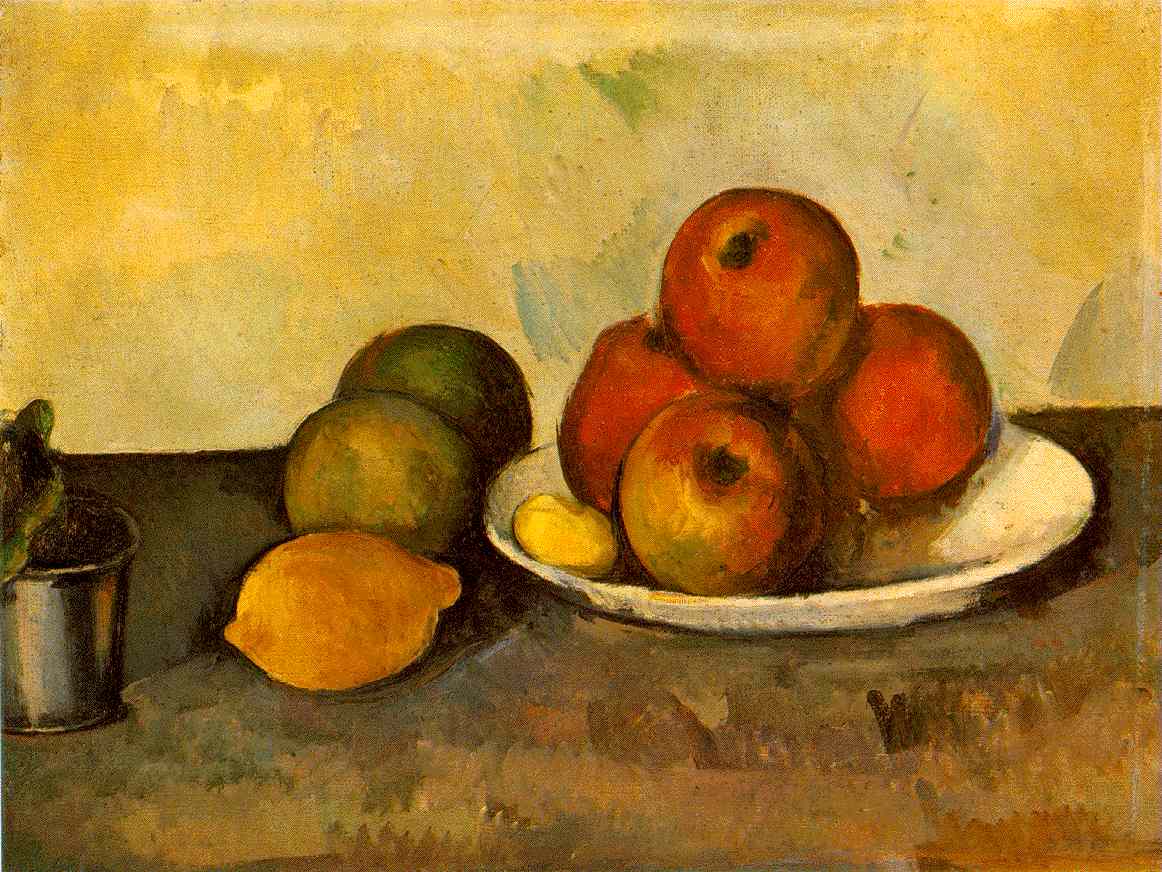
– Realization and modulation
– motif – what is the focus
– structure at any cost
– monumentality while retaining the intensity of the visual image
– ‘doing over Poussin entirely from nature’
– Cezanne insisted that human perception was ‘inherently confused’
– of treating nature by the cylinder the sphere the cone everything is proper perspective so that each side of an object is directed towards a central point, “light does not exist for the painter”
– “a construction after nature” – abstraction
– modulation
– interaction of color planes and surfaces to create “monumentality”
– the “masonry”
– mosaic surface structure
– integrated into a whole
– a good method of construction
– – “that an artist is responsible to no-one but himself, He donates to the centuries to come only in his own works, stands surely for himself alone. He dies without issue. He was his own king, his own priest, and his own god” – Adolfo Venturi (1936)
– Adolfo Venturi, ‘‘History of Italian Art’
– thus liberation
– Jugenstil, Art Nouveau, fin-de-siecle
– predecessors were Gaugin, Van Gogh, Munch, Seurat & Toulouse – Lautrec
– one Cezanne element betrayed referred to as “decorative”
– Japanese and British influences
– arts & crafts of William Morris

– Charles Rennie Macintosh
– Voysey
– World wide influence
– Seurat- pointillism/divisionism
– Scientific temper
– optical mixture
– scientific basis of aesthetic harmony
– Charles Henry
— Paul Valery, ‘Aesthetics’
– “a unified system of human sensibility and activity”
– an art of harmony
The Breakthrough chpt. 2
– ‘The Fauves’ (The Wild Beasts)
– Henri Matisse
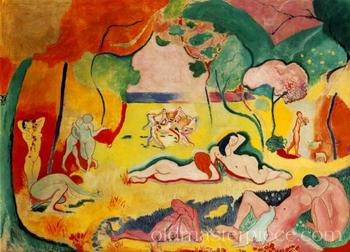
“Fauvism shook off the tyranny of divisionism”
-enduring character serenity
-called ‘symbolic color’ because it wasn’t exact or naturalistic
essentially “expressive”
-Derain & Vlaminck & Braque
& Metzinger & Le Foucoumier
-Die Brucke in Dresden
-Der Blau Reiter in Munich
-German Expressionism
-Emil Nolde (1867-1956)
-Otto Mueller, Max Pechstein
-Wilhem Worringers “Abstraction and Einfuling” (12908) & ‘Form problem der Gothik’ (1912)
Artist groups – Die Brucke – practical propagandist in face of hostile and inhuman nature
Northern attitudes of action > leads to unhealthy play of fantasy
-a spatially heightened and distorted actuality
-unsympathetic environment
-Calvinistic Geneva
-Nolde’s ‘Autobiography’
-Munch’s ‘Poems’
-Die Brucke (the Bridge)
-Ernst Ludwig Kirchner (1880 – 1938)
-Impulse to “self–alienation”
chpt. 3
Cubism
-Picasso called it “raissonable”
-Les Madamoiselles D’Avignon
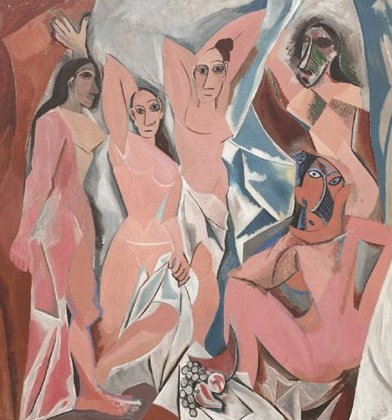
-Mixture of African art & Cezanne’s realization of motif
-Braque, Gris, Gertrude & Les Stein, Appolinaire – Delauney, Gleizis, Herbin, le Fauconnier, Chote, Metzinger, Picabia, Leger, & sculptor Alexander Archipenko
”an art dealing primarily with forms” -Picasso
-classical & rococo cubism
-as opposed to analytical & synthetic
-Braque as a painter’s painter
i.e. “permanence, grandeur, deliberation, lucidity, & calm are paramount virtues of the art of painting.”
-Our age has demanded other virtues: “a new vision to express a new dimension of consciousness, – not only harmony, but the Truth which is alas, fragmentary & unconsoling.” P.81
-New ‘recruits’
-De la Fresnaye, Marcoussis, & the three Duchamp brothers : Jacques Villon, Duchamp Villon & Marcel Duchamp
-Substitute composition after nature to autonomous structure
“to be free and yet not to lose touch with reality, that is the drama of that epic figure who is variously called inventor, artist or poet.” – F. Leger
-Delauney & “Orphism” – visual elements created entirely by the artist
-dispersed with the “motif”
completely non-objective”
i.e. Kandinsky’s ‘Improvisations”
-memory image
-visual imagination’
-focus becomes picture space itself
-composition is king
-new independent structure
“moment of liberation”
-no longer firm perception to > representation or perception > to imagination
-non-representational
-non-rational or non-conceptual
-Brancusi > egg > a cylinder
-sphere, cone of Cezanne
-Modigliani meticulous search for simplicity
Chpt. 4
Futurism, Dada & Surrealism
-two tendencies emerge from intense fermentation of 1906-14
-introvert & extrovert
-substitute Romantic & Classicist
artist has a chameleon nature
1909 Futurism
– Marinetti ‘Futurist Manifesto’ 1910
– Group included Boccionni, Carra, Russolo, & Severini
Boccionni’s “Manifesto of Futuristic Painting”
The vortex of modern life – a life of steel, fever, pride & headlong speed
-physical or mechanical forces
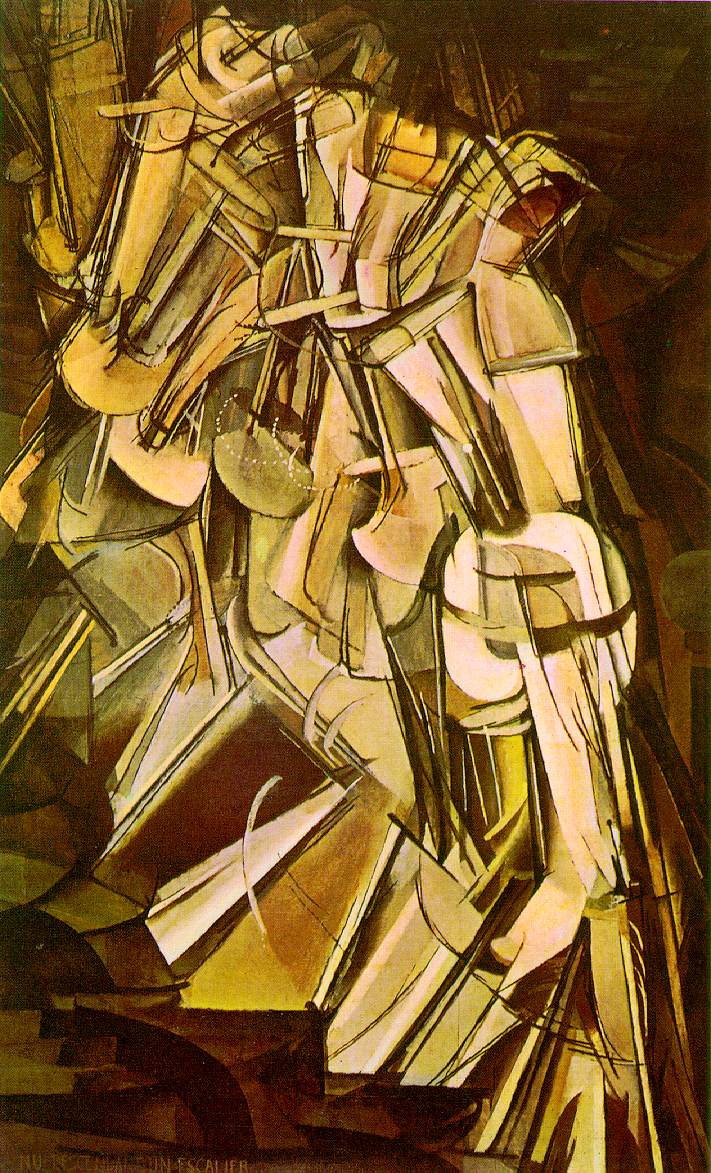
The Armory Show NY 1913
-Duchamp’s “Nude Descending the Staircase”
Surrealism – Breton, Elouard & Aragon
Dadaist’s adopted Bakunin’s slogan
“destruction is also creation”
to exalt scandalous objects like bottle racks & urinals
de Chirico
nostalgia of the infinite
Morandi
– Albers’ Homage to Square’
Chagall nostalgic symbolism
Dr. Breton
– Dada needed a reorientation “A man cut in two by the window” accompanied by a vision
-Surrealism: psychic automatism “the omnipotence of the dream”
“thought is supreme over matter”
conscious/unconscious
-stream of consciousness
free association
a “disdain for thesis”
Duchamp
Thus anti- aestheticism
M. Ernst :
frottage – rubbings of rough surfaces
Surrealism

– vague boundaries – Dali: paranoiac – critical activity
– Marcel Raymond, ‘De Baudelaire au Surrealisme’ (1933)
– critic of surrealism
– Freedom of spirit – imagination
– “what can be”
Picasso Kandinsky & Klee chpt 5

-individualists
“when you came right down to it, all you have is your self. Your self is a sun with a thousand rays in your belly. The rest is nothing.” Picasso
-style and magnificence continually overlap and contradict each other. P. 148
-Blue period 1901-4,

-Rose period 1904-6
-“an experimental period in the arts is harvest time for the charlatan”
Picasso’s periodic return to neo-classicism
personal to him
connection to Greek vases, engravings on Etruscan mirrors, even pre-historic drawings on walls of Altamura caves
distortions of the motif
imaginative, and fantastic
Picasso: ‘I don’t work after nature but before her’ p.152
The Three Musicians 1921- grotesque enough
The Three Dancers 1925 – physical, emotional violence
magnificent
A ‘turning point’
-psychologically disturbing
‘calculated rearrangement’ – Read
‘constrructive dispersal’ – Kandinsky
geometricized
Alfred Barr – ‘a metamorphosis of the motif itself’
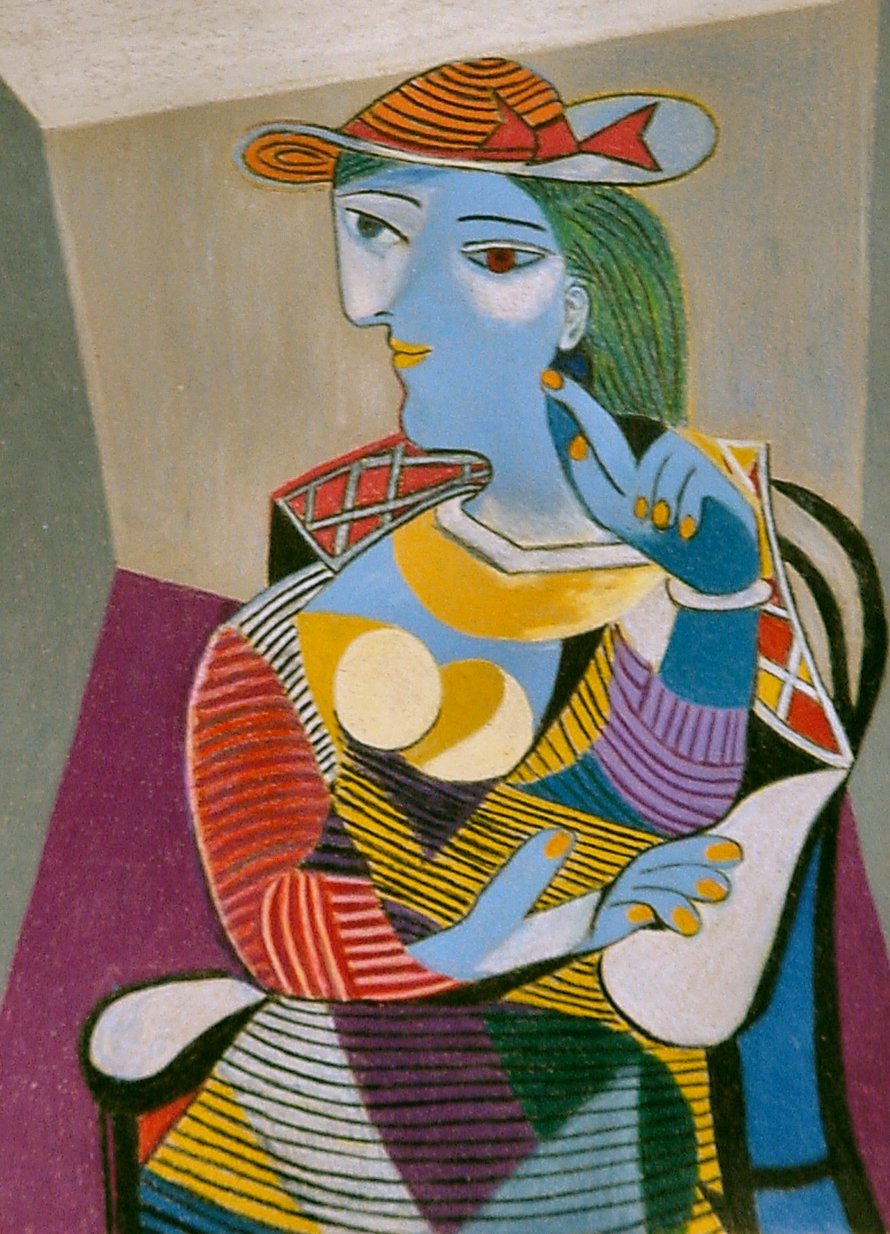
‘The Seated Woman’ 1926-27
arbitrary, vital, not abstract
Miro, Tanguy
‘Four Children Viewing a Monster’
realm of fantasy – archetypal or generic
C.G. Jung – ‘collective unconscious’
to watch objectively – Jung
‘Woman in Blue Dress’
symbolism – imagery is archetypal
sex and fertility, birth and death, love and violence
‘Guernica’
Paul Findlay ‘On Modern Art’
socially conscious
Klee, ‘Pedagogical Sketchbook’
a political being
chpt. 6
Constuctivism
Picasso , like Shakespaeare – a ‘myriad mind’
Two distinct movements:
1) Reaching towards an ideal of clarity, formality and precision
2) Towards the opposite idea; obscurity , informality and impression
– Jugenstil
– Oriental art
– Cezanne
– Cubism
– Kandinsky
– Personal apocalypse
– ‘depiction of objects needed no place in my paintings’ Kandinsky
– Deliberately to paint a non-objective painting
– Must be ‘expressive’
– Worringer
– Jawlensky, Werefkin
– Kubin, Munter, Kanoldt, Erbsloh
– New Artists Association
– La Faconnier
– Franz Marc
– Munter, Kubin
– Der Blaue Reiter
– Three sources:
– Direct impression, and clearly formed expression
– Inner necessity, the knowledge
– Triangle: its particular spiritual perfume
– Color: physical effects
– Wide range of moods
– ‘the principle of inner necessity’
– Objective concept of abstraction
– Mondrian
– Cubist early Mondrian
– Theo van Doesberg
– De Stijl
– Neo-plasticism
– Van der Leck
– Rosenberg
– Temperament
– Schoenmaekers
– Theosophical Society
– Neo-Platonic system
– Dr. Jaffe, ‘De Stijl’
– Schoenmaekers, ‘The New Image of the World’ and
– ‘Principles of Plastic Mathematics’
– Plastic expression of definite relations
– Architect J.J.P. Oud
– Vantongerloo
– Kandinsky ‘Concerning the Spiritual in Art’
– Furniture, decorative arts, typography
– Robert van’t Hoff
– G.T. Rietveld – furniture designer, & architect
– Jan Wils
– C. van Eesteren
– Cesar Domaela Nieuwenhuis
– Friedel Vordenberge-Gildwart
– Constructivist
– Search for harmony, intensity
– Mondrian – a ‘humanist’
– The culture of determined relations has begun
– Balance between freedom and discipline
– Spiritual energy
– Kandinsky left Munich 1914
– Switzerland, Italy and Balkans
– Reached Moscow via 1915
– Remained in Russian til 1922 – when called to the Bauhaus
– Academy of Fine Arts Moscow
– Commisserat for Education
– Museums of Pictorial Culture
– Professor University of Moscow
– 1922 founded Academy of Arts and Sciences
– became its Vice President
– Malevich 1913 Suprematism
– Taitlin, Rodchenko
– Pevsner, Naum Gabo – brothers
– Archipenko
– Section d’or – Gleizes Metzinger
– Du Cubisme
– Boccioni 1913 exhibition –architectonic constructions
– Gabo ‘Bust’ 1916

– ‘Head of a Woman’ 1916
– Capitalism
– Nihilism
– Gabo and Pevsner Manifesto
– Tolerated by Russian Government
– Soviet Revolution
– Bourgoise decadence
– Pevsner and Gabo – Berlin
– Kandinsky – joined Gropius in Weimar
– Gropius, Mies van der Rohe, Le Corbussier
– Bauhaus – founded by Gropius
– Klee, Feininger & Oskar Schlemmer
– Johannes Itten, Josef Albers
– El Lissitsky – Moscow type Bauhaus
– 1923 – Moholy-Nagy Chicago type Bauhaus
– Herbert Bayer, Marcel Breuer Gyogy Kepes
– Corbusier & Ozenfant ‘Apres le Cubisme’
– Purist manifesto
– Purism
– Synthesis of the plastic arts which was the ideal of the Bauhaus and De Stijl
– ‘constructions’ in wood, paper and other material
– Picasso as early as 1912
– Experimental, decorative or surrealistic
– Evolution of painter Ben Nicholson
– Mondrian, Arp
– ‘relief’
– Sculptural paintings
– Victor Pasmore
– Weimar, Dessau, Harvard , Chicago, and elsewhere
– After WWII manifestations of abstract art in Paris continued to increase
– Annual salon show ‘Realites Nouvelles’
– Kandinsky and Albert magnelli
– Jean Piaubert, Serge Poliakoff, Victor de Vaserely,jean Deyrolle, Natalie Dumitresco, Alexander Israti, Jean Dewasne,
– 1949 onwards – Salon de Mai
– Charles Lapicque, Geer van Velde, Andre Lansky, Leon Gischia, Maurice Esteva, Jean Bazaine, Marie Helena Vieira de Silva, Gustave Singier, Raoul Ubac, Alfred Manessier, Jean Paul Riopelle (Montreal)
– Began to merge with an expressionist type of abstraction which had separate origins and different aims
Chpt. 7 ‘Abstract Expressionism’
Worringer ‘Formprobleme der Gothik’ and
Abstraktion und Einfuhlung’
both significant and important
to artists of Abstract Modern movement
gave them an ‘aesthetic’ and historic justification
a ‘distinct style’
Northern Man
the transcendentalism of the Gothics
world of expression – Worringer
pathos and restlessness
Roualt ‘Au Salon’
Marc ‘Tigers’
-metaphysical anxiety’
serenity and clarity of Classical art denied
stupefication and release
parallels in literature – Joyce’s ‘Ulysses’ and ‘Finnegan’s Wake’
Brecht’s plays
verse of Pound, William Carlos Williams, Boris Pasternak
contemporary architecture – Frank Lloyd Wright, Le Corbusier, Luigi Nervi
same restless linear activity and refined construction – Read
Futurism, Surrealism
‘metaphysical anxiety’
the basic theory of Expressionism
relates to psychology in general
not to characteristics of any particular race
Kandinsky – ‘outward expression of an inner need’
‘Constructivism’
Gothic linear ornamentation
Expressionism – a deliberate revelation of this anxiety
Fauvism, Cubism
origins in Scandinavia and Germany
Munich 1911 -German Expressionism
post Die Brucke
notably – Slevogt and Corinth
Kandinsky came to Munich in 1896
‘The Phalanx’
his painting entitled ‘Der Blaue Reiter’
1909 – ‘Neue Kunstlerverinigung’ (The New Artists Association’)
Kandinsky, Jawlensky
von Wereflin, Alfred Kublin
Kanoldt, Adolf Erbsloh
Karl Hofer
Le Fanconnier and Roualt (later)
close association with Macke and Marc
developed what might be called ‘jury-trouble’
Macke – a considerable influence
Brucke group developing towards a ‘new realism bearing a socialistic flavor’
essentially ‘Romantic’
– a theory of symbolic value of colours, an interest in primitive art, folk art and children’s art
Klee joined in 1912
seemed to ‘synthesize’
Compendonk
Marc claims to ‘seek the inner spiritual side of nature’
Kandinsky – art as the expression of an ‘internal necessity’
the ‘spiritual aspects’ of man
second Blaue Reiter Exhibition 1912
restricted to Graphic work and watercolours
Nolde. Pechstein, Kirchner, Heckel and Mueller
French cubists
several Russians : Goncharova, Larianov and Malevich
a new Swiss group (der Moderne Bund)
included Klee and Arp
Rayonism, Suprematism
and of course ‘Expressionism’
Marc – ‘we went with a divining rod through the art of the past’
Berlin 1913 – a universal survey of the creative arts of all countries
largest representation scope of artists until Brussels International 1958
Chagall, Delauney, Leger, Metzinger,Glerzes , Marcoussis, Picabia, Balla, Carra, Severini, Boccioni, Russolo,Gontcharove, Larionov, Kokoshka, Mondrian, Klee, Feininger, Marsden Hartley, Jawlensky, Kubin, Mar, Compendonk,
Kandinsky, Macke, Arp, Max Ernst, Willi Baumeister and Archipenko
Rousseau
influence that predominated was Kandinsky’s ‘theories’ and
Delauney’s ‘colour dynamism’
led to what we now call ‘Abstract Expressionism’
colour, inner necessity, life of spirit
two kinds of freedom:
1) a freedom to transform the real object
2) freedom to create an entirely new motifless object
Max Beckmann
Belgium Expressionists
Mexico – Tamayo
U.S. – Marin, Shahn, Rattner, Levine
Neue Sachlichkeit – ‘New Objectivity’
Socialist Realism – Rivera, Oroszco, etc.
Marc, ‘Fighting Forms’ 1914
Klee and Kandinsky – ‘the limits of plastic consciousness in so far as limits have been given to that consciousness in our age’ – Read
Novembergroupe
Hans Richter
Kreck and Berck
planning and realizing
Grosz and Otto Dix
Meidner
social criticism
explore the nature of ‘troubled souls’
New Subjectivity
Breton, Elouard
a ‘far from natural’ palette
colour takes on an independent function
Rembrandt’s ‘ Slaughtered Ox’
an alchemical substance, a ‘materia prima’
Chaim Soutine – Russian
and his compatriot Chagall
lived life of a recluse
Roualt – colour its own ‘evocative power’
clowns and prostiutes
judges and Christ
raucus fair, carnival
death and desolation
Kokoshka born at Pochlarn on the Danube
formal education: studied at Vienna Arts and Crafts School 1904
Buchner, ‘Wozzeck’
Nestroy’s satirical works
moral and social struggle
Maulpertsch’s super-cubist disposition
Gran, Kremser Schmidt
near-ugliness of reality
compared with the illusionist’s magic color
a deliberate rejection of classical Italian conventions of harmony
an insistence on the place of ‘vision’ in art
‘Sphinx und Strohmann’ (Sphinx and the Strawman)
‘Morder, Hoffing der Frauen’ (Murder, Hope of Women’)

‘The Tempest’ 1914 – one of the great symbolic works which epitomize an age – Read
Edith Hoffman’s description p. 240
raisson d’etre of the paintings
‘Woman in Blue’ 1919
1) identify and define what darkens man’s intellect
2) to set the mind free
thus in everything imagination is simply that which is natural; it is nature, vision, life
the ‘anatomy of vision’
interpretor of consciousness and imagination
the word becoming flesh
symbols as automatic and as expressive as signature
Fenellosa – aesthetic value assigned to calligraphy
i.e. Sesshu (c 1420 – 1506)
Kandinsky’s ‘pure composition’
no new idea – i.e Art of Persians
soul – ‘vibrations of spirit’
supra- personal
archetypal patterns
‘the final abstraction of every art is number’ – Kandinsky
‘must have a hidden construction’
‘calculated effects’
‘constructional’
Oriental calligraphy
influence in works of :
Henri Michaux
Mark Tobey (b. 1890)
Morris Graves ( b. 1910) visited Japan 1930
the Pacific Coast Artists
in Paris – Fautrier and Wols
– a completely abstract type of expressionism
– ‘Il faut savoir que tout rime’
– towards ‘action painting’
– Harold Rosenberg – American critic
– Andre Masson
– Masson, ‘Entretiens avec Georges Clarrbonnier’
– Breton
– Nietzschean ‘spirit’
– trancelike automatic writings (or poetry)
– came to U.S.
– already there – Duchamp, Ozenfont
– Tanguy 1938
– Matta (Chile) to N.Y. 1938
– Gorky 1920
– Calder (Miro’s influence)
– Jackson Pollock (1912 – 56) – most associated with the term ‘action painting’
– inspired directly by Masson
– still very ardent in his later works such as:
– ‘Sleeping Effect’ 1953
– origins owe something perhaps to Futurism
– well documented by Sam Hunter
– Pollock’s radical new sense of freedom
– methods of surrealists like Ernst, Masson and Matta
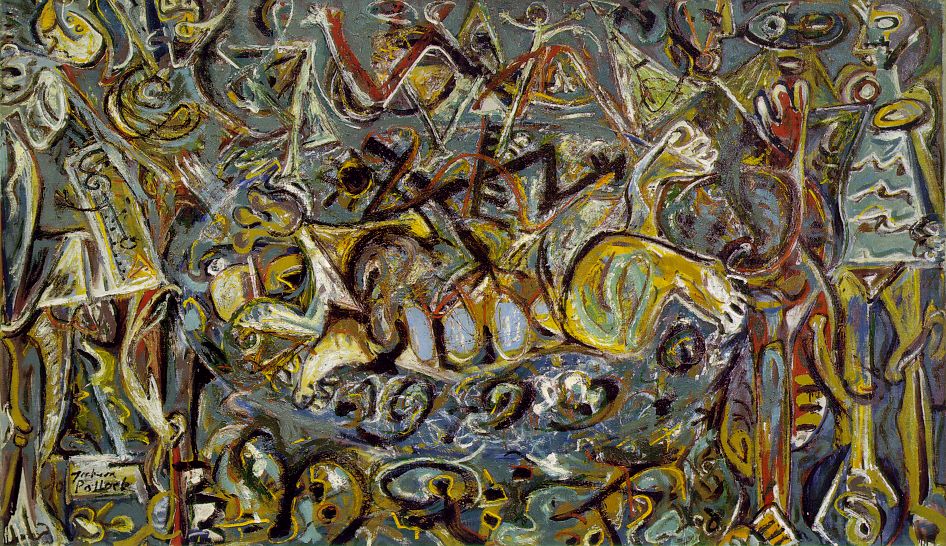
‘Pasiphae’ (1944)
– ‘ She-Wolf’’
– ‘Totem I’
– fragments of Picasso’s anatomical imagery and distorted memories of the surrealists bestiary’
– circling arabesque – reminds us of Masson or Miro
– crusade against materialism and the pressures toward conformity of shallow, popular culture
– psychoanalytic interpretation
– a superficial layer of the unconscious – from what Freud called ‘pre-conscious
– Pollock’s now legendary method
– has been interpreted as ‘a means to automatism’
– ‘When I am in my painting I’m not aware of what I’m doing’
– ‘I have no fears of making changes – destroying the image’
– ‘otherwise an easy give and take and the painting comes out well’
– Pollock speaks of ‘pure harmony’
– reminiscent of Matisse’s ‘Art of Balance’
– ‘Portrait and a Dream’ 1953
– painter’s gestures, internal dynamics of the painted area
– Flaubert’s phrase ‘sustained by the internal force of its style’
– Hans Hoffman ( b. Germany 180)
– Willem de Kooning (b. 1904 Netherlands)
– Gorky, Arshile ( U.S. > 1926 – Turkish- Armenia)
– Mark Rothko (Russia – 1903)
– Tworkov (Poland)
– hard to make a distinction between them and the Americans
– B.W. Tomlin (Syracuse 1898)
– Adolf Gottlieb (N.Y. 1903)
– Clyfford Still (North Dakota 1904)
– Barnett Newman (N.Y. 1905)
– James Brooke (St. Louis 1906)
– Franz Kline (Pensylvania 1911)
– Philip Guston (Montreal 1912)
– Robert Motherwell (Aberdeen, Washington 1915)
Grace Hatigan (New Jersey 1922)
Theodore Stamos (N.Y. 1922)
William Baziotes (Pittsburgh 1912)
who might claim to be indigenous
Debuffet, Tapies
‘…informal is not to be confused with the formless. Only vacancy is formless’ – Read
significance/ or insignificance
but it still can be asked : ‘significant for whom?”
Collingwood: ‘Art must be prophetic’
‘The artist must prophesy, not in the sense that he foretells things to come, but in the sense that he tells his audience, at the risk of their displeasure, the secrets of their own hearts. His business as an artist is to speak out, to make a clean breast. But what he has to utter is not, as the individualistic theory of the art world have us to think, his own secrets. As spokesman of his community, the secrets he must utter are theirs. The reason why they need him is that no community altogether knows its own heart; and by failing in this knowledge, a community deceives itself on the subject concerning which ignorance means death, for the evils which confirm that ignorance the poet as prophet suggests no remedy, because he has already given one. The remedy is the poem itself. Art is the community’s medicine for the worst of disease of mind; the corruption of consciousness.’
– a primary source of forming clear ideas of feelings and sensations
– Modern movement in art so often been presented as in itself corrupt that it may seem paradoxical to present it as a purifying influence
– a rich treasury of icons they have created is the basis upon which any possible civilization of the future will be built. – Herbert Read

1. Paul Gauguin The Spirit of the Dead Watches. 1892
2. Raoul Dufy Ste-Adresse. 1906
3. Albert Marquet The Pont Neuf. 1906
4. André Derain Still-life. c. 1907
5. Georges Rouault Aunt Sallies. 1907
6. Henri Matisse The Blue Nude. 1907
7. Paula Modersohn Becker Self-portrait. 1907
8. Kees van Dongen Woman with Hat. 1908
9. Wassily Kandinsky Landscape with Tower. 1908
10, Pablo Picasso Nude in a Forest. 1908
11. František Kupka The First Step. 1909

12. Oskar Kokoschka Portrait of Mme Franzos. 1909
13. Maurice de Vlaminck Still-life with White Pottery. 1909
14. Erich Heckel Fasanenschlösschen. 1910
15. Robert Delaunay La Tour Eiffel. 1910
16. Georges Braque The Violinist. 1911
17. Albert Gleizes The Kitchen. 1911
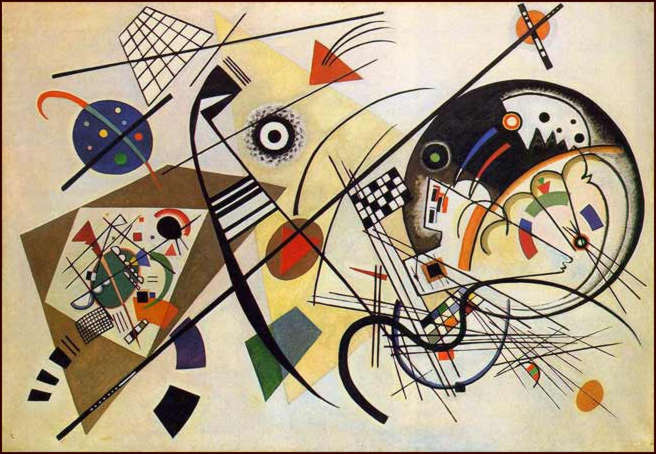
18. Wassily Kandinsky Transverse Line.
19. André Lhote Nude: Flute Player. 1911
20. Max Pechstein Under the Trees. 1911
21. Luigi Russolo Houses and Light. 1912
22. Michael Larionov Rayonnist composition. 1911
23. Roger de la Fresnaye Emblems. c. 1912
24. Henri Le Fauconnier The Huntsman. 1912
25. Giacomo Balla Automobile and Noise. 1912
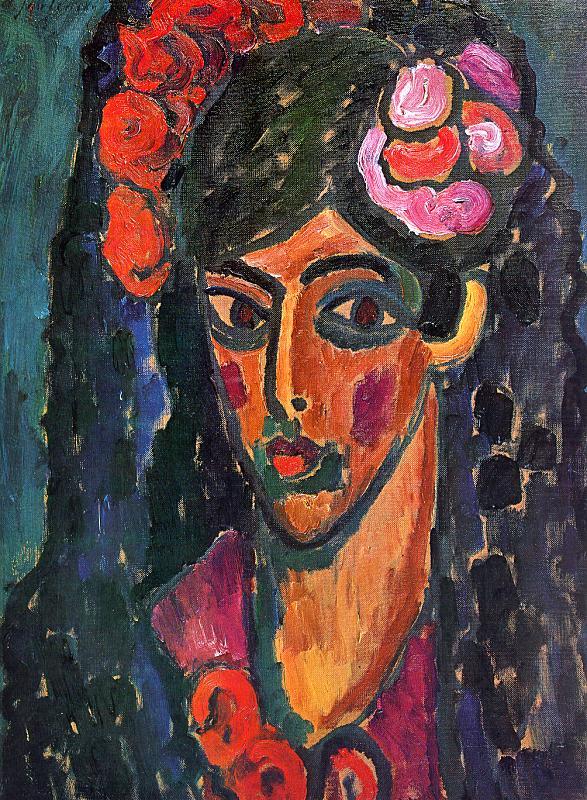
26. Alexei von Jawlensky Spanish Girl. 1912
27. Nathalie Gontcharova The Laundry. 1912
28. August Macke The Shop-window. 1912
29. Kasimir Malevich Woman with Water Pails. 1912
3. 0 Piet Mondrian Still-life with Ginger-pot II. 1912

31. Piet Mondrian Flowering Trees. 1912
32. Piet Mondrian Still-life with Ginger-pot I. 1912
33. Morgan Russell Synchromy No. 2 to Light. 1912
34. Jean Metzinger Dancer at the Café. 1912
35. Karl Schmidt-Rottluff Woman with Bracelets. 1912
36. Jacques VillonYoung Girl. 1912
37. Gino Severini Spherical Expansion of Light. 1913
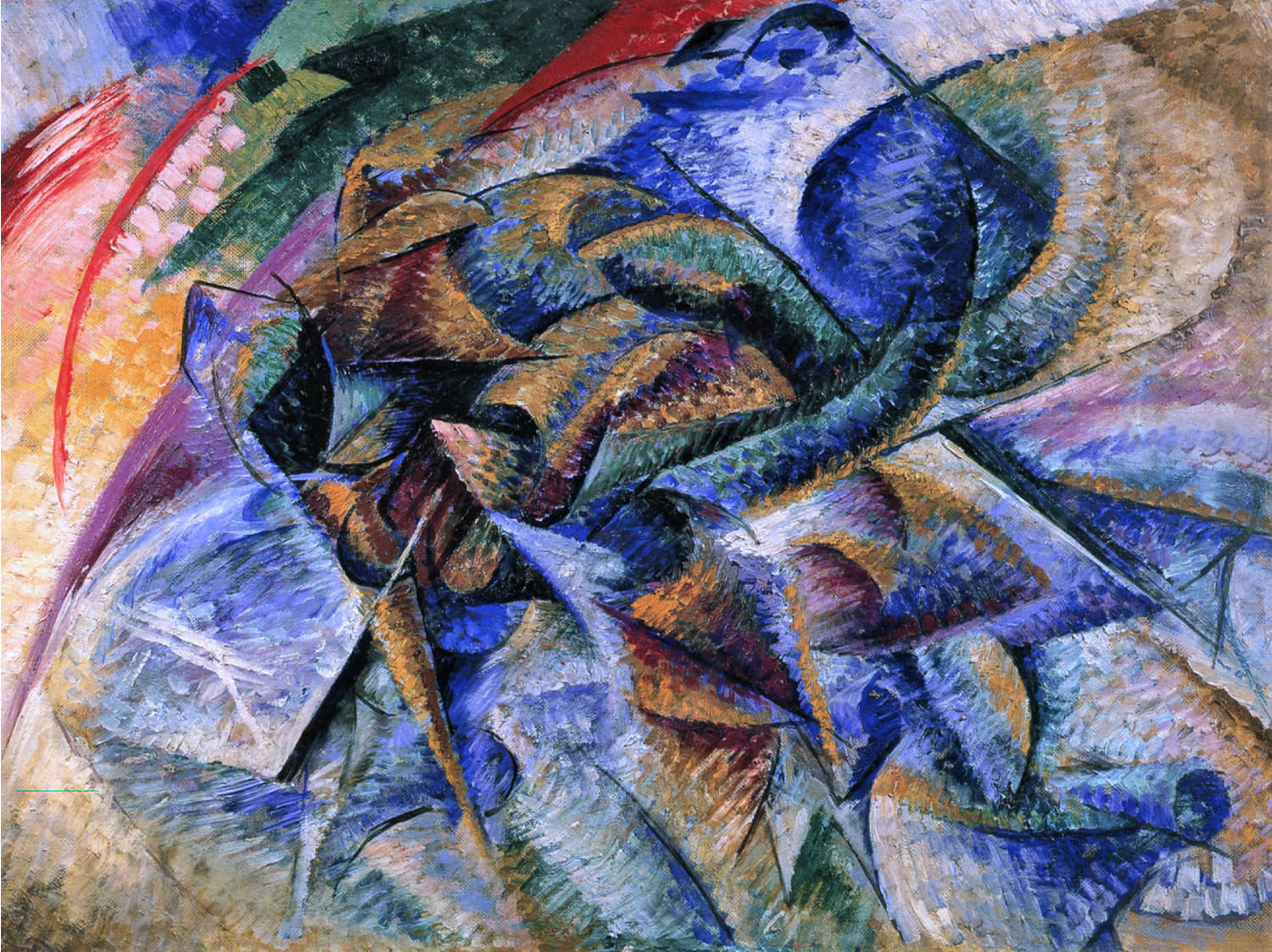
38. Umberto Boccioni Dynamism of a Cyclist. 1913
39. Antoine Pevsner Abstract Forms. 1913
40. Alfred Reth Corner of the Studio. 1913
4. 1 Marcel Duchamp Chocolate Grinder No. 2. 1914
42. Enrico Prampolini Lines of Force in Space. 1914
43. Franz Marc Fighting Forms. 1914
44. Paul KleeRed and White Domes. 1914
45. Paul Klee Homage to Picasso. 1914
46. Piet Mondrian The Sea. 1914
47. Sonia Delaunay-Terk Portuguese Market. 1915
48. Pablo Picasso Woman with Guitar. 1915
49. Georges Ribemont-Dessaignes Young Woman. c. 1915
50. Giorgio de Chirico Regret. 1916
51. Carlo Carrà Composition with T.A. 1916
52. Bart van der Leck Geometrical Composition. 1917
53. Francis Picabia Parade Amoureuse. 1917
54. Max Weber The Two Musicians. 1917
55. George Grosz Metropolis. 1917
56. Jan Sluyters The Peasants of Staphorst. 1917
57. Stanton Macdonald Wright Synchromy. 1917
58. Alexander Rodchenko Composition. 1918
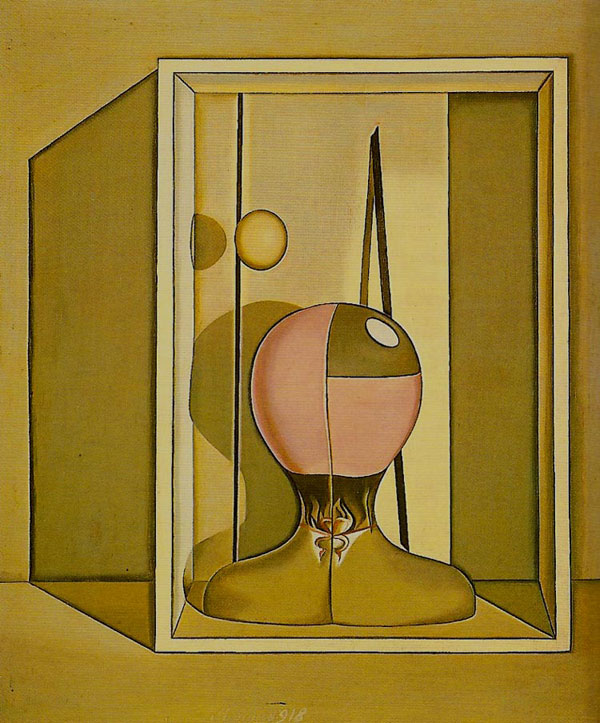
59. Giorgio Morandi Metaphysical Still-life. 1918
61. Juan Gris Harlequin with Guitar. 1919
62. Amedeo Modigliani Portrait of a Student
63. Georges Valmier Figure. 1919
64. Paul Klee Villa R. 1919
65. Amédée Ozenfant Still-life. 1920
66. Otto Mueller Self-portrait with Nude. 1920
67. Louis Marcoussis The Frequenter. 1920
68. Heinrich Campendonk Listening. 1920
69. Léopold Survage Landscape. 1921
70. Joan Miro Glove and Newspaper. 1921
71. El Lissitzky Composition. 1921
72. Constant Permeke The Betrothed. 1923
73. Victor Servranckx Opus 47. 1923
74. William Roberts The Game of Chess. 1923
75. Willi Baumeister Men and Machines. 1925
76. Kurt Schwitters Merz 1003: Peacock’s Tail. 1924
77. Laszlo Moholy-Nagy A II. 1924
78. Pablo Picasso Mandolin and Guitar. 1924
79. Otto DixFrau Lange. 1925
80. Gustave de Smet The Estaminet. 1925
81. Lyonel Feininger Village. 1927
82. Jean Lurçat Smyrna. 1927
83. Max Ernst The Bride of the Winds. 1927
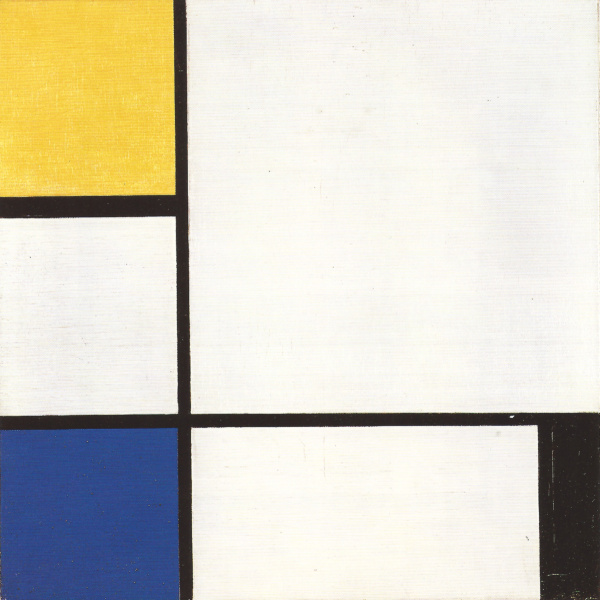
84. Piet Mondrian Composition in a Square. 1929
85. Pablo Picasso Monument: Woman’s Head. 1929
86. Fritz van den Berghe Genealogy. 1929
87. René Magritte The Annunciation. 1929
88. Paul Klee Calmly Daring. 1930
89. Wassily Kandinsky Angular Structure. 1930
90. Emil Nolde Landscape. 1931
91 Joaquin Torres Garcia Symmetrical Composition. 1931
92. Oskar Schlemmer Bauhaus Stairway. 1932
93. Hans Arp Constellation. 1932
94. Karl Knaths Harvest. 1933
95. Max Beckmann Alan with Fish. c. 1934
96. Wyndham Lewis Roman Actors. 1934
97. Jean HelionPainting. 1935
98. Edward Wadsworth The Perspective of Idleness. 1936
99. Jack Levine The Feast of Pure Reason. 1937
100. Arthur DoveRise of the Full Moon. 1937
101. Paul Nash Event of the Downs. 1937
102. Mario Sironi Mural Painting. 1938
103. Paul KleeFruitson Blue. 1938
104. Yves Tanguy Sun on Cushion. 1937
10. 5 Otto Freundlich Unity of Life and Death. 1936-8
106. Chaim Soutine Flayed Ox
107. Karl Hofer Girls playing Cards. 1939
108. Graham Sutherland Landscape with Estuary
109. Kurt Seligmann Sabbath Phantoms. 1939
110. Jean Brusselmans Large Winter Landscape. 1939
111. Balcomb GreeneThe Ancient Form. 1940
112. Pablo Picasso Nude dressing her Hair. 1940
113. . Josef Albers Study of Painting Mirage A of. 1940
114. Paul Klee Death and Fire. 1940
115. Fritz Vordemberge-Gildewart Composition No. 126. 1941
116. Rufino Tamayo Animals. 1941
117. Ben Nicholson White Relief. 1942
118. Pavel Tchelitchew Hide and Seek. 1940-2
119. Marsden Hartley Evening Storm. 1942
120. Fiet Mondrian Broadway Boogie Woogie. 1942-3
121. Paul Berçot The Tritons. 1942
122. Jackson Pollock The She-Wolf. 1943
123. Wilfredo Lam The Jungle. 1943
124. Robert Motherwell Pancho Villa, Dead and Alive. 1943
125. Charles Lapicque Canal in Champagne. 1943
126. Loren MacIver Red Votive Lights. 1943
127. Alfred Wols Long Vertical Rods.1943
128. Francis Bacon Study.1944
129. Wolfgang Paalen Fumage.1944-5

130. André Masson Asleep in the Tower
131. Paul Delvaux Venus Asleep.1944
132. MattaThe Vertigo of Eros.1944
133. Charles Seliger The Kiss.1944
134. Robert MacBryde Emotional Cornish Woman
135. Jean Feuttrier The Woman’s Body.1945
136. Marcel Gromaire Purple Roof.1945
137. Robert Colquhoun Seated Woman with Cat.1946
138. André Marchand Quinces.1946
139. Massimo Campigli Ball Game.1946
140. Pablo Picasso Reclining Nude.1946
141. Francis Tailleux Young Girl on Beach.1946
142. John Tunnard Project.1946
143. Ashile Gorky The Betrothal II.1947
144. Henri Matisse Dahlias and Pomegranate.1947
145. Janker Adler Tremblinka.1948
146. Theodoros Stamos World Tablet.1948
147. Charles Howard The Amulet.1947
148. Fritz Glarner Relational Painter.1947-8
149. Geer van Velde Composition.1948
150. John Wells Landscape under Moors.1948

151. Alberto Giacometti Seated Man.1949
152. Stanley WilliamHayter Orpheus.1949
153. Stander Walker Tomlin Number 20,1949
154. Roy de Maistre The Green Shade.1949
155. Georg MeistermannThe New Adam.1950
156. Fernand Lèger Still-life with Knife.1950
157. Jimmy Ernst A Time Fear.1949
158. Simon Hanta iCut Emerald Eye.1950
159. Patick Heron Kitchen at Night.1950
160. Morris Graves Spring.1950
161. Renato Guttuso The Sleeping Fisherman.1950
162. Alberto Magnelli Composition No.6.1950
163. Jen Dewasne Operacash.1951
164. Alfred Mannesier Variation of Games in the Snow.1951
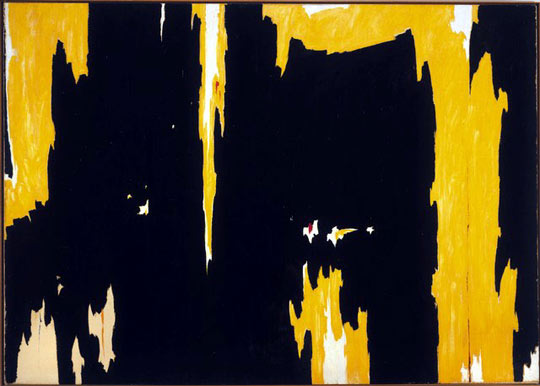
165. Clifford Still Painting.1951
166. Theodor Werner Astral Flowers.1951
167. Hans Eltzbacher Magical Mirror.1951
168. Bram van Velde Composition.1951
169. Atanasio Soldati Composition.1951
170. Lucien Freud Cock’s Head.1952
171. Heinz Trockes Stoccato.1952
172. Georges Mathieu Painting.1952
173. Peter Lubarda Mediterranean.1952
174. Fritz Winter Earthbound.1952
175. Mattia Moreni Return at Night.1952
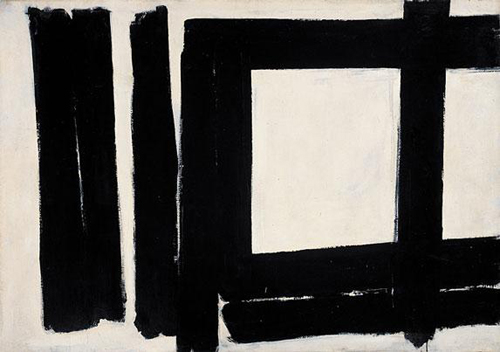
176. Frantz Kline Painting No.7.1952
177. Nicolaes de Staël Les Martigues.1952
178. Gianni Dova Painting.1952
179. Alexander Camaro Scenic Railway.1952
180. Gustave Singer Dutch Town.1952-3
181. George Morris Receding Squares.1951-3
182. Pierre Soulges Painting.1953
183 Alfro Ballet.1953
184. Giuseppe Santomaso Wedding in Venice.1953
185. Roger Hilton June.1953
186. William Scott Composition.1953
187. Karel Appel Two Heads.1953
188. Irene Rice Pereira Spirit of Air.1953
189. Alberto BurriSacco 3.1953
190. Ceri Richards Blue Vortex in the Primaries. 1952-3
191. Keith Vaughan Small Aeembly of Figures. 1953
192. Peter Lanyon Farm Backs. 1953
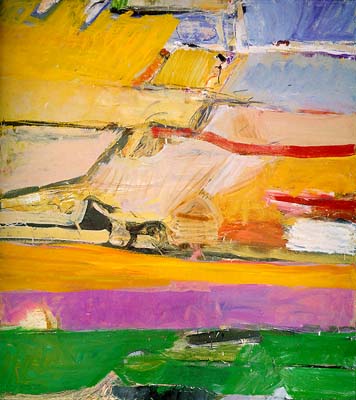
193. Richard Diebenkorn Berkeley No. 2. 1953
194. Lismonde Ruines I. 1953
195. Vieira da Silva Painting. 1953
196. Eduardo Paolozzi Head. 1953
197. Leonardo Cremonini Three Women in the Sun. 1954
198. Carl Morris Brown Painting. 1954
199. Kenzo Okada Solstice. 1954
200. Le Corbusier Taureaux V. 1953-4
201. William Gear Sculpture Project. 1954
202. Mark TobeyCanals. 1954
203. K. R. H. Sonderborg 6.XI.54. 19.05–20.30 h.
204. Adolf Fleischmann Op. No. 24. 1954
205. Serge Poliakoff Composition. 1954
206. Jack Tworkov Pink Mississippi. 1954
214. Victor Brauner Displayed Head. 1955
215. Richard Mortensen Avignon. 1955
216. Hann Trier Nest Construction I. 1955
217. Francis Salles Negative Contingency. 1955
218. Alan Davie Painting. 1955

219. Stuart Davis Cliché. 1955
220. Willem de Kooning Composition. 1955
221. Ruth Francken Ardent. 1955
222. Ben Shahn The Defaced Portrait. 1955
223. Renato Birolli Agricultural Machine. 1955
224. Abraham Rattner Prairie Sky No. 6. 1955
225. Hans Hofmann Exuberance. 1955
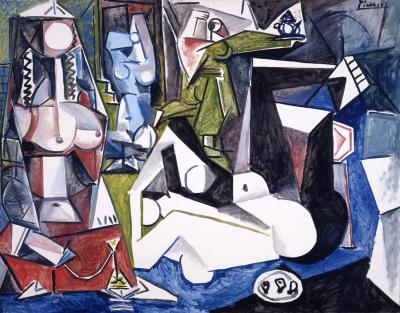
226. Pablo PicassoWomen of Algiers. 1955
227. Bernard Schultze The Organs of a Landscape. 1955
228 Jean Deyrolle Sydney. 1955
229. Tancredi Painting. 1955
230. Zao-Wou-ki Cathedral and its Surroundings. 1955
231. Merlyn Evans Standing Figure. 1955
232. Jean Dubuffet Georges Dubuffet in the Garden. 1956
233. Camille Bryen Floral Envelope. 1956
234. Jean Paul Riopelle Purple Track
235. René, Pierre Tal Coat Composition. 1955-6
236. Jean Piaubert Brown Rhythm. 1956
237. Antoni Tapies Painting. 1956
238. Raoul Ubac Autumn. 1956
239. Pierre Alechinsky Dragon Anemone. 1956
240. Philippe Hosiasson Red and Black. 1956
241. Louis le Brocquy Male Presence. 1956
242 Alva Trio. 1956
243. Gaston BertrandItaly. 1956
244. Maurice Estève Tacet. 1956
245. Roland Berthon Man with Stick. 1957
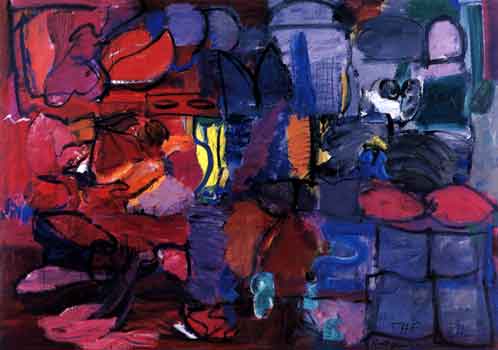
246. Grace Hartigan The No.1
247. Asger JornThe Defender. 1957
248. Sidney Nolan Glenrowan. 1956-7
249. Hans Jaenisch Miniature Garden
250. Bryan Wynter Source. 1957
251. Paul Borduas Magnetic Silence. 1957
finis
 tomreading
Leave a comment