‘Analysis of Mind’ by Bertrand Russell

Preface
– Professor Eddington’s ‘ Space, Time and Gravitation’
– William James
Lecture 1
‘Recent Criticisms of Consciousness’
– ‘mental’
– believing and desiring
– Russell, ‘Our Knowledge of the External World’
– perception
– memory
– ideas
– Locke, Berkeley and Hume
– Belief
– Cognitive
– Knowledge
– Brentano, ‘Psychology from the Empirical Standpoint’
– Travelling
– Meinong
– Abstract
– Golden mountain
– Round square
– Meinong
– Modifications of the threefold analysis into act, content and object
– Beliefs – ‘there is a thought in me’

– Sir Christopher Wren
– William James, ‘Does Consciousness Exist?’
– Transcendental ego
– Bewisstheit or Bewisstein uberhaupt
– A function
– Mach’s ‘Analysis of Sensations’
– ‘Journal of Philosophy, Psychology and Scientific Methods’
– James, ‘A World of Pure Experience’
– Neutral stuff
– Behaviourists
– Professor John B. Watson
– Professor John Dewey
– Dr. Schiller
– Pragmatism
– Niedermeyer, ‘The Concept of Consciousness’
– Watson, Behavior: ‘An Introduction to Comparative Psychology’
– …they have not so far found any evidence of thought’
– the language habit
– it is frustrating to find how terribly adequate this hypothesis turns out to be
– instinct
– Lloyd Morgan’s ‘Instinct and Experience’
– we are all willing to admit that other people are thoughtless
– ‘Cogito Ergo Sum’ would be regarded by most people as having a true premiss. This, however, the behaviourist dismiss.
– Introspection, as a separate source of knowledge is entirely denied by psychologists of this school
– knowing
– desiring
– feel pleasure in success, and pain in failure
– …by what lies in front of him
– desire
– moral considerations
– We say, I desire to be kind to my friends, honourable in business, philanthropic towards the poor, public spirited in politics. So long as we refuse to allow ourselves, even in the watches of the night, to avow any contrary desires, we may be bullies at home, shady in the city, skinflints in pay wages and profiteers in dealing with the public; yet if only conscious motives are to count in moral valuation, we shall remain model characters
– our theorizing is often mistaken
– theory of Ideas
– psycho-analysis
– hysteria
– insanity
– ‘Subconscious Phenomena’ – Ribot, various authors (pub. Rebman)
– Freud and Jung
– unduly narrow
– honour and power
– theoretic psychology
– analysis of mind
– the ‘repressed desire’
– ‘The Psychology of Insanity’ , Dr. Bernhard Hart
– imbecility
– dementia
– the followers of Descartes held that mind and matter are so different as to make any action of the one on the other impossible
– metaphysical theory
– neutral entities
– laws of physics
– Bergson
– Boyle’s Law
– Freud
– an air of mystery and mythology
– Unconscious
– strange atavistic lusts
– temporary equilibrium
– the unconscious desire is not something actually existing, but merely a tendency to a certain behavior, it has exactly the same status as a force in dynamics.
– Freudian ‘repression’
– it is not the usual reason for unconsciousness of our wishes
– we used to be full of virtuous wishes, but since Freud our wishes have become, in the words of the prophet Jeremiah, ‘deceitful above all things and desperately wicked’
– product of theory
– Watson, ‘The Psychology of Wish Fulfillment’ Scientific Monthly 1916
– the trapdoor
– …our ‘real’ selves (keep inactive or partially inactive) these habits and instructive tendencies which belong largely in the past.
– ‘It is among the frustrated impulses that I would find the biological basis of the unfulfilled wish’.
– It may be inferred from this that there is no particular reason for applying the term ‘wish’ to such tendencies
– Mystery is delightful, but unscientific, since it depends upon your ignorance. Man has developed out of the animal, and there is no serious gap between him and the amoeba.’
– Consciousness is not the essence of life or mind. In the following lectures accordingly, this term will disappear until we have dealt with words, when it will reemerge as mainly a trivial and unimportant outcome of linguistic habits
Lecture II
‘Instinct and Habit’
– protozoa
– structures or behavior
– Is introspection or external observation the surer method in psychology?
– We know we have a toothache
– We know for example that we have desires and beliefs, but we do not know what constitutes a desire or a belief
– Such things as desires and beliefs, which seem obvious to introspection, are not visible directly to external observation
– It is customary to divide human movements into three classes: voluntary, reflex and mechanical
– Involuntary
– Reflex acts
– Semi- reflex
– It is a voluntary act
– ‘appropriateness’
– ‘mechanical’
– A drunken man falls into a water butt and is sobered
– A moth flying into a lamp is not acting sensibly
– The nervous system
– chemistry and physics
– electrons

– A great source of energy in unstable equilibrium ready to burst into violent motion by the addition of a very slight disturbance
– ‘All is discovered, fly!’
– Mass of dynamite contains a store of energy in unstable equilibrium
– Physicists distinguish between macroscopic and microscopic equations
– The explosion is analogous to vital movements, the curling about to mechanical movements
– Professor Lloyd Morgan
– Instinctive behavior
– Wellbeing of the individual and preservation of the race
– ….which may be subject to subsequent modification under the guidance of experience
– The sex-instinct
– ‘habit’
– ‘Many instincts mature gradually and while they are immature an animal may act in a fumbling manner which is very difficult to distinguish from learning.’ –James, ‘Psychology’
– Birds do not learn to fly
– Imitation
– Thorndike’s ‘Animal Intelligence’
– Every animal can take food by instinct
– No one can ride a bicycle by instinct
– E.g. … you put a hungry animal, say a cat, and in a cage which has a door that can be opened by lifting a latch, outside the cage you put food. The cat, at first, dashes round the cage, making frantic efforts to force a way out. At last, by accident, the latch is lifted, and the cat pounces on the food. Next day you repeat the experiment, and you find that the cat gets out much more quickly than the first time, although it still makes some random movements. The third day it gets out still more quickly, and before long it goes straight to the latch and lifts it at once.
– …or a model of the ‘Hampton Mazes’…put a rat in the middle…
– It is by essentially similar processes that we learn speaking, writing, mathematics or the government of an empire.
– Professor Watson ‘ Behaviour’
– ‘The Law of Effect’
– ‘The Law of Exercise’
– Satisfaction, discomfort
– Learning is only possible when instinct supplies the driving force
– Language…..later.
– Instinct, as a rule, is rough and ready.
– Bergson
– Drever ‘ ‘Instinct in Man’
– Hobhouse ‘Mind in Evolution’
– Ammophilia
– The caterpillar
– …this illustrates how love of the marvelous may mislead even so careful an observer as Fabre and so eminent a philosopher as Bergson. P. 30
– …the larvae of the Lomechusa beetle
– Ants
– Semon (‘Die Mneme’) pp. 207 – 9)
– The literature of instinct is vast
– Laying eggs
– The essence of instinct
Lecture III
Desire and Feeling
– Hysteria
– Insanity
– Actions alone
– One might say rivers ‘desire’ the sea
– Killed at the end of the fall
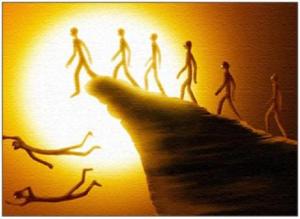
– Interrupted movements
– Eat your best peas
– Stocks and stones
– The existence of cycles in the behavior of animals
– Prima facie
– A behavior-cycle…. Birds mate, build a nest, lay eggs, sit on eggs, feed the young birds and care for them until they are fully grown.
– An impulse
– Humans… our own actions, it seems clear what with us, sets a behavior cycle in motion is some sensation of the sort which we call disagreeable
– ‘Die Mneme’ Semon
– What we call consciousness seems to be a mere spectator of the process
– Volitions
– Discomfort
– Pleasure
– Kant
– Will
– Any kind of striving
– ‘conation’
– Sensations
– ‘pain’
– Berkeley
– Dr. H. Head
– Distinguish clearly between discomfort and ‘pain’
– Discomfort
A Wohlgemuth, ‘On the feelings and their neural correlate, with an examination of the nature of pain’.
British Journal of Psychology
Discomfort
Pleasure
e.g. erotic desire
the perfectly natural mistakes attributed by Freud to the censor’ p. 41
– Donne’s poem
‘‘When by thy scorn, O Murderess, I am dead’
– Conscious desire to change your profession or go round the world, or conceal your identity and live in Putney, like Arnold Bennett’s hero.
– ‘wicked one’ has been jilted
– beauties of tropical islands or the works of Chinese art…
– secondary desire
– behavior – cycle
– discomfort
– pleasure
– The cycle ends in a condition of quiescence
– purpose of the cycle – quiescence
– conscious
– unconscious
– secondary desires
– Interesting complications
Lecture IV
Influence of Past History on Present Occurrences in Living Organisms
– ‘a burnt child fears the fire’
– modifies
– magnetized steel
– Semon
– mnemic phenomenon
– chain of causes
– A) Acquired habits
– ….cat’s behavior due to some mental fact called ‘knowledge’ or displays a merely bodily habit
– B) Images
– New York
– Thinking
– C) Association
– -to soldiers
– D) Non-sensational Elements to Perception
– Hear a cat ‘bark’ or a dog ‘mew’
— E) Memory as Knowledge
– 1) the present stimulus
– 2) the past occurrence
– F) Experience
– The burnt child that fears the fire has ‘experienced’ the fire
– The essence of ‘experience’ is the modifications of behaviours produced by what is experienced
– Biography: ‘a series of occurrence limited by mnemic causation’
– This characteristic….distinguishes sciences dealing with living organisms from physics
– Richard Semon
– ‘primary-indifference state’
– ‘engram’
– ‘ekphoric’ influence
– Samuel Butler
– Two mnemic principles
– 1) Law of Engraphy
– 2) Law of Ekphony
– sciences’ applications of his fundamental ideas in various directions are interesting and ingenious
– alteration
– mnemic causation
– A present event, but this together with a past event
– If a complex stimulus A has caused a complex reaction B in an organism, the occurrence of part of A on a future occasion tends to cause the whole reaction B
– lightning is followed by thunder
– drunkenness is followed by headache
– differential equations
– ‘you have a smut on your nose’ understood by an English hearer but not a French one
– The effect of the hearer is a mnemic phenomena, since it depends upon the past experience which gave him understanding of the words
– A, B, C….in the past together with X now, causes Y now.
– this is a very difficult hypothesis
– Bergson
– …that is contrary to the maxim: ‘same cause, same effect’
– a priori
– ‘engram’
– …. to be found in physiology as in psychology. They are even to be found in plants, as Sir Francis Darwin pointed out.
– Professor J.S. Haldane, who contends that physiology is not theoretically reducible to physics and chemistry
– existence of mnemic phenomena p. 52
Lecture V
Psychological and Physical Causal Laws
– Laws of change
– 1) whenever A occurred, it was followed by B
– 2) in this sequence, there was something ‘necessary’ not a mere defacto occurrence of A first and then B
– … whether it can be said ‘day causes night’
– continuous change
– the theory of quanta suggests that continuity is only apparent
– taking arsenic
– Since a man might be shot through the head immediately after taking the dose and then it would not be of arsenic that he would die.
– ….after the man’s death his body is blown to pieces by a bomb
– Thus if we are to take the cause of one event and the effect as another, both must be shortened indefinitely
– The exact laws that are assumed in physics are known to be somewhere near the truth, but are not known to be true just as they stand
– Taking arsenic is followed by death is a good empirical generalization, it may have exceptions, but they will be rare
– … we shall be in practice justified in saying A causes B Lack of universality and necessity, which it is important to realize as regards causes in the above sense, and that is the lack of ‘uniqueness’ Cause,in the only sense in which it can be practically applied means nearly invariable antecedent. We cannot in practice obtain an antecedent which is quite invariable, for this would require us to account of the whole universe, since something not taken account of may prevent the expected effect.
– The laws of physics
– …matter of electricity
……‘the’ table is to be neutral as between different observers; it does not favour…to regard the ‘real’ table as the common cause of all the appearances which the table presents (as we say) to different observers
– … a whole set of sensations
– …being the table
– …the table which is neutral between different observers [actual and possible]
– Stellar photography
– Appearances
– Stars
– Star
– Something is happening
– That star
– Appearances
– 1) we can collect together all the happenings in one place, as is done by photography so far as light is concerned
– 2) we can collect together all the happenings in different places, which are connected in the way that common sense regards as being due to their emanating from one object
– Thus to return to the stars, we can collect together either
– 1) all the appearances of different stars in a given place or
– 2) all the appearances of a given star in different places
– -appearances
– …..Transverse vibration__
– Approximation
– ‘perspective’
– Sirius
– …all the different appearances of Sirius were pitched out whenever it appeared, all the different appearances of Sirius taken together, would represent Sirius. For the understanding of the difference between psychology and physical it is vital to understand these two ways of classifying particulars namely

– 1) according to the place where they occur
– 2) according to the system of correlated particulars in different places to which they belong, such system being defined as a physical object
– Appearance of that object in that place
– 1) cases in which only certain appearances of the object change while others, and especially appearances from places very near to the object, do not change
– 2) cases where all, or almost all, the appearances of the object undergo a connected change
– When a number of people at a theatre watch an actor, the changes in their several perspectives
– The actor himself
– …or to realist that the body in question is not really one thing but a set of correlated particulars
– The changes in appearance of an object
– Neighboring places
– …we can now begin to understand one of the fundamental differences between physics and psychology. Physics treats as a unit the whole system of appearances of a piece of matter, whereas psychology is interested in certain of these appearances themselves
– The psychology of perceptions
– …suitable parts of the nervous system form part of an intervening medium
– Just as a photographer plate receives a different impression of a cluster of stars when a telescope is part of the intervening medium, so a brain receives a different impression when an eye and an optic nerve are part of the intervening medium

– Perception
– In the particular case where the place is concerned is a human brain, the perspective belonging to the place consists of all the perceptions of a certain man at a given time, Thus classification by perspective is relevant to psychology, and is essential in defining what we mean by one mind
………it is the way that arose naturally out of our present topic. But when we approach psychology from a more introspective standpoint, we have to distinguish sensations and perceptions
Classification by perspective
The appearance of a piece of matter
From different places changes partly according to intrinsic laws (the laws of perspective in the case of visual shape) partly according to the nature of the intervening medium –
– fog, blue spectacles, telescopes, microscopes, sense organs etc.
Laws of perspective
The piece of matter concerned
Lecture VI
Introspection
– Mental life
– A converse task
– Corresponding to the supposed duality of matter and mind, there are, in orthodox psychology, two ways of knowing what exists. One of these, the way of sensation and external perception, is supposed to furnish data for our knowledge of matter; the other called introspection is supposed to furnish data of our knowledge of our mental processes.
– Kant
– …consists wholly of sensations and images
– Physiology
– Hallucination
– Knight Dunlap (Psychological Review, vol. xix, 1912)
– Stout
– William James’ theory
– ‘Psychology’, James
– Knight Dunlap
– Localization
– Dunlap, ‘Thought-content and Feeling’ (Psychological Review) (1916)
– Hume
– Kant
– ‘knowing’ is really various relations, all of them complex
Lecture VIII
The Definition of Perception
…into series of ‘perspectives’ each series being, what may be called a ‘biography’
The laws of perspectives
The laws of dynamics
Semon’s ‘engram’
’nebeneinander’
zusammen
‘simultaneity’
Theory of relativity
1) The group of particulars constituting the other aspects of the same physical object
2) The group of particulars that have direct time-relations to the given particular
1) A member of the group of particulars- which is the star, and which is associated with the place where the star is
2) A member of the group of particulars which is my biography, and which is associated with the place where I am
…where I am, and with the place where the star is
….same sense if I am replaced by a photographic plate…respectively
1) they give rise to mnemic phenomena
2) they are themselves affected by mnemic phenomena
300,000 kilometers per second -> speed of light
1) the object which is appearing irregularly
2) the intervening medium
Lecture VIII
Sensations and Images
William James
Chaos
Dreams, as Freud…..
James, ‘Essays in Radical Empiricism’ pp. 32 -3
– theatre
– the early days of motor-cars
– a tyre
– we have to pare away all that is due to habit or expectation or interpretation this is a matter for psychologist, and by no means an easy matter
– Leibniz
– patch of color
– awareness
– Brentano
– Against Berkeley
– We may say that the patch of colors and of our sensation in seeing it are identical
– Dewey
– Professor Dewey
– Transient
– Transient, which make up that part of the material world that does not come into the sort of contact with a living body that is required to turn it into a sensation
– Sensations
– Mach, ‘Analysis of Sensations’ 1886
– Images
– The definition of images is by no means an easy problem
– To begin with : we do not always know whether what we are experiencing is a sensation or an image
– Influence
– Expectation
– Inspection
– 1) by the less degree of vividness in images
– 2) by our absence of belief in their physical reality
– 3) by the fact that their causes and effects are different from those of sensations
1) Hume: – impressions and ‘ideas’
…differences betwixt feeling and thinking
– so faint
…..so very different
Semon, ‘Die mnemuschen Empfindungen’ pp. 19-20
Hume, ‘Treatise of Human Nature’
Hume – his criterion
A conception
Professor Stout ‘Manual of Psychology’
A difference of quality
Aggressiveness
Force or liveliness
– Varying intensity of the stimulus
– Mere faintness cannot be the characteristic mark of images
That suggestion
Whose horrid image doth unfix my hair
And make my seated heart knock at my ribs
Against the use of nature?
– – Macbeth
– A steam
– A very intense emotion
– Powerful compelling images which may determine the whole course of life
– possessing the mind p. 87
– hallucinations
– dreams and fever-delirium
– …the test of liveliness, however applicable in ordinary instances, cannot be used to define the differences between sensation and images
– Does not have the concomitants
– Macbeth’s dagger
– ….as in the case of dreams, it feels just as real as if it were a sensation
3) This brings us to the third mode of distinguishing images from sensations namely, by their causes and effects. I believe (says Russell) this to be the only valid ground of distinctions
Their causes
– Its mode of production
– A stimulus
– The distinction between image and sensations can only be made by talking account of their causation
– Accordingly images have been defined as ‘centrally excited sensations’
i.e. sensations which have their physiological cause in the brain only, not also in the sense – organs and the nerves that run from the sense-organs to the brain. I think the phrase centrally excited sensations assumes more than is necessary –it takes for granted that an image must have a proximate physiological cause
– A mnemic cause – which does not prevent it from also having a physical cause
It is governed by habit and past – experience
– Pianola
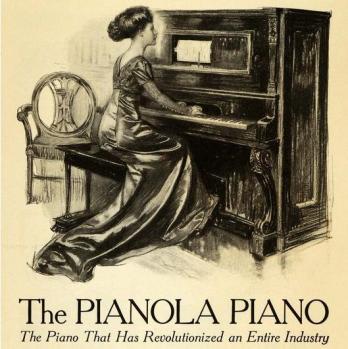
– region of mnemic…
– when habit and past experience…
– mnemic as opposed to ordinary physical causes
– the stimulation of nerves
– sensations, as a rule, have both physical and mental effects
– successive waves of fury and disappointment (mental effects)
– images, or the contrary though they may produce bodily movements, do so according to mnemic laws, not according to the laws of physics
– Mnemic
– Professor Watson….his behaviourists theory, denies altogether that there are any observable phenomena such as images are supposed to be. He replaces them all by faint sensations, and especially by pronunciation of words – sotto voce
– ‘Behaviorism’ Watson
– Recite a poem
– …because what is called thought consists mainly (though I think not wholly) of ‘inner speech’
– Professor Watson says; ‘ I should throw out imaging altogether ‘
… processes in the larynx……
– (Behaviour)
– Galton
– Fellows of the Royal Society
– existence of images is admitted
– there remains one very important point
– concerning images, which will occupy us much hereafter, and that is, their resemblance to previous sensations.
– they are said to be ‘copies’ of sensations
– Hume is the classic
– Impressions
– Ideas
– difference between simple and complex ideas
– Hume, ‘Treatise of Human Nature’ part 1, Section 1
– For the understanding of memory, and of knowledge generally, recognizable resemblance of image and sensations is of fundamental importance
– ….in the main simple images are copies of similar simple sensations
– the subject of images as copies of sensations
Lecture IX
Memory p.93
Memory, which we are to consider today, introduces us to knowledge in one of its forms.
The analysis of knowledge will occupy us until the end of the thirteenth lecture, and is
the most difficult part of our whole enterprise.
Analysis of memory – knowledge
Perception i.e. with the integral experience of things in the environment, out of which sensation is
extracted by psychological analysis
habit
frequent correlations
memory
ideas approximately represent impressions
Hume’s principle
why do we believe that images are, sometimes or always, approximately or exactly, copies of sensations?
It is the very possibility of comparison that is hard to understand
Of images as copies
Happening ‘now’
There is no logical impossibility in the hypotheses that the world sprung into being five minutes ago, exactly as it then was, with a population that remembered a wholly unreal past. There is no logically necessary connection between events at different times, therefore nothing that is happening now or will happen in the future can disprove the hypotheses that the world began five minutes ago.
– ….which might, theoretically, be just what they are even if no past had existed
– Like all skeptical hypotheses, it is logically tenable, but uninteresting
– Memory- images
– Memory are:
– A) known to be copies
– B) sometimes known to be imperfect copies
– Inaccuracy
– Influence of fatigue
– Horribly distorted
– The feeling of familiarity
– Some images, like some sensations, feel very familiar, while others feel strange. Familiarity is a feeling capable of degrees. In an image of a well-known face, for example, some parts may feel more familiar than others.
– That is to say if we suppose that A is the event remembered , B the remembering, and t the interval of time between A and B, there must be some characteristic of B which is capable of degrees, and which, in accurately dated memories, varies as t varies. It may increase as t increases, or diminish as t increases. The question which of these occurs is not of any importance for theoretic serviceability of the characteristic in question.
There are doubtless various factors that concur
‘pastness’
One of these is context
A remembered context
a) By successive images in the same order as their prototype, or
b) B) by remembering a whole process simultaneously, in the same way in which a present process may be apprehended, though akoluthic sensitive which by fading, acquire the mark of just – pastiness in and increasing degree as they fade.
1) those that may be called feelings of familiarity
2) those that may be collected together as feelings giving a sense of pastiness. The first lead us to trust our memories, the second to assign places to them in the time-order
– the memory-belief
– memory’s terminology
– content
– some points may be taken as fixed
– an elephant, or a man, or a mad dog
– in like manner, in the study of memory the certainties with which you begin are very vague
– there is knowledge of the past
– any given instance our memory may be at fault
– there can be no doubt that memory forms an indispensable part of our knowledge of the past
– the second datum is that we certainly have more capacity for knowledge the past
– than for knowing the future. We know some things about the future for e.g. what eclipses there will be
– We might provisionally, though perhaps not quite correctly, define ‘memory’ as that way of knowing about the past which has no analogue in our knowledge of the future
– The truth of memory cannot be wholly practical, as pragmatists wish all truth to be.
– The two forms of memory which Bergson distinguishes in the second chapter of ‘Matter and Memory’ namely the sort that consists of habit, and the sort that consists of independent recollection
– habit-memory
– a gramophone, by the help of suitable records, might relate to us the incidents of its past, and people are not so different from gramophones as they like to believe

– there can be no doubt that both forms exist
– what I had to eat for breakfast
– Similarly, the performances of animals in getting out of cages or mazes to which they are accustomed do not prove that they remember having been in the same situation before
– Habit-memory, not of knowledge
Samuel Butler’s arguments in favor of view that an animal remembers something of the lives of its ancestors are when examined by arguments in favor of habit-memory, Semon’s two books, mentioned in an earlier lecture
‘true’
Memory
The feelings of familiarity
Samuel Butler’s ‘Life and Habit’ and
‘Unconscious Memory’
….this is illustrated by Turgenev’s ‘Smoke’ where the hero is long puzzled by a haunting sense that something in his present is recalling something in his past , and at last traces it to the smell of heliotrope
– Familiarity as a definite feeling
– The feature in question is familiar
– …feeling of familiarity, such as a horse, may be supposed to have when he returns to his stable. Thus no knowledge as to the past is derived from the feeling of familiarity alone.
– A further stage is recognition.
– …. Not merely feels familiar, but we know it is such and such
– …the kind of object we are seeing at the moment is associated with the word ‘cat’ or auditory image purring, or whatever other characteristic we may happen to recognize in the cat of the moment.
– Judge
– Judgment
– Involve knowledge about the past
– Similar
– Familiarity by being cognitive, it is a belief or judgment
– The sense of familiarity
– Consists in a belief
– This has existed before
– ‘I have seen this before’
– ‘my experience’
– Certain links
– The definition: recognition will be one of the marks by which my experience is singled out from the rest of the world
– Only something familiar
– A friend’s face
– …but the face is merely a logical construction
– ‘Hullo Jones’
– The whole series of particulars that make up Jones
– The essence of recognition is in the difference between a repeated stimulus and a new one. On the first occasion there is no recognition, on the second occasion there is in fact, recognition is another instance of the peculiarity of causal laws in psychology namely, that the causal unit is not a single event, but two or more events. Habit is the great instance of this, but recognition is another.
– Bergson’s, ‘Matter and Memory’
– As Bergson suggests; but it does not prove that the causal laws of psychology are prima facie very different from those of physics
– ….peculiarities of nervous tissue
– Draw unwarranted metaphysical deductions
– ‘True Memory’ p. 102
– 1) What is the present occurrence when we remember?
– 2) What is the relation of this present occurrence to the past event which is remembered?
– Of these two questions only the first concerns the psychologist, the second belongs to the theory of knowledge
– An intermediate experience
– The original of our experience of pastnesss, whence we get the meaning of the term. (Psychology p. 604)
– Clock has been striking
– This retention of the immediate past in a condition intermediate between sensation and image may be called ‘immediate memory’. Everything belonging to it is included with sensation in what is called the ‘specious present’
At the beginning of a stimulus we have a sensation, then a gradual transition, and at the end of an image, sensations while they are fading are called ‘akoluthic’ sensations
Semon, ‘Die mnemisdem Empfendungen’ chpt. VI
True memory, as opposed to ‘immediate memory’ applies only to events sufficiently distant to have come to an end of the period of fading
What I ate for breakfast this morning
Calling up images of my breakfast
A feeling of belief
Imagination – images
…the words ‘this happened’. The mere occurrence of images, without this feeling of belief, constitutes imagination; it is not the element of belief that is the distinctive thing in memory
Different kinds of belief feeling
Memory, expectation and bare assent
Bare assent
Caesar landed in Britain in 55 B.C.
What is believed
Dorothy Wrinch “On the Nature of Memory”
Bare assent
As in reading history
….this morning does not whenever it is used, mean the same thing as ‘John’ or ‘St. Paul’s’ does; it means a different period of time on each different day.
Habit of associating them with something having a fixed time relation to our present
‘this morning’
…say a new picture hung on the wall

something is familiar
that picture was not on the wall before
Clashes with perception
Belief feeling
….change that drives us from the present to memory of the past
…the causes of beliefs are obscure, and we cannot investigate them yet
Bergson’s view
The content of a memory-belief
‘meaning’
‘something like this image occurred’
A ‘prototype’
‘this occurred’
The word ‘this’
‘this’ is a present image
Deceptive
Ordinary speech does not distinguish between identity and close similarity
A word always applies, not only to one particular, but to a group of associated particulars, which are not recognized as multiple in common thought or speech
This primitive memory, when it judges that ‘this occurred’, is vague, but not false
Vague identity, which is really close similarly, has been a source of many of the confusions by which philosophy has lived. Of a vague subject such as this, which is both as image and its prototype, contradictory predicates, are true simultaneously: this existed and does not exist, since it is a thing remembered, but also this exists and does not exist, since it is a present image. Hence, Bergson’s interpenetration of the present by the past, Hegelian continuity and identity in diversity.
Obscure and confused
To understand what is meant by accuracy, it will be well to consider first instruments of measurement, such as a balance or a thermometer.
A Chinaman….p. 107
Understanding a language is a case in point. Few Frenchmen can hear any difference between the sounds ‘hall’ and ‘hole’ which produces quite different impressions upon us.
The ‘hall’ is full of water.
The ‘hole’ is full of water
A memory is vague when it is appropriate to many different occurrences for instances: ‘I met a man’ is vague since any man would verify it, memory is precise’ when the occurrences would verify it are narrowly circumscribed for instance, ‘I met Jones’ is precise as compared to ‘I met a man’. A memory is ‘accurate’ when it is both precise and true.
To try and hit an object with a vague thought is like trying to hit the bull’s eye with a lump of putty
Fungus family
Mushrooms
I met Jones
We may omit precision
Reliable
Measure
‘degree of accuracy’
Vague
The attempt to interpret the word ‘this’
This occurred
Equally applicable the present memory – image and to the past occurrence which is its prototype
A word is general when it is understood to be explicable to a number of different objects in virtue of some common property.
A word is vague, when it is in fact applicable to a number of different objects because in virtue of some common property, they have not appeared, to the person using the word to be distinct. I emphatically do not mean that he has judged them to be identical, but merely
That he has made the same response to them all and has not judged them to be different. We may compare a vague word to a jelly and a general word to a heap of shot.
The belief that ‘this occurred’
Ribot ‘ Evolution of General Ideas’
Belief –feeling
Occurred
The image is, in one sense, occurring now, and therefore we must find some other sense in which the past event occurred but the image does not occur.
Images are merely imaginary. They have not, in crude thought, the sort of reality that belongs to outside ‘bodies’. Roughly speaking ‘real’ things would be those that can cause sensations, those that have correlations of the sort that constitute physical objects.
‘feels real’
‘feels imaginary’
We may now summarize our analysis of pure memory
Memory demands a) an image b) a belief in past existence. The belief may be expressed in the words ‘’this existed’
1) The believing
2) what is believed
– Belief-feeling
– A) the image
– B) the feeling
– C) a relation between the image and the feeling of reality, of the sort experienced when we say that the feeling refers to the image
– ‘remembering’ or (better) ‘recollecting’
– When we have made this distinction, we can say that the image ‘means’ the past event.
– The content expressed in words is best represented by the words ‘the existence of this’
– Existence expresses the feeling of a ‘reality’ aroused primarily by whatever can have effects upon us without our voluntary co-operation
– ‘the existence of this’ represents the relation which subsists between the feeling of reality and the ‘this’
Lecture X
‘Words and Meaning’
– The problem of determining what is the relation called meaning
– Napoleon

– Set of occurrences
– Speaker
– From the heart
– Indo-European language
– Hobbes
– Rousseau
– The association of words
– The process is unknown
– Wundt’s ‘Volkpsychologie’
– two vast volumes on Language
– gesture-language
– ants
– antennae
– writing seems to have consisted originally of picture
– ‘T’ for ‘Tommy’
– A ‘sign’ or ‘symbol’
– The idea
– The meaning
– We are concerned with what is called ‘thought’
– Language profoundly affects our thoughts
– We are almost more concerned with the internal speech that is never uttered than we are with the things said out loud to other people
– When we ask what constitutes meaning, we are not asking what is the meaning of this or that particular word
– The ‘Indo-European’ languages
– ‘Napoleon’ is a complicated series of occurrences, bound together by casual laws
– ‘Comedy of Errors’
– In the case of a ‘proper’ name
– ‘the visual sensation which occupied the centre of my field of vision at noon on Jan 1, 1919
– Particulars have remained one and all without a name
– …. A sign of Jones (which is the case because it is one of the particulars that make up Jones)
– Passing on from proper names, we come next to ‘general’ names, such as ‘man’ and ‘triangle’
– We only give proper names to the individuals of a species when they differ uter se in practically important respects. In other cases we do not do this. A poker, for instance, is just a poker, we do not call one ‘John’ and another ‘Peter’
– There is a large class of words such as ‘eating’, walking’, and ‘speaking’ which mean a set of similar occurrences
– Causal connection
– Instance of ‘man’ solely : ‘Jones’
– There could be no Jones unless there were something like walking for him to do
– There is no logical impossibility in walking occurring as an isolated phenomenon, not forming part of any such series as we call ‘person’
– ….a great difference between a process which like a flash of lightning, can be wholly comprised within one specious present, and a process which, like the life of a man, has to be pieced together by observation and memory and the apprehension of causal connections
– Words denoting qualities i.e. ‘white’
– ‘round’
– ‘whiteness’
– …the word ‘white’ as denoting a certain set of similar particulars or collections of particulars,…. The similarity being in respect of a static quality, not of a process
– From the logical point of view, very important classes of words are those that express relations, such as ‘in’, ‘above’, ‘before’, ‘greater’ and so on.
– …..previous classes being more abstract and logically simpler than any of them. If our business were logic, we should have to spend much time on these words.
– Psychology is what concerns us presently
– ‘understands’
– We may say that a person understands a word when a) suitable circumstances make him use it b) the hearing of it causes suitable behavior in him.
– We may call these two active and passive understandings respectively
– Dogs often have passive understanding of some words, but not active understanding since they cannot use words
– It is not necessary to understand or ‘know’ what it means
– Understanding languages is more like understanding cricket. It is a matter of habits, acquired in oneself and rightly presumed in others
– Watson, ‘Psychology From the Standpoint of a Behaviourist’
– Moreover, the meaning of a word is not absolutely definite, there is always a greater or lesser degree of vagueness. The meaning is an area, like a target.
– There is always a doubtful region, however small, surrounding it. There is no more reason why a person who uses a word correctly should be able to tell what it means than there is a planet which is moving correctly should know Kepler’s laws’
– ‘look out, there’s a motor coming
– He ‘understands’
– Being habits
– in this sense may be reduced to mere psychological causal laws
– ‘Que dit-il’?
– Ah, oui. Une automobile!’
– Watson
– Four ways of understanding words
– 1) on suitable occasions you use the word properly
– 2) when you hear it you act appropriately
– 3) you associate the word with another word (say in a different language) which has the appropriate effect on behavior
– 4) when the word is being first leant, you may associate with an object, which is what it means or a representative of various objects that it ‘means’
The word ‘motor’ can make you leap aside, just as the motor can, but it cannot break your bones
Involve vital movements
‘demonstrative’ use of language
Its narrative and imaginative uses, as in history and novels
-words are used demonstratively p. 119
The whole of this occurrence is much more difficult to account for on behaviourist lines
Telescoped process
Words used demonstratively describe and are intended to lead to sensation, while the same words used in narrative describe and are only intended to lead to images
5) words may be used to describe or recall memory –image: to describe it when it already exists, or to recall it when the words exist as a habit and are known to be descriptive of some past experience.
6) words may be used to describe or create an imagination-image, to describe it, for example, in the case
– Of a poet or novelist, or to create it in the ordinary case for giving information – though in the latter case it is intended that the imagination image, when created, shall be accompanied by belief that something of the sort occurred.
– The use of words in ‘thinking’. If we are right this use of words in thinking depends, at least in its origin upon images, and cannot be fully dealt with on behaviourist lines.
– The meaning of words:
– ….we have to explain its extension to cases in which the box is absent
– …is caused by the image of the box
– what causes an image of the box to arise
– a theory of desire
– a convenient fiction, like force in mechanics. With such a view, desire is no longer a true cause but merely a short way of describing certain processes
– psychology (or nerve-physiology)….
– …when two things have frequently existed in close temporal contiguity, either comes in time to cause the other. This is the basis both of habit and of association
– Wohlgemuth’s ‘On Memory and Direction of Associations’
– If A causes B and B causes C, it will happen in time that A will cause C, directly, without the intermediacy of B
– ‘thinking’
– In this and other ways the understanding of a word often comes to be quite free from imagery; but in first learning the use of language it would seem that imagery always plays a very important part
– St. Paul’s may be said to mean St. Paul’s
– …of dogs in general
– …on some one particular occasion but rather a compromise expression derived from many occasions
– ….but a number, none of which is copied exactly
– What is called an ‘image’ ‘of’ some definite object, say St. Paul’s
– Upon association
– And conversely desire may cause images: a hungry man will have images of food and so on…..
– Berkeley and Hume, in their attack on ‘general ideas’, do not allow for the vagueness of images…
– A meaning which is general
– Hume’s principle
– Prototypes
– A given case
– special dog or kind of dog
– ‘Spaniel’
– in mnemic causation
– mnemic effects
– ‘entity’
– verbal associations, the learning of which constitutes the study of metaphysics
– the word dog
– the image of a dog
– P.125
– ….and men have been engaged for ages in giving increased precision to the meanings of words
– …..the relation which constitutes meaning is much the same in both cases. A word, like an image, has the same associations as its meaning has. In addition to other associations, it is associated with images of its meaning, so that the word tends to call up the image and the image tends to call up the word.
– Abstract matters
– Lend themselves to imagery
– Concrete
– Abstract
– Two instance of the word ‘dog’ are much more alike than (say) a pug, and a great Dane; hence the word ‘dog’ makes it much easier to think about dogs in general.
– We have to be on our guard against assuming that grammar is the key to metaphysics, or that the structure of a sentence corresponds at all accurately with the structure of the fact that it asserts.
Sayce maintained that all European philosophers since Aristotle have been dominated by the fact that the philosophers spoke Indo-European languages, and therefore supposed the world like the sentences they were used to, necessarily divisible into subjects and predicates.
– Most serious advances in philosophic thought result from some such comparatively direct contemplation of facts. But the outcome has to be expressed in words if it is to be communicable.
– It is partly for this reason that the highest philosophical capacity is so rare: it requires a combination of vision with abstract words which is hard to achieve, and too quickly lost in the few who have a moment to achieve it.
Lecture XI
General Ideas and Thought
It is said to be one of the merits of the human mind that it is capable of framing abstract ideas, and of conducting non-sensational thought. In this it is supposed to differ from the minds of animals
– …or what can be discovered by observation, in the way of mental content to account for the intelligent use of abstract words
– A sufficiently ingenious person could manufacture a machine moved by olfactory stimuli which, whenever a dog appeared in its neighboring world would say, ‘There is a dog’, and when a cat appeared would throw stones at it. The act of saying, ‘There is a dog’ , and the act of throwing stones, would in such a case be equally mechanical.
– (say) a pug and a great Dane.
– Berkeley and Hume
– Locke
– Abstraction
– Abstract notions
– …not to be attained without pains and study; we may therefore reasonably conclude that. If such there be, they are confined only to the learned
– Hume, ‘Essay on Human Understanding’
– I readily agree with this learned author, that the faculties of brutes can by no means attain to abstraction
– ‘words become general by being made signs of general ideas’.
– Generality
– Berkeley’s view
– Hume’s
– Modern psychology
– Semon, “ Die Mnemone’
– Physiological abstraction
– One negro
– The name Smith
– The word ‘man’ on the other hand, is general
– A general idea when its affects are different from those appropriate to individuals
– What distinguishes a general idea from a vague idea is merely the presence of a certain accompanying belief
– It should also be said that , our images even of quite particular occurrences have always a greater or lesser degree of vagueness
– Ribot
– The definite and that the vague appears earlier than either the particulars or the general.
– A judgment
– For logicians
– Concept
– Ratiocination
– For the psychologists, on the contrary affirmation is the fundamental act
– Titchener, “Experimental Psychology of the Thought Process’
– Watt, Messer and Buhler ‘Archiv fur di gesammte Psychologie’,
– Introspection
– It is extremely fallible
– Imageless ‘thinking’
– ….purely verbal; they are contending that there can be thinking which proceeds neither in words nor in images. My own feeling is that they have rashly assumed the presence of thinking in cases where habit has rendered thinking unnecessary
– Perceived
– Conceived
– ‘smell of a bear’
– A man
– A horse
– ‘I smell a bear’
– What exists in us consists of various factors, some open to external observation, others only visible to introspection
– Knowledge of universals
– Dog
– The generic image produced by the superposition or, in Semon’s phrase, homophony, of a number of similar perceptions
– Behaviourist psychology
– That part of behavior of other people
– …as the theory of relativity suggests, the physical universe contains the diversity of points of view which we have been accustomed to regard as distinctively psychological, then we are brought back by the different road to the necessity for trusting observations which are in an important sense private.
– The behaviourist psychology
– …..appears to me to fail
– …an inadequate philosophy of physics
Lecture XII
Belief
– Central problem
– Believing seems the most ‘mental’ thing we do, the thing most remote from what is done by mere matter
– Reasoning
– Beliefs
– Psychology, theory of knowledge and metaphysics, revolve around belief, and on the view we take of belief our philosophical outlook largely depends
– 1) just as words are characterized by meaning, so beliefs are characterized by truth or falsehood.
– …the object meant, so truth and falsehood consist in relation to something that lies outside the belief.
– win the Derby
– According to the outcome, your belief was true or false
– …the actions of Columbus, not upon anything present or under your control
– What makes a belief true or false is called a ‘fact’
– I call its objective’ ’reference
– Objective reference:
– Columbus 1492
– the reference of my belief and the voyage
– intrinsic name of belief
– In all these cases the believing is just the same
– my first sight of New York. In all these cases the feeling of memory-belief is just the same.
– the believing, what is believed, and the believing, must both consist of present occurrences in the believer, no matter what may be the objective of the belief.
– …..that Caesar crossed the Rubicon
– The actual event
– …obviously not to be confounded with the event, since the event is not occurring now but believing is.
– What is believed, however true it may be, is not the actual fact that makes the belief true, but a present event related to the fact.
– ‘content’ of the belief
– 4) Between content and objective there is sometimes a very wide gulf, for example, in the case of Caesar crossed the Rubicon. This gulf may, when it is first perceived give us a feeling that we cannot really ‘know’ anything about the outer world. All we can ‘know’, it may be said, is what is now in our thoughts.
– ….the feeling assumes an ideal of knowing which I believe to be quit mistaken: it assumes, if it is thought out, something like the mystic entity of knower and known
– These two are often said to be combined into a unity by the fact of cognition; hence when this unity is plainly absent, it may seem as if these were no genuine cognition
– I believe knowing to be a very external and complicated relation, incapable of exact definition, dependent upon causal laws, and involving no more unity than there is between a signpost and the town to which it points.
– 5) the objective reference of a belief is concerned with the fact that all or some of its constituents of its content have meaning. If I say ‘Caesar conquered Gaul’….. p. 141
– ….which is dual, namely true and false
– Complex
– But definite relations between them;
– Plato preceded Aristotle
– Aristotle preceded Plato
– Although they consist of exactly the same constituents they are different, and even incompatible.

– The content belief, may consist of words only, or if images only, or of a mixture of the two, or of either both together with one or more sensations:
– For example, you hear a noise, and you say to yourself, ‘tram’. Here the noise and the word tram’ , are both constituents of your belief; there is also a relation between them, expressed by ‘is’ in the proposition ‘that is a tram’
– In this case the constant of your belief is a sensation (the noise) and a word (tram) related in a way which may be called ‘predication’
– Judgments of perception
– The unsophisticated do not distinguish them from the sensation, it is only the psychologist or the skilled observer who is aware of the large mnemic element that is added to sensation to make perception
– Solar System

– Kinesthetic images
– Impossible p. 144
– The content of the belief, when expressed in words, is the same thing (or very nearly the same thing) as what in logic is called a ‘proposition’
– A proposition is a series of words(or sometimes a single word) expressing the kind of thing that can be asserted or denied. That ‘all men are mortal’, that ‘Columbus discovered America’, the ‘Charles I died in his bed’ that ‘All philosophers are wise’, are propositions.
– Meaning
– Objective reference
– That the inhabitants of the Andaman islands habitually eat stewed hippopotamus for dinner, but there is no difficulty in understanding the proposition:
– ‘image-propositions’ … ‘word-propositions
– In logic we are concerned with propositions rather than beliefs, since logic is not interested in what people do in fact believe, but only in the conditions which determines the truth or falsehood of possible beliefs
– It would be rash to assert positively that memory of this sort does not occur among higher animals
– Sofa
– Marble
– Tactile images
– Most of our beliefs, like most of our wishes, are ‘unconscious’, in the sense that we have never told ourselves that we have them.
– …i.e.……if someone puts tea (without milk) into a glass, and you drink it under the impression that it is going to be beer. -p. 146
– ….and such expectations must be classed as beliefs
– I remember once watching a cock-pigeon running over and over again to the edge of a looking-glass to try to wreak vengeance on the particularly obnoxious bird that he expected to find there, judging by what he saw in the glass. He must have experienced each time the sort of surprise on finding nothing, which is calculated to lead in time to the adoption of Berkley’s theory that objects of sense are only in the mind. His expectation, though not expressed in words, deserves, I think, to be called a belief.
– An egg for breakfast
– Different attitude
– Desire and aversion
– Cognitive
– To define ‘belief’
– Efficacy in causing voluntary movements
– The theory
– physiological and behaviourist
– A content is said to be ‘believed’ when it causes us to move.
– there is an escaped tiger coming along the street
– It is possible that I may not (BR wit) p. 147
– Charles I
– Soviet government
– Suppose I am invited to become King of Georgia; I find the prospect attractive, and go to Cook’s to buy a third class ticket to my new realm.
– ….a belief always may influence action if it becomes relevant to a practical issue, it often exists actively 9not as a mere disposition) without producing any voluntary movement whatever. If this is true, we cannot define belief by the effect.
– 1) causal efficacy p. 147
– On voluntary movements
– …..there must be some intrinsic difference between believing and considering
– 2) theory….. regards belief as belonging to every idea which is entertained, except so far as some positive counteracting force interferes
– Spinoza…. [percept] ..boy imagines himself a horse….unless the imagination of the winged horse were joined to an idea which contradicted [tollit] its existence (Ethics, vol. II p. 49, Cilium)
– …James ‘any object which remains not-contradicted is ipso facto believed and posited as an Absolute reality.
– ….which may be called suspense or non-belief- a feeling which may be compared to that of a man about to run a race waiting for the signal.
– ….a man who is considering a proposition without believing it will be in a state of tension, restraining the natural tendency
– Not merely of ‘this’ but of ‘this’ rather than ‘that’
– There must be belief feelings
– ‘I ate my breakfast’
– ‘ Caesar conquered Gaul’
– I assent to the contenti in the latter case, but not the former, the pastness is part of the content believed
– James says, …..’in its inner nature, belief, or the sense of reality, is a sort of feeling more allied to the emotions than to anything else. (Psychology, vol. ii p.283)
– …….what passes for revelation or mystic insight……
Lecture XIII
Truth and Falsehood
– A belief is rendered true or false by relation to a fact, which may lie outside the experience of the person entertaining this belief
…..the relations of mental occurrences to outside things
We wish to believe that our beliefs, sometimes at last, yield knowledge, and a belief does not yield knowledge unless it is true. The question whether our minds are instruments of knowledge, and, if so, in what sense, is so vital that any suggested analysis of mind must be examined in relation this raises the problem of verifiability
to this question
-a chronometer
– a thermometer
1. We may regard knowledge, from a behaviourist standpoint, as exhibited in a certain kind of response to the environment
2. ….without reference to outside facts.
3. …we believe that some beliefs are true, and some false.
– we may regard the human being as an instrument, which makes various responses to various stimuli
– accuracy and appropriateness
– pursued by a tiger
– knowledge of the beast
– and especially from what he says and writes
– ….. a purely behavioristic account of truth and falsehood
…the boy answers four (2 plus two)
– I know a certain weather cock….
– …they do not vary their response when the stimulus is varied. A good instrument, or a person with much knowledge, will give different responses to stimuli which differed in relevant ways.
1) It gives different responses to stimuli which differ in relevant ways
2) It gives the same response to stimuli which do not differ in relevant ways
– E.g. examinations
– We can go a certain distance in this direction
– …..kind of accuracy and the kind of response
….knowledge is displayed by actions based upon perception. A bird flying among trees avoids bumping into the branches – its avoidance is a response to visual sensations
– e.g. …you look in your calendar and find that Easter will be early next year
future
– the behavior of the barometer has a present stimulus but foretells the future so that the barometer might be said to know the future
– in knowledge of the future, it is obvious that they are totally distinct, since otherwise the response would precede the stimulus. In abstract knowledge, also they are distinct, since abstract facts have no date. In knowledge of the past there are complications, which we must briefly examine.
– Every form of memory….
– ….delayed response
– dynamite
– ….. a display of habit has two sorts of causes: a) the past occurrences which generated the habit, b) the present occurrence which brings it into play. When you drop a weight on your toe, and say what you do say
– ….calculating machine
– What is 34521 times 19987, without a moments hesitation or hint of accuracy
– …we do not say the machine ‘knows’ the answer
– But as far as mere accuracy goes, the machine leaves nothing to be desired
– ‘sensitive’
– Sensitiveness does not constitute knowledge
– Behavior demands the consideration of purpose. A carrier pigeon flies home, and so we say it ‘knows’ the way.
– …a person who always believes falsely is just as sensitive an instrument as a person who believes truly.
– The one who believes falsely would quickly come to an end
– By appropriateness, i.e. suitability for realizing one’s purpose.
– 1) self-evidence
– 2) mutual coherence
– 3) self-evidence
– ….two and two are four, that two things cannot be in the same place at the same time, nor one thing in two places, or that a particular buttercup that we are seeing is yellow
Meinong, ‘Uber die Erfahrugs grundlagen unseres Wissens’
If this theory is to be logically tenable, self-evidence must not consist merely in the fact that we believe a proposition. We believe that our beliefs are sometimes erroneous, and we wish to be able to select a certain class of beliefs which are never erroneous
– If, for example, two propositions p and q were self-evident, and it were also self-evident that p and q could not both be true, that would condemn self-evidence as a guarantee of truth
– Antipodes
– New Zealanders
– Antipodes self-evident. Meinong meets this difficulty….
– ….self-evident that they are self-evident, and these are wholly reliable.
– It would seem therefore, that self-evidence is useless as a practical criterion for insuring truth
– Two and two are four follows by purely logical deductions from definition: that means that its truth results; not from the properties of objects, but from the meanings of symbols
– Now symbols, in mathematics mean what we choose
– I do not wish to assert that this is the whole truth about mathematical propositions, for the question is complicated, and I do not know what the whole truth is.
– …concerned with meanings of symbols, not with properties of the world such as external observation might reveal
– Judgment of perception, such as ‘this buttercup is yellow’ are in a quite different position from judgments of logic, and their self-evidence must have a different explanation.
– The word ‘similar’ is a vague word, since there are ‘degrees’ of similarity
– A red rose
– Similarity is not prima facie measurable
– …this process of the pursuit of precision there is simply no limit
– The next thing to observe ( although I do not personally doubt that most of our judgments of perception are true)
– Most of our judgments of perception involve correlations
– ‘this is a buttercup’….’this is yellow’
– All such judgments entail some risk of error, though sometimes perhaps as a very small one, some flowers that look like buttercups are marigolds, and colours that some would call yellow , others might call orange,
– …no form of self-evidence seems to afford an absolute criterion of truth.
– Nevertheless, it is perhaps true that judgments having a high degree of subjective certainty are more apt to be true than other judgments
– 2) coherence – coherence as the definition of truth
– Joachim, ‘The Nature of Truth’ 1906
– There must be also someone who is a married woman
– Everything that can be said about any one object is relative in the same sort of way as ‘so and so’ is a married woman
– he fundamental objection to this view is logical, and consists in a criticism of its doctrine as to relations
– Russell, ‘The Monastic Theory of Truth’, (Longmans)
– ….the powers of logic seem to me very much less than this theory supposes. If it were taken seriously, its advocates ought to profess that any one truth is logically inferable from any other, and that, for example, the fact that Caesar conquered Gaul, if adequately considered, would enable us to discover what the weather will be tomorrow.
– Leibniz’s conception of many possible worlds
– Nowadays most men’s beliefs must be tested by observation
– A consistent fairy-tale is a different thing from truth, however elaborate it may be.
– 3 Many difficult problems arise as regards the verifiability of beliefs
– relative criteria
– plainest cases of verification
– ….in the happening of something expected
– The relation between image and sensation Is closely similar in the two cases of memory and expectation, it is a reaction of similarity, with difference as to causal efficacy
– Broadly , the image has the psychological but not the physical effects that this sensation would have the experience of verification in this sense is exceedingly familiar; it happens every time that accustomed activities have results that are not surprising, in eating and walking and talking and all our daily pursuits
– To take a more external and causal view of the relation of expectation to expected occurrence
– We have first an expectation. Then a sensation with the feeling of expectedness related to memory of the expectation
– The whole process may be illustrated by looking up a familiar quotation, finding it in the expected world, and in the expected part of this book. In this case we can strengthen the verification by writing down beforehand the words which we expect to find
– I think all verification is ultimately of the above sort. We verify a scientific hypotheses indirectly, by deducing consequences as to the future, which subsequent experience confirms
– Caesar had crossed the Rubicon
– Caesar
– Colour
– Verified by future
– Occurrence of events inferred by means of them. The existence and persistence of causal laws, it is true, must be regarded as a fortunate accident….
– Gradually discover what kinds of beliefs tend to be verified by experience, and what kinds tend to be falsified, to the former kinds we give an increased degree of assent, to the latter kinds a diminished degree. The process is not absolute or infallible, but it has been found capable of sifting beliefs and building up science
– ‘’’the systems of our beliefs grows gradually towards the unattainable ideal of impeccable knowledge
– ….IV. I come now to the purely formal definitions of the truth or falsehood of a belief
– Just as a word has meaning, so a proposition has an objective reference
– ’points’ towards the fact
– This objective reference of a belief is not determined by the fact alone, but by the direction of this belief towards or away from the fact.
– …true belief points towards the fact while the false one points away from it,
– …..there are true and false propositions, but not true and false facts
– Ludwig Wittgenstein
– To-day is Tuesday\today is not Tuesday
– …propositions occur in pairs, distinguished (in simple cases) by the absence or the presence of the word ‘not’. Two such propositons have the same objective, but opposite meaning: when one is true, the other is false and when one is true the other is false
– Image-propositions instead of word-propositions p. 165
– ‘Socrates precedes Plato’ , Pla-Socrates- To’ might be used to mean ‘Plato was born before Socrates and died after him.
– Disbelieve
– I believe these attempts to be mistaken, and I shall assume that there are negative facts
– Word-propositions, like image-propositions, are always positive facts
– ‘precedes’
– Does not precede’
– The propositions asserting negative facts are themselves positive facts; they are merely asserting different positive facts from those asserting positive facts
– 1) positive and negative facts
– 2) image propositions, which may be believed or disbelieved, but do not allow any duality of content corresponding to positive and negative facts;
3) word propositions, which are always positive facts, but are of two kinds: one verified by a positive objective, the other by a negative objective
– ‘the sun is brighter than the moon’
– ‘sunshine’ and ‘moonshine’
– The acts of comparison, implied in our judgment, is something more than the mere co-existence of two images
– Simpler kind of propositions
– An ’atomic’ proposition
– Obtained by replacing each word by what it means
– Socrates precedes Plato
– Precede
– Socrates does not precede Plato
– …appropriateness depends on purpose, and purpose thus becomes a vital part of the theory of knowledge
Lecture XIV
Emotions and Will
-…..namely that all psychic phenomena are built up out of sensations and images alone
Emotions are traditionally regarded by psychologists as a separate class of mental occurrence
The physiological causation of emotions,… valuable and exceedingly interesting work has been done
The ‘James-Lange Theory’ on the causation of emotions
….my theory, on the contrary, is that the bodily changes follow directly the perception of the exciting fact, and that our feeling of the same changes as they occur is the emotion (James’ italics)
….common sense says, we lose our fortune, are sorry and weep, we meet a bear, are frightened and run, we are insulted by a rival, are angry and strike
Work of Sherrington and Cannon
James R. Angell ‘A reconsideration of James’s ‘Theory of Emotion in the light of recent Criticisms’
Sherrington
Cannon, ‘Bodily Changes in Pain, Hunger Fear and Rage’ (1916) D. Appleton & Co.
Effects of aderenalin
Mosso, ‘Psychology of the Normal and Sub-Normal’ (1919)
….time to get up
James, ‘Psychology’
– Voluntary
– Sensation and images, with their relations and causal laws, yield all that seems to be wanted for the analysis of the will….
– Conflict of desires
– Kinesthetic images
Lecture XV
Characteristics of Mental Phenomena
– images
– ….exclusively to psychology
‘mental phenomena’
Which is often thought to be the essence of the mind
‘consciousness, by those who regard it as fundamental, is taken to be a character diffused throughout our mental life, distinct from sensations and images, memories, beliefs and desires, but present in all of them
Dr. Henry Head
– ….consciousness must be ‘of’ something
– An image, together with a belief of this sort concerning it, constitutes, according to our definition, consciousness of the prototype of the image
– copy of an image of the cat

– Mnemic causation
– Knight Dunlap
– Sensitiveness to signs…..the sensible presence of A, which is a sign of B, enables us to act in a manner appropriate to B
– The power of acquiring experience
– ‘a burnt child fears the fire’
– Thus A and B together, not either separately, must be regarded as the cause of the animal’s behavior
– …..take account of the effect A has had
– …if so, the possibility of acquiring experience cannot be used to define the mind
– Subjectively
– Subjectivity, as a characteristic of mental phenomena…
– ….makes a bundle of all those particulars
– ‘biography’
– Subjectivity is the characteristic of perspective and biographies
– Perspective
– Nervous tissue or at any rate living tissue of some sort
– ‘data’
– ‘datum’
– Datum when it is remembered – judgment of perception
– There is always some vagueness in memory – inference data outside psychology, consists of sensations, including certain spatial and temporal relations,
– -sensations are certainly among the data of psychology
– Matter…is a logical fiction…..physics….is concerned with particulars of just the same sort as those which psychology considers under the name of ‘sensations’ – active, passive – psychology is concerned, interalia, with our sensations when we see a piece of matter, as opposed to the matter which we see…
– …but when we see him, a yard away, we can tell what he will look like a mile away
– It is the causation of images that is the vital problem – materialism…..p. 183
– The bulk of the evidence points to the materialistic answer as the more probable
– ….there are many rough generalizations in psychology
– Habit and association
– Mr. Wohlgemuth , ‘The Direction of Associations’ (British Journal of Psychology)1913
– It is suggested that motor –memory is physiological, while visual and auditory memory are more truly psychological
– ‘law of associations’….purely psychological law
– Law of tendency
– Professor J.S. Haldane
– The causal laws
– Causal laws so stated would, I believe, be applicable to psychology and physics equally; the science in which they were stated would succeed in achieving what metaphysics has vainly attempted namely a unified account of what really happened wholly true even if not the whole truth, and free from all convenient fictions or unwarrantable assumptions of metaphysical entities. A causal law applicable to particulars would count as a law of physics, if it could be stated in terms of those fictitious systems of regular appearances which are matter; if this were not the case, it would count as a law of psychology if one of the particulars were a sensation or an image, I’ve’ were subject to mnemic causation
– Russell says: I believe that the realization of the complexity of a material unit, and its analysis into constituents analogous to sensations, is of the utmost importance to philosophy, and vital for any understanding of the relations between our perceptions and the world which they perceive. It is in this direction, I am convinced, that we must look for the solutions of many ancient perplexities.
Haldane, ‘The New Physiology and Other Addresses’
Philosophy of matter
Philosophy of mind
I.
– Physics and psychology are not distinguished by their material. Mind and matter alike are logical constructions, the particulars out of which, or from which they are inferred, have various relations, some of which are studied by physics, others by psychology. Broadly speaking, physics group particulars by their active place , psychology by their passive places.
II.
– The two most essential characteristics of the ‘causal’ laws which would naturally be called psychological are ‘subjectivity’ and ‘mnemic causation’., these are not unconnected, since the causal unit in the mnemic causation is the group of particulars having a given passive place at a given time, and it is by this manner of grouping that subjectivity is defined.
– III.
– – Habit , memory and thought are all developments of mnemic causation. It is probable though not certain, that mnemic causation is derivative from ordinary physical causation in nervous (and other) tissue.
– IV. Consciousness is a complex and far from universal characteristic of mental phenomena
– V.
– – Mind is a matter of degree, chiefly exemplified in number and complexity of habits
– VI.
– -All our data, both in physics and psychology, are subject to psychological causal laws; but physical causal laws, strictly speaking, can only be stated in terms of matter, which is both inferred and constructed, never a datum. In this respect psychology is nearer to what actually exists.
Finis
 tomreading
Leave a comment