Adorno’s Aesthetic Theory
Intro – translator’s intro
– Hegel
– Kierkegaard
– Benjamin’s ‘Artwork in the Age of Mechanical Reproduction’
– Proust’s ‘Swann’s Way’
– Figaro
– Stefan George
– Para tactical capacity
– ‘Situation’ chpt 2
– Aesthetic
– The impulse to pick up the sacred threads of what was just fascist in Germany’s past and the value of which, however alloyed, he never doubted
Aesthetic Theory chpt. 1
– Hegel
– It is uncertain whether art is still possible
– Helmut Kuhn
– Flounder
– Bachofen
– Film is or is no longer art leads nowhere
– It is defined by its relationship to what is not
– Nietzsche’s late insight
– Progresses secularization
– Hegel
– critique of culture that as Hegel ruminated it one hundred and fifty years ago, art may have entered its age of demise
– Rimbaud
– Barbarism
– ‘Madame Bovary’
– historicophilosophical optimism
– Schoenberg said ‘one paints a painting, not what it represents.’
– Artworks
– …thus they come into contrast with the arbitrariness of what simply exists
– The Warburg Institute
– theologumenom
– Extra-aesthetic,
– pre – aesthetic
– Failed education
– Valery
– Homeric
– Pagan- Germanic
– Christian epics
– Hegel’s content-aesthetics [inhalts-asthetik] element of ‘otherness’
– Art is related to its other, as is a magnet to a field of iron fillings
– Gravitational force
– Wedikind’s derision of the ‘art-artist’ with Apollinaire and indeed with the beginnings of cubism
– Psychologically
– Laforgues’ book
– Baudelaire, ‘The Flowers of Evil’
– The mark that process of repression for psychoanalysis, artworks are daydreams
– Artworks are incomparably less a copy and possession of the artist than a doctor who knows the artist exclusively from the couch can imagine. Only dilettantes reduce everything in art to the unconscious, repeating clichés.
– Artworks are not ‘Thematic Apparition Tests’ of their makers
– Among artists of the highest rank such as Beethoven or Rembrandt, the sharpest sense of reality was joined with estrangement from reality
– Roots of fantasy in the fantasy of omnipotence
– Wish to bring about a better world
– Kant’s aesthetics’ the antithesis of Freud’s theory of art as wish-fulfillment
– Kant’s subjective approach
– Moses Mendelssohn
– Kant’s ‘The Critique of Judgment’
– Freud’s theory of sublimation
– ….seal itself off from art’s spiritual essence
– Plenipotentiaries of sensual impulse
– In principle subjectively oriented by power of desire
– The artwork exists only in relation to its observer or maker
– Taboo on art
– A ‘castrated hedonism’, desire without desire.
– Freud – the not-I
– Plenipotentiary
– critique of praxis as the rule of brutal self-preservation
– Kafka ‘The Metamorphosis’
– Kafka, ‘The Penal Colony’
– Hegel
– Horace’s ‘Ars Poetica’
– -proceeds by way of disinterestedness immanently reproduces – and transforms – interest.
– For the sake of happiness, happiness is renounced. It is thus that desire survives in art.
– ….grimacing cellist under Toscanini – ‘I just hate music’
– Beethoven, ‘The Ninth Symphony’
– ‘ersatz’ a commodity
– Components of ritual praxis the magical and animistic predecessors of art were not autonomous, yet precisely because they were sacred they were not objects of enjoyment
– no naked Greek sculpture was a pin-up.
– ‘symbolic art’
– Hegel
– banausic
– anti—Victorian impulse of impressionism
– Alban Berg said, ‘it is a prosaic matter to make sure that the work shows no nails sticking out and that the glue does not stink’
– Mozart’s composition
– the ‘isms’
– The schools
– Academies
– solidarity
– What is up to date
– pharisaically
– ‘Finnegan’s Wake’
– Work in progress
– Adolf Loos wrote that ‘ornaments cannot be invented’
– ‘the absurd’
– Brecht’s work
– Hegel’s thesis
– Shakespeare’s great dramas
– Beckett
– metaphysically
– Cervantes’s ‘Don Quixote’
– ephemeral intention to parody the medieval romances
– Ernst Scloren
– fireworks
– Art has confronted this dialectic with the aesthetic conception of an anti-art
– teleologically it tends towards infantile tinkering
– The ego
– The bourgeois spirit
– American hotels
– Socially affordable radicalism itself must pay the price that is no longer radical. Among the dangers faced by the new art, the worst is the absence of danger
– pseudo concreteness
– The scream or the destitute
– what after all is left to do but scream?
– Clearly the concept of the subjective point is also a temporal one
– Beckett’s plays unfold like forces in infinitesimal physics
– vaguement
– traditional painting
– ubiquity of monopoly The marrow of experience has been sucked out
– pseudo individualized action
– the ‘message’
– ‘What does he mean?’
– fabula docet
– Galileo
– Brecht, ‘The Good Woman of Setzuan’
– Barbarism
– The relation of the new is modeled on a child at the piano searching for a chord never previously heard. His chord however was always there; the possible combinations were limited and actually everything that can be played on it is implicitly given in the keyboard. The new is the longing for the new, not the new itself
– utopia
– Hegel’s theory
– To an antagonistic experience
– Architecture
– In the image of catastrophe, an image that is not a copy of the event but the cipher of its potential. P. 33
– The taboo
– Extra-aestheticallly
– Paul Klee

– Zeitgeist
– Rancor is therefore one of the reasons why many of the cultured opposed radical modern art
– Modern art
– Only the works that expose themselves to every risk have the chance of living on
– The necessity of going to the extreme is the necessity for this particular rationality
– To the material…
– The idea of a moderate modernity is self-contradictory because it restrains aesthetic rationality
– The agon of Greek tragedy
– Each artwork is the mortal enemy of the other
– Determine negations
– Stravinsky and Brecht
– Baudelaire extolled Monet and sided with Flaubert
– Kitsch is an idiosyncratic concept that is as binding as it is elusive to definition
– Cocteau’s variety
– The older Schoenberg
– Bloch, ‘The Spirit of Utopia’
– 1930 experimentation
– Mallarme
– Netherland School
– Music of the late Middle Ages
– The artist
– The alienated artist
– In action painting and aleatoric art
– Richard Strauss
– l’emprevu in Berlioz
– What can, without stirring up the musty odors of idealism, justly be called serious in art is the pathos of an objectivity that confronts the individual with what is more and other than he is in his historically imperative insufficiency. The risk…
– Art thereby falls into an unsolvable aporia
– As play, art seeks to absolve itself of the guilt of its semblance
– Any relation to what was once thought of as the dignity of art – what Holderlein called that noble, grave genius – has become ambivalent
– To put on airs, strike a pose
– Verlaine
– Stefan Zweig accused him of being a ‘weakling’
– Sachlichkeit
– Schubert
– Baudelaire
– Schoenberg’s ‘ Pierrot Lunaire’
– The secret bellum omnium contra omnes that fills the history of art
– Pfitzner and Sibelius
– Carossa or Hans Thoma
– Gesualdo de Venosa
– El Greco
– Turner
– Buchner
– Mahler’s early symphonies
– Clumsy
– Hegel was right in his criticism of the popular idea that the artist must be more than his work
– Give it shape from out of him
– Idiosyncratic compulsiveness that artists must obey
– Wedekind
– Bourgeois idealist philosophy
– Berg’s ‘Wozzeck’
– Played it off against the Schoenberg School
– Webern’s’ ‘ Six Bagatelles for String Quartet’
– It spurns animal warmth
– Its Kantian postulate; that of emancipation from the spell of the infantile, holds not only for reason, but equally for art.
– Métier
– The totum of capacities
– Only dilettantes confuse originality with tabula rasa
– Windowless it contains the monad
– Hegel’s ‘Logic’
– Superiority of Schoenberg’s Erwartung’
– Picasso’s cubist works
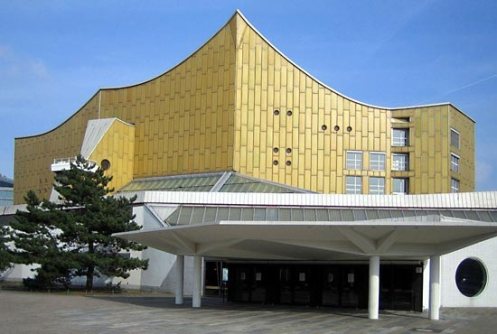
– H.B. Scharoun’s Philharmonic Hall in Berlin
– The phenomenon of aura
– The theory of aura
– Beethoven’s last works
– Shakespeare’s Prospero
– The Hegelian Karl Rosenkranz’s ‘The Aesthetics of the Ugly’
– The fauna and seleni of Hellenism
– Traditional aesthetics
– Benn
– The anatomical horror in Rimbaud
– Beckett
– Seventeenth century Dutch paintings
– Ugly vis a vis
– Images of terror
– Nietzsche’s dictum
– Affirmativeness of spiritualizing art
– Golden mean
– Max Frisch’s play about Don Juan ‘The Love of Geometry’
– Kant’s aesthetics
– Content [Inhalt]
– The peasants became a fit subject for art
– Rimbaud
– Baudelaire’s ‘Martyr’
– Lumpenproletariat
– Uncouth
– Mnemosyne
– Powerful aesthetic values are liberated by social ugliness
– Hannele’s ‘Ascension’
– Kant
– Hitler’s empire put his theorem to the test; as it put the whole of bourgeois ideology to the test; the more torture went on in the basement, the more insistently they made sure that the roof rested on columns. Doctrines of aesthetic invariance have the tendency to raise the reproach of degeneracy
– George clear-sightedly recognized this in his preface to his translation of ‘Flowers of Evil’
– Pegasus as having sprung from the blood of Medusa
– Aphrodite Peithon
– Hegel
– The idea of beauty draws attention to something essential without however articulating it directly p. 52
– Hegel
– Undifferentiatedness
– The history of the Hellenic spirit discerned by Nietzsche is unforgettable because it is followed through and presented the historical process between myth and genius
– Euripides’s dramas
– Epicurean philosophy
– Recalcitrant
– Beauty not only speaks like a messenger of death –as does Wagner’s Valkyrie to Sigmund
– Decomposition
– The reciprocal relations operative in art in the image
– Idiosyncratic relations operative in art is the image
– Idiosyncratic reaction
– Beauty’s aversion to the overly smooth, the pat mathematical solution
– The prospect of the rejection of ‘art for the sake of art’ is foreseeable
– rather no art than Socialist Realism
– Art is the refuge for mimetic comportment
– Art’s disavowed magical practices
– ‘the magic of art’
– The disenchantment of the world
– The Weimar classicists
– Eichendorff’s verses
– ‘clouds pass by like heavy dreams’
– Valeurs
– Rationality
– But it does not reflect its categorizing order
– Apparatchuks
– Expressionism and surrealism
– German expressionism and French Surrealism too converged in Fascism
– Zhdanov
– Benjamin’s theory of artwork in its technical reproduction
– Benjamin, ‘A Short History of Photography’
– Atget
– Brecht
– Benjamin
– Kant’s theory of schematism
– Constructivist approaches such as Mondrian’s…
– Hegel’s aesthetics
– Adolf Loos
– Art that is simply an oxymoron
– The magical element
– The enchantment
– Tabooed by the progress of the rational knowledge
– Hegel
– Jazz fans
– The de-aesthetization of art is immanent to art
– Artistic technique
– Dazzled
– Scientists
– Nomenclature
– Scientific terminology
– Magic as well
– That ‘means-end’ reaction that Kant had in general equated with the aesthetics
– technoligization
– Masterworks since Palladio
– Bach
– Alois Riegal’s concept of the artistic
– volition
– The Etruscan Apollo at the Villa Guilia
– Paul Klee’s work
– Bauhaus
– Adolf Loos
– vindication of what capitalism has oppressed – animals, landscape, women
– Karl Krauss
– In Proust , whose ‘Recherché’ is an artwork and a metaphysic of art
– Thus the last act of ‘Figaro’ is played out of doors, and in Freischutz ‘Agathe’ standing on the balcony suddenly becomes aware of the starry night.
– Kant
– The superiority of natural beauty
– Cult of the ruin
– An advertising gimmick for organ festivals and phony security
– The stigmata
– Desiderata
– The progress of civilization
– To how vulnerable they remain
– Verlaine’s
– Hegel’s theory that art is inspired by negativity, specifically by the deficiency of natural beauty
– Kant
– The world of phenomena
– Critical rejection of topoi
– Origin is the goal
– Song of birds is found beautiful by everyone
– Art extricates itself completely from myth and thus from the spell of nature
– ‘the Book of Nature’
– A tautology
– paintings of the Matterhorn and purple heather are kitsch
– That natural beauty cannot be copied
– The green forest of German Impressionism is of no higher dignity than those views of the Konigissee painted for hotel lobbies
– French impressionists so seldom chose pure nature
– Ballerina and racing jockey’s or the dead nature of Sisley’s winter scenes
– Pissarro
– Proust’s insight that Renoir transformed the perception of nature
– Beautiful girl
– Film star
– Natural beauty
– A caricature of itself
– The Old Testament prohibition on image
– No image of anything whatsoever
– Borchardt’s verse
– Betrachtung von Landshaft-Zeichmungen geschrieben
– Corot
– Tout court
– Monadological
– Beyond
– ‘oh how beautiful’
– Friedrich Hebbel
– The more intensively one observes nature, the less one is aware of its beauty, unless it was already involuntarily recognized
– Nature’s eloquence is damaged by the objectivation that it is the result of studied observation
– Temps dure
– Bergson
– what Kant called ‘sublime’
– Krause’s polemical genius
– Peter Altenberg
– Reflex of bourgeois megalomanias ridiculous as Husserl
– Poetaster
– Natural beauty
– Under its optic, art is not the imitation of natural beauty
– Nietzsche in ‘Sils Maria’ felt himself to be ‘two thousand meters above sea level, but even higher than that: ‘above all things human’
– In Holderlein’s ‘Winkel von Hardt’ [the shelter at Hardt]
– Shakespearean dramas
– ‘Hamlet’
– Wilhelm von Humboldt
– Goethe’s ‘Italian Journey’
– Humboldt
– Tuscany
– Bay of Biscayne
– Kant
– Poe’s portrayal of the maelstrom
– Solger’s and Hegel
– Goethe’s ‘Wanderer’s Night Song’
– Pure self-abandonment
– The dignity has been transformed into the hermetic character of art, into (as Holderlein taught) art’s renunciation of any usefulness whatsoever, even if it were sublimated by the addition of human meaning
– Schelling
– ‘aesthetics’ or the ‘Philosophy of Nature’
– ‘Aesthetics’ , Hegel
– Harmony
– The advances of dissonance
– Hegel
– A beauty of abstract understanding
– The ‘necessity’ of the ideal
– Bourgeoisie topos dating back at least to d’Alembert and Saint-Simon
– Topoi
– Hegel’s philosophy fails vis a vis beauty because he equates reason and the real the quintessence of their meditations
– The pseudomorphosis of art
– The idea of making the mute eloquent which demands a desperate effort, and the idea of what this effort would amount to, the idea of what cannot in any way be willed
– Baudelaire
– Erich Kachler
– The poem ‘Two Cranes’
– Beckett’s oeuvre
– Klee’s ‘Angelus Novas’
– Its apparition
– Leo Perutz
– Drommet red
– Science fiction
– Artworks are images as apparition, as appearance and not as a copy
– The contradictory and dissonant
– If apparition
– Pertinent here is Benjamin’s formulation of dialectic at a standstill
– His conception of a dialectical Image
– concept of Tessily’s aesthetics, that of the pregnant moment
– Imagerie
– Wedikind’s ‘Spring Awakening’
– Moritz’s Steifel
– Wols’ paintings
– What appears in the artwork is its own inner time; the explosion of appearance blasts opens the continuity of this inner temporality
– Its monadological nucleus
– Beethoven’s sonata movements
– Klagen and Jung
– Not to be hypostatized
– Diltheyian provenance
– Empirical through empirical deformation
– Spiritus
– The phenomenality
– Dazzling French works
– Sensual elements into bearers of a spirit
– Suaveness
– Beethoven’s ‘Kreutzer’ sonata which Tolstoy defamed as sensuous
– The ‘Kreutzer’
– Spirit – art’s vital element
– Critique
– Only in this act, and not through any philosophy of art that would dictate to art what its spirit must be, do art and philosophy converge
– Discrite and separate
– Kant’s
– Schilling’s model of art
– Spirit
– Spirit
– Hegel
– A process
– Hegel
– its spiritual content
– charlatanism of Farbton experiments
– the Kantian court of justice
– Hegel’s metaphysic of spirit results in a certain reification of spirit in the artwork through the fixation of its idea
– Kant
– Hegelian
– Process
– Progress of consciousness
– Since Greek antiquity
– Kant’s theory of the sublime
– For Kant what is sublime in nature is nothing but the autonomy of the spirit in the face of the superior power of sensuous existence, and this antinomy is achieved only in the spiritualized artwork
– tends toward barbarism
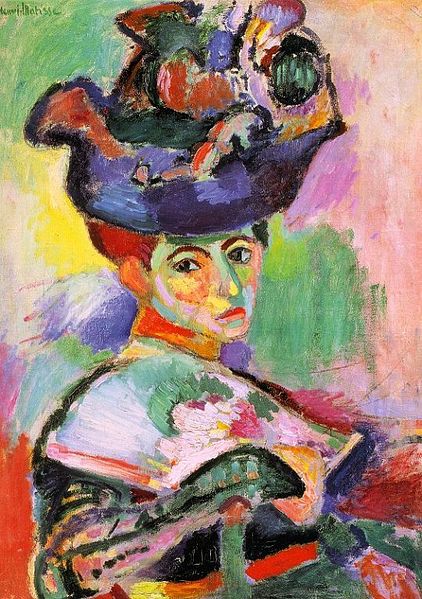
– The Fauvists
– Otherwise art deteriorates into a violent act of spirit
– The good souls who cross themselves
– in front of the reproduction of the d’amoisellles d’avignon or while listening to Schoenberg’s early piano pieces
– Rimbaud
– Karl Krauss
– Mallarme
– Breton and Symbolism
– Strindberg and late Ibsen
– the early German expressionists and Stephan George
– intuitability
– ‘Critique of Judgment’ – “the beautiful is that which pleases inversely without a concept’
– Precisely art’s spiritualization
– Lukac’s
– Anschanlichkeit [inuitability]
– Kant treats the judgment of taste as a logical function
– The dominant model is philistine. Appearance is to be purely conceptual, corresponding to the rigid dichotomy between freedom and labor. No ambivalence is tolerated
– Fundamental repose
– Theodor Meyer
– ‘Eroica’
– since Attic tragedy the work has been a hearing
– Brecht
– The language of advanced lyrical poetry achieves this
– A ‘parameter’. Indeed because art is essentially spiritual, it cannot be purely intuitive. It must also be thought: art itself thinks.
– ….subaltern importance. In Wagner’s words : an effect without a cause.
– Friedrich Theodor Vischer
– For artwork is things in space and time, whether this holds for hybrid musical forms such as improvisation….
– That in drama not the text but the performance is taken to be what matters just as in music not the score but the living sound is so regarded, testifies to the precariousness of the thing-character in art, which does not, however thereby release the artwork from its participation in the world of things
– The emancipation from the concept of harmony has revealed itself to be a revolt against semblance. Construction inheres tautologically in expression
– Under neurological study, the particular – the artworks vital element – is volatized; its concreteness vanishes
– Nietzsche
– Aesthetic nominalism
– Radically pathos-alien work
– Hamlet in a suit, Lohengrin without a swan
– The beginning of Proust’s ‘Recherché’
– During the nineteenth century aesthetic semblance was heightened to the point of phantasmagoria
– Hegel’s term: art-religion
– Schopenhaurian Wagner
– Those ‘antipodes’ George and Karl Krauss
– The novelists Proust and Gide
– The often adduced ant romantic mood of the time
– Phantasmagorical
– The rival of the romantic artwork
– The psychograph
– The ‘happening’ event
– Engagement
– Rejection of semblance by Dadaism. Mimetic comportment – by which hermetic artworks criticize the bourgeoisie maxim that everything must be useful
– The ivory tower
– The Furer of totalitarian countries
– Spleen
– Engage
– Authentic artworks are eloquent even when they refuse any form of semblance, from the phantasmagorical illusion to the faintest auratic breath
– The term expression
– Expressive
– expressive
– Artur Schnabel
– Apocryphal
– prefabricated
– beleaguered with inconsistencies
– monstrous
– All art is endowed with sadness
– ‘Oh, were it only so’
– Melancholy is…p. 105
– The defamation of the virtuoso’s element by Hegel ( who nevertheless was charmed by Rossini], which lives on in the rancor against Picasso…
– The tour de force, that great works must be simple
– Bach when…
– synthesis of harmonic thoroughbass and polyphonic thinking
– The logic of chordal progression divested
– First steps of Hegel’s ‘Logic’
– making the impossible possible
– Aesthetic semblance
– Semblance is not the characteristic formalis of artworks, but rather the trace of the damage artworks want to revoke
– trompe l’oeil
– Sachlichkeit
– Member disjecta
– Hegel’s formulation of the sensuous semblance idea. This view of semblance stands in the Platonic – Aristotelian tradition, which distinguished between semblances of the sensuous world on the one hand and essence or pure spirit as authentic being on the other
– In Kant’s critique of aesthetic judgment
– Hegel’s method puts Kant’s thesis to the test
– Virtue of aesthetic realization
– A husk
– Artist’s ‘skillfulness’
– Michelangelo, Rembrandt, Beethoven
– Dissonance is the truth about harmony
– How it appears in the late works of important artists
– The mimetic taboo
– Expression approaches the trans subjective remote from psychology
– Art’s mimetic consummation. Its expression is the antithesis of expressing something…remote from psychology.
– Art is secular
– Act of autonomous spirit
– Schubert
– ‘it is thus’
– Joyce
– Transformation of communicative into mimetic language
– Etruscan vases in the Villa Giulia
– The true language of art is mute
– Rilke’s line , ‘for there is no place/ without eyes to see you
– Emolument
– There is nothing as expressive as the eyes of animals, especially apes – which seem objectively to mourn that they aren’t human
– art oscillates between ideology and what Hegel confirmed as the native domain of spirit, the truth of spirit’s self-certainty
– The plenipotentiary of the no alienated. To make things of which we do not know what they are.
– Goethe
– The unconscious
– Baudelaire
– Automatic writing
– Schoenberg’s ‘Erwartung’
– Self-censorship
– Noesis noesos
– Beckett’s work
– Late Beethoven
– ‘intolerance to ambiguity’
– Immediately back of the taboo stands a sexual one: nothing should be moist, art becomes hygienic. Many artistic directions identify with their taboo and with the witch hunt against expressionism
– …once a prerogative of the avant-garde which rebelled against Jugenstil as well as a realism protracted by a turn towards inwardness
– Max Weber’s thesis
– Protestantism
– Benjamin once said that in his opinion inwardness could go fly a kite. This was directed against Kierkegaard and the philosophy of inwardness
– David Reismann termed ‘outer-directed’
– Aesthetic manipulation
– Neue Sachlikeit’s polished extirpation of expression
– Depositions of expression
– Sachlichkeit
– Evident that anti-expressive and like Mondrian’s mathematical artworks have by no means passed final judgment on expression
– In accord with a modernism that has not pledged itself to absolute construction – speak through things, through their alienated and mutilated forms p.118
– Hermeneutical
– It is their incomprehensibility
– Absurd
– Art is redemptive
– Mimetic impulses
– Methexis of artworks in reconciliation the ridiculous in art
– Calculated fun of the culture industry
– ‘The Magic – Flute’
– Der Freisshutz
– The constellation animal fool/clown is a fundamental layer of art
– Art’s enigmaticalness
– The connoisseur
– Artworks dubiousness
– Raison d’etre
– A taboo on aesthetic comportment as a whole
– Alieness to art often changes into aggression
– ‘what’s it for’?
– Poe’s letter
– Connoisseurship
– If one seeks to get a closer look at a rainbow, it disappears
– Trakl’s poems
– ‘Moonlight Sonata’
– Morike
– Mousetrap rhyme
– Enigmaticalness
– The enigma of artworks is their fracturedness
– Kafka’s damaged parables
– In fact, the praxis of important artists has an affinity with the making of puzzles, as is evident in the delight taken by composers over many centuries in enigmatic canons
– The work also suggests the solution to its unsolvable enigma
– ‘what is it all about?’ becomes ‘Is it true?’
– A taboo
– The terror
– Seismogram
– No message is to be squeezed out of Hamlet
– Hermeneutically sealed
– Physiogonomy of an objective spirit
– Interpretation
– The idea
– The idea
– The idea
– Friedrich Theodor Vischer
– Artworks have no truth without determinate negation, developing this is the task of aesthetics today
– Truth is antithetical to the phantasmagorical element of artworks
– Nietzsche’s critique of Wagner
– Truth content
– Great artworks are unable to lie
– Schelling
– shattered
– The condition for the possibility that philosophy and art converge is to be sought in the element universally that art possesses through its specifications as language sui generis
– Art’s spirit
– As Mignon’s prodigious verse prophesises
– Non confundor
– According to Bergson’s and Proust’s thesis
– The Marquis de Sade
– Methexis
– Comment c’est
– Baudelaire and Poe
– First ‘technocrats of art
– Baudelaire’s Satanism
– Beckett’s ‘Endgame’
– Egyptian
– Reconciliation
– Intransigence
– The nonfungability of content [Inhalt]
– Hic et nun
– Karl Heinz Haag
– Beckett’s ‘ Play’
– Selma Laglof’s ‘Marbacka’
– Tenebrous
– A sitar
– Proust’s ‘Recherché’
– Camera obscura
– Magic of an act
– Aesthetic experience is that something that spirit may find neither in the world not in itself it is possibility by its impossibility. Art is the ever-broken promise of happiness
– The traditional disiderata of homeostasis
– The substratum
– Mathematics
– A la letter
– Nietzsche’s comment… that in artworks everything only appears as if it must be as it is and could not be otherwise
– Logic
– Logic in art
– Thoroughbass music and commedia
– Logical consistency
– Unbridled logical consistency. Art is thus made to pay for the fact that conclusions cannot be drawn without concept and judgment
– Schopenhauer’s ‘principia Individuationis’ space, time and causality
– Schoenberg
– By dint of its heterogeneity
– Space, time and causality
– The many forms of disruption in modern art
– apodicity
– If Schopenhauer’s thesis of art as an image of the world once over
– The Jewish descriptions of messianic order
– The nature dominating ‘ratio’
– …by revoking the violent act of rationality by emancipating rationality from what it holds to be inalienable material in the empirical world
– The closure of artworks
– Scrutinized from another planet they would all seem Egyptian
– The purposiveness of artworks Kantian theorem
– Origin of artworks in magic
– In general, then, the hermeneutics of artworks is the translation of their formal elements into content [Inhalt]
– The Kantian conception of teleology of art modeled on that of organisms was rooted in the unity of divine reason
– Syntactically articulated
– Traditional aesthetics misses the mark
– Parti pris
– Indeed the concept of form has been the blind spot of aesthetics right up to Valery
– In Mozart the unity… p. 141
– Mozart the composer, who is praised above all others for the rigor of his form, masterfully juggles the concept of form itself
– Beethoven, in whom unity lost its substantiality under the nominalist assault, there is a need to assert unity far more strictly
– Today artists would like to do away with unity altogether
– Musical analyses
– …that the sought-after non-identity is achieved, without sameness of any sort, chaos itself would prevail as something ever same
– bestial
– phraseology that indulges in expressions like ‘consummate form’
– form is the central concept of aesthetics
– Whether art is in any way still possible depends precisely on this
– Art has precisely the same chance of survival as does form, no better
– Form is essential to art
– Mediates instead of simply being present
– The desiderata
– Aesthetics of Zeising’s era
– Renaissance
– Bach
– How little mathematical organizations
– ‘New Principles of Form’
– Erwin Stein’s program
– Schoenberg
– Twelve-tone
– His ingenious technique
– Mathematization
– Universality and necessity
– Painting form
– Formation of color
– Divergence and contradiction
– Form is the seal of social labor p.143
– e contrario
– The topos, the practical. Form converges with critique
– Ever since Nietzsche…
– The myth of Procrustes
– Kandinsky coined the term ‘ cerebral acts’
– Alienated
– The hermetic works
– Against Hegel – because content, which his aesthetics wanted to salvage
– In poetics, Benjamin’s study of the German Baroque shows…
– ….and ultimately of the alliance of aesthetics and idealist philosophy
– Ludwig Klages
– Relativism of Hegel’s ‘artistic will’
– The ‘little men’ they are
– Aesthetic resignation
– The rudis indigestique moles
– Webern’s intensity
– Artworks
– Prior to WWII, Schoenberg noted that Ariadne provides no thread to follow through the interior of artworks
– Temporal art forms
– In literature the problem of a denouement, which came to a head in Brecht?
– Spurious infinity, the inability to close, becomes a freely chosen principle of method and expression
– Beckett’s play
– Schoenberg
– March of his ‘Serenade’
– Lukacs
– Discharge of meaning
– Ghaccus
– Kant’s maxim
– [Inhalt]
– Hegel
– Hegel’s theory of romantic artwork
– Consonance, dissonance
– Triad and diatonicism
– By virtue of the taboos they radiate
– Rigorousness
– Ruthlessly eliminates all traces of the traditional and the negated
– Stripping the material of any qualitative dimension, which superficially connotes its dehistorization, is itself the material’s historical propensity, the propensity of subjective reason Since Kandinsky, Proust and Joyce incontrovertibly declined
– Kierkegaard
– Marxist theoreticians
– van Gogh
– Of van Gogh’s epoch
– What is the importance of Delft in Vermeer?
– ….as Krauss wrote; a gutter well painted is of greater value than A badly painted palace
– Hegel’s aesthetic of content
– The third book of ‘World as Will and Representation’, in its relation to art, idealism’s eternity is unmasked as kitsch
– ‘funf Schwierigkeiten bein Schrieben der Wahreit’ ( ‘five difficulties in writing the truth’)
– This is a blague
– Galerie des Glaces de Versailles of 1871
– They were Meir, the Basel mayor who promises to fetch the coal
– Fabula docet
– The philological procedure it tautologically extracts from…
– The secondary literature of Thomas Mann
– A thema probandum
– of Goethe’s‘ Iphegenia’
– Verlaine’s ‘Claire de Lune’
– Debussy
– And there is no lack of actual historical ties
– Intention does not always miscarry as the result of the inadequate form-giving powers of the subject
– Art’s inexhorable sell-criticism
– Chaos the ever lurking pre-condition of all art
– Kant’s magnificently paradoxical formula are ‘purposeless’
– Auschwitz
– The artistic ingenium
– It is easy to convict
– Neo-Dadaism of a lack of political imports and dismisses meaningless and purposeless in every sense of the word
– Beckett’s oeuvre already pre-supposes this experience of the destruction of meaning as self-evident
– Gunther Anders
– Beckett’s Plays
– But because they put meaning on trial
– Cage’s ‘Piano Concerto’
– Montage and photography
– Montage has its appropriate place in film
– Jugenstil
– A stream of lived experience
– The aesthetic principle of construction
– Microstructure
– Modern art
– The anti- organic praxis of montage
– Gyorgy Ligetti
– Most notably in seventeenth century Dutch painting and the early English novels, art has absorbed contingent elements of landscape
– The bourgeois
– A hostility to art
– Reprivatizing
– Subjectivity is made to pay the price for production of the untruth of aesthetic semblance
– A nexus of meaning
– A unity
– Harmony
– Antithesis
– Culinary
– The most extreme incoherence and dissonance
– The pure consonance of a triad
– Laudation tempori acti
– A horror vacuui
– Hermann Grab
– Bach was so incomparably superior to the music that preceded him and that of his epoch….
– Symmetry
– The phenomenon of distortion in Picasso
– Schoenberg
– ‘Moon fleck’ of Peirrot Lunaire’
– When traditional aesthetics – Hegel’s included- praised harmony in natural beauty, it projected the self-satisfaction of domination onto the dominated
– Static and dynamic
– Stockhausen’s Zeitmabe
– Heteronomous order, a constant of German ideology
– Webern
– Shubert’s ‘Wintereisse’
– Affirmation
– This apriority of the affirmation is art’s idea’s logical dark side
– According to cliché, great works are ‘compelling’
– The jigsaw-puzzle aspects of musical classicism – the mechanical moments – Bach’s technique
– name composition before, as Valery noted
– Greek sculpture
– …the art of late centuries. This is why classical sculptures stare with those empty eyes that alarm
– The floor mosaics of the villas in Ostia…
– Attic classicism – the real barbarism of antiquity the slavery , genocide, and contempt for human life .p. 161
– Debased by sexual taboos
– Baudelaire’s
– A function in commercialism, which exploits a mutilated sexuality, but equally the dark side of Christian inwardness. The concrete transience of the classical however, which Hegel and Marx did not experience
– Goethe’s ‘Iphegenia’
– and Schiller’s ‘Wallenstein’
– Brecht
– Common sense
– Mozart
– Valery
– Content [Inhalt]
– The classical ideal
– The countermovement tat classicism shares with the acme of Greek philosophy
– Taboo
– The desiderata of clear-cut division’s formal perfection
– Baudelaire’s sense
– paradigmatical status
– Contemporary aesthetics is dominated by the controversy over whether it is subjective or objective
– Intention recta
– Between classical and romantic
– Hegel
– A taboo
– ‘Critique of Judgment’
– Subjective judgment of taste
– Kant
– Kantian
– The epistemological intentio obliqueia
– The concept of aesthetic feeling
– Kant would have attributed such feeling as ‘taste’ exclusively to one…
– From the question of good and bad
– A bad artwork
– Kant
– ‘that which pleases universally, without requiring a concept
– pleases universally
– Each and every person
– The act of pleasing is external to the work
– ‘Critique of Judgment’
– Kant’s aestheticism,
– His advance must be emancipated from absolute idealism this is the task
– that today confronts aesthetics
– Theoretical
– …that beauty is universally pleasing presupposes a consent that is…subordinate to social convention
– objectivity of ethics, by way of universality
– conceptual formalization
– aesthetic phenomena
– contingency
– Kant
– Critique of a dialectical aesthetic
– …but rather spirit bound up with, performed and mediated by the object
– impenetrability
– the reciprocity of subject and object
– The marble block
– piano keys
– If the tool has been called the extension of an arm, the artist could be called the extension of a tool, a tool for the transition from potentiality to actuality
– Art’s linguistic quality gives rise to reflection over…
– Masked by the lyrical ‘I’
– Poetics fictional character of poetry and of music
– The grammatical ‘I’
– The empirical ‘I’
– Latent ‘I’
– No art pour l’art
– The antithesis of reified monstrosity
– The ‘We’ introduces its literalness…
– Ultimately inescapable participation in communicative language
– a ‘We’
– The plastic arts speak through the ‘flow’ of apperception
– ‘behold’
– The history of art
– According to Trotsky’s thesis, no proletarian art is conceivable , only ‘socialist’ art
– Paradoxically art…
– Schumann’s ‘Scenes from Childhood’
– “the Poet Speaks” – one of our earliest models of Expressionistic music
– Not to be banal requires effort
– Marxian terms; they need to reflect a relation of living labor as if it were a thing
– The multiplicities in the aesthetic continuum want synthesis
– Meta-aesthetically
– The membra dijecta
– Wagner’s words
– Nietzsche’s “Beyond Good and Evil”
– Self-alieness
– Genius
– Historophilosophical objectivity
– Kant’s anti- psychologism
– Art’s authenticity
– Fichte
– Principia individuationis
– The intellects archetype, genius as a fact of art
– “Critique of Judgment”
– Crass elitism. The concept of genius becomes the potential enemy of artworks, with a sidelong glance at Goethe, the person back of the work is purported to be more essential than the artworks themselves
– A kitsch biography
– Often neurotic art-damaged individuals
– What deserves to be salvaged in genius is what is instrumental to the work ingenious
– To be genial means to hit upon a constellation
– Schubert’s nouveau
– Original genie
– The difference between Bach and his contemporaries suffices….
– Benjamin’s sense of the ordinary
– Originality remains touched by the historical fact of the category of individualness from which it was derived p.172
– Fantasy
– Fantasy
– Absolute invention
– Sublime
– Fantasy
– the Adagio of Schubert
– Turner’s seascapes
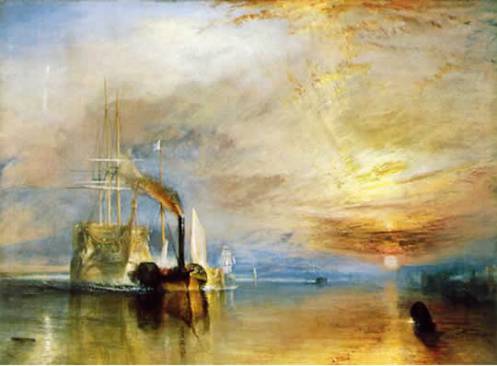
– ‘Appasssionata‘
– Beethoven
– ‘Eroica’
– The sense that the freedom to the involuntary is what distinguishes them from the dilettante’s foolish cliché’
– Fundamentium
– Aporetic nexus
– Fantasy may be defined as the differential of freedom in the midst of determination
– Neoclassicism faltered because it deluded itself with the goal of achieving an ideal of objectivity
– A rigor
– Valery
– The ‘chaotic’ vitality he despised
– The abduction of the subject
– Projection
– Benjamin
– There is no redemption for artworks
– Fundamentium in re
– ….thus art turns against art
– Psychological cathexis as a condition of aesthetic perception
– George’s symbolist teaching
– The ‘Tapestry ‘ poem – an art poetique
– The work is set free
– Teleologically sexual experience
– This is why art mocks verbal definition
– Artworks paradoxical nature, stasis, negates itself
– Mozart, who seems so unpolemical
– What crackles in artworks, is the sound of the friction of the antagonistic elements that the artwork seeks to unify; it is script not least because, as in linguistic signs, its procession element is enciphered in its objectivication
– Fall victim to time. The curse of neoclassicism
– Beethoven – ‘Appasionata‘ -he commented that it would still be played in ten years later
– Stockhausen’s concept of electronic works
– The common declarations against fashion that equates the transient with the nugatory p.178
– A stubborn limitation to individual quiddity
– Picasso’s rayonism
– Haute couture experiments
– The artwork is a process essentially in the relation of its whole and its parts
– The indefeasability of what is sketched on paper, painted on canvas, or carved in stone is no guarantee of the indefeasibility of what is essential to the artwork, its spirit – which is dynamic in itself
– Philistinism
– The dedication of the ‘Eroica’
– The imitated nightingale in ‘Critique of Judgment’
– Andersen’s famous fairy tale
– One sees a painting differently if one knows the name of the painter
– Andersen
– Stravinsky’s opera
– Hermeticism
– Goethe
– Entelechy, the synonym for monad
– The monadological character of the artwork
– Anton Weber’s works
– The universal
– Valery
– Few fulfill the strict concept
– Guilt for this
– Valery
– Art’s aporia
– A Sprachkunstwerk
– Incommensurable with historicism
– The more intensively one seeks to comprehend Bach, the more puzzling is the gaze he returns
– Bach, ‘A Well-Tempered Clavier’
– Alienation of contemporary art
– Freud’s dictum that the uncanny is repulsed because it is all so familiar
– Art-alien element, which art senses; is admixed to aesthetics
– No more than juxtaposition
– Retroactive metamorphoses
– A psychical gestalt
– Robert Schumann
– The tendency towards disintegration
– toward amorphousness
– literally Hegelian
– paradigmatic of art’s illusory element
– Beethoven
– Ravel, Valery
– Thomas Mann
– Art is a higher form of prank. P. 185
– The unity of artworks is their caesura from myth
– Goethe
– Bach prelude
– Mastery over material
– Homer’s tale of Penelope
– What cunning Penelope inflicts on her artifacts
– Proust’s ‘Bergotte’
– Vermeer’s painting
– Beethoven
– Adagio of the Sonata in D minor op 31 no. 2
– Schubert – the mimic par excellence
– Schoenberg’s string Quartet in F sharp Minor
– Mahler’s ‘Ninth Symphony’
– The solo horn
– Philistines
– Greater possibility of reconciliation
– Debussy
– That style flamboyant
– Harlequinade
– Holderlin
– Heterogeneous
– Correct consciousness in artwork
– Most progressive consciousness
– Productive critique of…
– Anton Bruckner
– Rimbaud’s ‘ il faut etre absolument modern’
– Great artists since Baudelaire have conspired with fashion
– Richard Strauss, perhaps even Monet
– Progression
– Progressive consciousness
– Marx’s comment that each epoch solves the tasks that are posed to it
– Thus ever cinematographic gaze may appear innate
– ‘Parsifal‘
– The ‘logicality’ of artworks
– Benjamin once spoke of the traces that the innumerable eyes of beholder’s have left behind
– Goethe’s dictum that it is hard to judge what once made a great impression indicates more than merely respect for established opinion
– Mathias Claudius and Johann Peter Hebel
– Friedrich Hebbel
– Flaubert of Salamnbo’s parody
– In Zermott the Matterhorn…
– This wisdom is a historicophilosophical rationalization
– Occasional great discoveries or exhumation
– El Greco, Buchner and Lautremont
– Benjamin
– Be brushed against the grain
– Nugatory
– Epoch of historicism, which ‘ransacked’ everything it could lay its hands on
– Superior in quality p. 195
– Beethoven
– The crasser effects of younger composers like Berlioz. The superiority of great impressionists over Gaugin
– Whereas Kafka’s writings violate the col of the novel reader by the explosive empirical – – impossibility of what is narrated
– ….by Westerners and Stalinists
– Kafka’s writings
– Forms that made nature taboo
– Kant
– The self-consciousness of spirit
– Art’s spirit is the self-recognition of spirit itself as natural
– Taboo for art
– The dialectic of the elemental and spirit is the truth content
– Spiritualized
The sublime which Kant reserved exclusively for nature, later becomes the historical constituent of art itself
– Nature
– The counter image of mere existence
– Schiller
– The spell of sovereignty’s aim
– Kierkegaard’s subjectivally terms ‘aesthetic seriousness’
– unarbitrated contradictions
– opposition to
– Beidermeier invention
– Collapsing constellation’s in Mahler’s works
– Constellation
– … the half-century before Brecht, Debussy entitled his most important orchestral work ‘Jeux’
– Napoleon
– Even in Kant’s formulation
– What Haydn implied in his reaction to Beethoven when he called him the great Mogul
– Tolstoy’s ‘Kreutzer Sonata’
– Kant directly
– Even Kant
– Images of a space liberated from fetters and strictures
– Tragedy and comedy perish in modern art and preserve themselves in it as perishing
– The medieval ordo
– Croce’s art – critical reflections
– Bach
– Hegel
– …Attic tragedy was also the crystallization of no less a universal than the reconciliation of myth
– The principium individuationis
– ‘construct’
– ‘concreteness’
– Fugues become fetters historically
– even ‘ Figaro’
– Schoenberg
– Beethoven
– The glorification of the artist as creator does him an injustice
– Whoever creates authentic forms fulfills them – Croce’s insight
– His mentor – Hegel
– The development of art
– Bach
– Structuration of his works
– August Halm, now disgracefully forgotten
– Canzona and Ricercare p.201
– Platonic ideas
– Kant
– From the perspective of teleology
– Plato’s assessment of art shifted according to his estimation of its presumptive political usefulness
– Aristotle’s aesthetics
– In accord with Hellenistic tendencies toward privatization
– The works become monads
– Pragmatism
– Plato’s judgments
– Ontological entetement
– Germanic
– Scientism
– Prix du progress
– All art is reminiscent of masks
– The magic masks p. 203
– Comedic del’Arte naturalistically
– if this form of theatre…
– .. society provided the
– Nietzsche’s defense of conventions
– As poetry and prophecy
– Wittgenstein’s famous maxim
– Ontological asceticism of language is the only
– way to say unutterable
– Under the spell of authority
– The primal aesthetic phenomena
– Bourgeoisie art
– Brecht said
– Aesthetics irrationality and rationality
– Like Schoenberg
– Retrospectively
– Hegel
– Constitutive in Beethoven’s subjective art was…
– Beethoven
– Berg
– ‘tone’
– Conformist traits in non-conformism
– Mautz has shown…
– Kandinsky’s book ‘The Spiritual in Art’
– Phenomenon
– Demagogical effect
– Widespread intellectualism that has degenerated into the cultivated terrain of the culture industry
– Hegel and Marx
– Art is enmeshed in the historical movement
– Of growing antagonisms
– Hegel’s theorem of art as the consciousness of needs
– Art persists
– ‘il faut continuer’– Admittedly art remains caught up in what Hegel would call ‘spirit’
– The mono-dimensionality of the world spirit
– Go beyond the ever sameness of the administered world
– Beethoven’s last quartet
– Inhomogeneous
– The Italian public’s attitude to opera from the time of Neapolitans to Verdi, perhaps even to Puccini
– thoroughbass music
– Dutch and Italian polyphony
– Bach
– The work of purportedly protean natures
– Concretized and therefore, as ever, limiting
– Phylogenetic ally
– Ontogenetically
– Brecht
– Taboo
– The history of art has nodal points
– Bach’s oeuvre
– Universal construction of the history of art
– Arts double character as being socially determined in its autonomy and at the same time social. When the social character of art overwhelms in its autonomy, when its immanent structure, explosively contradicts its social relations, autonomy is sacrificed and with it art’s continuity, it is one of the weaknesses of the history of ideas that it idealistically ignores this.
– Society’s ruling structure
– The incommensurable genius of…
– The essence of its history
– Differentiation of harmonic consciousness
– From Giotto and Cimabue to Piero della Francesca… to conclude that Piero’s paintings are therefore better than the frescos of Assissi (Giotto) would be schoolmarmish
– Every work is the mortal enemy of the other
– In concreto
– Subcutaneous structure of Bach’s most important instrumental works
– Yet it would be ridiculous to wish for perspective in medieval paintings which would rob them of their specific expression…
– Perspective in modern painting produces correspondences
– Western music’s polyphony and rationalization
– As a result, only Western music achieved full autonomy
– Bound up with spiritualization p.212
– Correlative of objective control
– The prix du progress
– Die wintereisse
– Webern
– dubious
– dignity of Webern’s music, differentiation
– Objectivation
– Che Guevera
– Progress of spirit in Hegel’s sense
– Beethoven
– Bach
– Each had a superior mastery of the material
– The truth-content reached a higher development in Beethoven than in Bach
– This criterion surpasses all others
– The aesthetic name for mastery over nature – – technique
– The artisanal praxis
– The technical aspect is only one aspect among many others
– Each artwork is a human artifact
– Shakespeare’s nominalist breakthrough
– A metaphysical experience
– The technical questions of artworks become infinitely complex and cannot be solved
– Technique
– Logic of the works
– The suspension of logic
– Métier
– Parallel fifths
– Debussy
– Métier
– The dilettante’s image of artistic skill
– Mollified
– The ‘flow’
– Gradus ad Parnassum
– Alban Berg
– Strauss
– Schoenberg
– Berlioz
– Beethoven
– ‘Problems in Teaching Art’, Schoenberg
– Schoenberg’s economical Piano Pieces Op. 11
– Strauss, ‘Helderleben’
– Picasso’s ‘Les Demoiselles d’Avignon’
– Kant’s idea of purposefulness
– Applied arts are, however a prophetic warning for art
– Saint Simonian ‘technocracy’
– Berlioz, ‘Symphony Fantastique’
– Late work of Beethoven
– Benjamin’s reflecions on Surrealism began ‘It no longer feels right to dream about a blue flower’
– Beckett’s as well as Celan’s poetry
– Rebaptized Kurfustenctamn as Kudamin
– Cubism
– Valery’s theory, a rational theory of aesthetic irrationality
– The guilt
– Nominalism
– Form that
– Bach
– Traditional forms
– Cliché praises
– Aristotle
– Form of Mozart
– Brecht’s difficulty
– The classical Viennese sonata
– Beethoven to Mahler
– Bach
– Italian concerto
– Mozart’s rondo
– Beethoven
– Klee’s best work
– Action painting, l’art informelle
– Beethoven’s music, which was no less affected by nominalism than was Hegel’s philosophy
– Hegel called the unfolding of truth occurred as the same process of unfolding both in art and philosophy
– Construction is…
– Schelling’s speculative philosophy
– Plein air
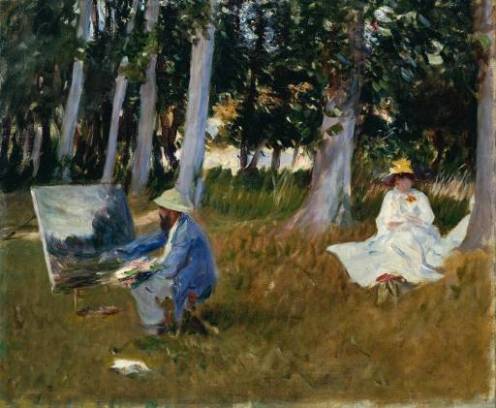
– Nominalism’s progress
– Haydn’s development
– Sort of residual ontology
– A kind of cunning of unreason
– Comment c’est
– ‘worked’
– Dynamic synthesis
– Tableaux economiques
– Subordinates all
– Haydn, one of the greatest composers
– ‘Les Liaisons Dangereuse’
– Baudelaire
– Le spleen de Paris
– L’art pour l’art
– His dugout
– Baudelaire
– Il faut continuer
– Beckett’s writings
– mores
– one of Tristophanes tactics
– A faut social
– Don Quixote
– ‘socially useful’
– Society
– Social force of resistance
– Social development
– Self-alienation
– Political position
– Music, betrays all art
– Brecht’s China in ‘The Good Woman of Setzuan’
– Schilller’s Messina in ‘The Bride of Messina’
– Foolish
– This culture industry
– What is social in art is…. P.227
– L’arte pour l’arte
– Social labor
– Charged with false consciousness
– Intrinsically
– L’arte pour l’arte theorists
– Marx’s scorn
– Milton, ‘Paradise Lost’
– Artworks
– Survival of art becomes precarious as soon as it becomes…
– Art cannot
– Art’s fetishism
– Content [Gehalt]
– Collectivization
– A social explanation
– Neutralization
– Cultural commodities
– Surrealism began as a protest against the fetishization of art as an isolated realm
– Painter’s
– Andre Masson
– Salvador Dali
– Exalted society painter
– The Lazlo, or Van Dongen of a generation
– Modern tendencies
– Long-term contracts between painters and art merchants
– A ‘personal touch’’ or more blatantly, a ‘gimmick’
– German Expressionism
– Expressionist works
– Soviet Union began to prosecute radical art
– Americans say ‘to go commercial’
– Social matters
– Emile Meunier’s idealized coal miner
– Blut–und-Boden authors
– Zola
– Semitic clichés
– Kafka
– Kleistian quality
– Kafka’s form
– Kafka’s is made acceptable
– Kafka’s epic style, is, in its archaism, mimesis of reification
– the artistic subject is inherently social
– Schoenberg envisioned a work of integral construction
– The aesthetic principle is not to be played out as sacrosanct
– Brutality towards things is potentially brutality towards people
– Social struggles
– Political opinions
– Euripides
– Collision between mythical law and subjectivity
– Historicophilosophical
– Real partisanship
– Lukacs
– Figuration
– The concept of art
– Mozart’s works
– Brecht’s exclusivity
– Principium individuatinous
– Ideology, socially necessary semblance
– Stifter
– Ideological in its intentions
– Fabula docet
– The eccentricity
– Alienated
– Allergic to the happiness of color
– The bad conscience of art as a whole
– Art cannot…
– Schiller’s tirade
– Catastrophe, art
– The horror that has transpired
– Barbarism
– Secure the spheres of spirit and culture
– Only in so far as sprit…
– Greece’s new tyrants knew why they banned Beckett’s plays, in which there is not a single political word. Asociality becomes the social legitimization of art
– Emil Staiger
– Leitbild
– Sexual repression
– The rage against the purported destruction
– Real destructive wishes of the indignant
– Inevitably, those who rail loudest against the anarchy of modern art…
– The incomprehensibility of physics
– Schizoid arbitrariness even though the aesthetically incomprehensible gives way to experience no less than does the scientifically obscure
– Advances from self-disdain to self-destruction
– ‘I like that’
– Munus vult decipi
– Leibniz’s formulation, they represent this process windowlessly
– Artistic labor is social labor
– Artworks
– ‘natural monopoly’
– Just as pots and statuettes once were…
– Sartre rightly accented that the principle of l’arte pour l’arte
– Principle of l’arte pour l’arte p.237
– George in a letter excoriates Hofmannsthal for having allowed the painter in ‘Death of Titian’ to die of the plague. L’arte pour l’arte’s concept
– Jugenstil

– Ibsen’s formulaire description of vine leaves entwined in locks of hair and of dying in beauty
– Baudelaire and Rimbaud
– Imagery of Paris , in Baudelaire’s instance
– Kitsch
– Rilke’s rapture over cabaret songs and the fragrance of an old chest….
– Picasso’s ‘Guernica’
– Rage at art reacts…. P. 237
– It is actually this against which the artworks…..
– The ‘we’
– External ‘We’
– Greek philosophy
– The good and bad marks Plato distributed to art according to whether or not it conformed to the military virtues of the community he confused with Utopia. His Totalitarian rancor against rural or spitefully invented decadence even his aversion to the lies of the poets…
– Aristotle’s ‘Poetics’
– Consciousness dreams of the ‘new’
– Jugenstil
– D’Annunzio and Maeterlinck
– Kitsch
– Erwin Ratz’s question
– Art respects the masses by presenting itself to them as what they could be rather than by adapting itself to them in their degraded condition.
– The model of aesthetic vulgarity is the child in the advertisement, taking a bit e of chocolate with eyes half closed as if it were a sin. P.240
– Vulgar
– In its clowns, servants and Papagenos
– Advertisement
– Beauties whose praise of toothpaste….unites the billboards of all lands, those who know….
– Art as vulgar
– Act of Budapest operettas
– Holderlein’s verse
– The vulgar
– Vulgarity greedily
– Art’ capable of this because, as the negation of practical life, it is itself …and indeed not simply on the basis of its genesis and the fact that, like every artifact, it is the result of activity. Just as its content is dynamics in itself
– Beethoven’s symphonic language
– Tolstoy’s ‘Kreutzer Sonata’
– Tolstoy’s of humanity
– Art
– A cryptogram of domination
– Barbaric appetite of the species
– That artworks intervene politically is…..
– The ideological effect of Wagner’s music
– ‘Saint Joan of the Stockyards’ Brecht
– Preaching to be saved
– Artworks
– Aesthetic cultivation
– Art requires self-exteriorization
– The jargon of needs
– The need for art is itself largely ideological
– Life would be possible without art, too, not only objectively but also with regard to the psychological economy of consumers who in modified circumstances are easily moved to changing their tastes, in that their taste follows the line of least resistance
– Superfluous
– Self-reproducing barbarism
– Catastrophe
– What Marx characteristically old-fashioned named of live aesthetic experience
– A listener is
– That of its truth or untruth is more than subjective experience
– Ninth symphony
– This is it
– Comprehending experience (Erfahrung)
– The lived experience (Erhebenis)
– Ninth symphony
– ‘Aesthetic of the Sublime’ , Kant
– Its attitude of objectivity
– The ‘I’ is seized by the unmetaphorical semblance – shattering consciousness; that is itself not ultimate, but semblance
– ‘appropriate measures’
– Hegel’s break from sensualist aesthetics was of a part both with the spiritualization of the artwork…
– However to jettisoning categories
– The law of form
– Brecht taught…. P. 247
– Goodness requires the masks of evil
– The moribund theater of philosophy and intrigue
– In ‘Romeo and Juliet’
– Shakespeare
– The taboo
– Praxis is
– Don Quixote may…
– Cervantes work
– Works, such as Werther
– Plaidoyer
– Refusal of the status quo
– Their truth content
– Stefan George
– Arno Holz
– George’s self –staged aristocratic posturing contradict
– The brutality of George’s social attitude
– Arno Holz
– Because artistically
– …bound to a vulgar idealism
– Bourgeoisie
– ‘Savage Paris’
– A contra couer
– Stylization
– Sudermann
– P.258
– Beckett’s ‘Godot’
– And ‘Endgame’
– Functional society
– The function of television for the adaptation of Europa for Developing Countries Obtuseness
– Steurmann
– Fascism
– Pronuncamento
– Lewis Carroll’s Queen of Hearts: ‘ Off with their heads!’
– The Marxist theory of ideology
– Popular music
– Mannheim fashions
– Herbert Marcuse’s critique of the affirmative character of culture
– The double character of art
– Faits iociaux
– Physiognomic ally decipherable
– Beethoven’s kettle drums
– Wagner’s irritation with those vestiges of divertissement in Mozart
– …during WWII
– Prior to Stalin
– Zhdanov and Ulbricht’s
– Heavy German industry
– Andre Malreaux
– Avante garde doctrines
– Pound and Eliot
– Baudelaire’s modernism
– The Communist Party line, Brecht’s hatred of ‘Tui’ intellectuals
– Strindberg and Schoenberg
– The interpretation of Greek myths, such as Vico’s interpretations of that of Cadmus was ingenious
– Shakespeare’s plays to the idea of class struggle
– Lukac’s called their ‘perspective’…
– Caliban’s bourgeoisie concreteness and the corrupt Venetian merchants
– Semi-matriarchal world in ‘Macbeth‘ and ‘King Lear’
– The complete disgust for power in ‘Antony and Cleopatra’
– Shakespeare
– Shakespeare could not have been Bacon
– Theatrum mundi
– Picasso and Sartre opted for a politics that disdained what they stood for aesthetically
– The dichotomization
– Important surrealists such as Max Ernst and Andre Masson who refused to collude with the market and initially protested against the sphere of art itself
– Masson largely abandoned representation
– Schoenberg, Klee and Picasso
– Ibsen’s bravest accusation’s
– Gorki’s bravest accusations
– Hauptmann’s ‘Hannele’s Ascension’
– Aldous Huxley was already struck by the emerging comicalness’s of Satanism p. 257
– The evil that both Baudelaire and Nietzsche found to be lacking in the liberalistic eighteenth century
– Jugenstil
– Sisyphus
– Modern Art
– ‘happenings’
– Beauty in art is the semblance of the truly peaceful
– semblance
– Ever falsifying photography
– materialistically
– The innervation
– Force of externalization
– Index falsi
– Young Marx called alienation and self-alienation
– To affirmative replication and harmony wish a future art
– Acute
Paralipomena
– Emphatically, art is knowledge, though not knowledge of objects
– The idea of value – free aesthetics is nonsense
– No one can understand Wagner’s ‘Meistersinger’ who fails to perceive that element denounced by Nietzsche of a narcissistically self-strategy positively, that is, its element of untruth
– In art, more than in any other sphere, it is right to speak of value. Like a mime, every work says: ‘I’m good, no?’ to which what response is a comportment that knows no value.
– Arts very raisson d’etre
– Benjamin, who philosophically potentiated to the extreme the immersion in concrete artworks was himself motivated toward a turn to universal reflection in his theory of reproduction
– …. As park may occasionally flash up – as it did in Hegel’s ‘Phenomenology of Spirit’
– Between the concretimon of spiritual experience and the medium of the universal concept
– Desiderata
– Aesthetic aims at concrete universability. The most ingenious analyses of individual works are not necessarily aesthetics, this is their inadequacy as well as their superiority over what is called the science of art.
– In this regard, even a nonidealistic aesthetics is concerned with ‘ideas’
– The qualitative difference between art and science does not simply consist in using the latter as an instrument for knowing the former
– The growing relevance of technology in artworks must not become a motive for subordinating then to that type of reason that produced technology and finds its continuation in it.
– An erzats
– Its untruth becomes manifest in the objectivity of artworks
– In American argot – a ‘battery of tests’
– Theory of knowledge
– A lumine
– Hegel’s argument
– The culture industry Of art as a vestige of animism
– The Murray Test
– the bare asservation
– a hit song
– What philosophical aesthetics held to be liberating
– in art – in philosophical argot , what transcended time and space – was the self-negation of the contemplation that is virtually extinguished in the works
– ‘outer – directed’
– Objectivity
– Aesthetic objectivity
– Phenomena of art
– Spirtitual element
– Fallible both for itself and for others
– Aesthetics effectively means the study of the condition and medications of the objectivity of art. Hegel’s argumentation against Kant’s subjective grounding of aesthetics is too facile….
– The sensorium. In general, the supposed basis of art is predicated on subjective forms of reaction and comportment
– Croce’s achievement
– Hegel’s classicism
– ‘Philosophy of Right’
– Taking inventories of their effects
– The fetishization of artworks
– Positivism draws….
– Opera
– Tired businessman
– Schinanaeder had no need to dream up ‘Bachtofen’
– The libretto of the Magic Flute
– The ‘Queen of the Night’ is not presented as an evil force
– In relation to artworks as ‘monads’, the pent up force of aesthetic consciousness constituted beyond the individual work must participate. It is in this sense that ‘understanding art’ is meaningful
– The phenomenon
– Stravinsky’s ‘Reynard‘
– Wedekind’s “Lulu’
– Berg’s music
– extra-aesthetics
– supra-aesthetics
– A thing, a faut social
– Meta-aesthetics in the idea of truth
– Trans-aesthtics
– …..of a mere spectator
– The instant of the transition is art’s highest
– The negation of subjectivity
– Express the grief over one’s own mortality
– Kant sensed something of this in his aesthetic of the sublime, which he excluded from art
– The force of spontaneous reaction
– Art is supposed to be like love, spontaneous, involuntary, and unconscious
– Indistinguishable
– Subcutaneously
– Great music of Viennese classicism which nevertheless corresponds perfectly with the idea of organic development in that era’s philosophy
– Creation ex nihilo
– The sovereign artist would like to animal the hubris of creativity
– The keys of each and every piano hold the whole ‘Appasionata’ the composer need only draw it out, but this, obviously, required Beethoven
– Vis – a vis
– via Jugenstil
– Schoenberg’s ‘Pierrot’
– Maeterlinck and Strindberg
– Jugenstil
– The key to contemporary anti-art, with Beckett at its pinnacle
– Jugenstil
– Hegel
– As it is evident in its name, Jugenstil is a declaration of permanent puberty: it is a Utopia that barters off its own realizability
– Baudelaire, Manet and Tristan
– The allure of freedom
– Sometimes sterile aspects
– Chaos forgotten becomes disaster
– To sacrifice cherished habits
– Industrial procedures that increasingly dominate the material production of society
– Industrial techniques
– Based on a pattern
– This exerts itself as a force of antinomy of the aesthetically new
– Just as there is nothing that is simplifying per se, and just as anything ugly can become beautiful through its function, so there is nothing that is simply beautiful
– Beauty and ugliness
– Beauty in historical in itself as what wrests itself free
– Perugia and Assisi show the highest degree of form and coherence p. 273
– The extra-aesthetic
– Hegel was the first to oppose aesthetic sentimentalism that seeks to discern the inherent content of the artwork not in the work itself but rather in its effect
– Concern w mood
– Art-alieness
– A non-aesthetic facticity
– The concept of aura
– Protagonists
– Complete obtuseness
– ‘to breathe its aura’
– Terre a terre
– Mood in artworks once meant that in which the effect constitution of works formed a murky amalgam that went beyond the elements
– As the semblance of sublimity
– Kant
– My tears well up, earth I am returning to you’
– Spiritualization
– Otherwise art becomes infantile
– Victorian era
– Force of sexuality and the sensuality related to it
– Theodor Storr’s novellas
– Early Brahms
– Sensual satisfaction punished at various times by an ascetic authoritarianism; has historically become directly antagonistic to art
– Berg’s ‘Lulu‘
– Andre Masson
– Requires the culinary
– Beethoven’s Op. 51 no. 1
– The synthesizing spirit
– Their lethality
– The crisis of art
– Mimetic element
– Without art’s eloquence, which is now in the process of perishing
– The tales of nature
– Benjamin’s dictionary-that the paradox of an artwork is that it appears
– Every artwork is in fact an oxymoron
– Reality sui generis
– Profusion of desiderata
– Locke’s infamous universal triangle
– Paradox of an artwork becomes…
– Interlocutor
– But that’s just the trick
– Virtuosos
– Virtuosity
– Virtuosos and the martyrs of artworks
– Ballerinas or coloratura sopranos, somethi9ng sadistic has become sediment, some traces of torture required to carry it out
– The name ‘artist’ is borne both by the circus performer and one who has most turned away from effect, who champions the audacious idea of art, to fulfill its pure concept
– Such fixation
– Duration of the transient
– Frobenius
– The apotheosis
– Walter Resch
– ‘ a marked fear of portraying human beings’
– A ‘taboo’
– ‘ritual deconstruction of the image’
– This taboo originates in a fear that the animal would no longer roam about.’ This taboo originates in a fear of the dead….. which was a motivation for embalming them in order – so to speak – to keep them alive
– Felix Speiser’s work on wood figures of the New Hebrides
– Speiser interprets
– The origin of ‘signification’
– ….as did the revolt against death as a magical nature-bound practice
– Huxley constructed in the ‘feelies’ of his ‘Brave New World’
– To this extent sabotages
– Nietzsche called for an anti-metaphysical but artistic philosophy
– A mix of Baudelaire’s cult of the lie and the chimerical
– Aerial concept of the beautiful in Ibsen
– Coup de main
– Fetishization of which relativists would have nothing to discuss
– Their comportment is reified
– Relativism
– Vis a vis aesthetics
– Their meta-aesthetics truth
– Leibniz’s pre-established harmony, which presupposes a transcendent creator
– The Ariadrian thread
– The canon of this transformation is untruth
– Constitutive meta-aesthetic
– The subjective imagination
– The necessity of guarding the line of demarcation around artwork
– The capacity to do this
– Details, fables, whatever
– The sedimentation
– These experience much representational depiction
– Slow movement of Beethoven’s Quartet op. 59
– That D flat passage
– Reduction ad hominem
– Vis a vis evil
– Beethoven
– Nietzsche
– The adagio of Beethoven’s D minor sonata, op. 31, no. 2
– Authenticity [authentzitat]
– The first thematic complex of that movement, which is o extraordinary…
– Registrally distant
– The F major theme
– A rising thirty second note gesture
– Truth content
– Vouched for by the coherence of the works configuration
– Truth content. It is the task of aesthetics to trace the topography of those elements
– There would have been no Joyce without Proust, no Proust without Flaubert, on whom Proust looked down
– Husserl works….
– Art reaches towards reality, only to recoil at the actual touch of it
– The form of a lack of taste destroying the fruitful tenebrosity of
– The artworks enigmaticalness is the shudder, not how in its living presence but as recollection
– Realistic novel as protosociology or reportage
– Raison d’etre
– Of the peinture
– Picasso’s shocks
– The taboo
– Extrapolation p. 287
– Platonic archetype
– As Kierkegaard expressed it ‘my booty is images
– The circus tableau
– Beauty
– Art is a polarization
– That of constitutia
– Kant’s ‘purposefulness’
– Into a remote realm, formerly that of the sacred
– Kant’s oxymoron
– Aesthetic totality is the antithesis of the untrue Whole
– Valery
– The image of animals
– Psychologically
– touched by magic
– A means of power over the animal? Magic
– The ratio
– Irrational telos
– Aesthetic rationality
– The expiation of domination
– Formation [gestalung]
– Klee’s diary entries
– Richard Strauss
– Georg Trakl’s poetry
– It is
– What is not , is.
– A web of associations p. 290
– Aesthetics of form and aesthetics of Content [inhalt]
– Tension and release
– Since Manet
– The golden mean
– No otherwise
– The concept of construction in art is legitimate… otherwise the concept ultimately becomes a fetish
– Klee
– Jugenstil
– Solus ipse
– Emerging dynamization of art and the soupcon felt…..
– The visual arts of the Baroque from those of the Renaissance
– The mathemetisation of strictly quantifiable artists materials and of the technical procedure spun out of them is in fact itself an achievement of the emancipated subject, of reflection that then rebels against its emancipation
– The physiologically perceivable, quasi-neutral element
– After WWII
– Forty German marks
– To be rebuilt from the ground up. Clear writing is a character mask of the status quo
– The concept of homeostasis
– From painter’s like Kandinsky
– Who, for instance, observed that an artist who believed he has found his style has thereby already lost it
– The openness towards which
– The philistine
– Trans objectivity
– The idea is so exemplary embodied in the French tradition
– Love it’s so erotic
– Art, it’s so aesthetic
– Bach
– Mozart and Schubert
– Brahms, Wagner and even Chopin
– Sachlichkeit
– The theatrum mundi
– Theatrum dei
– Paradoxically aesthetic bourgeois virtues such as that of solidity have emigrated into antibourgeois avante –garde art
– Otherwise they would be simply amateurish p. 295
– The owl of Minerva
– Aesthetic meaningfulness arose
– The crisis of meaning in art
– Nomination
– ‘suddenly I realized/unfaithful boy/that all night/ I dreamt of you
– Morike
– Beethoven’s late works
– Ever since Plato
– Valery
– Platonic heaven. In the paintings of Max Ernst
– Christianity
– Cocteau’s order après le disorder
– Following Poe’s lead
– Damned
– Brecht’s mockery of the cultural treasure of aesthetic of Stravinsky, whom Brecht scorned as a ‘Tui’ intellectual
– Soviet Union
– Benjamin ‘s study of the ‘Elective Affinities’
– Summen aus summa inuria is an aesthetic maxim
– The caveat that… p. 299
– Neo-Gothic, New York churches and Regensburg’s medieval city center were destroyed when -they became traffic impediments
– The Hedwig courts
– Mahler
– Important surrealist’s such as Masson
– A mannerist
– Saint-Saens accused Debussy of being….a mannerist
– Proust, and after him Kahnweiler
– The heteronomous geometrization
– The aerial photographs of bombed out cities during WWII
– Drove Picasso and Braque beyond cubism
– Lukacs
– Beckett
– Zeitgeist
– Schoenberg, middle period
– Webern’s works
– Epistemologically untenable
– Centripetal and centrifugal forces
– Dilettante
– Aesthetic asceticism
– Schiller in Wallendein’s camp rhymes the words ‘Potz Blitz’ with ‘Gustal von Blasewitz’
– Schoenberg, Berg and even Webern
– Kreneke and Steurmann
– Kafka’s obsessively varied situation
– Pierrot Lunaire
– ‘On the Dialectic of Construction and Expression’
– Synthesis
– Polarization
– Vestiguality
– Taboo expression
– their synthetic function immanent
– The derision of public and private in art
– Concrete chances
– The a conceptual, quasi-fragmentary
– Windowless, artworks participate in civilization
– Mozart
– The monads out
– Form in Mozart
– The second act of Figaro
– His most audacious instrumental movement, such as several of his violin concertos
– Tend toward disintegration as do Beethoven’s last quartet’s
– Authenticity [authentizat]
– Unity is semblance
– The monadological character of artworks
– Objectivity that transcends solipsism
– Taboos
– In Hegel’s language
– Nominalistic
– Modernism such as Debussy’s ‘Pelleas’
– Principium stylizations
– Unity of a multiplicity
– The uninterrupted psalmody
– Abgesang
– Homophony
– Arnold Gehler
– Konrad Lorenz
– In all art….spirit was always…..
– Artistic artists
– In the Meistersinger
– Brecht
– The artistic artist’ mocks, ogles the barbaric
– Art is bewitched
– ‘what do I get out of it’?
– ‘to be German means doing something for its own sake’
– Benjamin’s definition of aura
– The empirical domain
– Stendhal’s dictum of art is the premesse de Bonheur
– Because all happiness found in the status quo is an ersatz and false art must break its promise in order to stay true to it
– Thespian cart rolls into town in Smetana’s ‘The Bartered Bride’
– Aesthetic creativity
– The detritus of vitalism’s wisdom: that consciousness kills’
– For art ‘good enough’ is never good enough
– Pluralism of peacefully coexisting spheres
– Why Colette is treated as entertainment in Germany whereas in France she enjoys the highest regard
– The social critic Wally Haas
– The distinction between entertainment
and autonomous art
– Has its substances in the qualities of the works
– Range from sketchy to the stereotypical
– Puccini’s extraordinary talent
– Manos Lescaut and la Boheme
– Offenbach and Johann Strauss are relevant
– Karl Krauss
– Such literary phenomenon as Nestroy
– Perfection, beauty itself asks: ‘Am I not beautiful?’
– Collette was talented
– Mitsou
– ‘The Innocent Libertine’
– Vicky Baum
– …in a selection for highbrows, middlebrows, and lowbrows
– The social need for amusement and what is called relaxation
– The need for entertainment
– Entertainment
– Art is vulgar when….. p. 314
– ..in the sphere of so-called functional art
– Voltaire’s equation of vrai besoin and vrai plaisser
– Index very et fasi
– kitsch
– What once was art can later become kitsch. Perhaps this history of collapse is the history of the correction of art, its true progress
– Fashion in art
– Transform every apology into advertisement
– P.316
– Aesthetic values such as those of inwardness, timelessness and profundity
– Fashion makes it possible to recognize the degree to which…
– Fashion’s ‘octroi’
– Aesthetics – Hegel defines the task of art as the appropriation of the alien
– Constantin Guy
– Baudelaire – the artist de la vice modern is he who remains in self-control while abandoning himself to what is completely ephemeral
– Much of Rimbaud’s poetry resonates with the tons of Parisian history cabarets
– Jugenstil
– The ‘latest mode’
– Concept of art, play is the element by which art immediately raises itself above the immediacy of praxis and it purposes
– Playful forms are without exception forms of repetition
– Shillerian ideology
– Schiller’s ‘Aesthetic Education’
– …in psychological dependencies
– The formal playfulness of dance
– Huizinga’s much celebrated ‘Homo Ludens’
– Culture, he argues , originates as play to speak of this ‘play’ element in culture ….is not to imply that among the various….
– Play itself an after image of praxis rather than of semblance
– Convergence of Huizinga’s theory of language with Wittgenstein’s
– Thomas Mann emphasized this quality in Kafka and in Beckett
– The concept of play
– The hermetic character of play
– Praxis itself is fetishized
– Commitment
– The demise of art
– Recommending jazz and rock and roll instead of Beethoven does not demolish the affirmative lie of culture but rather furnishes barbarism and the profit interest of the cultural industry
– The Great Refusal
– The thesis that the ends of art is immanent or has already occurred recurs through our history
– Communist ban on Modern art
– The il faut continuer; the conclusion of Beckett’s ‘The Unnamable’
– Hermetic poetry
– Jugenstil
– ‘will to style’
– Valery’s idea
– Mallarme
– The windowless monadic works
– Work of the most important contemporary representative of German hermetic poetry – Paul Celan
– Kafka’s treatment of expressionistic painting
– Today the primacy of the object
– Kafka was a realist writer
– The sum of taboos
– The nuance between proscription and prescription Hegel’s doctrine of the positive negation
– The thesis of the primacy of the object
– ‘after all, I paint a picture, not a chair’. – Schoenberg
– Immanent primacy, the primacy of the external world
– Even in legendary better future, art could not disavow remembrance of accumulated horror, otherwise its form would be trivial
– Theories of the Origin of Art Excurses
– The philosophers of origin
– They make it more obscure
– Croce – aesthetician
– Ethnology
– Frobenius
– Melville J. Herskovits, study ‘Man and His Work’
– Sprachkunstwerk
– Oldest cave paintings
– Valery
– The indeterminate of what has not been nailed down
– The so-called problem of origin echoes….
– Arnold Hauser ‘Social History of Art’
– Undifferentiated
– The basis of the theory of magic
– semblances effective replicability and it exercises practical magic
– Religion
– Erik Holm
– Contest the hypotheses of the utilitarian –
– Katessa Schlosser
– As an expressive form of a biological ratio
– Holm’s thesis of the religious origin of art
– Same period
– Into a sacred and a profane sphere …. Into idol sculpture and decorative ceramics
– The non-empirical world view
– Plato’s ‘Parmenides’
– Fritz Krause’s ‘Masks and Ancestral Figures’
– Of material and form
– Transformation
– But rather ‘formative magic’
– Psychologist Henry Werner
– Bearer of the mask
– Essential transformation of the bearer of the mask
– Belief in real transformation
– Replication
– Herskovits
– Humanized nature
– Phaedrus
– Art puts this to the test
– ‘Dialectic of the Enlightenment’
– Repression of mimesis
Draft Introduction
– Lukac’s ‘Theory of the Novel’
– ‘Elective Affinities’
– ‘Origin of German Tragic Drama’
– Weltanschauung
– Gustav Jochmann
– Raphael
 – Pierro della Francesca’s discovery of aerial perspective
– Florentine camerata
– ‘The Penal Colony’
– ‘Godot‘ and ‘Endgame‘
– Wedekind name a ‘piece a clef’
– Maxim of Nietzsche’s
– Schoenberg’s ‘Theory of Harmony’
– Fichte German idealism
– Kierkegaard
– Hegel’s ‘Logic’
– Common sense
– Phenomenology
– Pre-artistic experience
– Ibsen’s ‘Wild Duck’
– Ionesco’s ‘Rhinoceros’
– Beethoven Symphonies
– Kantian formulation
– Art mocks efforts to reduce it to pure essentiality
– Valery
– Certainly Hegel’s critique of Kant holds good
– Applied philosophy , a priori fatal
– ‘Critique of Pure Reason’
– Bruno Liebruck’s insight
– ‘Twilight of the Idols’
– Goethe’s maxim……as a chapel would be entered
– Beethoven’s sonata ‘Les Adieux’
– ….retroactive force, and from it alone it is possible to expect what general aesthetics offered merely as a hope and a sham. P. 359
– Editor’s Afterward
– Parapilomena
– Draft introduction
– Adordo, ‘Kierkegaard: Constitution of the Aesthetic’
– Alban Berg
– Benjamin’s ‘Arcade Project’
– Berg’s ‘Lulu‘
– Teaching at the University of Frankfurt
– Negative Dialectics
– Introduction to Durkheim
– Rudolf Borchartt’s poems
– Late Holderlin
– central to ‘Aesthetic Theory’
– Advanced contemporary art
– Friedrich Schlegal
– Paralipomena
– ‘what is called the philosophy of art usually lacks one of two things : either the philosophy or the art.’
– Adorno had intended to dedicate the book to Samuel Beckett
finis
 tomreading
Leave a comment