Illuminations by Walter Benjamin
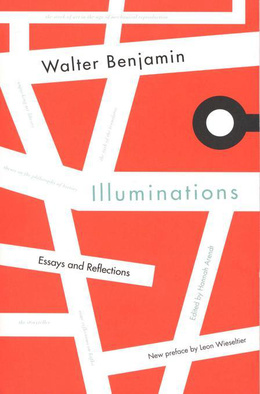
Introduction by Hannah Arendt
Introduction:
– Marxist
– Jewish
– What seems paradoxical about everything that is justly called beautiful is the fact that it appears.
– The flaneur
– Angel of history has his face turned towards the past
– Klee’s ‘Angela Novus’

– The allegorical representation of death by a skeleton
– The metaphor as the greatest gift of language
– Brecht
– proverbs are a school of crude thinking
– figures of speech
– riddle
– ‘Anabase’ by A. Saint-Leger [St. John Perse]
– Institute for Social Research in New York
– Proust
– Kafka, ‘The Stoker’
– Only for the sake of the hopeless ones have we been given hope
– the Gestapo
– Only on that particular day was the catastrophe possible
– ‘flaneur’ of Paris streets
– The peculiarities of his gait
– walk of a flaneur
– top of the mast
– tempestuous
– the shipwreck
– Max Rychner
– life of the ‘homme de lettres’
– Nietzsche’s aphorisms
– criticism as something disreputably subversive
…which might be enjoyed
– to re-create it as a genre
– out of considerartion for my family
– habitation
– in the Weimar Republic, a university career was open even to unbaptized Jews
– subvention
– livelihood by moving back into the parental home
– caused him a great deal of suffering
– secondhand bookstores
– Freud
– German-Jewish milieu
– Oedipus complex
– The numerous Communists from well-to-do families
– Kafka – who possibly because he really was something like a genius
– an ordinary job at the Prague workman’s compensation office
– running start for suicides
– homme de lettres
– Privalgelehrten
– La Rochefoucauld
– Montaigne
– Pascal’s thought
– Montesquieu’s political reflection
– ‘A Berlin Childhood’
– the house hoard of silver
– since the 1870’s or 1880’s been called the ‘Jewish Question’
– Jewish Intelligentsia
– Central European Jewry
– the ‘Jewish Question’ marked in Kafka’s words the terrible inner condition of these generations
– to Goldstein, the problem as it appeared to the Jewish Intelligentsia had a dual aspect, the non-Jewish environment and assimilated Jewish Society, and in his view the problem was insoluble
– baptized
– ‘I know of no solution’
– German-Jewish writers,….he said that the Jewish question, or the despair over it was their inspiration
– Kafka considered their use of the German language as the ‘overt or covert, or possibly self-tormening usurpation of an alien property, which has not been acquired but stolen’.
– ….the impossibility of writing, for this despair was not something that could be mitigated through writing, – as is normal for poets, to whom a god has given to say what men suffer and endure. Rather, despair has become here ‘an enemy of life and of writing; writing was here only a moratorium, as it is for someone who writes his last will and testament, just before he hangs himself.
– already in prefect
– ‘mauschein’ (speaking in Yiddish – German)
– OstJuden (Jews from Eastern Europe)
– the murder of Walter Ratheman (1922)
– the hell of German –Jewish letters
– Krauss held sway as the greatest overseer and taskmaster
– …esssays what Brecht said about Karl Krauss: ‘When the age died by its own hand, he was that hand’
– The available forms of rebellion were Zionism and Communism
– Zionists Jewish Fascists
– Jewish Communist ‘red assimilationists’
– ‘will to lie, the objective mendacity’
– The spiritual and linguistic resources of the people, in Rathmen’s the nation – but both used their works and talents as ‘sovereign means in the service of an absolute will to power’
– ‘the light of the public darknesss is everything’ -Heidigger
– Jewish Question
– Jewish writers
– Hamann and Humboldt
– Benjamin, ‘Thesis on the Philosophy of History’
– The Last Judgement
– …….well, in this respect the last thirty years have hardly brought much that could be called new
III. The Pearl Diver
Full fathom five the father lies,
Of his bones are coral made,
Those are pearls that were his eyes,
Nothing of him doth fade
But doth suffer a sea-change
Into something rich and strange.
– The Tempest 1.2
– Peace of mind
– Wander in darkness as in de Tocqueville
– ‘not the strength to preserve, but to cleanse, to tear out of context, to destroy’
– Biblical citations
– Collecting
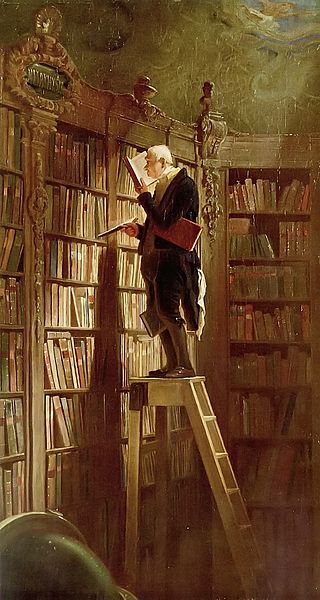
– Bibliomania
– Romanticism
– Kafka who after all his efforts stated bluntly that he had no use for anything Jewish except the Hasidic Tales which Buber had just prepared for modern usage –‘into everything else I just drift, and another current of air carries me away.’
– German Baroque Age
– Goethe rightly said that when he was eighteen years old, German literature was no older
– consistence of truth…. has been lost.
– that truth concerned a secret and that revelation of this secret had authority.
– the Greek a-letheia p. 41
– ‘unconcealment (‘unverborgenheit’) – Heidegger
– Benjamin discusses these matters in connection with Kafka and says that of course:
‘Kafka was far from being the first to face this situation. Many had accommodated themselves to it, adhering to truth or whatever they regarded as truth at any given time and, with a more or less hearing heart, foregoing its transmissibility. Kafka’s real genius was that he tried something entirely new: he sacrificed truth for the clinging to the transmissibility.’
– The peculiar duality of wanting to preserve and wanting to destroy
– ‘new beauty’ in what is vanishing
– ‘and you have read all these? Anatole France is said to have been asked by an admirerer of his library. ‘Not one-tenth of them. I don’t suppose you use your Sevres china every day? (Unpacking My Library)
– Collected objects
– Collector’s attitude, in the highest sense, the attitude of the heir
– ‘a renewal of the old world’
– …as the typically Jean Paullian vision of one of these writers who ‘write books not because they are poor, but because hay are dissatisfied with the books which they could buy but do not like.
– Genuineness
– It is the bull whose blood must fill the pits, if the shades of the departed are to appear at its edge
– A stubborn subversive protest against the typical classifiable……
– The study of Kafka
– Brecht – the poet who was most at home in this century
– ‘pearls’ and ‘coral’
– Goeckings, ‘Der erste Schnee’ a report from Vienna dated summer 1939 saying that the local gas company had ‘stopped supplying gas to the Jews’
– The gas consumption of the Jewish population involved a loss for the gas company, since the biggest consumers were the ones who did not pay their bills. The Jews used the gas especially for committing suicide
– Martin Heidegger
– Dest ‘logo’
– Irresponsible arbitrariness of their terminology
– Veiled posture at Seis p. 47
– A collection of over 600 quotations very systematically and clearly arranged
– Raison d’etre
– Contemporaneous surrealistic experiments
– …….by drilling rather than by excavating
– ‘no poem is intended for the reader, no picture for the beholder, no symphony for the listener (The Task of Translation)
– God’s remembrance
– Shakesperean ‘sea-change’
– Origin of German tragedy
– Not Plato but Adam
– Father of philosophy
– Essentially acoustical phenomenon
– The Greek ‘polis’
– ‘politics’
– The world essence…..from which speech arises
– ‘man can speak only insofar as he is the sayer’
– ‘The Task of the Translator’
– Mallarme
– Babel-like tumult, the ‘imotello parole’
– The gift of thinking poetically
– light but to pry loose the rich and the strange
– ….the conviction that although the living is subject to the ruin of the time, the process of decay is at the same time a process of crystallization, that in the depth of the sea, into which sinks and is dissolved what once was alive, some things suffer a sea-change, and survive in new crystallized form and shapes that remain immune to the elements, as thought they wanted only for the pearl diver, who one day will come down to them and bring them up into the world of the living – as thought fragments, as something rich and strange and perhaps even as everlasting
– Urphanomen
– Hannah Arendt
Illuminations
‘Unpacking My Library’
– Anatole France
– Physiognomists
– The magical side of the collection
– ‘The Divine Comedy’

– ‘Ethics’
– ‘The Origin of Species’
– To renew the old world
– Writers are really people who write books not because they are poor but because they are dissatisfied with the books which they could buy but do not like.
– Anatole France
– ‘and you have read all the books monsieur Frank> Not one-tenth of them. I don’t suppose you use your Sevre’s china every day?
– Der Blaue Reiter
– Bachofen’s ‘Sage von Tanaquil’
– German book illustrator Lyserrchenbuch
– ‘The Arabian Nights’
– Balzac’s ‘Peau de Chagrin’
– famous Munich collector Baron von Simolin
– ‘Fragments aus dem Nachleass eines jungen Physikers’ (Posthumous
Fragments of a Young Physicist)
– German Romanticism
– Ex officio
– O bliss of the collector, bliss of the man of leisure
– Ownership is the most intimate relationship that one can have to objects
‘The Task of the Translator’
– Contingently
– Sporadically
– God’s remembrance
– As for the posited central kinship of languages, it is marked by a distinctive convergence
– crudest psychologism
– coup de grace
– ‘brot’ and ‘pain’ intend the same object
– ‘brot’ means something different to a German than the word ‘pain’ to a Frenchman
– Luther , Voss and Schlegel
– Holderlin and Stefan George
– Mallarme’
– The nineteenth century considered Holderlin’s translations of Sophocles as monstrous examples of such literalness
– In the beginning was the word
– The intention
– A tangent touches a circle lightly and is but one point
– Rudolf Pannwitz
– Die Krisis der europaischen Kultur
– Goethe’s notes to the Westoslicher Divan
– Holderlin’s translation of Sophocles
– Pindar’s ‘Third Pythian Ode’

– ’ the interlinear version of the scriptures is the prototype or ideal of all translation resident teller of the soil, and the other in the trading seaman
The Storyteller
– Leskov
– First WWI a process began to become apparent
– Hebel and Gotthelf
– Sealsfield and Gerstacker
– Middle Ages in their trade structure
– The resident master craftsman and the travelling journeyman worked together in the same rooms
– The dissemination
– Even the first great book of the genre ‘Don Quixote’
– Wilhelm Meister’s ‘Wandeyehre’
– ‘The Bildungsroman’
– Villemessant, the fouder of ‘La Figaro’
– Lesker, ‘The Deception’
– ‘The White Eagle’
– Herodotus ‘The Histories’
– Montaigne
– Psychological analysis
– Dostoievsky’s funeral
– ‘Apropos of the Kreutzer Sonata’
– ‘Interesting Men’
– Tolstoy, ‘The Steel Flea’
– Paul Valery
– Inscription on a sun dial of Ibiza Ultima multis [the last day for many]
– Johann Peter Hebel
– Schatzkastlein des rheinschen
– Hausfreundes , ‘Unexpected Departure’
– Lisbon
– Seven Years War
– Emperor Francis I
– Jesuit Order
– Emperor Maria Theresa
– Spanish forces
– General Stein
– Napoleon
– English bombarded Copenhagen
– The Reaper
– Historiography
– Concatenation
– Eschatologically
– ‘The Alexandrite’
– Memory in the epic faculty par excellence
– Mnemosyne
– Memory
– It starts the web which all stories together form in the end
– Sheherazade
– Homeric epics
– One hero, one odyssey, one battle
– ‘no one’. Pascal once said ‘dies so poor that he does not leave something behind
– Arnold Bennett
– Lukacs
– ‘Theory of the Novel’
– Meaning of life
– Education sentimenals
– ‘a man who dies at the age of thiry –five said Marty Heimann once, is at every pointof his life a man who dies at the age of thiry-five
– The novel is significant –therefore
– Gorky
– ‘The Arabian Nights’

– Enlightenment in Hebel appears as hermetic tradition in Poe, finds a last refuge in Kipling
– …and they lived happily ever after
– Riddle of the Sphinx
– The mythical world with cunning and with high spirits
– Mut – courage
– Untermut – cunning
– Ubermut – high spirits
– Origen, ‘On First Principles’
– ‘The Enchanted Pilgrim’
– Hybrid between fairytale and legend
– Ernst Bloch
– Taoist climate of Gotthelf
– Lady Macbeth of Mtsensk’ , Leskov
– wrath of Achilles or the hatred of Hagen
– Dostoevsky, ‘Tales from Olden Times’
– Leskov, ‘The Alexandrite’
– ‘Czar Alexander’
– ‘Artistic Observation’
Franz Kafka
– Potemkin
– Empress Catherine
– Kafka’s K.
– Michelangelo
– Hermann Cohen
– written law being one of the first victories scored over the world
– Official decisions are ‘as shy as young girls’
– …..so it must be the mere charges brought against them that somehow show on them
– Max Brod
– ‘Our world is only a bad mood of God, a bad day of his’. K.
– ‘Oh plenty of hope, ann infinite amount of hope – but not for us’. K. p.116
– ‘The Trial’
– Odradek
– Gregor Samsa, wakes up as a bug
– ‘meditations’
– Robert Walser
– The author of ‘Der Gehulfe, The Assistant’
– Gandharves
– None has a firm place in the world, firm, inalienable outlines
– A latter day Ulysses
– ‘Silence of the Sirens’
– wish to become a red Indian
– ‘nature theatre’ of Oklahoma
– Irany Rozenwig, ‘Star of Redemption’
– Confuscious
– ‘A Fratricide’, Werner Kraft
– ‘The Metamorphosis’
– Gestus
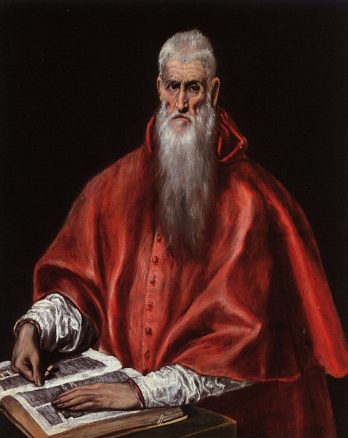
– El Greco
– ‘Before the Law’ parable
– Kafka, ‘A Country Doctor’
– Napoleon in his famous conversation with Goethe at Erfurt
– ‘The Castle’
– ‘Great Wall of China’
– Metchnikoff
– Famous book ‘La Civilisation et les grande fleures historique’ [Civilization and the Great Historical Rivers’]
– Dostoevsky’s ‘Grand Inquisitor’
– Mysticism
– Rudolf Steiner
– Pirandello’s the character’s sought an author
– Kafka’s ‘Amerika’
– Lao-tse
– Knut Hansun, ‘Growth of the Soil’
– Hellmuth Kaiser
– H.J. Schoeps, Bernhard Rang
– Bernhard Groethuysen, Willy Haas
– ‘Kafka goes back… to Kierkegaard as well as to Pascal; one may call him the only legitimate heir of these two. In all three there is an excruciatingly harsh basic religious theme: man is always in the wrong before God.
– Denis de Rougemont
– Christ
– Scheherezade : to postpone the future
– ‘The Trial’
– Corresponding as it does to his ‘elemental purity of feeling’ shame is Kafka’s strongest gesture
– ‘whose untrammeled voluptuosness’
– Luteae volupttates [dirty voluptuousness] : the real hero of this incredible book is forgetting
– Forgetting of itself
– Raison d’etre
– Franz Rosenweig’s ‘Star of Redemption’
– Trieck’s ‘Fair Eckbert’
– ‘The Cares of a Family Man’
– ‘Penal Colony’
– The Little Hunchback’ poems p. 134
– what Malebranche called ‘the natural prayer of the soul: ‘attentiveness’’
– ‘The Next Village’ says life is astonishingly short
– ‘Nature Theatre’
– Bucephalus
Some Reflections on Kafka p. 141
– ‘The Nature of the Physical World’, Eddington
– A contemporary world
– Klee
– what is ‘Epic Theatre’?
– Brecht, ‘The Fourth Wall of China’
– Brecht, ‘Life of Galileo’
– The Inquisition
– Oedipus
– Ibsen, ‘The Wild Duck‘
– Galy Gay, ‘A Man’s Man’
– Gryphuis
– Calderon
– Baroque Age
– Grable
– Strindberg
– Goethe’s ‘Faust’
– Shakespeare
– Baroque drama
– The dramas of Brecht: –
– ‘The Happy End’
– ‘The Measure Taken’
– ‘Lindbergh’s Flight’
– T.E. Lawrence’s ‘The Seven Pillars of Wisdom’
– Robert Graves
– Brecht, ‘The Mother’
– Putting on a show
– Romantic irony
– Tieck, ‘Pussin Boots’
– Brecht’s ‘The Private Life of the Master Race’
– Moliere’s ‘Don Juan’
– Unfathomable depth
– Benjamin, ‘On Some Motifs in Baudelaire’’
– ‘Fleurs de mal‘
– ‘spleen’
– Hypocrite lecteur – mon semblable – mon frère!
– Minstrel
– Lamartine
– Verlaine
– Rimbaud
– The lyric poetry of Victor Hugo
– Heine’s, ‘Bach der Lieder’
– Baudelaire, ‘Fleur de mal’
– Dilthy’s book, ‘Das Erlenbnis und die Dichtung’
– Klages and Jung – both made common cause with fascism
– Bergson’s early monumental work: – ‘Matiere et Memoire‘
– Bergson’s philosophy
– Afterimage
– ‘Matier et Memoire‘
– Proust’s work ‘ A la Recherche du temps Perdu’
– Madeleine
– As for that object. It depends entirely on chance whether we come upon it before we die or whether we never encounter it
– Freshness of the news, brevity and comprehensibility and above all, lack of connection between the individual news items
– Proust
– His own childhood
– Memoire involuntaire
– Triggered recollection
– Voluntary and involuntary recollection lost their material excusiveness
– Freud, ‘Beyond the Pleasure Principle’
– Rieck’s writing
– Remembrance is essentially conservative, memory is destructive
– ‘consciousness comes into being at the site of a memory trace’
– phenomena becoming conscious
– protection against stimuli
– reception of stimuli
– toward destruction
– psychoanalytic theory
– dreams of this kind
– ‘Situation de Baudelaire’ , Valery
– Lamartine
– Hugo
– Musset
– Screams in fright
– ‘Portrait‘ by Margot Pontmartin
– Claudel
– Gautier
– Nadir
– psychiatry knows traumatophile types
– stabs away
– combative
– ‘Le Soleil’
– Gide
– Riviere
– ‘Spleen de Paris’
– Houssaye
– The faubourgs
– Hugo, ‘Les Miserables’
– ‘Les Travauleurs de la mere’
– Sue’s ‘Les Myster de Paris’
– ‘The Condition of the Working Class in England’
– Gozlan, Delvan, Lurine
– Parisian
– Barbier
– Tableaux parisiens
– Danse macabre
– ‘La Parisienne’
– Proust
– A story by Poe, ‘The Man in the Crowd’
– Social realism
– Flaneur
– ‘Crepuscle du Soir’
– How the man of leisure looks upon the crowd
– E.T.A. Hoffmann, ‘The Cousin’s Corner Window’
– One of superiority
– Heine
– Fear, revulsion and horror
– James Ensor
– Kaleidoscope
– Thus technology has subjected the human sensorium to a complex kind of training
– The unskilled worker is the most deeply degraded by the drill of the machines. His work has been sealed off from experience, practice counts for nothing there.
– Poe’s text makes us understand the true connection between wildness and discipline
– Most factory workers
– So-called coup
– Lithograph of Senefelder
– Ludwig Borne
– Only the aristocracy gambled
– ‘what one wishes for in one’s youth, one has in abundance in old age
– Goethe, ‘La Seconde’
– Giotto’s ‘Iracudua at Padua‘
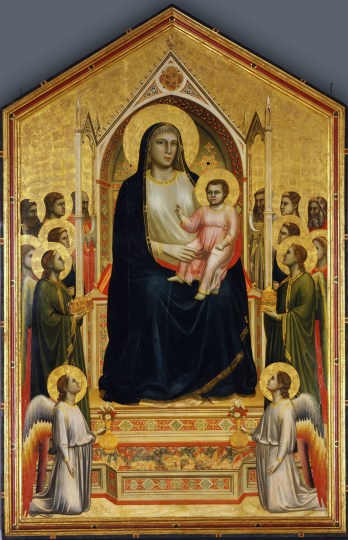
– Correspondence
– Nature is a temple whose living pillows sometimes gives forth a Babel of words
– Times out of mind
– Madeleine
– The azure of the vast, vaulted sky
– Something profoundly unnerving and terrifying about dagguerrotyp
– Startling and cruel
– The stupidity of the broad masses
– On which man has bestowed the imprint of his soul
– To the eyes that will never have their fill of a painting, photography is rather like food for the hungry or drink for the thirsty.
– Perceptibility’ as Novalis put it is a kind of ‘attentiveness’
– Memmoire involuntaire
– ‘Fleurs de mal’
– Inertness of tropical seas
– ‘a lost Halo’
– A star without atmosphere
– Notes p.195
– Roman’s unanimusme
– Londres
– Baudelaire’s ‘Crepuscle de Soir’
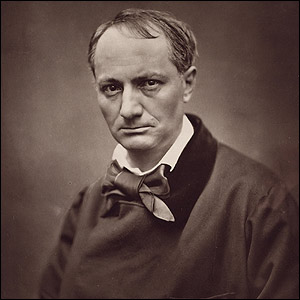
– Barbier’s ‘Mineurs de Newcastle’
– Stefan George
– Hymnen, Pilger fahrter, Algabal
– Tertullian
– To abolish the world of spirit
– Cityen
– Monet’s ‘Cathedral of Chartres’
– Gambling inviolates the standards of experience
– For the bourgeoise, even political events were apt to assume the form of occurrences at the gambling table
– ‘jardin d’epicure
– Reproducing aspect
– Correspondence
– Aporia
– Counterpoint in Bergson
– Actualization of the uninterrupted
– Reminiscent of Proust
– The ‘here’
– Man’s abstract idea of Time
– Proust
– The endowment is a wellspring of poetry
– Karl Krauss, ‘The Images of Proust’ p. 201
– Thirteen volumes of Marcel Proust’s ‘A la recherché du temps perdu’
– Proust, ‘A Remembrance of Things Past’
– A life as it was remembered by the one who had lived it.
– Memoire involuntaire
– The Latin word textum means web
– Jean Cocteau was able to say in a beautiful essay that the intonation of Proust’s voice obeyed the laws of night and honey.
– Oevre
– Resentiment
– ‘I was dunking a cookie in my tea, when it occurred to me that as a child I spent some time in the country’
– Proust’s sentence as that summer day at Balbec
– Zola or Anatole France
– Swann
– Who were personally close to Proust as admirers and friends
– The memoirs of Princess Clermont-Townerre
– The autobiographical work of Leon Daudet
– Tonerre, Ace Temps des equipages
– Ritz
– Don Quixote
– Pantagruel
– Gil Blasé
– My Dear Madam
– ….please be good enough to give it to the bearer of this letter
– P.S. kindly pardon me for disturbing you, I just found my cane.
– Foolish Virgins
– Balzac, Flaubert, Saint-Beuve
– Henride Regnier, the Goncourts Michelet, Renan, and his favourite Saint-Simon
– Pastiches et mélanges
– Ortega y Gasset
– Servant curiosity
– Proust’s analysis of snobbery which is far more important than his apotheosis of art…his criticism of Society
– ‘Au Temps Perdu’ an inn at Grenoble
– Fernandez rightly distinguished between a theme de l’eternite and a theme du temps
– The higher regions which Plato or Spinoza reached with one beat of the wings
– The eternity which Proust….
– Correspondences
– Memoire involuntaire
– ‘Guermantes Way‘
– Capriciously
– A propos de Baudelaire
– The essay is Jesuistic
– Soit que
– Jacques Riviera
– ‘serenes inteueres’
– Marcel Proust died of the same inexperience which permitted of him to write his works
– He did not know how to make a fire or open a window
– Psychogenic asthma
– Memoire involuntaire
– Sea of the temps perdu
– Michelangelo’s Sistine chapel
– The sickbed on which marcel Proust consecrates the countless pages which he covered with his handwriting, holding them up in the air, to the creation of his microcosm
The Work of Art in the Age of Mechanical Reproduction
– Amazing change
– Aesthetics
– Creativity and genius
– Fascist sensefascism
– Mechanical Reproduction
– Woodcut
– Engraving
– Etching
– Lithography
– Photography
– The convergent endeavors made predictable a situation which paul Valery pointed up in this sentence
– ‘Just as water gas and electricity are brought into our house from far off to satisfy our needs in response to a minimal effort, so we shall be supplied with visual or auditory images, which will appear and disappear at a simple movement of the hand, hardly more than a sign.’
– Time and space
– The presence of the original
– Authenticity
– Process reproduction
– Object
– Abel Gance
– Far –reaching liquidation
– Vienna Genesis
– Antiquity
– Wickoff
– Aura of natural ones
– Its internal function
– L’art pour l’art
– Practice politics
– Value of the work
– Atger
– The scene of the crime
– Alexander Arnoux
– ‘The Gold Rush’
– Severin-Mars
– ‘A Midsummer’s Nights Dream’
– The audience identification with the actor is really an identification with the camera
– Franz Werfel’s translation of Shakespeare’s, ‘Ein Sommernachtstraumm’
– Pirandello
– Si Gira
– ……yet foregoing its aura
– Macbeth
– Rudolf Arnheim
– Beautiful semblance
– Personality
– Vertoff ‘Three Songs about Lenin’ or
Iven’s, ‘Borinage’
– Soviet Union
– Illusionary
– Result of cutting sight of immediate reality
– Compare with the painter
– Picasso
– Chopin
– …great social significance
– Freudian
– Freud, ‘The Psychopathology of Everyday Life’
– Unconscious optics
– Dadaism p.237
– Distinction of the aura
– August Stramm
– Arp
– Derain
– Rilke
– Making works of art the center of scandal to outrage the public
– Cushioned by heightened presence of mind
– Dadaism – kept it inside the moral shock effect
– Duhamel, ‘Scenes de la vie future’
– ‘ a pastime for helots’
– A star in Los Angeles
– Chinese painter
– Tragedy begins with the Greek, is extinguished with them, and after centuries its ‘rule’ are only revived.
– The epic poem
– ….expires in Europe at the end of the Renaissance
– Panel painting
– Architecture
– Tactile
– By habit
– Apperception
– Proletarianization
– Fascism
– Introduction of aesthetics political life
– Fuhrer
– All efforts to render politics aesthetic culminate in one thing : War
– Marinetti
– Futurists
– ‘War is beautiful’
– The horrible features of imperialistic warfare
– Human material
– ‘Fiat ars-pereat mundus’
– Mankind
– Homer’s time
– Olympian gods
– Self—alienation
– Communism responds by politicizing art
– Notes:
– Mona Lisa
– Madonna
– Faust
– John Henrich Merck
– Mephisto
– Rembrandt ‘Anatomy Lesson’
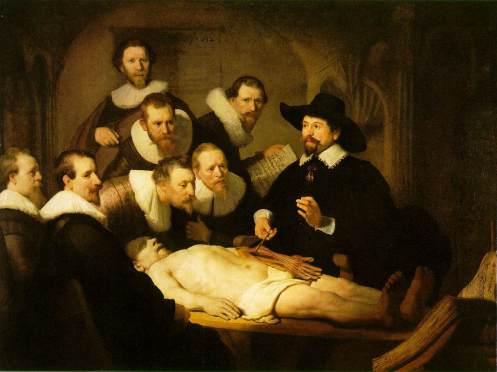
– Empirical uniquenesss
– Fetishist
– Ritual power
– Hegel
– Polarity
– Limits of Idealism
– Fine art has arisen…in the church….although it has already gone beyond its principles as art
– Hegel, ‘The Philosophy of Fine Art’
– Reflective kind
– Emotions
– Hubert Grimme
– St. Peter’s
– Church of the Black friars at Piacenza
– Bertolt Brecht
– The film
– Brecht, ‘Versuche, Der Dreigroschemprozes’
– Rudolf Arnheim ‘Film als Kunst’
– Jeanne d’Arc
– Pudovkin’s ‘Filmregie und Filmanuscript’
– Huxley writes:
‘Advances in technology have led…to vulgarity…process reproduction and the rotary press have made possible the indefinite multiplication of writing and pictures. Universal education and relatively high wages have created an enormous public who know how to read and can afford to buy reading and pictorial matter. A great industry has been called into existence in order to supply these commodities.’ p.234
– Huxley, ‘Beyond the Mexique Bay’ A Travelers Journal’ 1949
– Luc Derain
– Leonardo
– ‘painting is superior to music, it does not have to die as soon as it is born…music which is consumed in the very act of its birth is inferior to painting which the use of varnish has rendered eternal.’
– To Leonardo painting was a supreme goal and the ultimate demonstration of knowledge
– Paul Valery, ‘Pieces su ‘l’art “, Autour de Corot”
– The work of art is valuable only in so far as it is vibrated by the reflexes of the future
– -Andre Breton
– Dadists
– Chaplin
– Kaiserpanorama
– Edison
– The theological archetype
– Dadaism
– Cubism
– Futurism
– Propagandist importance
– Benjamin, ‘Thesis on the Philosophy of History’
– P. 253
– Automaton
– hookah
– happiness
– happiness is indissolubly bound up with the usages of the redemption
– ‘Seek for food and clothing first, then the kingdom of god shall be added unto you’ – Hegel
– The class struggle
– Marx
– A historical materialist
– Gottfried Kelller
– The way it really was
– The messiah comes not only as the redeemer he comes as the subdue of the antichrist
– ….even the dead
– Consider the darkness and the great cold in this vale which resounds with mystery’
– Brecht, ‘Threepenny Opera’
– Flaubert
– Struggle against fascism
– Gerhard Scholem
– Klee’s ‘Angelus Novum’
– This storm is what we call progress
– The Goethe Program
– Socialist Utopias
– Exists gatis, Dietzgen
– ‘we need history, but not the way a spoiled loafer in the garden of knowledge needs it. – Nietzsche, ‘The Use and Abuse of History’
– The downtrodden
– ‘everyday our cause becomes cleare and people get smarter.’
– Dietzen, ‘Die Religion de Socialdemocratic’
– Social Democratic
– ‘origin is the goal’
– Kraus ‘ Worte in Versen’ vol. 1
– Jews
– Torah
– The Messiah
– Editors note p. 266
– Paris , the capital of the nineteenth century
– Conversations with Brecht
 tomreading
Leave a comment