Myth of Sisyphus

by Albert Camus
An Abstract Reasoning
– An intellectual malady
Absurdity and Suicide
– There is but one truly serious philosophical problem and that is suicide
– Nietzsche
– Galileo
– the method of the Palisse and the method of Don Quixote
– The relationship between individual thought and suicide
– ‘undermined’
– Killing yourself amounts to confession. It is confessing that life is too much for you or that you do not understand it
– A priori
– Either ‘yes’ or ‘no’
– Nietzsche criterion
– Peregrinos of legend
– Jules Lequer who belongs to hypotheses
– Schopenhauer
– In the Pascalian sense
– Typical act of eluding
– Hope of another life
– ….thus everything contributes to spreading confusion
– ….does the Absurd dictate death?
– Karl Jaspers
– ….these waterless deserts where thought reaches its confines
– …the figures of that elementary yet subtle dance before illustrating them and reliving them itself.
– A metaphysical and an attitude of mind
– Practically
– Practically
– Method is one of analysis and not of knowledge
– ….mere Anxiety as Heidegger says, is the source of everything
– That stage – scenery masked by habit becomes again what it is
– ‘nausea’ as a writer of today calls it
– …the face of the cruel mathematics that command our condition
– I am interested – let me repeat again – not so much
– in absurd discoveries as in their consequences p. 14
– Ad infinitum
– Aristotle
– The vicious circle
– giddy whirling
– The acrobatics of logic
– ‘all thought is anthropomorphic’
– Parmenides – the reality of the One
– Socrates – ‘Know Thyself’
– Electrons gravitate around a nucleus
– You explain this world to me with an image. I realize then that you have been reduced to poetry. I shall never know. Have I the time to become indignant? You have already changed theories.
– The soft lines of those hills and the hand of evening on this troubled heart teach one more.
– Science
– Thought that negates itself as soon as it asserts
– those categories that explain everything are enough to make a decent man laugh
– The absurd depends as much on man as on the other world. For the moment it is all that links them together.
– From the moment absurdity
– Is recognized, it becomes a passion, the most harrowing of all
– …those impulses born of the desert
– Zarathustra’s great outburst
– From Jaspers to Heidegger, from Kierkegaard to Chestov, from the phenomenologists to Scheler.
– Heidegger considers the human condition coldly and announces that the existence is humiliated
– Anxiety
– ‘the world can no longer offer anything to the man filled with anguish
– ‘to return from its loss is the anonymous ‘They’
– Jaspers despairs of any ontology because he claims that we have lost ‘naiveté’
– …he tries to discover the Ariadne’s thread that leads to divine secrets
– Chestov
– Dostoyevskian experience of the condemned man, the exacerbated adventures of the Nietzsche an mind, Hamlets impeccations , or the bitter aristocracy of Ibsen
– Kierkegaard
– Don Juan of the understanding
– ‘Discourses of Edification’
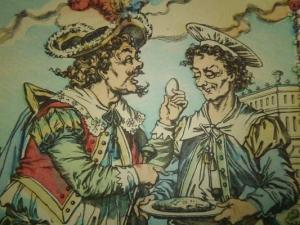
– ‘The Diary of the Seducer’
– Absurd spirit itself grappling with a reality beyond its comprehension
– Kierkegaard to his beloved scandals
– Husserl and the phenomenologists
– In the manner of Proust
– If one could only say just once ‘this is clear’ all would be saved
– Man stands face to face with the irrational
Philosophical Suicide chpt p. 27
If I see a man armed only with a sword attack a group of machine-guns, I shall consider his act to be absurd.
– The absurd is essentially a divorce. It lies in neither of the elements compared; it is born of their confrontation
– Absurd is not in man
– Nor in the world
– It is only bound uniting them
– The odd trinity
– For me (says Camus) the only sole datum is the absurd
– One has to pay something
– Existential philosophies
– All of them without exception suggest escape
– ‘does not the failure reveal beyond any possible explanation and interpretation not the absence but the existence of transcendence
– I return to Chestov
– ‘The only true solution’, he said, ‘is precisely where human judgment sees no solution. Otherwise, what need would we have of God?’ ‘We turn towards God only to obtain the impossible. As for the possible, men suffice’.
– If there is an absurd, it is in man’s universe
– Chestov
– Hamlet’s remark that ‘Time is out of joint’
– To Chestov reason is useless but there is something beyond reason. To an absurd mind reason is useless and there is nothing beyond reason
– The pre-eminence of the irrational
– Kierkegaard
– Christianity
– Antinomy and paradox become criteria of the religion
– ‘the sacrifice of the intellect’
– ‘In his failure…..the believer finds triumph’
– A matter of persistence
– Abbe Galiani said to Mme d’Epernay, is not to be cured, but to live with one’s ailments. Kierkegaard wants to be cured.
– ‘but for Christian death is certainly not the end of everything and it implies infinitely more hope than life implies for us’
– Even when that life is overflowing with health and vigor
– For sin is what alienates from God. The absurd, which is the metaphysical state of the conscious man, does not lead to God
– The absurd is sin without God
– If man had no eternal consciousness , if, at the bottom of everything, there were merely a wild, seething force producing passions, if the bottomless void that nothing can fill
– Underlay all things, what would life be but despair? This cry is not likely to stop the absurd man
– Everything considered, a determined soul will always manage.
– I am taking the liberty at this point of calling the existential attitude philosophical suicide
– For the existentials, negation is then God
– But the suicides, god’s change with men
– …of the spirit of nostalgia…
– I shall examine the theme of ‘intention’ made fashionable by Husserl and the phenomenologists
– Phenomenology declines to explain the world, it wants to be merely a description of actual experience
– To borrow a Bergsonian image, it resembles the projector that suddenly focuses on an image
– Magic lanterns only ‘face value’ is topographical
– One psychological and the other metaphysical
– It simply testifies to the ‘interest’ that reality can offer
– extra-temporal essences
– effectionates
– Platonic realism becomes intuitive but it is still realism. Kierkegaard was swallowed up in his God. Parmenides plunged thought into the One. But here thought hurls itself into an abstract polytheism
– The species of centaur collaborates with the more modest specifies of metropolitan man
– Husserl
– ‘That which is true is true absolutely, in itself; truth is one identical to itself, however different the creatures who perceive it, men, monsters, angels, or gods.’
– Metaphysics of consolation
– …..if we could contemplate clearly the exact laws of physic processes, they would be seen to be likewise eternal and invariably like the basic laws of theoretical natural science. Hence they would be valid even if there were no psychic process.’
– The integrating power of human reason, the leaps by this expedient to eternal reason.
– Husserl’s thesis of the ‘concrete universe’
– Plotinus
– At that time reason had to adapt itself or die. It adapts itself. With Plotinus after being logical it becomes aesthetic. Metaphor takes the place of syllogism.
– Above all, a man’s thought is his nostalgia. Absurd mind has less luck. For it the world is neither so rational nor so irrational. It is unreasonable and only that.
– I am not interested in philosophical suicide but rather in plain suicide. I merely wish to purge it of emotional content and know its logic and its integrity.
Absurd Freedom p. 49
– ….this chaos, this sovereign chance and this divine equivalence which springs from anarchy.
– constant awareness
– This hell of the present is his Kingdom
– The wine of the absurd and the bread of the indifference
– He is told that nothing is. But this at least is a certainty. And it is with this that he is concerned: he wants to find out if it is possible to live
‘Without appeal’
It was previously a question of finding out whether or not life had to have a meaning to be lived. It now becomes clear on the contrary that it will be lived all the better if it has no meaning.
Living is keeping the absurd alive. Keeping it alive is above all contemplating
Revolt
Suicide settles the absurd
But I know that in order to keep alive, the absurd cannot be settled
It is the extreme limit of the condemned man’s last thought, that shoelace that despite everything he sees a few yards away, on the very brink of his dizzying fall. The contrary of suicide, in fact, is the man condemned to death.
– That revolt gives life its value
– Consciousness and revolt, these rejections are the contrary of renunciation.
– Suicide is repudiation. The absurd man can only drain everything to the bitter end, and deplete himself.
– ….gives proof of his only truth which is defiance
– Knowing whether or not man is free doesn’t interest me. I can experience only my own freedom. As to it, I can have no general notions, but merely a few clear insights.
– ….the problem of God.
– ….a problem of evil. You know the alternative: either we are not free and God the all-powerful is responsible for evil. Or we are free and responsible , but God is not all –powerful. All the scholastic subtleties have neither added anything nor subtracted anything from the acuteness of this paradox.
– The only conception of freedom I can have is that of the prisoner or the individual in the midst of the state.
– Death is there as the only reality. After death the chips are down
– A slave?
– Not act
– Mystics
– Spontaneously accepted slavery they recover a deeper independence
– Preaching
– It does not write a cheque on eternity. But it takes the place of illusions of ‘freedom’, which all stopped with death.
– The absurd man is the contrary of the reconciled man.
– His refusal to hope, and the unyielding evidence of a life without consolation.
– Knowing whether or not we can live without appeal is all that interests me.
– ..And what counts is not the best living but the most living.
– Value judgments are discarded here in favor of factual judgments
– The Greeks had the code of their leisure just as we have the code of our eight-hour day
– Being aware of one’s life, one’s revolt, one’s freedom, and to the maximum is living, and to the maximum
– Madness and death are his inseparables. Man does not choose. The absurd and the extra life it involves therefore do not depend on man’s will but on its contrary which is death.
– The Greeks claimed that those who died young were beloved of the gods
– In one of its aspects, eternal nothingness is made up precisely of the sum of lives to come which will not be our own. P. 61
– Nietzsche writes….’It clearly seems that the chief thing in heaven and on earth is to obey at length and in a single direction: in the long run there results something for which it is worth the trouble of living on this earth as, for e.g. art, music, the dance, reason, the mind – something that transfigures, something delicate, mad or divine. Hope elucidates the rule of a really distinguished code of ethics.’
– In a book of great importance, ‘Le Choix’, Jean Grenier , establishes in this way a veritable philosophy of indifference.
– ‘Prayer’ says Alain, is when night descends over thought.’
– Polar night, vigil of the mind.
– But the point is to live.
The Absurd Man
If Stavigan believes, he does not think he believes
If he does not believe, he does not think he does not believe
– ‘The Possessed‘
– To live without appeal and to get along with what, he has, the second informs him of his limit
– Madame Roland
– I start out here from the principle of his innocence
– That innocence is to be feared. ‘Everything is permitted’, exclaims Ivan Karamazov
– Everything is permitted does not mean that nothing is forbidden.
– It does not recommend crime, for this would be childish, but it restores to remorse its futility One can be virtuous through a whim
– When drawing from Rousseau the conclusion that one must walk on all fours and from Nietzsche that one must maltreat one’s mother. ‘It is essential to be absurd, writes a modern author, ‘it is not essential to be a dupe.’
– A sub-clerk in the post office is the equal of a conqueror if consciousness is common to them.
– Everything that makes man work and get excited utilizes hope. The sole thought that is not mendacious is therefore a sterile thought. In the absurd world the value of a notion or of a life is measured by its sterility.
Don Juanism
– Don Juan
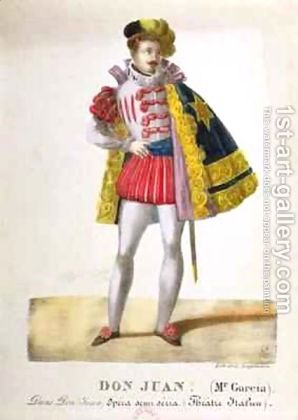
– ‘At last’ exclaims one of them, ‘ I have given you love.’ Can we be surprised that Don Juan laughs at this. ‘At last?’ ‘No, he says, but once more.’
– This madman is a great wise man.
– But to anyone who seeks quantity in his joys, the only thing that matters is efficacy.
– Is he selfish for all that? In his way probably.
– Don Juan has chosen to be nothing.
– To a conscious man old age and what it portends are not a surprise.
– He would consider it normal to be cherished
– The true ‘Burbador’ died assassinated by Franciscans who wanted to put an end to the excesses and blasphemes of Don Juan whose birth assured him impunity
– Drama p. 75
– ‘the plays the thing’, says Hamlet, wherein I’ll catch the conscience of the King.’
– The actor’s realm is that of fleeting; of all kinds of fame, it is known, his is the most ephemeral.
– The actor has three hours to be Iago or Alceste, Phaedre or Gloucester
– Off the stage , Sigismundo ceases to count . Two hours after he is seen dining out. Then it is, perhaps, that life is a dream.
– Occasionally when reaching for his glass he resumes Hamlet’s gesture of raising his cup
– I should never really understand Iago unless I played his part
– Moliere’s Alceste
– ‘And blest are those’, says Hamlet, ‘whose blood and judgement are so well comingled that they are a pipe for fortune’s finger to sound what stop she pleases.’
– ‘what matters’, said Nietzsche, ‘is not eternal life but eternal vivacity’
– Adrienne Lecouvreuer
– Conquest p83
– Masterpieces of Dutch painters born at the height of the bloody wars in Flanders, be amazed by the prayers of Silesian mystics brought up during the frightful Thirty Years War.
– Royal power
– The flames of earth are surely worth celestial perfumes
– If the term ‘wise man’ can be applied to the man who lives on what he has not, then they are wise men
– And I have not spoken of the most absurd character, who is the creator.
Absurd Creation
– Philosophy and Fiction
– ‘Art and nothing but art’, said Nietzsche
– ‘we have art in order not to die of the truth’
– If the world were clear, art would not exist.’
– Leger
– That game the mind plays with itself…
– The philosopher, even if he is Kant, is a creator.
– ‘The Ethics’ itself in one of its aspects is but a long and reasoned personal confession. Abstract thought at last returns to its prop of flesh
– The great novelists are philosophical novelists, that is the contrary of the thesis writers, for instance, Balzac, Sade, Melville, Stendhal, Dostoyevsky, Proust, Malraux, Kafka, to cite but a few.
– Of love, fictional creation has the initial wonder and the fecund rumination
– A clear starting point and lucid climate
– One must however limit oneself
– Malraux’s work
– There are these gods of light and idols of mind. But it is essential to find the middle path leading to the faces of man.
– Kirilov
– All of Dostoyevsky’s heroes question themselves as to the meaning of life.
– …logical suicide in his ‘Diary of a Writer’
– In Kirilov of ‘The Possessed’ likewise as advocate of logical suicide, Kirilov the enquirer declares somewhere that he wants to take his own life because ‘it is his idea.’
– ‘If god does not exist, I am God.’
– Jesus at his death did not find himself in Paradise.
– For Kirilov, as for Nietzsche, to kill God is to become God oneself; it is to realize on this earth the eternal life of which the Gospel speaks.
– This theme in Dostoyevsky, then, is indeed an absurd theme
– Of course, like Nietzsche, the most famous of God’s assassins, he ends in madness.
– ‘The Brother’s Karamazov’

– Consequently it is not an absurd novelist addressing us but an existential novelist.
– The existence of God
– Gide’s curious and penetrating remark: almost all of Dostoyevsky’s heroes are polygamists.
– It is possible to be a Christian and to be absurd.
– The author of ‘The Possessed’
– Existence is illusory and it is eternal
– Ephemeral creation
– Gnostic
– Manichean currents
– The difficulty of the absurd ascesis
– Melville’s ‘Moby Dick’
– Superhuman consciousness
– Proceeding by juxtaposition
– A ‘smug’ thought
– Thus I ask of absurd creation what I required from thought – revolt, freedom and diversity.
– A difficult wisdom and an ephemeral passion.
– The Myth of Sisyphus p. 115.
– The Gods had condemned Sisyphus to ceaselessly rolling a rock to the top of a mountain, whence the stone would fall back of its own weight.
– According to Homer, – Sisyphus was the wisest and most prudent of mortals.
– He is accused of certain levity in regard to the gods. He stole their secrets.
– To the celestial thunderbolts he preferred the benediction of water. He was punished for this in the underworld.
– Sisyphus woke up in the underworld.
– Pluto – permission to return to earth in order to chastise his wife.
– He no longer wanted to go back to the infernal darkness
– Mercury came
– Led him finally back to where his rock was ready for him.
– Sisyphus is the absurd hero. He is as much throughout his passions as throughout his torture. H scorn of the gods, h hatred of death, and his passion for life won him the unspeakable penalty in which the whole being is exerted towards accomplishing nothing. This is the price that must be paid for the passions of the earth.
– He is superior to his fate. He I stronger than his rock.
– There is no fate that cannot be surmounted by scorn.
– These are our nights of Gethsemane.
– Dostoyevsky’s Kirilov
– What? By such narrow ways?
– I conclude that all is well, says Oedipus, and that remark is sacred.
– The rock is still rolling
– One must imagine Sisyphus happy.
Appendix
– Hope and the Absurd in the Work of Franz Kafka
The whole art of Kafka consists in forcing the reader to re-read.
There is no word for word rendering
– Nothing is harder to understand than a symbolic work
– For a casual reader they are disturbing adventures that carry off quaking and dogged characters into pursuit of problems they never formulate.
– In ‘The Trial’ K. is accused. But he doesn’t know of what.
– He merely assumes that he I condemned, but to what, he barely wonders.
– People have spoken of an image of the human condition
– ‘The Castle’

– The individual adventures of a soul in quest of its grace…
– ‘Metamorphosis’
– The horrible imagery of an ethic of lucidity.
– The perpetual oscillations between the natural and the extraordinary, the individual and the universal, the tragic and the everyday, the absurd and the logical, are found throughout his work and give it both its resonance and its meaning.
– The contradictions
– The absurd work
– A symbol indeed, assumes two planes, …..
– Supernatural anxiety
– Greek tragedy
– Nietzsche’s remark: ‘Great problems are in the streets’.
– Greek tragedy
– Oedipus’s fate is announced in advance, it is decided supernaturally that he will commit the murder and the incest.
– One of its aspects (at least)
– Late Ulysses
– Samsa, the hero of ‘The Metamorphosis‘ is a travelling salesman
– The entity K. who is the x of this flesh and blood equation
– You know the story of the crazy man who was fishing in a bathtub. A doctor with ideas as to psychiatric treatments asked him if they were biting’, to which he received the harsh reply: ‘Of course not, you fool, since this is a bathtub!”
– Kafka’s world is in truth an indescribable universe in which man allows himself the tormenting luxury of fishing in a bathtub, knowing that nothing will come of it.
– Hope in a strange form.
– How I need you’, Frieda says to K.. ‘How forsaken I feel, since, knowing you, when you are not with me.’
– The secret of the melancholy
– Proust’s work or in the landscape of Plotinus: nostalgia for a lost paradise.
– ‘Probably‘ – on this implication Kafka gambles his entire work
– Inspired automata
– Distractions
– This makes one think of Kierkegaard’s strange love for Regina Olsen
– You recognize a theme familiar to existential philosophy: truth contrary to morality.
– Endowed solely with his mad hope, the desert of divine grace.
– ‘Earthly hope must be killed; only then can one be saved by true hope.’
– One has to have written ‘The Trial’ to undertake ‘The Castle’
– Works of related inspiration like those of Kafka, Kierkegaard or Chestov….
– The absurd
– In the long run lead to that tremendous cry of hope
– They embrace the God that consumes them
– It is through humility that hope enters in.
– Purity of heart
– Early Christianity
– …describes the life of a ‘happy man’
– ‘ In the Penal Colony’
– Nostalgia
– Phantoms of regret
– ‘Faust’
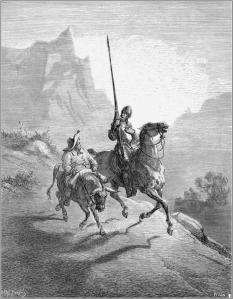
– ‘Don Quixote‘
– B. Groethuysen
– A daydreamer
– It offers everything and confirms nothing.
 tomreading
Leave a comment