Art as Experience by John Dewey
Preface:
– 1931 Harvard
– Dr. Meyer Schapiro
– Dr. Joseph Ratner
– Dr. A.C. Barnes
“The Live Creature” chpt.1
– Ironic perversities
– Opaque
– geographers and geologists
– Appreciation
– Parthenon
– Understand
– Coleridge
– Pleasurable activity of the journey itself
– The movie, jazzed music, the comic strip, and too frequently newspaper accounts of love-nests, murders and exploits of bandits.
– Even in the caves….. p. 5
– ….they were part of the significant life of an organized community
– Athens
– Reproduction or imitation
– Plato
– Censorship
– The idea of art for art’s sake would not have been even understood
– nationalism and imperialism
– Spoils of Napoleon that are in the Louvre
– The nouveaux riches
– Holier than-thou attitude
– Modern industry
– Cosmopolitanism
– Specimens of fine art
– Probably many a savage tribe had its Maecenas
– Theories
– Role
– Compartmentalization
– Pigeon-hole theories
– Modes of experience
– Function of art
– Esthetic understanding –as distinct from sheer personal enjoyment – must start with the soil, air, and light out of which things esthetically admirable arise.
– Scientific enquirer
– To discriminate things as favorite and hostile. How could it be otherwise?
– Interaction
– Rhythms
– Balance and counterbalance
– Because measured through overcoming resistance. Environing objects avail and counter avail
– Where everything is already complete, there is no fulfillment
– Santayana
– Hushed reverberations
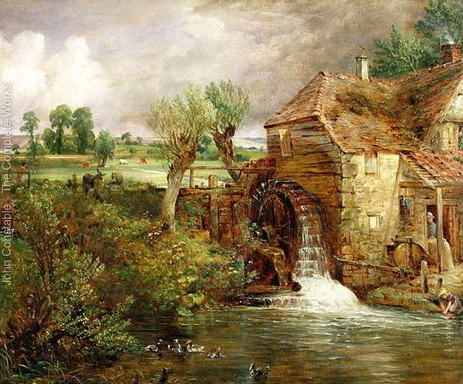
– George Eliot, “The Mill on the Floss”
– Recourse to animal life below the human scale
– Qui vive
– Savage that is sodden
– The savage
The Live Creature and Ethereal Things chapt 2 p.20
– Compartmentalization of occupations and interests brings about separation of that mode of activity commonly called ‘practice’ from insight, of imagination from executive doing, of significant purpose from work, of emotion from thought and doing.
– He identifies the sensuous with the sensual and the sensual with the lewd
– ‘Sense’ covers a wide range of contents: the sensory, the sensational, the sensitive, the sensible and the sentimental along with the sensuous
– Experience is the result, the sign and the reward of the interaction of organism and environment which, when it is carried to the full, is a transformation of interaction into participation and communication.
– What is distinctive in man makes it possible for him to sink beneath the level of the beasts
– Man excels in complexity and minuteness of differentiations
– Sub – rhythms
– Space p. 23
– Like the soil, mind is fertilized while it lies fallow, until a new burst of bloom ensues
– Hamlet
– Organic substratum
– As man, sharing many activities with the ape, is wont to think of the latter as imitating his own performance
– The idea of art as conscious idea-
– The greatest intellectual achievement in the history of humanity
– The arts in Greece led thinkers to……the art of politics
– Socrates and Plato
– Dewey ‘Experience and Nature’

– To make a distinction between fine art and useful or technological art
– The fetishes of the Negroes
– But now they are fine art
– This degree of completeness of living in the experience of making….
– Of the useful and the fine arts….
– Production has…
– conditions
– the thesis in hand
– W.H. Hudson, ‘Green Mansions‘
– Acacia trees
– supernatural being
– Emerson
– relationships of this living being to its surroundings
– there is no limit to the capacity of the immediate sensuous experience to absorb into itself meanings and values that in and of themselves- that is in the abstract – would be designated ‘ideal’ and ‘spiritual’
– architecture
– the sensible
– the same word ‘symbol’ is used to designate expressions of abstract thought , as in mathematics
– the anthropological
– myths
– rendition of a good yarn
– supernatural
– psychology
– …man through a direct appeal to sense and to sensuous imagination.
– Most religions have identified their sacraments with the highest reaches of art
– Henry Adams
– Music, painting, sculpture, architecture drama and romance were handmaidens of religion
– Pater
– The Latin hymn writers
– Pater, ‘The Child in the House’
– Keats the word ‘ethereal’
– Ethereal things
– The hawk wants a mate, so does the man
– May there not be superior beings amused
– Seen by a supernatural being
– Shakespeare as a man of ‘negative’capabiltiy’….as one who was capable…
– Coleridge
– ‘intuitions’
– Psychology
– It must fall back upon your imagination
– ‘Beauty is truth – truth beauty- that is all ye need on earth, and all ye need to know’
– Reasoning must fail man-…..
– ….taught by those who have held to the necessity of a divine revelation, Keats did not accept this supplement and supplement for reason
– His ‘Odes’
– Shakespeare and Keats
Having an Experience chpt. 3 p.36
– inchoate
– it is an experience
– that was an experience
– quality
– intellectual
– emotional as well
– purposive and volitional
– Thinking goes on in trains of ideas.
– Not separate and independent like Locke’s and Hume’s so-called ideas and impressions, but are subtle shadings of a pervading and developing hue.
– A conclusion’ is no separate and independent thing; it is the consummation of a movement
– The difference is enormous
– Like Caesar and Napoleon have something of the showmen about them
– The Greek identification of good conduct with conduct having proportion, grace and harmony. The kalom-agathon , is a more obvious example of distinctive esthetic quality in moral action
– A generalized illustration may be had if we imagine a stone, which is rolling down a hill, to have an experience
– …..thus the non-esthetic lies within two limits
– Aristotle
– ‘mean proportional’
– An element of undergoing, of suffering in its large sense, every experience
– Significant
– A man does something; he lifts, let us say, a stone
– Mr. Hinton, ‘The Unlearner’
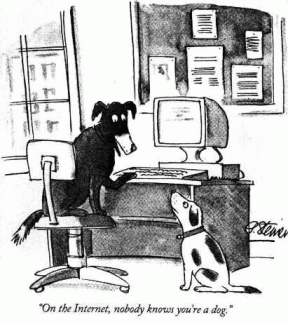
– A flitting and a sipping
– No balance between doing and receiving
– Tested and organized
– Necessary role of intelligence
– Art probably demands more
– Thinking
– Intellectuals
– ‘artistic’ refers primarily to the act
– Art denotes a process of doing or making, This is as true of ‘fine’ as of ‘technological’ art
– Production of something visible, audible or tangible
– John Stuart Mill : ‘art is an endeavor after perfection in execution.’
– While Matthew Arnold calls it ‘pure and flawless workmanship.’
– Are great artists who are not in the first ranks as technicians (witness Cezanne)
– …and as Sargent is not a great painter…..
– Craftsmanship to be artistic in the final sense must be loving ‘, it must care deeply for the subject matter upon which skill is exercised
– Man whittles
– …’an epicure than in one who merely ‘likes’ his food as he eats it.’
– The potter shapes his clay to make a bowl
– Enduring grace and charm
– The real work of an artist is to build is to build up an experience that is coherent in perception while moving with constant change in its development
– It is no linguistic accident that ‘building’, construction’, work’, designate both a process and its finished product. Without the meaning of the verb that of the noun remains blank.
– Medieval cathedrals
– Minerva –like
– But receptivity is not passivity
– Even a dog that barks and wags his tail….
– Notre Dame
– Rembrandt’s ‘Portrait of Hendrikje Stoffels’
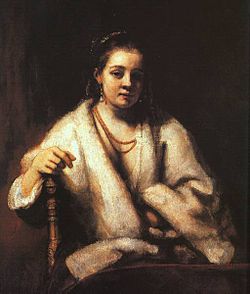
– Art often abstraction, that is of extraction ‘intellectual’
– ‘practical’
– In every integral experience there is form because there is dynamic organization
– William James aptly compared the course of conscious experience to the alternate flights of a bird.
– An engraver , painter, or writer is in process of completing at every stage of his work
The Act of Expression
– Impulsion
– They proceed from need; from a hunger and demand that belongs to the organism as a whole and that can be supplied only by instituting definite relations (active relations, interactions) with the environment
– Completion through what the environment – and it alone- can supply……
– Obstacles
– Impulsion from need starts an experience that does not know where it’s going
– …a balance between furthering and retarding conditions is the desirable state of affairs
– Not just quantitative, or just more energy, but is qualitative, a transformation of energy into thoughtful action
– ‘How that man is expressing his own dominant character in what he is doing or saying.’
– A fit of passion
– Emotional discharge is a necessary but not a sufficient condition of expression
– The ‘meaning of …..what he does
– Performs ‘on purpose’ an act that was blind
– A consciously entertained consequence
– Awkwardness
– An act of discharge
– Savage taboos that look to the outsider like mere prohibitions and inhibitions…
– Etymologically, an act of expression is a squeezing out, a pressing forth.
– The mere forth or discharge of raw material is not expression.
– Interaction
– Transformation
– Samuel Alexander remarked that the artist’s work proceeds not from a finished imaginative experience to which the work of art corresponds, but from the passionate excitement about the subject matter…The poet’s poem is wrung from him by the subject which excites him.’
– Art is a construction in time, not an instantaneous emission
– The Almighty took seven days to create heaven and the earth…
– The raw material of chaos that confronted him
– Still inchoate
– To generate the indispensable excitement, there must be something at stake , something momentous and uncertain – like the outcome of a battle or the prospects of a harvest
– Hence it is not mere excitement that is expressed but excitement about something
– Abercrombie, ‘The Theory of Poetry’
– An inspiration ‘completely and exquisitely defines itself
– The artist ‘does the deed that breeds’ the emotion
– That art is selective is a fact universally recognized
– But of the emotion leads one to gather material that is affiliated to the mood which is aroused, a poem may result….
– Not ‘what’ is expressed
– Truth in Wordsworth’s formula
– Of emotion recollected in tranquility
– Van Gogh
– The intensity, there is an explosiveness due to absence of assertion of control.
– ‘Mot juste‘ of the right incident In the right place, of exquisiteness of proportion
– Emotion
– Emotion is informed and carried forward when it is spent indirectly – in search for material and in giving it order, not when it is directly expended
– Works of art often present to us an air of spontaneity, a lyric quality, as if they were unpremeditated song of a bird. But man, whether fortunately or unfortunately, is not a bird.
– Keats
– ‘Innumerable compositions and decompositions which take place between the intellect and its thousand materials before it arrives at the trembling delicate and snail-born perception of beauty.’
– The music of memory as something wholly outside themselves – outside their present’s conscious selves. The invocation is a tribute to the power of what is most deep-lying and therefore the furthest below consciousness, in determinations of the present self and of what it has to say. It is not true that we ‘forget’ or drop into unconsciousness only alien or disagreeable things.’
– In one of his letters Van Gogh says that ‘emotions are something so strong that one works without knowing that one works.’
– ‘spontaneity’ is the result of long periods of activity, or else it so so empty as not to be an act of expression
– What William James wrote… p. 75
– Rearrangement
– Pretty surely definite
– ‘when the new center of energy has been subconsciously incubated so long as to be just ready to burst into flower, ‘hands off’ is the only word for us; it must burst forth unaided’
– Subconscious maturation
– ‘wit and will’
– When patience has done its perfect work, the man is taken possession of by the appropriate muse and speaks and sings as some god dictates
– Identity of an aura in which their obsessions and reflections swim
– If all meanings could be adequately expressed by words , the arts of painting and music would not exist
– Edgar Allen Poe left an account of the process of expression as its engaged in by those of more deliberate cast of mind
– About the Raven he wrote: ‘the public is rarely permitted to take a peep behind the scenes at the vacillating crudities, of the true purpose seized at the last moment, at the wheels and pinions, the tackle for scene shifting, the step ladders and demon traps, the red paint and black patches, which, is ninety-nine cases out of a hundred constitutes the properties of the literary histrio
– Oftentimes, this need is greater in cases of inspiration
– This fact…
– ….on the side of ‘inner’ materials, images, observations, memories and emotions. They are also progressively reformed; they too must be administered
– Decalcomania
– A comparatively simple matter.
– But better between conception and bringing to birth there lies a long period of gestation
– There is truth in Hulme’s statement that ‘beauty is marking time, the stationary vibration, the feigned ecstasy, of an arrested impulse unable to reach its natural end’
– Indirect excursions that are imagination in action
– Aboriginally esthetic
– Tennyson ‘In Memoriam’
– Samuel Johnson with the Philistines sturdy preference for reproduction of the familiar criticized Milton’s ‘Lycidas‘: ‘ It is not to be considered as the effusion of real passion’
– ‘ ….where there is leisure for fiction there is little grief.’
– The remote, in one of its aspects
– All primitive people’s
– Remote
– Diderot’s paradox
– A ‘part’
– Portrayal of intoxication is a common device of the comic stage, But a man actually drunken would have to use art to conceal his condition if he is not to disgust his audience, or at least to execute a laughter that differs radically from that intoxication when acted
– Raw emotion
– It is a difference in methods of bringing about the desired effect
– A difference doubtless connected with personal temperament
– The arts of painting, poetry…
– The community in the direction of greater order and unity
– 5. The Expressive Object
– Matisse said that the camera was a great boon to painters, since it relieved them from any apparent necessity of copying objects
– ….it presents the world in a new experience which they undergo
– Meaning does not belong to the word and signboard of its own intrinsic right, they have meaning in the sense in whitish an algebraic formula or cipher code has it
– Flower garden
– Unfortunately however the case is not so simple
– The esoteric idea of fine art
– Unique quality
– H2O
– ‘ Tintern Abbey’ expressed itself to Wordsworth in and through his poem
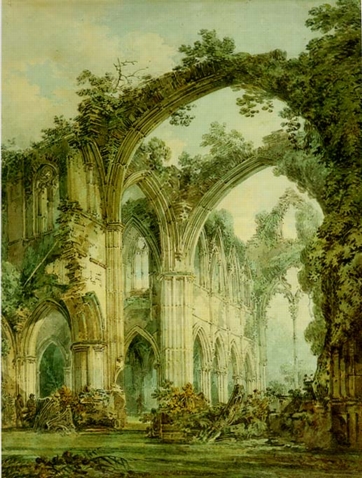
– The logic of poetry
– art is an immediate realization of intent
– van Gogh’s letters to his bro
– there
– intense malachite
– ‘I am trying to get to something utterly heart-broken’
– Expressiveness
– Roger Fry
– Vision of esthetically qualified material
– Nature of representation in art
– Why is he more likely to paint Soho than St. Paul’s
– A person with a knack can…..
– The drawing is similar in kind though not in its constituents to a signboard
– The halo that surrounds the head of saints
– William James
– ‘Assumption’ by Titian

– Deprecatory
– What self-abnegation
– Unworthy
– Murillo’s paintings
– Giotto painted saints

– Saints of Masaccio
– Titian, Tintoretto, Rembrandt or Goya, we seem to be in the presence of essential character
– The nature of drawing
– …..a Botticelli, an El Greco or Cezanne and say ‘what a pity the painter has never learned to draw’
– Dr. Barnes
– A physical distortion
– Barnes , ‘the Art in Painting’
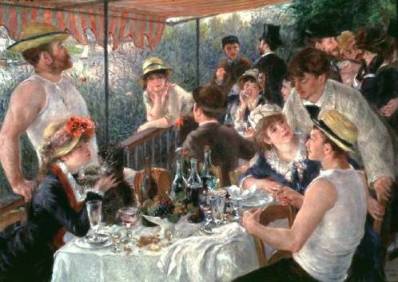
– ‘The Art of Matisse”
– Draughtsmanship
– ‘abstract’
– Dr. Barnes
– Color, extensity, solidity, movements, rhythm, etc. All particular things have these qualities, hence, what serves, so to speak, as a paradigm of the visible essence of all things may hold in solution the emotions which individualized things, provoke in a more specialized way
– Chardin or Cezanne
– ‘abstraction is usually associated with distinctively intellectual undertakings, actually it is found in every work of art’
– It is everywhere accepted that art involves selection
– An artist is ruthless in his selection
– The nudes of Renoir give delight with no pornographic suggestion
– The esthetic expels the physical, and the heightening of qualities common with flesh to flower ejects the erotic
– Samuel Johnson said, ‘the delight of tragedy proceeds from our consciousness of fiction: “if we thought murders and treasons real they would please us no more.’
– Mr. Colvin
– On account of their not swallowing them
– Fencing match in ‘As You Like It’
– ‘consciousness of fiction’
– An inexpert huntsman has buck fever when he suddenly comes upon the game he has been pursuing
– ‘association’
– The ‘expressiveness of lines’…..
– In tangents
– The mere pleasantness or unpleasantness of the experience
– Functions in isolation
– Nature, in other words, does not present us with lines in isolation. As expressed, they are lines of objects; boundaries of ttings
– Hence lines…
– One who has run into a sharply projecting corner will appreciate the aptness of the term ‘acute’ angle.
– ‘obtuse’
– They reinforce and interfere
– Vernon Lee
– German theory of Einfuehling or empathy
– As animistic version of the classic theory of representation
– ‘art’ signifies a group of activities that are, respectively, recording, constructive, logical and communicative
– The desire for shapes
– ‘art so far from delivering us from the sense of really living, intensifies and amplifies those states of serenity which we are given the sample too rare , too small and too alloyed in the course of our moral practical life.’
– …psychology, are motor and sensor.
– Hence experience…
– …cumulative community.
– We also inhabit the world
– Lives only in communication when it operates in the experience of others
– Tolstoy says about immediate contagion as a test of artistic quality is false
– 6. Substance and Form
– …logicians call a triadic relation. There is the speaker, the thing said, and the one spoken to.
– He observes and understands as a third person might note and interpret
– An English critic, Mr. A.C. Bradley has said that ‘poetry being poems….’
– …. A poem exists in innumerable qualities or kinds, no two readers….
– The Parthenon as a building
– ‘I meant just that, and that means whatever you or anyone can honestly, that is in virtue of your own vital experience get out of it’
– Dated
– …part of those less gifted than the original creator
– Mr. Bradley, ‘Poetry for Poetry’s Sake‘
– Milton’s ‘Paradise Lost’
– Coleridge, ‘The Rime of the Ancient Mariner’
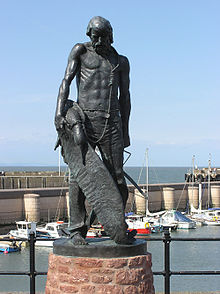
– Pallas Athena, Virgin Goddess
– Dante’s Divine Comedy’
– The painter Poussin
– Classical themes are so alien
– ‘subject’, however varies over a wide range
– The poems of Keats and Shelley on the sky-lark and the nightingale
– Beethoven’s ‘Fifth Symphony’
– Titian’s ‘Entombment‘
– A poem of Wordsworth ‘Lucy Gray’
– Rembrandt’s ‘Jewish Bride’
– ‘River at Twilight’
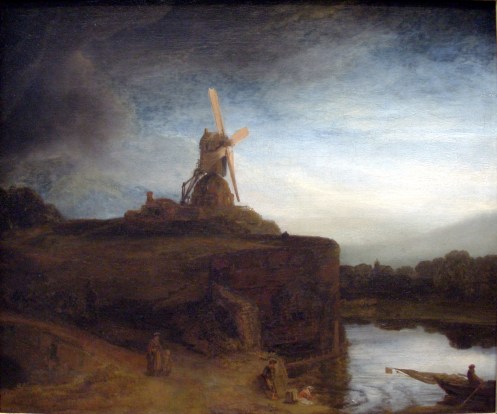
– The business of a detective
– Elijah
– Matisse
– ‘Madam that is not a woman that is a picture!’
– The majesty of Mount Blanco, the tragedy of Anne Boleyn, but esthetically they stand on the same level
– Adaptations to an end
– Herbert Spenser
– The spoon that in addition has that esthetic called ‘grace’ bears no such limitation
– Dynamic shape
– Metaphysical theory of the nature of forms
– Distinguish things in perspective: chairs from tables, a maple from an oak. Since we note – or ‘know’ them- in this way and since knowledge was believed to be a revelation of true nature of things, it was concluded that things are what they are in virtue of having, intrinsically, certain forms.
– – Moreover, since things are rendered knowable these forms, it was concluded that form is the rational, the intelligible, element in the objects and events if the world, Then it was set over and against, matter’, the latter being the irrational, the inherently chaotic and fluctuating stuff from which was impressed.
– It was eternal as the latter was shifting. This metaphysical distinction of matter and form was embodied in the philosophy that ruled European thought for centuries
– Separation
– Immediate and vital experience
– The word ‘design ‘has a double meaning. it signifies purpose and it signifies arrangement, mode of composition
– Dr. Barnes: ‘Form is ….. The synthesis or fusion of all plastic means… their harmonious merging. on the other hand, pattern in its limited sense, or plan and design,’ is merely the skeleton upon which plastic units….are engrafted’
– The art in Painting
– – What is called the magic of the artist resides in his ability to transfer these values from one field of experience to another, to attach then to object of common life, and by his imaginative insight make these object poignant and momentous
– The art of Matisse
– William James
– intellectual ‘Stop and Go’
– For this reason contain trains of ideas leading to their appropriate consummation (or conclusion) are beings that exist immediately as feelings having qualifies beautiful or elegant
– When there is genuine artistry in scientific inquiry and philosophic speculation, a thinker precedes neither by rule nor yet blindly, but by means of meanings that exist immediately as having qualitative color.
– … Here are no experiences of ‘pure’ or simple’ qualities,
– Dewey ‘Qualitative Thought’ ,
– ‘Philosophy and Civilization‘
– Cezanne says, ‘Design and color are not distinct. In the degree in which color is really painted, design exists; the more colors harmonize with one another more defined is design. When color is at its richest, form is most complete secret of design, of everything marked by pattern, is contrast and relations of tones.’
– Delacroix: ’Give me the mud of the streets and if you will leave me also with power to surround it to my taste, I will make of it a woman’s flesh of delicious tint.’
– ‘pointillist’ technique
– James called this ‘psychological fallacy’
– Such things as narcotics, sexual orgasms, gambling indulged in for the sake of the immediate excitement of sensation.
– Keats
– Milton
– Shakespearean tradition
– The expressive inclines to the side of meaning, light and color’ there is distinctive satisfaction when this hunger is fed
– Hudson
– Kant
– Joie de vivre
– A gay Pierrot at a funeral would clash with the others
– As Goya carries its exaggeration in some portraits of the court folk of his day….
– ‘…..expression of the somber as it is a puritanical demand that all art be grave
– ‘functionalists’
– G. Scott, “Architecture of Humanism”
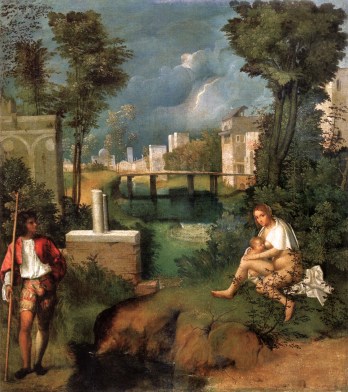
– Velasquez painting of the child Maria Theresa
– Titian, Velasquez, Renoir
– Lively sense of the decorative
– Lancret, Fragonard, Watteau
– Boucher
– Renoir
– Matisse is unrivaled among the decorative colorists of the present
– Claret
– Like too much sugar
– As Chardin renders….
– Cezanne achieves
– Guardi suffuses
– ‘how beautiful’
– Emotional rapture das been subjected to what philosophy calls hypostatization and the concept of beauty as an essence of intuition has resulted….
– The sublime, the comic, grotesque
– A compartmental pigeonholing
– Demonstrations in mathematics, operations in surgery are thus said to be beautiful- even a case of disease may be
– As typical in its exhibition of characteristics relations as to be called beautiful. Both meanings that of sensuous charm and of manifestation of a harmonious portion of parts mark the human form in its best examples.
– ‘we call the façade of a Greek temple beautiful….
– Beauty of a Norman castle
– Indeed at first view, it seems more natural to ascribe matter to sense and form to meditating thought than vice versa. The fact is that distinctions in both directions are completely arbitrary
– ‘Lucy Gray’
– In analysis, performed with reference to a more definite apprehension of form, may enrich further direct experience.
– …but by creation of a new experience
– It does so by reducing the raw materials of that experience to matter ordered through form
– The natural history of form
– ‘Relation’ is an ambiguous word. In philosophic discussion it is used to designate a connection instituted in thought. it then signifies something indirect, something purely intellectual…..even logical.
– ‘The relations of friendship, of husband and wife, of parent and child, of citizen and nation, like those of a body to body in gravitation and chemical action may be symbolized by terms or conceptions and then he stated in propositions. But they exist as actions and reactions in which things are modified. Art expresses, it does not state, it is concerned with existence in their perceived qualities, not w conceptions symbolized in terms.
– Max Eastman, ‘Enjoyment of Poetry’
– Finally the scene formed by the buildings may be looked at as colored and lighted volume in relation to one another, to the sky and to the river. He is now seeing esthetically, as a painter might see.
– The Empire State Building
– Matisse has described the actual process of painting: p. 141
– …a new combination…
– Subject-matter to its completion
– reading a poem
– Presses forward
– Such characteristics as continuity, calculation, conservation, tension and anticipation are thus formal conditions of esthetic form
– The factor of ‘resistance’
– ‘there is no excellent beauty that hath not some strangeness in the proportions’
– Delights of discovery
– Santayana speaks of being carried by contemplation of nature to a vivid faith in the ideal.
– ‘instrumental’
– Santayana
– Charles Lamb
– Then in the work but they are not of it
– Significant advances in technique occur, therefore, in connection with the efforts to solve problems, that are not technical but that grow out of the need for new modes of experience. This statement is as true of esthetic arts as of the technological
– renaissance
– craftsmanship of painting itself
– transition
– ‘three-dimensional’
– Chinese rendering of perspective
– Western painting
– Florentine
– The sculpturesque line
– …..with indicating how techniques functions in respect to express form
– Experimentation
– Mantegna
– Typical impressionists in respect to light effects.
– Dramatic movement characteristic of Titian and still more of Tintoretto, by means chiefly of light and shade, is exaggerated to the point of the theatrical. In Guercino, Caravaggio, Feti, Carracci, Ribera, the attempt to depict movement dramatically results in posed tableaux and defeats itself.
– ….technique is borrowed t. the academic and eclectic result.
– Without relation to the urgent experience that at first evoked it. The academic
and eclectic result
– Gothic sculpture
– Chinese paintings their special kind of perspective
– Greek sculpture will never be equaled on its own terms. Thorvaldsen is no Phidias. That which Venetian painters achieved will stand unrivalled
– Gothic cathedral
– Art is emergence
– Manet
– the relativity of techniques to form is nowhere better exemplified than in Shakespeare
– Borrowed from the conventions of the Elizabethan stage
– The effects is to deflate Shakespeare’s greatness
– Cezanne wished he had Manet’s muscles
– Yet one of the essential traits of the artist is that he is born an experimenter
– Without the trait he becomes a poor or a good academician
– …adventurous…
– The sense of adventure in reading any classic that Keats had in reading
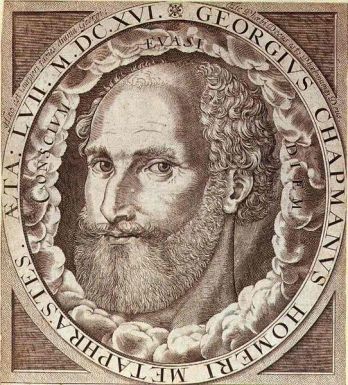
– Chapman’s ‘Homer’

– Accumulation , tension, conservation, anticipation and fulfillment as formal characteristics of – – – esthetic experience
– Delacroix ‘‘Before knowing what the picture represents, you are seized by its magical accord.’ p.151
– That level to one where there is intrinsic assurance if worth is through intervening periods of discrimination.
– The wind that bloweth where it lieth
– Seemed to the ancients to be a kind if divine madness
– Locomotive or a dynamo
– Existence of artistic form is rhythm
– There is rhythm in nature
– Dawn and sunset, day and night, rain and shine, are in their alternative factors that directly concern human beings
– March of the seasons was of necessity identified with the destiny of the community.
– The cycle of irregular regularities in the shape and behavior of the moon….p. 153
– In working the matter there are recurrent beats of patting, choosing molding, cutting, pounding that mark off the work into measures.
– The appointed reed, stretched string and taut skin rendered the measures of as\action conscious – through song and dance. Experiences of war, of hunt, of sowing and reaping, of the death and resurrection of vegetation, of stars circling over watchful shepherds of constant return of the – inconstant moon, we undergone to reproduce in pantomime and the generated sense of life as drama. The mysterious movements of serpents, elk, boar, fell into rhythms…
– Technic
– The anabolism and metabolisms of all living processes.
– The one, two three four of counting
– Wordsworth-
‘…..when the fretful stir, unprofitable and the fever of the world
Have hung upon the beatings of the heart.’
– In painting, ‘naturalism’
– When Hegel asserted that the first stage in ‘art is always symbolic’ he hinted in terms of his philosophy…..
– It is trivial to the point if frivolity with cupids masquerading as cherubs
– More hampering ones arise within artists themselves when they become academic, like the later eclectic painting in Italy, and most of English poetry in the 18th century.
– A work of art
– On England after the death of Milton, Wordsworth ‘s poetry was a naturalistic revolt’
– ‘And, fronting the bright west, yon oak entwines, its darkening boughs and leaves in stronger lines’
– ‘the moment was important in my poetic history; for I date from it my consciousness of the ‘infinite variety of natural appearance which had been unnoticed by the poets of any age or country, so far as I was acquainted with them; and O made a resolution to supply in some degree the deficiency. I would not at this time have been above fourteen years of age’
– Definition of rhythm. It is the ordered variation of changes
– There must be energies resting each other
– resistance accumulates energy; it institutes
– successive waves and pulses are themselves cumulative with respect to final consummation
– Darwin’s book ‘Expression of Emotions’
– when complete release is postponed –
– and it arrived finally through a succession of ordered periods of accumulation and conservation
– Coleridge’s explanation of meter in verse
– ‘An interpretation of passion and of will of spontaneous impulse and voluntary purpose.’ Meter thus tends to increase the vivacity and susceptible of both the general feelings and the attention.’
– Music complicates
– Santayana
– Idle-day-dreaming
– Paintings as well
– In tension
– As Leo Stein has remarked, ‘tension in line…’
– Sui generis
– The formative
– Shakespeare may have had little Latin and less Greek but he was such an insatiable devourer of accessible material that he would have been a plagiarist if the material had not at once antagonized and cooperated with his personal vision by means of an equally insatiable curiosity concerning the life surrounding him
– The great innovators in modern painting were the imitators who set the contemporary fashion
– There is an old formula for beauty in nature and art: Unity and Variety
– For the unity in variety that characterizes a work of art is dynamic
– The Organization of Energies
– Perception
– There are two kinds of fine arts, the spatial and temporal
– Symmetry
– The ‘tick-tock’ theory
– Esthetically satisfactory curves lines (like those of a Greek vase)
– The investigation remarked that the artists always ‘took liberties’ with music.
– In fact these ‘liberties’ mark the difference between mechanical or purely objective construction and artistic production
– Wordsworth’s ‘Prelude’ p. 171
– Without incongruities
– Some gospel hymn’
– Even in a ballad
– Cumulative conservation
– Relationships
– The beat of the drum of a savage has been held up as the model of rhythm, so that the ‘tic-toc’ theory becomes the ‘tom- tom’ theory.
– Primitive rhythms
– African Negros
– Northern Negros
– More conventionalized
– Too easy repulsive
– Compare a picture
– Whistler vs. Renoir
– The esthetic vulgarity of many of our edifice especially those that line American city streets
– Our terrible civil war monuments and much of our municipal statuary
– William James often quoted it marks an instance of ‘ever, not quite’
– Iliad and Odyssey are perennial witnesses
– Bosanquet call ‘easy beauty’
– In the ‘Spring‘ and ‘Birth of Venus’ of Botticelli

– Love of a Darby for some Joan
– Jane Austen and Sir Walter Scott
– The adequacy of Greek sculpture
– Epstein
– Negro sculpture
– Egyptian sculpture
– Absurdity is mutual nullification carried to its completion, becoming esthetic or ‘funny’ when successfully executed
– Exaggeration of line in the Florentine school; of light in Leonardo, and in Raphael under the influence of Leonardo, of atmosphere in the thoroughgoing impressionists
– As in Matisse
– Shakespeare’s employing the comic in the midst of tragedy is in point
– Barnes’ ‘The Art in Painting’
– Variation
– Perception of an object except in a process developing in time
– Niagara falls
– Manet
– Organization of energy as means for producing a result
– The object , the cloud, river, garment
– Still more true of the carbon molecule, the hydrogen ion, the entities of science generally
– Our ordinary perception
– One of a kind or of a species within the kind
– One that is organized and so rhythmic
– Animism
– The ‘Entombment‘ of Titian

– The ballet girls of Degas
– Children- in Renoir’s paintings
– In constable , verdure is moist in Courbet glen drops and rocks shine in cool wetness
– Sentimental associations derived from literature – a simulated esthetic experience occurs.
– There are works of art that merely excite, in which activity is aroused without the composure of satisfaction, without fulfillment within the terms of medium. Energy is left without organization. Dramas are then melodramatic; paintings of nudes are pornographic; the function that is read leaves us discontented with the world in which we are , alas , compelled to live without the opportunity for the romantic adventure and high heroism suggested by the story book
– Symmetry
– The connection of intensity and extensity and of both with the tension is not a verbal matter.
– Silhouette pictures of the thirteenth and fourteenth centuries
– Miniatures and quatrains
– A critic has observed lf O’Neill’s plays that they suffer from lack of retardations, everything moves too quickly and hence…
– An overcrowding
– Symmetry dynamic and functional
– Space-time
– The scientific inquirer
– As Croce has said, we are specifically (or separately) conscious of temporal sequence in music and poetry…
– Nothing but dry bones
– Galsworthy
– Defined art as the imaginative expression of energy which through technical concretion of feeling and perception, tends to reconcile the individual with the universal by exciting in him impersonal emotion.’
– Energies that constitute the objects and events of the world and hence determine our experience are the ‘universal’
– Appreciation is equally impersonal. P. 193
– The Common Substance of the Arts p.194
– Individuous distinctious
– Sir Joshua Reynolds
– The Roman. The Florentine, The Bolognese Schools
– Venetian and Flemish Schools
– The ballet girls of Degas
– The railway coaches of Daumier (actually third class) or the apples , napkins, plates of Cezanne
– Diderot
– Ibsen
– Housman ‘The Lyrical Ballads of Wordsworth and Coleridge’
– Ushered in a revolution
– Coleridge: ‘One of the two cardinal points in poetry consists of faithful adherence to such characters and incidents as will be found in every village and its vicinity….. mind to seek after them, or to notice them when they present themselves
– Flemish Painters
– Dutch genre painters – Breughel the Elder for example and French painters like Chardin turned frankly, to ordinary themes
– The novel has been the great instrument of effecting change in prose literature
– Rousseau’s excitement about ‘le peuple’
– The part played by folk music esp. in Poland, Bohemia and Germany
– ……pressed out and becomes the matter of a new experience
– Tolstoy’s identification as sincerity as the essence of originality…
– ……common man, factory worker and especially peasant , Tolstoy paints a picture of conventional restrictions that is out of perspective
– proletarianism’s material
– Shakespeare’s alleged personal aristocratic bias. I fancy that his limitation was conventional, familiar and therefore congenial to pit as well as to stalls. But whatever its source, it limited his ‘universality’
– ‘intuition’
– The resulting sense of totality is commemorative, expectant, insinuating, premonitory
– There is no name to be given it. As it enlivens and animates, it is the spirit of the work of art.
– Dewey, ‘On Qualitative Thought’
– we suppose the experience has the same definitive limits as things with which it is concerned
– total setting
– as Tennyson said: ‘Experience is an arch whether, Gleams that untraveled world, echoes margin fades, Forever and Forever when I move.’
– A microscope
– to view some tiny lichen
– imagination
– Poe spoke of ‘a suggestive indefiniteness of vague and therefore spiritual efforts.’
– Coleridge said that every work of art must have about it something not ‘understood’ to obtain its full effect
– Dim and vague
– At twilight , dusk is a delightful quality
– Desire to discern
– The sense of extensive and underlying whole is the context of every experience and it is the essence of sanity
– Like Macbeth, finds that life is a tale told by an idiot, full of sound and fury, signifying nothing.
– This vast world beyond ourselves……
– Sense of unity in itself and with ourselves.
– Photographs to primitive folks, have (so it is said) a fearful, magical quality.
– This power of representation could come only from a supernatural source.
– ‘Art’ tends to denote painting and ‘artist’ one who paints.
– One has lost one’s ‘head’
– ….they are but a scaffolding
– When the Greeks identified the good and beautiful in actions
– ‘decorum’ and ‘property’
– ‘spiritual’
– Even angels have to be provided in ‘imagination’ with bodies and wings.
– Clark-Maxwell
– The medium is mediation. It is a go between of artist and perceiver. Tolstoy in the midst of his moral preconceptions often speaks as an artist.
– Delacroix
– They used coloration rather than color
– The ability to paint a fly on a peach so that we are moved to brush it off or grapes on a canvas so that the birds come to peck at them, a scarecrow would be a consummate fine art when it succeeds at keeping away the crows.
– Underbrush
– Gems and sunlight
– As red arouses while another color soothes
– Stagecraft
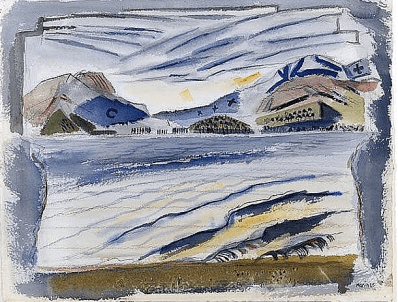
– John Marin
– Leibniz taught…
– Rembrandt
– Shakespeare – ‘in cradle of rude imperious surge’ with ‘icicles hang on the wall’
– In poetry , Blake
– Rubens, Rembrandt, and the Venetian and Flemish schools
– Space-time
– Macbeth
– An attempt to separate the witches from the hearth.
– Keats ‘Ode on a Grecian Urn”
– Psychologists
– William James
– Beethoven’s Fifth symphony
– Cezanne’s ‘Card Players’

– Three general themes: Room , Extent , Position –
– Spaciousness, spatiality, spacing
– Raum
– Emphasis upon spaciousness is a characteristic of Chinese painting
– Van Eyck’s “Jean Arnolfin and Wife’
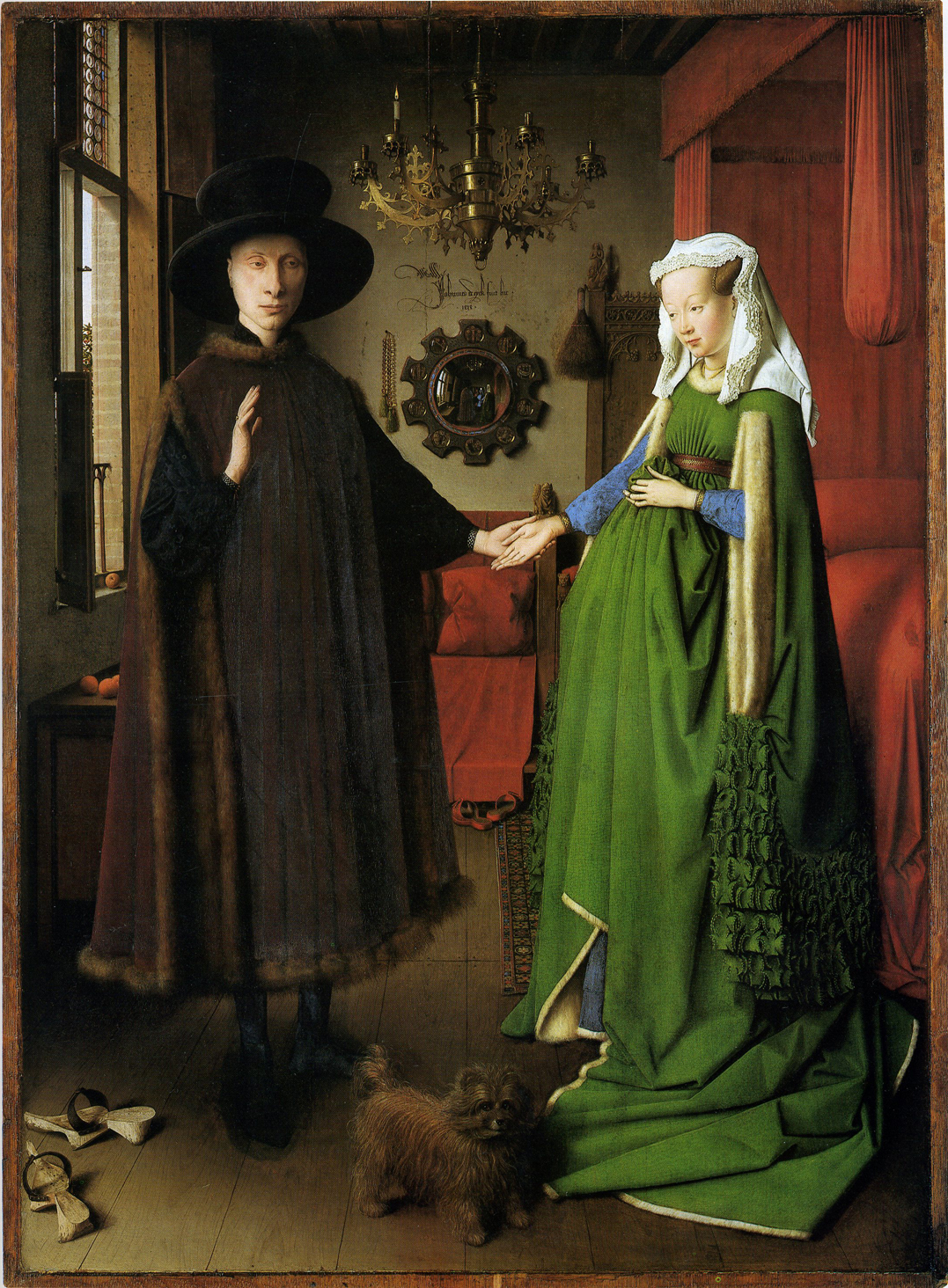
– A still life of Cezanne’s
– The very essence of volume in dynamic equilibrium
– Space
– Are marked by solidity, massiveness and the reverse
– As Cezanne is a Master of the latter Corot has unerring tact for the former.
– The so-called ‘Italian’ paintings as compared with his silvery and relatively weak landscapes.
– ….as it is in fiction in Mann’s “Magic Mountain’ and in architecture in the Bush Building in New York City
– The Varied Substance of the Arts
– Art is quality of doing and what is done.
– The product of art – temple, painting, statue, poem, – is not the work of art. The work takes place when…….
– ‘We receive but what we give. And in our life alone does nature live; ours is her wedding garment; ours her.
– Like Keats’ ‘spear going through one’
– Organic ‘clicks’
– Significant tendencies
– William James
– Kant’s effort
– ‘higher’ intellectual senses, eye and ear
– ‘Alice in Wonderland‘
– Britannica
– ‘all at once’
– It is a causal condition for having any and every ‘sensation’
– ‘reaches us simultaneously’
– Physically, a statue is a block of marble
– Simultaneous vision
– Reduction ad absurdum
– Saint Sophia
– Cathedral of Rouen
– The flitting landscape
– Representation in the sense of expression covers all the qualities and values of any possible esthetic experience.
– Just why buildings are called palaces, castles, homes, city-halls, forums, is a mystery if architecture is not supremely expressive of human interests and values.
– Frieze of Parthenon, the carvings of the cathedrals of Lincoln and Chartres
– Painting was first adherent to the walls of caves
– A decorative effect of temples and palaces
– Gothic buildings left little wall space for murals, stained glass and later panel paintings took their place
– Reduction ad absurdum
– A Gorgeous to possess
– Beethoven’s major theme in the ‘Fifth’ symphony
– Tendencies
– Movement
– Dr. Helen Parkhurst
– Weather report p. 283
Low pressure prevails,…..
…….Brazil has received a warning’.
– An experience as an experience , while in other cases the result moved towards is but a deposit for use in another experience
– ….are examples of ‘automatic ‘ art
– Parthenon
– Modern taste
– Stupid
– Work done by machines
– Santayana’s ‘Reason in Art’
– Assistance of reed, string and drum
– Instrumentation
– Iliad
– ‘arts constantly aspire to the condition of music’
– All the ‘shaping’ arts bend natural materials and forms
– Wood , stone, steel , cement as compared with relatively restricted number of materials available in painting, sculpture and poetry
– Its connection with engineering is inevitable
– …..buildings, among all art objects, come the nearest to expressing the stability and endurance of existence
– The complete elimination of human use
– Sculpture
– The Elgin Marbles
– Buddhist temple
– Negro sculpture
– Greek statuary
– Michelangelo’s “Moses’
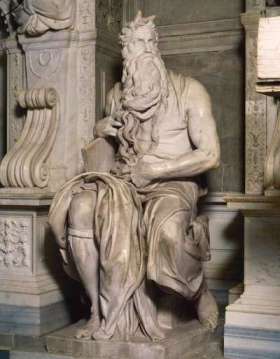
– Witness Greek dancing figurines and the ‘winged victory’
– Keats
– Spectacles
– Literary
– Abbey’s pictures in the Public Library in Boston
– Rousseau, Daumier
– Cezanne
– Vibration makes no sound
– Sounds come from outside the body
– Clash of vibrations
– The ‘right’ farmhouse
– The immediacy of emotional effect, music has been classed as both the lowest and the highest of the arts
– Havelock Ellis
– Pensioned quality
– ‘it is we ourselves who are tortured by the strings’
– Moliere’s character did not know he had been talking prose all his life
– Continuity of meaning and value is the essence of language
– ‘…..speak the tongue that Shakespeare spoke; the faith and morals hold which Milton held’
– Intense and vivid realization of the meanings of the events and situations of the universe can be achieved only through a medium already instinct with meaning
– Lascelles Abercrombie’s ‘The Theory of Poetry’
– Music is brutally organic
– Medium-paint
– Character
– The nature of things
– That is its nature
– Art breaks through barriers that divide human beings, which are impermeable in ordinary association
– This force of art
– Moral and the humane function
– The art of letters
Chpt 11 ‘The Human Contribution’
– By the phrase ‘the human contribution’ I mean those aspects and elements of esthetic experience that are usually called ‘psychological’
– Plato provides a perfect e.g. of this fact with his threefold division of the soul
– Sensuously appetitive
– Spirited faculty
– Loyal to the law and right belief
– The rational faculty
– ‘subject’ and ‘object’
– The professional thinker 9and naturally he is the one who writes treatises on esthetic theory) is the one who is most personally haunted by the difference between self and the world.
– Which organism and environment cooperates to institute an experience in which the twp. are so fully integrated that each disappears
– ‘projection’
– I. A. Richards
– ‘in us’
– The external causal factor is vibrations of light from pigments on canvas variously reflected and refracted
– ‘beauty’
– Mr. Richards
– Time of the renaissance
– Universal
– Consciousness of the rightful place of the strictly personal factor play any large role in plastic and literary arts
– Stream of consciousness;
– Impressionism’
– Nicolas Poussin
– Persian paintings as well as those if the sixteenth century by Italian painters
– Kant’s “Critique of Judgment’
– …working in conjunction with sense-materials. He has referred ordinary conduct, as prudential to desire which has pleasure as its object, and moral conduct to the Pure Reason operating as a demand upon Pure Will
– Truth and the Good
– Beauty
– Pure Feeling remained
– Faculty of Judgment
– Not reflective but intuitive
– Contemplation
– Esthetic element is the pleasure which attends such contemplation
– Thus the psychological road was opened leading to the ivory tower of ‘Beauty’ remote from all desire, action, and stir of emotion
– the effect upon German thought on Capitalization has hardly received proper attention
– …in a thoroughly anemic conception of art
– …exclude from esthetic
– Keats’s ‘St. Agnes’ Eve’
– More imagery and ideas are included than attend the act of escape
– The kingdom of art as well as of righteousness, it is those who hunger and thirst who enter
– A poesis
– Diderot’s paradox
– Disinterestedness, detachment, psychical distance, all express ideas that apply to raw primitive desire and impulse, but that are irrelevant to the matter of experience artistically organized.
– The substantial cake of reason while also enjoying the sensuous pleasure of eating it.
– Necessary instrumentality of reflection
– We recognize with the eye and as a different quality from the green of a leaf; and the gray of a rock as different in quality from that of a lichen growing upon it. In all objects perceived for what they are without need for reflective inquiry, the quality is what it means, namely the object to which it belongs. Art has the faculty of enhancing and concentrating this union of quality and meaning in a way which vivifies both.
– It exemplifies in an accentuated and perfected manner the union characteristic of many other experiences rough finding the exact qualitative media that fuse most completely with what is to be expressed.
– Cezanne
– Cezanne succeeds esthetically the work is accomplished wholly in terms of the qualitative and sensuous medium
– The ‘world’ is too much
– The assertion of philosophic theory of an inherent psychological separation of sense and reason, desire and perception.
– Mexican potter
– Presence of resistance that inhibit such action
– Obedience to some necessary psychological law
– Industrial conditions
– A teacher so fluent as to exclude emotional and imaginative perception of what he is doing, he may be safely set down as a wooden and perfunctory pedagogue
– Popular psychology and much so-called scientific psychology have been pretty thoroughly infected by the idea of the separateness of mind and body.
– The word ‘mind’….. p 274
– It signifies memory
– Mind also signifies attention
– Mind also signifies purpose
– In short ‘to mind’ denotes an activity that is intellectual, to ‘note’ something; affection, as caring and liking, and volitional, practical, acting in a purposive way
– Mind is primarily a verb….
– Entity which….
– Entity
– ‘in mind’
– Engaged with things of nature and life. It takes art out of the province of the live creature.
– ‘substantial’
– Substance, there is something substantial about mind
– The modification extends beyond acquisition of greater facility and skill.
– Judgment of them on a basis of sheer inspiration overlooks the long and steady work done by an interest always at work below the surface
– Coleridge and the term ‘esemplastic’
– …..not merely in religion that the prophet is at first stoned (metaphorically at least) while later generations builds the commemorative monument. With respect to painting, Constable stated, with almost undue moderation the universal fact when he said ‘in art there are two modes by which men aim at distinction. In the one by a careful application to what others have accomplished, the artist imitates their works or selects and combines their various beauties; in the other, he seeks excellence at its primitive source- nature.
– Original
– The usual course
– The contrast
– Art also renders men aware of their union with one another in origin and destiny.
– 12. The Challenge to Philosophy
– Mind that is the body of organized meanings by means of which events of the presence have significance for us….
– By way of ‘expressions’
– There is no test that so surely reveals the one sidedness of a philosophy as its treatment of art and esthetic experience
– The philosophies of esthetics are many and diverse. It is impossible to give even a ‘resume’ of them in a chapter.
– The make-believe theory
– State of dream
– Indeed it is safe to say that ‘creative’ conceptions in philosophy and science come only to persons who are relaxed to the point of reverie.
– Images and ideas come to us not by set purpose but in flashes, and flashes are intense and illuminating, they set us on fire, only when we are free from special pre-occupations
– ‘Joie de vivre’ of Matisse
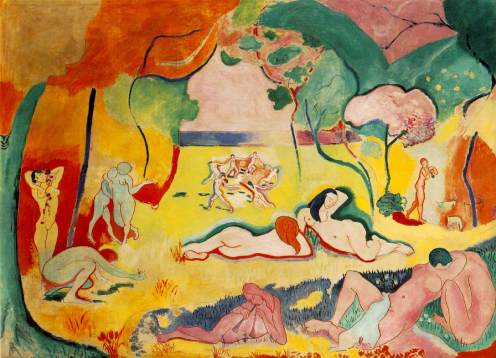
– Subject and object
– Play remains as an attitude of freedom from subordination….
– Production of an objective result.
– No one has ever watched a child intention his play without being made aware of the complete merging of playfulness w seriousness
– Playful attitude
– That art is play attributes play to the existence of a surplus of energy in the organism demanding outlet…….p. 291
– A little nonsense now and then is relished by the best of men
– As Goethe said, “Art is formative long before it is beautiful. For man has within him a formative nature that displays itself in action as soon as existence is secure….when formative activity operates on what lies around it from single , individual, independent feeling careless and ignorant of all that is alien to it, then, whether born of rude savagery or cultivated sensibility, it is whole and living.”
– Browning said,
– “And that your Venus-
Whence we turn
To yonder girl that
Fords the burn”
– Spontaneity and novelty of individuality
– From the manifestation by a child of an impulse to draw up to the creations of a Rembrandt….
– Schiller’s, “Letters on Esthetic Education of Man’
– Absorb what was alien and naturalize it within direct experience
– Delacroix
– Arabian scenes
– Sir Walter Scott is classed as a romanticist in literature
– A priori rules
– Charles Lamb
– I.T. regarded the individual as mere channel
– Aristotle
– Universals Macbeth, Pendennis or Felix Holt consists in fidelity to the nature found in a class or species
– Sir Joshua Reynolds
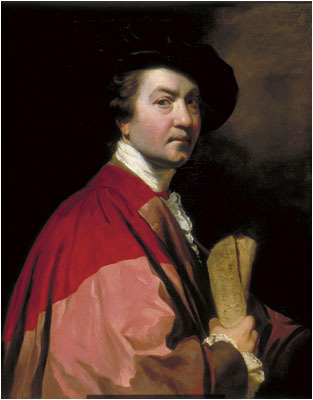
– Paintings of Sir Joshua Reynolds
– The Gothic
– Aristotle
– Bishop Berkeley
– Gothic
– The ‘universal’
– A ‘way in which things function’ in experience as a bond of union among particular events and scenes.
– ‘potentially anything whatsoever in nature…is common
– Art is the most effective mode of communication that exists. For this reason the presence of common or general factors in conscious experience is an effect of art.
– Such facts as these give convincing evidence that the medium of expression in art is neither objective nor subjective have so cooperated that neither has any longer an existence by itself.
– The notion that art is a form of knowledge (though not one superior to the scientific Mode) is implicit in Aristotle’s statement that poetry is more philosophical than history
– Aristotle
– Platonic Ideas
– Schopenhauer
– Hegel
– Croce
– There are artists who have been definitely influenced in their works by the science of their times- as Lucretius, Dante, Milton, Shelley and although not to an advantage of their paintings Leonardo and Durer in the large compositions of the latter
– Wordsworth declared that ‘poetry is the breath and finer sprit of knowledge; it is the impassioned expression which is in the countenance of all science.’
– Shelley said: “Poetry ……is at once the center and circumference of all knowledge; it is that which comprehends all science and to which all science must be referred.’
– What is intimated to my mind is that in both production and enjoyed perception of works of art, knowledge is transformed; it becomes something more than knowledge because it is merged with non-intellectual elements to form an experience worthwhile as an experience
– Dewey’s conception of knowledge as ‘instrumental’ p. 302
– Tangled scenes of life
– Plato: He sets out from imitation conception, but to him there are an element of sham and deceit in every imitation and the true function of the beauty in every object, natural or artistic, is to lead us from sense and phenomena to something beyond. Plato says, in one of his more genial references, ‘the rhythmic and harmonious elements of art, like a breeze blowing in a goodly place, may from earliest childhood lead us peacefully into harmony with the beauty of reasonableness; one so nurtured will, beyond others, welcome reason when it’s time comes and know it as its own.
– …….we may move on to the one intuitive knowledge of beauty absolute. Plato’s ladder is, moreover, a one-way ascent; there is no return from the highest beauty to perceptual experience.
– “Recall how in that communion alone, through beholding beauty with the eye of the mind, one will be able to become the friend of God and as a divine as any mortal may be.”
– Following Plato in a time that is well designated by Gilbert Murray ‘A Failure of Nerve”
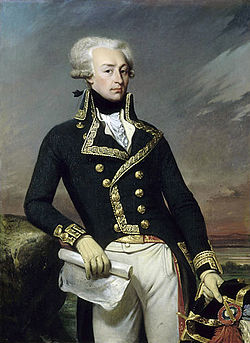
– ‘Conferred upon the creatures’
– Carlyle
– In art, ‘the infinite is made to blend with the finite; to stand visible and as it were attainable there, of this sort are all true there. Of this sort are all true works of art; in this (if we know the true work from the daub of artifice) we discern eternity looking through time, the Godlike rendered visible”
– Bosanquet – a modern idealist of the German tradition p. 304
– Santayana
– Reflection
– Is reinforced by fear of sense, moralistic in origin. Sense seems, as to Plato, to be a seduction that leads man away from the spiritual.
– It is a ghostly metaphysics irrelevant to actual esthetic experience.
– Courbet often conveys the essence of a liquidity that saturates a landscape; Claude, that of genus loci and of an Arcadian scene; Constable, the essence of simple rural scenes of England, Utrillo, that of the buildings in a Paris street.
– The forms or Ideas which Plato thought were models and patterns of existing things actually had their source in Greek art, so that his treatment of artists is a supreme instance of intellectual ingratitude.
– Croce
– For Croce is a philosopher who believes that the only real existence is mind, that the object does not exist unless it is known, that it is not separable from the knowing spirit.’
– ‘intuitions as truly such because they represent feelings’
– Schopenhauer
– To Schopenhauer, an active principle he termed ‘Will’ is the creative source of all phenomena of both nature and the moral life, while will is a form of restless and insatiable striving that is doomed to everlasting frustration. The only road to peace and enduring satisfaction is escape from will and all its works.
– Contemplation is the sole mode of escape
– contemplating works of art
– The ‘blessedness of will –less perception.’
– Painting deals with shapes and figures and thus comes nearer to metaphysical forms, in literature, especially poetry, we rise to the essential Idea of man himself, and thus reach the acme of the result of Will
– Music is the highest of the arts, because it gives us not merely the external objectifications of the Will but also sets before us for contemplation the very process of Will.
– Melody presents the intellectual life of man, the highest thing in objective existence
– …….’the significance that art has for philosophy in its broadest scope. For philosophy, like art moves in the medium of the imaginative mind, and, since, art is the most direct and complete manifestation there is of experience, it provides a unique control for the imaginative ventures of philosophy.
– “Nature”, said Goethe, “has neither kernel nor shell.’
– The significance of art as experience is therefore, incomparable for the adventure of philosophic thought.
– 13 Criticism and Perception
– Criticism is judgment, ideally as well as etymologically
– Holding that most vital questions in esthetic theory are generally to be found in controversies regarding special movements in some art, like ‘functionalism’ in architecture, ‘pure’ poetry or free verse in literature, ‘expressionism’ in the drama, the ‘stream of consciousness’ in the novel, ‘proletarian art’ and the relation of the artist to economic conditions and revolutionary social activities.
– Yet they complicate the theory of criticism with ideas and aims derived from external partisan movements.
– Shakespeare’s phrase, ‘a critic, nay a nightwatchman’
– The so-called classicism of the eighteenth century alleged that the ancients provided models from which rules could be derived. The influence of this belief extended from literature to other branches of art. Reynolds recommended to students of art the observance of the art forms of Umbrian and Roman painters and warning them against what others said of Tintoretto – that
– ‘His inventions are wild, capricious, extravagant and fantastic.
– Matthew Arnold
– ‘what poetry belongs to the class of the truly excellent and ‘’can therefore do us the most good’ is to have always in one’s mind lines and expressions of the great masters, and to apply them as a touchstone to other poetry.’
– ‘Nothing so contributes to the perversion of art as these authorities set up by criticism.’
– ‘all his works are regarded as admirable and worthy of imitation….every false work extolled is a door through which hypocrites of art creep in.’
– Their history is largely the record of egregarious blunders
– Commemorative exhibition of paintings of Renoir in Paris in the summer of 1933
– Pronouncements vary from assertions that the paintings cause ‘a nausea like that of sea-sickness, are products of diseased minds…..’
– As late as 1897, a group of academicians (always the favourite of judicial criticism) protested against the acceptance by the Luxembourg Museum of a collection of paintings by Renoir, Cezanne and Monet……as reception of insanities since it is the guardian of tradition – another idea characteristic of judicial criticism.
– The Armory Exhibition N.Y. 1913
– Cezanne
– ‘a second rate impressionist who had now and then fair luck in painting a moderately good painting.’
– Van Gogh
– A moderately competent impressionist who was heavy-handed (!) and who had little idea of beauty and spoiled a lot of canvas with crude and unimportant pictures.’
– Matisse
– ‘Relinquished all respect for technique……feeble impertinences.’ P.315
– Van Gogh being explosive rather than heavy handed, Matisse being a technician almost to a fault; second –rate applied to Cezanne speaks for itself.
– Manet and Monet
– His spirited offspring will doubtless hold up Cezanne and Matisse as standards by which to condemn some future movement in the art of painting.
– Obfuscate
– Cezanne
– ……techniques of the masters that immediately preceded them. The influence of Courbet, Delacroix, even of Ingres, pervades them. But these techniques were suited to the rendering of old themes.
– Jules Lemaitre
– His demarcation and delineation
– Mr. Grudin
– Qualities in qualitative relations
– Criticism is judgment
– So-called criticism of judgment paintings are the order of analyses of handwriting by experts
– Analytic judgment
– He will remain on the outside
– There is the tradition of Negro, of Persian, of Egyptian, of Chinese and Japanese art, as well as Florentine and Venetian traditions – to mention a few outstanding ones.
– The overestimation of the Roman school at the expense of Tintoretto and El Greco.
– ‘classicism’ and ‘romanticism’
– In the field of art, there are many mansions; artists have built them.
– Seventeenth century Italian Painting
– Because Homer sometimes nods
– The words of Cezanne: ‘study the Venetians; especially of Tintoretto…..the diversity of the e scene of nature is the real prodigious study to be undertaken.’
– To study beautiful nature and search to express it according to our personal temperament…and at last comprehension comes.
– Critic and artist alike have their predilections
– ‘abstract’ and ‘concrete’
– The utmost point consistent with organization
– There are artists who tend toward what Thomas Mann calls the dark and death and others who rejoice in light and air.
– ‘While the two examples of animal art are given primarily to indicate the nature of ‘essence’ in art, they also exemplify these two methods.’
– Goethe for e.g. gave a notable manifestation of ‘synthetic’ criticism in his account of the character of Hamlet’
– Those who saw Edwin Booth’s portrayal of the character……
– ‘Why, look you now, how unworthy a thing you make of me! You would play upon me; would seem to know my stops; you would pluck out the heart of my mystery; you would sound me from my lowest note to the top of my compass; and there is much music, excellent voice, in this little organ; yet cannot you make it speak. ‘S blood, do you think I am easier to be played upon than a pipe?”
– The sumptuousness of Venetian aristocracy and commercial wealth is a genuine constituent of the painting of Titian.
– Much of so-called psychoanalytic ‘criticism’ is of this nature.
– If an Oedipus complex is part of the work of art, it can be discovered on its own account. But psychoanalytic criticism is not the only kind that falls into this fallacy.
– …..some biographical incident is taken as if it were a kind of substitute for appreciation of the poem that resulted.
– The other chief mode in which this type of the reductive fallacy prevails is in the so-called sociological criticism. Hawthorn’s “Seven Gables’, Thoreau’s “Walden”, Emerson’s “Essays”, Mark Twain’s “Huckleberry Finn”…….p.329
– Martin Schutze, in his “Academic Illusions”, gives pertinent detailed examples of this kind of fallacy (psychoanalytic) and shows them to be in the stock-in-trade of entire schools of esthetic interpretation.
– The historian, the physiologist, the biographer, the psychologist, all have their own problems and their own leading conceptions that control the inquiries.
– The historian of Greek life cannot construct his report of Greek life except by taking into account the monuments of Greek art……
– Used to control inquiry into art which also has its own ideas.
– Jay Hanbridge has produced a treatise on the mathematics of Greek vases.
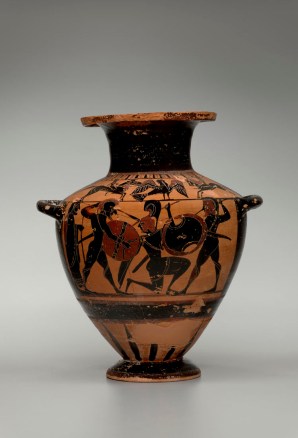
– Confusion of ‘values’
– Byzantine, Russian, Gothic and early Italian paintings are all equally ‘religious’
– ‘Paradise Lost’
– ‘Ancient Mariner’
– There is a significant chapter with this title in Buermeyer’s “The Aesthetic Experience” (confusion of values)
– Dante’s or Milton’s works
– I think Wordsworth spoke truly when he said: the objects of science itself…….the chemist, the botanist, or the mineralogist…..p.332
The Poet’s art
– T.S. Eliot, for example says that ‘the truest philosophy is the best material for the greatest poet.’
– Dante’
– Lucretius
– Goethe
– ….and yet these are our great ‘philosopher’ poets
– Ultimately all confusion of values proceeds from the same source: – neglect of the intrinsic – significance of the medium,’
– The arts of science, of politics, of history and of painting and poetry all have finally the same material, that which is constituted by the interaction of the live creature with his surroundings.
– Science was the medium that is adapted to the purpose of control and production, of increase of power; it is an art.
– An artist may, of course, have a philosophy, and that philosophy may influence his artistic work.
– Mr. Santayana is a poet, who is also a philosopher and a critic,
– ‘Quest for Certainty’, Dewey
– There is no fixed conception of any forces natural or moral, dominating and transcending our mortal energies’
– What is required for the theoretic wholeness is not this or that system but some system.
– Homer and Dante
– The ideals of reason
– More germinal
– Browning’s essay on Shelley
– The influence of such an achievement will not soon die out. A tribe of successors (Homerides) working more or less in the same spirit dwell on his discoveries and reinforce his doctrines, till, at unawares, the world is found to be subsisting wholly on the shadow of a reality…….
– Tear away the veils due to wont and custom, perfect the powers to perceive.
– Chpt 14 Art and Civilization p.339
– Art is a quality that permeates an experience; it is not, save by a figure of speech, the experiment itself.
– The Magna Carta
– ‘the glory that was Greece and the grandeur that was Rome.’
– Glory and grandeur are esthetic
– Ancient Egypt and its monuments
– Troy lives
– Minoan civilization
– Pagan gods and pagan rites
– We ourselves might live amid hardly a higher culture than that of our savage ancestors
– Primitive folk
– In Athens, which we regard as home par excellence of epic and lyric poetry, of the arts of drama, architecture and sculpture, the idea of art for art’s sake……..have been understood.
– Plato’s harshness toward Homer and Hesiod seems strained.
– The decay of art in the Alexandrian period….
– Conglomerate imperialism
– Through services and sacraments, the church revived and adapted in impressive form what was most moving in all prior rites and ceremonies
– The Church, even more than the Roman Empire, served as the focus of unity amid the disintegration that followed the fall of Rome. The historian of political institutions, the development of law and authority by means of the ecclesiastic institution. But the influence that counted in the daily life of the mass of the people and that gave them a sense of unity was constituted, it is safe to surmise, by sacraments, by song and pictures, by rite and ceremony, all having an esthetic strand, more than by any other one thing.
– 787 A.D. the Second Council of Nicea officially ordained the following:
– ‘the substance of religious scenes is not left to the initiative of priests, it derives from the principles laid down by the Catholic Church and the religious tradition….o the painter; its organization and arrangement belongs to the clergy’
– The censorship desired by Plato held full sway.
– Machiavelli
– Symbolic of the spirit of the renaissance he said that when he was through with the business of the day, he retired into his study and lost himself in absorption of the classic literature of antiquity.
– The distinction between ‘art ‘ and ‘substance’ is similar to that drawn by some adherents of a proletarian dictatorship of art technique or craft that belongs to the artist and subject –matter dictated by the needs of the party line’ in furthering the cause. A double standard is set up. There is literature that is good or bad as mere literature, and literature that is good or bad according to its bearing upon economic and political revolutions.
– Biblical subjects and the lives of saints to portrayal scenes of Greek mythology and to the spectacles of contemporary life that were socially impressive inevitably ensued.
– Egyptian
– Such phrases as the art of the South Sea islands, of the North American Indian, of the Negro, Chinese’s, Cretan, Egyptian, Greek, Hellenistic, Byzantine, Moslem, Gothic, Renaissance, art have a veridical significance, the undeniable fact of the cultural origin and the import of works illustrates the fact previously mentioned, that art is a strain in experience rather than an entity in itself. A problem has been made out of the fact, however, by a recent school of thought.
– …..there is an ordered movement of the matter of experience to a fulfillment; there is a dominant esthetic quality. ‘Au fond; the esthetic quality is the same for Greek, Chinese and American,
– Taine
– Race, milieu and time
– Mr. Hulme’s theory of the basic difference between Byzantine and Moslem art on one side and Greek and Renaissance on the other. The latter, his days, is vital and naturalistic. The former is geometric.
– The gulf is made by a fundamental difference of attitude of desire and purpose
– Byzantine art
– Oriental Art
– P.346
– Hulme – differences between oriental and occidental art
– The ‘esthete’
– Chinese art then seems ‘queer’ because of its unwonted schemes of perspective, byzantine art, stiff and awkward; Negro s art, grotesque
– ‘nature’
– ‘Naturalistic’
– ‘universe’
– The productions most characteristic of the twentieth century were marked by the influence of Egyptian, Byzantine, Persian, Chinese, Japanese and Negro art.
– The so-called pre-Raphaelite art of England is the most typically Victorian of all the painting of the period.
– ‘structure’ of works of art.
– …..to borrow a term from Bergson, we install ourselves in modes of apprehending nature that at first are strange to us…
– Barriers are dissolved, limiting, prejudices melt away, when we enter into the spirit of Negro or Polynesian art.
– The differences between English, French and German speech create barriers that are submerged when art speaks.
– Philosophically speaking, the problem with which we are confronted is the relation of the discrete and the continuous.
– Egyptian civilization and art were not just a preparation for Greek, nor were Greek thought and art mere reedited versions of the civilizations from which they are so freely borrowed. Each culture has its own individuality and has a pattern that binds its parts together.
– …..the verb ‘to civilize’ is defined as ‘to instruct in the arts of life and thus to rise in the scale of civilization.
– Civilization is uncivil because human beings are divided into non-communicating sects, races, nations, classes and cliques.
– We inherit much from the cultures of the past. The influence of Greek science and philosophy, of Roman Law, of religion having a Jewish source, upon our present institutions…constitute the modern.
– These two forces are natural science and its application in industry and commerce through machinery and the use of non- human modes of energy, in consequence, the question of the place and role of art in contemporary civilization demands notice of its relations to science and to the social consequences of machine industry. The isolation of art that now exists is not to be viewed as isolated phenomenon.
– Descartes and Locke
– Poignancy and preciousness
– The world about them is indifferent to their hopes
– Neither a world wholly obdurate and sullen in the face of man nor one so congenial to his wishes that gratify all desires is a world in which art can arise.
– Even now we owe to science liberation of the human spirit.
– The bathing beaches, street corners, flowers and fruits, babies and bankers of contemporary painting are after all something more than mere diffuse and disconnected objects. For these are the fruits of a new vision’
– Mr. Lippmann, ‘’A Preface to Morals”
– Science is here, and a new integration must take account of it and include it.
– It goes as far back as the Greeks when the useful arts were carried on by slaves and ‘base mechanics’
– Favorable
– The change from the old wooden Pullman cars with their silly encumbering ornamentations to the steel cars of the present is typical of what I mean. The external architecture of city apartments remains box-like but internally there is hardly less than as esthetic revolution brought about by better adaptation to need.
– City slums
– ‘apperceived’
– Modes of production; buildings, furnishings, wares. Into an experience saturated with these values, objects having their own internal functional adaptations will fit in a way that yields esthetic results.
– Under the influence of modern industry.
– ….so destitute of imagination
– Auguste Comte’ said that ‘the great problem of our time is the organization of the proletariat into social system.’
– Proletarian art
– Capacity for enjoying the fruits of collective work.
– The social effect of the novels of Dickens or of Sinclair Lewis is far from negligible
– Shelley did not exaggerate when he said that the moral science only arranges the elements that poetry has created’.
– Aesop’s fables
– Matthew Arnold’s dictum that ‘poetry is criticism of life’
– Mr. Garrod, a follower of Matthew Arnold in more senses than one said that what we resent in didactic poetry is not that it teaches, but that it does not teach, its incompetency.
– ‘poetical values are, after all, values in human life. You cannot mark them off from other values, as though the nature of man were built on bulkheads
– ‘an airy citadel’
– Filling the air with a beautiful circuiting’
– Pine in Oak
– A grand democracy of Forest, Trees
– The idea of education, it is a way that lifts art so far above what we are accustomed to think of as instruction, that we are repelled by any suggestion of teaching and learning in connection with art.
– Shelley said ‘That imagination is the great instrument of moral good, and poetry administers to the effect by acting upon the causes.
– But Shelley’s statement goes to the heart of the matter…..
– Morals
– Were art an acknowledged power in human association and not treated as the pleasuring of an idle moment or as a means of ostentatious display, and were morals understood to be identical with every aspect of value that is shared in experience, this ‘problem’ of the relations of art and morals would not exist.
– Mankind is divided into sheep and goats, the vicious and virtuous, the law-abiding and criminal, the good and the bad. To be beyond good and evil is impossibility for man, and yet as long as the good signifies only that which is lauded and rewarded and the evil that which is currently condemned or outlawed, the ideal factors of morality are always and everywhere beyond good and evil.
– ‘the great secret of morals is love, or a ‘going out of our nature” and identification of ourselves with the beautiful which exists in thought, action, or person, not our own. A man to be greatly good must imagine intensely and comprehensibly.’
– Art is a mode of production not found in charts and statistics, and it insinuates possibilities of human relations not to be found in rule and precept, admonition and administration.
– ‘but art, wherein man speaks in no wise to man, only to mankind – art may tell a truth
Obliquely, so the deed shall breed the thought.’
– Finis p.363


 tomreading
Leave a comment