Of the Standard of Taste and Other Essays by David Hume
Introduction
– As a philosophical critic, Hume has few peers. No one has challenged more sharply rationalism’s central thesis that matters of fact can be known without recourse to experience; nor has anyone revealed more clearly the severe problems raised by insisting that all factual claims be empirically verified. Holding that without experimental support beliefs are arbitrary.
– Unrestricted empiricism leads to thoroughgoing skepticism.
– He brought out the problems inherent in empiricism.
– Reid
– Formulated its tenets with precision and purity.
– His regularity view of causality, phenomenalistic analysis of physical objects and persons, and formal interpretation of mathematics are important contributions to the empiricist tradition.
– An associationist psychology stressing the primacy of feeling- that has proved highly seminal.
– A fierce intellectual independence.
– The essays display Hume’s early and continuing mastery of this genre.
– An excellent indication of what Hume deemed most central in his own thought.
– His empiricist methodology, emotivist theory of valuation, and naturalistic view of man…
– Of the Standard of Taste tackles the difficult problem of the ‘objectivity’ of aesthetic evaluations.
– Hume’s influential theory of moral sentiment.
– ‘Hume’s Life and Writings’
– Born in Edinburgh , Scotland on April 26, 1711
– Grew up at Ninewells, the family estate in the nearby countryside.
– 1723 entered University of Edinburgh
– His plan to apply the scientific method to the study of man.
– A career in law
– A merchant’s post at Bristol
– 1734 set off for France, settling at La Fleche, where Descartes had composed his revolutionary ‘Discourse on Method’
– In three years at the age of twenty-four, Hume had substantially completed an equally pivotal work, his:
– ‘Treatise of Human Nature’
– ‘Essays, Moral and Philosophical 1742
– He became tutor to the virtually mad Marquis of Annandale
– 1746 accepted on offer from General St. Clair to serve as his secretary, first during an ill-fated attempt to invade the coast of Brittany, and later in the military embassy to Vienna and Turin.
– Brought him the financial independence and urbane qualities which in later years inspired the title:
– ‘le bon David’
– ‘Four Dissertations’
– ‘History of England’
– By 1757 he was generally regarded as one of the leading literary figures in Great Britain
– support of men such as Adam Smith
– Keeper of the Advocates Library in Edinburgh
– ‘Dialogues Concerning Natural Religion’
– Liberal France
– Secretary in the British Embassy
– Brought him into the company of philosophes such as d’Alembert, Buffon and Diderot
– The hit of Parisian salons
– James Boswell
– Died in his native city, Edinburgh on August 25, 1776)
‘The Form and Style of the Essays’
– Addison and Steele
– Tatler and Spectator papers
– Whereas Addison and Steele state their views as ‘one man’s opinion,’ Hume marshals evidence in support of his contentions
– ‘Of Essay Writing’
– Chimerical
– The Experimental Method of Reasoning
– Abstract a priori reasoning cannot by itself decide questions of fact; appeal to experience is necessary.
– Matters of fact, that is, must be known either directly, through sense perception or memory, or else, indirectly through casual inference
– Hume thought of this theory of knowledge as espousing the experimental method of reasoning used so successfully by physicists such as Boyle and Newton.
– That in Newton’s hands the experimental method was a potent instrument of both explanation and prediction was undoubtedly Hume’s major reason for advocating it.
– Use of the experimental method
– Our necessary reliance upon it severely limits human knowledge. Men’s experience is often restricted by accidents of time and place, though, as Hume points out in Of the Study of History, it can be broadened by examining the past.
– A fortiori
Evaluations as Feelings
– Moral and aesthetic evaluations are expressions of sentiment, attacks the rationalist contention that one can by means of ‘intellectual intuition’ know what is good or bad.
– sentiment
– A conflict of sentiments
– …that whenever we evaluate objects we do find ourselves with feelings of approval or disapproval
– …only if evaluations are regarded as feelings can we account for the ability of the former to influence our actions – as when, for example, our judgment that cheating is wrong tend to deter us from it. This latter argument is premised on another doctrine of Hume’s: that only passions can directly motivate actions, conclusions of reason being unable to do so.
– Francis Hutcheson
– Domitian
– William Rufus
– Alexander the Great
Deterministic Theory of Belief and Passion
– Just as physical forces control the motions of bodies, so, Hume held, analogous powers govern men’s desires, feelings and beliefs.
– Necessary accord with general forces within human nature
– Hume’s theory of universal determinism
– All events are causally necessitated
– Perennial philosophical attitudes: The Epicurean, The Stoic, The Platonist and The Skeptic
– gentle force of association
– serves to associate ideas and feelings
– the very intensity of one’s emotional; response to scenes of horror and destruction only heightens the usually calmer aesthetic pleasure one receives from the drama.
– The primacy of natural feeling.
Of the Standard of Taste
– Finding Shakespeare’s poetry beautiful is no more defensible than finding doggerel sublime. The problem is to establish standards of excellence with reference to which appraisals can be shown right or wrong.
– ‘qualified critics’
– Deterministic theory of the passions certainly implies that where the internal makeup of men is identical, their sentiments will be so too.
– By abstracting features common to objects of which qualified critics approve, one discovers those properties which have those determines aesthetic value. Ascertaining which critics have those characteristics that mark them as qualified, discovering of what objects such critics approve and isolating the common properties of such objects can all, according to Hume, be done empirically.
– standards of worth
– Ask what judgment a critic, whom they both accept as most qualified either does make or would make of the particular object in question.
– it is clear that Hume consciously likens moral and aesthetic evaluations to perceptual judgments
– Similarly, one man may feel approval toward an object, another disapproval, but both would agree that the true worth of the object is determined by the reaction of the qualified critic.
– An ideal critic
– a belief as to how a certain kind of man does or would react
– An ‘emotive’ element, namely, a feeling of approval toward a certain kind of critic or judgments.
– Granting that someone with jaundice can say, ‘This looks yellow to me but is actually white,’ can one inexperienced in judging art say,’ ‘This seems good to me, but it really is not’?
– Hume has presented us with a subtle theory of evaluation that repays our most careful study.
John W. Lenz (Professor of Philosophy, Brown University) 1965
Of the Standard of Taste
– The great variety of Taste
– We are apt to call barbarous whatever departs widely from our own taste and apprehension but soon find the epithet of reproach retorted on us.
– Still greater in appearance than reality
– Every voice is united in applauding elegance, propriety, simplicity, spirit in writing; and in blaming fustian, affectation, coldness, and a false brilliancy. But when critics come to particulars, this seeming unanimity vanishes; and it is found, that they had affixed a very different meaning to their expressions.
– Homer
– Virtue
– Vice
– A degree of ferocity
– Cunning and fraud
– Francois Fenelon (1651-1715)
– Fenelon’s ‘Telemaque’
– Ulysses in the Greek poet, seems to delight in lies and fictions
– The followers of the Alcoran (the Koran) insist on the excellent moral precepts interspersed throughout that wild and absurd performance
– The pretended prophet
– He bestows praise on such instances of treachery, inhumanity cruelty, revenge, bigotry, as are utterly incompatible with civilized society
– No steady rule of right seems there to be attended to; every action blamed or praised, so far as it is beneficial or hurtful to the true believers.
– It is natural for us to seek a Standard of Taste; a rule by which the various sentiments of men may be reconciled; at least a decision afforded confirming one sentiment, and condemning another.
– Beauty is no quality in things themselves; it exists merely in the mind which contemplates them, and each mind perceives a different beauty.
– Ogilvy and Milton
– Bunyan and Addison
– A mole-hill to be as high as Tenerife
– Ariosto
– a perfect serenity of mind, a recollection of thought, a due attention to the object; if any of these circumstances be wanting, our experiment will be fallacious, and we shall be unable to judge of the catholic and universal beauty.
– A man in a fever would not insist on his palate as able to decide concerning flavors; nor would one affected with the jaundice pretend to give a verdict with regard to colors.
– An entire or a considerable uniformity of sentiment among men
– Even while color is allowed to be merely a phantasm of the senses
– Particular incidents and situations occur, which either throw a false light on the objects or hinder the true from conveying to the imagination the proper sentiment and perception.
– It is with good reason, says Sancho, to the squire with the great nose, that I pretend to have a judgment in wine; this is a quality hereditary in our family. Two of my kinsmen were once called to give their opinion of a hogshead vintage, which was supposed to be excellent, being old and of good vintage. One of them tastes it, considers it; and, after mature reflection, pronounces the wine to be good, were it not for a small taste of leather which he perceived in it. The other, after using the same precautions, gives also his verdict in favor of the wine; but with the reserve of a taste of iron, which he could easily distinguish. You cannot imagine how much they were both ridiculed for their judgment. But who laughed in the end? On emptying the hogshead, there was found at the bottom an old key with a leathern thong tied to it. -Cervantes, ‘Don Quixote’, [Part II, chpt. 13]
– Delicacy of taste
– Like finding the key with the leathern thong
– Bad critic
– An avowed principle of art
– Principle by example
– The perfection of the man, and the perfection of the sense of feeling, are to be united. A very delicate palate, on many occasions, may be great inconvenience both to a man himself and to his friends. But a delicate taste of wit or beauty must always be a desirable quality, because it is the source of all the finest and most innocent enjoyments which human nature is susceptible.
– The best way of ascertaining it is, to appeal to those models and principles which have been established by the uniform consent and experience of nations and ages.
– practice
– Acquire experience
– Assign it suitable praise or blame
– Practice
– Acquired by the same means as the judging of it.
– Comparisons
– Affect the mind of a peasant or Indian with the highest admiration
– A great inferiority of beauty gives pain to a person conversant in the highest excellence of the kind, and it is for that reason pronounced a deformity; as the most finished object with which we are acquainted is naturally supposed to have reached the pinnacle of perfection, and to be entitled to the highest applause.
– But to enable a critic the more fully to execute this undertaking, he must preserve the mind from all prejudice
– Prejudice is destructive of sound judgment
– Good sense
– reason
– the object of eloquence is to persuade, of history to instruct, of poetry to please, by means of the passions and the imagination
– every kind of composition, even the most poetical, is nothing but a chain of propositions and reasonings; not always, indeed the justest and most exact, but still plausible and spacious, however disguised by the coloring of the imagination. The persons introduced in tragedy and epic poetry must be represented as reasoning, and thinking, and concluding, and acting, suitably to their character and circumstances; and without judgment, as well as taste and invention, a poet can never hope to succeed in so delicate an undertaking.
– Yet few are qualified to give judgments on any work of art, or to establish their own sentiment as the standard of beauty
– Where no comparison has been employed, the most frivolous beauties, such as rather merit the name of defects, are the object of his admiration.
– So rare a character:
– Strong sense, united to delicate sentiment, improved by practice, perfected by comparison, and cleared of all prejudice, can alone entitle critics to this valuable character; and the joint verdict of such, wherever they are to be found, is the true standard of taste and beauty.
– How distinguish them from pretenders?
– But where are such critics to be found?
– But that such a character is valuable and estimable, will be agreed in by all mankind
– That some men in general, however difficult to be particularly pitched upon, will be acknowledged by universal sentiment to have a preference above others.
– Terence and Virgil maintain a universal, undisputed empire over the minds of men. The abstract philosophy of Cicero has lost its credit; the vehemence of his oratory is still the object of our admiration.
– The soundness of their understandings and the superiority of their faculties above the rest of mankind.
– A certain degree of diversity in judgment is unavoidable.
– Ovid
– Horace
– Tacitus
– We choose our favorite author as we do our friend, from a conformity of humor and disposition. Mirth or passion, sentiment or reflection; whichever of these most predominates in our temper, it gives us a peculiar sympathy with the writer who resembles us.
– One person is more pleased with the sublime, another with the tender, a third with raillery.
– Because there is no standard by which they can be decided
– ‘Andria‘ of Terence
– ‘Citia’ of Machiavel
– Poets monument more durable than brass
– Continual revolutions of manners and customs
– Ruffs and farthingales
– The Greek tragedians
– Homer
– Corneille,‘Polieucte’
– Racine, ‘Athalie’
– Achilles tells Agamemnon that he was a dog in his forehead and a deer in his heart
– Jupiter threatens Juno with a sound drubbing, if she will not be quiet
– Petrarch compares mistress Laura to Jesus Christ
– Boccaccio gives thanks to god Almighty and the ladies, (for their assistance in defending him against his enemies).
Of the Delicacy of Taste and Passion
– Delicacy of passion
– Men of cool and sedate tempers.
– Delicacy of taste
– Everyone will agree with me…..
– And recives more enjoyment from a poem, or a piece of reasoning, than the most expensive luxury can afford
– A knowledge of human nature requisite
– A relish in the liberal arts
– Incommodious
– Ingenuas didicisse fideliter artes,
– Emollit mores, nec sinit esse feros. [Ovid, ‘Epistolae ex Ponto’ II. 9. 48.]
– A study of the beauties either of poetry, eloquence, music or painting
– The gaiety and frolic of a bottle companion improves with him into a solid friendship; and the ardors of a youthful appetite become an elegant passion.
– Fontanelle, ‘Pluralite’ des Modes’
Of Tragedy
– It seems unaccountable pleasure which the spectators of a well-written tragedy receive from sorrow, terror, anxiety, and other passions that are in themselves disagreeable and uneasy.
– The whole art of the poet…..
– Compassion and indignation, the anxiety and resentment of his audience
– L’abbe’ Dubos, ‘Reflections On Poetry and Painting’
– Jean-Baptiste Dubos (1670 -1742) French diplomat, archeologist, and historian.
– We find that common liars always magnify, in their narrations, all kinds of danger, pain, distress,sickness, deaths, murders, and cruelties, as well as joy, beauty, mirth, and magnificence.
– Fontenelle, ‘Reflections sur la Poetique’
– Pleasure and pain
– ‘Epilogues’ of Cicero
– ‘The Second Speech Against Gaius Verres’ (V. 118-38)
– The pathetic description of the butchery made by Verres of the Sicilian captains is a masterpiece of this kind
– The impulse or vehemence arising from sorrow, compassion, indignation, receives new direction from the sentiments of beauty.
– The soul being at the same time roused by passion and charmed by eloquence, feels on the whole a strong movement, which is altogether delightful.
– Imitation is always itself agreeable. This circumstance serves still further to smooth the notions of passion, and converts the whole feeling into one uniform and strong enjoyment. Objects of the greatest terror and distress please in painting, and please more than the most beautiful objects that appear calm and indifferent.
– Tragedy softens the passions by an infusion of a new feeling
– Subordinate movement is converted into the predominant, and gives force to it, though of a contrary nature
– Iago
– Othello’s jealousy
– Subordinate
– Predominant
– Difficulties increase passions of every kind; and by rousing our attention; and exciting our active powers, they produce an emotion which nourishes the prevailing affection.
– Jealousy and absence in love compose the dolce piccante (‘sweet failings’) of the Italians, which they suppose so essential to all pleasure.
– ‘The Iris’ of Aristides
– ‘The Tyndandes‘ of NIcomachus
– ‘The Medea‘ of Timomachus
– ‘The Venus‘ of Apelles
– Lord Clarendon, ‘History of the Rebellion’

– He hurries over the king’s death without giving us one circumstance of it.
– ‘The Ambitious Step-Mother’, Rowe (1674-1718)
– Mingled brains and gore
– Painters
– martyrdoms, tortures, wounds, executions, passive sufferings
– Ovid
– Scarcely natural or probable enough for painting.
‘Of Essay Writing’
– The elegant part of mankind who is not immersed in mere animal life, but employs themselves in operations of the mind, may be divided into the ‘learned’ and the ‘conversable’. The ‘learned’ are such as have chosen for their ‘portion’ the higher and more difficult operations of the mind, which requires leisure and solitude, and cannot be brought to perfection without long preparation and severe labor. The conversable world join to a sociable disposition, and a taste for pleasure, an inclination for the easier and more gentle exercises of the understanding, for obvious reflections on human affairs, and the duties of common life, and for observation of the blemishes or perfections of the particular objects that surround them.
– The separation of the ‘learned’ from ‘conversable’ world seems to have been the great defect of the last age, and must have had a very bad influence both on books and company: for what possibility is there of finding topics of conversation fit for the entertainment of rational creatures, without having recourse sometimes to history, poetry, politics, and the more obvious principles of philosophy.
Stunn’d and worn out with endless chat
Of Will did this and Nan did that?
Learning has been a great loser by being shut up in colleges and cells secluded from the world and good company
– Belles lettres –became totally barbarous……
– Even philosophy went to wreck by the moping recluse method of study
– I cannot but consider myself as a kind of resident or ambassador from the dominion of learning to those of conversation, and shall think it my constant duty to promote a good correspondence betwixt these two states, which have so great a dependence on each other.
– let no quarter be given
– Women, that is , women of sense and education… are much better judges of all polite writing than men of the same degree of understanding
– Corneille
– judgment of females
– Addison’s elegant discourses
– Otway’s tragedies are rejected for the rakes of Dryden
– To sacrifice the substance for the shadow
– Of Simplicity and Refinement in Writing
– Fine writing according to Mr. Addison, consists of sentiments which are neutral, without being obvious.
– Nothing can please persons of taste, but nature drawn with all her graces and ornaments, la belle nature [that is, nature adorned and perfected by art; not simply imitated, but presented as it might be.]
– The absurd naiveté’ of Sancho Panza
– If his language be not elegant, his observations uncommon, his sense strong and masculine, he will in vain boast his nature and simplicity
– Horace talks of ‘fallentis semita vitae’ (‘path of the deceitful life) [Horace, ‘Epistles‘ 1-8 107]
– May be the happiest lot of the one; but it is the greatest misfortune which the other can possibly fall into
– On the other hand, productions which are merely surprising, without being natural, can never give any lasting entertainment to the mind. To draw chimeras, is not, properly speaking, to copy or imitate.
– Too much ornament is a fault in every kind of production
– As the eye in surveying a Gothic building, is distracted by the multiplicity of ornaments, and loses the whole by its minute attention to the parts
– The just mixture of simplicity and refinement in writing
– Mr. Pope
– Lucretius
– Corneille
– Congreve
– Sophocles
– Terence
– Virgil
– Racine
– It is very difficult, if not impossible, to explain by words where the just medium lies between the excesses of simplicity and refinement, or to give any rule, by which we can know precisely the bounds between the fault and the beauty.
– ‘The Dissertation on Pastorals’, Fontanelle
– The sentiments of his shepherds are better suited to the toilettes of Paris than to the forests of Arcadia
– As much as Virgil could have done
– ……we ought to be more on our guard against the excess of refinement than that of simplicity and that because the former excess both less beautiful and more dangerous than that of the latter.
– For this reason, a greater degree of simplicity is required in all compositions where men, and actions, and passions are painted, than in such as consist of reflections and observations.
– ‘Epigrams‘ of Martial
– Each word in Catullus has its merit
– Abraham Cowley (1618- 67)
– Parnell, Thomas (1679-1718)
– Simplicity passes for dullness when it is not accompanied with great elegance and propriety.
– Seneca abounds with agreeable faults, says Quintilian, abundant dulcibus vitiis [Quintilian, Institutio Oratutoria X , 129]
– It was thus the Asiatic eloquence degenerated so much from the Attic. It was thus the age of Claudius and Nero became much inferior to that of Augustus in taste and genius. and perhaps there are, at present, some symptoms of a like degeneracy of taste in France, as well as England.
– D’Alembert, ‘Preliminary Discourse’
– The century of Demetrius of Phalerum immediately follow that of Demosthenes, the century of Lucan and of Seneca that of Cicero and Virgil, and our century that of Louis XVI
Of Refinement in the Arts
– Luxury
– In general it means great refinement in the gratification of the senses
– The bonds between virtue and the vice cannot here be exactly fixed, more than in other moral subjects
– These indulgences are only vices, when they are pursued at the expense of some virtue, as liberality or charity; in like manner as they are follies, when for them a man ruins his fortune, and reduces himself to want and beggary.
– Since luxury may be considered as innocent or blamable, one may be surprised at those preposterous opinions which have been entertained concerning it.
– ….that the ages of refinement are both the happiest and most virtuous; secondly , that wherever luxury ceases to be innocent, it also ceases to be beneficial
– Human happiness, according to the most received notions, seems to consist in three ingredients: action, pleasure and indolence
– Indolence and repose
– Requisite as an indulgence, to the weakness of human nature
– Quick march of the sprits, which takes a man from himself….
– education
– when industry and the arts flourish, men are kept in perpetual occupation, and enjoy, as their reward, the occupation itself as well as those pleasures which are the fruit of their labor
– … both satisfies its natural appetites and prevents the growth of unnatural ones, which commonly spring up, when nourished by ease and idleness
– Another advantage of industry and of refinements in the mechanical arts is that they commonly produce some refinements in the liberal……
– The spirit of the age
– Curiosity allures the wise; vanity the foolish; and pleasure both
– Increase of humanity
– Thus industry , knowledge and humanity are linked together
– The Tartars are often guilty of beastly gluttony, when they feast on their dead horses….
– Drunkenness, a vice more odious and more pernicious, both to mind and body. And in this matter I would appeal, not only to an Ovid or a Petronius, but to a Seneca or a Cato.
– But industry, knowledge and humanity, are not advantageous in private life alone; they diffuse their beneficial influence on the public, and render the government as great and flourishing as they make individuals happy and prosperous.
– Charles VIII of France invaded Italy
– Guicciardin
– Mazarine’s death
– Course of wars lasted nearly thirty years
– Not to mention that all ignorant ages are infested with superstition.
– Francesco Guicciardini (1483-1540) Florentine historian
– Industry, their inseparable attendant
– A sense of honor
– Discipline and martial skill
– Datames
– Pyrrhus
– Plutarch ‘Pyrrhus’
– These barbarians have nothing barbarous in their discipline.
– That Sallust represents a taste for painting as a vice, no less than lewdness and drinking
– Sallust, ‘The War With Catiline’
– Bacon and brandy
– Champagne and ortolans
– …but a sense of honor and virtue
– Of all European kingdoms, Poland seems most defective in the arts of war as well as peace, mechanical as well as liberal; yet it is there that venality and corruption do most prevail.
– A progress in the arts is rather favorable to liberty, and has a natural tendency to preserve, if not produce, a free government
– Treachery and cruelty, most pernicious and most odious of all vices, seem peculiar to uncivilized ages; and, by the refined Greeks and Romans, were ascribed to all the barbarous nations which surrounded them.
– Wherever luxury ceases to be innocent, it also ceases to be beneficial
– Let us consider what we call vicious luxury
– The same care and toil that raise a dish of peas at Christmas, would give bread to a whole family, during six months.
– Indolence, selfishness, inattention to others
– ….as one poison may be an antidote to another
– Such a Utopian state
– A little less than a contradiction
– and indeed it seems, upon any system of morality. little less than a contradiction in terms, to talk of a vice, which is in general beneficial to society
Of Eloquence
– Revolutions
– ‘civil’ history
– The Goths were much more inferior to the Romans in taste and science than in courage and virtue
– The speaking in public
– Calvus, Caelius, Curio, Hortensius, Caesar
– Cicero the most eloquent speaker
– Demosthenes – ‘Ita sunt avidae et capaces meae aures, says he, et semper aliquid immensum, infinitumque desiderant‘
(‘so greedy and insatiate are my ears and so often yearn for something vast and boundless’) [Demosthenes, ‘Orator’ XXIX 104]
– Of all the polite and learned nations, England alone possesses a popular government
– Oratory
– That none of them have attained much beyond a mediocrity in their art, and that the species of eloquence, which they aspire to
– Mr. Pope
– Demosthenes
– Battle of Chaeronea
– ‘No, my fellow-citizens, No: you have not erred. I swear by the manes of those heroes, who fought for the same cause in the plains of Marathon and Platea.’ – Demosthenes
– ‘should I paint the horrors of this scene, not to Roman citizens, not to the allies of our stae, not to those who have ever heard of the Roman name, not even to men, but to brute creatures; or, to go further, should I lift up my voice in the most desolate solitude, to the rocks and mountains, yet should I surely see those rude and inanimate parts of nature moved with horror and indignation at the recital of so enormous an action’ – [Cicero, ‘The Second Speech Against Gaius Verres‘ V. 171]
– A torrent of eloquence
– effectuated
– Supplosio pedis, or stamping with the foot
– Our progress in eloquence is very inconsiderable, in comparison of the advances which we have made in all other parts of learning.
– The flowers of Parnassus
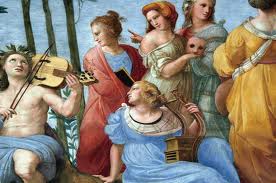
– Westminster Hall
– Parliament
– Among the Athenians, the Areopagites expressly forbade all allurements of eloquence
– The Athenians
– The deliberative kind
– The liberty, happiness, and honor of the republic, were the subject of debate
– Disputes of this nature elevate the genius above all others, and give the fullest scope to eloquence; and such disputes are very frequent in this nation.
– The Areopagites were members of the court which held its sittings on the Areopagus (‘Hill of Ares’) in Athens.
– If a man be accused of murder, the fact must be proved by witnesses and evidence, and the laws will afterwards determine the punishment of the criminal. It would be ridiculous to describe, in strong colors, the horror and cruelty of the actions; to introduce the relations of the dead, and, at a signal, make them throw themselves at the feet of the judges, imploring justice, with tears and lamentations: and still more ridiculous would it be, to employ a picture representing the bloody deed, in order to move the judges by the display of so tragical a spectacle, though we know that this article was sometimes practiced by the pleaders of old. Now banish the pathetic from public discourses, and you reduce the speakers merely to modern eloquence; that is, to good sense, delivered in proper expressions.
– Of all human productions, the orations of Demosthenes present to us the models which appear the nearest to perfection
– It would be easy to find a Philip in modern times, but where shall we find a Demosthenes?
– Georgias Leontinus
– Diodorus’, Siculus’, Ciceros have appeared as well as British Archimedes and Virgils.
– Edmund Waller
– We are satisfied with our mediocrity
– Lysias among the Athenians
– Calvus among the Romans
– But when compared with Demosthenes and Cicero, were eclipsed like a taper when set in the rays of a meridian sun.
– Those latter orators possessed the same elegance, and subtlety, and force of argument with the former; but, what rendered them chiefly admirable, was that pathetic and sublime, which, on proper occasions, they threw into their discourse, and by which they commanded the resolution of their audience.
– Lord Bolingbroke
– A force and energy
– Pericles
Of the Rise and Progress of the Arts and Sciences
– Chance
– Causes
– Statutes of alienation
– Kings
– Charles Quint
– Harry IV, Cardinal Richelieu, Louis XIV
– Philip II, III, IV, and Charles II
– Avarice
– Curiosity
– Chance, therefore, or secret and unknown causes, must have a great influence on the rise and progress of all the refined arts.
– ‘There is a God within us’, says Ovid, ‘who breathes that divine fire by which we are animated.’

– ‘Est Deus in nobis; agitante calescimus illo: Impetus hic, sacrae semina mentis habet.’ [Ovid, ‘Fasti’)
– Concerning the taste, genius, spirit of a few, but concerning those of a whole people, and may therefore be accounted for, in some measure, by general causes and principles.
– Homer
– Fabius and Scipio
– ‘Scit genius, natale comes, qui temperat astrum,
– Naturae Deus humanae, mortalis in unum – –
– – – Quodque caput, vultu mutabilis, albus et ater.’
– [Horace, ‘Epistles II’, 2, 187]
– The blessing of a free government
– Bashaws
– Cadis
– ‘Habet subjectos tanquam suos; viles ut alienos.’
– ‘He governs the subjects with full authority, as if they were his own; and with negligence or tyranny, as belonging to another.’
– Tacitus, ‘The Histories’
– The Roman Consuls
– The decemvirs
– Twelve Tables
– The first growth, therefore, of the arts and sciences, can never be expected in despotic governments
– all these causes render free governments the only proper nursery for the arts and sciences
– That nothing is more favorable to the rise of politeness and learning, than a number of neighboring and independent states, connected together by commerce and policy.
– A superstitious reverence for princes
– ‘No man’, said the Prince of Conde’, is a hero to his valet or chambre.’
– Sleep and love convinced even Alexander himself that he was not a god.
– Reputation
– Greece
– Each city produced its several artists and philosophers
– ….even at this time the objects of our admiration
– Roman Christian or Catholic church had spread itself over the civilized world
– Peripatetic philosophy
– Cartesian philosophy
– Scrutiny which Newton’s theory has undergone
– In China
– Confucius
– The sciences have made so slow a progress in that almighty empire
– Tartars
– Eclectics
– Augustus
– Stoics and Epicureans, Platonists and Pythagoreans
– Famous wall
– A republic is most favorable to the growth of the sciences, and a civilized monarchy to that of the polite arts.
– Tyranny
– A strong genius succeeds in republics, a refined taste in monarchies
– The good manners of a Swiss civilized in Holland
– ‘Quicunque impudicus, aduller, ganeo, manu, ventre, pene, bona patria laceraverat’
(whatever wanton, glutton, or gamester had wasted his patrimony in play, feasting or debauchery’), says Sallust, in one of the gravest and most moral passages in history.
– ‘Nam fuit ante Helenam Cunnus teterrima belle causa’
(‘for before Helen’s day a wench was the most dreadful cause of war’) is an expression of Horace
– Arrian claims he himself is as eminent among the Greeks for eloquence as Alexander was for arms
– Ovid and Lucretius
– Lord Rochester
– Juvenal
– Cicero’s friend Atticus
– Philalethes friend in our modern dialogues
– Some of Dr. Swift’s images
– Catullus
– Phaedrus
– Cicero, ‘Tuscalan Disputations’
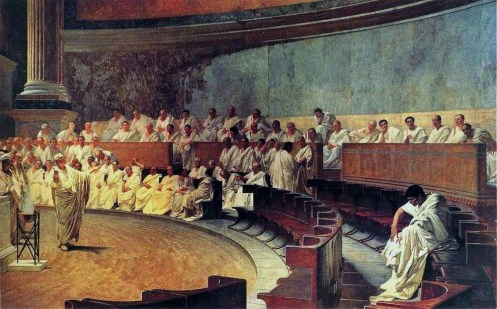
– Polybius
– that perhaps the reason why he (Philip II) had none of his friends with him, was because he had murdered them all. – Flamininus
– Witty and agreeable sayings of the Roman general and politician Flamininus
– Cardinal Wolsey, – ‘Ego et Rex Meus’ (I and my King)
– Affectation and foppery
– Rusticity and abuse
– Scurrility and obscenity
– Gallantry
– Good manners
– The part of good manners
– By gallantry
– Plutarch, ‘Titus Flamininus’
– Tacitus, ‘The Annals’
– Terence, ‘Self-Tormentor’
– Shaftesbury, ‘Moralists’
– Earl of Shaftesbury, ‘An Inquiry Concerning Virtue or Merit’
– Good manners
– The part of good manners
– By gallantry
– The ancient Muscovites wedded their wives with a whip, instead of a ring
– Even among brute creatures
– Pliny’s ‘Letters’
– Lucian’s, ‘De Mercede Conductis’, ‘Saturnalia’, etc.
– Earl of Carlisle, ‘Relation of Three Embassies’
– The company of virtuoso women
– Banquet of Xenophon
– Dialogues of Lucien
– Horace
– Cold jests of Plautus
– Emperor Justinian
– Virgil
– Homer
– Moliere
– Corneille
– Shakespeare, ‘Pericles, Prince of Tyre‘
– Shakespeare, ‘The Moor‘ (‘Othello‘)

– Ben Jonson,’Every Man in His Humor‘
– Ben Jonson, ‘Volpone‘ (The Fox’)
Of the Study of History
– Plutarch’s ‘Lives’
– Cleora
– Cato’s sister had an intrigue with Caesar
– The loves of Messalina or Julia
– a kind of raillery
– The advantages found in history seem to be of three kinds: as it amuses the fancy, as it improves the understanding, and as it strengthens virtue
– Erudition
– Machiavel, ‘History of Florence‘
– So keen an indignation against vice, and so warm an approbation of virtue in many passages
‘Vero voces tum demum pectore ab imo
Eliciuntur’
‘For only then true words are drawn from his inmost heart’ – Lucretius, ‘On Nature‘
The Epicurean
– The man of elegance and pleasure Art may make a suit of clothes, but Nature must produce a man.
– Xerxes
What foolish figure must it make?
Do nothing else but sleep and ake.
Pleasure (Dia Voluptuous) [Lucretius “On Nature’ II, 72]
– The embellishments of spring and all the treasures of the autumn.
– Odoriferous wings
– Virtue
– The barbarous dissonance of Bacchus and his revellers
– The sprightly Muses wait around, and, with their charming symphony, sufficient to soften the wolves and tigers of the savage desert, inspire a soft joy into every bosom. Peace, harmony, and concord, reign in this retreat; nor is the silence ever broken but by the music of our songs, or the cheerful accents of our lovely voices.
– But hark! The favorite of the Muses, the gentle Damon (goatherd in Virgil’s ‘Ecologue’) strikes the lyre
– Ye happy youth! Ye favored of the Heavens!
– an imitation of the Syren’s song in Tasso:
O Giovenetti, mentre Aprile et Maggio V’ammantan di fiorite et verde spoglie, …etc. – [Tasso, Gerusalemme Liberato, XIV, 489-90]
– Innocence
The Stoic
– Industry
– Art
– By art and attention alone
– The man of action and virtue
– The attainment of happiness
– Man of virtue, and the true philosopher, who governs his appetites, subdues his passions, and has learned, from reason, to set a just value on every pursuit and enjoyment.
– They roll along the ephemeral plains
– Philosophers
– sages
– Aurora
– Taste the sweets of honest labor
– The rolling thunder
– The sage
– Apathy
– Alacrity
– Associate themselves with the sentiments of virtue, and prompt us to laudable and worthy actions.
– Public good
– Interests of our country
The Platonist
– Or the man of contemplation and philosophical devotion
– The most perfect thought
– It is MIND alone which we admire, while we bestow our applause on the graces of a well-proportioned statue, or the symmetry of a noble pile.
– This superior beauty of thought
– To discover an intelligence and a design in the exquisite and most stupendous contrivance of the universe?
– To feel the warmest raptures of worship and adoration upon the contemplation of that intelligent Being, so infinitely good and wise
– The most perfect happiness surely must arise from the contemplation of the most perfect object.
– Our Maker
– The business of an eternity
The Sceptic
– They confine to much their principles, and make us account of that vast variety which nature has so much affected in all her operations
– Methods of attaining happiness
– Prejudiced
– One man, following his inclination, in choosing his course in life, may employ much surer means for succeeding than another, who is led by his inclination into the same course of life, and pursues the same object.
– Are riches the chief object of your desire?
– Acquire skill in your profession; be diligent in the exercise of it; enlarge the circle of your friends and acquaintance; avoid pleasure and expense; and never be generous, but with a view of gaining more than you could save by frugality.
– Would you acquire public esteem?
– Guard equally against the extremes of arrogance and fawning. Let it appear you set a value upon yourself, but without despising others. If you fall into either of the extremes, you either provoke men’s pride by your insolence, or teach them to despise you by your timorous submission, and by the mean opinion which you seem to entertain of yourself.
– If we can depend upon principles which we learn from philosophy, this, I think, may be considered as certain and undoubted, that nothing, in itself, valuable or despicable, desirable or hateful, beautiful or deformed, but that these attributes arise from the particular constitution and fabric of human sentiment and affection.
– The same divine creature, not only to a different animal, but also to a different man, appears a mere mortal being, and is with the utmost indifference.
– A Scot’s tune
– Each of you will allow that the other may be in the right
– Beauty and worth are merely of a relative nature
– The Ptolemaic and Copernican systems
– The nature of things
– Sentiment determines it to affix the epithet beautiful or deformed, desirable or odious…
– Beauty is not a quality of the circle
– Aeneas’ voyage
– Natural religion
– External objects
– A turn of mind
– The happiest disposition of mind is the virtuous
– Reduces the affections
– Proteus – like
– Continual alterations of his shape and form
– Philosophy and the ‘medicine of the mind’
– Mankind are almost entirely guided by constitution and temper
– Study and application
– education
– we have already observed, that no objects are in themselves, desirable or odious, valuable or despicable; but that objects acquire these qualities from the particular character and constitution of the mind which surveys them. To diminish. Therefore, or augment any person’s value for an object, to excite or moderate his passions, there are no direct arguments or reasons, which can be employed with any force or influence. The catching of flies like Domitian, if it gives more pleasure, is preferable to hunting of wild beasts like William Rufus, or conquering of kingdoms, like Alexander.
– Would you be angry at the ape for its malice or the tiger for its ferocity?
– If plagues and earthquakes break not heaven’s design,
– Why then a Borgia or a Catiline?
– Pope, ‘Essay on Man’
– A superior being
– ‘exile, says Plutarch to a friend in banishment, is no evil…. Plutarch, ‘De Exilio’ [600-601]
– Thucydides ‘The Peloponnesian War’
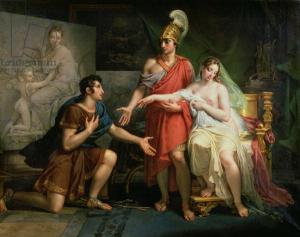
– Boccaccio, ‘ The Decameron’, ‘Preface to the Ladies’
– A comparison of our own condition with the condition of others.
– Philosophical topics of consolation
– equipage
– The Skeptic perhaps…..p. 136
– A toothache produces more violent convulsions of pain than a phthisis or a dropsy’s
– Alacrity
Of the Dignity or Meanness of Human Nature
– with regard to the dignity of human nature
– who derives his origin from heaven
– other animals
– the former
– The other extreme
– A splenetic temper
– more influenced by comparison
– he can form an idea of perfection
– Tully
– Cicero
– Lord Bacon
Of Superstition and Enthusiasm
– That the corruption of the best things produces the worst
– Superstition
– Enthusiasm
– The corruption of true religion
– These two species of false religion….
– ‘the soul’
– Weakness, fear, melancholy, together with ignorance, are, therefore the true sources of Superstition
– World of Spirits
– The soul
– Elapses
– Hope, pride, presumption a warm imagination, together with ignorance are therefore the sources of Enthusiasm
– That superstition is favorable to priestly power, and enthusiasm not less, or rather more contrary to it, than sound reason and philosophy
– Hence the origin of Priests
– There being nothing but philosophy able entirely to conquer those unaccountable terrors
– The Quakers
– Independents
– Fanaticism
– Presbyterians
– The fanatic consecrates himself, and bestows on his own person a sacred character
– Anabaptists, Levelers
– Convenators in Scotland
– To inspire the deluded fanatic with the opinion of Divine illumination
– Prudence
– Thunder and tempest
– Superstition
– The disciples of Confucius in China
– That superstition is an enemy to civil liberty, and enthusiasm a friend to it.
– Renders men tame and abject, and fits them for slavery
– Whig
– Tory
– The leaders of the Whigs have been either Deists, or professed Latitudimorians in their principle, that is, friends to toleration, and indifference to any particular sect of Christians
– Molinists
– Jansenists
– The Molinists, conducted by the Jesuits are great friends to superstition
– The Jansenists are the tyrants of the people, and the slaves of the court: and the Jansenists preserve alive the small sparks of love of liberty which are to be found in the French nation.
On Suicide
– One considerable advantage that arises from philosophy, consists in the sovereign antidote which it afford to superstition and false religion
– The superstitious man, says Tully, is miserable in every sense, in every incident in life; even sleep itself, which banishes all other cares of unhappy mortals, affords to him matter of new terror, while he examines his dreams, and finds in those visions of the night prognostications of future calamities
– Cicero, ‘De Divinations’
– Our horror of death
– But when the menaces of superstition are joined to this natural timidity, no wonder it quite deprives men of all power over their lives, since even many pleasures and enjoyments, to which we are carried by strong propensity, are torn from us by this inhuman tyrant.
– By examining all the common arguments against suicide, and showing that that action may be free from every imputation of guilt or blame, according to the sentiments of all the ancient philosophers.
– In order to govern the material world, the almighty Creator has established general and immutable laws, by which all bodies, from the greatest planet to the smallest particle of matter, are maintained in their proper sphere and function.
– From the mixture, union, and contrast of all the various powers of inanimate bodies and living creatures, arise that sympathy, harmony, and proportion which affords the surest argument of Supreme Wisdom.
– Is a man’s disposing of his own life criminal, because in every case it is criminal to encroach upon these laws, or disturb their operation?
– These general laws, has not every one of consequence the free disposal of his own life?
– oyster
– Nile or Danube
– Where then is the crime of turning a few ounces of blood from their natural channel?
– Agamus Deo gratias, quod nemo in vita teneri potest. (‘I thank Providence, both for the good which I have already enjoyed, and for the power with which I am endowed of escaping the ills that threaten me.’), [Seneca, ‘Epistles’]
– Appellation of hero
– When the horror of pain prevails over the love of life; when a voluntary action anticipates the effects of blind causes; it is only in consequence of those powers and principles which he has implanted in his creatures Divine Providence is still inviolate, and placed far beyond the reach of human injuries. [Tacitus, ‘Annals’ I. 74]
– Reproach of wretch or miscreant
– To divert rivers from their course
– To inoculate for smallpox
– Produce some innovation
– Pain or sorrow
– Tired of life
– No greater than betwixt my being in a chamber and in the open air.
– Famous and brave Strozzi of Florence
– Heathens
– There is not a simple text of Scripture , Arrea and Portia acted heroically
– Pliny as an advantage which men possess even above the diety himself. ‘Deus no sibi protest mortem consciscere si velet, quod hominid edit optimum in tantis vitae poenis.’ [Natural History, II, 5]
On the Immortality of the Soul
– Metaphysical topics suppose that the soul is immaterial, and that it is impossible for thought to belong to material substance
– The ethereal fires of the Stoics
– Paste or clay
– Their consciousness
– A pair of shoes
– Foxes and hares
– Can anyone approve Alexander’s rage, who intended to exterminate a whole nation because they had seized his favorite horse Bucephalus? [ Quintas Curtias, ‘The History of Alexander’ VI. 5]
– But the greatest part of mankind float betwixt vice and virtue. Were one to go round the world with an intention of giving a good supper to the righteous and a sound drubbing to the wicked, he would frequently be embarrassed in his choice, and would find the merits and demerits of most men and women scarcely amount to the value of either
– Roman law, those who had been guilty of parricide and confessed their crime, were put into a sack along with an ape, a dog, and a serpent, and thrown into a river.
– ‘You surely’, (said the Prince), ‘did not kill your father’. [Seutonius, ‘The Deified Augustus’, II. 3]
– The metempsychosis
– In continual flux and change
– Every planet in every solar system, we are at liberty to imagine peopled with intelligent mortal beings, at least we can fix on no other suppositions
– Quanto facilius, says Pliny, certiussque sibi quemque credere, ac specimen securitatus antigene tali sumere experiment. ( but how much easier and safer for each to trust in himself, and for us to derive our idea of future tranquility from our experience of it before birth!’ [Pliny, ‘Natural History’ VII. 55]
– By what arguments or analogies can we prove any state of existence, which no one ever saw, and which no way resembles any that was ever seen? Who will repose such trust in pretended philosophy as to admit upon its testimony the reality of so marvelous a scene? Some new species of logic is requisite for that purpose, and some new faculties of mind, that they may enable us to comprehend that logic.
Textual notes and Variants
– Patru
– The Advocate-General, Talon
– The spirit of St. Louis
– Cicero, ‘De Oratore’
– Modern Judaism and Popery
– Priests- pretenders to power and domain
– Very different from ‘clergymen’
– Quakers
– body of Deists
– Superstition is an enemy to civil liberty, and enthusiasm a friend to it.
finis
 tomreading
Leave a comment