‘The Origin of the Work of Art’ Heidegger

“Only image formed keeps the vision –
Yet image formed rests in the poem.”
Introduction
– As Marleau-Ponty does of Cezanne
– Truth as ‘aletheia’ or unconcealment
– When Heidegger examines and describes Van Gogh’s painting of some (peasant?) shoes
– Friedrich Holderlin (1770- 1843)
– ‘Germanica’ and ‘The Rhine’
– One of the most ancient of the Homeric Hymns, : “Eis Gen Metera Panton” “To Earth, Mother of All”
– Gaia, All mother will I sing! Revered…..
– …..Goddess sublime! Generous divinity!
– Building, Dwelling, Thinking
– David Farrell Krell
– The Origin of the Work of Art
– But can art be an origin at all?
– Deriving concepts
– Van Gogh
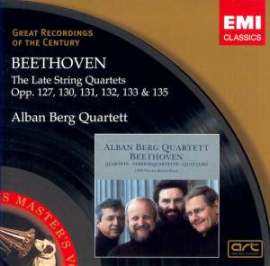
– Beethoven’s quartets
– The thingly element
– …what the mere thing itself is, allo agoreuei. The work makes public something other than itself; it manifests something other; it is an allegory
– Greek symballein. The work is a symbol
– Element
Thing and Work
– The thing being (thingness) of the thing
– Airplanes and radio sets are nowadays among the closest to us, but when we have in mind the last things we think of something altogether different. Death and judgments – these are the last things. On the whole the word ‘thing’ here designates whatever is simply nothing. In this sense the work of art is also a thing, so far as it is some sort of being.
– We would sooner think of a hammer as a thing, or a shoe, or an ax, or a clock.
– Back from the widest domain
– Everything is a thing (thing = res = ens = a being)
– Even the highest and last things.
– In the narrow precinct of mere things
– The Greek are supposed to have called it ‘hypokeimenon’ (the core of things)
– Ta symbebekota
– The appropriation of Greek words by Roman-Latin thought: Hypokeimenon becomes subiectum; hypostasis becomes substantia; symbebekos becomes accidens.
– The aistheton, that which is perceptible by sensations in the senses belonging to sensibility.
– Gestalt p.151
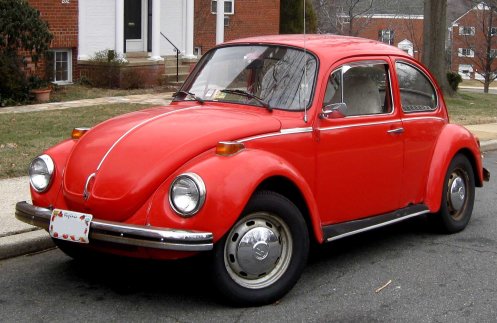
– The Mercedes in immediate distinction from the Volkswagen.
– The distinction of matter and form is the conceptual schema which is used, in the greatest variety of ways, quite generally for all art theory and aesthetics.
– Where does the matter form structure have its origin – in the thingly character of the thing or in the workly character of the artwork?
– The matter
– Jug, ax or a
– Pair of shoes
– Usefulness
– God’s creative work
– Thomistic philosophy
– An alien philosophy
– Middle Ages
– The medieval period
– Thing-being
– The unity of the manifold of sensations
– Thingly character of the thing
– The equipmental character of equipment
– The workly character of the work.
– The exertion of thought.
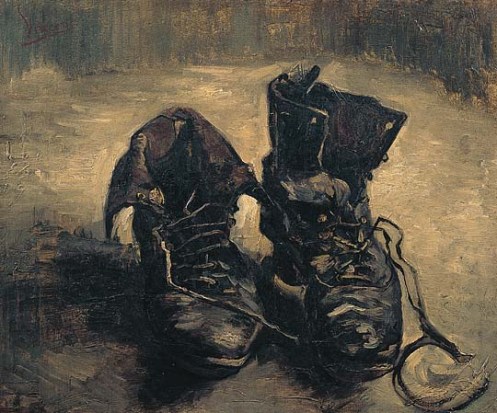
– A pair of peasant shoes
– Van Gogh
– Such shoes
– The equipment belongs to the earth
– Made privy
– Vibrates
– Thus equipmentality wastes away sinks into mere stuff.
– …..The unconcealment of its Being. The Greeks called the unconcealment of beings ‘aletheia’. We say ‘truth’ and think little enough in using this word. If there occurs in the work a disclosure of a particular being…..
– In the work of art the truth of beings has set itself to work.
– ‘to set’ means here ‘to bring to stand’
– Middle ages called it ‘adequatio’, Aristotle already spoke of ‘homoiosis’.
– A Greek temple
– That the idea of Temple is represented in the building?
– Holderlin hymn ‘The Rhine’
– C.F. Meyer’s poem ‘Roman Fountain’ p. 163
– Can truth happen [geschehen] thus be historical [geschichtlich]?
– The preeminence of equipmentality
– Actual artwork in its actuality
– The work is no more anything of the kind than the bare thing is a piece of equipment that merely lacks specific equipmental characteristics of usefulness and being made.
– The Being of beings.
– The things reality of the work leads not from thing to work but from work to thing
– This revealing i.e. the truth of beings
The Work and Truth
– But what is art?
– The Aegina sculptures in the Munich collection

– Sophocles ‘Antigone’
– The temple in Paestum
– Bamberg cathedral
– As to what truth is and how truth can happen
– A Greek temple
– Physis
– The earth
– Heraclitus; fragment 53
– ‘set up’
– ‘Setting up the work’
– The world worlds
– The peasant woman the earth appears openly cleared as itself only when it is perceived as that which is essentially undisclosable, that which shrinks from every disclosure and constantly keeps itself closed up.
– The repose
– Strife
– The laxity
– True gold in contrast with sham gold
– An abyss
– Aletheia, the unconcealment of beings
– Propositional truth
– Unconcealment of being (Being)
– There is but little that comes to be known
– This denial, in the form of a double concealment, belongs to the essence of truth, in its essence un-truth
– The essence of truth is un-truth – to hold [halten] originally means to take into protective heed [huten]
– Truth happens in Van Gogh’s painting
– Beauty is one way which truth essentially occurs as unconcealment.
– Setting into a work of art as the essence of art
– How is it that there is art at all?
Truth and Art
– What is art?
– We seek its essence in the actual work
– Instauration
– Self-sufficiency
– Techne
– Technites
– For Greek thought the essence of knowing consists in ‘aletheia’, that is in the revealing of beings.
– The open region
– Greek sense of thesis
– The stars

– It is philosophy
– Its common outline
– In German, ‘der Riss’ is a crack, tear, laceration, cleft or rift, but it is also a plan or design in drawing

– The rift is writ
– Figure [Gestalt]
– Hence the illusion that artistic creation is also an activity of handicraft. It never is. But it is at all times a use of the earth in fixing in place of truth in the figure.
– Not the N.N. fecit
– Simple factum
– ‘that it is’
– The work casts itself the eventful fact that the work is as this work.
– This fact about itself
– Luminous becomes uniqueness of the fact that it is rather than is not.
– ‘that it be’
– P. 191
– More cleanly it seems to cut all ties to human beings
– The willing
– ‘Being and Time’
– ‘Entschlossenheit’: ‘unclosedness’
– Aestheticizing connoisseurship of the world’s formal aspects
– Familiarity and connoisseurship
– Nietzsche’s notion of will to power as art
– To some extent the whole of the present essay may be viewed as a response to the Nietzschean ‘ Wille zur Macht als Kunst’
– The site in which the figure must be fixed in place
– Albrecht Durer: ‘For in truth, art lies hidden within nature, he who can wrest it from her, has it.’

– True, there lies hidden in nature a rift-design, a measure and boundary and tied to it, a capacity for bringing forth – that is, art.
– Spadework
– reissen heist hier Herausholer der Risses und den Riss reissen mit der Reissfeder auf dem Reissbrett
– ‘Wrest’ here means to draw out the rift and to draw the design with the drawing-pen on the drawing board.
– Each answer remains in force as an answer only as long as it is rooted in questioning
– …..its advent in throwness is projected
– Throwness : ‘Geworfenheit’
– ‘’thrown project’
– If all art in its essence is poetry then the arts of architecture, painting, sculpture and music must be traced back to poesy. That is pure arbitrariness.
– Art, as the setting-into- work of truth, is poetry.
– The essence of art is poetry.
– The setting-into- work of truth thrusts up the awesome and at the same time thrusts down the ordinary and what we believe to be such.
– All creation, because it is such a drawing up, is a drawing, as of water from a spring.
– Historical Dasein itself.
– P.201
– Bestowing and grounding
– A genuine beginning, however, has nothing of the neophyte character of the primitive.
– This foundation happened in the West for the first time in Greece.
– History is the transporting of a people into its appointed task as entry into that people’s endowment.
– Art is the setting-into –work of truth.
– …this is the word ‘origin’[Ursprung, literally – ‘primal leap’]
Reluctantly, that which dwells near its origin abandons the site.
-Holderlin
Epilogue
– The riddle of art
– Aesthetic
– Aesthesis
– Everything is an experience
– The half-baked cliché of an age when great art, together with its essence has departed from among human beings.
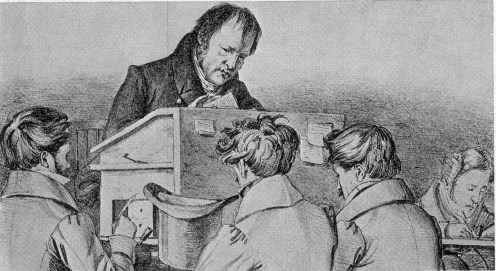
– Hegel, ‘Lectures on Aesthetics’ 1828—29 University of Berlin
– The truth of beings
– The beautiful and the good
– Truth is an unconcealment of being as beings
– A peculiar confluence of beauty with truth
Addendum
– ‘to set’ is ‘to lay’
– Latin ponere
– Greek sense of ergon, this works ‘Being’ is energia.
– ‘energies’
– ‘letting happen’
– Ge-stell [enframing]
– To the propriative event [Ereignis]
– What art may be is one of the questions to which no answers are given in the essay
– ‘the setting-to-work of truth’
– The relation of Being and human being
– Heidegger, ‘Identity and Difference’
 tomreading
Leave a comment