Introductory Lectures on Aesthetics by Hegel
Introduction by Michael Inwood
Art in Hegel’s Germany
– Stuttgart
– Johann Wolfgang Goethe (1749- 1832)
– Hegel knew Goethe well and visited him in Weiner
– Friedrich von Schiller (1759-1805)
– A third great writer, Friedrich Holderlin (1770- 1843), a lyric poet, novelist and dramatist whose career was cut short by madness in about 1803
– Mozart, Haydn, Schubert, Weber and Beethoven (born in the same year as Hegel, but never mentioned by him) were active in Hegel’s lifetime.
– Friedrich Wilhelm Joseph Schelling (1775- 1854) saw the age as one of artistic poverty.
– Schopenhauer in his “World as Will and Idea’ of 1819, regarded music as supreme art.
– The Schlegels, Novalis, Tieck and Schelling, regarded literature and poetry as the supreme art.
– Winckelemann
– German translation of the ‘Odyssey‘ 1781 and ‘Iliad‘ 1793
– August von Schlegel translated Shakespeare and ‘Don Quixote‘
– Modern society has no place for a new Homer
– In times of intense artistic creativity, such as Periclean Athens or Elizabethan England, there is little reflection on art.
Philosophy and Aesthetics
– Gottlieb Baumgarten’s, “Aesthetica’
– Kant’s “Critique of Judgement”
– Johann Gottfried Herder (1744-1803)
– August Schlegel’s lectures on literature and art (1801-04)
– Schelling’s “System of Transcendental Idealism” (1800)
– ….that art is the pinnacle of philosophy, that it is in fact superior to philosophy itself, since it represents in an objective form the union of mind, or spirit and nature.
Hegel’s Aesthetic’s
– In 1801 Hegel became a lecturer at the University of Jena
– Art thus has a high position in Hegel’s system, but a position lower than that of religion and philosophy
– ‘The Phenomenology of Spirit’ (1807)
– ‘The Encyclopaedia’
– Egyptians
– ‘The Science of Logic’
Art, the Absolute and Spirit
– Art in Hegel’s view portrays the human spirit, at first in a bodily form, later in a more spiritual form. Art reveals the Absolute
– One might say that, for man at this stage, the absolute is simply a collection of perceptibles and consummerables
– For his essential nature to think
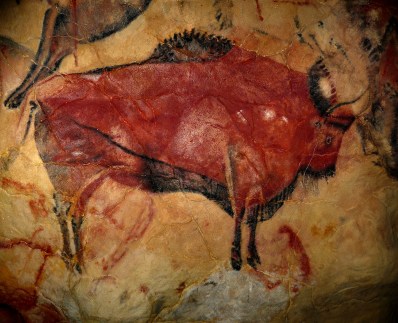
– Suppose, for example, that he carves a piece of wood into the shape of a bison.
– Restrain his desires
– Not some particular bison, but all and any bison that he has encountered and even those that he has not yet encountered.
– A symmetry between the mind of the artist and the absolute
The Absolute as Spirit
– In his ‘Logic‘, Hegel gives a philosophical account of the complex system of thoughts that form the basis both of the mind and of the world. Religion in his view provides a pictorial counterpoint to this system in God the Father.
– i) the bison – carver
– ii) the bison producer
– iii) men are superior to bison and to other natural entities.
– The Holy Spirit
– To see the Absolute as a bison is, in Hegel’s view, as disorienting as seeing a bison when one looks in the mirror.
Concept and Idea
– In his ‘Logic’ he attempts to unravel the concepts or conceptual system that underlies the world as a whole, and also explain its tendency to realize itself in nature and in spirit
– The full grown oak
– Art, in Hegel’s view, involves the concept –reality – Idea schema in several ways
Art and Religion
– The art that he admired most – the archaic and classical Greek art.
– Electricity essentially manifests itself in such phenomena as lightning
– For e.g. Greek tragedy
– He attempts to accommodate it within an overarching religious view of art.
Art and History
– A world-view
– The Homeric world view
– The appropriate one for its time
– Relatively false
– Better suited to expression in art (Christianity)
Art and Philosophy
– Hegel insists that art is an end in itself
– A sensory of the absolute
The Rise and Fall of Art
– Art reaches its peak in Greece and then declines as it approaches modern times
– The youth whose body and movements perfectly express his developed, but still relatively superficial inner life.
The Rise of Philosophy
– Xenophanes and later Plato, criticized Homer’s and other artists’ portrayal of the gods
– The failure of Egyptian art to express, harmoniously and adequately, the highest beliefs of the age…
– Its message was unfit for adequate expression in any medium
– Contaminated by religion and philosophy
– Rise of Protestantism and the growing secularization of philosophy
– Our conduct is guided not by parables or by heroic ideals but by rules and regulations
Art and Irony
– But reflective men break loose from such attachments and succumb to irony
– Thus the reflective artist becomes ironist
– Tabula rasa
Irony and Philosophy
– Irony
– Hegel’s dialectic
– Goethe as a ‘universal’ artist
– The solution for art is provided not by art, but by the philosophy of art
The End of Art or the End of History
– The history of art
– A history of decline
– Symbolism, classicism, romanticism
– Architecture, sculpture, painting, music, poetry
– The pantheon
– The availability of an as yet unrealized stock of possibilities
– America or Russia
– The end of a chapter
– ‘we may well hope that art will always rise higher and come too perfection, but the form of art has ceased to be the supreme need of the spirit.
– In the 1800’s, history and philosophy have reached a significant climax, while art has declined.
Chronology
– 1790 Schelling and Holderlin
– 1795 ‘Life of Jesus’, Hegel
– 1797 Frankfurt
– ‘The Earliest System-Programme of German Idealism”
– 1801 ‘On the Orbits of the Planets”
– First book: “ On the Differences Between Fichte’s and Schelling’s Systems of Philosophy’
– 1802-03 editor of ‘The Critical Journal of Philosophy’
– 1807 “Phenomenology of Spirit”
– 1812 “Science of Logic”
– 1817 “Encyclopaedia of Philosophical Sciences”
– 1820 “Philosophy of Right”
– 1827 visits Goethe in Weimar
– 1831 essay “On the English Reform Bill”
Further Reading
– Caird, ‘Hegel‘
– Kauffman, ‘Hegel, Reinterpretations Texts Commentaries‘
– Hegel’s Aesthetics: ‘Lectures on Fine Art‘
– ‘Lectures on the Philosophy of Religion, Hegel
– ‘’Lectures on the Philosophy of World History’ trans. H. Nisbet
– Bungay, “Beauty and Truth: A Study of Hegel’s Aesthetics”
– D. Henrich, ‘The Contemporary Relevance of Hegel’s Aesthetics‘
– R. Wicks, “Hegel’s Aesthetics” An Overview” 1953
A Note on the Translation and Commentary
Bosanquet’s translation 1886
‘The Introduction to Hegel’s Philosophy of Fine Arts’
– Michael Inwood, Professor Trinity College, Oxford

Introductory Lectures on Aesthetics Hegel
The Range of Aesthetic Defined and Some Objections Against the Philosophy of Art Refuted
– The wide realm of the beautiful
– Fine art
– The feelings
– Feelings of pleasure, admiration, fear, pity, etc.
– Philosophy of art
– Philosophy of Fine Art
– We at once exclude the beauty of Nature
– Artistic beauty stands higher than nature
– Art is the beauty that is born
– -born again that is; of the mind
– Mind and mind only, is capable of truth
– The aspect of Utility
– Too open to vagueness
– Too destitute of a criterion
– The first thing that may suggest itself to us is the difficulty whether fine art shows itself to deserve a scientific treatment.
– Still these shapes themselves appear to fall outside the real purposes of life
– Luxury
– Still the means employed by art for such purposes is deception
– Moreover what we enjoy in the beauty of art is precisely the freedom of its productive and plastic
– We would exchange the shadowland of the idea for cheerful vigorous reality
– Art is what cheers and animates the dull and withered dryness of the idea
– Works of French authors
– That because ideas of beauty are so endlessly various, and therefore, as seems obvious, are something particular, it follows that there can be no universal laws of beauty and of taste.
– As regards the worthiness of art to be scientifically considered
– A thing of the past
– It is its true task to bring to consciousness
Methods of Science Applicable to Beauty and Art
– History of Art
– Abstract philosophy of the beautiful
– The pretension to display oneself as a dilettante and connoisseur is pretty universal
– Art-scholarship
– Moreover, every work belongs to its age, to its nation
– Art scholarship further requires a vast wealth of historical information of a very special kind
– Theories of the arts
– Aristotle’s ‘Poetics’
– Horace’s ‘Ars Poetica’
– Longinus’ ‘Treatise on the Sublime’
– Abstracted from a very limited circle of artistic productions
– Horation epistles
– Contains much that amounts to nothing
– Stay at home and earn an honest livelihood
– Home’s ‘Elements of Criticism’
– Bateaux
– Ramler’s ‘Introduction to the Fine Arts’
– The psychology that was then in vogue
– Goethe’s account of the beautiful
– Meyer embodied in his ‘History of the Formative Arts in Greece’
– Horen 1797
– The conception of the ‘Characteristic’
– That determinate individual modification whereby forms, movement and gestures, bearing and expression, local color, light and shade chiaroscuro and attitude, distinguish themselves in conformity, of course, with the requirements of an object previously selected
– A content
– The mode and ‘fashion’
– Enlightened judge of art (Goethe)
– Goethe says ‘the highest principle of the ancients was the significant but the highest result of successful treatment, the beautiful’
– ….should reveal life, feeling soul, import and mind, which is just what we mean by the significance of a work of art
– Hirt’s principle of the characteristic
– Contains the necessity of its particulars
– These particulars
– Carry in themselves the universality
The Conception of Artistic Beauty
Part I – The Work of Art as Made and as Sensuous
– The philosophy of artistic beauty
– To treat it scientifically we must begin with its conception
– What it is
– In astronomy and physics it should be demonstrated that there was a sun, heavenly bodies, ‘magnetic’ phenomena etc.
– Doubts may arise
– E.g. in psychology, the science of the mind, it may be doubted if there is a soul, a mind, i.e. something subjective, separate and independent, distinct from what is material; or in theology, whether a God is.
– To a merely subjective idea
– So for instance, the beautiful has so often been regarded as not naturally and independent ally necessary in our ideas, but as a mere subjective pleasure or accidental sense
– To lead us on with scientific necessity to the idea of fine art
– Scientific form
– Its higher principles
– 1) we suppose the work of art to be no natural product, but brought to pass by means of human activity
– 2) to be essentially made for man, and, indeed, to be more or less borrowed from the sensuous and addressed to man’s sense
– 3) to contain an end
– Being the conscious production of an external object, can also be known, and expanded
– It would only be a matter of anyone’s will and pleasure to carry to carry the process in a uniform way, and so produce works of art.
– Something formally regular and mechanical
– An exercise
– The precepts conveyed in general rules, the meaning laden spiritual activity of true art
– Determinateness
– Without further and original activity of mind
– Being abstract, however in their content, such rules reveal themselves
– As wholly inadequate
– For the work of art came to be regarded no longer as the product of an activity general in mankind, but as the work of a mind endowed with wholly peculiar gifts
– Of talent and genius
– Production on the part of talent and genius then appears in general terms, as a state, and in particular, as a state of inspiration
– In which process moreover, the good service of the champagne bottle is not forgotten
– In Germany, the so-called epoch of genius
– Goethe
– Schiller
– Reflection, industry, and practice
– The depths of heart and mind, and these are not known without learning them…..
– Study
– Music, for instance
– …..deals with musical sounds as, so to speak, feeling without thought
– …..musical talent generally announces itself in very early youth….
– In poetry
– Of his profounder interests
– Yet it was only their mature manhood that presented us with creations profound
– Thus too, it was not till his old age, that Homer devised and uttered his immortal songs.
– While the work of art attains the semblance of animation on its surface only, but within is common stone or wood and canvas or, as in the case of poetry, is idea, uttering itself in speech and letters
– It is a work of art only in as far as, being the offspring of mind. It continues to belong to the realm of mind, has received the baptism of the spiritual, and only represents that which has been molded in harmony with mind
– Denouement
– Of a higher rank than anything produced by nature
– For everything spiritual is better than anything natural
– Permanence whereas the individual living thing of nature is transient, vanishing
– Genuine pre-eminence as compared with natural reality
– It is said that nature and its products are a work of God, created by his goodness and wisdom, whereas the work of art is merely a human production
– We at once come upon the misconception that God does not work in man and through man, but limits the range of his activity to nature alone
– A divinity in man
– Appropriates the essence of God
– Higher than in nature
– God as Spirit
– The divine element, as it makes itself known in the work of art….
– A mere toy of chance and of man’s fancies
– The absolute need of man
– Thinking
– For himself
– Immediate and single
– Reduplicates
– For himself
– Active, self-realizedness
– In the first place, theoretically
– Practical activity
– To recognize himself
– The seal of his inner being
– his own characteristics
– A mere external reality of himself
– Even the child’s first impulse involves this practical modification of external things
– A boy throws a stone in the river and then stands admiring the circles that trace themselves on the water, as an effect in which he attains the sight of something that is his own doing.
– Self-production
– This is the cause of all ornament and decoration, though it may be as barbarous as tasteless as utterly disfiguring or even destructive as crushing Chinese ladies feet or as slitting the ears and lips
– The universal need or expression in art lies therefore in man’s rational impulse to exalt the inner and outer world into a spiritual consciousness for himself as an object, in which he recognizes his own self
– Spiritual freedom
– Explicit for himself within
– His explicit self without
– What is in him into vision and into knowledge for his own mind and for that of others
– That it is made for man’s sense and for this reason is more or less borrowed from the sensuous
– That fine art is intended to arouse feeling
– Pleasant feeling
– Fear, e.g. and compassion; and then, how these could be pleasant
– Moses Mendelsohn’s times

– What is felt remains wrapped in the form of the most abstract individual subjectivity
– Also quite abstract
– The subject (i.e. the person)
– Feeling, as such, is a thoroughly empty form of subjective affection
– Feeling of justice, moral feeling, sublime religious feeling and so forth
– They remain purely subjective
– Affections
– A peculiar feeling of beauty
– Sense of beauty
– The education comes to be demanded for this sense
– Educated sense of beauty came to be called taste
– Only defective in universal principles
– Less directed to justifying a definite judgment
– A standstill in the indefinite
– Let the depths of the matter remained a sealed book
– Taste was only directed to the external surface about which the feelings play, and on which one-sided maxims may pass for valid
– Pettifogging peculiarities
– The connoisseur, or scholar of art has replaced the art-judge, or man of taste.
– Art-scholarship
– Time and place of its productions
– All that it can do for us on its own way is to be accepted with gratitude
– For art – scholarship (and this is its defective side) is capable of resting in an acquaintance with purely external aspects, such as technical or historical details, etc.
– Invested with a relation to man as a sensual being
– A) Purely as regards the work of art as object
– B) partly with respect to the subjectivity of the artist, his genius, talent, and so on….
– We find that what is sensuous may bear various relations to the mind
– A) the lowest mode of apprehension and that least appropriate to the mind, is purely sensuous apprehension. It consists naturally in mere looking, listening, feeling, just as in seasons of mental fatigue it may often be entertaining to go about without thought and just to hear and look around us
– Desire
– Ought not to remain on such a level
– bound to exclude from itself all desire and intelligence
– desire
– semblance
– mere semblance
– the work of art occupies the mean between what is immediately sensuous and ideal thoughts
– sonorous vibration of things
– schemata
– the sensuous is spiritualized, i.e. the spiritual appears in sensuous shape
– passage through the mind
– spiritual activity
– element of sensuousness and immediateness
– rather the spiritual and the sensuous side must in artistic production be as one
– two separate activities
– this genius mode of production constitutes the activity of artistic fancy
– great experience of the world, or, again, with that of a man of esprit
– the productive fancy of the artist is the fancy of a great mind and heart
– fancy unquestionably rests on natural gifts
– speaking generally, on talent
– it is true that we speak in the same way of scientific talent, but the sciences only presupposes the universal capacity of thought, which has not, like Fancy, a natural mode (as well as an intellectual one)
– it would be more correct to say that there is no scientific talent in the sense of a mere natural endowment
– now, Fancy has in it a mode of instinct-like productiveness
– unconscious operation must belong to the natural element in man, as well as to the rational
– considered as a natural endowment, moreover, such talent reveals itself for the most part in early youth
– and speaking generally, whatever men of such talents have in their imagination, whatever rouses and moves their inner nature turns at once into shape, drawing , melody or poem
– thirdly, and to conclude: the content of art is also in some respects borrowed from the sensuous form, nature, or, in any case, representing the seized and fixed even if the content is of a spiritual kind, it can only be seized and fixed by representing the spiritual fact, such as human relations, in the shape of phenomena with external reality.
Part II The End of Art
– the End
– imitation of nature
– representation
– prima facie
– repetition
– a superfluous labour
– comes far short of nature; for art restricted in its means of representation and can produce only one sided deception
– mere imitation
– mere parody of life
– just so the Turks, being Mohammedans, tolerate, as is well-known, no pictures copied from men or the like, and when James Bruce, on his journey to Abyssinia, showed paintings of fish to a Turk, the man was amazed at first, but soon enough made: ‘if this fish shall rise up against you on the last day and say ‘you have created for me a body, but no living soul; how will you defend yourself against such an accusation?’
– the prophet :
‘These pictures will accuse their authors on the day of judgment’
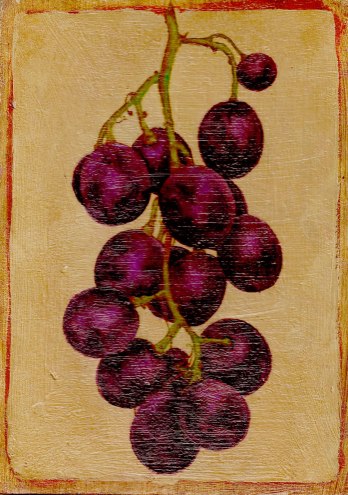
– Zeuxis painted grapes have from antiquity downward been taken to be the triumph of this principle of the imitation of nature, because the story is that living doves pecked at them
– Buttner’s monkey
– Rosel’s ‘Diversions of the Insect World’
– They have actually deceived even pigeons and monkeys
– In general we may sum up by saying that as a matter of mere imitation, art cannot maintain a rivalry with nature, and , if it tries, must look like a worm trying to crawl after an elephant
– Pleasure in the sleight of hand
– Labour, skill and industry
– Kant
– Grow tired of a man
– Who is able to mimic the nightingale strain
– Once weary of the song
– Conjuring trick
– The feat of a man who had taught himself to throw lentils through a small opening without missing, he displayed this skill of his before Alexander and Alexander presented him with a bushel of lentils as a reward for his frivolous and meaningless art
– Objective beauty itself disappears
– For the question is, in that case, no longer of what is too be copied but only whether it is correctly copied
– Subjective taste
– From what men think
– Every bridegroom thinks his bride beautiful
– The taste of nations
– Full of extreme diversity and contrast
– A Hottentot p. 50
– Most gruesome idols
– The most horrible noise
– On their side will regard our sculptures, paintings and musical productions as trivial or ugly
– Architecture
– Poetry
– Are by no means to be called imitations of nature
– The end of art must , therefore lie in something different from the purely formal imitation of what we find given
– Neither is the given natural world its rule, nor is the mere imitation of external appearance as external as its end
– What is the true content of art?
– ….all that finds a place in the mind of man
– “homeo sum: humani nihil a me alienum puto’
– filling the heart
– The whole range of what man’s soul in its inmost and secret corners has power to experience and to create…
– The Idea
– To set imagination roving
– The semblance thereof by art
– Of artistic semblance
– Images, symbols, and ideas
– The content of reality
– Traversing the emotions and the passions of wrath, hatred compassion of anxiety, fear, love, reverence and admiration, or of the desire of honour and of fame
– The dragging of the heart
– Through the whole significance of life
– By means of merely deception
– Formal mode
– Artistic dress
– Power of manipulating
– Either sets them a staggering like Bacchantes, or passes into sophistry and skepticism in the same way as argumentation
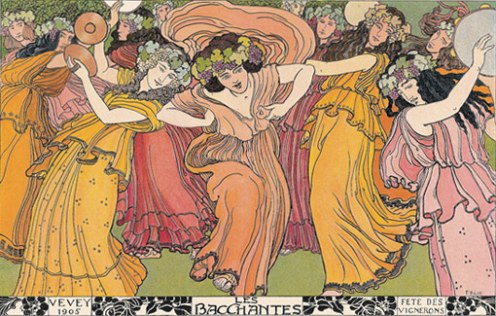
– The State
– This wild diversity
– All human capacities and all tendencies
– What unity
– What single end?
– The function of mitigating the fierceness with the desires
– brutality in general
– desire is most savage
– the whole man
– the passion is stronger than ‘I’
– the oneness of the ‘I’ as universal
– such brutality and untamed violence of passions is softened through art
– at least made aware
– man’s mode of occupying himself with works of art is always purely contemplative
– it cultivates attention to their significance
– the purification of the passions, instruction and moral perfecting
– a determinate
– end
– universality and essentiality
– in this latter aspect, the end of art has been pronounced to be that it should teach
– Fabula docet
– In this respect, the Horation saw, ‘et prodeisse volunt et delectare poetae (poets aim at utility and entertainment alike)
– Art was in fact the first instructress of peoples
– For the work of art ought to bring a content before the mind’s eye
– ……art is a thing divided against itself
– Didactic
– Unessential
– A means
– A supreme end
– Instructed
– Moral improvement
– Moral goodness
– Purification
– Improvement of mankind as its useful purpose and supreme goal
– Didactic purpose
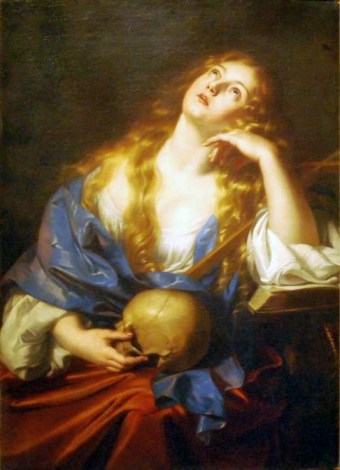
– Portrayal of Mary Magdalene, the beautiful sinner who afterwards repented, has seduced so many into sins, because art makes it look so beautiful to repent, and you must sin before you can repent.
– Morality involves reflection
– Negativing
– A moral aspect
– The nobler emotions and the higher impulses
– For the modern moralistic view starts from the fixed antithesis
– Antithesis
– Also emerges as a fundamental distinction and antagonism between that which is real essentially in its own right, and that which is external reality and existence.
– The pedantry of philosophy
– A prisoner
– As a will
– A mere ought
– That truth only lies in the conciliation and mediation of the two and that this mediation is no mere postulate, but it is in its nature and in reality accomplished and always self-accomplishing.
– This intuition agrees directly with the natural faith and will, which always has present to the mind’s eye precisely this resolved antithesis, and in action makes it its purpose and achieves it.
– Reconciliation
– Something else
– Get rid of the perverse idea, which is asking, ‘what is the aim?’ retains the accessory meaning of the question, ‘what is the use?’
– So that then the work of art would only have value as a useful instrument in the realization of an end having substantive importance outside the sphere of art
– Hence the point of view, as it is the reawakening of philosophy in general, so also is the reawakening to which alone aesthetic as a science owes its true origin and art its highest estimation.
Historical Deduction of the True Idea of Art in Modern Philosophy
– The above antithesis and contradiction between the abstract self-concentrated mind and actual nature, whether that of external phenomena, or the inner subjective feelings and emotions.
– The Kantian philosophy
– This absolute beginning
– Kant
– He succeeded neither in scientifically unfolding its genuine essence, nor in presenting it as the true and sole reality
– The required unity in what he called the intuitive understanding
– Indeed Kant defines the power of judgment generally as ‘the power of thinking the particular as contained in the universal’
– Teleology
– The particular conforms to this end
– Spontaneously
– I.e. devoid of relation to our appetitive faculty
– Now, what Kant asserts is that the relation to the beautiful is not of this kind. The aesthetic judgment allows the external existence to subsist free and independent giving license to the object to have its end in itself. This is, as we saw above, an important consideration.
– The beautiful, in the second place, says Kant, is definable as that which without a conception i.e. without a category of the understanding, is perceived as the object of a universal delight.
– In the third place
– A teleological character
– Without the idea of an end
– Teleologically
– Teleology
– The beautiful
– In the fourth place…..
– ….as objects of necessary delight.
– Necessity is an abstract category and indicates an inner essential relation of two aspects, if the one is, and because the one is, then (and therefore) the other is.
– To give us pleasure ….
– Kant regards the beautiful in art as an agreement in which the particular itself is in accordance with the conception
– ….the beauty of art becomes embodiment of a thought, and the material is not externally determined by this thought, but exists itself in its freedom.
– In themselves
– ….nevertheless, merely subjective in respect of our appreciation as in respect of our production, and not to be the naturally and completely true and real.
– Duty for duty’s sake
– Schiller
– Goethe’s agreeable straightforwardness and objectivity.
– Goethe’s idiosyncrasy led him to the physical side of art, to external nature, to animal and vegetable organisms, to crystals, to cloud formation, and to color.
– Schiller’s ‘Letters Upon Aesthetic Education’
– ‘Anmuth und Wurd‘ [‘On Grace and Dignity’]

– Unity of the universal and particular
– as the Idea itself
– Winckelmann
– A new organ and new methods of study in the field of art
– A.W. and Friedrich Schlegel
– A clever polemic against the traditional views
– A character of indefiniteness and vacillation
– The work of the older painters of Italy and the Netherlands
– ‘The Nibelungenlied’
– Indian poetry and mythology
– The blunder of admiring what was but mediocre e.g. Holberg’s comedies
– The so-called irony. This idea had its deeper roots….in Fichte’s philosophy, in so far as the principles of his philosophy were tied to art
– The abstract ‘I’
– A mere semblance
– The pleasure of the ‘I’ which has attained absoluteness in itself and simply as ‘I’
– With respect to beauty and art this receives the meaning of living as artist and forming one’s life artistically
– The level of mere semblance
– Such earnest can never come into being , as nothing has validity ascribed to it but the formalism of the ‘I’
– They are simply deceived, poor borne creatures
– And this skill in living as ironical artist life apprehends itself as a God-like geniality
– But as genius he sets no value on this relation to his determinate reality and particular actions, or to what is universal in its own right; that is he assumes an ironical attitude towards it
– ….that concentration of the ‘I’ into itself for which all bonds are broken and which will only endure to live in bliss of self-enjoyment. This irony was the invention of Herr Fried von Schlegel and many followed him in prating about it then, or are prating of it afresh just now.
– But on the other hand, the reverse may happen…
– Misfortune and antinomy
– Seizure of sickly yearning which we have also seen emanate from Fichte’s school.
– The source of morbid saintliness and yearning for a true saintly soul acts and is a reality. But all that craving is the feeling of the nullity of the empty futile subject or person which lacks the strength to escape this futility, and to fill itself with something of substantial value.
– The representation of the Divine as the Ironical
– Borders closely on the principle of comedy
– Such an individual is then null and despicable in character, and weakness and want of character into the representation.
– The public does not like all this mediocrity, half grotesque and half-characterless.
– Solger and Ludwig Tieck
– ‘infinite absolute negativity’
– He never got beyond the aspect of negativity
– ‘Romeo and Juliet’
Division of the Subject
– The study of our object-matter
– As, however, we have spoken of art as proceeding from the Absolute Idea….
– Hence the Jews and the Turks have not been able to represent their God
– For God in Christianity is conceived in the truth, and therefore, as in Himself, thoroughly concrete, as a person, at the same time in relationship, and more closely determined, as mind or spirit
– The Trinity of Persons, which at the same time in relation with itself is one
– The birds variegated plumage shines unseen, and their song dies away unheard, the Ceros which blossoms only for a night.
– Thought is a higher mode than representation by means of the sensuous concrete.
– If, for instance, we compare the Greek god with God, as conceived according to the Christian ideas.
– Greek gods closely akin to the natural human shape
– Christian God
– Is known to be as mind
– Means of which He can only be represented imperfectly, and not in the whole depth of His idea.
– First, we obtain a general part
– Ideal
– Secondly, a particular part
– Particular plastic forms
– In the third place, there results a final part
– The sensuous realization of its shapes and its self-completion as a system of the several arts and their genera and species
– The Idea, is the Ideal
– Defectiveness of form arises from defectiveness of content
– In its determinate sphere
– The Christian imagination will be able to represent God only in human form and with man’s intellectual expression
– Determinateness is, as it were, the bridge to phenomenal existence.
– Thus it is only the true concrete Idea that can generate the true shape, and this correspondence of the two is the Ideal.
– Totality of particular stages and forms
– We have here to consider three relations of the Idea to its outward shaping
– A) first the Idea gives rise to the beginning of art
– It is made the import of artistic creations
– The first form of art is therefore rather a mere search after plastic portrayal than a capacity of genuine representation
– The symbolic form of arts
– ….can only concern an abstract attribute, as when a lion is used to mean strength.
– In view of the unsuitability of the two elements to each other, the relation of the Idea to objective reality becomes a negative one
– Sublimity
– Exaltation
– Primitive artistic pantheism of the East
– Reciprocal inadequacy of shape and Idea remains insuperable.
– In the second form of art, which we propose to call Classical
– In classical art the peculiarity of the content consists in being itself concrete ides, and, as such, the concrete spiritual is the truly inner self
– The spirit of art
– Into accord with free individual spirituality
– The Romantic form of art
– Art as such takes for its object Mind
– Mind cannot be represented according to its true notions, for mind is the infinite subjectivity of the Idea, which as absolute Inwardness is not capable of finding free expression in its true nature on condition of remaining transposed in a bodily medium as the existence appropriate to it.
– Christianity declares to be true of God as Spirit.
– Greek faith in gods which forms the essential and appropriate content for – classical art.
– In Greek art…..
– The unity of the human and divine nature
– Knowledge of this latent unity
– Man
– Conscience
– Science
– For the reasons that he knows himself to be animal, he ceases to be animal, and, as mind, attains to self-knowledge
– Self-conscious-inward intelligence
– Christianity brings God before our intelligence as spirit, or mind
– Not as particularized individual spirit, but as, absolute in spirit and in truth
– Spiritual knowledge and in spirit
– Romantic art must be considered as art transcending itself, while remaining within the artistic sphere and in artistic form
– Left at the mercy of freaks imagination
– Grotesqueness
– In themselves
– Even in crime
– Higher perfection
– The third part of our subject
– Actual existence
– Actuality
– As a work of art
– Particular material
– Separate: into independent and so particular forms embodying their realization
– Universal forms, break the bound of particular realization
– The merely natural vesture of God
– At this point the external element takes plastic shape as something that has its spiritual aim and content, not in itself, but in another
– The divine as inward
– Subjective, individual inwardness
– Deity
– Emotion, perception and feeling
– First
– Earthly natural life
– Secondly
– Consciousness makes God its object to the devotion of the community
– Thirdly
– We advance from God as such to the devotion of the community, that is to God as living and present in the subjective consciousness
– Architecture
– A heavy mass subject to mechanical laws
– Relations of symmetry
– Material
– To establish an abstract relation
– Symbolical form
– Temple as a fit place for concentration of spirit
– Against rain, the hurricane and wild beasts, and reveals the will to assemble, although externally, yet in conformity with the principle of art
– With such import
– leaning to sculpture
– sculpture
– makes itself at home in the sensuous shape and its external matter
– the classical form
– should place the spirit before us in its bodily form
– form should be animated by the content of the spiritual individuality
– wrought in ideal form of the human figure
– all three spatial dimensions
– external repose
– unity and repose
– community
– god himself comes to be really and truly spirit – the spirit in His (God’s) community
– the common nature and union of the multitude
– the reflected appearance which essentially displays itself as inward and as subjectivity
– therefore the higher content is now the spiritual nature, and that in its absolute shape
– God in Himself
– All the most manifold subjectivity
– As human passion, action and incident, and, in general, the wide realm of human feeling will, and its negation – is for its own sake the object of artistic representation
– Media
– Painting, music and poetry
– In this region the sensuous medium displays itself as subdivided in its own being and universally set down as ideal
– Spiritual
– Intelligible
– Sensuous medium
– Closer intimacy than was possible in the case of architecture and sculpture
– Amalgamation
– Immediate sensuous element
– Totality
– Third sphere
– Painting
– Into color
– The human heart, as feeling idea and purpose
– The whole realm of the particular existence, from the highest embodiment of mind down to the most isolated object of nature, finds a place here.
– The second
– Music
– The indifferent externality of space
– Imitated by painting
– Excluding space
– Of positive negation
– Motion and tremor of the material body within itself and in its relation to itself
– Earliest inwardness of matter and inspiration of soul into it furnishes the medium for the mental inwardness – itself as yet indefinite – and for the soul into which mind concentrates itself as yet indefinite and for the soul into which mind concentrates itself.
– Music forms the center of the romantic arts
– The third and most spiritual mode of representation of the romantic art type – we must look for it in poetry.
– Is a sign
– Sign of the idea
– Develops into the word
– The point which is mind
– The self-conscious individual
– Yet this sensuous element which in music was still immediately one with inward feeling, is in poetry separated from the content of consciousness
– In poetry the mind determines this content for its own sake, and apart from all else, into the shape of ideas, and through it employs sound to express them, yet treats it solely as a symbol without value or import.
– Expatiates exclusively in the inner space and inner time of the ideas and feelings
– From the poetry of imagination into the prose of thought
– Their purely abstract attributes of space and time
– Higher principle
– Symbolic
– Classical
– Romantic
– Symbolic
– Architecture
– Classical
– Sculpture
– The romantic type
– Painting and music
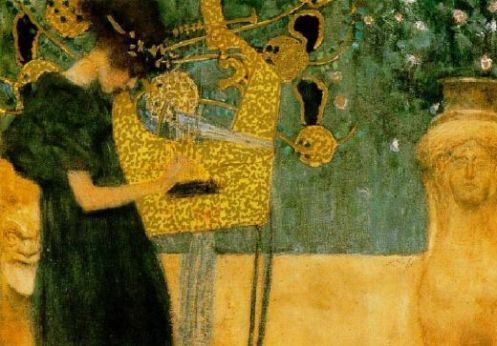
– Poetry is conformable to all types of the beautiful and extends over them all
– It is as the external realization of this Idea that the wide Pantheon of art is being erected, whose architect and builder is the spirit of beauty as it awakens to self-knowledge, and to complete which the history of the world will need its evolution of ages.
finis.
 tomreading
Leave a comment