Commentary on Hegel’s ‘Introductory Lectures on Aesthetics’ Michael Inwood

Commentary
– The Latine Aesthetica
– German as Asthetik
– A.G. Baumgarten (1714-62) in ‘Metaphysica’ and ‘Aesthetica’ (1750) from the Greek aisthanaesthai: ‘to perceive’
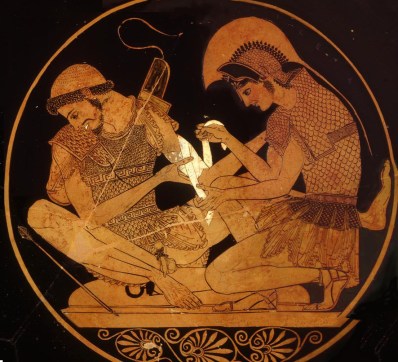
– Crafts and to the seven liberal arts of the Middle Ages
– Charles Batteaux
– Henry Home, Lord Kames (1698-1782)
– Johann Heinrich Meyer
– F.W. Reimer
– Aloys Hirt (1759-1839)
– ‘Die Horen’ [The Seasons] monthly magazine
– S. Bungay, ‘Beauty and Truth’
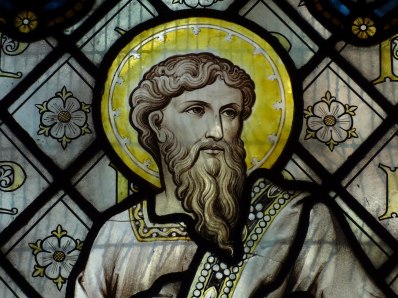
– Anton Raphael Mengs (1728-79)
– Johann Joachim Winckelmann (1717 – 68)
– Philostratus ‘Images’ (with Goethe’s additions)
– Painting of Hercules taming of the mares of Diomedes, who ate his friend Abferus while he was fighting Diomedes
– F. Schlegel, ‘On Language, and Wisdom of the Indians’
– studies of Boccaccio, medieval romances and Shakespeare
– ‘the Aesthetic Miscellaneous Works’
– ‘Goethe on Art’
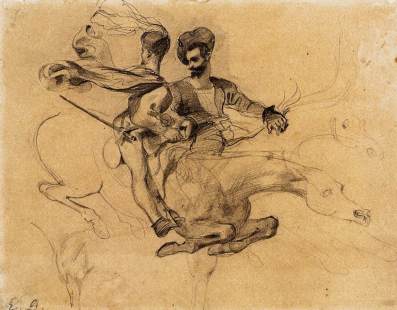
– Hegel intertwines Idee as translation of Plato’s Greek term ‘idea with Idee in his own sense, a sense which derives not only from Plato but also from e.g. Kant
– Knox (p. 28) suggests that Hegel is thinking of Mozart
– ‘The Iphigenia’
– Gotz
– Schiller’s “Wallenstein’
– Friedrich August Wolf (1759-1824)had argued in his ‘Prolegomena in Homerum’ (1795) thet the Iliad and the Odyssey were not the work of a single author but a collection of orally transmitted poems put together at a later date. Hegel disagreed.
– a ‘unified work of art`and must have been the work substantially of a single author
– Hegel, God is a spirit or mind
– God, like man himself becomes self-conscious only in his products
– The world process, Hegel believes can only be explained on the model of spirit, not e.g. in mechanical or biological terms
– Nature and thus the world as a whole is ‘spiritualized’
– Hegel’s view entails that all artifacts (e.g. knives and forks) and not only art, are superior to nature
– That one needs it for its own sake, not for some further purpose, which can be meant by something other than art, e.g. by snooker or by philosophy
– Man’s role in the world-process is to achieve self-consciousness, i.e. an insight into the whole universe and his place in it.
– Hegel: ‘what is summoned out of his inner self’ (e.g. his thoughts, anger, etc.) but also in ‘what is received from without’ – apart, that is; from his own body.’
– Hegel also leaves it unclear why one should want to strip the world of its ‘foreignness’ (fremdheit c.f. section xxI on ‘alienation’)
– Both self-cognition and self- production alter the self, in Hegel’s view, and extend its boundaries
– At lower levels (e.g. stone-throwing) practice is distinct from theory
– But at higher levels, practice involves the production of meaningful objects (paintings, poems, etc.) that are similar to such theoretical products as textbooks.
– Stone-throwing
– Gestalt: ‘he means an attitude, bearing; gentle movements, etc.
– ‘War and Peace’’
– ‘The Iliad’
– For Hegel, by contrast, beauty is whatever makes for aesthetic merit. Cf. xxxii, n. 3.
– A man wants to eat e.g. the apple himself as a sensuous ‘particular’ (Einaelner): it is irrelevant to his purpose whether others want or ought, to eat apples.(it is, by contrast, relevant whether others find an object as beautiful as oneself)
– I associate art with the more ‘theoretic’
– XLIX dealt with the producer of art while LVI deals with its contemplator or audience (e.g. ‘Antigone’)
– Nothing can be tasted which is not dissolved in a liquid.
– Anschauung(en): ‘intuition(s)’
– Gestalt: lit. figure, shape, form
– Cf. Kant’s, ‘Critique of Judgement’
– The artist often cannot explain esp. to the non-artist, how he achieved his results, and does not know, at least in a prosaic or scientific sense, how did he did it. This argument is implicit in Hegel’s reference to fancy’s ‘instinct –like productiveness’ and its ‘unconscious operation’ below.
– An artist cannot produce satisfactory works in early youth
– Inhalt : here it hovers between ‘theme’ and ‘meaning’
– Zweck: aim, purpose, end. Hegel’s question here: ‘What is the purpose of this artist in producing art?’
– Similar to his earlier question, ‘Why does the artist need to produce art?’
– But not identical to it
– To imitate nature…
– ‘Travels to Discover the Source of the Nile’, J. Bruce
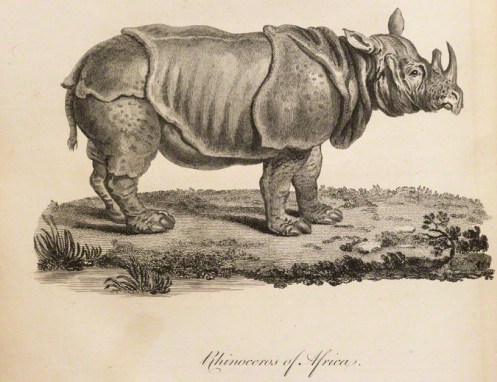
– Pliny, ‘Natural History’
– Hegel’s own dominant view is that the beauty of a work depends on the extent to which its sensory form and its content are in harmony. But he occasionally lapses into the view that it depends on the truth of the content: see section CIII, n 4.
– Phantastischen Erdictungen lit. ‘fanciful inventions’, ‘fantastic’ means odd or wild. Hegel only means ‘original’; ‘creative’.
– Terence, ‘Heuton Timorumenos’, I. I, 25:
– ‘I am a man; I regard nothing human as alien to me.’
– Rasonnnement
– Analogously, art can arouse both sympathy and disgust for e.g. adultery, Antigone, the French Revolution, etc.
– Horace, ‘Ars Poetica’
– A knife is ‘spiritual’ in the sense that it is produced by the mind, as well as by the hand, but its aim is not spiritual in the sense that it is designed to affect the mind rather than bodies.
– Art must convey an undfur sich wesentichen geistigen Gehalt: : lit. ‘spiritual content’ [i.e. meaning] that is essential in and for itself.
– This presenting a dilemma: if art is entertainment, it is an end in itself, but trivial; while if art didactically instructs, it is significant, but merely as a means.
– Sittichkeit: ‘almost equals morality in the English sense. It means the habit of virtue, without the reflective aspiration after goodness as an ideal.’
– The contrast between what is real essentially and in its own right’ (an und fur sich) and what is ‘external realty and existence {Dasein] is roughly the contrast between e.g. a book in the abstract and the (possibly misprinted) copies of it or between a play and (more or less inadequate) performers of it.
– Art essentially harmonizes its sensory form and its spiritual content (esp. it meaning)
– By its very harmony of form and content, art conveys a certain content, viz. reconciliation
– Reveals something
– Begriff
– The aim
– In section XVIII Hegel attributed the modern decline of art in part to ‘reflective culture’ (Reflexionsbilding) and in XVIII he implied that this very reflexiveness gives rise to philosophy of art.
– we reach ‘0’ at infinity
– Kant’s view
– intuitions required to guarantee the existence of an object corresponding to a concept
– Thus Kant comes to a standstill in the contradiction of subjectivity and objectivity.
– ‘Critique of Judgement’ [C7] Part I of C7 presents Kant’s views on aesthetics
– ‘purposive’
– [e.g. the heart and the brain keep each other operating] that they seem as if they were purposively designed.
– (intuitive and divine) understanding for the benefit of our cognition
– E.g. if a watchmaker makes a watch in accordance with his concept of a watch….
– as if produced by an understanding the emergence and structure of e.g. a plant can, like those of a watch, only be explained in terms of its overall concept….
– The concept is primarily, if not exclusively, responsible for its growth and structure, i.e. that here too it is as if an intuitive understanding were at work.
– The teleological judgment and the aesthetic judgment (esp. a judgment to the effect that something is beautiful
– If I judge something to be beautiful, I commit myself to claiming not that everything relevantly similar (or falling under the same Begriff) is beautiful or that everyone should delight in it and judge it to be beautiful.
– This coheres with the exclusion of interest ( i.e. of what differentiated one person from another) from aesthetic judgment,
– (in contrast to e.g. a preference for tea over coffee) p.149
– Justifiable claim to universal acceptance
– Hegel here conflates Kant’s view (as in 4 above) with his own view e.g. a statue (but not a flower) is beautiful in virtue of embodying a conceptual meaning which cannot be extricated from its sensory expression. Kant locates beauty of an object in (our judgments of) its sensory form, not in any deep meaning that it may possess.
– Finite teleology contrasts with the infinite [i.e. self-enclosed self-contained] teleology.
– Symmetry or regularity is an apparent exception to Kant’s claim since it pleases us and yet is generated in accordance with a concept. Kant’s reply is that symmetry alone is not especially beautiful
– Unlike Kant, Hegel has in mind the quasi-conceptual meaning or theme that the artist attempts to embody in a sensory form (the particular)
– By contrast, every detail of a work of art is determined by the universal e.g. ‘to be or not to be this is the question’ differs significantly from ‘to be or not to be that is the question’, and would not serve the same purpose. It is thus impossible to distinguish the general concept of the work from the contingent details of its realization
– But since nature etc. is a ‘limit’ or ‘barrier’ a Schranke, i.e. not only a limit (Grenze) but a limit that is felt as a limit and as needing to be overcome, nature etc. require, Hegel implies, to be overcome, e.g. conceptualized by thought repressed and controlled by duty, etc. when conceived in this way; essentially involve opposition to nature, etc. Another barrier appears as soon as one has been overcome…..
– Thought and duty are also involved in an endless progression of overcoming a nature, etc. that continually re-emerges as a new barrier to be overcome
– Totality and reconciliation
– Begriff: i.e. conceptual thought
– Hegel (like Schopenhauer) had a higher opinion of Goethe’s scientific researches, esp. his theory of colors, than most scientists, both of the time and since. Goethe argued that the colors are mixtures of white light and darkness while Newton held white light to contain all the colors of the spectrum. For Hegel, Newton epitomizes the ‘science of the mere understanding’
– Compare Browning’s “ Luria”:
– “a people is but the attempt of many
– To rise to the completer life of one.”
– Friedrich W.J. von Schelling (1775-1854) ‘System of Transcendental Idealism” p.154
– D.W. Stott, ‘The Philosophy of Art’
– Wincklemann, ‘ History of Art in Antiquity’
– The brothers August von Schlegel (1769-1845) and Friedrich von Schlegel (1772-1829) ‘German Aesthetic and Literary Criticism’
– ‘The Romantic Ironists and Goethe’
– Ironie: this derives (via the Latin Ironia) from the Greek eironeia, which meant ‘dissimulation’, ‘pretended ignorance’ and was seen as a fault, esp. of Socrates in Plato’s dialogues
– Knox p.69 says that it’s generally understood to mean that the writer, while still creative and emotional, should remain aloof and self – critical.
– Johann Gottlieb Frege (1762-1814)
– F, Marti ‘ The Unconditional in Human Knowledge’ : ‘Four Early Essays’ (1794-1796)
– Hegel discussed the divergence between Fichte and Schelling in his first book: ‘The Difference Between Fichte’s and Schelling’s Systems of Philosophy’
– Schelling’s philosophy – which might be called mysticism – ends like Aeschylus’ ‘Prometheus’ in earthquake and ruin.

– Science of Knowledge [Wissenschaft=slehre]
– Fichte
– The Baccalaureus’ speech in Goethe’s ‘Faust’
– [the world, it was not, before I created it]
– ‘Die Welt sie war nicht, eh isch sie ershuf’
– ….and thereby depend thereby simply that the artist’s work is subject to no external moral religious or even epistemological constraints
– Hegel’s train of thought
– Even the ironist must live some definite type of life
– ‘Living as an artist’ in the sense of ‘producing works of art’ rather than ‘forming one’s life artistically’
– These two types of life are distinct: one can produce many works of art without regarding or forming one’s life as a world of art, and vice versa.
– A rough paraphrase of the sentence would be ‘now this is where art and beauty come in: if one is a Fichtean ironist then one can only live artistically, etc.’
– Since the Absolute I is constrained in its creativity, the analogy need not imply that the artist can put what he likes into his work: he may be constrained by e.g. his Christian religion and bound to express it in his art
– Formal freedom
– Genialitat: ‘the character or state of mind in which genius is dominant – here, the mere self-enjoyment of genius.’
– Selbstgeniss: ‘I do not think it means self- indulgence, but the above described enjoyment of reposing in the superiority of the ego’
– ‘Nachste’ lit: ‘next, nearest’
– Eitkeit: it ‘also = ‘conceit’
– Novalis (Friedrich von Hardenberg 1772-1801)
– Saintly soul
– German literature esp. Goethe’s ‘Wilhelm Meister’
– Hegel often criticizes this morbid beautiful soul. Here he contrasts it with the ‘true’ beautiful soul who is ready to act decisively, and thereby to incur the guilt that in Hegel’s view, all action entails.
– F. Schlegel, like many Romantics converted to Catholicism.
– Irving Babbit in , ‘Rousseau and Romanticism’
– ‘the affinity of certain Romantic converts for the Church is that of the jellyfish for the rock. It is appropriate that Friedrich Schlegel, the great apostle of irony, should, after a career as a heaven storming Titan end by submitting to the most rigid of all forms of outer authority.’
– in der Poesie: “poetry’ includes novels, stories, dramas and aphorisms.
– It was in this period, the supreme Romantic.
– Fichte himself
– Solger (1780-1819)
– Author of “Erwin Vier Gesprache uber das Schone und die Kunst” [‘Erwin, ‘Four Conversations on Beauty and Art’ Berlin 1815
– Ludwig Tieck (1773-1853)
– “German Aesthetic and Literary Criticism’: The Romantic Ironists and Goethe”
– Hegel describes his account of the Idea as incomplete ( rather than simply sketchy)
– E.g. this very temporarily for us becomes a living reality and a continuous revelation of ‘the living presence of the Godhead’
– ‘ p.147 The Romantic Ironists and Goethe’
– Solger writes of Sophocles’ Oedipus at Colonius’: ‘Oedipus’ innocence counts for nothing before the natural laws which annihilate him and yet his transgression of these laws leads him to a miraculous transfiguration (the ‘Romantic Ironists and Goethe” p148)
– ‘History of Mr. William Lovell’ (1793-6)
– Tieck endorses Solger’s view of irony and refers to it as ‘that ethereal spirit which however much it penetrates into the depths of the work with love, nevertheless hovers disinterested and unconstrained over the whole – that whole which can be created and grasped from this height alone’
– The content [inhalt] of art can be
– I) the theme, e.g. the anger of Achilles
– II) the Idea or Absolute, or
– III) the conception of the idea or Absolute current in a given society
– The Idea essentially realizes itself in our developing conception of it i.e. God’s consciousness of himself develops in our consciousness of Him (cf. section XLVII n.2)
– Thus the Idea or Absolute develops over time, and at some stages (e.g. Greek) it is more readily representable in art than at others (e.g. Egyptian)
– The Christian god is a trinity: Father, Son and Holy Spirit
– universality-particularity-individuality
– With individuality conceived as the restoration of universality out of particularity, is a fundamental schema in Hegel’s thought
– The Christian God is representable in art, both because of his complexity and because appearance in a sensory form, in Christ and the Church, is an essential feature of him. But in section XVI and XCVIII, Hegel concedes that, unlike Greek gods, he is not fully representable in art; art portrays, as it were, only the tip of the Christian iceberg. (the Judaic and Islamic icebergs, by contrast, are fully submerged)
– i) significant entities
– ii) artistic portrayals of significant entities
– iii) insignificant entities; and
– iv) artistic portrayals of intrinsically insignificant entities. Hegel, unfairly discounts the possibility of (iv) by rejecting (iii) as insignificant
– The claim that God reveals himself in phenomena and art portrays this revelation, to the claim that God reveals himself in phenomena, i.e. in art. Art does not simply portray God; it is an aspect of his highest phase, spirit, and thus puts the finishing touches on himself.
– His reasons are:
– i) the inner harmony of Greek art, esp., sculpture,
– ii) the assumed absence of philosophical or conceptual thought at the time of the formation of Greek religious beliefs
– …it is true that e.g. Egyptian Art fails inadequately to express its message, even though this message was not adequately or originally expressed in Egyptian conceptual thought. But Egyptian art lacks the inner harmony of Greek art.
– It is not very clear why in Hegel’s view; Christianity cannot be adequately expressed in art.
– Christianity eludes adequate sensory representation for several reasons; it is complexly triadic…
– Begriff: ‘the idea [concept] of art
– it is the philosopher not the artist who needs to concern himself with the concept of art
– In the introduction to ‘The Phenomenology of Spirit’ for example, he argues that the consciousness of an object involved at one stage forms the object of the succeeding type of consciousness in the evolutionary advance.
– Hegel is probably thinking of religion and philosophy in so far as they become (in the later stages) independent of art, as supplying the content of art and thus as playing a crucial part in the process.
– How can the arts, which are also spiritual, be specially related to certain types of matter, e.g. music to sound? Hegel’s (not very satisfactory) answer to both questions is that the ‘concept’ is the ‘soul’ or essence of ‘sensuous existence.’
– But Hegel may be influenced by the fact that it is in this part of the lectures ( Part III, Knox, LA II) that he considers individual works of art.Hegel’s triad of universal, particular and individual derives from two distinctions made in the standard logic of his day:
– i) between a general or determinable concept (e.g. colored) a determinate concept (e.g. red) and an individual (e.g. the rose)
– ii) between a universal judgment (e.g. all dogs hate cats) a particular judgment (some dogs hate cats) and an individual judgment (Fido hates cats)
– E.g. Christianity may be represented by a cross or a fish, or Islam by a crescent, but representing it in this way does not amount to the beauty of the ideal.
– As he indicates later in the section, that accuracy with which ‘natural forms’ are portrayed is a secondary issue: its attainment depends as much on the world view as on the skill of the artists.
– Hegel argues, in e.g. section XVI that Greek religion – a relatively fake and unprofound religion, makes for better art than Christianity.
– This not only establishes a link between artistic beauty and non- aesthetic truth, but also suggests that in art, as in other spheres the highest form come s at the end. He finds it hard to accept the fact, that art is out of line with religion, philosophy, logic , etc. in that the best art ( in the view expressed by Hegel elsewhere) or unsurpassed art (in any reasonable view) comes not at the end, but fairly early on.
– His general belief, also apparent in C, that the final stage of a thing e.g. a plant, fulfills its concept (which also determines all the imperfect stages on the way to its realization) implies that the latest art is the best art (but art, like a plant, might have gone to seed.)
– A system of anthropomorphic deities which is adequately representable in art, since its mode of representation is not determined by the hidden depths that conceptual concreteness requires (cf. section XCVIII n. 3) where I doubt that Hegel has good reason for assuming that Greek religion had no such depths. But what is relevant here is Hegel’s belief, not the justification of it.)
– Why should the fact that e.g. one statue is of Apollo while another is of Christ be regarded as a significant artistic (rather than religious or doctrinal) difference between them, if this difference does not involve some further difference, e.g. with respect to the internal harmony of the statue as works of art or the adequacy with which they express their respective messages? (see section XCVIII n.2)
– The analogy of geometry, where Euclid reconciled a variety of discoveries made at different times into a single system, or of philosophy, where Hegel himself purports to integrate all the philosophies of the past into a single system
– Goethe was sometimes seen (e.g. by F. Schlegel) as an artist who combined classicism and romanticism. But Hegel gives no sign that he hopes for a reconciliation of type….
– Gestaltung: ‘I do not think this means the process of shaping, but the shapes taken collectively.’
– A stock or stone
– The Idea
– The Greek gods or the Christian god
– Color or sound
– Natural objects and human shapes and incidents are left unaltered, but the Idea, their inner universal substance, is conceived as related negatively to them, as persisting beyond them in exaltation or sublimity. On the basis of Hegel’s more detailed discussion later in the lectures, Karelis associates these phases with Zoroastrianism, Hinduism and Hebrew poetry respectively.
– The Indian representation of deities
– Hegel is arguing that art must portray the human self, not assuming it.
– Geistigkeit: the nature of mind, thought or spirit
– Hegel leaves it unclear whether classical art portrays gods in human form (as the references to ‘anthropomorphism’ implies) or men in human form (as the reference to migration of souls implies)
– The human body is Janus-faced: it expresses both the spirit of the human being, and the divine essence of the world.
– In Hegel’s own view (but not explicitly in the Greek view: cf section CVVII) human beings are not simply distinct from the Idea, but constitute its highest phase (cf. section XLVII n.2) hence to portray the Idea in human form is to portray gods, as well as men.
– The overall argument of this section is this: Art represents mind or spirit
– The god is seen as distinct from men, an ‘essence and a power’ over against them.
– With the advance of civilization a time generally comes when art points beyond itself
– ….Hegel is more likely to mean that the deeper aspects of spirit, esp. thoughts, but also feelings, have no obvious bodily manifestations (apart from speech) moreover, thoughts are often not, like e.g. perception, directed on externally present, sensory portrayable objects, so that a person’s thoughts cannot be conveyed by e.g. painting him in an external setting: the ‘inward mind….coalesces with its object’ (cf. n.10 below).
– Compare Browning’s “Old Pictures in Florence”
– Thus e.g. sculpture is the art which corresponds par excellence to the general type called Classical Arts, but there is a symbolic kind of sculpture, although neither of these types are exactly fitted to the capabilities of sculpture.
– architecture as relative to the purposes of life and religion, but more specifically as a temple containing the statue of a god.
– The center of this world is the work that has ‘mastered the external elements of form and of medium’ (i.e. which is classical) and is ‘divine truth artistically represented’ (i.e. is a representation , primarily a statue, of a god)
– Apart from the fact that art at its highest [i.e. Greek] stage is immediately connected with religion, Hegel’s reason for linking art and religion so closely here is that it supplies a systematic account of why all five arts (or all three groups of arts) and at least approximations of all three art forms, are required: they provide respectively the enclosure of the god, the god himself (his statue) and the inner unification of the community with the god. It also implies a correlation between arts and art forms: e.g. architecture cannot fully express the Idea, since it merely encloses the (statue of) god, and is thus symbolic rather than classical.
– Hegel’s general view of God and the community that worships him is that God achieves self-knowledge or self-consciousness in the community i.e. in man’s knowledge of him.
– Since this art reflects our knowledge of God and God’s knowledge of himself, it involves subjectivity’s feelings etc. to a greater degree than earlier phases of art.
– The triad temple –god-community
– The Trinity
– The terms used in the text explain themselves if we compare e.g. a Teniers with a Greek statue, or again, say, a Turner with the same.
– ‘Subjectivity’ means that the work of art appeals to our own ordinary feelings, experiences, etc. music and poetry are still stronger cases than painting, according to the theory. Poetry especially can deal with everything.
‘Tell me good Brutus, can you see your face?
‘No, Cassius, for the eye sees not itself,
But by reflection, by some other things’
Shakespeare’s ‘Julius Caesar‘
– Hegel does not here use the words reflexion or reflektieren (to reflect), but Gegenschein, lit. ‘counter-appearance’
– Given the triadic character of Hegel’s thought, it is something of an embarrassment for him that there are at least five major arts, rather than three. He resolves the difficulty by regarding painting, music and poetry as a totality.
– In sections CXIV and CXV, he tends to see poetry not simply as one romantic art among others, but as the universal art, which is equally at home in all three art forms.
– On sound and music in general, see Hegel’s ‘Philosophy of Nature’ the second part of his ‘Encyclopedia’ pp. 300-302 and also part III of Hegel’s ‘Aesthetics’
– Aufhebt, from aufheben: used pregnantly by Hegel to mean both ‘cancel’, ‘annul’ and ‘preserve’, ‘fix in mind’, ‘idealize’. The use of this word is a cardinal point of his dialect…. I know of no equivalent but ‘put by’, provincial Scotch, ‘put past’. p.193
– Since Bosanquest’s time, many renderings of ‘aufheben’ have been suggested. The most common is ‘sublate’ (‘raise up, elevate’ and ‘uproot, destroy’)
– Inwood, M. , ‘Kant and Hegel on Space and Time’ in Hegel’s ‘Critique of Kant’, ed. S. Priest (Oxford, 1987)
– The comparison of music with architecture was common at the time.
– F. Schlegel (Knox, LA, II p. 662) Schelling also referred to architecture as ) ‘music in space’
– …solidified music (‘The Philosophy of Art‘ p. 165)
– On sign, word and language, see Hegel’s verses of his, ‘Philosophy of Mind’, the third part of his ‘Encyclopedia’ 458-60. The sign (Zeichen) by itself is void of import or meaning…
– Some very grotesque verses of his, preserved in his biography [Karl Rosenkrantz, ‘Hegel Leber’ (Berlin 1844)] go to show that his ear was not sensitive. Yet his critical estimate of poetry is usually just. Shakespeare and Sophocles were probably his favorites.
– Poetry is the universal art in that, since it involves the ‘imagination’ common to all arts and art forms and a minimal attachment to ‘external sensuous matter’, it represents the highest common factor of all the arts.
– Crystallization is discussed in Hegel’s ‘Philosophy of Nature’ pp. 315 in ‘The Phenomenology of Spirit’ VIII A.c. and B.a , he speaks of the ‘crystallization of the pyramids; and the comparison refers to the shape rather than the process of formation, since, in Hegel’s view, crystallization; unlike architecture, is relatively independent of gravitational force.

– Phantasie, ‘fancy’, not ‘Vorstelling’
– Poetry; of all the arts, is especially if not exclusively, associated with Vorstellung in the sense of ‘imagination’ and hence with Phantasie.
– ‘Now, at the end we have arranged every essential category of the beautiful and every essential form of art into a philosophic garland’ (Knox, LA, II p1236).
– There is no suggestion that the garland (or the ‘Pantheon’) still awaits completion or that some ‘essential category’ or ‘form of art’ still lacks realization in actual works of art. The implication, if any, is rather that art has come to an end, since the garland or Pantheon is finished and there is nothing left for art to do.
finis
 tomreading
Leave a comment