Book Three – Modern Philosophy

General characteristics
– diminishing authority of Church
– increasing influence of Science
– National States
– kings, democracies or tyrants
– American and French Revolutions
– Socialism 1917
– more lay than clerical
– commerce
– in the main: culture is liberal
– most associated with commerce
– Fichte and Hegel in Germany
– an outlook totally unconnected with commerce
– Italian Renaissance
– Copernican Theory 1543
– authority of Science is intellectual not governmental
– theoretical vs. practical science
– practical science: an attempt to change the world
– triumph of Science
– war
– artillery and fortification
– Machiavelli
– until seventeenth century there was nothing of importance in philosophy
– machine production
– steam
– electricity
– individualism
– genius in art and literature
– Modern Philosophy
– individualistic and subjective character
– Descartes
– Spinoza
– Liebniz (not so much)
– Locke –objective
– forced reluctantly into subjective doctrine that ‘knowledge is of the agreement or disagreement of ideas’
– Berkeley – no matter
– Hume- empirical skeptic
– ‘I think therefore I am’ – Descartes
– Bakunin – anarchy
– Rousseau – Romanticism
– power: man much less at the mercy of his environment
– modernity
– a social order imposed by force
– the will of the powerful rather than the hopes of the common man
– religion – ethically neutral – in this way it is incomplete
The Italian Renaissance
– Petrarch
– ancient revival
– philosophy inspired by scientific technique
– ‘power’ philosophies
– power ‘impulse’
– had a scope which it never had before
– political condition of Italy
– Frederick II
– Milan, Venice, Florence
– Papal domain
– Naples
– Venice: had never been conquered by barbarians
– Venice – trade with East
– at first – independaent of Rome
– regarded itself as subject to the Eastern Empire
– Milan
– the Viscount family
– 170 years
– Sforza family
– Dukes of Milan – a battle ground between French and Spanish
– Paolo Sarpi – Anti-Papal History
– Vasco de Gama’s discovery of the Cape route to India 1497-98
– ‘ruined’ Venice
– strengthened Turks
– Ranke and Venetian diplomacy
– Florence
– three conflicting classes
– rich, merchants, small men
– Ghibellines and Guelphs
– Florence is chief source of Renaissance
– the Medici family
– tyranny
– 1509 League of Cambry
– the Doge
– oligarchy
– Great Council
– Cosimo di Medici (1389 – 1464)
– & his grandson: Lorenzo the Magnificent (1469 – 1492)
– wealth and power
– elections
– Pietro & then Savanarola
– humanism p.498
– the victory of the Pope was a victory for Italy and to a lesser degree Spain
– Leo X – son of Lorenzo
– a cardinal at 14
– Cesare Borgia & Duke of Gandia
– legendary wickedness
– wickedness
– the Reformation – Leo X (1513 – 1581)
– Alphonso the Magnanimous
– Naples
– Frederick
– Manfred
– Alexander VI
– victory of Spain and the Counter Revolution put an end to Italian Renaissance
– Charles V caused Rome to be sacked by a largely Protestant army 1529
– much statecraft, no wise statesmanship
– Renaissance – not a great period of philosophy
– although it did revive study of Plato
– constant wars
– mostly bloodless
– Byzantium and Plato
– Gemistrus Plethe
– Bessarian
– Bocaccio
– Martin Luther p.501
– Guicciardini – historian (1523)
– swarm of scandals
– Masaccio
– eliminated purgatory
– eliminated alms
– Germany p. 502
– Savonarola
– astronomy
– Innocent VIII (1484)
– appalling persecution of witches in Germany and elsewhere
– Burkhardt ‘ Renaissance Italy

– treachery and restless cruelty
– bring your own wine for fear of poisoning
– revived knowledge of Greek world
– murder and anarchy for great achievements
– instability, individualism mostly related
– ‘outside sphere of morals, the Renaissance had great merits’ -BR
– architecture, painting, poetry
– Leonardo
– Michelangelo
– all very great men
– Machiavelli
– one man of supreme eminence as a political philosopher
– sometimes shocking
– scientific and empirical
– Savonarola
– frank avowal of evil-doing
– all armed prophets and unarmed ones failed
– typical of Renaissance that Christ is not mentioned
– Machiavelli, ‘The Prince‘ – dedicated to Lorenzo the Magnificent
– ‘Discourses’ – more republican and liberal
– Machiavelli would have applauded Hitler as an artistic connoisseur of statecraft – BR
– Reichstag fire, purge of the Party 1934 and his ‘breach of faith’ after Munich
– ‘The ‘Prince’
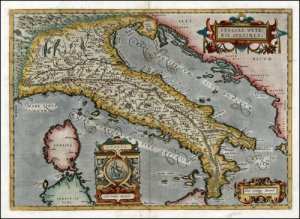
– how principalities are won and held and lost
– corrupt
– Charles V – sacks Rome 1527
– same year Machiavelli dies
– praise for the villains
– Cesare Borgia
– papal powers
– Julius Caesar – a ‘tyrant’
– Brutus was ‘good’
– princes – ‘exalted and maintained by God’
– ‘Ecclesiastical Principalities” chpt XI
– religion should have a prominent place in the State
– a social ‘cement’
– ‘Church has kept and still keeps our country divided’ – M
– ‘politicians must be cunning as a fox and fierce as a lion’ -M.
– in what way princes must keep faith?: – ‘when it pays to do so.’
– The ‘Discourses‘

– could have been read with approval by 17th century Liberal
– above all ‘a prince should appear to be religious’
– ‘seem’ to have virtue
– Montesquieu
– Lycurgus and Sparta constitution best
– ‘voice of the people is the voice of God’ – M.
– Liberty
– checks and balances
– ‘political thought of Greeks and Romans in their Republican day acquired an actuality in 15th century which it had not had in Greece since Alexander or in Rome since Augustus’ – BR
– ‘popular’ governments are ‘less cruel’, unscrupulous and inconsistent as tyrannies
– City States
– for considerations of stability it is wise to give more power to the people.’
– ‘success’ means: ‘the achievement of your purpose’
– purely scientific manner without regard for ‘goodness’ or ‘badness’, even for the Saints
– knavery
– the plain fact is: ‘right will prevail’
– concealed by slogans
– triumph of evil is short-lived
– desirable to present the appearance of virtue before the ignorant public
– those who seize power, can, by controlling propaganda cause their party to appear virtuous
– unscrupulous
– Cynicism
– if a man is unscrupulous his wisest line of conduct will depend upon the population with which he has to operate
– Machiavelli’s political thinking is somewhat shallow –BR
– i.e. Lycurgus and Solon
– not organic or evolutionary
– Lycurgus i.e. a ‘myth’
– Alexander VI and Julius II
– Renaissance Church shocked everyone but it was only north of the Alps where it shocked people enough to cause the Reformation
– American propaganda p.510
– Russia and Germany – modern Lycurgians
– Erasmus and More
– The ‘Northern Renaissance’
– More – ‘pious’
– Ecclesiastical reform
– despised ‘Scholastic’ philosophy
– both ‘deplored’ the Reformation (Proletarian Schism)
– dislike of anything ‘systematic’ in theology or philosophy characterized the reaction against Scholasticism
Erasmus (1466-1536)
– Rotterdam
– ‘cajoled’ into becoming a monk ( regretted it for the rest of his life)
– Paris
– Ancients vs. Moderns p. 513
– 1482
– Erasmus
– he hated supernatural, antiquated (Scholastics didn’t really like philosophy not even Plato and Aristotle)
– More and Collet encouraged him to do ‘serious’ work not just ‘literary trifles’
– learned Greek in order to do work on the Bible
– edited St. Jerome
– brought out a Greek Testament with a new Latin translation
– achieved it
– 1516
– discovery of ‘inaccuracies’ in the Vulgate
– was subsequently of use to the Protestants in controversy
– ‘In Praise of Folly’
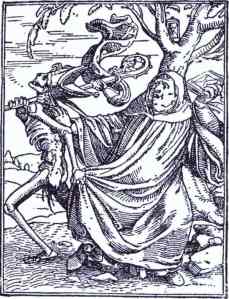
– (illustrated by Holbein)
– fiercely ridiculed
– monastic order he called ‘brainsick fools’
– Popes are not ‘spared’
– true religion? A form of ‘folly’
– the view set forth in Rousseau’s “Savoyard Vicar’
– ‘on earth these men (monks, priests) are feared for they know many secrets from the ‘confessional’ and often ‘blab’ them when they are drunk’
– Vicar of Savoyard i.e. – true religion: from the heart – not the head
– and all elaborate theology is superfluous
– essentially a rejection of Hellenic intellectualism by the ‘sentimentalism’ of the North
– London and Cambridge
– a considerable influence on English humanism
– English public schools, until recently, exactly what he would have wished – a thorough grounding in Latin and Greek, not only in translation, but in verse and prose composition
– science was thought ‘unworthy’ of a gentleman, Plato should be studied – but not the sublects which Plato himself thought worth studying
– curiosity of Renaissance gradually becomes ‘science’
– colloquies
– Latin: the only ‘international’ language
– “Julius – Exclusus”
– comes down on the Catholic side
– Sir Thomas More (1487-1535)
– to Erasmaus Columbus was far less interesting than the Argonauts
– Carthusians practiced ‘extreme’ austerities
– contemplated joining the Order
– decided to become like his father, a lawyer
– 1504 – a member of Parliament
– he led the opposition to Henry VIII’s new taxes
– Henry VIII’s ‘Act of Supremacy’ declaring himself, not the Pope, head of Church of England 1514
– Proved under ‘very dubious testimony’ that he said Parliament could not make Henry head of Church of England
– convicted of High Treason
– beheaded 1535
– ‘Utopia’
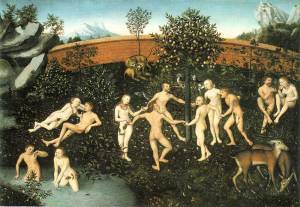
– all things held in common (as in Plato’s Republic)
– Raphael
– everyone in a ‘little house’
– common clothing
– surplus time off
– Communism and elected Democracy
– at the head a prince elected for life
– Patriarchal
– wasteland
– nothing is wasted
– eat at common halls
– man on one side woman on the other
– trade – for iron which they don’t have on the Island
– mercenaries
– there is divorce
– a store of gold and silver to pay mercenaries for themselves: no money
– almost all believe in god, the few who don’t are not accounted ‘citizens’
– Communism is constantly stressed
– for painful, incurable diseases the patient is advised to commit suicide
– bondmen
– unmolested
– preaching was in the tradition of many religious movements
– University is essential to happiness
– what is said about war, about religious toleration, against wanton killing of animals (i.e. hunting) and in favour of a mild criminal law (no death penalty for theft) extremely Liberal
– life would be intolerably dull – BR
– the Reformation and Counter Reformation chpt. V
– the rebellion of less civilized countries against the intellectual domination of Italy
– revolt was political as well as theological
– authority of Pope rejected
– ‘tribute’ ceases to be paid
– Reformation – Germany
– Counter Revolution – Spain
– Counter Revolution against the Intellectual
– and moral freedom of Italy
– power of Pope not diminished but enhanced
– moral indignation against the Italians had much to do with the Reformation – unfortuneately it involved also the intellectual repudiation of what Italy had done for civilization
– Iachimo in
– “Cymbeline”

– how many of Shakespeare’s villains are Italian? i.e. Iago
– St. Augustus’s relation of soul to God
– diminished power of Church
– abolished purgatory and Indulgence
– Papal revenge
– three great men of the Reformation
– Luther, Calvin and Loyola
– pre-destination
– Protestant divines (at least at first) were as bigoted as Catholic ones, but had less power so were less able to do harm
– Luther was willing to let princes (protestant ones) to be head of Church in their Country
– i.e. Henry VIII and Elizabeth
– Germany, Scandinavia, and Holland (post – Spain) led to increase in power of Kings
– Cromwell and rise of Liberalism i.e. religious tolerance
– Jesuits – influential
– Far East missionaries
– Pascal
– more lenient – except towards heresy
– Descartes p.524
– some Protestants just as unwilling to submit to King – i.e. Anabaptists
– Jesuits concentrated on education of the young
– Jesuits – warfare against heresy
– after Thirty Years War
– disgust of theological warfare
– disciplined, able
– completely devoted to the cause
– skillful propagandists
– believed in ‘free will’, opposed pre-destination
– ‘salvation’ – not by faith alone but faith and ‘works’
The Rise of Science
– sixteenth century is philosophically barren – BR
– seventeenth century – greatest names and marks the most notable advance since Greek times -BR
– Newton p.525
– Descartes, in a sense, the founder of Modern Philosophy
– ‘almost everything that distinguishes the modern world from the earlier centuries is attributable to Science, which achieved its most spectacular achievements in the 17th century’
– four Great men:
– Copernicus, Galileo, Kepler and Newton
– Copernicus (1471 – 1543)
– a Polish ecclesiastic
– professor of Mathematics
– Rome and then Frauberg
– sun at center of universe
– earth has a two-fold rotation: diurnal and annual
– Copernicus’ book ‘De Revolution ibus Orbium Celestrum’
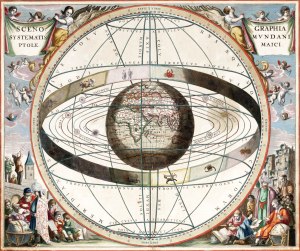
– Three Copernican Treatises, E. Rosen
– absence of stellar parallaxes til 19th century
– falling bodies not understood until Galileo
– scientific discoveries were ‘lucky’
– ‘accidents’ springing from superstitions as gross as those of the Middle Ages
– Burtt, ‘The Metaphysical Foundations of Modern Science’

– immense patience in observatons and great boldness in framing hypotheses
– Aristarchus p. 528
– two great merits:
– a) the recognition that what had been believed since ancient times might be false
– b) that the test of scientific truth is patient collection of facts combined with bold guessing as to laws binding the facts together.
– Revolutionary effect in ‘cosmic imagination’
– Luther: ‘Joshua commanded the Sun to stand still and not the earth’
– people give ear
– Tycho Brahe
– distant new stars and comets
– Like everything else Aristotle proved to be an obstacle to progress
– Brahe made a star catalogue
– Keplar (1571 – 1630)
– his observations were invaluable
– The important aspect of Protestantism was schism, not heresy
– Churches everywhere opposed every innovation that made for an increase of happiness or knowledge here on earth
– Keplar – patience without much in the way of genius
– three laws of planetary motion
– Mars p. 530
– planets move in ellipses
– as observation grew more exact, no system of epicycles would exactly fit the facts
– the substitution of ellipse for circles involved the abandonment of the aesthetic bias which had governed astronomy ever since Pythagorus
– it seemed obvious that a perfect body must move in a perfect figure
– Many deep-seeded prejudices had to be discarded before Keplar’s first Law could be accepted
– Galileo
– the greatest of the founders of modern science (except maybe Newton)
– third law: average distance of planet from Sun
– same for all planets
– acceleration or change in velocity
– no ancient – not even Aristarchos of Samos had anticipated such an hypothesis (ellipses)
– metempsychosis
– Galileo (1564-1642)
– Founder of Dynamics
– ‘force’
– first law of motion
– law of falling bodies
– air pump 1654
– vacuum – acceleration of all objects is constant except in so far as resistance of air may interfere
– same whether objects big or small heavy or light
– feather and brick are equal, big pieces of lead, little pieces of lead
– velocity increases at a constant rate of 32 feet per second
– horizontal velocity will remain constant (apart from resistance opf air)
– and as added vertical velocity would grow according to the law of falling bodies
– When several forces or simultaneous – the effect is as if they acted in turn
– Galileo
– consequent course (of rocket i.e.) is a parabola
– the parallelogram
– measure distance of ship
– measure distance of you (on the ship)
– add together for result
– stone retains velocity of rotation which before it was dropped it shared with earth
– Galileo corresponds with Keplar
– Galileo makes his own telescope
– Leeuwenheuk the Dutchman
– the Milky Way consisted of stars
– the phases of Venus
– satellites of Jupiter
– Sidera midicea
– in honor of his employers
– Newton – achieved final and complete triumph for which Copernicus, Keplar and Galileo had prepared the way
– thus he deduced everything in planetary theory
– the motions of the planets and their satellites, the orbits of comets, the tides
– microscopic 1590
– telescope 1608
– every body attracts every other with a force directly proportional to the product of their masses and inversely proportional to the square of the distance between them.
– Wolff, ‘A History of Science Technology and Philosophy in the sixteenth and seventeenth century’

– Newton – three laws of motion two dice to Galileo
– Guericke – air pumps, clocks – greatly improved
– Gilbert (1540 – 1603)
– the magnet
– Harvey
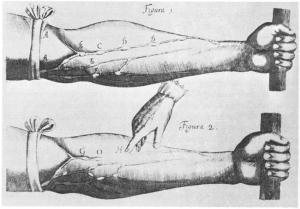
– circulation of blood
– Leeuwenheuk – spermatozoa and bacteria
– Boyle
– Boyles Law : ‘in a given quantity of gas at a given temperature, pressure is inversely proportional to volume
– Napier – logorithms
– Descartes – Co-ordinate geometry
– Liebniz – differential and integral calculus (the instrument for almost all higher mathematics
– outlook of educated man – completely transformed
– Haley
– physics, laws of motion, views of life with motion, soul, the planets as gods
– God as the unmoved mover –First Cause
– i.e. God ‘hurled’ the planets into motion – all this brought into controversy
– the ‘skepticism’
– then pretty much rejected
– laws of motion changed this
– conception of man’s place in Universe
– universe found to be ‘vast’
– earth is now just a ‘pinprick’
– in now seemed unlikely that all this immense apparatus was all designed for the good of a certain small creature on this pinpoint
– triumphs of Science
– revived human pride
– damnation – not Newton though he was an Arrian
– western Europeans
– despite this newly discovered astronomical insignificance
– modern theoretical physics
– ‘force’ – found to be ‘superfluous’
– considered themselves ‘fine fellows’, instead of ‘miserable sinners’
– (though they still proclaimed themselves to be on Sundays)
– Quantum mechanics p. 540
– Foucault’s pendulum
– by most physicists motion and space are merely ‘relative’
– amalgamation of space and time-‘spacetime’
– considerably altered our point of view since Galileo and Newton
– Francis Bacon
– founder of modern inductive method
– pioneer in the attempt at logical systemization
– scientific procedure
– 1618 Lord Chancellor accused of taking bribes
– Tower of London for four days
– enters Parliament at 23
– Advisor to Essex (abandoned him)
– Compelled to abandon public life and to spend the remainder of his life writing important books
– morality of an average man
– died of a chill –caught while experimenting on refrigeration by stuffing chickens full of snow
– emphasized the importance of induction as opposed to deduction
– parable of induction by simple enumeration. 543:
– all Williams’ Williams’ (so far)
– goes home and it turns out there is one John Jones
– his most important book ‘The Advancement of Learning
– knowledge is power
– To give mankind mastery over forces of nature by means of scientific discoveries and inventions
– prerogative – instances
– he despised the syllogism
– under-valued mathematics
– anti-Aristotlien
– pro Democritus
– observational data
– ‘unfair to the ants’ p. 544
– Idols
– 1) Idols of the tribe
– 2) idols of the market place
– 3) idols of the theatre
– 4) idols of the school
– he writes philosophy like a Lord Chancellor – BR
– Harvey, ‘On Circulation‘
– as a rule the framing of a hypotheses the most difficult part of scientific work
– John Stuart Mill
– part played by deduction is greater than Bacon supposed
– importance of mathematics in scientific investigation
– the problem of induction remains unsolved to this day –BR
Hobbes (1588 – 1679)
– Empiricist and admirer of mathematical method – in this respect Hobbes merit is great – BR
– Hobbes, ‘The Leviathan‘

– theory of State
– translated ‘The Medea‘ by Euripedes into Latin iambics at age of fourteen
– Oxford
– his pupil (Lord Hardwicke) becomes his patron until his death
– ‘Royalist’ in the extreme
– the Petition of Right 1628
– translated Thucydides to show the ‘evils of democracy’
– visited Galileo in 1636
– in 1637 returned to England
– Lord Herbert of Cherbury
– lived in Paris – studied Euclid
– became tutor to his former tutors son
– controversy with Bishop Branhall
– a rigid determinist
– The Plague
– The Great Fire
– his reputation abroad much greater than in England
– Thoroughgoing materialism
– life : ‘ nothing but a motion of limbs’
– man as an ‘individual
– nominalist
– psychology
– dreams p. 549
– thoughts – not arbitrary, but governed by laws
– absurdity
– self – contradiction
– reason is not innate
– anti – Plato
– the religions of the Gentiles came of not distinguishing dreams from waking life
– geometry: the one ‘true’ science
– an out & out nominalist
– ‘true’ and ‘false’ are ‘attributes of speech’
– endeavor, desire – aversion
– laughter
– fear of ‘invisible’ power
– bees – agreement is natural
– men- need a covenant
– ‘covenants without the sword are ‘mere words’”
– a commonwealth
– the ‘Leviathan’ is a ‘mortal’ god
– Hobbes prefers a monarchy or at least an ‘unfettered’ rule
– even the worst despotism is better than anarchy
– rebellion is wrong
– sovereign
– Great Council of Venice
– House of Lords
– Liberty – absence of implement to motion
– David and Uriah
– criticize
– St. Ambrose and Pope Zachary
– a man has no duty to a sovereign who has not the power to protect him i.e. Charles II
– duty of submission
– right of self – preservation (absolute)
– right of self-defense (even against Sovereign)
– a man has a right to refuse to fight when called on by government
– no trade unions or political parties
– teachers only teach what sovereigns think
– sovereign thinks ‘right’
– right to punish a ‘natural right’
– the Christian commonwealth
– there should not be much difficulty in teaching people to believe in the rights of Sovereign – after all – have they not been taught to believe in Christianity and even in transubstantiation which is ‘contrary to reason’
list of reasons for dissolution of Commonweath
– Hobbes hates Church of Rome because it puts spiritual power above the Imperial
– the ‘Power of State’ must be ‘absolute’
– monarchy of France and England
– anarchy – checks and balances i.e. Locke
– America: tendency towards increase in power of Administration
– Germany, Italy Russia and Japan
– present day after the War
– first really modern writer on Political Theory
– free from superstition
– clear and logical
– ethics (right or wrong) are intelligible
– State must increase opposition to become harder and harder
– Anarchy
– i.e. France 1789
– Russia 1919
– Hobbes fails to realize the importance of clashes between the classes i.e. i.e Marx
– to improve the fighting quality of separate states withouit having any means of preventing war is the road to universal destructio
Descartes
– founder of Modern philosophy
– edifice
– not since Aristotole…
– a ‘new’ self-confidence
– resulted from progress of science
– a ‘freshness’ in his work had not been found since Plato
– he writes not as a teacher but as a discoverer and explorer
– anxious to communicate what he has found
– an extraordinarily excellent ‘style’
– sold his inherited land and invested the money
– obtaining an income of six or seven thousand francs a year
– a ‘sincere’ Catholic
– The ‘stove’ story p. 559
– Dutch army, Russian army, French army
– moved to Holland
– did not publish because it contained two heretical doctrines : the earth’s rotation and the infinity of the Universe -BR
– ‘Le Monde’ – a great book says Russell
– ‘Discourse de la Methode‘
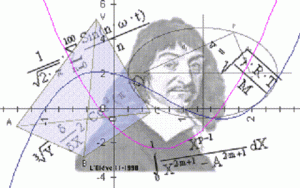
– The importance of Holland in 17th century
– University of Leyden forbade all mention of him
– Queen Christina of Sweden a treatise on love and a work on the passions
– in philosophy and mathematics his work was of supreme importance in geometry : inventor of co-ordinates
– co-ordinate geometry
– use of co-orinates i.e. the determination of the postion of a point in a plane by its distance from two fixed lines
– his most important contribution to mathematics (not his sole one)
– vital spirits – ‘soul’ and ‘body’
– total quantity of motion in Universe is ‘constant’ (proved false)
– animals are ‘automata’
– ‘men’ are different – they have a soul (resides in the peneal gland)
– Cartesian School
– All physical action is of the nature of impact
– Souls – ‘affects’
– Geulineaux’s ‘theory of two clocks’
– related to mind (one clock) and body (the other clock)
– each wound up by the other
– God to keep time with the other
– a dictionary where all cerebral occurrence could be translated into a mental occurrence
– an ideal calculator, could calculate the cerebral occurrence by the laws of dynamics and infer the commitment
– mental occurrence by means of the dictionary
– mind and matter – two substances
– they were so dissimilar that interaction seemed inconceivable Geulineaux’s explained the appearance of interaction while denying it’s reality
– method of Cartesian doubt
– we resolve to make himself doubt everything that he can imagine to doubt
– 1) skepticism of the senses
– even in regard to arithmetic and Geometry
– however, doubt is possible
– gods and/or demons causing him to make mistakes. Traps for my ‘credulity’
– it may be that all things I see are only illusions
– the kernel of Descarte’s philosophy contains what is most important in his philosophy
– ‘While I wanted to think everything false, it must necessarily be that I who thought was something and remarking that this truth ‘I’ think therefore I am’ was so solid and certain that all the most extravagant suppositions of the sceptics were incapable of upsetting it. I judged that I could not receive without scruple as the 1st principle of the philosophy that I sought. P. 564
– ‘All things that we conceive very clearly and very distinctly are ‘true’’
– ‘knowledge of external things,must be of the mind
– subjectivism
– to regard matter as something knowable (if at all) by inference by what is known of mind
– decriptions and categories of thinking
– the mind must think, even during deep sleep
– a piece of beeswax p.565
– different kinds of ‘ideas’
– 1) those that are innate
– 2) those that are foreign
– 3) those that are invented by me
– a certain ‘inclination’ to believe it
– dreams are involuntary
– though they come from within
– the method of ‘critical doubt’
– was of great philosophical importance
– Russell re-phrases Descartes’ famous saying:
– “There are thoughts”
– two parallel but indispencsable worlds that of mind and that of matter
each of which can be studied with a reference to one another
– ‘critical doubt’
– the decision to regard ‘thoughts’ rather than external objects as the prime empirical certainty was very important
– Thirst and sorrow p.568
– physical ‘laws’
– difficulty of ‘free will’
– inconsistency made him the source of two important but divergent schools of Philosophy
Spinoza (1634-1677)
– the noblest and most loveable of the great philosophers
– born a Jew
– excommunicated him
– his family had come to Holland to escape the Inquisition
– ethically he is ‘supreme’
– made his living by polishing lenses
– at 43 died of Phthisis
– biblical criticism
– Politics
– Political theory only
– assigned much later dates to various books of the Old Testament
– politically is in the main derived from Hobbes
– in a state of nature there is no right or wrong – consists of breaking the law
– the sovereign can do no wrong
– Church subordinate to State
– opposed to all rebellion
– wrote a treatise on the rainbow
– Ethics and distinct matters
– 1) metaphysics
– 2) Psychology
– 3) Ethics
– A material and deterministic physics
– only one substance – God
– God or Nature
– a complete and undiluted pantheism
– everything is ruled by an absolute logical necessity
– in god who alone is completely real, there is no negation
– in the main –concerned with religion and virtue
– reverence and a life devoted to the good
– Spinoza’s complete rejection of ‘free will’
– no negation in God (not orthodox)
– Euclid
– The Scholia – to maintain that everything could be demonstrated
– for Spinoza, the geometrical method was necessary and was bound up in the most essential part of his doctrine
– Spinoza’s – theory of emotions
– eternal and infinite ‘essence’ of God
– the passions distract and obscure our intellectual vision of the whole
– of human bondage
– of human freedom
– most interesting – BR
– believes all wrong action is due to intellectual error (like Socrates or Plato)
– ‘he who repents of an action is doubly wretched or infirm’
– no virtue can be conceived as prior to this endeavor to preserve one’s own being’ the minds highest good is the knowledge of god and the minds highest virtue is to know god
– ‘the human mind has an adequate knowledge of the eternal’
– in so far as a mind conceives a thing under the dictate of reason, it is affected whether the idea of a thing is past present or future
– sub-species aeternitatis
– under the aspect of eternity
– what will be will be
– the future is as unalterably fixed as the past
– this is why hope and fear are condemned
– he not only believed his own doctrine, but he practiced them
– we are a part of a universal and we follow her order, nature
– the ‘intellectual’ love of god p.574
– love towards god must hold the chief place in the mind
– understanding that all things are necessary, helps the mind to acquire power over the emotions
– ‘logical monism’ – Spinoza’s metaphysic
– self-evident axioms
– logical necessity of events 2+2 =4
– ‘the whole of this metaphysic is impossible’ – BR
– in ethics – Spinoza is concerned to show how it is possible to live nobly even when we recognize the limits of human power – BR
– the Christian principle does not inculcate calm, but an ardent love even towards what is worst in men
– revenge p. 579
– no revenge & mental health
– insanity
– torture
– Spinoza’s life dominated by a single person is a narrow life, incompatible in every kind of wisdom
– on revenge: not the best reaction – BR
– a help towards sanity and an antidote to the paralysis of utter despair
Leibniz
– (1646 – 1716)
– was one of the supreme intellects of all time, but as a human being he was not admirable p.581
– Malebranche
– the infinitesimal calculus
– same time as Newton
– discovered a bit earlier – BR
– the House of Hanover
– the History of Brunswick
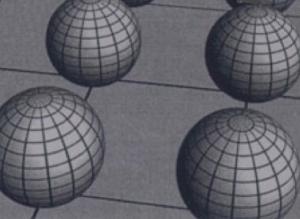
– ‘Monadology‘
– the notion of ‘substance’
– god & mind & matter
– denies reality of matter and substitutes the ‘infinite family of souls’
– an infinite number of substances
– monads
– each monad is a soul
– pre-established harmony
– an infinite number of clocks
– monads for non-hierarchy
– one dominant monad called the soul
– identity of indiscernibles
– free-will
– principle of sufficient reason
– Arnauld thought of it as shocking
– the god of the theologians from Aristotle to Calvin is ‘intellectual’
– 1) the ontological argument
– distinction between existence and essence
– essence doesn’t imply existence
– The Scholastics
– Hamlet p. 586
– St. Anselm and Descartes
– Leibniz – proof of the existence of God p.586
– Kant – existence is not a predicate
– Russell’s refutation of his ‘theory of descriptions’
– An uncaused cause of everything (this is obviously God)
– i.e. the first cause
– God’s sufficient reason
– Aristotle’s ‘unmoved mover’
– the arguments from the eternal truths
– gist of it is – truths are part of the constants of the mind, & that an eternal truth must be part of the content of an eternal mind
– the argument from pre-established harmony
– the argument from design
– being good, god decided to create the best of all possible worlds p.589
– Manichean might retort that this is the worst of all possible worlds – in which the good things that exist serve only to heighten the evils
– the conception of substance derived from logical category of subject and predicate
– the ‘notion’ of Socrates (all the predicates about him)
– Leibniz – a firm believer in the importance of logic
– Mathematical logic would have been enormously important had he published it
– generalized mathematics characterizing universals
– founder of mathematical logic
– if only he would have publicized it
– thinking could be replaced by calculation
– two philosophers in dispute
– ‘let us calculate’
– an analytic proposition
– necessity
– every soul is a world apart
– the individual notion incompatible with Christian
– doctrine of sin and free will
– there is no a priori, reason why? ‘one thing should exist rather than another
– compossible
– inhabited by essence all trying to exist
– largest growth of compossibles wins
– metaphysical perfection
– quantity and existence
– better to exist than to not exist – Leibniz (Russell comments : ‘I never understood this’)
– logic alone could decide whether a given possible substance would exist or not
– a ‘dull’ writer’ – BR
– Liebniz : the best example of a philosopher who uses logic as a key to metaphysics
– drawing inference from syntax to the real world
– A defective logic – BR
– a pioneer in mathematical logic of which he perceived it’s importance as no-one else
– monads cannot be regarded as windowsills
– two kinds of space
– one subjective – in perception of each monad
– one objective – consisting of the assemblage of points of view of the various monads
– Physics
– monads ‘point of view’
Philosophical Liberalism chpt. XII
– Russell’s reciprocal interaction between great men and ideas and times
– the development of Liberalism
– England and Holland
– right of private property
– rejected ‘Divine Right of Kings’
– opposed to everything medieval
– brief synopsis p. 597
– exciting enterprise of commerce and science
– East India company and Bank of England
– theory of Gravitation
– circulation of blood
– the ‘highest hopes’
– individualism
– first branch : Protestantism
– the battlefield
– a method was needed to reconcile intellectual and ethical individualism
– with ordered social life
– this was one of the main problems which liberalism sought to solve
– not by authority but by arguments
– Starting point : One’s own existence
– Girondins
– Liberalism – greatest success in America
– a new movement
– the antithesis of liberalism
– begins with Rousseau acquires strength from Romantic Movement & principle of Nationality
– from intellectualism of Liberalism to passion and anarchic aspests of individualism
– ‘Cult of the Hero’ as in Byron it’s Poet
– Carlyle and Nietzsche
– the splendor of war in defense of liberty
– Locke – the most influential though by no means most profound of modern philosophers
– King vs. Parliament
– Cromwell as Lord Protector
– Parliament = Presbyterians and Independents
– Presbyterian State Church but absolute Bishops
– no State Church or interference from central ecclesiastical government
– army – Independents
– Cromwell dismisses Parliament
– Altogether for rest of his life
– English parliament was a military tyranny
– Habeas Corpus – deprived Crown of the power and arbitrary arrest
– Cromwell and Charles II
– Kings would be made to suffer at the hands of their subjects
– James II
– the Stuarts
– France
– the king must go
– achieved without a shot
– The ‘Act of Toleration‘
– Anti –French until defeat of Napoleon
– The new king, being dutch – commercial and theological wisdom
– Bank of England
– Locke’s Theory of Knowledge
– ‘Essay Concerning Human Understanding‘

– his most important book
– 1632 -1704
– apostle of The Revolution of 1688
– the most moderate and most successful of all revolutions (Locke was 55 -61)
– his father was a Puritan
– fought for Parliament during civil war
– ‘Treatise on Government‘
– became a physician
– the founder of ‘Philosophical Liberalism’
– as much as of ‘Empiricism’
– Descartes – much influenced by
– Theory of Knowledge
– both in practice and theory
– views were held by the most vigorous and influential politicains and philosophers
– Voltaire and French philosophes and moderates
– American, British and French
– Locke’s theory primary and secondary qualities
– matter in motion
– basis of accepted theory of light and electricity
– lack of dogmatism
– truth is hard to ascertain
– rational man will hold his opinions with some measure of doubt
– religious toleration
– laissez-faire economics
– revelation – must be judged by reason
– thus reason in the end remains supreme
– things we know with certainty
– investigation into propositions which it is wise to accept in practice
– only have probability not certainty
– in their favor (his theories)
– the grounds of probability
– 1. Conformity with our experience
– 2. Testimony of others
– persuasion
– derived from experience
– founder of empiricism
– all our logic (with exception of logic and mathematics)
– his philosophy is piecemeal
– not statuesque i.e. contemptuous of metaphysics
– there are no innate ideas or principles from experience
– perception – new and revolutionary even Descartes and Liebniz had taught that most of our most valuable knowledge is not derived from experience
– thoroughgoing empiricism
– bold innovation
– verbal
– extension and solidity
– monstrosities p.611
– predates Darwin
– empiricism and idealism problems
– how we have knowledge of other things than ourselves and also the operation of our own mind are unsatisfactory
– of the names of substances
– is concerned to refute the Scholastics doctrine of ‘essence’
– inconsistent
– only conversant
– ‘essence’ purely verbal
– three kinds of knowledge and real existence
– is demonstrative and our knowledge of things present – sense of sensation
– Locke assumes it known that certain mental recurrences which he calls sensations have causes outside themselves that these causes resemble the sensations which are their effects
– 1) Intuition
– 2) Reason
– 3) Sensation
– Hume
– no idea without an antecedent
– impression
– wildly paradoxical
– more or less ‘wrong’ – BR
– ethical doctrine ‘interesting’- BR
– happiness , pleasure
– government of our own passions
– How men act and how they should act p.613
– No one has yet succeeded in inventing a philosophy at once credible and self-consistent
– Based on rewards and punishment in the next world
– A ‘prudent’ pleasure seeker will therefore be virtuous
– Bentham
– free thinker
– substituted human as lawgiver rather than god
– pleasures lose their attractiveness and pains their terrors in proportion to their distance in the future p.614
– Private and public
– In the long run…
– In a manner to promote the general good
– ‘The Highwaymen’
– annexed
– violation
– a triangle has three angles equal to the right one
– no gov’t allows for absolute liberty
– a concept of goodness antecedent to God’s degcrees
– almost all philosophers in their ethical systems, first lay down a false doctrine
– in a nutshell
– revolution of 1688
Locke’s Political Philosophy
– two treatise on Government
– criticism of hereditary powers
– Locke’s ‘Treatise on Government’
– criticism of Filmer’s ‘Patriarch’ and ‘Natural Power of Kings’
– Sir Robert Filmer
– Noah, Ham, Shem, Japheth,
– Africa, Asia, Europe
– the Divine Right of Kings
– God bestowed kingly powers on Adam
– the desire of Liberty
– Sir Robert regards as ‘impious’ Middle Ages Church vs. State
– State – armed forces
– Church – cleverness and sanctity
– The kings are ‘heirs of Adam’
– Filmer e.g. the authority of father over his children
– modern mind: parental power should cease completely when kid reaches age of maturity (18 -21)
– modern mother ‘at least’ the equal of father
– Japan – similar to Filmer’s theory
– Mikado –direct descendent of Sun God
– Theory not repugnant to human nature
– i.e. Egypt, Mexico, and Peru (pre-Spanish Conquest)
– also: Stuart England
– Henry VIII – head of Church of England
– Church of Scotland a class of ideas and beliefs
– In England he had to believe in Bishops and reject Calvinism in Scotland he had to reject Bishops and believe in Calvinism
– Locke had no trouble demolishing Filmer’s argument
– Emperors of hereditary principle now replaced by Dictators who do not need a foundation of hereditary Dynasty
– all this in most countries is very recent and has much to do with the rise of Dictators
– there is one great institution which had never had any hereditary element; namely: The Catholic Church
– new dictatorships
– government will gradually develop a form of government analogous to the Catholicism
– American Corporations and their Power p. 622
– curious political dynasties have disappeared but economic Dynasties survive
– Locke
– law of nature
– antecedent to all human government i.e divine command
– American Indians p. 623
– i.e. California land granted by King of Spain
– heirs have ‘just’ title to his grants
– perhaps in future this will seem as fantastic as Filmer’s now does
– Aquinas
– Tawney’s ‘Religion and the Rise of Capitalism’
– lenders and borrowers
– Eventually, Protestants, Calvin and the Catholics all sanctioned ‘usury’
– laissez-faire and right of man derived from ‘natural law’
– poor Lord Monboddo was a laughing stock
– Puritans and rise of free enterprise
– House of Commons 1604
– virtuous anarchist
– ‘thou shalt not kill’ part of natural law, but the ‘rule of the road’ is not. P.625
– equality – yet – freedom to advance one’s self
– Declaration of Independence combined with rights of ownership of land
– a ‘golden age’ in remote past – Biblical as well as Classical myths
– pre-Darwin on the ‘bad’ or ‘savage’ past
– perfect Freedom
– Natural Law and criminals p. 625
– government formed for the protection of a body politic
– perhaps the law of nature must be regarded as having a ‘wider’ scope than the ‘state’ of nature
– captives in a just war – slaves – says Locke
– property is very prominent in Locke’s Philosophy
– law of nature sans theology and prior to law and government classes of acts by A against B in justifying in retaliating against A i.e. defence against a murderous assault – himself, his wife and children and any member of the general public
– retaliation and Natural Law
– also a right to defend his property
– when is war ‘justified’?
– answer is purely ethical and not legal – it must be answered (in the same way an individual in a state of anarchy)
– cases of justifiable murder are imaginable but rare & do not afford an argument against the illegality of murder
– Locke’s theory needs a theological basis
– finds it in the Bible and God
– Law of State – proof of self – defence
– Utilitarian doctrine that right acts are those that do the most to promote the ‘general happiness’
– ab initio
– examines doctrine from point of view of its practical effect, he cannot condemn it ab ignition as contrary to his own ethic
– In 17th century two types of theory as to the origin of government:
– ‘Divine Right of Kings‘ and – ‘The Social Contract’
– Saint Thomas Aquinas p. 630
– tyranny
– Hobbes
– contract for citizens to hand over all power to Sovereign, says Locke
– the government is a party to the ‘contract’
– more or less ‘Democratic’
– limited by the view (implied rather than expressed) that those who have no property are not to be reckoned ‘citizens’
– government should not tbe absolute that the judiciary should be independent of the executive
– beginning of political society, says Locke, depends upon consent of individuals to join into and make one society
– in political society men surrender their right to Locke’s ‘Natural Law’
– argument against Absolute Monarchy
– pole cats, foxes and lions…p. 631
– civic society: rule of majority
– almost Democratic – exclusion of women and the poor
– Jews p. 631
– unclear in Locke as to whom will be the judge of what the ‘general good’ is
– obviously the government will decide in its own favor
– Locke’s worship of property and the absurd lengths to which Locke is driven
– The ‘electorate’ Locke would say, would be the judge
– preservation of their property
– military? This poses difficulties
– taxation
– the ‘mythical’ social contract – BR
– the ‘divine right’ of majorities – BR
– could become as tyrannicasl as the ‘divine right of Kings’
– as a legal ficton to justify government the theory of the ‘social contract’ has ‘some’ meaning of truth
– Locke : a champion of capitalism
– a half truth, says Russell
– a more nearly ‘Socialist’ outlook
– Locke and the subject of Property
– Aristocrats – rent or half of a peasant income
– France, Italy, England
– further East – Russia and Prussia
– serfs worked for landowners – had no rights
– ended by French Revolution and Russian Revolution
– Serfdom abolished by Napoleon conquerors and in Russia in the Crimean War
– in both countries aristocrats retained their lands and estates
– Henry the VIII and Cromwell
– enclosure of Commons
– Industrialism p. 639
– in England – House of Parliament ruthlessly used the legislative power to enrich themselves while thrusting agricultural workers down to the verge of starvation
– Lloyd George’s taxation
– aristocrats compelled to part with most of their rural property
– Soviet Government substituted collective farming rather than peasant proprietorship
– the Labour Theory p. 635
– of value are Marx’s and Ricardo’s
– Lockean
– true ‘sin’ is that of speculator or middleman who snatches private gain by the exploitation of public
– American Indians p. 636
– he thinks only of agriculture as according to his day
– the true descendents of the doctrine of Aquinas is the Labour Theory of Value – The Last of the ‘Schoolmen’ was Karl Marx – BR
– 9/10ths of value is due to labour
– of the other tenth? he says nothing
– peasant proprietorship (as Locke favors) is inapllicable to such things as large scale mining
– gold and diamonds and plums
– the imperishable character of precious metals
– Ford cars – the production of – how is anyone to determine the value of the labour you have put into production?
– Legislative, Executive, Judicial
– Liberalism
– to prevent abuse of Power
– the principle that a man has the right to the produce of his own labour is ‘useless’ in an industrial civilization – BR
– in an abstract and academic way he seems to regret economic equality i.e. Ford Cars)
– Locke was undoubtedly impressed by the gains of civilization that was due to rich men – chiefly as patrons of arts and letters
– force, military strength
– survival of the fittest; p. 638
– the belief that any honest man can know what is just and right fails to consider strength of party ‘bias’ or for the difficulty of establishing a tribunal – BR
– Power & Justice & Law
– fighting and victory to the better cause – God’s wish
– Heaven p.638
– Locke says nothing of the judiciary in cases involving Party it has merely substuted the judges prejudices for the kings
– checks and balances
– checks and balances originated in England to limit the power of the King
– English system is (of course) totally contrary to Locke’s principle’s
– Montesqieu p.638
– 1811 Great power given to Chamber of Deputies
– the United States Supreme Court
– Parliament, House of Commons and King
– Locke’s political philosophy was useful and adequate until the industrial revolution
– United States
– Locke’s principle of division of Powers has found its fullest application in the political sagacity of the U.S.
Our age is one of organization, and its conflicts are between organizations not between separate individuals
– the Prestige
– Locke’s influence chpt XV p641
– a new international ‘social contract’ is needed
– Locke vs. Descartes and Kant
– 1st -Berkely and Hume
– 2nd – The French Philosophes (not the Russian School)
– 3rd – Bentham and Philosophical Radicals
– 4th – Marx
– Marx’s system is ‘eclectic’, says Russell
– the ‘prestige’ of Newton
– French intellectuals regarded England as the home of freed, and therefore ‘pre-disposed to Locke
– Hume – lived in France
– chieftains transmitters of English influence to France was Voltaire
– in Germany, the newer empirical method was held responsible for the horrors of the Revolution
– Shelley’s “Necessity of Atheism’ is full of Locke’s influence
– Kant – an opposition to French atheism
– Continental vs. British Philosophy
– Leibniz said a table was a ‘colony of souls’ p.642
– the difference in method
– the doctrine that every proposition must have a subject and a predicate
– Berkeley – a ‘whole new’ argument for existence of God
– Hume – in whom the new philosophy comes to completion , rejected metaphysics entirely
– Spinoza – two unreconciled views on ethics
– 1) agreement with Hobbes
– 2) the ‘good’ consists in ‘Union with God’
– Kant – there must be a god to secure justice in the hereafter
– Power – Nobles
– Kant and ethics – ‘supreme’
– Kant’s ethic is important, because it is anti-utilitarain, a priori, and what is called ‘noble’
– Locke and followers cut shy of large programmes
– tentative and experimental
– their opponents thought they could grasp this ‘sorry scheme’ of things entire and much more willing to shatter it to bits and then remold it nearer to the hearts desire
– they did not shrink from violence in pursuit of vast objectives, and they condemned love of peace as ‘ignoble’
– big business on a whole, dislikes war – BR
– enlightened self-interest did more to increase human happiness than was done by schools who despised it in the name of heroism and self-sacrifice – BR
Berkeley
– God –‘always perceives everything’
– Berkeley’s ‘denial of existence of Matter’ p. 647
– limerick by Ronald Knox:
there was a young man who said
‘God must think it exceedingly odd
if he finds that this tree continues to be
When there’s no-one about in the quad’
reply:
Dear Sir:
“Your astonishments odd:
I am always abut in the Quad
and that’s why the tree continues to be.”
Since observed by yours faithfully,
-God
– Berkeley an Irishman
– a fellow of ‘Trinity’ in Dublin
– Swift’s wife Vanessa left him ½ her property
– Bermuda – three years
– Rhode Island
– westward the course of Empire takes
– Berkeley, California named after him
– tar water
– ‘A New Theory of Vision’ 1709
– ‘The Principles of Human Knowledge’

– ‘The Dialogue of Hylas and Philonous‘ in 1713
– all reality is mental
– we perceive qualities, not things
– common sense says can there be a more manifest form of Scepticism, then to believe there is no such thing as matter
– apart from sensible qualities there is nothing sensible
– the reality of sensible things
– consists in being perceived
– the famous ‘lukewarm water test’ p. 649
– scientifically educated
– common sense
– pleasure and pain are mental
– i.e. taste or odours (pleasant or unpleasant)
– sound is only waves or wind
– yet certainly cannot cannot be heard without the mind
– that any idea should exist in an ‘unthinking substance’ or ‘exterior’ to all minds is in itself an evident contradiction
– the brain, being a sensible thing, exists only in the mind
– the ‘nephew/uncle’ analogy
– if something is an object of the senses, some mind is concerned with , but it does not not follow that the same thing could have existed without being an object of the senses.
– ‘there is a house which no-one perceives or conceives’
– ‘whether the proposition is true or not, I do not know, but I am sure that it cannot be shown to be ‘self-contradictory” – BR
– The ‘pebble argument’ p.653
– The ‘logical necessity argument’
– so far as logic is concerned , there is no reason why there should not be
colors where there is no eye or brain.
– ambiguity of the word ‘pain’. It may mean the painful quality of a sensation, or it may mean the sensation that has this quality – BR
– Berkeley assumes here and everywhere that what does not inhere in matter must inhere in a mental substance, and that nothing can be both mental and material. – BR
a camera p. 654
the ‘camera argument’
the primary qualities – Extension, Figure, Solidity, Gravity, Motion and Rest
Russell – things as we know them are bundles of sensible qualities – i.e. a table, visual shapes, hardness, the noise it emits when rapped, and its smell
Russell – ‘contiguities of experience’
bundle of qualities
what do we mean by ‘perceiving’?
memory – more or less peculiar to the phenomenon that we naturally call mental, combined with habit
‘a burnt child fears the fire’
‘a burnt poker does not’
the waters course – we might almost say it ‘perceives’ the rain by which it is dispersed
habit and memory when described in physical terms, are not wholly absent in dead matter, the difference in this respect, is only of degree
‘percepts’
faced with question- Can we, from our own percepts, infer any other events?
– Russell maintains -four positions are possible:
1) deny totality the validity of all inference from my present percepts and memories to other events
2) solipsism : allows some inference from my percepts but only to other events in my own biography
3) That it is possible to make inferences to other events analogous to those in our own experience and that therefore, we have a right to believe that there are for instance, colors seen by other people but not by ourselves or toothaches felt by other people, pleasure and pains that but that we have no right to infer events experienced by no-one forming any part of mind.
4) that of common sense and traditional physics according to which there are, in addition to my own experiences, and other people’s – also events which no-one experiences – for example the furniture in my bedroom, when I am asleep and it is pitch-dark.
– a priori
– pragmatic
– mind and matter definition: as what satisfies Russell’s ‘equations of physics’… p. 658
– mind some group of structure of events i.e. memory, image memory – chains of events backwards and forwards
– a group of events, some events may be neither mental nor material and other events may be both
Hume p. 659
– one of the most important of philosophers
– ‘Treatise on Human Nature’
– written while he was in France
– logical conclusions to the empirical philosophies of Locke and Berkely
– ‘Dialogue Concerning Natural Religion‘
– left unpublished during his lifetime
– met Rousseau
– famous quarrel with him
– first part – distinction between ‘impressions’ and ‘ideas’
– ‘Essay on Miracles’
– we can imagine ‘winged horse’
– memory and imagination
– of abstract ideas
– suffers from ignoring vagueness
– Hume banished the conception of ‘substance’ from psychology as Berkeley had banished it from physics
– the ‘self’ nothing but a ‘bundle of perceptions’
– in this matter of ‘ego’ Hume made an important advance on Berkely
– seven kinds of philosophical relations
– most important part of ‘Knowledge and Probability‘
– Hume is concerned with understanding knowledge
– i.e. all our knowledge of the future
– result was a challenge to philosophers
– has still not been adequately met – BR
– resemblance, identity relations of time and place – proportion in my quantity and number
– degrees in any quality
– contrariety, and causation
– seven kinds of philosophical relations
– 1) resemblance
– 2) identity
– 3) relations of time and place
– 4) proportion in quantity or number
– 5) degrees in any quality
– 6) contrariety
– 7) causation
these may be divided into two kinds:
a) those that depend only on the ‘ideas’
b) those that can be changed without any change in the idea of the first kind are:
A) 1) resemblance 2) degrees in quality 3) contrariety 4) proportion in quality and number
B) 1) identity 2) relations of time and space 3) causation
– algebra and arithmetic are the only sciences in what we can carry or a long chain of reasoning without losing certainty the statement
‘what begins must have a cause’ is not one that has any certainty
– a conjunction
– A & B
– always conjoined
– custom operating on the imagination
– ‘cause and effect’
– the modern ‘Philosophy of Causation’ begins with Hume
– Hume’s rejection of causation as the foundation of ground
– consequent in logic was a ‘breakthrough’
– what appears to us as a necessary connections among objects is really only coined from many
– the idea of these objects: the ‘mind’ is determined by custom
– the law of habit explains the existence of my expectation, but does not justify it
– expectation of taste of an apple
– perhaps the next time I see an apple I shall expect it to taste like roast beef
– psychological
– induction: a large and difficult subject
– 1) in causation there is no indefinable relaton except conjunction and succession
– 2) induction by ‘simple enumeration’ is not a valid form of argument
– A & B have frequently appeared together…..
– taking even our firmest expectations such as the sun will rise tomorrow, there is not a shadow of a reason for supposing them more
likely to be verified than not
– the disagreement
– the ‘two clocks’ of Descartes
– The repetition neither discovers nor causes anything in the objects but has an influence on the mind
– Hume allows that some certain relations can be perceived ‘to receive as reasoning any of the observations we make concerning identity, and the relation of time and place, since in none of them the mind can go beyond what is immediately present to the senses
– The expectations neither discovers nor causes anything, in the objects, but has an influence on the mind
– Question is: Do we or do we not, sometimes perceive a relation which can be called causal? Hume says no.
– His adversaries say yes.
– Physiology, chemistry and finally in physics p.669
– Psychology is different
– Volition and consequent act
– So far as the physical sciences are concerned, Hume is wholly right – BR
– Hume’s view that there is nothing in cause except invariable succession
– Hume would say there is no rational justification to expect an apple to taste like an apple and not roast beef
– That those instances of which we have had no experience resembles those of what we have had experience. P.670
– Hume’s subtitle of book: ‘an attempt to introduce the experimental method of reasoning into moral subjects
– Habit p.671
– Speculation as a pass-time
– The disastrous conclusion that from experience and observation nothing is to be learnt
– Hume’s philosophy, whether true or false represents the ‘bankruptcy of eighteenth century ‘reasonableness’ – BR
– It paralyses every effort to prove one line of action better than another
– The ‘heart’ supreme to reason (Rousseau)
– The growth of unreason throughout the nineteenth century, and what has passed in twentieth – a natural sequel to Hume’s ‘destruction of empiricism’ – BR
– Rousseau was mad, but influential, Hume was sane but had no followers
– It is therefore important to discover whether there is any answer to Hume within the framework of a philosophy that is wholly or mainly empirical. If not, there is no intellectual difference between sanity or insanity – BR
– Sufficient probability for practical purposes
– Induction is an independent logical principle, incapable of being inferred either from experience or from other logical principles, and that without this principle – science is ‘impossible’ – p.674
The Romantic Movement
– First great figure is Rousseau
– The emotion of ‘sympathy’
– France, the French greatly admired ‘la sensibilite’ – a ‘proneness’ to emotion politics
– Rousseau in its most essential form – a revolt against ‘received’ ethical and aesthetic standards
– Direct, violent and uninformed by thought
– The exiled Duke in ‘As You Like It’
– Happy the man
– A few paternal acres bound, content to breathe his native air, on his own ground.
– Pope – the perfect example of all the romantic movement rebelled against
– The sage was thought of as a man who retires from the corruption of courts to enjoy the peaceful pleasures of an unambitious rural existence
– ‘Tess’, the rural pure Romantic
– ‘Proletariat’ came later
– Having the taste of a tramp, he found the restraints of Parisian society irksome – BR
– The Romantics were not without morals
– 1660
– Rousseau
– The dangers of chaos
– The ‘anarchic’ tendencies of all strong persons
– Prudence’ regarded as the most effective weapon against subversive fanatics
– Rousseau and ‘cult of sensibilite’ p. 677
– Excitement
– French Revolution
– Political manners pressed as a barrier against ‘barbarism’
– Newton’s ‘orderly cosmos’
– Restraint in expression of passion chief aim of education and the surest ‘restraint’ of a gentleman
– Nationalism was most vigorous of Revolutionary principles and most romantics favour it
– Romantic movement as a whole characterized by the substitution of aesthetics for utilitarian standards
– ‘Tiger, Tiger burning bright….’
– Gothic architecture
– taste in scenery
– generally what is useless, destructive and violent
– Russell praises Fielding and Smollet
– Ancient Mariner, Kubla Khan, Xanadu
– the places in which it is interested – remote, Asiatic, or ancient
– Romantic movement (in spite of owing its origin to Rousseau) was mainly German
– Coleridge, Shelley
– Hugo, Melville, Thoreau & Brooke Farm, Emerson, Hawthorne, Sheridans’s ‘Rivals’
– Jane Austen – made fun of the Romantics
– i.e., ‘Northanger Abbey’, ‘Sense and Sensibility’
– the German Romantics
– Wordsworth
– Southey
– Byron, Shelley, Keats
– Mary Shelley “Frankenstein”
– What might be regarded as an allegorical prophetic of history of the development of Romanticism
– the ‘fallen angel’ becomes malignant
– devil
– Kaiser
– Dr. Barts book on juvenile delinquency – most of the strongest passions are ‘destructive’
– Byronic variety – violent and anti-social
– hate and resentment and jealousy, remorse and despair, outrage, pride
– when passions are aroused, the prudent restraints of social behavior became difficult to endure
– not ‘one with god’ but ‘God’
– the ecstasy of independence
– dictators and madmen
– Revolt of solitary instincts against social bonds as the ‘key’ to the philosophy
– German ‘idealism’
– Philosophy became ‘solipsistic’ and self-development proclaimed as the mental principle of ethics
– D.H. Lawrence’s ‘The Man who Loved Islands’

– Strindberg
– love comes to be conceived as battle
– endogamy
– incest
– Romanticism and incest p. 682
– Sigmund and Sieglinde
– Byron and his half sister Augustus (scandalous)
– Nietzsche and his sister (not scandalous)
– ‘How strongly I feel, in all that you say and do that we belong to the same stock. You understand more of me than others do because we came of the same parentage. This fits in very well with my philosophy.’ – Nietzsche
– hence an emphasis on race leading as in the case of Ptolemy’s endogamy
– Principle of Nationality is an extension of the same philosophy
– belief in blood and race naturally associated with anti-semitism
– some kind of ‘blood consciousness’
– A ‘vehement’ contempt for commerce and finance
– An opposition to Capitalism
– based on a ‘dialectic’ of economic pre-occupation and strengthened by suggestion that capital world is governed by Jews
– a new ‘lawless’ ego
– Man is not a solitary animal, and as long as social life survives, self-realization cannot be the supreme principle of ethics. – BR
– Rousseau
– a philosophe – eighteenth century
– not what would now be called a philosopher
– ‘immense’ importance as a social force
– A ‘powerful’ influence
– The ‘father’ of the Romantic Movement
– since his times those that called themselves reformers have been divided into two groups
– a) those who followed Rousseau
– b) those who followed Locke
– Hitler is an outcome of Rousseau; Roosevelt and Churchill of Locke -BR (1945)
– Rousseau fled Geneva at sixteen
– The ‘stolen ribbon’ incident
– ‘ …never was wickedness further from my me than at that crucial moment; and when I accused the poor girl, it is contradictory, and yet it is true that my affection for her was the cause of what I did. She was present to my mind, and I threw the blame from myself on the first object that presented itself.’ -Rousseau ‘Confessions‘
– this is a good example of the way in which in Rousseau’s ‘ethic’ sensibilite’ took the place of all the ‘ordinary’ virtues. – BR
– Madame de Warens
– ten years called her Mama
– even after she became his mistress
– he shared her with her ‘factorum’
– all lived in the greatest amity
– Therese le Vasseur
– he had five children by her
– all of whom he took to the ‘Foundling Hospital’
– the ‘noble savage’
– science and ‘virtue’ are incompatible
– sold his watch – saying he would no longer need to know the time
– everything that distinguishes civilized man from the untutored barbarians is ‘evil’ p.607
– man is inherently good and only by institutions is he made bad
– the antithesis of original sin and salvation from the church
– Voltaire’s hilarious response to Rousseau’s essay p.688
– re-converted to Calvinism in order to be a citizen of his native Geneva
– speaking of himself as a primitive in opposition to Voltaire – he disses the arts
– a ‘bitter enmity’ between Voltaire and Rousseau
– Voltaire treated Rousseau as a ‘mischievous madman’
– Rousseau’s letter to Voltaire p. 690
– ‘The Confessions‘
– ‘Faith of a Savoyard Vicar‘
– the principles of natural religion as understood by Rousseau
– Frederick the Great took pity on him and allowed him to live in Motens
– Council of Geneva ordered his books to be burnt and he was to be arrested if he came to Geneva. The French government had ordered his arrest the Sorbonne and the Parliament of Paris condemned ‘Emile’
– villagers tried to murder him
– died in poverty in Paris
– probably suicide
– his theology and his political theory p. 691
– emotions
– faith over intellect
– Robespierre – ‘in all things, his faithful disciple’ – BR
– ‘feeling’ rather than ‘reason’ in order to be virtuous
– revealed ‘directly’ to each individual
– rejection of ‘revelation’ and of ‘hell’ is presumably what shocked the French government and the Council of Geneva
– ‘away with reason’ – BR
– Russell’s objections: – no reason whatever to suppose such beliefs will be ‘true’
– resulting beliefs will be private since the ‘heart’ says different things to different people
– Voltaire’s ‘One should only eat Jesuits’ p.694
– by a curious twist our very sufferings are made into an argument t for a better life hereafter
– Russell’s ‘ten dozen eggs’ argument p. 694
– however ardent I, or mankind may desire something however necessary it may be to human happiness, that is no ground for supposing this ‘something’ to exist.
– Russell prefers the ontological, cosmological and th ‘rest of the ‘stock in trade’ arguments for the existence of God, to the ‘sentimental, illogical (illogicity) that has sprung from Rousseau
– Sparta, Lycurgus, love of City-State, democracy and totalitarianism
– self-preservation leads men to unite to form a ‘society’
– ‘The Social Contract’

– more akin to Hobbes
– The city-state
– man is born free and everywhere he is in chains
– Russell : If I had to choose between Thomas Aquinas or Rousseau, I would unhesitatingly chose the ‘Saint’
– total alienation of each individual together with his rights to the whole community
– each being on one point his own judge
– the sovereign
– Sovereign means to Rousseau: the community in its collective legislative capacity
– The ’general will’
– The sovereign merely by the virtue of what it is, is always what it should be
– Sovereign is a more or less metaphysical ‘entity’, not fully embodied in any of the visible organs of the State
– State, sovereign and Power
– the ‘general will’ of the people
– this means nothing less than : he will be ‘forced’ to be free
– Rousseau forgets his Romanticism and speaks like a ‘Sophistical’ policeman
– Hegel’s definition of freedom : the right to obey the police
– nor does he believe in the ‘division of powers’
– the State in relation to all its members is master of all their goods
– Russell: was Galileo ‘forced’ to be free when the Inquisition compelled him to recant?
– as did Locke and Montesquieu – if the subjects refuse to obey…. Disorder takes the place of ‘regularity’
– the ‘general will’ : important and obscure
– it is not identical with the will of the citizen, it is (supposedly) the will belonging to the body politic
– what are the visible manifestations of this will? Rousseau ‘leaves us in the dark’ – BR
– the grand total of the small differences
– the ‘general will’ is always right since it represents what is ‘common’ among the self-interest of the various citizens, it must represent the largest collective, satisfaction of self-interest possible to the community – Russell’s interpretation
– what to do with ‘subordinate’ associations
– The great Lycurgus
– Will of all: common interest; general will: looks to private interest and is only a sum of particular wills, but take away from these some wills the more and some the less which destroy each other and the ‘general will’ –BR
– there should be no partial society within the State, and that each citizen should think only his own thoughts – system of Lycurgus
– all the old problems of eluding ‘tyranny’ remain
– his solutions a repetition of Montesquieu: an insistence on the supremacy of the legislature
– Rousseau’s democracy
– the direct democracy of the ancient City-State (Sparta)
– elective Aristocracy
– French government implacably hostile to the book
– became a ‘bible’ to most of the leaders of the French Revolution
– it re-introduced the metaphysical abstractions among the theorists of democracy and by its doctrine of the ‘general will’ it made possible the ‘mystic’ identification of a leader with his people, which has no need of confirmation by so mundane an apparatus as the ballot-box
– Robespierre, Stalin, Hitler in part an outcome of Rousseau’s teaching
Kant
– German Idealism
– 17th century British Empiricism leads to a theory of ‘Subjectivism’
– Locke’s inconsistency in his theory: the mind in all its thoughts and reasoning, hath no other objects but its own ideas, which it alone does or can contemplate, it is evident that our knowledge is only conversant about them. Knowledge is the perception of the agreement or disagreement of the two ideas. Nevertheless he maintains that we have three kinds of knowledge of ‘real’ existence: Intuitive, of our own, demonstrative of God, and Sensitive, of the things present to sense Simple ideas, he maintains, are the product of things operating on the mind in a ‘natural’ way. How he knows this he does not explain, it certainly goes beyond agreement or disagreement of the two ideas.
– Hume – solipsism – led to results few human beings could bring themselves to accept, and abolished the whole field of Science, the distinction between rational belief and credulity
– Enthusiasm vs. Reason
– Rousseau allowed the heart to decide questions the head left ‘doubtful’
– under Napoleon – heart and head alike were abolished
– Hegel – a new way of escape from the individual into the world
– the whole of German idealism has ‘affinities’ with Romantic Movemnet
– Kant : the founder of German Idealism
– not politically important -BR
– characteristics of German Idealism
– the critique of ‘knowledge’
– emphasis upon ‘mind’
– Leads to the assertion that only ‘mind’ exists
– A ‘vehement’ rejection of Utilitarianism
– their efforts ‘in part’ revolutionary but Fichte and Hegel’s defense of State and Religion : of ‘great importance’
– Kant’s early work
– scientific writing on earthquakes and on wind and physical geography
– ‘General Natural History‘ and ‘Theory of Heavens‘
– ‘Dreams of a Ghost Seer Illustrated by Dreams of a Metaphysician’
– admired Swedenborg –‘very sublime’
– ‘The Critique of Pure Reason’
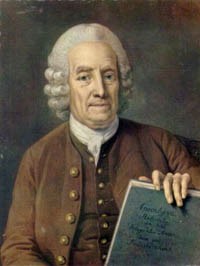
– His most important work – BR
– ‘a priori’ knowledge – not only ‘logic’, but much that cannot be included in ‘logic’ or deduced by it
– Analytic : ‘a tall man is a man’
– or ‘an equivalent triangle is a triangle’
– Synthetic: ‘Tuesday was a wet day’
– or ‘Napoleon was a great general’
– how are synthetic judgements ‘a priori’ possible?
– a ‘Copernican Revolution in Philosophy’ – so says Kant of his own work
– Kant’s ‘big Ego’ says Russell
– things in themselves – ‘unknown’
– empirical facts of history, geography and science – observational data
– a priori – i.e.: 2 + 2 + 4
– i.e. pure mathematics
– space and time, geometry and science and time
– rose-colored glasses and spatial speculation
– intuition, German anschuung: ‘looking at’ or ‘view’
– space and time
– four antinomies
– 1) the world has a beginning or no beginning
– a large part of the ‘Critique of Reason‘ occupied in showing the fallacies that arise from applying space and time on the categories to things that are not experienced
– twelve categories p. 708
– 2) every composite system both is and is not made up of simple parts
– Greatly influential
– Hegel
– existence of God p. 709
– ontological, cosmological, physical, theological
– 100 thalers
– ens realissimum
– 3) two kinds of causality
– a) one according to laws of nature
– b) freedom
– 4) there is and is not an absolutely necessary being
– geometry is a priori
– importance of these ideas are practical i.e. connected with morals
– purely intellectually ‘leads to fallacies’
– ‘The Practical Use of Reason‘
– moral law demands justice i.e. happiness – proportional to virtue
– Kant, ‘Metaphysics of Morals’
– considerable historical importance: the ‘categorical imperative’
– in this life…
– wrong to borrow money
– Russell’s criticism: treated every man as an end in himself
– an abstract form of the ‘Rights of Man’
– Kant’s ‘Perpetual Peace’
– vigor and ‘freshness’
– an international governmment
– A world federation
– Since 1933, this treatise has caused Kant to fall out of favour in his own country
– ‘The Doctrine of Space and Time‘
– ‘The Prolegomena‘
– reason ‘utterly condemns war’
– ‘things in themselves’ or ‘noumena’
– phenomena
– the sensations and our perception due to our subjective ‘apparatus’
– manifold: pure intuition plus time and space
– the ‘manifold’: the ‘forms of the phenomena’ – always the same as we carry it about with us
– phenomena – what we see
– noumena – things in themselves
– Kant holds that Euclidean Geometry is known a priori
– zugrunde liegen
– Russell, the phrase ‘outside of me’ is a difficult one.
– apodeictic
– why do I always see people’s eyes above their mouths and not otherwise?
– wavelengths p. 715
– Kant holds that the mind orders the raw material of sensation but never thinks it necessary to say why it orders it as it does
– I perceive lightning before I perceive the thunder
– sich vorstellan : what we can only imagine
– no serious argument can be based on what we cannot imagine – BR
– ‘The Prolegomena‘

– In the modern relational view of space this argument becomes impossible of being stated: – as neither space nor spaces can survive as a ‘substantive’.
– Imagined
– Vorgestellt
– Modern (1945) astronomers maintain that space is not infinite but goes round and round in circles like the earth.
– Konigsberg and space
– There is no sense in which perpetual time is subjective
– Things in themselves : ‘events’ in the world of physics’
– Russell counters –
– Absolutism
– Hegel, Fichte (1762 – 1814) carried subjectivism to a point which seems almost to involve a kind of insanity
– ‘ego’ is ultimate reality
– Fichte ‘Address to the German Nation‘

– Founder of German Nationalism
– Ego was German
– Germans were ‘superior’
Currents of Thought in the Nineteenth Century
– America, Russia, Indian philosophers on the Continent and in England
– Science: complex intellectualism
– Great advances : geology, biology, and organic chemistry
– Machine production
– Kant
– A Profound Revolt
– German history – a vigorous nation deprived of its natural share of Power
– Charles V
– Spain and the Low Countries
– Frederick the Great
– Charlemagne – to Germans a German
– Bismarck
– Goethe (did not regret Napoleon’s success at Jena)
– Weimar – east vs. west – very different Germanys
– Protestant Germany
– Frederick the Great
– Maupertuis fell victim to Voltaire’s ridicule
– Claque
– Fichte and Hegel philosophical mouthpieces of Prussia
– German Patriotism
– Mommsen and Treitschke – German historians
– Bismarck unified Germany under Prussia
– gradually Kant and Hegel conquered the Universities of France and England
– Helvetius, Condorcet
– Rationalism and enthusiasm
– Bentham a Helvetian
– Locke’s ‘tabula rasa and education’ is key
– A perfect education is all is needed to make a perfect man
– Condorcet, more influential due to Rousseau
– Helvetius’ ‘De l’Esprit’

– The American Revolution
– Died in prison – believer in equality for women
– Condorcet
– The inventor of Malthus’ ‘theory of population’
– Birth control
– British Radicals
– Bentham – equality of women
– Enemy of Imperialism
– Democrat owing to James Mill
– The Rationalists
– Patient, detailed economists
– Enthusiasm
– Malthus
– gloomy theory of population
– violent conflict in Industrial England led to rise in Trade Unionism and Socialism
– The Benthamites – at first Revolutionary
– almost wholly ‘rationalistic’
– the Romantics
– The ‘will’ over the intellect
– glorified violence
– definitely hostile to what is commonly called ‘reason’
– Germany the anti – rational philosophy of the ‘naked will’
– machines
– Darwin
– not to mention Anaximander
– Darwin- evolution and theory of common ancestry
– survival of the fittest
– by no means invented it – BR
– among chance variations those that are favourable will preponderate each generation
– from protozoa to homo-sapiens
– it was Malthus’ doctrine of population that suggested to Darwin struggle for existence
– Darwin – a liberal
– Darwin’s theories had consequences in some degree imminent to traditional Liberalism i.e. the doctrine that all men are born equal, and that the difference between adults are due wholly to education, was incompatible with his emphasis on congenital differences between members of the same species
– Egalitarianism i.e. inherited traits the congenital differences between men acquire fundamental importance
– the vote for oysters p.727
– at what stage did men and their semi-human ancestors become equal
– would Pithecanthropus Erectus, if he had been properly educated, have done work as good as Newton? A resolute egalitarian would say yes
– Piltdown Man
– Shakespeare’s Poetry
– Romantics opposition to the ugliness of Industrialism and the vulgarity of who mase money in the trade, led them into asn opposition of the middle class, whisch sometimes brought them into something like an alliance with the proletariat
– Power – power of man in his conflicts with nature
– Power of rulers as against human beings whose beliefs and aspirations they seek to control by scientific propaganda especially education
– they are certain old conceptions which represent men’s belief in the limits of human power of this two chief
– God and Truth
– (not that they are logically connected)
– Captains of Industry vs. the workers
– thus : the few over the masses
– Nietzsche – Few Marx – Masses
– Bentham – attempted a reconciliation – incurred hostility from both
Hegel (1770 – 1831)
– Professor at Jena, Heidelberg and Berlin
– influence has been very great
– leading academic professors in America and Great Britain were
Hegelians
– Marx a disciple of Hegel in his youth
– Protestant theologians adopted his doctrine
– and his philosophy of history profoundly affected political theory
– early interest in mysticism
– Hegel’s philosophy is very difficult -BR
– nothing is ultimately and completely real except the ‘whole’
– at first a ‘mystic’ – mystical insight
– reality must not be self- contradictory
– Triadic Movement – called ‘dialectic’
– The ‘Absolute’ (its spiritual)
– emphasis on logic
– Hegel’s ‘ Logic’

– His most important book
– the world? Same thing as metaphysics in a nutshell
– his views : any ordinary predicates if taken as qualifying the whole of reality turns out to out to be a self contradictory (dialectic)
– Thesis, antithesis, synthesis
– Uncle and Nephew
– Russell’s example p. 732
– traditional Logic
– relations cannot be real since they involve two things not one
– Hegel: a ‘Metaphysician’
– subject, predicate
– since everything except the ‘whole’ has relations to outside things it follows that nothing’s quite true can be said about separate things , and that, in fact, only the ‘whole’ is real
– The ‘Absolute Idea’ : thought thinking about itself
– Spirit – the only ‘reality’
– Wallace the blasphemous proposition that the Universe was learning Hegel’s philosophy
– Original German – even more difficult
– pure thought thinking about pure thought
– truly a ‘professor’s God’
– distortion of facts ad considerable ‘ignorance’ – BR
– Marx and Spengler
– Differs from Plato, Plotinus
– Spinoza in the time process has an intimate relation to the purely logical process of ‘the dialectic’
– ‘Philosophy of History‘
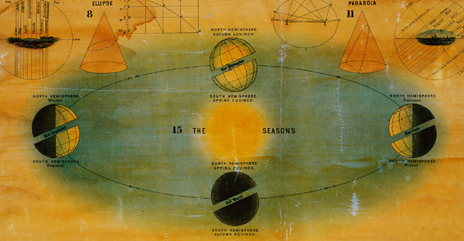
– an interesting thesis giving unity and meaning to the revolutions of human affairs. Like other historical theories.. it required, if it was to be made plausible, some distortion of fact and considerable ignorance.
– ethical perfection
– to become acquainted with spirit is the object of ur present understanding
– reason is the sovereign of the world
– substance, as well as infinite power its own infinite form
– spirit may be understood by contrasting it with its opposite – matter
– Essence of Matter – gravity
– Essence of Spirit – freedom
– the world of intelligence and conscious volition is not abandoned to chance, but must show itself in the light of the self-cognizant ‘Idea’
– …this is a result which happens to be known to me, because I hav e traversed the entire field’ – Hegel
– the Orientals, Greeks and Romans
– the Germans
– the three main phases of ‘Spirit’
– Germany – world knows that ‘all are free’
– a monarchy is the form of government preferred (for freedom)
– a very ‘superfluos’ brand of freedom
– does not mean you will be able to keep out of a concentration camp
– Reformation
– the holy ghost of Hegel’s ‘Philosophy of History‘
– The Peasants War
– “German History” by Hegel p.788
– Germany is ‘glorified’
– America is the land of the future
– national genius
– Alexander, Caesar, Napoleon
– everything important takes the form of War
– nations play the part that ‘classes play in Marx
– Philosophy of Law p.789
– State
– astonishing lengths
– The ‘universal’ is to be found in the State
– There are many ‘States’
– argues against a League of Nations
– peace is ossification therefore
– no ‘Holy Alliance’ or Kant’s ‘League for Peace’
– a family of States needs an enemy
– the interest of each state is its own highest law
– States are not subject to ordinary moral laws
– a doctrine, which, if accepted, justifies every internal tyranny and every external aggression that can possibly be imagined – BR
– Hegel conceives the ethical relations of the citizens to the state as analogous to that of the eye to the body
– a ‘super’ person
– the enemies of analysis
– Marshall Smut’s ‘Holism’

– the queston at issue is much wider than the truth or falsehood of Hegel’s philosophy, it is a question that divides the friends of analysis from its enemies
– John is the father of James analogy
– The ‘Holistics’ vs. the ‘Particularists’
– from ‘who is John’? to ‘the Universe’
– if the above were sound, how could knowledge begin?
– he may be the father of Jemima as well
– the fact is, I do not need to know all about John, but only enough to recognize him
– John, James and Jemima
– the worse your logic, the more interesting the consequences to which it gives rise
Byron
– as a cause of change in the social structure
– in judgements of value, or in intellectual outlook Byron’s importance is greater than it seemed
– it was on the Continent that Byron was influential
– The ‘aristocratic Rebel’
– The aristocrat, since he has enough to eat, must have other causes of discontent
– Love of Power
– Carbonari to Hitler
– Byron’s circumstances were very peculiar
– Criticism of the government of the world, which, when it goes deep – enough takes the form of Titanic self-assertion, or in those who retain – some superstition – Satanism
– Ten years old, after living in poverty, he suddenly found hiself Lord and owner of Newstead Abbey
– Newstead , his great Uncle from whom he inherited it – the – ‘wicked Lord’
– Byron’s lawless family
– The Gordon’s (his mother’s side) even worse
– Peculiar blend of snobbery and rebellion that characterized him
– A German prince, or a Cherokee chief p. 798
– As a Ghibelline chief cursed of God and man as they trampled their way to splendid downfall
– He sinned like the Hohenstaufen and like the Crusaders, died fighting the Moslim
– Incest with half-sister Augusta
– Wicked
– Remarkable as a sinner
– Delicious self congratulatory remorse
– Manfred, Cain, Satan, Nietzsche
– The Ishmaelite race of Byron
– Nietzsche, ‘If there were gods, how could I endure to be not a god’?
– His conclusion: there are no gods
– Man may bleed to death through the truth that recognizes – Sorrow is Knowledge
– They who know the most must mourn the deepest o’er the fatal truth –the Tree of Knowledge is not that of Life’
– The Corsair
– Genseric the King of the Vandals and Ezzelin the Ghibeline Tyrant
– Napoleon
– On Waterloo: I’m damned sorry for it’
– The great man to Nietzsche , is godlike, to Byron, usually a Titan at war with himself
– Kings, tyrants, pirates
– Don Juan
– French poets
– Unhappiness
– Maurois – ‘Life of Byron’
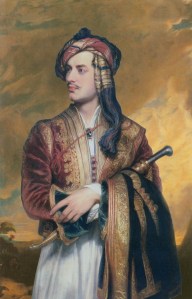
– Instilling the person of melancholy into the cheerful Gallic soul – BR
– Alfred de Mussett
– Napoleon an anti-christ, but one to be imitated
– Bismarck
– Rousseau
– Makes madness beautiful
– Byron is ‘fierce’ – BR
– The revolt of unsocial instincts
– Nietzsche remarked with ghoulish joy, ‘the classical age of war is coming’
Schopenhauer
– Hellenistic valetudinarian, tired
– Values peace more than victory
– Born in Danzig
– Dislikes Christianity
– Prefers Buddhism and Hinduism
– Quietism –attempts at reform – inevitably ‘futile’
– Hamburg and Paris
– He began the emphasis on ‘will’
– Three sources of his philosophy
– Kant, Plato and the Upanishads
– Father a ‘Voltairean’ – regarded England as ‘land of liberty’
– Two years at boarding school in England
– Became a clerk in Hamburg
– Father commits suicide
– Quarrels with mother
– Mother; a woman of literary aspirations
– Tiek, Novalis, Hoffmann
– Romantics admired Greece
– Thought ill of Hebraic elements in Christianity
– Schlegel – ‘Indian Philosophy’
– Went to University of Gottingen
– Admired Kant
– Bombast and ‘empty pathos’
– Low opinion of women
– Inherited a modest competence
– Despised Fichte
– Principle work – ‘The World as Will and Idea‘
– Some paragraphs, says Shopenhauer were: ‘dictated to him by the Holy Ghost’ p. 755
– An adaption of Kant
– Study of moral law can take you behind phenomena – Kant
– Volitions – must belong to the real world
– Both time and space belong to phenomena
– The phenomena corresponding to volition is a bodily movement – that is why according to Schopenhauer: that the body is the appearance of which ‘will’ is the reality
– Schopenhauer retained – ‘thing in itself’ he held that what appears to perception as my body is really my ‘will’
– ‘Will’ identified with Universe, but not God, the ‘Cosmic Will’ is wicked, the source of all of our endless sufferings
– Pessimism – suffering is essential to all life – and is increased by every increase in knowledge
– Nirvana p. 756
– Schopenhauer interprets as ‘extinction’
– the ancient wisdom of the human race will not be displaced by what happened in Galilee.
– Cause of suffering is intensity of will
– This distinction between one man and another is part of the phenomenal world, and disappears when the world is seen truly
– To the good man the ‘veil of Maya’ has become transparent
– Ascetic mysticism a’ la Eckhart and Angelus Silesius
– Veil of Maya
– All things are one
– Buddhism – the highest religion
– The ‘detestable’ doctrine of Islam
– The good man will practice complete chastity, voluntary poverty, fasting and self- torture
– Nothing remains
– No will, no idea, no will – only nothingness
– The drunk man
– Saints purpose to come as near as possible to non-existence, which for some reason he never clearly explains, he cannot achieve by suicide
– Not consistent or very sincere
– Not Beatific vision or profound knowledge as supreme good
– When we pierce the veil, we behold not God, but Satan
– The wicked omnipotent Will
– It is hard to find in his life, evidence of any kind of virtues, except kindness to animals
– An insult to the ‘mystics’ – BR
– The elderly woman thrown down the stairs – paid her fifteen thalers per quarter
– ‘obit anus, abit onus’
– The Diabolic Vision – his conviction in practice
– Historically two things are important
– 1) his pessimism
– 2) his doctrine that ‘Will’ is superior to knowledge
– A representative of the opposite is therefore likely to be useful in bringing forward cosiderations which would otherwise be overlooked
– The primacy of the Will – some after Schopenhauer found it a basis for optimism
– Nietzsche, Byron, James and Dewey held it acquired a vogue outside professional philosophers and in proportion as will has gone up in the scale, knowledge has gone down
– The most notable change that has come over the temper of philosophers of our age
– Optimism vs. pessimism
Nietzsche (1844 – 1900)
– More consistency than Schopenhauer
– Successor of Schopenhauer – yet superior
– The ‘will’
– His importance is mainly in ethics and secondly as an acute historical critic
– Nietzsche’s superman is very like Sigfried except that he speaks Greek
– ‘this may seem odd, but that is not my fault.’ – BR
– Criticism of religion
– 1888 – he became insane
– His outlook: Hellenism with the Orphic component omitted
– Close affinity to Heraclitus
– Admired the pre-Socratics, except Pythagoras
– Aristocratic, anarchism a la Byron
– Pope Julian II
– Machiavelli
– Nietzsche’s political philosophy is analogous to that of the Prince ( not the discources)
– Machiavellian
– Power
– Anti- Christian
– Napoleon – a great man – defeated by ‘petty opponents’
– The ‘excellence of the few’
– Ordinary human beings referred to as ‘ the bungled and the botched’
– Shocking, paradoxical
– Praises evil
– Beyond Good and Evil
– On J.S. Mill and his ‘Egalitarianism’: the hypothesis here is ignoble to the last degree. It is taken for granted that there is some sort of equivalence in value between my actions and thine.’
– Believes in Spartan discipline and strength of the will
– A passionate ‘individualist’
– A believer in the ‘Hero’
– True virtue for aristocracy only in all directions. Mediocre people are joining hands to make themselves masterly
– Rousseau, Harriet Beecher Stowe, Socialists – all must be combated
– Entertains the hope that life may one day become more evil and more full of suffering than it has ever been.
– Not a ‘Nationalist’
– No excessive admiration for Germany
– Wants an international ruling class to be Lords of the earth
– Not anti-semetic
– No further influx of Jews
– Great admiration for Old Testament not the New Testament
– Injustice to Nietzsche : many modern developments which have a certain connection with the general ethical outlook are contrary to his clearly expressed opinion
– His sister
– Women, are not yet capable of of friendship, they are still cats, or birds, or at best cows
– Thou goest to woman? Do not forget thy whip.
– Believes submission is right except for these supermen – but not submission to Christian God
– He will not treat all men as equal in any respect
– Critiques of Christianity
– He called it a ‘slave morality’
– Nihilistic
– Buddhism – much less objectionable
– Man shall be trained for war, and women for the recreation of the warrior All else is folly.
– Christianity is ‘degenerate’, full of decaying and experimental elements
– It’s driving force: revolt of the bungled and botched
– The ‘noble’ man capable of cruelty and crime
– Cruelty – the incarnate will with power
– Undeniable that Nietzsche has had great influence not among technical philosophers, but among people of literary and artistic culture
– So far, his prophecies of the future have proven more nearly right than those of Liberals or Socialists
– A ‘megalomaniac’
– His daydreams not a professor but a warrior, all the men he admires were military
– Nietzsche’s philosophy in a nutshell p.767. – frantic dread
– It never occurred to Nietzsche that the lust for power, what he endows his superman – is itself an outcome of fear. – BR
– I will not deny, that partly as a result of his teaching, the real world has become very like his nightmare, but that does not make it any less horrible – BR
– Pascal
– Dostoevsky, Nietzsche says : his prostration ‘contemptible’ – Russell agrees on this point
– A certain uprightness and pride and even self-assertion of a sort are elements in the best character
– Two types of saints
– To Nietzsche – Lincoln is abject, Napoleon magnificent
– As aristocratic ethic not same as aristocratic political theory
– He holds that the happiness of the common people is no part of ‘good’ per se
– The superior few: a conquering race or hereditary aristocracy
– Biologically superior
– More strength, courage
– Less sympathy, less fear and less gentleness
– No morality is possible without ‘good’ birth
– Impulse to Power
– Nietzsche’s ethic: victors in War, and their descendants, are usually superior to the vanquished. It is therefore desirable that they should hold all the power and should manage affairs exclusively in their own interests –BR
– If men will read my works…
– Fascist or Nazi Party if not defeated – then – a ‘police state’
– Where the rulers live in terror of assassination and the heroes live in concentration camps. In such a community, faith and honor are sapped by delation and would-be aristocracy of supermen degenerates into a clique of trembling poltroons
– The Egyptian government was conducted on Nietzschean principles for several millennia
– The government of almost all large – scale States were aristocratic until the American and French Revolutions
– If Buddhism and Nietzsche were confronted p. 771
– Salvation can only come thru love
– An ethic such as that of Christianity and Buddhism has its emotional basis in a a complete absence of sympathy
– Sympathy
– Alcibiades, Emperor Frederick II
– Napoleon
– For the sake of such men, any misery is worthwhile
– Buddha’s hero
– His successor Jesus who told men to love their enemies, men who discovered how to master the forces of nature and secure foods, labour, the medical men who have shown how to diminish disease, the poets and artists and musicians who have caught glimpses of the divine beatitude of love and knowledge and delight are not negations, they are enough to fill the lives of the greatest men who have ever lived.
– I dislike Nietzsche – BR
– Nietzsche – despises universal love, I feel it the motive power to all that I desire as regards the world. – BR
– Nietzsche’s followers have had their innings, but we may hope that it is coming rapidly to an end
The Utilitarians p. 773 chpt.XXVI
– Almost completely unaffected by by their German contemporaries
– Importance not so much philosophical as political
– Socialism
– In general, a complete silence about the Germans
– Bentham and his school derived their philosophy from Locke, Hartley and Helvetius the theory of law interested in ethics and politics
– Two principles
– 1) the ‘philosophy’ principle
– 2) the ‘association’ principle
– In essence same as the modern ‘conditioned reflex’ of Pavlov
– Bentham’s : purely mental
– Wanted to establish a code of laws and more generally – a social system
– ‘virtue’ – good
– A pleasure or happiness
– Pleasure over pain
– Hutcheson
– Priestly
– The business of legislature is to produce harmony between public and private interests
– Criminal law
– Civil law – four aims:
– 1) subsistence
– 2) abundance
– 3) security
– 4) equality
– Doesn’t mention ‘liberty’
– Men are to be punished by the criminal law in order to prevent crime the advocated abolition of the death penalty
– ‘for all but the worst offences’
– admired Catherine the Great and emperor Francis
– Great contempt for ‘Rights of Man’
– Plain nonsense
– Nonsense on stilts
– Equality
– Reason
– Equal divisions of man’s property among his children
– Democratic
– Votes for women
– Opposed to Imperialism
– Considered colonies a ‘folly’
– James Mill’s ‘A History of India‘
– Omnipotence of education
– J.S. Mill
– James Mill – pleasure only good – pain only evil
– Like Epicurus – valued moderate pleasure most
– Intellectual enjoyment best
– And temperance the chief virtue
– Like the whole Utilitarian school, he was utterly opposed to every form of Romanticism
– Moral order
– Equilibrium of interests
– Marx
– Only the principle of utility can give a criterion in morals and legislation and laythe foundation of social science
– An obvious ‘lacuna; in Bentham’s system
– If every man always pursues his own pleasures, how are we to secure that legislature shall pursue the pleasures of mankind in general?
– Again, if each in fact and inevitably pleasure there is no point in saying he ‘ought’ to is something else
– Russell ‘everybody’s main activities are determined by desires which are anterior to the calculations of pleasure and pain. i.e. hunger
– A masochist – desires his own pain
– A scathing criticism of Carlyle
– Ethics is necessary because men;s desires conflict
– Primary cause of conflict is egoism
– Ethics has a two fold purpose
– 1) to find a criterion by which to distinguish good and bad desires and
– 2) by means of praise and blame, to promote good desires and discourage such as are bad
– Promote the ‘General Happiness’
– Nietzsche p.780
– The Nietzschean aristocracy
– Utilitarian ethic is democratic and anti- Romantic
– Malthus – an integral part of the politics and economics of Bentham
– Free competition by no means really free
– Malthus – the framework of law does not exist among animals
– Darwinian competition was not of this limited source
– Darwinism and Socialism
– Survival of fittest
– Something much more like Nietzsche’s philosophy than Benthams
– Darwin ‘Origin of Species‘

– Its political implications not yet perceived
– Ricardo
– Robert Owens – Socialism
– Bentham didn’t like Socialism
– 1827 – James Mill regarding Socialism : there are rascals among them
– T. Hodgskin, ‘Labor Defended Against the Claims of Capital‘

– 1825
– James Mill’s letter 1831 may be taken as the beginning of long war between capitalism and Socialism
– Ricardo
– The exchange of value of a commodity is entirely due to the labour expended producing it 1817
– the madness of Hodgkins
– these opinions, if they were spread, would be the subversion of civilized society, worse than the overwhelming deluge of Huns and Tartars
Karl Marx
– last of the great system builders
– born 1818 Treves
– the philosophy of Socialism
– the powerful movement of Socialism
– his philosophy considered
– not his politics or economics
– in this regard: difficult to classify
– influenced by philosophy of Radicals like Hodgskin
– Rationality and anti-romantic
– A reviver of materialism
– System builder a la Hegel
– His ancestors had been Rabbis
– Converted to Christianity when he was a child
– married a gentile aristocrat to whom he remained devoted to throughout his life
– Hegel
– Engels
– Revolution of 1848
– London
– Always his intention to be a scientific
– British classical economics the interests of the wage-earner
– Feuerbach: revolt against Hegel’s materialism
– Marx always despised the Slavs
– The stimulus of his work was always the hope of the social revolution
– Marx, ‘Dialectical Materialism’

– More akin to ‘Instrumentalism’ – BR
– Knowledge a question of handling a practical question
– Democratic in practice
– Philosophers have only interpreted the world in various ways, but the real task is to altr it
– ‘Communist Manifesto‘ 1848
– -fire and passion (as Liberalism had been in the time of Milton)
– Dialectical – both subject and object
– The knower and the theory of knowing are in a continual ‘process’ of mental adaptation
– ‘noticing’ as opposed to mere ‘sensation’ of the British Empiricists
– Marx’s ‘Philosophy of History‘ – a blend of Hegel and British economics
– Very important
– An element of truth – BR
– The pursuit of truth
– It is something objective
– A German Jew
– He believes the truth of his own doctrines
– The materialist conception of history – production and distribution (to a lesser extent)
– Matter and man’s relation to matter
– Mode of production
– Marx and his own bias
– Middle class, middle of nineteenth century
– Economics – production
– Marxism and Fascism philosophies appropriate to the modern Industrial State
– Power – wealth only one form of power
– Political as well as economic – BR
– The problem of ‘Universals’
– On the Ontological argument – as a result of analysis of the concept of ‘existence’
– Modern logic has proved this concept invalid
– Purely a technical matter
– Amenable to methods which there is general agreement
– Philosophy – two very different elements
– 1) questions which are scientific
– 2) questions of passionate interest to large ‘Noise of People’
– In a very usual sense of the word (philosophy) an organic whole of such interational discussions
– On War: victory does not always go to the side with the greatest economic resources
– Marx philosophy – suggested by Hegel‘s dialectic in fact only one triad that concerned him
– 1) feudalism
– 2) capitalism
– 3) socialism
– Hegel’s nation’s substituted by Marx’s classes
– He might have said , he did not advocate socialism, but only prophesied it
– Vigorous exhortation to rebellion
– An emotional basis is implicit in all he wrote
– A limitation to terrestrial affairs
– Considered purely as a philosopher – Marx has some ‘grave’ shortcomings – BR
– i.e. he ignores Copernicus
– unscientific
– revolt in proletariat
– only alternative to private capitalism is State ownership of land and capitol
– in Germany, his doctrine inspired the program of the Social Democratic Party
– Election of 1912 seized one third of all votes
– This belief in inevitability of progress
– Marx thought it possible to dispense with ethical considerations
– If Socialism was coming – it had to be an improvement
– Marx’s beliefs: a result of the social revolution the division of classes is experienced ultimately to disappear giving place to completed political and economic harmony. But this is a distant ideal like the Second Coming in the meantime there is war and dictatorship and insistence upon ideological orthodoxy
– Orthodoxy
– Nazi – fascism – Rousseau – Fichte – Nietzsche
– The best philosophical unity since Rousseau can be reclaimed by a rationalistic conquest of man’s minds
– Bergson
– Influenced William James & Whitehead
– Irrationalism
– Conservatism
– Leading French philosopher of the twentieth century
– Vichy
– The revolt against rationalism
– Sorel, ‘Reflections on Violence‘
– Shaw, ‘Back to Methuselah‘
– Advocate of syndicalism
– The predominant desire which led the philosopher to philosophize
– Philosophies of feeling
– Philosophe
– Theoretical – inspired by love of knowledge or practical philosophy
– Inspired by the love of action
– Action – a supreme good
– Mind vs. matter
– The pragmatists and Bergson
– Revolt vs. Plato
– Dualistic
– Though the desire for knowledge is rare, it has been the source of most of what is best in philosophy
– Evolution
– Mechanism and Teleology
– Evolution – creative – unpredictable
– Intuition
– ‘Ants, bees, and Bergson’ – BR
– Sanford and Merton
– Instinct and Intellect
– More or less separated
– Bergson says: ‘ intellect is the misfortune of man’
– Becoming
– Simultaneous growth of matter and intellect
– From a stuff that contained both
– ingenious, say Russell
– An endless stream of ‘becoming’
– Intellect as ‘carven’
– Universe a vast funicular ‘Railway’
– Comic
– Dream
– Geometry to Logic
– Induction, deduction
– Unlike most writers, he regards time and space as profoundly dissimilar
– Duration
– ‘Time and Free Will’

– Russell admits to not fully understanding it
– Act, acting
– We see ourselves acting
– Memory
– Motor mechanism and independent
– Recollections
– Ego
– Perpetual ‘becoming’
– Bergson, ‘Matter and Memory’
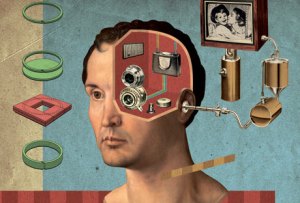
– Habit of mechanism
– Memory and merit
– Brain physiology
– Amnesia
– Pure perception – really a part of matter
– Life of the spirit
– Intuition
– The ‘penumbra’ of intellect
– Sight and touch
– Bergson a strong ‘visualiser’
– There are no ‘things’ there are only ‘actions’
– Memory that makes the past
– And future real ‘snapshot’ view
– Bergson’s doctrine of freedom and his praise of action
– Intensity of psychic states
– A quantity capable (in theory) of ‘measurement’ – Bergson sets out to refute it
– Artist/numerical
– Life is ‘like a shell bursting into fragments which again are shells’
– Like an advertiser
– Analogies and similes
– The charm of excellent style, says Russell
– Life: ‘like an immense wave starting at a center and moving outwards
– oscillation
– Calvary charger
– A ‘restless’ view of the world
– An imaginative and poetic view of the world
– ‘Doctrine of Space and Time‘

– Doctrine of perpetual flux – in which there is nothing that’ flows’
– His theory of ‘space’ p.801
– number to Bergson : a ‘collection of units’
– Russell refutes Bergson’s idea of number
– confusion same as if we confused a particular young man with youth.
– Cinematographic
– Russell’s denunciation of Bergson’s ‘living in the past’ mathematics
– Zeno and the arrow
– Eleatic School
– no such thing as ‘change’
– Static vs. dynamic
– Denying that the arrow is ever anywhere
– Motion implies relation – Russell
– Bergson’s theory a ‘mere play on words’- BR
– Friendship is made up of people who are friends, but not of friendship, etc….
– His theory of time is a theory that which omits time altogether
– The ‘image’ or representation
– Subject and object
– Not a philosophy for contemplative types
William James (1842 – 1910)
– Radical empiricism
– Brother of Henry and Jane
– Primarily a ‘psychologist’
– Science and religion
– Warmth of human kindness
– Santayana
– Delightful humour
– Almost universally beloved
– ‘Pragmatism‘
– Good conduct – most important
– Protestant
– Good conduct
– Democratic feeling
– Radical empiricism
– Denied fundamental subject/object relations
– Russell concurs he was persuaded by James himself 9 and his followers)
– James, ‘Does Consciousness Exist?’ (1904)
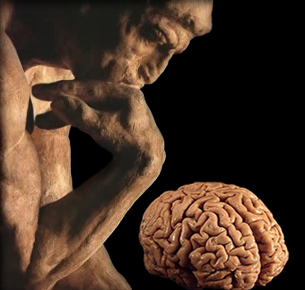
– Pure experience
– One ‘primal’ stuff
– Subject/object
– Abolishes distinction between mind and matter
– Neutral monism
– Experience defined p.813
– Russell’s ‘Dark Side of the Moon’ argument
– vs. Berkeley’s and Hegel’s idealism
– A definition of experience
– Neutral monism: according to which the material which the world is constructed is neither mind nor matter but something ‘anterior’ to both’
– A ‘burnt poker does not fear the fire’
– An event is experience when it sets up a habit
– ‘The Will to Believe‘ (1896)
– No wholehearted believer could accept – BR
– Russell’s ‘Ebeneezer Wilkes Smith’ argument a.k.a ‘A Stranger on a train’
– Experience is not co-extensive with the ‘stuff’ of the world
– ‘Pragmatism’ (1907)
– Absurdity reigns
– Never mentions probability
– Probability – crudity
– ‘ when we act upon an hypothesis, we keep our eyes open for fresh evidence’
– Hypotheses and how it applies to experience
– scientific philosophy
– pragmatism – a new definition of truth
– ‘true’ – if it ‘makes you happy’
– C.S. Pierce
– An idea – true so long as believe it is ‘profitable’ to our lives
– In James’ thesis – truth is one species of ‘Good’ not a separate category
– To do what ‘pays’
– Higher powers exist
– Russell’s ‘Columbus 1492’ argument vs. James’ Good = Truth
– Truth or consequences
– Russell finds ‘great intellectual difficulties’ in this doctrine
– Russell’s ‘Santa Claus’ argument
– If god is ‘useful hypothesis’ that is enough
– Good: a ‘useful hypothesis’
– Our ‘petty’ planet
– Hitler
– Subjectivist ‘madness’
– James doctrine is an attempt to bind a sub-structure of belief upon a foundation of skepticism – and like all such attempts it is dependent on fallacies – BR
– James’ ‘immaculate substitute’
– To substitute belief of God for God
John Dewey b(1859-
– New England Liberalism
– Education, aesthetics, political theory
– The leading living philosopher in America today (1945)
– A man of the highest character
– Profound influence on education
– ‘The School and Society’

– Substitution of ‘inquiry’ for ‘truth’
– Education
– Dewey: ‘biological’ rather than ‘mathematical’
– Trotsky
– Liberal, not a Marxist
– Dewey’s criticism of the traditional notion of ‘truth’
– Hegel’s ‘Absolute’
– ‘Instrumentalism’
– conceives ‘thought’ as an evolutionary process
– China and Russia
– Already temporal
– Russell: sentences are true or False because they are ‘significant’
– Truth – what is truth?’
– The investigation of belief
– In Arabic 1492 would have to be altered for the Mohammeden calendar
– A belief about where the stairs end are an organism – body , not mind, made mistake
– Falsity entails ‘surprise’
– A good test for belief
– ‘surprise!’
– What is ‘truth’?
– Sir James Jeans : ‘sun will explode some day’
– False belief
– Lightning and death
– A lion has escaped from the zoo… p.822
– Russell : – suppose you are walking in a thunderstorm….
– A ‘belief’ is a state of an organism promoting behavior such as a certain ‘occurrence’ would, if sensibly present, the ‘occurrence’ which would promote this behavior is the significance of the belief
– significance
– Russell’s disagreement with Dewey’s notion of ‘Inquiry’ : ‘a pack of cards’
– A drill sergeant with a crowd of recruits or a bricklayer with a heap of bricks
– ‘confused whole’
– A ‘dynamic’ person
– ‘truth’ is opinion fated to be ultimately agreed by all who investigate
– Metaphysic of Organism
– Difficulty is the severing of the relation between belief and the fact or facts which woul commonly be said to verify it
– Dewey doesn’t divide belief into true or false only ‘satifactory’ or ‘unsatisfactory’
– ‘good’ and ‘bad’ belief
– Did you have coffee for breakfast? P.825
– Coffee
– A refusal to add facts into his metaphysic
– Effect
– Causes
– Relations vs. warranted assertability
– Did Caesar cross the Rubicon?
– Re-arrangement of history to make it more agreeable to it’s effects
– George Raymond Geiger
– Dewey’s method would mean revolution in thought as spectacular as revolution in industry
– Common sense – changing?
– The Age of Industrialism and Dewey and the Americans and China and Mexico
– Santayana
– Human forces ones nature
– man vs. environment
– Community
– Dewey’s is a ‘power’ philosophy
– Man formerly too humble begins to think of himself as almost a god’
– Papin
– Loss of humility
– a ‘certain kind of madness’
– Cosmic ‘impiety’
– Fichte and intoxication of power
– The danger of a vast social disaster p. 828
The Philosophy of Logical Atomism
– Thought since Pythagoras-
– Mathematics – Plato, Aquinas, Spinoza and Kant
– Empirical Science – Democritus, Aristotle, Modern Empiricists from Locke onward.
– Logical Analysis – eliminate Pythagoreanism from mathematics and combine empiricism with an interest in the deductive parts of human knowledge
– Continuity
– Half as many equal to just as many
– Leibniz, Weierstrass, Cantor
– An oddity
– Tissue of nonsense
– Syntax
– Syntactical errors in syntax solved or insoluble (perhaps an overstatement)
– Matter – a ‘series of events’
– Theory of Relativity p.832
– Time and Space
– Interval
– Psychology: mind less mental e. g. ‘conditioned reflex’ therefore more physiological
– Two groups, both material and mental
– Neutral monism
– Perception
– Causal claims
– Which are to a greater or lesser extent independent of the rest of the world
– The structure of the world: two groups
– 1) mind
– 2) matter
– Some ‘events’ belong to both groups
– Our knowledge of the physical world therefore is only abstract and mathematica
– Modern Analytic Empiricism
– Empiricism plus mathematics and development of a powerful logical technique to achieve definite answers
– A method has been discovered by which, as in science, we can make successive approximations to the truth in which each new stage results from an improvement, not a rejection, of what has gone before
– The habit of ‘careful veracity’
– A lessening of fanaticism
– An increasing capacity of sympathy and mutual understanding
– In abandoning a part of its dogmatic pretensions, philosophy does not cease to suggest and inspire a way of life.
end book III
-Finis-
 tomreading
Leave a comment