Introduction to Symbolic Logic R. Carnap
Part one
System of Symbolic Logic
Chapter A
The Simple Language A
The Problem of Symbolic Logic
The purpose of symbolic language.
A language
A schema
Pure and applied
Part three – more comprehensive
Treatment of concepts of any kind
Frege, Russell, Hilbert
Logic of relations
Axiomatic method
‘Principia Mathematica’ – Whitehead and Russell
Couterat, Itelson and Lelande
Ziehen, ‘Lehrbuh der Logik’ 1904
Meinong, ‘Die Stelling der Gegenstandstheorie’
Peano, ‘Formulaire’
Frege, ‘Grundlagen’

Individual Constants and Predicates
The individuals
Universe of discourse
Predicates
a,b,c,d,e,
P,Q,R,S,T,
Property of prime numbers
The property ‘odd’
The relation ‘greater’
The relation ‘similar’
The relation ‘father’
P(a) for ‘sun is spherical’
P(b) for ‘moon is spherical’
Taking R for relation
R(a,b) the sun is greater than the moon
S(a,b) a is similar to b
P(a) R(b,c) – the a,b,c are called ‘argument expressions’
Further ‘b’ is said to stand in first-argument position
‘c’ in the second
‘P’ is a one-place (monadic) predicate
‘R’ is a two-place (dyadic) predicate
Generally, predicate is said to be n-adic (or n-place, or of a degree of n)
P (a) is a ‘sentence-completion’ or full sentence of the predicate ‘P’.
Similarly R(b,c) is a sentence –completion of R
Later – ‘letter groups’ and ‘compound expressions’
Where single letters are so used we usually omit parentheses and commas and write ‘Pa’, ‘Rab’,’Tabc’, etc.
Attribute
Predicate
Let us always distinguish clearly between signs and what is designated
….we therefore on occasion use the letters ‘A’,’B’, ‘C’, as abbreviations for any sentence whatever of the symbolic language
The letters are called sentential constants (or propositional constants) – see table p. 6
Sentential Connectives
descriptive and logical
descriptive signs
logical signs
connective signs
truth conditions
Connective signs
(A)n{B} is called disjunction
V stands for (or)
A or B has the meaning ‘either A or B, but not A and B’
Accordingly (Pa) n(Qb) means ‘a is a P’ or ‘b is a Q’, or both.
Again, ‘[stud(a)nFl(a)] means ‘a is either a student or female or both (i.e. a woman student)
Next , let us agree that the sentence (A) × (B)
The ‘conjunction’ (or logical product) of A and B is true just in case both ‘A’ and ‘B’ are true
Hence – (Pa) × (Qb) means ‘a is P’, and ‘b is Q’ and ‘[Stud (a)] × [Fl (a)]’ means ‘a’ is a woman student.
The sign ~ of negation is used in connection with one sentence.
We say that the sentence ‘~(A) is true just in case ‘A’ is not true; i.e. ‘A’ is false’.
The word ‘not’ generally refers to but a portion of the entire sentence
If the moon is blue then my desk is black.
Accordingly ~[P (a)] means ‘a is not P’ and ~[even (3)] means ‘3 is not even.
The sentence ‘(A) É (B)’ is and abbreviation for ‘[~(A)]V(B)
Hence (A) É (B) is true just in case either ‘A’ is false, or else ‘B’ is true, or both.
In many cases, ‘(A) É (B)’ corresponds to the English sentence ‘if A, then B’
There is an important difference between the two sentences however. In English, the if-sentence is used only when there is a connection (perhaps of a logical or causal sort) between the two sentential parts of the compound.
In the symbolic language the’É – sentence’ is used without such limitations.
Thus, if ‘A’ is ‘my desk is black’, then, ‘[Blue (moon)] É (A) is true whether ‘A is true or false because ‘Blue (moon)’ is false.
In English however, the sentence ‘If the moon is blue, then my desk is black’ would scarcely be considered an appropriate or correct sentence.
The domain : physical things
moon the moon
Book(a) a is a book
Blue(a) a is blue
Sph(a) a is spherical
The domain : human beings (presently alive)
Ml(a) a is male
Fl(a) a is female
Stud(a) a is a student
Fa(a) a is a father
Mo(a) a is a mother
Par(a,b) a is a parent of b
Bro(a,b) a is a brother of b
Hus(a,b) a is a husband of b
Friend(a,b) a is a friend of b
The domain: natural numbers (0, 1, 2, etc.)
0,1,2 in their usual signification
Even(a) a is an even number
Prime(a) a is a prime number
Gr(a) a is greater than b (a > b)
Sm(a,b) a is smaller than b (a < b)
Pred(a,b) a is the (immediate) predecessor of b (a+1=b)
Sq(a,b) a is the square of b (a = b²)
Sq(a) the square of a (a²)
Prod(a,b) the product of a and b (a.b)
‘Sq’ and ‘prod’ are ‘functors’ cf.18
The sign É is frequently called the ‘implication’ sign and (A) É (B) to be read ‘B’ is a consequence of ‘A’ or ‘B’ is deducible from ‘A’
A conditional sentence rather than an implication if ‘A’ then ‘B’ not from ‘A’ follows ‘B’
‘A’ – antecedent, ‘B’ – consequent
(A) º (B) a bi-conditional (or: equivalence) of ‘A’ and ‘B’ and is counted as true ‘just in case ‘A’ and ‘B’ are both true or else both false.
We read (A) º (B) as ‘A’ is equivalent to ‘B’ or ‘A’ if and only if ‘B’
3a) omission of parentheses:
Sentences which are themselves compounds can occur as components in a sentential composition i.e. the compound ‘~(A)’ in the sentence [~(A)] n (B) and the compound (A) n (B) in the sentence [(A)n(B)]×(C)
It is out of ‘practical expedience’ that we establish the following rules for omitting parentheses
The rules apply not only to sentences but to sentential formulas, i.e. to sentences and other similar expressions.
It is considered permissible to omit the parentheses that enclose a compound formula provided one of the following conditions is satisfied:
The component formula so enclosed is of the simplest form i.e. it contains no other sentential formulas as a proper part [e.g. : ‘A n B’, ‘~Pa’]
The component formula so enclosed is a compound formed with a connective that has the component as a member. For this purpose we count ‘~’ more cohesive than ‘n’ or ‘×’, and the letter two more cohesive than ‘É’ and ‘º’, e.g. ‘(~A)nB’ can now be written ‘~AVB’, similarly ‘(~A).B can be written ‘~A×B’, because ~ is more ‘cohesive’ than the other connectives.
Again, ‘AnB É C×D’ may be written in place of ‘(AnB) É (C×D) because ‘n’ and ‘.’ Are more cohesive than ‘ É ‘. Likewise, we may write ‘A×B º CnD’ for ‘(A×B) º (CnD)’
The compound formula so enclosed is a disjunction, or it is a conjunction. {Examples: instead of ‘(AnB) nC’ we write AnBnC we shall see later (T8 – 6m) that A n(BnC) can be transformed into (AnB) nC; that ‘A n(BnC)’ may be also be written ‘AnBnC’. Analogously, instead of ‘(A×B) ×C’, we write ‘A.B.C’ and we do the same for ‘A ×(B×C).’
Truth-Tables
Truth-tables
Truth and Falsity the two possible truth values of a sentence. Since every sentence is either true or else false, two independent sentences ‘A’ and ‘B’ can show four possible combinations of truth values: either both sentences are true, or only the first, or only the second, or neither.
TT TF FT TT
AnB: T T T F
A × B: T F F F
A É B: T F T T
A = B: T F F T
Truth table or truth-value table
‘T’ and ‘F’ are not signs in our symbolic language, simply abbreviations for ‘true’ and ‘false’
Truth –Table I
| A B | A n B | A × B | A É B | A º B | |
| 1 | T T | T | T | T | T |
| 2 | T F | T | F | F | F |
| 3 | F T | T | F | T | F |
| 4 | F F | F | F | T | T |
Since a negation has only one component, only two cases are possible:
Truth – Table II
| (1) A | (2) ~A | |
| 1 | T | F |
| 2 | F | T |
With the help of truth table I and truth table II we can determine the truth values of an elaborate compound involving, say, n different constituent sentences (n = 1,2,3….) joined by our various connectives
Column (1) shows the 2ᵑ possible combinations of truth values for the n constituent sentences, we determine in each case the truth-values of the successively larger compound components until we arrive at the truth – values of the original elaborate compound itself.
When this has been done for all 2ᵑ cases the distribution of truth-values for the original compound, will have been obtained.
Truth-Table III
| (1)A | (2)~A | (3)An~A | (4)A × ~A | |
| 1 | T | F | T | F |
| 2 | F | T | T | F |
Refer back to truth table I for V and. columns for results
Columns (1) and (4) of Table III thus constitute a truth table for ‘A. ~A’ with column (4) showing the actual distribution of truth-values.
Compounds involving two constituent
Here deal with three examples
The compounds ‘~(AVB)’, ‘~ ~B’, and ‘~(AVB) º ~A. ~B’
The distribution of values of ‘~(AnB)’ is shown in Table IV, column 3, that of ‘~A.~B’ in Table IV (6) and, and that of ‘~(AnB) = ~A × ~B in Table IV (7)
Truth Table IV
| (1)A B | (2)A n B | (3)~(A n B) | (4)~A | (5)~B | (6)~A × ~B | (7)~(AnB) º ~A × ~ B | |
| T TT F
F T F F |
TT
T F |
FF
F T |
FF
T T |
FT
F T |
FF
F T |
TT
T T |
|
Table V is a simplification of Table IV
Truth Table V
| ~(5) | (A(1) | n(3) | B)(1) | º(7) | ~(4) | A(2) | ×(6) | ~(4) | B(2) |
| FF
F T |
TT
F F |
TT
T F |
TF
T F |
TT
T T |
FF
T T |
TT
F F |
FF
F T |
FT
F T |
TF
T F |
A sentence is called a ‘tautology’ a ‘contingency’ or a ‘contradiction’ according as its distribution of truth values shows respectively only ‘T’ , at least one ‘T’ and at least one ‘F’, or only ‘F’.
Partial Truth-Tables
Frequently we are interested simply in deciding whether a given sentence is a tautology.
Assign the value ‘F’ to the whole sentence and check to see if this value can be maintained when we proceed backwards step by step through the values of successfully smaller components
Example: Is the sentence [A É (~B º C)] É (A×C É ~B) a tautology?
Partial Truth Table
| [A (6) | É(2) | (~ (7) | B (6) | º(8) | C)](6) | É(1) | (A(4) | ×(3) | C(4) | É(2) | ~(3) | B)(5) |
| T | T(9)
F |
F | T | F | T | F | T | T | T | F | F | T |
Truth-conditions and meaning
It’s raining or snowing in Paris
It is raining or snowing or both or as ‘it is not the case that it is neither raining nor snowing.
A knowledge of the truth conditions of a sentence is identical with an understanding of its meaning
L – Concepts
Tautologies
Suppose S is a sentence composed out of the sentential constants ‘A’ , ‘B’, etc. with the help of the sentential connectives previously discussed. (Here S is a sign of the meta-language which serves to refer to sentences of the symbolic language
A value – assignment for S
The range of S
The smaller the range of a sentence the more the sentence says.
g. if ‘A’ means ‘it is raining here and now’, then ‘An~A’, means it is raining here and now, or it is not raining here and now’ – a sentence which is true in every possible circumstance, no matter whether it is raining here or not; if communicated to us we could learn from it nothing whatever about actual present circumstances. Sentences which thus are true for all possible value – assignments of their constituent parts are said to be autologous sentences or ‘tautologies’.
Range and L – Truth
The first step must consist in establishing the meaning of the sentence
These meanings may perhaps be given by a list of meaning – rules arranged e.g. in the form of a dictionary
On the other hand we must attend to the form of the sentence i.e. the pattern into which the signs are assembled
The second step of our procedure consists in comparing what the sentence says with the actual state of affairs to which the sentence refers
e. what the facts are
then we compare these facts with what the sentence pronounces regarding them
if the facts are as the sentence says, then the sentence is true; otherwise it is false
in the usage of philosophers, the word ‘logical’ is quite vague and ambiguous
we shall call a procedure ‘logical’ when it is grounded only in the analysis of senses (the first step of our previous paragraph) and does not require any observation of fact (the second step above); if the procedure requires the second step, we call it ‘non-logical’, or ‘synthetic’ or ‘empirical’. The analysis of sense we therefore term ‘logical analyses.
We say a statement is logical if it is based exclusively on the analysis of sense, and we say the same of a question whose answer comes about solely by analysis of sense.
Now, let us introduce several concepts which are logical in the sense just indicated
We shall call then with the prefix ‘L’
We divide all the signs of our symbolic language into two classes, the ‘constants’ and the ‘variables’
Every ‘constant’ has a fixed specific meaning
Variables on the other hand, serve to refer to unspecified objects, properties, etc.
Again:- we divide all our signs into logical or descriptive (non-logical)
Descriptive signs are those constants which serve to refer to objects, properties, relations, etc. in the world; they include the individual constants, the predicates, and the sentential constants
Logical signs include all the variables and the logical constants
A compound expression is said to be descriptive if it contains at least one descriptive sign: otherwise it is said to be logical
Thus a logical expression is one that contains only logical signs
We turn next to the concepts of valuation and range
Among the value-bearing signs we count all the descriptive constants and certain variables
Sentential formulas i.e. sentence or sentence – like expressions of other kinds
If a sign occurs in S, more than once, the same value must be coordinated with each of its occurrences
Evaluation
The evaluation of S , is made by means of the truth-tables
Later we will lay down additional rules of evaluation for other types of sentential formulas
Sometimes it is said that a sentence (or a proposition, or a judgment) is logically true or logically necessary or analytical if it is true ‘on purely logical grounds’, or if it is true independently of the accidental state of the facts, or if it holds in all possible worlds (Leibniz),
Every L-true sentence is true; for since it holds in every possible case, it holds in the case actually before us.
What suffices here is logical analysis
We say that a sentential formula is L-true just in case its range is the total range, i.e. it is true for every value-assignment.
A sentential formula is said to be L-false (or logically false, or contradictory) in case its range is the null range, i.e. it is false for every value-assignment)
L-determinate
L-indeterminate
We also say that it is ‘factual’
An explication for the traditional notion of the synthetic judgment.
(as examples of factual statements, we offer: ‘Sph(moon)’, ‘Stud(a)VBro(a,b)’)
F-true (factually true)
F-false (factually false)
The theorems below follow from the definitions of the L-concepts and Truth-Tables I and II [we designate theorems by ‘T’ and give each theorem two numbers [e.g. ‘T5-lc’ refers to Theorem lc of section 5, if this reference is made in the text of section 5, it is written simply ‘Tlc’)
+T5 -1 Ranges
let S be as arbitrary sentential formula, and ~S, its negation; then the range of ~S, is the complement of the range Si. (The complement of the range Si is the class of those value-assignments in the total range of S, what do not belong to the range of Si)
the range of the disjunction of two or more sentential formulas is the union of the ranges of the individual sentential formulas. (the union of several classes is the class of all those elements which belong to at least one of the classes)
the range of the conjunction of two or more sentential formulas is the intersection of the ranges of the individual sentential formula. (the ‘intersection’ of several classes is the class of all those elements which belong to each of the classes)
L – Implication and L-Equivalence
the logical relations of L-Implication and L-Equivalence
Hence we can conclude ‘AVB’ from ‘A’ without any knowledge of the facts. What we do here is generalize the consideration in arbitrary sentential formulas Si and Sj
AVB is L-implied by ‘A’
T 6-1 a. A sentential formula which is L-implied by an L-true sentential formula is itself L-true.
a sentential formula which is tautological (i.e. in truth-table terms) L-implied by a sentential formula that is a tautology is itself a tautology.
a sentential formula which L-implies an L-false sentential formula is itself L-false
+T6-3a. Every sentential formula L-implies itself
transitivity of L-implication. If S L-Implies Sj and Sj L-implies Sk then Si implies Sk
+T6-4. If Si and Sj are arbitrarily sentential formulas, then Si L-implies Sj, if and only if the conditional Si>Sj, is L-true
+T6-6a. two sentential formulas are L-equivalent if and only if each L-Implies the other
two sentential formulas are L-equivalent If and only if at each value-assignment either both are true or else both are false
+T6-7. Two sentential formulas Si and Sj are L-equivalent if and only if the bi-conditional Si = Sj is L-true
L-equivalent
The essential character of logical deduction, i.e. concluding from a sentence Si sentence Sj, thus is L-implied by it, consists in the fact that the content of Si (because the range of Si is contained in that of Sj
Content can never be increased by a purely logical procedure
To gain factual knowledge, therefore, a non-logical procedure is always necessary
Rather, it is a clarification of logical relations subsisting between concepts i.e. a clarification of relations between meanings
However, the psychological content (the totality of associations of one of these sentences may be entirely different from that of the other
Thus we say a class of sentences is true just in case each of its member sentences is true.
Range
+T6-9 a conjunction of two or more sentential formulas is L-equivalent to the class comprising these sentential formulas
Axiom systems
In 6c
In 6a
Sentential Variables
In mathematics variables….
Thus e.g. the formula ‘x2 =3y + 4’ uses the number –variables ‘x’ and ‘y’ to express a relation which holds for certain pairs of numbers and not for others
Again, the formula ‘x + y = y + x’ expresses a universal numerical relation, i.e., one that holds for all pairs of numbers; it is a universal or generally valid formula (often called an arithmetical law or an identity)
The expression is substitutable
The ‘values’ of the variable
‘numerical’ variables
In mathematics the variables first used were numerical variables; later, however, use was made of variables whose values were entities of other sorts, e.g. functions, classes, operators, and the like.
Symbolic logic admits values of its variable entities of all possible kinds e.g. things, classes, properties, relations, functions, propositions, etc.
Value extensions
Value- intentions
Also predicate variables ‘F’, ‘G’, etc., for which predicates like ‘P’,’Q’, etc. are substitutable
A sentential formula
Appropriate substitutions
We make general use of the sign ‘S’ for sentential formulas.
‘formula’ in place of ‘sentential formula’
Sentential variables (or propositional variables ‘p’, ‘q’, ‘r’, etc.
g. in ‘p V q > q V p’
A free variable
‘open’ or ‘closed’
Substitution instance
Corresponding substitution instances
Individual signs
A full formula of the predicate
A full sentence of the predicate
Sentential signs
Atomic formula
Atomic sentence
A molecular compound
Molecular sentential formula
A molecular sentence, if additionally it is a sentence
This e.g. since Table III (3) the sentence ‘AV~A’ is L- true, the open sentence ‘pV~p’ is also L-true.
Sentential Formulas That are Tautologies
the theorems below list sentential formulas that are tautologies. In each case, the tautological character of the formula can be established by means of a truth-table that has sentential values ‘p’, ‘q’ etc. where formerly ‘A’, ‘B’. etc., appeared.
Important formula marked ‘+’
T8 – 1 the following formulas are tautologies and hence L-true
pV ~ p
2. Let Si =Sj be any of the conditionals introduced below.
Suppose Si > Sj is obtained from Si > Sj by arbitrary substitutions. Then each of the following holds:
Si > Sj is a tautology and hence L-true.
Si’ > Sj’ is a tautology and hence L-true. (from T7 -16.)
Si L-implies Sj (By T6-4)
Si’ L – implies Sj’. (By c, in view of T7 -1d.)
T8 -2 if Si is a conjunction (whence the whole conditional has the form Sk, Sl > Sj), then Sj is L-implied by the class comprising the formulas Sk and Sl; and similarly for formulas obtained from these three by corresponding substitutions.
(1) p> pVq.
(1) p.q > p.
(1) p. ~q>q.
(1) (p V q). ~ p>q
(2) (p V q). ~q> p.
(3) (p > q). p > q.
(1) (p =q) > (p > q)
(2) (p = q) > ((q>p)
(6) (p > q). (q> r) > (p>r)
(8) (p = q). (q = pr) > (p = r).
The subsidiary assertions C and D have special importance
It is possible in a deduction (derivation 8d) to infer the latter formula from the former.
Modus ponens. Cf T6 -14a.
Modus tollens
Interchangeability we say an expression Ui is interchangeable with an expression Uj, just in case the following holds for arbitrary sentential formula Si and Sj: if Si contains Ui and Sj is obtained from Si by replacing Ui by Uj at one or more ( but not necessarily all) occurrences of Ui in Si, then Si = Sj is true. We say Ui is L- interchangeable with Uj if additionally Si = Sj is always L-true, i.e. Si and Sj are always L-equivalent
The truth – value of a sentence involving just one of our connective signs is uniquely determined by the truth –values of its components, with the aid of the truth –table for the connective. (it is for this reason that our connectives are also called ‘truth- functions’)
T8 – 3. Suppose ‘…p…’ is one of the following formulas: ~p’, ‘pVr’, ‘r V p’, ‘p.r’, r.p’, ‘p>r’, ‘r>p’, ‘p=r’, ‘r = p’. Suppose ‘…q….’, ‘…A…’ and ‘…B….’ are corresponding formulas, with ‘q’ (or ‘A’, or ‘B’ respectively) standing in place of ‘p’. then the following hold:
‘(p=q) > [(….p…) = (…q…)]’ is L-true
‘p = q’ L – implies ‘(…p…) = (…q…).
‘(p=q). (…p…) > (…q…)’ is L-true.
D, ‘p = q’ and ‘…p…’ together L-imply ‘…q….’
‘(A = B) > [(…A…) = (…B….)]’ is L-true.
‘A = B’ L-implies ‘(….A….) = (…B….)’.
‘(A = B). (…A…) > (…B…)’ is L-true.
‘A = B’ and ‘…A…’ together L-imply ‘…B….;
T8 – 4. Suppose ‘…p…’ is a molecular sentential formula containing ‘p’.
Suppose ‘….q….’, ‘…A…’ and ‘…B…’ result from ‘…p…’ by the introduction of ‘q’ or ‘A’ or ‘B’ respectively in place of ‘p’. then assertions (a) through (h) of T3 hold.
T8-5
Suppose Si and Sj are L- equivalent; and suppose Si occurs in Sk one or several times, but only molecularly. Now let Sl be obtained from Sk by interchanging Si with S at one or more (but not necessarily all) of the occurrences of Si in Sk. Then Sk and Sl are L=equivalent.
Bi-conditional formulas that are tautologies.
T8 – 6. Let Si = Sj be any one of the bi-conditional formulas (a) through (q) (5) introduced below. Suppose Si’ = Sj’ is obtained from Si= Sj by arbitrary substitutions. Then the following hold:
– F.
b. + p= ~~p
Commutative laws.
+ (1) pvq = qVp.
+ (2) p.q = q.p
+ (3) (p=q) = (q=p).
T8 – 6
+ (1) (p=q) = (p>q). (q>p).
Duality laws.
+ (1) ~ (p>q) = p. ~q.
+ (3) ~ (p=q) = (p=~q).
Transposition laws.
+ (1) (p>q) = (~q > ~p).
+(4) (p=q) = (~p = ~q)
Associative laws
+ (1) (pvq)Vr = pV(qVr)
+ (2) (p.q).r = p. (q.r)
T8-6
Distributive laws.
+ (1) p. (qVr) = (p.q) V (p.r).
+ (4) pV (q.r) = (pVq). (pVr)
Sometimes called DeMorgan’s laws
In these cases parentheses may be omitted and e.g. expressions written simply ‘AVBVC’ or ‘A.B.C’ cf. 3c, rule (3) for omission of parentheses.
Finally, (n)(1) and (4) permit distribution through parentheses. These two laws are analogous to the arithmetical theorem ‘x . (y + z) = x . y + z’
Derivation.
The L-implication set forth above can be utilized in deducing from certain assumptions (the ‘premises) a result (the ‘conclusion)
A derivation
Universal and Existential Sentences
Individual variables and quantifiers.
‘for every x,….x…x…’ and write ‘(x)(…x…x)’
Thus the sentence ‘(x) (PxVRxb)’means ‘for every individual x, x has property P or x bears relation R to b’.
we term ‘x’. ‘u’, ‘v’, ‘w’, ‘y’ and ‘z’ – ‘individual signs’
The whole sentence ‘(x)(…x…x…)’ is known as a ‘universal sentence qualifier’ and the parenthetical expression following it is called a ‘universal sentence’
The expression ‘(x)’ at the head of a universal sentence is called a ‘universal quantifier’, and the parenthetical expression following it is called the ‘operand’ of this quantifier. [e.g. the ‘operand’ of the universal quantifier ‘(x)’ in the universal sentence ‘(x)(PxVRxb)’ is ‘PxVRxb’
‘at least one individual’
‘(Ex) (…x…x…)’
The whole sentence ‘(Ex)(…x…x….)’ is called an ‘existential sentence’ the expression ‘($x)’ at the head of and existential sentence is called an ‘existential quantifier’, and the parenthetical expression following it is called the ‘operand’ of this quantifier
The ‘domain of individuals’
A ‘universal formula’ or an ‘existential formula’
It is important to have rules which permit the omission of parentheses.
It is considered permissible to omit the parentheses that enclose a component formula Si of a given formula provided one of the following conditions is satisfied:
Si consists of an operator (of any kind) together with its operand. ‘[e.g. Si may be a component of a compound, as in ‘~($x) (PxVQx)’ of ‘A. (x) (PxVQx)’; again, Si may be the operand of an earlier operator, as in ‘($x) (x) (Rxy)’.]
One should note the difference between the sentence ‘~(x)Px’ (read: ‘not every individual has property not-P’) and the sentence ‘(x)~Px’ (read: ‘every individual has property not – P’, i.e. ‘no individual has property P’)
Multiple quantification. The sentence ‘(x) (PxVRxb)’ says something about the individual b, viz., it ascribes to be a certain property (in the broad sense of the word ‘property’ adopted in this book).
‘(y)[(x)(PxVRxy)]
The sentence ‘~(x) Px’ and ($x)~Px’ says the same thing: for if not every individual has property P, there must be at least one which fails to have it, and conversely.
Universal conditionals.
Of special importance for the language of science are universal sentences with operands in the form of a conditional. Such sentences are called ‘universal conditionals’
Hence this all-sentence ‘(x) (Px>Qx)’ state: ‘For every x, if x is a P then x is a Q’.
Most of the laws of science –physical, biology, even psychology and social science – can be phrased as conditionals e.g., a physical law that runs something like ‘if such and such a condition obtains or such and such a process occurs, then so-and-so follows’ can be replaced as ‘for every physical system, if such and such conditions obtain, then so-and-so obtains.
If a sentence of the form ‘all….are’….
Receive the symbolic formulation ‘(x)(Px>Qx)’
‘all books are blue’ is translated ‘(x)(Book(x)> Blue(x)
On the other hand ‘all things are blue’ is rendered ‘(x) (Blue(x).
A sentence running ‘For each prime number there is….becomes ‘(x) [Prime(x)>($y) (…)], whereas ‘For each number there is a greater’ is written simply ‘(x) ($y) Gr(y, x)’.
P. 37
Translation from the word-language.
(‘the’, ‘a’)
g. the phrase ‘the lion’ has a universal sense in the sentence ‘the lion is a beast of prey’, but not in the sentence ‘the lion is now fed’. The first sentence here means ‘all lions are beasts of prey’ and hence is to be translated into a symbolic sentence like ‘(x) (Px>Qx)’. The second sentence means ‘this object a is a lion and a is now fed’ – symbolically , ‘Pa.Sa’
Again ‘a lion’ expresses universality in the sentence ‘a lion is a beast of prey’, but existence in the sentence ‘Charles is shooting a lion’. The first of these two sentences means ‘the (or: every) lion is a beast of prey’, and hence is rendered (x) (Px>Qx)’. The second sentence states ‘there is an ‘x’ such that: ‘x’ is a lion and Charles is shooting ‘x’’, and so receives a symbolic translation like ‘($x)(Px.Rax)’
There are still other words e.g. ‘anything’ and ‘anyone’, which have this dual us – serving to express universality in some cases, and existence in others. To produce a correct symbolic translation of a sentence containing words like ‘a’, ’the’, something’, ‘anyone’, ‘nothing’, etc., it is best first to expose the sense of the sentence by paraphrasing it so that expressions such as ‘for every x’ and ‘there is an x’ appear in place of the words mentioned.
Predicate Variables
According to our treatment of the universal quantifier and the existential quantifier, a sentence in the form ‘(x) (…x….) is true if and only if the sentential formula ‘….x….’ holds for every individual and a sentence of the form ($x) (….x…)’ is true if and only if the formula ‘….x…’ holds for at least one individual.
Now, it is easy to see that the sentence ‘(x) Px>Pa’ (i.e. (x) (Px)>Pa’) is true in every possible case, no matter what the facts are regarding the individual ‘a’ and the property P.
Only two cases need to be distinguished.
Case (1): the individual ‘a’ has property P. in this case, ‘Pa’ is true; hence (by) truth-table I (14) the whole sentence is true. Case 2): ‘a’ fails to have property P. in this case ‘Pa’ is true , the sentence ‘(x)Px’ is false because it asserts that all individuals have property P
‘(x) Px>Pa’. ‘if all individuals are P, then ‘a’ is P.
Provided we extend
Let us extend now
Free variables and descriptive signs count as value bearing signs. [thus, in ‘((x) Px>Pa’ only ‘P’ and ‘a’ are value bearing.]
Predicate variables – ‘F’ , ‘G’, ‘H’, ‘K’…
‘(x) Fx>Fy’ is a purely logical formula, devoid of descriptive constants.
b. Intensions and extensions
A one-place predicate designates a property. (e.g., ‘Book’ designates a property of being a book; ‘Blue’ designates the color of blue, a property of certain things). We shall call this property the ‘intension’ of the predicate. By the ‘extension’ of a predicate we shall understand the class of individuals having the property designated by the predicate. (e.g., the extension of ‘Book’ is the class of books; and the extension of ‘Blue’ is the class of blue things).
(e.g. the intension of the predicate ‘Fa’, and the extension of the predicate is the class of pairs comprising a father and one of his children). In general, for any natural number n, n≥2, we take the intension of an n-place predicate to be the n-place relation designated by that predicate, and its extension to be a class of ordered n-tuples for which the predicate holds.
Suppose the father of Peter Brown is also mayor of Lexington. Then the two phrases ‘the father of Peter Brown’ and ‘the mayor of Lexington’ (more precisely the individual expressions in our symbolic language that correspond to these two phrases; such expressions are introduced later (35) as ‘descriptions) refer to the same individual. – they have the same ‘extension’
The term ‘individual concept’
A similar distinction between the value-intensions and the ‘value-extensions of a variable.
As we have seen, however, the tautological character of (say) the formula ‘pV~p’, can be ascertained without considering numerous (in some circumstances, infinitely numerous) propositions, but simply the two truth –values which are the value-extensions of the variable ‘p’.
This compound is uniquely determined by the truth-values of its components; i.e. the sentential connectives used in such compounds are themselves ‘extensional’
An atomic sentence is also extensional
….thus a universal sentence is also extensional
The same remark applies to an existential sentence. Indeed, each of our symbolic languages -= the present language A, and the languages B and C to be introduced later – is an extensional language in the following sense: a sentence in any one of these languages does not change its truth-value if any expression in the sentence is replaced by another with the same extension.
Symbolic language which, in contrast to the one treated here, also contains symbols for the so-called ‘logical modalities – i.e. such concepts as necessity, possibility, impossibility, contingency and the like – is not extensional.
For while it is not the case that it is raining here now, this case is nevertheless logically possible. Thus symbolic languages with modality symbols are generally not extensional.
Most systems of symbolic logic employ an extensional language
the logical modalities
Meta-language, with the aid of L-concepts.
The symbol ‘N’ for ‘necessary’, the sentence would appear as ‘N(AV~A)’
Intensions and Extensions of the Chief Types of Expressions
| Expression | Intension | Extension |
| SentenceIndividual constant
One-place predicate N-place predicate (n>1) Functor |
PropositionIndividual concept
Property N-place relation Function |
Truth-valueIndividual
Class of Individuals Class of ordered n-tuples of individuals Value-distribution |
Value-Assignments
Let us use the sign ‘B’ of the meta-language for value-assignments. Values of the following kinds are then associated with those value-bearing signs we have already introduced into the symbolic language:
(1) with a sentential sign: a truth –value
(2) with an individual sign: an individual (of the given domain of individuals);
(3) with one-place (descriptive) predicate: a class of individuals;
(4) with an n-place (descriptive) predicate, or an n-place predicate variable (n > 1): a class of ordered n-tuples of individuals.
Evaluation
‘T: ….’ Means ‘if…then Si is true relative to Bk; and if of…, then S is false relative to Bk’.
R11-1 Rules of evaluation for a sentential formula Si at a value- assignment Bk:
suppose Si is a one-place atomic formula, then Bk comprises a class of individuals (as value for the predicate), and a single individual (as value for the individual sign), T: the single individual belongs to the class.
suppose Si is an n-place atomic formula (n>1). Then Bk comprises a class of ordered n-tuples of individuals and a single n-tuple.T: the single n-tuple belongs to the class.
suppose Si is ~Sj. T: the value of Sj at Bk is F.
suppose Si is Sj V Sk. T: at least one of Sj and Sk has at Bk the value of T.
suppose Si is Sj. Sm. T: Each of Sj and Sm has at Bk the value of T.
suppose Si is Sj>Sm. T: at Bk, Sj has the value F or Sm the value T or both
suppose Si consists of a universal quantifier whose operand is the formula Sj. T: Sj at Bk is true for every value –assignment to the variable occurring in the universal quantifier. (In case the variable of the universal quantifier does not occur free in Sj, then T: Sj at Bk is true.)
suppose Si consists of an existential quantifier whose operand is the formula Sj. T: Sj at Bk is true for at least on value-assignment to the variable occurring in the existential quantifier.[in case the variable of the existential quantifier does not occur free in Sj at Bk is true]
suppose Si is and identity formula (17a) with the sign ‘=’ of identity standing between two individual expressions. T: the two individual expressions have at Bk the same individual as value.
Satisfies formula Si, i.e., the values associated through Bk satisfy Si.
‘value assignment’
Various L-concepts can thus be carried over unchanged…
We say a formula is descriptive when it contains at least one descriptive sign; otherwise, ‘logical’.
A logical formula, therefore, contains only variables and logical constants.
Instead of these terms we use for the most part the L-terms: ‘L – true’, ‘not L – false’, and ‘L – false’ respectively.
These last have the advantage of supplying a single terminology suitable at once to open formulas, to open descriptive formulas and to closed formulas (or sentences).
Substitutions
Substitutions for sentential variables.
Every substitution for a variable in a given formula requires that the same expression be substituted at each free occurrence of the variable in the formula (these occurrences are termed the ‘substitution positions’); an exception to this regulation is formula-substitution for a predicate variable – a type of substitution that will be described below.
g. in ‘(x)(p>Fx) = [p> (x)Fx] no formula in which ‘x’ is free would become bound at the first substitution position.
Substitutions for individual variables
g. in ‘(x)RyxV(Ǝz)Szy’ there may be substituted for ‘y’ any individual constant, and any individual variable except ‘x’ and ‘z’ – for ‘x’ would become bound at the first substitution position and ‘z’ at the second.
The formula ‘(Ǝx)Gr(x,y)’ holds for every ‘y’….
The substitution ‘x’….
We would obtain the sentence ‘(Ǝx)Gr(x,x)’. this sentence says ‘there is a number which is greater than itself, and is evidently false.
substitutions for predicate variables.
Simple substitution
Formula-substitution
Suppose Si is the sentential formula ‘(x)Fx>Fa’. It has been brought out above that Si is L-true, hence Si holds for every property F. Now it is easy to state that what Si claims for all properties holds I particular for the properties P, Q, etc.; we merely use simple substitution and produce the substitution instances ‘(x)Px>Pa’, ‘(x)Qx>Qa’, etc.
‘Fx’, ‘QxVRxb’;
‘Fa’, ‘QaVRab’.
‘Fu’, ‘QuVRub’;
‘Fb’, ‘QbVRbb’.
A uniform substitution for the individual variables that occur in the nominal formula.
Formula-substitution
We state general rules governing formula-substitution.
Let the formula Si be given, and suppose Si contains and n-place predicate variable for which substitution is to be made. Let Si be the nominal formula, and Sk the substitutum chosen for Sj. Formula – substitution may then proceed, subject to the following rules:
The nominal formula Sj consists of the predicate variable in question together with n arbitrary different individual variables:
The substitutum Sk for Sj is any sentential formula such that:
the variables of Sj do not occur in the quantifiers (or other operators) that appear in Sk ( these variables usually occur free in Sk, but this is not necessary);
the variables which occur In Si but not in Sj do not occur in Sk (variables which do occur neither in Si or in Sj may occur arbitrarily in Sk, free or bound;
From the formula-pair Sj, Sk other formula-pairs are obtained by the same substitutions for the variables occurring in Sj.
The substitution of Sk for Sj in Si proceeds as follows: each full formula in Si with a (free) occurrence if the predicate variable in question is replaced by the substitutum which is paired with this full formula in accordance with rule (3).
Theorems on substitutions
T12-1. Suppose Si and Sj are arbitrary sentential formulas. Suppose Si’ and Sj’ are obtained from Si and Sj respectively by the sane substitutions of the following four kinds for one or more (but not necessarily all) of the dree variables: (1) substitution for a sentential variable; (2) substitution for an individual variable; (3) simple substitution for a predicate variable; and (4) formula-substitution for a predicate variable. Then the following holds:
if Si is L-true, then Si’ is also L-true.
if Si is L-false, then Si’ is also L-false. (by (a) and T5-2a.)
if Si’ is L-indeterminate, the Si is also L-indeterminate (by (a) and (b).)
if Si L-implies Sj, then Si’ L-implies Sj’. (By (a) and T6-4)
if Si and Sj are L-equivalent, then Si’ and Sj’ are also L -equivalent. (By (a) and T6-7.)
…the formula Sk determines a certain class K. (the class K is the class of all those individuals which, when treated as value-assignments to ‘x’, render Sk true; i.e. K is the class of those individuals which either belong to the class chosen for ‘Q’ or bear the relation chosen for ‘R’ to the individual chosen for ‘b’.)
The content of Tla, viz. that L-truth persists under arbitrary substitutions is of great importance.
Now, by a proof we shall understand a derivation whose premises are L-true. The object in setting up a proof is to show that its last formula is L-true.
T12-2. Suppose Si is formula in which ‘x’ occurs as a free variable, but ‘y’ does not occur. Suppose Si’ results from Si by the substitution of ‘y’ for ‘x’. then the following hold (and analogous assertions hold for other arbitrary individual variables):
a)If Sj consists of an all-operator ‘(x)’ with Si as operand, and Sj’ similarly consists of ‘(y)’ with Si’ as operand, then : Sj and Sj’ are L-equivalent.
b)If Sj consists of ‘(Ǝx)’ with Si as operand, and Sj’ of ‘(Ǝy)’ with Si’ as operand, then: Sj and Sj’ are L-equivalent.((b) is an analog of (a).)
This theorem countenances an operation that is called revising (or rewriting) a bound variable…
…provided only that the same replacement is made at every free occurrence of the original variable in the operand.
…it is evident, e.g. that ‘(x)Px’ and ‘(y)Py’ say exactly the same thing, viz. every individual is P.
Theorems on Quantifiers
T13-1. Suppose Sx is an arbitrary sentential formula in which ‘x’ occurs free. Suppose the formula U(Sx) and G(Sx) are obtained from Sx by prefixing toSx the quantifiers ‘(x)’ and ‘(Ǝx)’ respectively. Finally, suppose Sa results from Sx by substituting ‘a’ for ‘x’ in Sx. Then the following hold (as well as analogous results phrased in terms of other individual variables and individual constants):
U(S)>Sx is L-true. (Cf. the discussion at the outset of 10a)
U(Sx) L-implies Sx (By (a) and T6-4).
U(Sx)L-implies Sa (By (s) and T6-4.)
if Sx is L-true, so also is U(Sx). (By rule R11-1g.)
Sx L-implies G(Sx). (By rule R11-1b.)
Sa L-implies G(Sx). (from (k).)
T13-3. Let Si and Sj be arbitrary formulas. Let Uk be a universal quantifier or a sequence of such quantifiers. Then the following hold:
Uk (Si.Sj) is L-equivalent to Uk (Si). Uk (Sj). (Proved below).
Uk (Si>Sj) L-implies Ik (Si ) > Uk (Sj). (From ©).
if Si and Sj are L-equivalent, then Uk(Si) and Uk(Sj) are also L-equivalent. (By © and T6-6a.)
Uk(Si=Sj) L-implies Uk(Si) =Uk(Sj). (proved below).
L-True Formulas with Quantifiers
L-true conditionals….. the lists are chiefly for reference, but assertions marked with ‘+’ deserve special attention because of their frequent use to practical work. The role these list will have is rather like that of the lists of tautologies given earlier (on T8-2 and T8-6)
T14-1. Suppose Si>Sj is any one of the conditionals (a) (1) through (k) mentioned below. Suppose Si’>Sj’ is obtained from Si>Sj by arbitrary substitutions. Finally, let Uk be a universal quantifier or a sequence of such quantifiers. Then the following hold:
–K. see pg. 55
the class comprising formulas Uk(Sm’) and Uk(Sn’) L- implies Uk(Sj’).
) Law of specialization (or instantiation)
(1) (x)(Fx) > Fx (By T13-1a.)
(2) (x)(Fx) > Fy (By (1), and T12-1a)
(1)(x)(Fx>Gx)>[(x)Fx>(x)Gx] By T13-3c)
(2) (x)(Fx>Gx).(x)Fx>(x)Gx (By (1) and T8-61 (1).)
(4) (x) (Fx>Fx) > [(x) (Fx>Gx)>(Ǝx)Gx] (By (5) and T8-6 (2)
(1) (x)(Fx=Gx)> (x) (Fx>Gx). (By T8-2e (1) and T13-4b.)
(4) (x) (Fx=Gx).(x)Fx>(x)Gx (By (3) and 61 (1).)
(9) (x)(Fx=Gx)>[(x)Fx=(x)Gx]. (By T13-3g)
(1) (Ǝx)(Fx.Gx)>(Ǝx)Fx.(Ǝx)Gx.
(2) (Ǝx)(Fx.Gx)>( (By (1).)
Syllogism
(1) [(x)(Fx>G>).(x)(Gx>Hx)]>(x)(Fx>Hx).
(2) (x)(Fx>Gx)>[(x)(Gx>Hx)>(x)(Fx>Hx). (By (1) and T8-61 (1).)
(4) [(x)(Fx>Gx).(Ǝx)(Fx.Hx)]>(Ǝx)(Gx.Hx).
Interchange of two dissimilar quantifiers.
(Ǝx)(y)Kxy>(y)(Ǝx)Kxy
From (c) we learn it is permissible to pass from a universal sentence to the corresponding existential sentence…
We recognize (j)(1) as the well-known inference called ‘Barbara’ in traditional logic. From (j) (4) we have: if all F are G and some individual has both F and H, then some (the same) individual has both G and H.
‘(Ǝx)(y)Kxy; is an absolute existential sentence. This sentence says: ‘there is at least one individual x such that for each individual y, x bears the relation K to y’. on the other hand, a sentence of the form ‘(y)(Ǝx)Kxy’ is a relative existential sentence. A relative existential sentence is weaker than (i.e. says less than; cf. 6b) the corresponding absolute one. The sentence ‘(y)(Ǝx)Kxy’ says: ‘for each individual y there is at least one individual x such that x bears relation to y’.
Contrariwise, however, it is generally not possible to pass from a relative existential sentence to its absolute counterpart.
g. in the domain of natural numbers, the relative existential sentence ‘(y)(Ǝx)Gr(x,y)’ is true because for each number there is a greater; however the corresponding absolute existential sentence ‘(Ǝx)(y)Gr(x,y), is clearly false, since it claims there is a number greater than all numbers.
L-true biconditionals.
T14 -2. Suppose Si = Sj is any one of the biconditionals (a)(1) through (h)(2) mentioned below. Suppose Si’ = Sj’ is obtained from Si=Sj by arbitrary substitutions. Finally, let Uk be a universal quantifier or a sequence of such quantifiers. Then the following hold: A. – I. (see p. 58)
Bound variables that occur maybe revised arbitrarily into other variables. (in view of T12-2.)
laws of negation.
(1) ~(x)Fx=(Ǝx)~ Fx. (By T13 -5a.)
(2) ~(Ǝx)Fx= (x) ~Fx. (By (1) and T8-6i(5), substituting ‘~Fx for ‘Fx’.)
(3) (x)Fx=~(Ǝx)~Fx. (By (1) and T8-6i(5).)
(4) (Ǝx)Fx=~(x)~Fx. (By (1), substituting ‘~Fx for ‘Fx’)
Distribution laws.
(1) (x)(Fx.Gx) = (x)Fx.(x)Gx. (By T13-3a.)
(2) (Ǝx)(FxVGx) = (Ǝx)FxV(Ǝx)Gx. (By (1), (a)(4) T8-6g(1), (3).)
Interchange of two similar quantifiers.
(1) (x)(y)Kxy = (y)(x)Kxy, By R11-1g)
(2) (Ǝx)(Ǝy)Kxy = (Ǝy)(Ǝx)Kxy. (By R11-1h.)
DeMorgan’s laws
‘all crows are black’ has the same meaning as ‘there is no non-black crow.’
‘for each Sodomite it is the case that if he is righteous, then Sodom will be spared’, and ‘if at least one Sodomite is righteous, then Sodom will be spared’. – formulas f(2) is seldom used; the operand of an existential quantifier is usually a conjunction, and only rarely a conditional. – finally, (g) and (h) indicate that the member of a sequence of two or more similar quantifiers may be reordered at will.
Definitions
T15 -3 Suppose Si and S jar e arbitrary sentential formulas. Suppose Si’ is constructed from Si and possibly other arbitrary formulas by means of connectives and quantifiers. And suppose finally, that Sj’ is obtained from Si’ through the replacement of Si by Sj. Then the following hold:
A – f. (see p. 63)
if Si and Sj are L-equivalent, then Si’ and Sj’ are also L-equivalent. (Proved below)
g. the new sign ‘A’ might be introduced as an abbreviation for the sentence ‘PaV(x)Qx’
‘the sentence ‘Qa’ is an abbreviation for ‘PaVRab’, and similarly for other full sentences obtainable from ‘Q’
examples
-6. P. 65
Let us take the sentential formula ‘Qx = PxVRxb’ as a definition.
….thus e.g. ‘Qa’ can always be transformed into ‘PaVRab’…
‘Qx’ can be substituted for ‘PxVRxb’ (or conversely), no matter whether ‘x’ is bound or free in that context.
The definiendum (e.g. ‘Qx’ and ‘Rxy’ above are definienda)
The other component of a definition contains only earlier signs; it is called the definiens.
Let ‘E(a,b)’ mean ‘a is equal to b’, and ‘Prod(a,b,c)’ mean ‘a is the product of a and c’. How then can we introduce by definition the (two – place) predicate ‘Div’ and the (one-place) predicate ‘Prim’ where ‘Div(a,b) stands for ‘a is divisible by b’ and ‘Prim(x)’ means x is a Prime number’? These definitions may be phrased as follows:
Div(x,y) = (Ǝz)Prod(x,y,z).
Prim(x) = (y)[Div(x,y)>E(y,1)VE(y,x)]
Predicates of Higher Levels
Predicates of the first level (or order)
Predicate of the second level.
To be a predicate of the (n+1) level
To make similar use of predicate variables (of any desired level)
Writing ‘(ƎF)(..F..F..)’ (read: ‘For at least one F, …’, or ‘For some F,..’, or, ‘There is an F such that…’).
Thus we have the following theorem (the technical proof of this theorem appears to be unduly complicated, and so will not be given here.
Domain of natural numbers
The following two assertions hold for natural numbers:
(1) (x)(y)(z)(Sm(x,y)>Sm(x,z)).
(2) (x)(y)Yz)(Gr(x,y).Gr(y,z)>Gr(x,z))
Relations which satisfy the condition expressed in (1) and (2) are said to be ‘transitive’ relations
(3) Trans(H) = (x)(y)(z)(H (x,y).H(y,z)>H(x,z)).
Later in 31c, simplified definitions will be given for ‘Trans’ and for the predicates ‘Sym’ ‘Refl’ and Reflex’ explained in the exercises just below.)
Identity. Cardinal Numbers
Identity. The sentence ‘a = b’ is taken to mean that a and b are identical, i.e. is a is the same individual as b. the sign ‘=’ is called the ‘identity sign’.
rule (1)0. If a is the same individual as b, everything that can be said about a must also hold for b. i.e. ‘a =b)(Si) L-implies ‘(F)(Fa>Fb)’
A. (x = y) = (F)(Fx >Fy)
(x ¹ y) = ~ (x = y).
The first theorem below expresses the familiar fact that identity is totally reflexive, symmetric and transitive.
T17-1. The following sentential formulas are L-true:
A x = x
(x =y) > (y = x).
(x = y) . (y = z) > (X = Z).
examples
Bro(x,y) = (Ǝu)(Son(x,u). Fa(u,y)). (Ǝv)(Son(x,v).Mo(v,y)).x ¹
(a similar definition of ‘Bro’ is put forward in language C. 30c)
Cardinal Numbers
Instead of ‘a has property P’, we shall say sometimes ‘a is a P-individual’, or briefly ‘a I a P’; or again ‘a is and element of the class of those individuals having property P’, or briefly, ‘a is and element of class P’
We shall also say ‘the property P (or the class P) has the ‘cardinal number 5’, or briefly, ‘P has cardinal number 5’
Thus for ‘P has cardinal number 5’ we may write ‘5(P)’.
‘(0)(P)’ for ‘P has cardinal number 0’ (I.e. ‘there are no P-individuals’)
‘1(P)’ for ‘P has cardinal number 1’ (i.e. ‘there is exactly one P-individual’); etc.
By 2m(P)’ we mean ‘there are at least two P-individuals’
Functors
Functors. Domains of a relation
‘prod(a,b) means ‘the product of the numbers a and b’).
‘prod(a,b)’ as a full expression of ‘prod’.
‘mem₁ is not a sentence (but a predicate expression)
A member of R
The field of R, and is designated by ‘mem®.
An ‘initial member’
A ‘terminal member’ (or final member) of R. e.g. the relation Predecessor in the domain of natural numbers has for its field the class of natural numbers, as ) for its (sole) initial member and has no terminal member.
Now let us introduce the signs ‘mem₁’, ‘mem₂’, and mem’ into our symbolic language any definitions.
Conditions permitting the introduction of functors.
Let us admit into our symbolic language the practice of using functors themselves – as well as individual signs and predicates – as argument-expressions of other functors or f predicates.
Let us also admit into out symbolic language ‘functor variables’ (e.g. ‘f’, ‘g’, etc.)
For each sequence (a₂, a₃…..aₔ+1) of n individuals there is one and only one individual, say a, such that ‘T(a₁, a₂, a₃,…., an+1) is true.
(1) (x2)(x3)…(xn)(xn+1)(Ǝx1)T(x1,x2,x3,….,xn+1);
(2) (x1)(y1)(x2)(x3)…(xn)xn+1) [T(x1,x2,….,xn+1).T(y1,x2,….xn+1) > x1 = y1].
The univalence of T
The designation ‘Un1’.)_
The relation Successor which we designate by ‘Suc’.
The considerations above make it evident that to introduce a functor into a language system is a serious step requiring preliminary validation
Isomorphism
The concepts treated in this section are dispensable for many of the simpler applications of symbolic logic, but for many others are of capital importance.
we say that a two-place relation R is one-many
Within our symbolic language the assertion ‘R’ is many-one’ is rendered symbolically by ‘Un2®.
Finally we say that R is one- one, and write ‘Un1,2®, whenever R is both one-many and many-one. The formal statement of these definitions follows
D19-1. Un1(H) = (x)(y)u)(Hxy.Huy > x = u).
D19-2. Un2(H) = (x)(y)(u)(Hxy.Hxu > y = u).
D19-3. Un1,2(H) = Un1(H).Un2(H).
D19-4 Corrn(K,H1,H2) = Un1,2(K) .(x)(mem(H1)(x) > mem1(K)(x)).
(x)(mem(H2)(x) > mem2(K)(x)).(x1)(y1)(x2)(y2)…(xn)(yn)
[Kx1y1.Kx2y2…Kxnyn > (H1x1x2…xn = H2y1y2…yn)]
D19-4. Corr1(K,F1F2) = Un1,2(K).(x)(F1x > mem1(K)(x)).(F2x > mem(K)x).(x)(y)[Kxy > (F1x = F2y)].
Again, the definition of isomorphism depends on the number of n of places.
D19-5. Isn(H1,H2) = (ƎK)Corrn(K,H1,H2).
Example 2. The symbol ‘Ismn’ appearing in Carnap- Bachmann
Herewith ends our presentation of the simple symbolic language A.
Chapter B
The Language B
Semantical and Syntactical Systems
Object language
The language we use in speaking about the object language is called the ‘metalanguage’
(1) the speaker
(2) the linguistic ‘expressions’
(3) the objects, properties or state of affairs, or the like which the speaker intends to designate – which we term the ‘designata’
The entire theory of an object language is called the ‘semiotic’ of that language
Pragmatics
Semantics
Syntax
Syntax may include rules which determine certain logical relations between sentence, e.g. the relation of derivability.
Rules of Formation For Language B
21a the language B.
The language B…
In the metalanguage, we use the following German letters
‘a’ for arbitrary signs; ‘v’ for variables; ‘U’ for arbitrary expressions; and ‘S’ for sentential formulas.
g. ‘n1’ might serve as a designation for ‘R’,’a2’ for ‘a’, a3’ for ’c’; in which case ‘a1(a2,a3)’ would designate the sentence ‘R(a,c)’. a German letter with ‘o’ or ‘f’ or ‘j’ or the like as subscript is used in speaking of expressions in general. Thus e.g. we write ‘if vi occurs in Sj, then…’ for ‘if a certain (unspecified) variable occurs in a certain (unspecified) sentential formula, then…’. Note that ‘vi’,’Sj’, etc., are variables of the metalanguage, and that ‘v1’, S2’, etc., are corresponding constants of the metalanguage.
the system of types. Each sign of language B belongs to one of the following kinds:
Connective signs: (a) one – place (‘~’), (b) two= place (‘V’, ‘.’,’>’,,’,’+’).
2, special signs: ‘(‘,’)’, ‘,’’,’=’, ‘λ’.
Sentential constants.
Individual signs: (a) constants; (b) variables.
Predicates: (a) constants; (b) variables.
Functors: (a) constants ; (b) variables
Variables
Signs of the type system
Primitive signs
Expressions of the type system
Every ‘individual expression’ is said to be of type 0.
A compound n-place argument expression Ui1,Ui2,….,Uin(here n ≥ 2)
A predicate expression U1 which can be completed by a one- or many-place argument expression Uj of type tj, is said to be type (tj).
A function expression Ui which can be completed by an argument expression Uj of type tj and which upon such completion becomes full expression Uk(Uj) of type tk is said to be of type (tj: tk).
If the type designation of an expression Ui contains at least one numeral ‘0’ surrounded by n pairs of brackets and no ‘0’ surrounded by more than n such pairs, then Ui is said to be an expression of the nth level.
Examples
Homogeneous
Inhomogeneous
(λUi)is called a λ-operator, and Uj, its operand.
Russell’s antinomy. The distinction between types was introduced by Bertrand Russell in order to avoid the so-called logical antinomies.
A property is impredicable in case it does not apply to itself; symbolically, ‘Impr(F) = ~F(F)’.
‘Impr(Impr) = ~ Impr(Impr)’. …of the form ‘p = ~p’. is L-false.
Our definition thus leads to a contradiction; this is the Russell antinomy.
Many-sorted languages
A system of geometry
Languages with no type distinction
(cf. Fraenkel’s axiom system in von Neumann, Bernays, and Godel). Systems of logic with this form have been developed and thoroughly investigated , especially by Quine ([Logistic])[Type], [Math. Logic]

Formulas turn up that can claim admission into the language as meaningful sentences and that have verbal counterpoints running as follows: ‘The number 5 is blue’, ‘the relation of friendship weighs three pounds’, ‘5% of those prime numbers, whose father is the concept of temperature and whose mother is the number 5, die within a period of 3 years after their birth either of typhoid or of the square root of a democratic state constitution.’
Sentential Formulas and Sentences in B.
An expression of the language B is called a sentential formula (S) provided it has one of the following (six) forms
(1) a sentential constant
(2) Ui(Uj), where Uj is of arbitrary type tj and Ui is of type (tj) ( i.e a predicate expression).
(3) Ui = Uj , where Ui and Uj are expressions of the same type.
(4) ~(Si)) where Sj is a sentential formulas
(5) (Si)ak(SJ)where Si and Sj are sentential formulas and ak is one of the signs ‘V’, ‘.’, >, and ‘=’.
(6) (vi)(Si), where Sj is a sentential formula.
A Closed sentential formula is called a sentence.
Definitions in B. A definition in B is a sentence of the form ai = Sj, or ai = Uj, where the definiendum ai is the constant to be defined and the definiens (Sj ir Uj, respectively) is a closed expression containing only primitive signs or signs which were previously defined.
It was in accord with this practice that we introduced into the language A e.g. the functor ‘mem1’: we utilized in D18-1 the open definitional formula ‘mem1(H)(x) = (Ǝy)Hxy’.
Sentence ‘mem1 = (λH)[(λx)](Ǝy)Hxy)]’
Rules of Transformation For Language B
A primitive sentence of B. the sign ‘( )’ signifies a sequence of universal quantifiers…
Connectives
( ) [Si V S I > Si]
( ) [Si . Si V Sj].
( ) [Si V Sj > Sj V Si].
( ) [(Si > Sj) > (Sk V Si > Sk V Sj)].
Specialization
Distribution of the universal quantifier
Vacuous universal quantifier
Identity:
P8(vi)(vj)[(vi = vj) = ((vk)(vk(vi). Vk(vj))], where vk is a one-place predicate variable.
Extensionality (this will be explained in 29c):
Λ-operator (this will be explained in 33)
P11 Principle of choice
Number of individuals
Explanatory notes on the separate primitive sentences.
Primitive sentence schemata
Schemata P1 to P4
The sentential calculus (or the propositional calculus)
Schema P5
Specialization for instantiation
Λ-functor-expression.
Schema P7 e.g. the derivation of ‘(x)(Pa)’ from ‘Pa’
The following are examples of primitive sentences conforming to schema P8
S1: ‘(x)(y)[x = y = (F)(Fx > Fy)]’;
S2: ‘(F)(G)[F = G = (N)(N(F) > N(G))]’;
S3: ‘(f)(g)[f = g = (N)(N(f) > N(g))];
B contains the sign of identity
Space-time relations
Principle of choice
To facilitate reading it, we write ‘(Ǝx)’ for ‘~(x)~’.
(N)[(F)[N(F)>(Ǝx)Fx]>(F)(G)[N(F).N(G).(Ǝx)(Fx.Gx)>(x)(Fx = Gx)] > (ƎH)f0[N(F)> (Ǝx)(y)*Fx.Hy =y =x)]].
In the terminology of classes this sentence says: If N is such a second – level class that its element classes are non-empty and mutually exclusive, then there exists such a first-level class H that with each element class of N the class H has precisely one individual in common. (thus class H is sometimes called the ‘selection class of N’.)
Zermelo
Àₒ (axiom of infinity; cf 37e).
For some axiom systems however, – e.g. projective or metric (Euclidean or non-Euclidean) geometries in their usual form – a higher cardinal number, viz. that of the continuum, is required for the domain.
This illustrative primitive sentence runs as follows:
‘~(x)(y)[x=y V ~ (z)9z = x V z =y)]’;
In words: ‘there are exactly two individuals.’ (in language A, this sentence is L-equivalent to ‘(Ǝx)(Ǝy)[x ¹ y . (z)(z = x V z = y)]’; cf, 17c.)
Rules of Inference. The rules of inference for B are two in number as follows:
Modus ponens. From Si and Si > Sj, Sj is directly derivable.
Rule for connectives. Sj is directly derivable from Si provided Sj is obtained from Si by replacing an expression Ui in one place by the expression Uj, or conversely, where:
Ui is Sk>Sm; Uj is ~Sk V Sm.
Ui is Sk . Sm; Uj is ~(~Sk V ~Sm).
Ui is Sk = Sm; Uj is (Sk>sm).(Sm>Sk).
Proofs and Derivations in Language B
Proofs
By a proof in L we understand not a train of thoughts of a particular kind, but a sequence of sentences of L which in a certain sense corresponds to such a train of thoughts.
Since definition are simply conventions regarding the use of new signs.
Give a proof in B…p. 91
derivations. Exercises. 1. Show that ‘B.A’ is derivable from ‘A.B’….
Theorems on Provability and Derivability in Language B
General theorems for B.
24 -6 a. Every tautology (recall 5a) is probable.
(the method makes use of the so-called conjunction normal form; cf. Hilbert [Logic]

T24-7. Illustrative applications
Interchanging a sentential formula in a sentential formula.
Interchanging a sentential formula in an expression of the type system.
Interchanging an expression of the type system in a sentential formula
Interchanging an expression of the type system in another such expression.
Use T7
The Semantical System For Language B.
Value-assignments and evaluations.
The meaning of individual constants of a language L will depend on the domain of things to which L is applied. These things may be space-time points, events extended in space-time, physical bodies, persons (of any historic epoch), persons now alive, etc.
Descriptive
All other primitive signs are logical. A defined sign is descriptive if a descriptive sign occurs in its definiens, otherwise logical.
Rules governing value-assignments:
As value-bearing signs…
Rules governing evaluation:
of expressions of the type system.
A – f.
Of sentential formulas
rules of designation.
Whereas L-concepts are among the most important concepts of logic and so occur frequently in the theorem of this book, the concept of ‘truth’ has less importance within logic: it appears mostly in conditional contexts such as ‘if Si is true, then Sj is true’. However, the concept of truth has quite an important role in epistemology and the methodology of science.
Rules of designation (table p. 99
In view of evaluation rules 2a. 2c and 1b, the value of ‘ (λx)(Px.Qx)’ at U1 is the class of all those things which are both spherical and blue; thus, this class is the extension of the expression ‘(λx)(Px.Qx)’.
T25 – a –c.
Astronomy
Relations Between Syntactical and Semantical Systems
Interpretation of a language.
What its ‘meaning’ is
the sentence ‘Pa’ is true if and only if the moon is spherical, appears in these earlier terms as : the sentence ‘Pa’ designates the proposition that the moon is spherical.
‘logical calculus’
Kurt Gödel
on the possibility of a formalization of syntax and semantics.
Language, calculus, interpreted language, and interpreted calculus.
An interpreted language, i.e. language for which a sufficient system of semantical rules is given, can be defined as an ordered triple (a,S,D).
An ordered quadruple (a,S,d,D)
Is a quintuple (a,b,S,d,D)
An interpretated calculus
The relation Dd.
Chapter C
The Extended Language C.
The Language C
The language A described in Chapter A contains sufficiently many forms of expression to allow the formulation of most axiom systems and scientific theories.
The present chapter, C, describes an extended language C. This language C contains all the forms of expression of language A except sentential variables.
Sentential variables are seldom useful in the formulation of scientific theories.
Thus, all the sentences of A are also sentences of C. Language C contains in addition a number of other forms…
‘λ’
Definitions, rules, the λ-operator
Forms of expression (sentences, sentential formulas, and expressions of the type system) were to be admitted into B.in C , we often omit brackets
The conventions given in 3c and 9a
Compound Predicate Expressions
predicate expressions.
Can be applied more than once in the same sentence…
D28 -1. (~F)x = ~(Fx)
(FV)x = FXVGX.
(F.G)x = Fx.Gx.
(F>G)x = (Fx>Gx).
(F = G)x = (Fx = Gx).
P is a subclass of Q. Our notation for this is ‘P<Q’. similarly, when ‘(x)(y)(Rxy > Sxy)’ or U(R>S)’ holds, we say that R is included in S, or R is a subrelation of S and write ‘R<S’. the definition:
D28-3. (F<G) = U(F>G).
class terminology.
Properties
‘corresponding’ classes.
At our pleasure
Perspicuous
+T28-2 p.110
Identity. Extensionality
+T29-1 111
Extensionality. i.e. P and Q have the same extension. This can be the case (i.e, ‘P = Q’ can be true) even when ‘P’ and ‘Q’ have different meanings
M is extensional
Our object languages are therefore all extensional languages.
Relative Product. Powers of Relations
Relative Product
By the relative product of the relation R by the relation S is meant that relations which exists between s and y if and only if there is au such that x bears the relation R to u ad u bears the relation S to y. for ‘the relative product of R by S’’ we use the symbol ‘R|S’
S30-1. (H)(K)xy = (Ǝu)(Hxu.Kuy).
We see that ‘R|S’ ab means: ‘a is an R of an S of b’ (e.g. ‘…is a sign of a brother of …’,’, is greater than half of …’).
The stroke ‘|’ has the same logical character as a functor. It differs from what we have called functors only in the unessential detail that it stands between its two argument-expressions rather than before them.
With a view toward economy in the use of brackets, let us agree now that all the new signs mentioned in the previous paragraph are more cohesive than the signs ‘V’, ‘.’,’>’,’=’,’<’, and ‘=’ between predicate expressions (the last sign also between individual expressions). If, therefore, Ui is a full expression of the stroke or any of the other new connectives, the brackets around Ui may be omitted whenever Ui enters as a component of one of the familiar connectives last mentioned. [e.g. parentheses may be omitted from the following expressions: ‘(R|S)V(R in P)’, (R’’P)>(k”Q)’, ‘(R’b)=a’; on the other hand, they may not be omitted from: ‘(R1V R2)(S1.S2)’.’(RVS)’’(P.Q)’.
e.g. ‘a is a friend of a teacher of b’ is different from ‘ a is a teacher of a friend of b’.
T30 -1. Sentential formulas of the forms (a) through (f) below are L-true.
(H1|H2)H3 = H1(H2|H3)
Powers of relations. We write ‘R2’ …
Of these, the second power is used quite frequently (e.g. ‘…is a friend of a friend of…’,’…is the father of the father of…’)
‘R’-1’ as a designation for the ‘converse’(or ‘inverse’) of the relation R
T30-2. The following sentential formulas are L-true:
(H-1)-1=H
Examples for (1) are: ‘R0|R=R’: ‘R3|R2=R5; ‘(R3)2=R6’
Examples for (2) are: ‘R5|R-3<’(R-2)2=R-4’.
Examples 117
Various Kinds of Relations
representations of relations fig. 1. Arrow diagram of the relation R (p.118)
Places in the square with’|’ are called ‘occupied’, the others ‘unoccupied’.
The main diagonal…
2. Matrix of the relation R see table p.118
Symmetry, transitivity, reflexivity.
A relation is called ‘symmetric’ if for each R-pair the relation R also holds in the inverse direction, i.e. ‘(x)(y)(Rxy>Ryx)’ or more concisely, ‘R<R-1’. E.g. if a is parallel to b, then b is necessarily parallel to a; thus the relations are ‘Similar’, Contemporary, Sibling. We say R is non-symmetric if the condition just stated fails, i.e. if ‘~(R<R-1)’ holds; in other words, if there is at least one pair for which R holds in a single direction only, i.e. if ’Ǝ(R.~R-1)’ holds. And in particular, R is said to be ‘asymmetric’ if there is no pair for which R holds in both directions, i.e. if R and the converse of R exclude each other: ‘R<~R-1’. Examples of asymmetric relations: Father, Less. The relation Brother is an example of a relation which is neither symmetric nor asymmetric. It is to be noted that these three kinds of relations provide a three-part classification of all(homogeneous two-place) relations, as indicated by fig. 3 (p.19)
We say that a relation of R is transitive if the following condition holds: ‘(x)(y)(z)(Rxy.Ryz>Rxz)’, or in brief ‘R2<R’. e.g. when a is parallel to b and b is parallel to c it is necessarily the case that a is parallel to c, whence we see that the relation Parallel is transitive. Examples of other transitive relations are Equal, Less, Less-or-Equal, Ancestor. We say R is non-transitive if the condition just stated fails.
And finally we say R is intransitive if R2 and R exclude each other, i.e. if the ‘R2<~R’ holds. Examples of intransitive relation: Father, Successor (in the sequence of natural numbers). The relations Brother and Friend are neither transitive nor intransitive.
A third three-way classification results from the following definition. We say R is reflexive provided ‘(x)(mem2x>Rxx)’, or briefly ‘R0<R’’, holds. I.e. Contemporary, equally-long, smaller –or-equal. When the condition just specified is not satisfied, R is called non-reflexive.
Irreflexive: R0<~R’ or ‘R<J’. i.e. Father, Brother, Smaller. The following relations are neither reflexive or irreflexive:
Linear order
’votes for’…: .. is a murderer of’…if each individual has the relation R to itself, i.e., if ‘(x)(Rxx)’ or I<R’, R is said to be totally reflexive; clearly, a relation R is totally reflexive if and only if R is reflexive and every individual is an R-member.
Theorems about relations.
D31-1. Sym(H) = (H<H-1). b. As(H) = (H<~H-1).
D31-2. Trans(H) = (<~H-1)
Intr(H) = (H2<~H).
D31-3. A Refl(H) = (H0<H).
Irr(H) = (H<J).
Reflex(H) = (I <H) (totally reflexive).
T31-1. The following sentential formulas are L-true:
Refl(H) = (x)[mem(H)x > Hxx].
reflex(H) = (x)Hxx.
Trans.Sym<Refl.
Every relation that is transitive and symmetric is also reflexive.
As<Irr.
Asymmetric relations are irreflexive.
trans. As = trans. Irr.
those transitive relations that are asymmetric are also irreflexive, and conversely.
Sym(H) = Sym(H-1). A relation is symmetric if and only if its converse is symmetric. (analogous assertions hold for ‘Intr’ and ‘Irr’ and also for the following to be defined below: ’Antis’, Un1’,’Un2’; but the same is not true of the other relational properties defined in 31).
Linear order
The relations may be classified into those representing a linear order and those that do not.
The relation Smaller (for natural numbers) or by its relation Smaller-or-equal(for natural numbers). The former is irreflexive, the latter reflexive. In terminology now to be introduced, the former relation will be called ‘series;, the latter ‘simple order’. In most cases it does not matter which of the two concepts is used. We shall introduce both because each of them has certain distinctive advantages and authors therefore prefer one to the other. The concept of ‘series’ is the older one’
A relation R is said to have a serial relation or, for short, a ‘series’ – in symbols ‘Ser®’ – provided R is irreflexive, transitive and connected.
D31-5. Ser=Irr.Trans.Connex.
D-31-6. Antis(H) = (H.H.-1<1).
D31-7. POrd =Refl.Trans.Antis.
D31-8. SOrd = POrd.Connex.
Concerning these concepts we have the following theorems.
T31-2. The following sentential formulas are L-true.
Ser = As. Trans. Connex. (from T1g).
B –l p.123
In arrow diagram terms
Matrix terms
T31-4. The following sentential formulas are L-true.
A Uni(H) = Uni(H-1).
Un2(H) = Un1(H-1).
Un1,2(H) = Un1,2(H-1).
Additional Logical Predicates, Functors and Connectives
‘A’ denotes the null class or the empty class.
And similarly. ‘A3’ can be defined for the null (three-place) relation, etc.
T32-1. The following sentential formulas are L-true (as are analogs phrased with higher indices, e.g. ‘A2’, etc.
~Ǝ(F) = (F = A1). From (a) T29-3c.)
A1< F – the empty class is contained in the universal class
F < V1 – every class is contained in the universal class
Union class and intersection class. If M is a class of classes, we designate the class of all individuals that belong to at least one of the element classes of M as the ‘union’ class or class-sum of M; this union class is symbolized by ‘sm1(M), where ‘sm1’ is a functor.
Intersection class
D32-7. (H in F)xy = Hxy.Fx.Fy.
1. If Q is the class of Englishmen, then ‘Fa in Q’ denotes the relation of fatherhood among Englishmen. -2. ‘Sm in Prime’ denotes the relation Smaller among prime numbers.
The λ-operator
the λ-operator. Let M be a one-place predicate of the second level, i.e. designating a property of properties of individuals.
An expression of the form ‘(λx)(…x…)’ is called a λ-expression
The λ-operator; and the portion written ‘(λx)’ is an operator which we call the λ-operator; and the portion written ‘…x…’ is the operand of the λ-operator.
130
An expression in the form ‘(λx)(…x…)’ is called a λ-expression. In the λ expression ‘(λx)(…x…)’ the portion written ‘(λx)’ is an operator which we call the λ-operator; and the portion written ‘(…x…)’ is the operand of the operator.
While of great importance theoretically, λ-expressions are relatively seldom used n language C.
The λ-rule. A full expression of the form
[(λVk1,Vk2,…Vkn)(Ui)](Um1,Um2,…,Umn)
g. by two applications of the λ-rule(the secend app;ication involving the two variables) the expression ‘(λx1)(λF2,x3,)(λH4)(…x1…F2…x3…H4…)(a1)(P2,a3)’ can be transformed into ‘(λH4)(…a1…P2…a3…H4…).
The use of λ-expressions requires careful attention to brackets.
Thus ‘[(λx)(…x…)](a)’, but not for ‘(λx)[(…x…)(a)] in other words: a predicate expression or functor expression which stands between a λ-operator and an argument expression belongs to the λ-operator.
Again the difference between ‘(λx,y)’ and ‘(λx)(λy)’ should be noticed.
Russell (see[P.M.], Introduction to vol 1., 2nd, and chap.Vi). –Church ‘the calculi of lambda-conversion’, Annals of Math. Studies, No.6, Princeton, 1941).
T33-1. The following sentential sentences are L-true:
(λx)(Fx) = F.
This λ-style definition can be used in defining any descriptive predicate or functor whatever, once an adequate stock of primitive descriptive signs is available.
Let us introduce for this predicate expression the shorter form ‘R(-b)’. similarly, let us write ‘R9a,-)’ as short for ‘(λy)(Ray)’, the class of those individuals to which a bears the relation R. e.g. ‘Gr(-,3)’ denotes the class of all numbers greater than three(3), while ‘Gr(3,-)’ denotes the class of all numbers smaller than 3.
Our use of the ‘-‘ will for the most part be confined to the two sorts of cases just described; see T2 below.
The dash is to occur only in an argument-expression belonging to a predicate expression; an argument expression may contain several dashes.
The remarks above are illustrated by the following examples concerning the use of two dashes in a three-place argument expression: ’T(-,_,c)’ is synonymous with ‘(λx,y)(Txyc); ‘T(-,c,-)’ is synonymous with’(λx,y)(Txcy)’; ‘T(c,-.-)’ is synonymous with ‘(λx,y)(Tcxy)’; on the other hand, ‘(λx,y)(Tyxc)’ cannot be transformed into a full expression of ‘T” with dashes.
We are now able to state:
T33-2. The following sentential sentences are L-true:
H(-,y) = (λx)(Hxy).
H(x,-) = (λy)(Hxy).
Equivalence Classes, Structures, Cardinal Numbers
Equivalence relations and equivalence classes. If a relation R is symmetric and transitive, it is said to be an ‘equivalence relation’.
‘material equivalence’.. and symbolized ‘º’
If R is an equivalence relation…
Let a be
Suppose now…
Next consider..
And condition is satisfied
‘(x)(y)*Px.Py > Rxy). (x)(y)(Px.Rxy>Py)’. A still more concise formulation thereof is: ‘(x)(y)(Px>(PyºRxy)’. Classes that satisfy these conditions we call equivalence classes with respect to R:
D34-1. Equ(H)=(λF)[(x)(y)(Fx>(FyºHxy))].
Note that ‘equ’ is a functor; that ‘equ2’ denotes the class of all equivalence classes with respect to R; and that the sentence ‘equ2(P)’ reads ‘P is an equivalence class with respect to R’.
The discussion which now follows concerns non-empty equivalence classes.
Suppose R is a relation which expresses likeness (or equality, or agreement) in some particular respect i.e. color. Then obviously R is an equivalence relation…
In the color illustration just given, the separate colors are the equivalence properties relative to color-likeness, i.e., each separate color is characterized by the fact that two individuals have the same color if and only if they are alike in color.
Suppose R is an arbitrary equivalence relation….
Definition by abstraction (see Russell [Principle] 166; Frege [Grundlagen] 73ff.; H. Schweitzer, Die sogenannten Definitionen durch Abstraktion, Forrschungen zur Logistik, NO.3, 1935)

Structures. Earlier in D19-5, we defined the concept of isomorphism; our symbolism was ’Isn’, where for ‘n’ one of the numerals ‘1’, ‘2’, etc, must be put.
…hence isomorphism is a transitive relation. In view of these results, isomorphism is an equivalence relation; moreover, it is totally reflexive since identity is a correlator between S1 and S1.
T34-2. The following sentences are L-true:
Sym(Isn).
Trans(Isn).
Reflex(Isn).
If two relations are isomorphic, we say they have the ‘same structure’.
The class of relations isomorphic with it (or; the property of being isomorphic with it). Employing a functor ‘ str(n)’ we agree to write ‘strn(T)’ for ‘the structure of the (n-place) relation T’.
That M is a structure of n-place relations or – as we shall also say – an n-place structure, is symbolized by ‘Strn(M)’; ‘Strn’ is a predicate of the third level.
T34-3. The following sentential formulas are L-true:
Strn(N) = (H)(K)[N9H)>(N(K)= Isn(H,K)))]. (this result follows from D1.)
P. 139
e. Using ‘Eqda’ for Equidistant from the point a’, give an informal proof to show that Eqda is an equivalence relation. Define a predicate ‘Cira’….
Suppose e.g. there are exactly three individuals having property P; as we learned in 17c, this fact can be expressed by the sentence ‘3(P)’…
T34-4 Suppose ‘M’ is any one of the second –level predicates ‘0’. ‘1’, ‘2’, etc., defined according to D17-3. Then the following sentential formulas are L-true:
Str1(M). (from (d) and D3.)
Earlier in the book (in 17c) we called the second-level properties ),1,2,etc. ‘cardinal numbers’. But only here, after defining the general concept of cardinal number (Str1’) have we been able to show that ) 1,2, etc., actually are cardinal numbers (T4e).
The empty class, and only the empty class, has the cardinal number 0 (see below T5b,c,d). therefore 0 itself is not empty (cf T5e). the contrast between T5e below and T32-1a thus signalizes an important difference beween the (first –level) empty class A1 and the (second-level) non-empty class 0; this difference is particularly to be noted since in set theory unfortuneately the empty class is often designated by ‘0’.
The following sentential formulas are L-true:
0(F) = ~3(F).
0(A1).
Two-place structures: ‘Prog’ (D37-1), ‘n00’, etc. ‘ContSer00’, etc., and ContOrd00’, etc., (38)
Frege was the first to indicate clearly that cardinal numbers are to be attributed to classes (or properties) rather than individuals.
In 1901, independently of Frege, Russell constructed similar definitions and used them in establishing the foundations of arithmetic. Both Frege and Russell considered it necessary to use different forms of expression for classes and for properties, and both defined the cardinal numbers as classes of classes. According to this view, the cardinal number 3 e.g. is the class of all triples of individuals.
Received adverse criticism i.e. Hausdorf and Kronig
For further discussion see Fraenkel [Einleitung]
Wittgenstein and Waismann’s criticism (Waismann [Math. Thought)

Structural properties. If R is a systemetric relation, it is easy to show that every relation having the same structure as R is also symmetric.
D34-4. Structn(N) = (H1)(H2)[N(H1).Isn(H1,H2)>N(H2)].
T34-6. The following sentences are L-true:
Struct2(Sym). The same holds for the other predicates defined in 31: ‘ As’ ‘Trans’, ‘Intr’, ‘Refl’ ‘Irr’, ‘Reflex’, ‘Connex’, ‘Ser’, ‘Antis’, ‘POrd’, ‘SOrd’, ‘Un1’,’Un2’,’Un1,2’.
Individual Descriptions
descriptions. The expressions elucidated in this section are treated chiefly because they occur frequently in the system of [P.M.] and in certain other systems. In our language C, however, expressions of this kind will seldom be used.
Our task is the explication of phrases such as ‘the son of Charles Smith, ‘the book on my desk’, Now the sentence ‘the book on my desk is black’ says two things; (1) that there is exactly one book on my desk, and (2) that it is black.
If ‘P’ designates the property of being a book on my desk and ‘Q’ the property of being black, we symbolize ‘the book on my desk’ by (ɿx)(Px) and the whole sentence by ‘Q[(ɿx)(Px)]
The uniqueness condition – can be formulated as ‘(Ǝy)(x)[Px º(x=y)]
An expression of the form ‘(ɿx)(…x…) denotes an individual, the denoting being not in the fashion of a proper name (e.g. ‘a’, ‘b’ or the like) but with the help of a property which attaches to this individual only.
A description
ɿ-operator (read: ‘iota-operator’
T35-1. The following sentential formulas are L-true:
G(ɿx)(Fx) = (Ǝy)[(x)(Fx = (x = y)).Gy]. (by D1a.
[(ɿx)(Fx) = y] = 1().Fy.
relational descriptions
Expressions like ‘R’b’ are called ‘relational descriptions.
In contradistinction
Hereditary and Ancestral Relations
ancestral relations
Let us take ‘Anc(a,b)’ to men ‘a is an ancestor of b’.
If a is an ancestor of x or is the same as x and if x is a parent of y, then evidently a is an ancestor of y. hence the property of x to the effect that a bears the relation Anc’ to x is itself a Par-hereditary property.
The ancestral of R of the first kind and is symbolized by ‘R³°’
We owe to Frege the idea of using the concept of hereditary property to explicate the ‘etc.’ in mathematics and to define the concept of a finite number (see[Bergriffsschrift] 55ff.: [Grundgesetze] 1, 59 ff., also [P.M.] 1, 569 ff. and Russell [Introduction] ch.3.

36-c. R-families by the R-posterity…
Finite and Infinite
Progressions. In the series of natural numbers the predecessor relation Pred has the following properties: (1) it is one-one; (2) it has exactly one initial member; (3) it has no terminal member; and (4) of any two distinct Pred-members, one can be reached from the other in finitely many Pred steps, i.e. the relation Pred>°is connected. If an arbitrary relation R has these four properties, we say that R is a progression and write ‘Prog(R)’.
We call a class P denumerable, and write ‘Àₒ(P)’, provided there is a progression whose members are elements of P. the symbol ‘Àₒ’ is read ‘aleph-zero’ (sometimes ‘aleph-null;, due to a mistranslation from the German ‘Aleph-Null’)
T37-1. The following sentential formulas are L-true:
Str(Prog). (By (a), (b) and T34-3c.)
The so-called ‘principle of mathematical induction’…
The illustrative property just cited, viz. the one expressed by ‘N¹N=1’, shows that the inductive principle does not hold for Àₒ, and further, that Àₒis not an inductive cardinal number (T3e). (the preceding remark presuppose that Àₒis not empty; compare 37e.
Reflexive classes. We saw earlier (in connection with the proof of T2e) that a certain subrelation of a progression R is also a progression, and hence that the field P of R is both denumerable and has a proper subclass which is denumerable. Thus P is isomorphic to a proper subclass of itself (cf. T1d)
‘ClsRefl(P)’
A reflexive class
The cardinal number M of a reflexive class is called a reflexive cardinal number: ‘Str1Refl(M)’ (see D8 below)
The improper null cardinal number A1
assumption and infinity some systems include in their bases as assumption to the effect that there are infinitely many individuals
A contested question
T37-5. The following sentences (a) through (i) are L-equivalent to each other; each of them says that the number of individuals is infinite. (if any one of these sentences is taken as primitive – i.e. as an ‘axiom of infinity’, then each of the others is provable.
Ǝ(²Prog).
Ǝ(²ClsRefl).
The domain of individuals is finite
Provable
Continuity
a well-ordered relations, dense relations, rational orders
We say that an element a is a minimum of a class P with respect to a relation R, and write ‘min(P,R)(a)’, provided a is an R-member which belongs to P but no other element of P bears the relation R to a. a minimum of P with respect to R-1 is counted a maximum of P with respect to R.
D38-1. Min(F,H)(x) = Fx.mem(H)(x).~(Ǝy)[y¹x).Fy.Hyx].
Well –ordered
‘Word(R)’
The structures of well-ordered relations are called ordinal numbers, and designated ‘NO’ (from ‘numerous ordinals)
To every ordinal number M there corresponds exactly one cardinal number N, viz. the cardinal number common to the fields of thee relations which have the structure M.
[on the other hand, there is no series with exactly one member. Therefore…]
Dense
A relation R is called a rational order, symbolically ‘h(R), provided R is a simple order which is dense and whose field is denumerable.
D38-4. h(H) = SOrd(H) . [(H.J)<(H.J)²] . Àₒ(mem(H)).
Rational orders can be divided into four kinds, separately designated with the help of subscripts: (1) rational orders which have no initial member and no terminal member (designation: ‘hₒₒ’) ; (2) rational orders which have a (one) initial member, but non terminal member (’h₁ₒ’); (3) rational orders which have no initial member, but do have a terminal member’(hₒ₁’); and (4) rational orders which have both an initial member and a terminal member (h₁₁’).
Dedekind continuity and Cantor continuity. We say that R is a Dedekind relation and write ‘Ded(R)’, provided: for each two classes F and G such that each element of F bears the relation R to every element of G, there is a z which ‘separates’ F and G in the following sense: if x is any element of F different from z and y is any element of G different from z, then it is the case that both Rxz and Rzy . Precisely:
D38-5. Ded(H) = (F)(G)[(x)(y)(Fx.Gy>Hxy)>(Ǝz)(x)(y)(Fx.(x ¹ z). Gy.(y ¹z)> Hxz.Hzy)].
Dedekind series
Dedekind continuity
(symbols: ‘DedSer(R)’.
Dedekind order ‘DedOrd(R)’
A median class
Cantor continuity
Cantor continuity implies Dedekind continuity, but the converse is far from being true.
…for these two reasons, the Cantor concept of continuity is preferred to the Dedekind one.
T38-1. The following sentential formulas are L-true. [the subscript ‘m’ is to be supplanted by one of the two numerals ‘0’, ‘1’, and similarly for the subscript ‘n’.]
Str₂(𝜂mn). (from (a), (b), and T34-3c.)
Str₂(ContSernn). (from (d), €, and T34-3c.)
Str₂(ContOrdmn). From (g), (h), and T34-3c.
Part Two
Application of Symbolic Logic
Chapter D
Forms and methods of the construction of languages
Preliminary remarks. Part II of this book is devoted to showing how symbolic logic is used, be it in the symbolization of general languages or in the formation of special axiom systems.
‘coordinate languages’
Values of measurable magnitudes’
‘axiom system is abbreviated ‘AS’, ‘axiom systems’ is abbreviated ASs’
Thing Language
things and their slices
In many branches of empirical science we have to do with properties and relations of physical things…
e. a thing occupies a region in the four-dimensional space-time continuum. A given thing at a given instant af time is, so to speak, a cross-section of the whole space-time region occupied by the thing. It is called a slice of the thing (or thing-moment)
…particular space-time points which we speak of as ‘the space-time points of the thing.’
The thing language
Relations between space-time points or spec-time regions…
Simultaneity and the time relation
‘SIm(x,y)’ provided x and y are simultaneous.
Space-time regions (regarded as individuals) are simultaneity, the time-relation, the part-relation, and the slice-thing relation.
The relation T as a primitive concept…
Language form 1B. here the individuals are taken to be space-time regions of definite but finite extent; here, therefore, both things and the thing slices count as individuals, but not space-time points.
Language form 1C. space-time points
Space-time regions
Language form II. Space regions
Space regions of finite spatial extent…
Language form II B. here all space regions, including space-time points are taken as individuals. (Space-time points are defined as the smallest non-empty spatial regions.)
Language form III. This form takes as individuals just the space-time points (space-time topology, world –points i.e. particle slices – as individuals instead of space-time points)
Co-ordinate Languages
Coordinate language with natural numbers. In many domains of individuals each individual is identified by its position in some appropriately ordered system. The basic ordering here may be a linear one (i.e. of people according to age), or a circular one (e.g. the three-dimensional ordering of points in space)
N-tuples
N-dimensional
Now let us construct a particular coordinate language supplementing language C of Part I in a certain way.
A single initial position and no terminal position
We agree that ‘0’ designates the number Zero, and that the successor of a number a has the designation ‘a’.
‘Blue(0)’ may read ‘The position with coordinate 2 is blue’.
K-operator
Additions to the rules of formation. We add ‘0’ and ‘A’ to the stock of primitive signs
K-expression is descriptive, viz. when a descriptive sign occurs in its operand
Additions to the rules of transformation. The following are said to be added to the stock of primitive sentences:
(x)(0 ¹ x’)
(x)(y)[x’ = y’ > x =y]
(F)[F(0).(x)(Fx>Fx’)>(x)Fx].
(G)(F)[G(Kx)(Fx) º [~(Ǝx)(Fx).G(0)] V (Ǝx)[Fx.(z)((H)[Hz’.(u)(Hu>Hu’)>Hx]m> ~Fz).Gx]].
Restricted operators
Certain philosophical views sometimes called ‘finitism’ or ‘constructivism’
in a coordinate language of the form set forth in 40a it is possible to define arithmetical concepts quite simply. We give several examples to suggest how this can be done
Recursive definitions
Predecessor (‘Pred’), Smaller (‘Sm’) and Greater (‘Gr’); of functors for the functions Sum(‘sum’) and Product (prod’); of predicates for the properties Divisible (‘Div’) and Prime number (‘Prime’); and of some of the usual symbols. See p. 164
Coordinate language with integers. A coordinate language similar to that of 40a (a coordinate language with natural numbers) can be constructed with integers as the individuals.
…and ‘a’’ designates the successor of a, i.e. the number a + 1
Real numbers. We now have at our disposal two different procedures for introducing further kinds of numbers, in particular the real numbers.
The form (a,b).
Primitive signs: ‘0’ and ‘1’
The functors ‘sum’ and ‘prod’, and the two-place predicate ‘Sm’ (the relation Smaller-than)
Tarski’s axiom system for real numbers
Expressions for real numbers are of special importance in the construction of a language of physics.
Quantitative Concepts
Quantitative concepts in thing languages. Progress in the different areas of science discloses an ever-increasing use of quantitative numerical concepts in the description of things and processes.
Quantitative concepts, e.g. length, weight, temperature, price, degree of attention, etc. , are also called ‘measurable magnitudes’
The magnitudes which ascribe a real number to a definite space region at a definite time (e.g. a thing slice). Examples of magnitudes that are representable in this form are: temperature, energy, mass, weight, intelligence, performance in mathematics (or in chess, tennis, etc.), life expectancy, and so on.
Formulation of laws. In the terminology customarily employed by physicists ( a terminology, by the way, which is not entirely clear) measurable magnitudes like length, pressure, current intensity, etc., are sometimes termed ‘variables’.
Consider e.g. the so-called perfect gas law. The usual formation of this law of physics is ‘p .V = R.T’.
…for pressure, volume, etc. see Carnap [Foundations]
Some unit measure (e.g. a centimeter or an inch, a second or a day, a shilling or a dollar); …
g. ‘the length of rod a is 5 cm’, the price of a is $5’.
Quantitative concepts in coordinate languages.
The use of measurable magnitudes in coordinate languages does not differ essentially from their use in thing languages. Thus e.g. magnitudes used in coordinate languages are also designated by functors.
The special forms α, β, γ.
. The Axiomatic Method
Axioms and Theorems
By an axiom system (abbreviation: AS) we understand the representation of a theory in such a way that certain sentences of this theory (the axioms) are placed at the beginning, and from them further sentences (the theorems) are defined by means of logical deduction.
There is a traditional view of an AS – current in Euclid’s time, and continuing into our own – that requires its axioms to be self-evident. i.e. immediately clear to the intuition and hence in no need of proof. (Even today, common usage tends to attribute this meaning to the word ‘axiom’). The modern conception of an AS does not include this requirement; arbitrary sentences may be selected as axioms.
For the formulation of an AS we need to choose or construct a language L, the so-called basic language of the AS.
The axiomatic constants of the AS
The axiomatic primitive constants of the AS
Formalization and symbolization; interpretations and models; in connection with the construction of the language L’ in which an AS is formulated, the following additional procedures may be applied. The language L’ can be formalized, i.e. a syntactical system with explicit formal rules for L’ may be constructed as indicated above; see 21, 22. Such an AS is then not only symbolized but formalized as well.
either to semantics or to syntax
Two formulations are given
Chapter E
Axiom Systems (ASs) for set theory and arithmetic
AS For Set Theory
The following AS is a modification of Fraenkel’s system ([Grundlegung]; see [Einleitung] 16 and [Set Theory]) which in turn is based on the system of Ernest Zermelo (Math Annalen, 651908). In Fraenkel’s system the following is the case: (1) sets are not classes but individuals; (2) every element of a set is itself a se; (3) there are no individuals other than sets. Our modification of this system consists in retaining (1) and (2), but abolishing (3); the modification permits a clearer formulation of the axiom of restriction (axiom A10 in 43b below)
A set in set theory is, in practice, essentially the same as a class in logic. The logical rules for the two concepts differ, however, since in the AS now to be considered (as well as in the majority of Ass of set theory) no distinction of type are made between sets: the same variables (e.g. ‘x’, ‘y’, etc.) are used for sets, for sets of sets etc. this meaning of statement (1) above that sets are individuals of the system.
Among other ASs of set theory are those of: J. von Neumann, ‘Eine Axiomatisierung der Mengenlehre’, Jour. Reine u. ang. Math. 154,1925, and ‘Die Axiomatisierung der Mengenlehre’, Math. Zeitschr. 27, 1928; P. Bernays, ‘ A system of axiomatic set theory’, Jour. Symbolic Logic 2 1937, and subsequent volumes; and K. Godel, ‘The consistency of the axiom of choice, etc., Annals of Mathematics Studies, No. 3, Princeton, 1940.
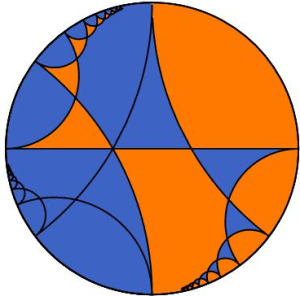
The Zermelo-Fraenkel AS.
This AS features a single primitive sign ‘E’; the expression Exy’ may be read, ‘The set x is an element of the set y’ (the customary notion is ‘x ϵ y’)
Sets are members of relation (E):
Sx = mem€x
Subset (analgous to subclass):
Ss(x,y) = Sx.Sy.(z)(Ezx.>Ezy).
Sets with the same elements are identical
Ss (x,y).Ss(y,x)>(x=y).
A set x is a pair set comprising y and z provided y and z are the only elements of x
Prs(x,y,z) = Sy.Sz.(u)(Eux = (u = y)V (u = z)).
Existence of a pair set comprising two given sets:
Sy.Sz.(y¹z)> (Ǝx)Prs(x,y,z).
A set x is a(the) union set of y provided the elements of x are the elements of the elements of y:
Us(x,y) = Sx.Sy.(u)[Eux = (Ǝz)(Euz.Ezy)]
Existence of a union set of a given set:
Sy> (Ǝx)Us(x,y).
A set x is a (the) power set of y provided the elements of x are the subsets of y:
Ps(x,y) = Sy.(u)[Eux = Euy. Fu)].
A set x is a selection set for y provided x is a subset of a (the) union set of y and x has exactly one element in common with each set that is an element of y.
Sls(x,y) = (Ǝw)(Us(w,y).Ss(x,w)).(z)[Ezy> (Ǝu)(v)(Evz.Evx = (v=u)].
Xiom of choice ( or selection). If y I a set whose elements are non-empty and mutually exclusive, then there is at least one selection set for y:
Sy. (z)(Ezy>(Ǝu)Euz).(v)(w)(u)[Evy.Ewy.Euv.Euw> (v –w)]>(Ǝx)Sls(x,y).
Set x is a (the) unit set of y:
Uts(x,y) = Prs(x,y,y).
Axiom of infinity. Axiom A7. Below (p.179)
(Ǝz)[Sz.(y)[Sy.~(Ǝx)(Exy)>Eyz]. (v)(w)(Evz.Uts(w,v)>Ewz)].
Axiom of replacement
(x)(K)[Sx,(v)(w)(Kvw>Sv).(u)(v)(w)(Kuw.Kvw>(u = v))> (Ǝy)[Sy.(v)(Evy = (Ǝw)(Ewx.Kvw))]].
Axiom of regularity
Eux > (Ǝy)[Eyx.~(Ǝz)(Ezy.Ezx)].
The axiom of restriction. It can easily be seen that the axioms in 43b leave open certain questions concerning the existence of sets. Therefore Fraenkel considered…
Zermelo-Fraenkel AS
ZF(H) = (x)(y)[mem(H)x.mem(H)y.(z)(Hzx = Hzy)> (x = y)]. (y)[mem(H)y>(Ǝx)(mem(H)(x).(u)[Eux,etc.
Now the meaing of Fraenkel’s axiom is this: ‘For the system of sets ordered by the relation E, there is no subsystem of a different structure (i.e. not isomorphic to the original system) which likewise fulfills the previous axioms’.
(H)[(x)(y)(Hxy>Exy).ZF(H)>Is₂(H,E)].
‘minimal-structure axioms’
Carnap-Bachmann [Extrem.]
a modified version of the AS in an elementary basic language. The AS stated in 43a makes use of predicate variables,viz., ‘F’ in A5 and ‘K’ in A8. For certain purposes, however, it seems desirable to have an AS for set theory with a more elementary basic language (42a) containing only individual variables but no predicate variables. Especially us this so if set theory is constructed for the purpose of serving as the logical theory of abstract concepts (classes, relation, functions, etc.)
Peano’s AS for the natural numbers
the first version: the original form. For the original account, see Peano [Formulaire] II 2: Arithmetique, 1898, pp. 1ff, for another account see Russell [Introduction] ch i. our formulation A nay be read after 18, formulation C after 32. The AS features three primitive signs ‘ze’, ‘N’, ‘sc’. The sign ‘se’ is an individual constant,’N’ a one-place predicate, and ‘sc’ a one –place functor. The usual interpretation is: ‘ze’ denotes the number ‘0’; ‘Nx’ reads ‘x is a (natural) number’; and ‘sc(x)’ reads ‘the successor of ‘x’ or ‘the (natural) number following x’.
Zero is a number:
A1, N(ze),
The successor of a number is a number:
A. Nx>Nn(sc(x)).
sc”N<N.
Numbers with the same successor are identical:
Nx.Ny (sc(x) – sc(y))>(x = y).
Zero is not the successor of any number:
A. Nx > (sc(x) º ze).
~(sc”N)(ze).
Axiom A5 is the Principle of Mathematical Induction (‘complete’ induction); recall 37c. every number F if the property F satisfies the two conditions: (1) zero is F; and (2) if any individual is an F, then so is its successor:
(F)[F(ze).(x)(Fx>F(sc(x)))>(y)(Ny>Fy)].
(F)[F(ze)>(sc”F<F)>(N<F)].
The second version: just one primitive sign. The single primitive sign here is the two-place predicate ‘Pr’; it customary interpretation: immediate predecessor in the series of natural numbers. For discussions, see Russell [Introduction] Ch 1. And [P.M.] II, 245.
(see p. 182)
Explicit concept of M..
AS for the Real Numbers
This AS stems from Tarski [Logic] 63. An account of it may also be found in Cooley [Logic] 36
The AS has six primitive signs, viz. Two predicates: ‘R’ (Real number) and ‘S’ relation Smaller); two two-place functors: ‘su’ (sum) and ‘prod’ (product); and two individual constants (numerals): ‘0’ and ‘1’.
A. (x ¹ y) > Sxy V Syx,
Connex(S). (see 31b.)
The relation S is asymmetric:
A. Sxy > ~ Syx.
As(S).
The relation S is transitive:
A. Sxy.Syz>Sxz.
Trans(S).
The relation S is a Dedekind relation (38b):
A. (x)(y)[Fx.Gy>Sxy] > (Ǝz)(x)(y)[Fx.(x ¹z).Gy. (y ¹z) > Sxz.Szy].
Ded(S).
It follows from A4 and other axioms that S has no initial member and no terminal member, and hence that S belongs to the kind Dedₒₒ.
The sum of two numbers is a number:
Rx.Ry > R(su(x,y)).
The sum is commutative:
Su(x,y) = su(y,x)
The sum is associative:
Su(x,su(y,z)) = su(su(x,y),z).
Existence of the difference of two numbers:
Rx.Ry > (Ǝz)(Rz,(x = su(y,z)))
[Here Cooley takes the simpler axiom: ‘Rx > (Ǝz)(Rz.(su(x,z) = 0))’.]
Monotony of the sum:
Syz >S(su(x,y)su(x,z)).
It is the case that 0 is a number:
R(0).
It is the case that x + 0 = x:
A11, su(x,0) = x.
The product of two numbers is a number:
Rx . Ry > R(prod(x,y)).
The product is commutative:
Prod(x,y) = prod (y,x)).
The product is associative:
Prod(x,prod(y,z)) = prod(prod(x,y),z).
Existence of the quotient:
Rx,Ry,(y¹0)>(Ǝz)(Rz.(x = prod(y,z))).
Monotony of the product:
S(0,x).S(y,z)>S(prod(x,y),prod(x,z)).
The distributive law:
Prod(x,su(y,z) = su(prod(x,y),prod(x,z)).
It is the case that 1 is a number:
R(1)
It is the case that x . 1 = x:
Prod(x,1) = x.
It is the case that 0 is distinct from 1:
0 ¹ 1.
Chapter F
Axiom Systems (ASs for geometry)
AS for Topology (Neighborhood Axioms)
The AS below is constructed following Hausdorff [Grudzuge] 213 ff.(compare also Rosser [Logic] ch IX sec. 8; and H.F. Bohnenblust , Theory of functions of real variables, Princeton 1937). With the elements, called points, certain classes of points are associated as neighborhoods. Such a neighborhood system forms a topological space.
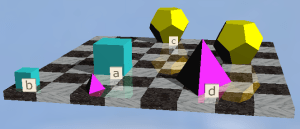
the first version/ here the only primitive sign is the predicate ‘Nb’. The expression ‘Nb(F,x)’ reads ‘the class F (of points) is aneighborhoo of (the point) x’. (Formulation A can be read after 19; formulation C, after 32.
The points are the second place members of Nb:
A. Px = mem2(Nb)x
P = mem2(Nb).
The neighborhoods (‘Nbh’) are the first-place members of Nb:
A. Nbh(F) = mem1(Nb)(F).
Nbh = mem1(Nb).
The point classes:
A. PC(F) = (z)(Fz>Pz).
PC = sub1(P).
Each neighborhood is a class of points:
A. Nbh(F) > PC(F).
Nbh < PC.
Every neighborhood of x contains an x:
Nb(F,x) > Fx.
If F1 and F2 are neighborhoods of x, then there is a neighborhood of x which is a subclass of both F1 and F2:
A. Nbh(F1,x). Nb(F2,x) > (ƎG)[Nb(Gx) . (y)(Gy > F1y.F2y)].
Nb(F1,x).Nb(F2,x) > (ƎG)[Nb(G,x).(G<F1.F2)].
If y belongs to the neighborhood F ox, then there is a neighborhood G of y such that G is a subclass of F:
A. Nbh(F).Fy > (ƎG)[Nb(G,y).(G<F)].
Two different points have neighborhoods with no points in common:
A. Px.Py.(x ¹ y)> (ƎF)(ƎG)[Nb(F,x).Nb(G,y). ~(Ǝz)(Fz.Gz)].
Px.Py.(x ¹ y)> (ƎF)(ƎG)[Nb(F,x). Nb(G,y).~Ǝ(F.G)].
the second version. Here the sole primitive sign is the predicate ‘Nbh’ (of second-level); Nbh is the class of all neighborhoods. (Formulations A can be read after 17; formulation C, after 37.) we take any class which belongs to Nbh as a neighborhood of any of its points. (This is a simplified version of Rosser’s AS, p. 273, which uses two primitives and essentially three axioms.)
A. Px = (ƎF)[Nbh(F).Fx].
P = sm1(Nbh).
The following axioms A1 and A2 correspond to A3 and A5, respectively.
A. Nbh(F1).Nbh(F2).F1x.F2x > (ƎG)[Nbh(G).Gx.(y)(Gy > F2y. F2y)].
Nbh(F1).Nbh(F2).F1xF2x > (ƎG)[Nbh(G),Gx,(G < F1,F2)].
A. Px.Py.(x¹y) > ((ƎF)(ƎG)[Nbh(F).Fx.Nbh(G).Gx.~Ǝ(F.G)].
We now can define the two-place predicate ‘Nb’ so that it corresponds to the primitive predicated ‘Nb’ of the first version:
Nb(F,x) = Nbh(F).Fx.
For ‘PC’, as in D3.
It can easily be shown that on the basis of these axioms and definitions, the five axioms of the first version are derivable.
The additional concepts of topology (point set theory) can be defined in the basis of ‘Nbh’. Some examples follow below:
A. Inn(x,F) = PC(F).(ƎG)[Nb(G,x).(z)(Gz >Fz)].
Inn(x,F) = PC(F).Ǝ(Nb(-,x).sub1(F)).
A point class is called ‘open’ (‘OPC’), if all its points are inner points:
A. OPC(F) = PC(F).(x)(Fx > Inn(x,F)).
OPC(F) = PC(F).(F< Inn(-,F)).
By the complement of F we understand the class of all three points which do not belong to F (note that ‘cpl’ is a function of the second level):
A. cpl(F) = P.~F.
We may say that x is a limit point of F(‘Lim(x,F)). Provided F is a point class and x is a point(not necessarily belonging to F) such that every open point class containing x also contains a point of F different from x:
Lim(x,F) = PC(F).Px.(G)[OPC(G).Gx > (Ǝy)(y ¹ x,Fy,Gy)].
A point class is called ‘closed’ if it contains all its limit points:
A. Clos(F) = PC(F).(x)[Lim(x,F)>Fx].
Clos(F) = PC(F). [Lim(-,F)<F].
The closure of F is defined as the union of F and the class of the limit points of F. it is denoted by ‘clos(F)’, where ‘clos’ is a functor of second level:
A. clos(F)(x) = FxVLim(x,F).
clos(F) = (FVLim(-.F)).
A point x is said to be a point of accumulation of F(‘Acc(x,F)’) provided every neighborhood of x contains infinitely many points of F:
A. Acc(x,F) = (G1)[Nb(G1,x) > (ƎG2)(ƎG3)[(z)(G3z>G2z).(Ǝy)(G2y.~G3y).Is1(G3,G2).(z)(G2z>G1z.Fz)]].
Acc(x,F) = (G)[Nb(G,x)>ClsRefl(F.G)].
The whole space, i.e. the class of all points, is both open and closed:
A. OPC(P). b. Clos(P).
Every neighborhood is open:
A. Nbh(F) > OPC(F).
Nbh < OPC.
The closure of any point class is closed:
PC(F) > Clos(clos(F)).
A point class is closed if and only if it is identical with its closure:
A. Clos(F) = (x)[Fx = clos(F)x].
Clos(F) = [F = clos(F)].
A point class is closed if and only if its complement is open:
Clos(F) = OPC(cpl(F)).
Definition of logical concepts. What follows is given in formulation C, and may be read after 40. we begin by defining the explicit concept (recall 42d) for the Hausdorff AS in its second version (46b), which reads ‘ the class of M (of the second level) satisfies the Hausdorff AS’ or “M is a (Hausdorff) neighborhood system.’ Therefore we list definitions of additional logical concepts culminating in the concept of the ‘dimension number’ (see Karl Menger, Dimensiontheorie, 928, pp. 77ff.; see also his ‘What is dimension?’, Amer. Math Mon., 50m 1943), all these definitions are formulated just in language C; their formulation in language A is too long and complicated.
C. Hausd(M) = (F1)(F2)(x)[M(F1).M(F2).F1x.F2x > (ƎG)[M(G).Gx.(G<F1.F2)]].(x)(y)[sm1(M)]x.sm1(M)y.(x ¹ y)< (ƎF)(ƎG)[M(F).Fx.M(G).Gx.~Ǝ(.G)]]
To the axiomatic predicate ;Acc’ (recall D10) there corresponds the logical predicate ‘Acp’; the sentence ‘Acp(x,F,M)’ says ‘x is a point of accumulation of F with respect to neighborhood system M” (all the other concepts below similarly refer to a neighborhood system M):
C. Acp(x,F,M) = Hausd(M).(G)[M(G).Gx>ClsRefl(F.G)].
The boundary class F with respect to M (symbols; ‘bd(F,M)’) is the class of those accumulation points of F respecting M which are not points of F:
C. bd(F,M)x = Acp(x,F,M). ~Fx.
We now include the type of the integers, and take the variables ‘m’, ‘n’, (etc., to be of this type.
In the fashion of Menger
In defining the latter concept we have departed from Menger.
C.1. Di(0,F,x,M) = Hausd(M). ~Ǝ(F).
SmEq(0,n) > [Di(n’,F,x,M) = Hausd(M).(F<sm1(M)).Fx.(G1)[M(G1).G1x > (ƎG2)[M(G2).G2x.(Gs < G1).(y)(Fy.bd(G2,M)y > Di(n,F,bd(G2,M),y,M))]]].
SmEq(n,0) > [Di(‘n,F,x,M) = (x ¹x)].
C. dimp(F,x,M) = (Kn)(Di(n’,F,x,M)).
Omitting the references to a point, we say the dimension number of class F respecting neighborhood system M (symbolically: ‘dim(F,M)’) is n provided: either F is empty and n = -1; or else F is not empty, the dimension number of F at each of its points does not exceed n, and the dimension number of F at one at least of its points is n. Thus:
C. dim(F,M) = (Kn)[~Ǝ(F),(n = -1)) V [(x)(Fx > SmEq(dimp(F,x,M),n)).(Ǝy)(Fy . dimp(F,y,M) = n)]]
We say that F has the homogeneous dimension number n provided either F is empty and n = -1, or else F is non-empty and has dimension number n at each of its points:
C. Dimhom(n,F,M) = Haus(M).[(~Ǝ(F).(n = -1)) V [Ǝ(F).(x)(Fx > dimp(F,x,M) = n)]].
The concepts defined above, especially the logical predicate ‘Dimhom’ are utilized in 48d, 49, and 50.
ASs of Projective, of Affine and of Metric Geometry
Roth (Axiomat].
First we set up an AS of projective geometry (47a)
…this last system is similarly extended to an AS of metric (Euclidean) geometry (47e).
The first modern AS of Euclidean geometry is due to Hilbert (Foundations of Geometry, 1899).
AS of projective geometry.
The sentence ‘Oxu’ reads ‘the point x lies on the line u’; the sentence ‘In(x,r)’ reads ‘the point x lies in the plane r’; and the sentence Sxyuw’ reads ‘the points x and y separate the points v and w on a line’.
A cyclic order.
We agree to use the variables ‘x’, ‘y’,’z’,’v’,’w’ for points , ‘t’ and ‘u’ for lines, and ‘r’ and ‘s’ for planes.
The class of points, the class of lines, and the class of planes
Moreover, we would require eight new axioms: three axioms to the effect that the here classes just mentioned are mutually exclusive, and five other axioms stipulating to which of these three classes the members of ‘0’, of ‘In’ and of ‘S’ belong.
Axioms of connection (see Roth: 1, 1 – 8)
Axioms 1-10 p.193
Axioms A11 through A19 are called axioms of order (see Roth: II, 1-8). If points x,y separate points v,w, then points x,y,v,w are distinct and collinear:
A. Sxyvw > Coll4(x,y,v,w).(x ¹y).(x ¹v).(x ¹w).(y ¹w).(v ¹w).
S < (Coll4.J4).
If x,y separate v,w then x,y separate w,v:
Sxyvw > Sxywv.
If x,y separate v,w then v,w separate x,y:
Sxyvw > Svwxy.
If x,y,v are distinct collinear points, then there is a point w such that x,y separate v,w:
A. Coll3(x,y,v).(x ¹y).(x ¹ v).(y ¹v) > (Ǝw)Sxyvw.
(Coll3>J3)xyv > Ǝ(Sx,y,v,-)).
If x,y,v,w are distinct collinear points, then either x,y separate v,w; or x,v separate y,w; or y,v separate x,w:
A. Coll4(x,y,v,w).(x ¹ y).(x ¹ v).(x ¹ w).(y ¹ v).(y ¹w).(v ¹w) > SxyvwVSxvywVSyvxw.
(Coll4.J4)xyvw > Sxyvw V Sxvyw V Syvxw.
If x,y separate v,w then x,v do not separate y,w:
Sxyvw > Sxvyw.
If x,y separate z,v if z,v,w are collinear, and if w is distinct from and from y, then x,y separate z,w if and only if x,y do not separate v,w:
Sxyzv.Coll(z,v,w).(w ¹ x).(w ¹ y)>(Sxyzw º ~Sxyvw).
Axiom A18 is the axiom of Pasch. Suppose that three non-collinear points x,y,z and also all the points of line u and of line t lie in the same plane r, but that none of x,y,z lies on either of u and t; and suppose further that v is a point on u, that w is a point on t, and that x,y separate v,w: then there is a point v on u and a point w on t such that v,w separate either y,z or x,z.:
A. In(x,r). In(y,r).In(z,r).~Coll3(x,y,z).LinIn(u,r).KinIn(t,r).~Oxu.~Oyu.~Ozu.~Oxt.~Oyt.~Ozt.(Ǝv)(Ǝw)(Ovu.Owt.Sxyvw)>(Ǝv)(Ǝw)[Ovu.Owt.(SvwyzVSvwxz)].
~Coll3(x,y,z).LinIn(u,r).LinIn(t,r).[(x,y,z)<(In(-,r).~O(-,u).~O(-,t))].(Ǝv)(Ǝw)[Ovu.Owt.(SvwyzVSvwxz)].
We say that point w belongs to segment x,y,z (and write: ’Segm(w,x,y,z)’) provided x,y,z are three distinct points on a line u,w lies on u, and w,y do not separate x,z:
A. Segm(w,x,y,z) = (Ǝu)(Oxu.Oyu.Ozu.Owu).(x ¹ y).(x ¹z).(y ¹z).~Swyxz.
Segm(w,x,y,z) = (J3 in O(-,u))xyz.Owu.~Swyxz.
We say that w is an inner point of segment x,y,z (and write ‘ISegm(w,x,y,z)’) provided w belongs to segment x,y,z and is distinct from x and from z:
ISegm(w,x,y,z) = Segm(w,x,y,z).(w ¹x).(w ¹z).
Axiom 19. Is the axiom of continuity. If F is a subclass of a segment and has at least two points, then there exist three points x1,y1,z1 such that F is contained in segment x1,y1,z1 and each segment having either x1 or z1 as an inner point also has an inner point that belongs to F.
(Ǝx)(Ǝy)(Ǝz)(v)(Fv > Segm(v,x,y,z)).(Ǝv)(Ǝw)(Fv.Fw.(v ¹w)) > (Ǝx1)(Ǝy1)(Ǝz1)[(v)(Fv > Segm(v,x1,y1,z1)).(x2)(y2)(z2)(ISegm(x1,x2,y2,z2)VISegm(z1,x2,y2,z2)) > (Ǝw)(ISegm(w,x2,y2,z2).Fw)].
Axiom A20. Is the projective axiom (see Roth III): Two lines in a plane always have at least one point in common:
A. LinIn(u,r).LinIn(t,r)>(Ǝz)(Ozu.Ozt).
(LinIn\LinIn-1)<(0-1|0).
AS of affine geometry. We obtain affine geometry from projective geometry by singling out one (projective) plane and giving it a particular role in the system.
The improper plane (sometimes the ‘ideal’ plane) – ‘improp’
An additional primitive sign ‘improp’
The three-sorted language (points, lines, planes)
The four primitive terms ‘O’, ‘In’, ‘S’ and ‘improp’, the axioms and definitions already laid down for projective geometry, and the four definitions now to be given.
Improper points and improper lines. All other planes, points and lines are called respectively proper planes (PPl), proper points (‘PPo’) and proper lines (‘PLi).
PPl® = (r ¹ improp).
PPo(x) = ~In(x,improp).
OLi(u) = ~LinIn(u,improp).
Two proper lines are said to be parallel (Par) provided they have an improper point in common:
Par(u,t) = Pli(u).Pli(t).(Ǝx)(In(x,improp).Oxu.Oxt).
And from this it follows that ‘(Ǝr)(r = improp)’ is provable (‘there is a plane improp’).
AS of metric Euclidean geometry: A1-A32. Additional primitive signs here is ‘Perp’; the sentence ‘Perp(u,r)’ is read ‘the proper line u is perpendicular to the proper plane r’. axioms A21 through A32 below are called axioms of originality (Roth: V, 1-3)
The first-place members of Perp are proper lines (A21), and the second-place members thereof are proper planes (A22):
A. mem1(Perp)u > Pli(u).
mem1 (Perp) < PLi.
A. mem2(Perp)r > PPl(R).
mem2(Perp) < PPl.
If the proper point x lies in the (proper) plane r, then there is at least (A23) and at most (A24) one line through x perpendicular to r:
PPo(x).In(x,r) > (Ǝu)Oxu,Perp(u,r)).
A. PPo(x).In(x,r).Oxu.Perp(u,r).Oxt,Perp(t,r) > (u = t),
PPo(x).In(x,r) > ~2m(O(x,-).Perp(-,r))
If the proper point x lies on the (proper) line u, then there is at least (A25) and at most (A26) one plane r in which x lies and to which u is perpendicular:
PPo(x).Oxu > (Ǝr)(In(x.r).Perp(u,r)).
A. PPo(x).Oxu.In(x,r).Perp(u,r).In(x,s).Perp(u,s)>(r =s).
PPo(x).Oxu> ~2m(In(x,-).Perp(u,-)).
If the proper point x lies on the (proper) line u, then there is at least (A27) and at most (A28) one plane s such that x lies in s and the following is the case: if u lies in the plane r and the line t is perpendicular to r and x lies on t, then all points of t lie in s:
PPo(x).Oxu>(Ǝs)[In(λ,s)….(r)(t)(LinIn(u,r).Perp(t,r).Oxt>LinIn(t,s))]
PPo(x).Oxu.In(x,s1). In (x,s2).(r)(t)[LinIn(ur).Perp(t,r).Oxt> LinIn(t,s1).LinIn(t,s2)]>(s1 = s2).
If the proper point x lies on the line u and in the planes s and r. if u is perpendicular to s and t to r, and if u lies in r, then t lies in s:
PPo(x).Oxu.Oxt.In(x,s).In(x.r).Perp(u,s).Perp(t,r).LinIn(u,r)>LinIn(t,s).
If the proper point x lies on the line u and in the plane r, and if u is perpendicular to r then u does not lie in r:
PPo(x)>Oxu>In(x,r).Perp(u,r)>~LinIn(u,r).
If lines u and t are perpendicular to a plane, then there is a plane r in which both u and t lie:
A. Perp(u,s).Perp(t,s)> (Ǝr)(LinIn(u,r).LinIn(t,r)).
(Perp|Perp-1)< (LinIn|LinIn-1).
If two different lines u and t are perpendicular to the same pane then u and t have no proper point in common:
Perp(u,s).Perp(t,s)PPo(x).Oxu>Oxt>(u = t).
Chapter G
ASs of Physics
ASs of Space-Time Topology: 1. The C-T System
General Remarks.
Measurable magnitudes, viz. of coordinate systems
By a purely topological method
The AS is based on the conception of space and time found in Einstein’s general theory of relativity; a knowledge of this theory is, of course, not pre-supposed.
g. Reichenbach, Axiomatik der relativistischen Raum-Zeit-Lehre
Particles proper, e.g. electrons again, they may be thought of as the smallest elements of electro-magnetic radiation); they are regarded as idealized, i.e. unextended.
As individuals we take moments or slices of particles
World-points
World-line
Space-time point, i.e. the space time continuum
world points are identified with space-time points
Following Kurt Lewin, we say that world-points of the same particle are genidentical
The Eigenzeit of relativity theory
The Eigenzeit relation
C and T suffice to express, not only the topological structure of temporal order, but that of spatial order as well.
Relation C is symmetric (A1) and transitive (A2), thus C is an equivalence relation (see34a):
A. Cxy > Cyx
C<C-1. [alternatively : Sym(C).]
A. Cxy.Cyz>Cxz.
C2<C. [Alternatively: trans(C)
Every individual coincides with something:
A. (x)(Ǝy)Cxy.
mem1(C). [Abbreviation for ‘U(mem1(C))’; see 28b.]
Every individual coincides with itself, i.e. relation C is totally reflexive:
C. I < C. [Alternatively: Reflex(C).] [By A1,A2,A3 and T31-1(d) and (c).]
Relation T is transitive (A4), irreflexive (A5), and dense (A6; see 38a):
A. Txy.Tyz > Txz.
T2 < T. [Alternatively: Trans(T).]
A. ~Txx.
T < J. [Alternatively: Irr(T).]
A. Txy > (Ǝu)(Txu,Tuy).
T < T2.
Every individual is a first member (A7) and a second member (A8) of T:
A. (x)(Ǝy)Txy.
mem1(T).
A. (y)(Ǝx)Txy.
mem2(T).
Relation T is asymmetric (T2); T has no initial member (T3) and no terminal member (T4):
C. T < ~(T-1). [also: As(T).] [From A4,A5, and T31-1g.]
C. ~Ǝ(init(T)). [From A8, D32-8.]
C. ~Ǝ(init(T-1)). [From A7.]
axiomA9 leads to the theorem (T5) that C and T are mutually exclusive:
A. Cxy . (x ¹y) > ~Txy.
C.J < ~T.
C. C <~T. [By A9 and A5.]
World-points x and y are genidentical provided x is identical with y, or the relation T holds between them in one direction or the other:
A. Gen(x,y) = Txy V Tyx V (x = y).
Gen = (T V T-1 V 1).
Relation Gen is symmetric (T6) and totally reflexive (T7);
C. Sym(Gen). [From D.]
C. Reflex(Gen). [From D1.]
A world-line never branches into two parts, either in the direction of the past (A10) or in the direction of the future (A11):
A. Txz.Tyz > Gen(x,y).
(T|T1) < Gen.
A. Tux.Tuy > Gen(x,y).
(T-1|T) < Gen.
Relation Gen is transitive:
C. Trans(Gen). [From A4, A10, and A11.]
It follows from T6 and T8 that Gen is an equivalence relation. World-lines are the non-empty equivalence classes of Gen, i.e. a world-line is the class of world-points genidentical with some world-point:
A. Wl(F) = (Ǝx)[(y)(Fy = Gen(y,x))].
Wl(F) = (Ǝx)[F = Gen(-,x)].
The world-points of each world-line are ordered into a series by means of a subrelation of T; these series relations we call ‘world-line series’ (‘Wlin’):
A. Wlin(H) = (ƎF)[Wl(F)(x)(y)(Hxy = Txy.Fx.Fy)].
Wlin(H) = (ƎF)[Wl(F).(H = (T in F))].
The world-line series are transitive (T11; from A4 and T32-2c), irreflexive (T12; by A5), asymmetric (T13; from T2) and connected (T14; from A4,A10,A11); hence they are properly series (T15; from T11,T12,T14); moreover, they are dense (T16; by A6):
C. Wlin<Trans.
C. Wlin<Irr.
C. Wlin<As.
C. Wlin<Connex.
C. Wlin<Ser.
C. Wlin(H) > (H <H2).
Every world-line series is a Dedekind relation (A12; recall 38b) and hence is a series of Dedekind continuity without initial or terminal members (T17):
A. Wlin(H) > (F)(G)[(x)(y)(Fx.Gy>Hxy)>(Ǝz)(x)(y)(Fx.(x ¹z), Gy(y ¹ z)> Hxz.Hzy)].
Wlin<Ded.
C. Wlin<DedSerₒₒ
The following axiom A13, formulated only in language C, may be passed over inasmuch as it is not used hereafter. It says that every world-line series has a denumerable class of intermediate members (recall D38-7). Hence such a series also has Cantor continuity (T18; from T17 and A13). This topological structural property of these series makes possible a transition to a metric, viz. it permits a one-one association of real numbers with world-points of a world-line.
C. Wlin(H) > (ƎF)(Àₒ(F).Med(F,H)).
C. Wlin<ContSerₒₒ.
The signal relation. [Here formulation A (axioms only) can be read after 18; formulation C, after 38. An effect reaches from a world-point y if and only if x is connected to y by a signal. The simplest case of such a connection sees x coincident with the world-point u of a particle which so moves that a later world-point r of the same particle coincides with y. (According as this mediating particle is a material signal or a radiation signal e.g. a light signal.) in other cases the signal is not by a single particle, but by a chain of particles: x and y are joined by a linkage consisting of segments of world-lines, the linkage being such that the end of each constituent segment is joined to the beginning of the next by a coincidence. Figure 4 illustrates how world-point b1 could be joined to world-point e3 by the signal chain: Tb1c1, Cc1c2, Tc2d2, Cd2d3, Td3e3.
(see fig 4. ‘Signal Chain’ p. 201)
Since identical world-points are also regarded as coincident (T1), our explication of the concept of the signal chain loses no generality if we require that every such chain begins with C and ends with C. if there is a chain of this kind, we say that the signal relation(‘S’) exists between the initial member and terminal member of the chain. E.g. adding ‘Cb0Cb1’ and ‘Ce3e4’ to the chain pictures on Figure 4, we obtain the signal chain: Cb0b1,Tb1c1,Cc1c2,Te2d2,Cd2d3,Td3e3,Ce3c4; in view of this chain we see that Sb0e4 is the case. Of course, it is also the case that Sb1e3, since C is totally reflexive and hence both ‘Cb1b1’ and ‘Ce3e3’ hold. Thus ‘S’ represents the same thing as ‘C|T|C|T|C|T…|C’.
On the basis of the consideration above we construct ‘S’ the definition D4. [From this point on we give the definitions as well as the theorems only in formation C; formulation A becomes quite complicated beginning with D4.]
C. S = (C|T) > 0|C.
If T holds, so also does S (T19; by T1); and S is transitive (T20; by A2):
A. T < S.
C. Trans(S)
The following axiom A14 serves to establish the irreflexity of S (T21):
A. Sxy.~ Txy > (x ¹y).
(S.~T)< J.
C. Irr(S). [From A14, A5.]
Relation S is asymmetric (T22; fromT20,T21), and S and C are mutually exclusive (T23; from A1,A2,T21):
C. As(S).
C. S<~C.
Two further axioms are to the following effect. Suppose x bears the relation S to y, and either lies outside the world-line but not before y. then, first, there is a world-point u before y on the world-line of y which is so early that no signal (i.e. S-relation) from x reaches it (A15); and, second, there is a world-point v after x on the world-line of x which is so late that no signal from it reaches y (A16). From these assumptions it follows that the same also holds for arbitrary world-points x and y (T24: from A15, T19,T20, A8; and T25: from A16, T19T20,A7). This in turn entails that on each world-line there are arbitrarily early and arbitrarily late world-points.
A. Sxy .~Txy>(Ǝu)(~Sxu.Tuy).
(S.~T)>((~S)|T).
C. (~S)|T. [Abbreviation for ‘U((~S)|T)’; see 28b.]
A. Sxy.~Txy>(Ǝv)(Txv.~Svy).
(S.~T) < (T|~S).
C. T|~S.
Axiom A17 concerns the finite limiting velocity. If there were an infinite signal velocity, there could be two non-coincident points x and y with a signal from x to y and also a signal from y to x; but this iss impossible because of the asymmetry of S (T22). However, it might still be the case that there are signal velocities of any arbitrary finite value. Were this last to be so, it could happen that from each point before x on the world-line of x – if not from x itsel – a signal could go to y, and from y, and from y a signal to each point after x n the world line of x. axiom A17 leads to T26 (with the help of T22) and thereby excludes this possibility, in accordance with relativity theory.
A. (u)(Tux > Suy).(z)(Txz > Syz) > (Sxy.Syx) V Cxy.
(T(-,x) < S(-,y)).(T(x,-) < S(y,-)) > (Sxy.Syx) V Cxy.
C. (T(-,x) < S(-,y)). (T(x,-) < S(y,-)) > Cxy.
the structure of space. [From here on everything, including axioms, is formulated in language C only; the material can be read after 38 of part One and 40 and 46 of part two]. We say two world-points x and y are simultaneous (and write ‘Sim(x,y)’) provided the signal relation fails to hold between x and y, and likewise between y and x. this definition is in agreement with that feature of relativity theory according to which there is and admissible coordinate system furnishing the same value to the time coordinate of both x and y when and only when it is impossible that a signa go from x to y or from y to x. (Cf. Reichenbach, Philosophie der Raum-Zeit.Lehre, Berlin, 1928, p. 171; or its English translation Philosophy of space and time.,,1958.

C. Sim = (~S. ~S-1).
The class S(-,a) of world-points that bear the signal relation S to the world-point a we call (following MInkowski) the prior cone of a (see Figure 5). The class S(a,-) of world-points to which a bears the signal relation S we call the posterior cone of a. in view of the finite limiting velocity (A17) there exists between the prior cone and the posterior cone the so-called intermediate region of a; this intermediate region of a is the class Sim(-,a) of world-points simultaneous with a. a world-line F having no coincidence with a has a whole segment in common with the intermediate region of a (in Figure 5, this segment is labelled ‘F.Sim(-,a)’). Such a world-line F has not simply one world-point simultaneous with a, but many (indeed infinitely many; see T34 below). While these last-mentioned world-points of F are all simultaneous with a, they are not simultaneous with each other, i.e. Sim is not a transitive relation (in contradistinction to simultaneity with reference to a fixed coordinate system).
5 the shaded area represents the effected region H of the point x in the space G
Theorems regarding Sim. Sim is totally reflexive (T27; by T21) and symmetric (T28). Coincident world-points are simultaneous (T29; from T23 and A1); simultaneous genidentical points are identical (T30; by T19); Sim and S are mutually exclusive, hence Sim and T are likewise (T31 and T32 by T19).
C. Reflex(Sim).
C. Sym(sim).
C. C<Sim.
C. (Sim.Gen)< I.
C. Sim<~S.
C. Sim<~T.
Additional theorems. For each world-point x there is on each world-line F a world-point simultaneous with x (T33) and even infinitely many world-points simultaneous with x provided no world-point of F coincides with x (T34):
C. (x)[Wl(F) > Ǝ(F.Sim(-,x))].
C. Wl(F). ~(C”F)(x)>ClsRefl(F.Sim(-,x)).
Outlines of proofs for T33 and t34. We distinguish two cases; T33 refers to both, T34 to the second only. (1) Suppose x coincides with a point pf world-line F; T33 then follows with the help of T29 – and in the special event that x belongs to F, with the help of T27. (2) Suppose x does not coincide with a point of F. Let F1 = F.S(-,x), i.e. F1 is the class of those world points of F which bear the relation S to x; and let F2 = F.S9x,-), of the Dedekind continuity of T in F (recall T17) there is an upper limit say y1,(i.e. a world-point of F which separates the class F1 and its complement in F; cf. 38b), and a lower limit, say y2, for F2(i.e. a world-point of which separates F2 and its complement in F). in accordance with the axiom of the finite limiting velocity (A17), world-points y1 and y2 are different; indeed, it is the case that Ty1y2. By A6 there are infinitely many points of F between y1 and y2. All of these intervening points are simultaneous with x (cf. Figure 5).
A spatial class, or space for short, is so to speak a three dimensional cross section of the four dimensional space-time world, the sectioning being done across the time direction – i.e. across all world lines. Thus our definition runs as follows: A space is a class of world-points which are simultaneous with each other, the class of itself being such that it has in common with each world –line at least one world-point.
C. Sp(G) = (x)(y)[Gx.Gy > Sim(x,y)]. (F)[Wl(F) > Ǝ(G.F)].
In view of definition D6 it is the case that every space has exactly one point in common with ech world-line (T35; by T32):
C. Sp(G).Wl(F) > 1(G.F).
Axiom A18 is adopted to assure that for each world-point there is a space to which it belongs (T36). To weaken our formulation of A18 we add to it the condition that every world-line not containing a point coincident with x has infinitely many points simultaneous with x. the condition can be omitted fromT36, because by T34 it is already satisfied. Finally, T37 says that points coincident with points of a space also belong to the space.
C. (F)[Wl(F).~(C”F)x > ClsRefl(F.Sim(-,x))] > (ƎG)(Sp(G).Gx).
C. sm1(Sp)x.
C > Sp(G) > (C”G<G).
What the primitive concepts C and T furnish directly is a topological order for time alone. The question arises whether it is possible on this same basis, i.e. without additional new primitive concepts, also to determine a topological order in each space. This question can be answered affirmatively with the help of the concept of effected region. We say (D7; see Figure 5) a class H is the effected region in space G of world-point x, and write ‘Effreg(H,x,G)’, provided H is non-empty and is the class of all points z of G to which a signal (i.e. the S-relation) leads from some point y later than x (so to speak, H is the intersection of G with the class of interior points of the posterior cone of x):
C. Effreg(H,x,G) = Sp(G).[H = ((T|S)(x,-).G)].Ǝ(H).
Coincident world-points have the same spatial position. Hence we take as elements of our space order, i.e. as space-points (‘SpP’), not world-points but classes of world-points coincident among themselves – which is to say, we count as space-points the non-empty equivalence classes respecting the relation C (recall T34-1b):
C. SpP(F) = (Ǝx)(F = C(-,x)).
The nearer x lies to space G, the smaller is the effected region of x in G. thus each G contains arbitrarily small effected regions. On the other hand, an arbitrary world-point of G can be reached by a signal from a given world-line provided only the signal emanates from a sufficiently early world-point x of this given world-line. Hence G also contains arbitrarily large effected regions. These considerations suggest that effected regions – more precisely: space –point classes that correspond to effected regions – be taken as neighborhoods within space G. we shall do this; ‘Nbd(N,G)’ is to mean ‘the class N (of space points) is a neighborhood in space G” (D9). Then we shall regard such a class N as a neighborhood of each space-point F in G which belongs to it. (cf. 46b):
C. Nbd(N,G) = (Ǝx)(ƎH)[Effreg(H,x,G).(N<SpP).(sm1(N) = H)].
To show (T40) that in each space the neighborhoods just defined constitute a Hausdorff neighborhood system (recall 46b), we require axioms A19 and A20. Axiom A19 says: if y and v are two non-coincident points of space G, then there is an x preceding y and a u preceding v such that no point of G can be reached both by a signal from a point after x and by a signal from a point after u. it follows from this axiom A19 that there are in G neighborhoods of the space-points corresponding to world-points y and v such that these neighborhoods have no points in common (T38) – viz., the neighborhoods corresponding to the effective regions of x and of u in G.
C> Sp(G).Gy.Gv.~Cyu>(Ǝx)(Ǝu)[Txy,Tuv,~(Ǝt)[Gt.(T|S)(x,t).(T|S)(u,t]].
C. Sp(G).SpP(F1).SpP(F2).(F1<G).(F2<G)>(F1 ¹F2) > (ƎN1)(ƎN2)[Nbd(N1,G).N1(F1).Nbd(N2,G).N2(F2).~Ǝ(N1.N2)].
Axiom A20 says: if there is a point z in space G which receives a signal from a point later than x and also a signal from a point later than y, then there is also a point u of which the same is true and which is such that from a later point(i.e. a point later than u) there is a signal that leads to z. i.e. if the effective regions F1 and F2 in G of x and of y respectively have a point z in common, then in the intersection of F1 and F2 there is also an effective region, viz. that of u. from this axiom we obtain the following result (T39): ifN1 and N2 are neighborhoods of F in G, then there is a neighborhood N3 of F in G such that N3 is a subclass of N1 and a subclass of N2.
C. Sp(G).Gz.(T|S)(x,z)>(T}S)(y,z)>(Ǝu)[(T|S)(x,u).(T|S)(y,u).(T|S)(u,z)].
C. Sp(G).Nbd(N1,G).N1(F).Nbd(N2,G).N2(F)>(ƎuN3)[Nbd(N3,G).N3(F)>(N3<N1>N2)].
That the two neighborhood axioms A1 and A2 in 46b hold is shown by T39 and of T38 respectively. (Notice that A2 would not hold for two different but coincident world-points; it is for this reason that we use space-points, rather than world-points, as the elements of the neighborhoods of our system.) thus in each space the classes of space-points defined her (by D9) as neighborhoods constitute a Hausdorff system of neighborhoods (T40). Recall that ‘Hausd’ is a logical constant; see D11 in 46c).
C. Sp(G) > Hausd(Nbd(-,G).
The foundation just laid enables us to employ all the topological concepts defined earlier (in 46c) with respect to neighborhood systems. Thus, a description of any of the topological properties of space can be formulated in the signs of our AS – and this means in terms of C and T ultimately. E.g. we can now construct an axiom (it is A21) stipulating that each space is three-dimensional. Axiom A21 says: if any space G is such that it carries a Hausdorff system of neighborhoods, then the class of space-points of G has the homogenous dimension number 3 respecting the neighborhood system in G (recall D17 in 46c). theorem T41 says the same thing without the restrictive condition involving the neighborhood system in G, for in view of T40 this condition holds in any case.
C. Sp(G). Hausd(Nbd(-,G)) > Dimhom(3,SpP.sub1(G),NBd(-,G)).
C. Sp(G) > Dimhom(3,SpP.sub1(G),Nbd(-,G)).
ASs of Space –time topology 2. The Wlin-System
The present second form is called the Wlin-system. Its single primitive sign is ‘Wlin’. This sign designates the class of time relations (in previous terms: world-line series) on world – lines; recall D3 in 48b. In the present system, world-points are again taken as individuals – however, world-points not as particle slices, but as the space-time points corresponding thereto. Here, therefore, coincident world-points are identical, and hence the relation of C is superfluous. On the other hand, discrimination between the various world-lines now requires the class Win of relations, rather than the relation T. the present form of the system makes especially clear how the axioms ascribe topological properties to the time order, while also permitting a representation of the nature of space order. [the present system, as well as that given in 50, are formulated in language C only; both systems may be read after 38 of Chapter C, together with46 of Chapter F.]
Axioms A1 through A6 say that each of the time relations Wlin is irreflexive, transitive, devoid of initial member, devoid of terminal member, dense and connected:
C. Wlin<Irr.
C. Wlin<Trans.
C. Wlin(H)>(mem(H)<mem2(H)).
C. Wlin(H)>(mem(H)<mem1(H)).
C. Wlin(H)>(H>H2).
C. Wlin<Connex.
It follows from A1, A2 and A6 that the relations comprised by Wlin are series:
C. Wlin<Ser.
We can now introduce a sign ‘T” with roughly the same meaning as that imputed to the primitive sign ‘T’ of the first form (48b). Here, however, the relation T is not transitive; if the present T holds between x and y and between y and z, and if x and z belong to different world-lines, then this T does not hold between x and z.
C. T = sm2(Wlin).
It follows from A1 that T is irreflexive (T2), and from A5 that T is dense (T3):
C. Irr(T).
C. T < T2.
The signs defined next below correspond to the same signs given in the first form (48b, c): ‘Wl’ denotes the class of world-lines, i.e. of the fields of the relations constituting Wlin; ‘Gen’ denotes genidentity, and ‘S’ the signal relation.
C. Wl = mem”Wlin.
C. Gen(x,y) = (ƎF)(Wl(F).Fx.Fy).
C. S = T>0.
axioms A7 through A9 of the present system are identical in appearance with axioms A12 through A14 of the previous system; for that reason we do not list them here explicitly.
Axioms A10.A11 and A12 below are similar to our preceding axioms A15, A16 and A17 respectively:
C. Wl(F) > (S”F.~F < (~S)”F).
C. Wl(F) > (S -1”F.~F < (~S-1)(“F).
C. (T(-,x) < S(-,y)).(T(x,-) < S(y,-)) > (Sxy.Syx) V (x = y).
From the axioms given to date there follow theorems with the same phrasing as our earlier theorems T17 through T22, T24, and T25; we do not repeat these theorems here.
Again our present D5 for ‘Sim’, D6 for ‘Sp’ and D7 for ‘Effreg’ run like D5m D6 and D7 of our first form (48d), and are not repeated here.
From this point our present system continues in a fashion analogous to the previous one, though in some respects it is markedly simpler. Since here coincidence points are identical, we need not distinguish between world-points and space-points. Further, neighborhoods can be defined directly as the effected region themselves:
C. Nbd(F,G) = (Ǝx)Effreg(F,x,G).
Additional axioms A13 through A15 are to be constructed in analogy with axioms A18 through A20 of the first form. Thereupon there follows a theorem with the same wording as our earlier T40.
Axiom A17 stipulates that each space has the homogenous dimension number 3; the formulation of this axiom is somewhat simpler than that of the corresponding axiom (A21) in the first system.
C. Sp(G). Hausd(Nbd(-,G)) > Dimhom(3,G,Nbd(-,G)).
And finallyT41. Sp(G) > Dimhom(3,G,Nbd(-,G)).
ASs of Space-Time Topology: 3. The S-System
We now turn to the third form, called the S-system. The single primitive sign of this system is ‘S” , standing for the signal relation. Here, as in the second form (49) , we regard coincident points as identical. However, the concepts of genidentity and of world-line do not appear in the present system. From a certain point of view, this omission is an advantageous feature of the third form because the use e.g. of the concept of genidentity is questionable in some cases – notably, in the matter-free electromagnetic field and for particles in quantum theory. (The formulation that follow are given in language C alone).
The first axioms say that S is transitive, irreflexive, dense, and devoid of initial and of terminal members. Subsequent axioms are analogous to some of the first form; however, a smaller number of axioms suffices for this system. We shall not state the axioms here, but give only the definitions.
Definition D1 for ‘Sim’ reads like D5 of the first form (48d).
The present form poses a difficulty n connection with the definition of ‘Sp’ (space). In order that each space be sufficiently comprehensive, our earlier definition (D6 in 48d) required a space to have a point in common with every world-line. Our difficulty here stems from the fast that the concept of world-line does not appear in the system. However, we can avoid this difficulty and reach the same goal with the help of the concept of signal line (Sln). A signal line is a series which is contained in S and which –this being the essential thing so far as the definition of ‘space’ is concerned – is as comprehensive as possible, i.e. neither the ends nor the middle lack a piece. Our definition of ‘Sln’ (D2) exhibits the requirements in the form of a condition that a signal line not be extensible, i.e. not be a proper subrelation of a relation which itself is a series and is contained in S.
C. Sln(H1)= Ser(H1).(H1<S).(H2)[Ser(H2).(H2<S)>(H1<H2)>(H1 = H2)].
C. Sp(G) = (x)(y)[Gx.Gy>Sim(x,y)].(H)[Sln(H)>Ǝ(G.memH))]
Our definition of the effected region is analogous to that given for the first form (D7 in 48d), but simpler:
C. Effreg(F,x,G) = Sp(G).(F = G.S(x,-)).Ǝ(F).
The present definition of ‘Nbd’ (D) reads like that of the second form (D8 in 49).
The axiom relating to three-dimensionality runs here exactly as it did in the second system (A17 in 49). From this axiom follows the theorem about the homogeneous three-dimensionality of each space; this theorem has exactly the same phrasing as T41 in 49:
C. Sp(G)>Dimhom(3,G,Nbd(-,G)).
If, with the help of the definitions so far given, we eliminate from T1 all the defined axiomatic signs and simplify the result slightly, we obtain theorem T2 below. Besides logical constants and variables, this theorem contains only ‘S’ as the single axiomatic sign; hence the theorem expresses the three-dimensionality of spaces as a property of S:
C. (V2 in G<~S).(H1)[Ser(H1).(H1<S).(H2)[Ser(H2).(H2<S).(H1<H2) . (H1 = H2)] > Ǝ(G.mem(H1))]>Dimhom(3,G,(λF)[(Ǝx)(F =G.S(x,-)).Ǝ(F)]).
Further, every other topological property of space order can similarly be expressed as a property of the signal relation. In a certain sense, therefore, t is possible to say that the space order is the order among simultaneous points determined by the signal relation.
Determination and Causality
The general concept of determination. ( Formulation A may be read after 19, formulation C after 33). There are two primitive signs: ‘Magn’ and ‘Pos’. the sentence ‘Magn(f)’ says ‘f is a state magnitude’; this means that f is a function and that to each position of the domain in question f associates either a quantity (recall 41a) , say a real number or an n-tuple of real numbers, or else a quantity. The sentence ‘Pos(H)’ says ‘H is a two-place positional relation between positions’; the positional relations determine the order of the positions, but not their nature.
We take positions as individuals (or as individuals of the first sort, in case the values of the state magnitudes – e.g. real numbers – are taken as individuals of the second sort in a two –sorted language). Individual variables ‘x’, etc., thus refer to positions.
The relation H is called a positional correlator between classes F and G, and we write ‘PosCorr(H,F,G)’, provided: if K1 is any positional relation, and K2 and K3 are the subrelations of K1 for the elements of F and of G respectively, then H is a correlator between K2 and K3.
A. PosCorr(H,F<G) = (K1)(K2)(K3)[Pos(K1).(x)(y)(K2xy) = K1xy.Fx.Fy).(x)(y)(K3xy = K1xy.Gx.Gy) > Corr2(H,K2,K3)].
PosCorr(H,F,G) = (K)[PosCorr2(H,K in F,K in G)].
A positional correlator between F and G is a magnitude correlator between F and G with respect to the class N of state magnitude (we write: ‘MagnaCorr(H,F,G,N)’) provided each state magnitude of class N has at each position of F the same value that it does at the position of G corresponding thereto under H.
MagnCorr(H,F,G,N) = PosCorr(H,F,G). (f)(x)(y)[N(f).Hxy.Fx.Gy > Magn(f).(f(x) = f(y)))].
The class F of positions is called a determining class of position x with respect to the class N of state magnitudes ) ’Det(F,x,N)’) provided it is the case that the values of the state magnitudes of N at x are determined y their values at the position of F (more precisely: if, on the basis of a positional correlator H, a position y has the same positional relations to a class G of positions as position x does to class F, and if H is also a state magnitude correlator between F and G with respect to N, then the state magnitudes of N at y have the same values that they do at x):
A. Det(F,x,N) = (f)(N(f) > Magn(f)). (F2)(G1)(G2)(y)(H)(f)[(u)(F2u = Fu V (u = x)). (u)(G2u = G1u V (u =y) . PosCorr(H,F2,G2). Hxy.MagnCorr(H,F,G,N).N(f) > (f(x) = f(y))].
The principle of causality. (what follows is phrased in language C only; it may be read after 37.) with the help of the present concepts, and some earlier ones from 48-50, we can now formulate various versions of the principle of causality. We assume at the outset the following interpretations of present concepts: individuals (positions) are space-time points, i.e. we employ language form III explained in 39d; Pos is the class of geometric relations between space-time points, (e.g. distance of 3 cm.); and Magn is the class of physical magnitudes (e.g. temperature).
Version 1. ‘there is a non-empty finite class N of state magnitudes such that the state at every space-time point x with respect to N is determined by the state with respect to N at a class F of space-time points not including x’:
C. (ƎN)(x)(ƎF)[Ǝ(N). ClsINduct(N).~Fx.Det(F,x,N)].
Version 2. Suppose some physical state magnitudes are specified, and M is defined as the class of these specified magnitudes. The causality principle with respect to M runs as follows” ‘the state at every space-time point x with respect to M is determined by the state respecting M at a class F which does not include x’:
(x)(ƎF)[(F<S(-,x)).Det(F,x,M)).
Version 4. A stronger assertion is the following one. ‘The state at x with respect to M is determined by the state respecting M at an arbitrary spatial cross-section F through the prior cone of x’ (regarding ‘Sp’, see 48d):
C. (x)(F)(G)[Sp(G).(F = G.S(-,x)).Ǝ(F)>Det(F,x,M)].
A similar assertion of still greater strength makes the same claim for any spatial cross-section through the prior cone or through the posterior cone; i.e. in this case – the case of classical physics – determinism is assumed in both directions. To formulate this assertion, we simply replace ‘S(-.x)’ by ‘(S(-,x) V S(x,-))’ in CP4.
Chapter H
ASs of Biology
AS of Things and Their parts.
things and their parts. In 52 and 53 there is constructed as AS which is a small portion (slightly modified) of the AS set up by Woodger (Biology) for certain basic concepts of biology, notably of genetics. The present section contains a preliminary part concerned with things in general, without specialization to biology. This AS can therefore serve as a basis for other fields besides biology. The next section enlarges this AS into an AS with certain primitive concepts of a biological character. (the formulation of 52a and 52b given in language A can be read after 17; those given of language C, after 35.)
The present AS treats part-relations and time-relations between space-time regions. These regions are taken as individuals, i.e. we employ language form I explained in 39b. the primitive signs of this AS are: ‘P’, ‘Tr’, ‘Th’. (Woodger uses ‘P’, ‘T’, – instead.) interpretations of the first two agree with those given in 39a: ‘Pxy’ is read ‘x is temporarily earlier than y – more exactly: every part of x is temporarily earlier than every part of y’. our interpretation of the third primitive sign runs: ‘Thx)’ means ‘x is a thing’.
Relation P is transitive:
A. Pxy.Pyz > Pxz.
Trans(P).
We say that x is the sum of the class F, and write ‘Su(x,F)’, provided the elements of F are parts of x and for each part y of x there is an element z of F such that y and z have at least one part in common:
A. Su(x,F) = (u)(Fu > Pux).(y)[Pyx > (Ǝz)(Ǝw)*Fz.Pwy,Pwz)].
Su(x,F) = (F < P{-,x)).(y)[Pyx > (Ǝz)(Fz.(P-1)|P)yz)].
Every non-empty class has exactly one sum:
A. (Ǝu)(Fu) > (Ǝx)(y)(Su(y.F) = (y = x)).
Ǝ(F) > 1(Su(-,F)).
[Axiom A2 shows that ‘Su’ is designed so that any description of the form ‘Su’Q’ (see D35-2), for Q a non-empty class, satisfies the uniqueness condition. Instead of the two-place predicate ‘Su’, therefore, we could just as well take a one-place functor ‘su’ as a primitive sign (recall 18b); in this case we would have to take as the (improper) sum of the empty class (su(A)) some fixed region, e.g. the empty region.]
Of the theorems which follow from A1 and A2 we give two. The first says that relation P is totally reflexive:
A. Pxx.
Reflex(P).
The second theorem runs as follows: if x and y are parts of each other then they are identical (i.e. between two different individuals the relation P holds in at most one direction):
A. Pxy.Pyx > (x = y).
(P.P-1) < 1.
The time relation Tr is asymmetric:
A. Tr(x,y) . ~Tr(y,x).
As(Tr).
If a (the) sum of F is earlier (Tr) than a (the) sum of G, then F and G are not empty and every element of F is earlier than every element of G; and conversely:
A. (Ǝu)(Ǝv)[Su(u,F).Su(v,G).Tr(u,v)] = (Ǝx0(Fx).(Ǝx)(Gx).(x)(y)(Fx.Gy > Tr(x,y)).
Tr(Su’F,Su’G) = Ǝ(F),Ǝ(G).(x)(y)(Fx.Gy >Tr(x,y)).
If no part of x is later than y, then every individual earlier than y is also earlier than x:
A. (u)(Pux > ~Tr(u,y)) >(v)(Tr(y,v) > Tr(x,v)).
(P(-,x) < ~Tr(y,-)) > (Tr(-,y) < Tr(-,x)).
Relation Tr is transitive:
A. Tr(x,y).Tr(y,z) >Tr(x,z).
Trans(Tr).
If x is earlier than y, then x is earlier than every part of y:
A. Tr(x,y). Pzy > Tr(x,z).
(Tr|P-1) < Tr.
If x is part of something which is earlier than z, then x itself is earlier than z:
A. Pxy.Tr(y,z) > Tr(x,z).
(P|Tr) < Tr.
If x is earlier than y, then any part of x is earlier than every part of y:
A. Tr(x,y).Pux.Puy > Tr(u,v).
(P|Tr|P-1)<Tr.
If w is earlier than x and x is a part of y and y is earlier than z, then w is earlier than z:
A. Tr(w,x).Pxy.Tr(y,z) > Tr(w,z).
(Tr|P|Tr) < Tr.
Relations Tr and P are mutually exclusive:
A. Tr(x,y) > ~ Pxy.
Tr < ~P.
The slices of things. A space-time region x is said to be momentary provided no part of x is earlier than any other part of x:
A. Mom(x) = (u)(v)(Pux).Pux > ~Tr(u,v)).
Mom(x) = ~Ǝ(Tr in P(-,x)).
Every individual has momentary parts:
A. (x)(Ǝy)(Pyx.Mom(y)).
Ǝ(P(-,x).Mom).
As in 39a. So here ‘Sli(x,y)’, means ‘x is a slice of the thing y’. this relation holds between x and y provided y is a thing and x is a maximal momentary part of y (i.e. x is a momentary part of y and there is no momentary part of y of which x is a proper part):
Sli(x,y) = Th(y).Mom(x).Pxy.~(Ǝz)(Mom(z).Pzy.Pxz.(x ¹y)).
Two different slices of a thing have no parts in common:
A. Sli(x,z).Sli(y,z).(x ¹y) >~(Ǝu)(Pux,Puy).
(J in SLi(-,z)) < ~(P-1|P).
Of two different slices of a thing, one is earlier than the other:
A. Sli(x,z).Sli(y,z).(x ¹y) > Tr(x,y) V Tr(y,x).
Connex(Tr in SLi(-,z)).
A slice x of y which is earlier than all other slices of y we term an initial slice of y, and write ‘ISli(x,y)’(D4). A slice of x of y which is later than all other slices of y we term an end slice of y, and write ‘ESli(x,y)’ (D5).
A. ISli(x,y) = Sli(x,y).(z)[Sli(z,y).(z ¹x) > Tr(x,z)].
ISli(x,y) = Sli(x,y).(Sli(-,y).~(x) < Tr(x,-)).
A. ESli(x,y) = Sli(x,y).(z)]Sli(z,y).(z ¹x) > Tr(z,x)].
ESli(x,y) = Sli(x,y).(Sli(-,y).~(x) < Tr(-,x)).
Every thing has at least one initial slice (A8) and at least one end slice (A9):
A. Th(x) > (Ǝy)ISli(y,x).
Th < mem2(ISli).
A. Th(x) > (Ǝy)(ESli(y,x).
Th < mem2(ESli).
Every thing has exactly one initial slice (T11; fromA8 and T10) and exactly one end slice(T12; from A9 and T10);
A. Th(x) > (Ǝy)(z)(ISli(z,x) = (z = y)).
Th(x) > 1(ISli(-,x)).
A. Th(x) > (Ǝy)(z)(ESli(z,x) = (z = y)).
Th(x) > 1(ESli(-,x)).
Every thing has at least one slice (by A8):
A. Th(x) > Ǝy)(Sli(y,x).
Th < mem2(Sli).
If y is a momentary part of a thing x, then x has exactly one slice of z of which y is a part:
A. Th(x).Pxy.Mom(y) > (Ǝz)(u)[Sli(u,x).Pyu = (u = z)].
Th(x).Pyx.Mom(y) > 1(Sli(-,x).P(y,-)).
Every thing is identical with the sum of its slices:
A. Th(x).(y)(Fy = Sli(y,x)) >(z)(Su(z,F) = (z = x)).
Th(x) > (x = Su’Sli(-,x)).
the time relation. The following phrased only in language C, and may be read after 38.
Respecting the slices of a thing, the time relation Tr is a series (from A3, T3 andT10):
C. Ser(Tr in Sli(-,z)).
Between two different slices of a thing there is always a third slice:
C. (Tr in Sli(-,z)) < (Tr in Sli(-,z))2.
Respecting the slices of a thing, the time relation Tr is a Dedekind relation:
C. Ded(Tr in Sli(-,x)).
Respecting the slices of a thing, the time relation Tr is a series with Dedekind continuity (from T16, A10 and A11):
C. DedSer(Tr in Sli(-,x)).
AS Involving Biological Concepts
Division and Fusion. Following Woodger [Biology, the AS described in 52 above will now be broadened into a biological AS by the addition of several new primitive signs and axioms. What we give here is only the first part of Woodger’s system. Our formulation A in 535a can be read after 19, formulation C after 35.

Additional primitive signs here are: ‘Org’, ‘Y’, ‘Cell’, and ‘Orgs’. Explanations of them run as follows: ‘Org(x)’ means ‘x is an organic unit’ (examples of an organic unit are an organism, an organ, a cell); ‘Yxy’ means ‘The organic unit x is transformed into the organic unit y’ [i.e. x divides into several parts of which one is y (e.g. cell division), or x fuses with one or more units to produce y(e.g. cell fusion); ‘Cell(x)’ means ‘x is a cell’; ‘Orgs(x)’ means ‘x is an organism’. a cell here conceived as a thing i.e. as temporally extended, in distinction to the slices of cells (Sli”Cell); and the same for an organism. The duration of an organic unit– and thus, in particular, of a cell or an organism- is counted from the instant of its production (e.g. by division or fusion) t the instant of its end (e.g. through the instant of its division, or of its fusion with other units of the same kind).
Each organic unit is a thing:
A. Org(x) > Th(x).
Org <Th.
The members of Y are organic units:
A. Yxy > Org(x).Org(y).
mem(Y) < Org.
Suppose that Yxy, that u is an (the) end slice of x, and that v is an (the) initial slice of y; then u and v are different, and either u is part of v or v is part of u;
A. Yxy.ESli(u,x).ISli(v,y) > (u ¹ v).(Puv V Pvu).
(ESli|Y|ISli-1) < (P V P-1).J.
Now we define division (‘Div’) and fusion (‘Fs’). We say: x is transformed by division into y (‘Dv(x,y)’) provided Yxy and an (the) initial slice of y is part of an (the) end slice of x (D6). Again, we say: x is transformed by fusion into y (‘Fs(x,y)’) provided Yxy and an (the) end slice of x is part of an (the) initial slice of y (D7).
A. Dv(x,y) = Yxy.(Ǝu)(Ǝv)[ESli(u,x).ISli(v,y).Pvu].
Dv = Y.(ESli-1|P-1|ISli).
A. Fs(x,y) = Yxy.(Ǝu)(Ǝv)[ESli(u,x).ISli(v,y).Puv].
Fs = (Y.(ESli-1|P|ISli)).
The axioms which follow are formulated more simply with the help of these definitions.
If x is transformed by division onto y, then x is the only element which bears the relation Y to y:
C. Dv(x,y) > (u)(Yuy = (u =x)).
Dv(x,y) > (x = Y’y).
If x is transformed by division into y, then there is an z different from y such that x is transformed by division into z:
A. Dv(x,y) > (Ǝz)[z ¹ y),Dv(x,z)].
Dv < (Dv|J).
If x is transformed by fusion into y, then y is the only element to which x bears the relation Y:
A. Fs(x,y) > (u)(Yxu = (u = y)).
Fs(x,y) > (y = Y-1’x).
If x is transformed by fusion into y, then there is a z different from x which is transformed by fusion into y:
A. Fs(x,y) > (Ǝz)[(z ¹ x).Fs(z,y)].
Fs < (J|Fs).
Relation Y is the union of relations Dv and Fs:
A. Yxy = Dv(x,y)VFx(x,y).
Y = Dv V Fs.
Relation Y is irreflexive (T19), intransitive (T20), and asymmetric (T21):
A. ~ Yxx.
Irr(Y).
A. Yxy.Yyz >~Yxz.
Intr(Y).
A. Yxy > ~ Yyx.
As(Y).
Relation Dv is one-many (T22) and asymmetric (T23):
A. Un1(Dv).
A. Dv(x,y) >~Dv(y,x).
As(Dv).
Relation Fs is many-one (T24) and asymmetric (T25):
Un2(Fs).
A. Fs(x,y) >~Fs(y,x).
As(Fs).
Relations Dv and Fs have no first members in common (i.e. no individual is transformed both by division and by fusion (T26), and no second members in common (i.e. no individual is produced both by division and by fusion) (T27):
A. ~(Ǝx)(Ǝy)(Ǝz)[Dv(x,y).Fs(x,z)].
~Ǝ(mem1(Dv).mem1(Fs)).
A. ~(Ǝx)(Ǝy)(Ǝz)[Dv(x,z).Fs(y,z)].
~Ǝ(mem2(Dv).mem2(Fs)).
Hierarchies, cells, organisms. (Formulations given here in language A – these occur only in D11 and in the axioms – can be read after 19; those given in language C, after 36). We urn now to the logical concept of hierarchy, a concept especially useful in biology. A relation H is called a hierarchy (‘Hier(H)’) provided the following three conditions obtain: H is asymmetric and one-many; H has exactly one initial member; and every member is only finitely many H-steps removed from this initial member. The concept of hierarchy is related to that of progression (37a); the difference is that a progression is also many-one (hence one-one) and has no terminal member, whereas hierarchy permits bifurcation in the direction away from the initial member and allows the occurrence of terminal members.
C. Hier(H) = As(H).Un1(H).1(init(H)).(x)(y)[init(H)x.mem2(H)y > H>0(x,y)].
If x is a first-place member of Dv, then the relation Dv with respect to the Dv-posterity of x (recall 36c) is a hierarchy:
C. mem1(Dv)x > Hier(Dv in Dv ³0(x,-)).
Such a hierarchy is called a ‘Dv-hierarchy’:
C. DvHier(H) = (Ǝx)[mem1(Dv)x.(H = Dv in Dv³0(x,-))].
A subrelation H of Y is called dendritic, symbolically ‘Dend(H)’, provided H is formed by selecting some Y-member x and by limiting the field of Y to those elements that can be reached from x by a finite chain composed arbitrarily of Y- and Y-1 steps:
C. Dend(H) = (Ǝx)(mem(Y)x.(H = Y in [(YVY-1)³0(x,-)])}.
If two dendritic relations have a member in common, then they are identical:
C. Dend(H).Dend(K).Ǝ(mem(H).mem(K)) > (H = K).
We say x is an organic part of y, and write ‘)P(x,y)’, provided” x and y are different organic units; more than one slice of x is a part of y; and if u is a slice of x and v is a slice of y such that u is neither earlier nor later than v, then u is a part of v.
OP(x,y) = Org(x).Org(y).(x ¹y).(Ǝw)(Ǝz)((w ¹z). Sli(w,x).Sli(z,x).Pwy.Pzy).(u)(v)[Sli(u,x).Sli(v,y).~Tr(u,v).~Tr(v,u) > Puv].
If an organic unit is part of another organic unit, then the first is an organic part of the second:
]T30. [(P.J) in Org] < OP.
Below are several axioms involving ‘Cell’ (cell) and ‘Orgs’ (organism). The first (A19) is to the effect that for every cell y there is a cell x such that Yxy (i.e. y results from x by division or fusion):
A. Cell(y) > (Ǝx)(Cell(x).Yxy).
Cell < mem2(Y in Cell).
Every organism has a cell as a (proper or improper) part:
A. Orgs(x) > (Ǝy)(Cell(y),Pyx),
Orgs(x) > Ǝ(Cell.P(-,x)).
Every cell is an organism or an organic part of an organism:
A. Cell(x) > Orgs(x) V (Ǝy)(Orgs(y).OP(x,y)).
Cell < (Orgs V OP”Orgs).
If x is an organism whose initial slice is an initial slice of a cell that has resulted from fusion (i.e. if x begins with a zygote), then x has not resulted from division:
A. Orgs(x).(Ǝy)(Ǝz)(Ǝu)[ISli(y,x).Cell(z).ISli(y,z).Fs(u,z)] > ~(Ǝv)(Dv(v,x).
Orgs(x).(Ǝz)[(Cell.mem2(Fs))z.(ISli’x = ISli’z)]> ~mem2(Dv)x.
Organisms are organic units:
A. Org(x) > Org(x).
Orgs < Org.
It now follows (from A21, A23, and D11) that cells are organic units:
C. Cell < Org.
AS for Kinship Relations
Biological concepts of kinship. The AS here presented treats the relations of kinship between humans. The treatment in 54a. considers biological concepts of kinship, that in 54b deals with legal concepts of the same. Things, humans in particular, are taken as individuals; thus use is made of language form 1A explained in 39b. it is a consequence of the choice that temporal relationships cannot be expressed. (For Ass in which concepts of kinship are further analyzed and time relations are also examined, see 55d – problems 25,26,27.) the sense intended for the biological concepts introduced below may be more readily grasped if it is understood that we say x is a father of y provided x has engendered y; that x is a mother of y provided x has borne y; that x is husband of y provided x has engendered a child by y; etc. [insofar as 54a is given in formulation A, it may be read after 17; in formulation C, after 36.]
Primitive signs: Signs ‘Par’ and ‘Ml’ may be thought to designate respectively the relation Parent and the class of male humans. For identification of ‘Hu’ (human), ‘Fl’ (female), ‘Fa’ (father), ‘Ch’ (child), ‘son’, ’GrPar’ (grandparent) in language A, see 15c; for that of ‘Bro’ (brother), see 17b. proceeding similarly, it is and easy matter to define ‘Dau’ (daughter), ‘GrFa’ (grandfather), ‘GrMo’ (grandmother), ‘Sis’ (sister), ‘Sib’ (sibling); and also for some additional ones, definitions in language C can be found in 30c.
We begin with definitions of ‘Mo’ (mother), ‘Anc’ (ancestor), ‘Des’ (descendent), ‘Hus’ (husband in the biological sense explained just above) and ‘Wif’ (wife, in a similar biological sense). [our definitions of ‘Anc’ and ‘Des’ appear only in formulation C; cf. 36b.]
Mo(x,y) = Par(x,y).Fl(x).
D2. C. Anc = Par >˚.
C. Des = Ch > 0.
A. Hus(x,y) = (Ǝz)*Fa(x,z).Mo(y,z)).
Hus = Fa|Mo-1.
A. Wif(x,y) = Hus(y,x).
Wif = Hus-1.
Several theorems follow at once from these definitions, even before axioms are laid down; such theorems are therefore provable in the basic language 9recall 42a), and hence are L-true.
Every human is male or female; and conversely, every male or female human is a human.
A. Hu(x) = Ml(x) V Fl(x).
Hu = Ml V Fl.
A parent of someone is either his father or his mother, and conversely:
A. Par(x,y) = Fa(x,y) V Mo(x,y).
Par = Fa V Mo.
The classes Ml and Fl are mutually exclusive (T3), hence so also are the relations Fa and Mo(T4):
A. ~(Ǝx)(Ml(x).Fl(x)).
~Ǝ(Ml.Fl)
A. ~(Ǝx)(Ǝy)(Fa(x,y).Mo(x,y)).
~Ǝ(Fa.Mo).
The relation Hus is asymmetric. (The same holds for the relation Wif; consequently, both Hus and Wif are irreflexive.)
A. Hus(x,y) > ~Hus(y,x).
As(Hus).
Relation Fa is one-many, i.e. everyone has at most one father (A1). Similarly, Mo is one-many (A2). And again, Anc is irreflexive, i.e. no one is his own ancestor (A3).
A. Fa(x,z).Fa(y,z) >(x = y).
Un1(Fa).
A. Mo(x,z). Mo(y,z) > (x = y).
Un1(Mo).
A. ~Anc(x,x).
Irr(Anc).
From A1 and A2 it follows that everyone has at most two parents (T7), and that if someone has two parents, they are his father and his mother (T8):
C. ~3m(Par(-,x)).
C. 2(Par(-,x)) > (Ǝu)(Ǝv)[Par(-,x) = {u,v}).(u = Fa’x).(v = Mo’x)].
From A3 it follows that these relations are irreflexive and asymmetric: Ancestor, Parent, Father, Mother, Descendent, Child, SO, Daughter, and further all powers of these relations (viz. Grandparent, Great-grandparent, grandfather, etc.):
C. (Anc,Par,Fa,Mo,Des,Ch,Son,Dau,Par2,Par3,…)<(Irr.As).
Legal concepts of kinship. Here we extend the system of 54a by adding to it legal concepts.
Additional primitive sigs: ‘LPar’ and LHus’. We read ‘LPar(x,y)’ as ‘x is a legal parent of y’ (i.e. the parenthood, whether natural or by adoption, is legally recognized); and ‘LHus(x,y)’ as ‘x is a legal husband of y’ (i.e. the male x at some time in his life legally married the female y). [With the exception of D41 and D42, 54b in formulation A can be read after 17,; 54b in formulation C can be read after 36.]
We begin with definitions of additional legal concepts: ‘LFa’ (legal father), ‘LCh’ (legal child), :Son’ (legal son), ‘LWif’ (legal wife), ‘LSp’ (legal spouse), ‘EPar’ (x is a legitimate parent of y, i.e. both x and a legal spouse of x are legal parents of y), ‘EFa’ (legitimate father), ‘ECh’ (legitimate child), ‘ESon’ (legitimate son), ‘ESib’ (legitimate sibling), ‘Ebro’ (legitimate brother), ‘InPar’ (parent in-law), ‘InFa’ (father – in –law), ‘InCh’ (son-in-law or daughter-in-law),’INSon’(son-in-law), ‘InSib’ (brother-in-law or daughter-in-law). , ‘InSon’ (son-in-law), ‘InSib’ (brother-in-law or sister-in-law), ‘InBro’ (brother-in-law), StPar’ (step-parent), ‘StFa’ (step-father), StCh’ (stepchild), ‘StSon’ (stepson), ‘HSib’ (half-sibling, i.e. half-brother or half-sister), ‘HBro’ (half-brother), ‘StSIb’ (step-brother or step-sister), ‘StBro (step-brother),’UnAn’ (uncle or aunt), ‘Un’ (uncle), ‘NeNi’ (nephew or niece), ‘Ne’ (nephew), ‘Co’ (male or female cousin), ‘MlCo’ (male cousin), ‘EGrPar’ (legitimate grandparent), ‘EGrCh’ (legitimate grandchild), ‘EGrSon’ (legitimate grandson), [corresponding relations of female persons (‘LMo’(legal mother),etc,) are readily defined in analogy with D6,8,12,14,16,18,20,22,24,26,28,30,32,34,36,38, and 40 by replacing ‘Ml’ with ‘Fl’ in the definiens.]
LFa(x,y) = LPar(x,y)Ml(x).
A. LCh(x,y) = LPar(y,x).
LCh = Par -1.
LSon(x,y) = LCh(x,y).Ml(x).
LWif(x,y) = LHus(Y,x)
A. LSp(x,y) = LHus(x,y)VLWif(x,y)
LSp = LHus V LWif.
A. EPar(x,y) = LPar(x,,y),(Ǝz)(LSp(x,z).LPar(z,y)).
EPar = LPar.(LSp|LPar).
EFa(x,y) = EPar(x,y).Ml(x),
ECh(x,y) = EPar(y,x)
ESon(x.y) = ECh(x,y).Ml(x).
A. ESib(x,y) = (Ǝu)(Ǝv)(ECh(x,u).EFa(u,y).ECh(x,v).Emo(v,y).(x ¹ y).
ESib = (ECh|EFa).(ECh|Emo).J.
Ebro(x,y) = ESib(x,y).Ml(x).
A. InPar(x,y) = (Ǝz)(EPar(x,z).LSp(z,y)).
InPar = EPar|LSp.
InFa(x,y) = InPar(x,y).Ml(x).
InCh(x,y) = InPar(y,x).
InSon(x,y) = InCh(x,y).Ml(x).
A. InSib(x,y) = (Ǝz)[(ESib(x,z).LSp(z,y)V(LSp(x,z).ESib(z,y))].
InSib = ESib|LSp)V(LSp|ESib).
InBro(x,y) = InSib(x,y).Ml(x).
A. StPar(x,y) = (Ǝz)(LSp(x,z).LPar(z,y).~LPar(x,y)).
StPar = (LSp|LPar).~LPar.
StFa(x,y) = StPar(x,y).Mi(x).
StCh(x,y) = StPar(y,x).
StSon(x,y) = StCh(x,y).Mi(x).
A. HSib(x,y) = (Ǝz)(LCh(x,z).LPar(z,y)).(x ¹ y).~ESib(x,y).
HSib = (LCh|LPar).J.~ESib.
HBro(x,y) = HSib(x,y).Ml(x).
A. StSib(xy) = (Ǝz)[LPar(z,x).StPar(z,y)]
StSib = LCh|StPar.
StBro(x,y) = StSib(x,y).Ml(x).
A. Unan(x,y) = (Ǝz)[(ESib(x,z)VInSib(x,z)).EPar(z,y)].
UnAn = (ESib V InSib)|EPar.
Un(x,y) = UnAn(x,y).Ml(x).
NeNi(x,y) = UnAn(y,x).
Ne(x,y) = NeNi(x,y).Mi(x).
A. Co(x,y) = (Ǝu)(Ǝv)(ECh(x,u).ESib(u,v).EPar(v,y)).
Co = ECh|ESib|EPar.
MlCo(x,y) = Co(x,y).Ml(x).
A. EGrPar(x,y) = (Ǝz)(EPar(x,z).EPar(z,y)).
EGrPar = EPar2.
EGrFa(x,y) = EGrPar(x,y).Ml(x).
EGrCh(x,y) = EGrPar(y,x).
EGrSon(x,y) = EGrCh(x,y).Mi(x).
The definitions for ‘EAnc’ (legitimate ancestor) and ‘EDes’ (legitimate descendent) we give only in formulation C; these definitions are analogous to D2 and D3.
C. EAnc = EPar > 0
C. EDes = EAnc -1.
As in 54a so here many theorems follow from the definitions alone, without the intervention of axioms; however, we shall not introduce any of them at this point.
At first glance one might think that some of these legal concepts might be regulated by axioms analogous to those laid down for their counterpart biological concepts (A1 through A3 in 54a). such is not the case, however. The relation’LFa’,’LMo’, EFa’, and ‘Emo’ are not one-many, for in the course of time these relations can be dissolved and replaced by relations to other persons. Further, the relation ‘LAnc’ is not absolutely irreflexive: while it is highly unlikely that at a certain moment a man could be his own legal grandfather, it is not impossible that between two men a and b of approximately equal age legal paternity by adoption first goes in one direction and then is dissolved and reinstituted in the opposite direction; in this case ‘LGrFa(a,a) would hold. (This possibility can be excluded only by laying down special legal conditions governing adoptions, e.g. conditions requiring a minimum difference in age.] and again, there are no simple relations between Fa and LFa, since each of these relations can occur without the other; the same applies to Mo and LMo, to Hus and LHus,etc.
Nevertheless, axioms can be extracted from the usual legal conditions which prohibit legal parenthood and legal marriage in certain cases. The axioms A4 through A10 which follow illustrate this possibility.
In a legal marriage, the husband is male (A4) and the wife female (A5):
A. LHus(x,y) > Ml(x)
Mem1(LHus) < Ml.
A. LHus(x,y) > Fl(y).
mem2(LHus) < Fl.
It is prohibited that x marry y if x is (in the biological sense) father of y (A6), or son of y (A&), or brother of y(A8):
A. Fa(x,y) > ~LHus(x,y).
Fa < ~LHus.
A7 and A8 are formulated similarly.
Legal parenthood is prohibited in the case of identity (A9), the sibling relation (A10), and certain other kinds of kinship:
A. ~LPar(x,x).
Irr(LPar).
A. Sib(x,y) > ~LPar(x,y).
Sib < ~LPar.
Many prohibitions against marriage cannot be expressed in the simple system above because they contain temporal specifications. Among these e.g. are the prohibition against bigamy, against marriage between x and y if x is a legal father of y – or legal son of y, or legitimate brother or half-brother of y (all such prohibitions involve the concept of simultaneity); also to be mentioned here is the minimum-age requirement for marriage. The same remark applies to similar limitations on legal parenthood (in cases involving adoption). All such conditions require for their formulation a more complicated language form (cf. Problem 27 in 55d).
 tomreading
Leave a comment