Problems of Philosophy Bertrand Russell
Ch. 1
Philosophers deeply concerned with the way things ‘are’
Inference and appearance
Various sensations
‘signs’ of some properties
The ‘real’ table is not immediately ‘known’ to us
Is there a ‘real’ table at all?
Can it be known by ‘inference’?
The problem of the relation of ‘sense ‘to the ‘real’ table
Is there any such thing as real ‘matter”
Bishop Berkeley (1685 – 1753)

‘nothing exists except ‘minds’
The real table as an ‘idea’ in the mind of God’
‘Idealists’
Leibniz
What exists …rudimentary minds table is –
A ‘colony of souls’
What senses immediately tell us are not the truth of the table
Mere appearance
Reality
And what it is like
The one thing we know is it is not what it seems
‘A vast collection of electrical charges in violent motion’, says sober science
Descartes ‘doubt’
A complete liberty of conjecture
Doubt suggest that perhaps there is no table at all
Ch. 2
The Existence of Matter
Is there any reality at all?
if so what is it like?
Matter
independent existence of matter, of bodies, of the minds in other people’s bodies
Leads to solipsism
Descartes (1596 -1650)
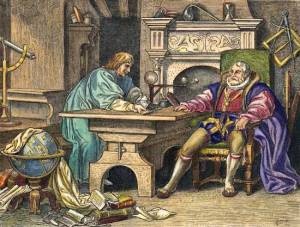
Doubts everything
Doubt concerning his own existence was his only certainty
‘I think therefore I am’
…the real self is as hard to be certain of just like the table
Don’t be afraid of absurdities
Different points of view
Something over and above the so-called public perception
Similar sense-data
Various people at various times
…. part of my ‘dream’
Testimony of sense-data independently of us
Can never ‘prove’ that everything else is mere fancy
If the cat exists e.g.
Difficulty of cat is nothing compared to human beings
i.e. language – talking
An ‘instinctive’ belief
No good reason for rejecting it.
A hierarchy of our instinctive beliefs
A harmonious system
Possible that all or any of our beliefs are false
Orderly and systematic study of our knowledge
Arduous and difficult questions
Chapter 3 – The Nature of Matter
The table – its qualities discovered through sense-data
Position in space and its motion
Light
Wave motion? According to science.
indescribable
Space
Indefinable
Real and apparent space
Time
Duration
Public and private – just like space
Time-order
No reason to be given that the two-points of view are contrary
Thunder – lightning
Light of sun – eight minutes to arrive
Blue or red
A wave motion
Familiarity tells us otherwise
More or less like it
‘seems’
Intermediary
Nature of light -waves which strike the eye
Intervening air
Whatever is Real must be in some sense ‘mental’
Idealists
Deny the existence of matter that exists independently from Minds
Chapter 4 – Idealism
Used by different philosophers in different senses
Widely held
Even the briefest survey of philosophical thought must take account of it
Not to be dismissed as obviously absurd
In the ‘dark’ as to the true nature of physical objects
Theory of knowledge
Berkeley
Argued that sense-data was the only…
To understand his use of the word ‘Idea”
Not wholly confined to sense data
Imagining
The tree
It’s being exists only in its being perceived
When we aren’t there then God perceives the tree
Permanently – as long as the tree exists
Everything is known is in some sense an Idea
Russell counters –
A good many fallacies
The notion of being in the mind is ambiguous
Only thing Berkeley has a right to say is that a ‘thought’ of the tree is in our minds
Not the tree itself
The Nature of Ideas
The history
Independent
Immediately known – must be in a mind
Must be ‘mental’
The word ‘idea’
Things we are aware of
And the act of being aware
Relation of our sense-organs to the object i.e. the table
Confusing the thing apprehended by the act of apprehension
the distinction between act and object in our apprehending of things is vitally important, since our whole power of acquiring knowledge is bound up with it.
The relation between the mind and things other than the mind
Berkeley’s argument wrong in substance as well as form.
A mere chimera
The word ‘know’
‘judgements’
‘knowledge of truths’
‘knowledge of things’
Or knowledge by acquaintance.
Difficulties
The Emperor of China
Acquainted with something that exists
Known by Description
Inferred by something with which one is acquainted.
Chapter 5 – Knowledge by Acquaintance and Knowledge by Description
Knowledge by Acquaintance
Knowledge by Description
What we mean by these words
Acquaintance
Directly aware
When conscious
Knowledge ‘about’ the i.e. table
Causes such and such sense data
Things and truths
Universals
Acquaintance by memory
Source of all our knowledge concerning the past
Knowledge by Introspection
Awareness
Of the feeling when we see a sunset
Of the desire we feel when we are hungry
Others minds deduced by the awareness of our own minds
Animals -different from us in this respect, says Russell
The “I”
Hard to disentangle
“my’ seeing the sun
On one hand …
On the other hand
Self-acquainted with sense-datum
Acquaintance with ‘Self’
Acquaintance with Universals
conceiving
A concept
‘Knowledge by Description’
‘a’ so and so
‘the’ so and so
A prisoner
‘The Man in The Iron Mask’
We know there is one object and no more
The candidate who will get the most votes
Just one object who is the so and so
That has the properties related to this so and so
‘Bismarck’
Some statement made about Bismarck
Different from one where someone knows him
Different things mean different things to different people
i.e. German
‘the most long-lived man’
‘the first chancellor of the German Empire was a fine diplomatist’
Particulars
With what which might or could exist
An astute diplomatist
Bismarck to those who knew him etc.
‘The Man in the Iron Mask’
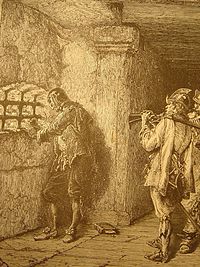
Impossible to make judgements about things if we do not have some knowledge of what we are speaking
Julius Caesar
Murdered on Ides of March
Roman Emperor
The chief importance of Knowledge by Description
Knowledge of things of which we have never experienced
Chapter 6 – On Induction
On Induction
Sense-data
Memory
Knowledge
Inferences
A > B
Thunder < Lightning
‘The Sun will rise tomorrow”
Because it always does
Laws of motion
Nothing to interfere
‘conscious expectations
‘probable’
Experience
Repetition
Tastes
Touch
Ghosts
Nothing tactile
Feed the chicken
Wring its neck
Past uniformities cause’ expectations
The “Uniformity of Nature”
All subject to exceptions
General rules which have ‘no exceptions’
Balloons and airplanes
Law of Gravity
Law of Motion etc.
Science has been ‘successful’
‘past futures’
Will future futures resemble past futures?
Almost certainty
Probability
The Principle of Induction
- a) A and B ‘associated’
b) A and B ‘probability’
‘all swans are white’
Fresh datum
Probably
Inductive Principle –
Incapable of being ‘proved’ by experience alone
Likely, likelihood
Refute
Chapter 7- On Our Knowledge of General Principles
On Our Knowledge of General Principles
Assumptions
A generality
2 + 2 = 4
‘true’ of any pair of couples
If this is true that is true
This ‘implies’ that
Indubitable
Laws of Thought
Empiricists -experience -Brits Locke, Berkeley, Hume
Rationalists -innate ideas known
independently of knowledge -Descartes, Leibniz
A priori
Emperor of China exists
Testimony
A priori knowledge is ‘hypothetical’
Empirical evidence – observed
Judgements
Ethics -deducing what ought to be from what is
‘All men are mortal’
Grounds for belief
Some doubt
Imagine a world where 2 + 2 = 5 or where men are immortal
Swift
‘All men are mortal’
‘Socrates is a man’
‘Socrates is mortal’
Probability
Deduction
Kant -how apriori knowledge is possible
Chapter 8 – How A priori Knowledge is Possible
How Apriori Knowledge is Possible
Immanuel Kant (1724 -1824)
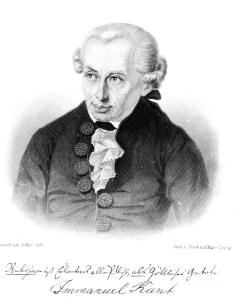
Generally considered the greatest of the modern philosophers
The importance of the Theory of Knowledge
The ‘critical’ philosophy
Before Kant anything that was not a priori was considered
Analytic knowledge
A bald man is not bald i.e. observation
The predicate is obtained by merely citing the subject
The law of Contradiction
Hume (1711- 1776)

Preceded Kant
Analytic was really synthetic
Nothing could really be ascertained by
Cause and effect
Kant much perturbed by Hume
No analysis of the subject would reveal the predicate
examine: his stock example – 7 + 5 = 12
All mathematics synthetic and a priori
All knowledge is general, all experience is particular
Induction by particular instances
i.e. gain nothing by enumeration
Generalizations: ‘All Men Are Mortal”
Logic and Arithmetic will…
Kant’s solution interesting (though not valid, in Russell’s opinion)
Two things to be distinguished
The sense-data and the physical object an interaction
Kant’s distinction: He considers the qualities are solely due to the object
And Space and Time and causality. are our part – a priori knowledge
Due to our own nature
The physical object
The ‘Thing in itself’ cannot be ‘known’
Attempt to fuse Empiricists and Idealists views
And the ‘Phenomena’ – what we bring
Thing in itself
a possible world where 2 + 2 = 5
Two phenomena plus two phenomena makes Four Phenomena
The Law of Contradiction
A law about things, not about thoughts
i.e. something cannot both be and not be
A ‘Law of Thought’ says Kant
Russell refutes it
Qualities and relations
In my room
Does ‘in’ exist
Relations are a work of the mind
Open to rejections
An earwig may be in my room
Not dependent on my thought
Relations put into a world which is neither of mind or matter
Our Nature
Apriori synthetic
How Pure Mathematics are possible
Chapter 9 – The World of Universals
A very old question
Plato’s ‘Theory of Ideas’
Consider such a notion as ‘justice’
Common nature in things which are ‘just’
Another e.g. Whiteness
The pure ‘essence’
Something other than particular things, but particular things partake of it
Leads to Plato’s ‘super-sensible world
A World of ‘Ideas’
Easy to pass into a type of mysticism
The word ‘idea’
Misleading
Therefore, we use the world ‘universal’
Anything which may be shared by many universals
Proper names -particulars
….
A universal – all truths
Most of the words in the dictionary are ‘universals’
Charles the 1st
head cut off
Relation between things
Relations are impossible
Spinoza – monism
Leibniz – monadology
The universal term ‘whiteness’
Strenuously denied by Berkeley and Hume
In geometry for e.g. We draw a particular triangle
Or several triangles
How do we ‘know’ a thing is ‘white’
Or a ‘triangle’
This is where a ‘universal’ comes in
Resemblance – a ‘universal’
Next universals ‘being’ …
Edinburgh is to the North of London
Whether or not there were no ‘minds’ at all
The relation ‘north of’
A different type of ‘existence’
Neutral
Neither in space or time neither mental or physical
”whiteness’ in our mind”
Not whiteness but the act of thinking ‘whiteness’
We may come to think that whiteness is an idea
One man’s …. different from another’s
The commonality – it’s ‘object’
‘subsist’
The world of ‘Being”
The world of “Existence”
We can prefer one or the other
Both are ‘Real’
Consider their relations
Chapter 10 – On Our Knowledge of Universals
‘white’ patches
A universal
Sensible qualities
Less removed from particulars
Relations
The ‘whole’ page
Some ‘parts’ of the page
To the ‘left of’ or; to the ‘right of’
A chime of bells
A memory
Before and after
Time relations
Space relations
Resemblance relation
Become acquainted with universal similarity or disparity
More power of abstraction required
Returning to the problem of a priori knowledge
2 + 2 = 4
….
Particulars, properties, classes
We do not know if B an J and R and S are 4
Because we do not know B and J and R an S
Man and mortal
We don’t need an acquaintance with the whole human race in order to understand it
Mortal – by experience
Connection between Man and Mortality
Science a degree of certainty
From instances not a priori (like arithmetic)
It is known if we draw perpendiculars from 3 sides of a triangle they meet in a point
We know that any two numbers can be multiplied together
Up to one hundred all recorded
Some integers will never be known
Proposition
‘any integer of a number that will be unknown will be over 100’
A ‘possibility’ of existences outside of our immediate knowledge by ‘extension’
Of what we already know
‘intuitive’ knowledge
Self-evident truths
Deduction, deduced
The Nature and scope of Intuitive Knowledge
The Nature of Truths
The Nature of Error
Dreams and hallucinations not necessarily error
Chapter 11 – On Intuitive Knowledge
Almost all of our knowledge ‘inferred’
Our food will not turn out to be poisoned
A ‘Socrates’ driven to delve further
To eventually come to a general principle
Sometimes consciously, sometimes unconsciously
Proof – capable or incapable
Rose – red or not red
Parts are red, shades of red
Outcome (sadly) Not red
A patch of color exists
Not true or false
Different from sense-data which are obtained
Two kinds of judgements of perception
A round patch of red
A single sense datum
Round in shape
This is to the right of that
Judgements of Memory
Accompanied by an image of the memory
Present and past
Object (as opposed to the image) before the mind
To understand the word ‘past’
Intuitive knowledge of past
Vivid to experience and ‘nearness’ in time
Thunder/lightning
Quite certain, almost certain, by no means certain
Doubt – a continual gradation
Degrees of self-evidence
Wholly false
George IV came to believe that he was at the Battle of Waterloo
More or less present
Down to an almost imperceptible faintness
Important in the Theory of Knowledge
Chapter 12 Truth and Falsehood
The opposite of truth – error
No dualism as regards knowledge of acquaintance
Often strongly held beliefs are thought by others to be erroneous
A preliminary
What do we mean by truth or falsehood?
Not what beliefs are true and which beliefs are false
If there were no beliefs…
Truths and falsehoods are properties of beliefs
Charles I – an historical fact
Distinction between belief and ‘facts’
Two rival hypothesis for any fact
i.e. Life is one long dream
Coherence presupposes the laws of logic
This tree is a beach
This tree is not a beach
Not meaning of truth but a ‘test’ of truth
a ‘correspondence’
Allowance for necessity of falsehood
e.g. Othello believes falsely that Desdemona loves Cassio
The relation ‘between’ must have three terms
York is ‘between’ Edinburg and London
Jealousy requires three people
Four terms – Othello, Desdemona, Cassio, and loving

Instances might be multiplied indefinitely
What distinguishes a true Judgement?
The mind – the subject
The constituents of the judgement
A certain order
i.e. Nominative and accumulative
a sense or direction or a host of mathematical concepts
‘belief’ a complex relation
Loving – a brick in the subjects…
True when it ‘corresponds’
United – true
If not – false
Truth – an ‘extrinsic’ property of belief
If we take such a belief
Terms, relation, order, unity
Fact corresponding to belief
Minds do not create truths or falsehoods, they create beliefs
The mind’ of those that believe
Chapter 13 – Truth, Falsehood
Certainty or erroneous
At first cite
The late last Prime Minister’s name began with a B
Balfour or Bannister(?)
A telegraph
Headlines – election results
Derivative knowledge
e.g. reading
‘The King is Dead’
Arrived at knowledge by sense-data
Analysis
inference
Valid logical inductions
Psychological inference
Discoverable
Knowledge not a precise definition
i.e. opinions
Some degree of doubt
Mitigate the uncertainties
Corresponding ‘facts’
Perception
The knowledge of the hour of ‘sunset’
Or look to the West and see it setting
‘Privacy’ of facts i.e. only Desdemona truly knows what she feels about Cassio
…to be absolutely certain
Analyze the constituent facts
Sun is shining
The first-instance
Degrees
A horse trotting away from us
a ‘process’
Continual gradation
Of sound
Same with shades of color
Coherence
Scientific hypotheses
Philosophical hypotheses
Dreams and waking life
The test of coherence
Never gives absolute certainty
Indubitable knowledge
Chapter 14 –The Limits of Philosophical Writing
The Limits of Philosophical Writing
Vain
Attempt at reasoning
Vast metaphysics
Hegel (1770 – 1831)

Difficult
Whole interpreted by the parts
The world of thought
The world of things
Thesis, antithesis and a new idea
A synthesis
The Absolute Idea
Absolute reality
Absolute one harmonious system
Our fragmentary, piecemeal perception
One wholly rational and
System
As God sees it
Sublime and perfect
Logic
…what is incomplete…
Man – memories loves hates
A fragment
a contradictory
Interconnectedness
Nature of things and truths
Critique of his theory
Knowledge and the concept of relations
Are relational characteristics necessary to ‘know’ the thing?
Russell thinks not
Space and Time
No last point
No first or last time
Appear to be infinite
Even in the opposite direction
Infinitely halved
A second infinitely divisible
Euclid’s axioms
Actual space
Euclidean space
Other kinds of space
Logic presents many kinds of space apart from experience
What is ‘Maybe’ is infinitely increased
Logic has become the great liberator
So much remains unknown because there is so much to know
Law of Causality
Law of Gravity
Pure empirical knowledge
Pure a priori knowledge
Philosophical knowledge and Scientific knowledge similar
Philosophy alone requires a ‘critical’ enquiry about knowledge
Descartes’ methodical doubt
A priori and induction
Empirical plus
Critique of knowledge
Skepticism
Descartes ‘methodical doubt’
Doubting whatever seems doubtful
Chapter 15 – The Value of Philosophy
What is the Value of Philosophy?
Useless trifling, hair-splitting?
Study of physical science is ‘useful’
Philosophical ‘utility’? Not so much.
The ‘goods’ of the mind at least as important as the ‘goods’ of the body’
Aims at ‘knowledge’
Judgements, criticism, beliefs
Definite knowledge is no longer philosophy
i.e. astronomy was once philosophy
Newton’s work on astronomy entitled ‘Philosophy…
As was psychology
Enlarge our thoughts
Definitely ascertainable knowledge
Free from the tyranny of custom
Philosophic contemplation
Self and universe
conformity
prejudices
Definite, finite, obvious
Familiar things in unfamiliar aspects
The things which it contemplates
An escape from the confining garrison of everyday existence
Self-assertion
Contemplation
The infinity of the Universe
An assimilation
‘Man is the Measure of All Things’
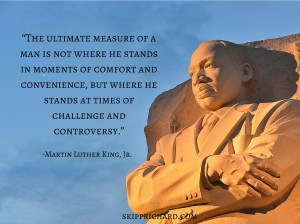
Or is he?
Is this perhaps just a set of prejudices
An exclusive and personal point of view
Impartiality
Without a here and now…
infinitesimal fragments
Citizenship with the Universe
Parts of the whole
Desire for truths
Justice
Universal love
Objects of our thoughts actions and
Not for the sake of any definite answers but for the sake of the questions themselves
Enrich
Union with universe its highest good.
Plato, “Republic” especially Books VI and VII
Descartes, “Meditations”
Spinoza, “Ethics”
Leibniz, “The Monadology”
Berkeley, “Three Dialogues Between Hylas and Philonous”
Hume, “An Enquiry Concerning Human Understanding”
Kant, “Prolegomena to any Future Metaphysic”
 tomreading
Leave a comment