The Arms of Krupp

Prologue
Anvil of the Reich

Werfern, Austria
Salzburg
Munich
The Salzach River
Franz Ferdinand
Superb view of the Austrian Alps
First Reich
1870, 1914, 1939
Kaiser Wilhelm II
Jewish slave labour
Reich’s manufacturers not only had a choice, most of them took advantage of it
Das Ausland
Heinrich Heine
April, the cruelest month
Gotterdammerung
Super-Nazi (Obernazi)
“Mein Sohn hatte die Here, fur den Fuhrer zu sterben” (My son had the honor to die for the Fuhrer)
The real Krupp was Bertha.
Led by United States Supreme Court Justice Robert H. Jackson
138 concentration camps toiled for Krupp, and Robert Rothschild was gassed because he wouldn’t sign his French firm over to Krupp.
Krupp considered it a duty to make 520 Jewish girls, some little more than children, work under the most brutal conditions in the heart of the concern, in Essen.
Auschwitz
With 97,952 slaves, he was the sovereign of the Ruhr.
Martin Boorman, Hitler’s deputy, and Hans Lammers
Preserved as family property
Since 1931, when he became a sponsoring member of the SS – for Fuhrer and Reich.
Landberg Fortress. Where Hitler had written Mein Kampf two decades before, Alfried wore convict garb
U.S. High Commissioner John J. McCloy, in an historic act of clemency, removed the problem by restoring Alfried’s holdings and pardoning him
The great coalfields
This priceless lode
The conversion of iron into steel
Hydroelectric
Dortmund-Dusseldorf Autobahn
Famous streetcars
An industrial organization which in its compactness and intensity is unparalleled in the world
German ingenuity
Second Reich (The Kaisers)
“The German Empire”, John Maynard Keynes observed, “has been built more truly on coal and iron than on blood and iron”
The bottom of Essen’s one-hundred-year-old Amalie shaft
‘gluck-auf!” (good luck)
It is not a pleasant journey , nor is it entirely safe
Mining
Each year four or five men die in this shaft. One dodges live wire and coal carts.
Earn nine dollars a day
there are over one hundred and fifty miles of such caves under Essen
Krupp’s vertical concentration is literally vertical, for when the coal goes up it is fed directly into furnaces.
Most of the ore has been shipped from Africa, Asia, and the Western Hemisphere.
Good coke is more precious than ore, the plant is here because the coal is just below.
You hear the workers speaking the harsh north German which, as the Bavarians say, “makes the ears bleed”.
Only 300 registered prostitutes
Estimated two thousand unregulated ‘wild girls’- wilde Dirnen
p.18
flying over the Ruhr is like dodging traffic in a dense fog
black smoke, red smoke, yellow, white, and orange smoke, blending into an immense greasy overcast as the toiling chefs below season and spice their entrees of liquid metal
‘Flak Alley’
Krupp’s Villa Hugel
Green – There is a countryside too
Westphalia’s landed aristocracy
Europe made it an anchor of commerce for the whole continent six centuries ago
On a map they suggest the shadow of the gigantic Ferris-wolf offspring of Loki and the giantess Angurboda and the brother of Mitgard the serpent. The evil wolf was bound by a magic cord until he burst free to swallow Odin, and it is unfettered that his silhouette appears on the map, lunging eastward. Hamm is the eye, Recklinghausen the ear, Dortmund the mouth, Bochum the throat. Wuppertal and Solingen form the front leg, Mulheim, and Dusseldorf the rear. Rheinhausen is the tail. Gelsenkirchen, Bottrop, and Duisberg trace the hunched back. And the heart is Essen.
The dawn of written European history the entire country was one enormous jungle. To the Romans that Hercynian forest was a marvel.
The Rhine was Caesar’s outpost. The land beyond never became part of his Empire. Tacitus warned them that “It is for your sake, not ours, that we guard the barrier of the Rhine against the ferocious Germans, who have so often attempted, and who will always desire, to exchange the solitude of the their swamp and woods for…Gaul”
Even Tacitus was impressed by them. To him they, were noble savages; hardy warriors.
‘the Germans despised an enemy who appeared destitute either of power or of the inclination to offend them”
Germans of Moravia
Midsummer Eve
A dying Teuton chieftain who would deliver a farewell sermon to his people and then ceremoniously burn himself to death in front of the sacred oak tree.
Werewolves
In a cave Brunnhilde dreamed of the dank smell of bloodstained axes.
The murder of unwanted bay girls at birth persisted into the eleventh century
During the seventeenth century some hundred thousand Germans were executed for witchcraft
There was nothing chivalrous about Teutonic tournaments, the object was mayhem. A knight entered the lists determined to hack to death as many fellow knights as he could; in one medieval tourney near Cologne, over sixty men were slain.
Christianity mixed with pagan rites
i.e. Christmas tree
Charlemagne captured Saxons hilltop citadel south of Dortmund
Monks – Werden Abbey
Romanesque
Convents
Processional crosses
Seven branched candelabra
First bishop A.D. 852
The infidelic ‘Vorstellung’
elves and sprites
blonde hero – a godlike figure – makes a supernatural appearance
demons are foiled and the land flourishes
he tells the Volk to stop worshipping false idols and they do.
Instead they worship him – the extraordinary deity is the prelate, but that is only a gesture towards the cross. He could just as easily be a pre-Christian chief. Even his name seems more significant than his faith. In the Essen myth he is actually called Alfried.
Chapter I
The Walled City

The first Krupp came out of the woods
From Dutchmen called Kroppen, or Krop
At Gendregin references to such a family appear in 1485, 1522, and 1566, but any link between them and Arndt is pure speculation. He could just as easily have sprung, order pad in hand, from the hot loins of a dragon.
The Essen of Charlemagne’s day
Member of the Hanseatic league
Seen from afar it is an exuberant Brueghel dream
Despite the wall, wolves managed to penetrate the town; there was a bounty on them.
Wolves and thieves
The city’s Jewish moneylenders should be mobbed every Good Friday and left to fester the rest of the year on a squalid angle of the wall
Essen’s Salt market
Bubonic plague
Mingled odors of vomit, urine, and feces.
Arndt, betting he would survive and winning, bought extensive ‘gardens and pastures’ (Garten und Trifte) outside the city gates, acquiring parcels of land which would still be part of the family empire nearly four centuries later.
Shops of Solingen
Dusseldorf swordsmiths
the wall is mended, and the Jewry knows its place
The Thirty Years War
Between 1618 and 1648 Germany served as a bloody doormat for five foreign armies – Danes, Swedes, Spaniards, Frenchmen, Bohemians.
Anywhere from one third to two-thirds of the population perished
Villages were obliterated
That the Krupp’s should have endured those years is remarkable enough
Westphalian plain in the midst of this horror
Maria Klara von Spauer, denounced the city as heretical to the Spanish.
What is singular is they seem to have been almost untouched by the tragedy.
Arndt did expire in 1624 – after prudently investing in a headstone from the public ‘stone quarry’ (Steinkuhle)
Anton Krupp
Fined heavily for beating Dr. Hasselmann in the street (weil er Dr. Hasselmann auf der Strasse geschlagen hat)
In 1612 he married Gertrud Krosen. The elder Krosen was one of Essen’s twenty-four gunsmiths. Anton adopted his father-in-law’s trade, and during the war he sold a thousand barrels a year.
The first member of the dynasty to deal in arms and because he entered the field so early. After him came a long hiatus. The next military transaction would not be until the Napoleonic era. Nevertheless, there it is : a Krupp was selling cannon in the Ruhr nearly three centuries before Verdun, three and a quarter centuries before Stalingrad.
At midcentury – the Peace of Westphalia ended the Teton agony.
France
Richelieu
Became dominant power in Europe
One of a string of Gallic triumphs which the Germans would never forget.
A new abbess presided over the nunnery
In the Rathaus a youthful clerk named Matthias Krupp took office
Matthias was Georg’s son.
Orphaned at age two p.28
As true Brahmins, they became men of property
Krupp succumbs to the yearning for more Lebensraum.
In the end they owned just about everything worth having
Essen’s ‘uncrowned kings’ (Essens ungrekronte Konige)
Then in 1751, the dynasty was granted a reprieve. Joducus married nineteen-year-old Helene Amalie Ascherfeld.
Arndt Krupp had been her great-great-great grandfather
The child, Peter Friedrich Wilhelm Krupp, is transitional
They were becoming more mysterious
Men were starting to understand the blast furnace
The wind
Water -driven bellows
The widow Krupp was one of the shrewdest Germans of her time. She acquired a mill north of Essen, and she bought shares in four coal mines
Iron forge Sterkrade brook 1782
Had already begun to experiment with coal
Public auction paying 12,000 thalers for all the buildings, plant rights and good will (mit allen Gebduden, Rechten und Gerechtigkeiten)
Seven years later she appointed her nineteen-year-old grandson, Freidrich Krupp, to manage the works
He is without doubt the most incompetent
Under Helene Amalie the forge had become a highly profitable enterprise, producing kitchenware, stoves, weights, and , under a subsidy from Berlin, cannonballs for Prussia
In 1802 Prussia – “not a state with an army,” in Mirabeau’s mot, ‘but an army with a state’
Retooled for highly technical production: pistons, cylinders, steam pipes, engine parts.
Therese Wilhelmi
He was determined to break the law, smuggling products into the continent from Dutch colonies. That November he and his agents planned to ship goods from Amsterdam to Essen. The Rothschilds could bring that kind of thing off. He couldn’t.
The almost legendary Geheimnis des Stahlgiessens, the secret of cast steel.
1740 September 20,1811, he founded his Gustahlfabrik – Cast Steel Works.
clockmaker named Benjamin Huntsman
Crucible steel
Cast steel (Gusstahl)
Sheffield
was christened Alfried in memory of Essen’s legendary hero.
He remained Alfried until his first trip to England, where in a burst of Anglophilia he changed it to Alfred. To avoid confusion, we shall call him Alfred in future references (footnote p.35)
Napoleonic Europe
Now he took the plunge, swearing allegiance to Bonaparte on December 17 – just as the Emperor’s Grande Armee’ was disappearing into the mows of Russia.
The idea of casting steel had become as a diversion, now it was an obsession
Sketching plans for a new shop with sixty cupolas, he cashed in assets worth ten thousand thalers and negotiated a loan – the first of many – from the ‘Jew Moses’: (Jude Moses)
Orders for tools and dies
The dies were good…
A new Shmelzhaus with an 800 -pound hammer
On the shore of the little Berne River, a ten-minute walk from the city wall on what is now the Altendorferstrasse
Sunday, October 8, 1826, he quietly turned his face into his straw tick and died. He was just thirty-nine
A victim of “the pectoral dropsy” (der Brustwassersucht)
Chapter 2
The Anvil Was His Desk

The teaching continues today
Woischnik, B. “Alfred Krupp, Meister des Stahls” (1957)
Sui generis – a true maverick -restless, brilliant, imaginative, tormented, farsighted, and despite some rather extraordinary eccentricities, supremely practical. He comes awfully close to that stock character in Victorian three-deckers, the mad genius.
A compulsive writer – over thirty thousand of his letters are extant.
“I have to compliment him in every aspect, especially his endeavors in math
‘no time for reading politics and that sort of thing’
Before he was twenty, he would be producing fine steel.
I myself acted as clerk, letter writer, cashier, smith, smelter, coke pounder, night watchmen at the converting furnace, and took on many other jobs as well.
The secret
Vulcan
The pact created a single nation of thirty -million Germans
His work was flawless
The 1830’s, ‘40’s, 50’s
‘it is well known that my works, established twenty years ago and now doing well are the only ones of their kind on the continent”. P.48
Repeated endlessly, it came to be an accepted fact long before it was true.
It was, in truth, a big lie, told a century before Berlin discovered the technique.
Efficiency, that German totem, was a fetish with him.
Gemutlichkeit
Writing of fine steel, he could grow lyrical: “It must be fine-fibered, not crystalline – moreover, with a metallic sheen – not like most of it, breaking off blackish and dull, but quite soft and tough, both cold and in a glowing state.
He had learned a few things about chemistry
Swedish iron, not Prussian, was untainted by phosphorous.
Experimenting in a corner of the shop, he engraved patterns on rollers. The resulting hand mill was then used to crank out superior tableware.
Summer of 1938
Kaiser Wilhelm II
Sheffield, a magic name since his boyhood, had become a Mecca for him.
Paris is the kind of place where a skilled salesman can find something to do, year in, year out, in all the kinds of things we make
For five days I had not been out of bed
I suppose we might have a second watchman to check the first, and a third to keep an eye on the second
“How easily a fire can break out, you know, and a fire would destroy everything , everything!”
industrial espionage
By the 1830’s the Huntsman principle was known everywhere
J.A. Henckel
Henckel introduced himself as himself, and no one clammed up; he wrote home that he was free to tour all mills “from ten o’clock in the morning until ten at night”.
‘the Baron’
Krupp remained in England for five months, picking up no information he couldn’t have acquired at home.
In Paris
it is not quite suppressed yet, but will probably end today. if it improves business…then in the devil’s name let them bash in each other’s heads.
Metternich
Jakob Mayer
In nearby Bochum, had succeeded in casting steel
Still scratching himself angrily, he left the Ruhr again to stalk contracts.
He appeared in Warsaw and Prague, reappeared in Paris and Brussels, sought a meeting with James von Rothschild (he was trying to get his foot in the door of the French mint) and even pondered “doing business in North America.”
“Now that my travels are over, I can prepare with an easy mind to remain at home in the future”…February 27, 1841
From Vienna: “You will be surprised to hear that I have already been here a week…”
His relatives rarely saw him. “You have become like the Wandering Jew,” Solling wrote him, “always travelling from one place to another.”
Gauche? Well yes; Alfred was always that. But there was just no other way he could be. Remembering his family, remembering the ninety-nine Kruppianer now dependent on the works, remembering his father and vowing that he would follow Friedrich’s sad example, he had to weigh every pfenning. the wolf was always there, gnawing at the Stammhaus door.
Under Metternich, Prussia was a full-fledged police state.
The Austrian misadventure has cost 75,000 thalers, thrice what he thought. He was at the end of his tether: “At this moment I stand on the brink of the abyss (am Rande des Abgrundes); only immediate assistance can still save me.”
The Stamhaus diet had been reduced to bread, potatoes, and coffee. the spoon and fork patent kept them going.
On February 24, 1948, Alfred rather churlishly noted that his mother had turned over to him ‘das Wrack der Fabrik” (the wreck of a factory).
Solling meanwhile had arranged a loan from Salomon Oppenheim, a Cologne banker.
It was no small feat in that year of banking failures, and though Alfred, loathing interest charges, began his long feud with “speculators, stock exchange Jews, share swindlers, and similar parasites,” the payroll was met.
Alfred had learned to distrust luck, foreigners, even his own men.
at the Deutsche Gewerbe-Austellung his tubular bells had brought Krupp the gold medal which was to be sacrificed in fire four years later.
Alfred’s own contribution were ignored in the 1844 exhibit. He himself didn’t think much of them. His papers mention them casually, almost in passing.
They were two hollow-forged, cold-drawn musket barrels.
Chapter 3
Der Kanonenkonig
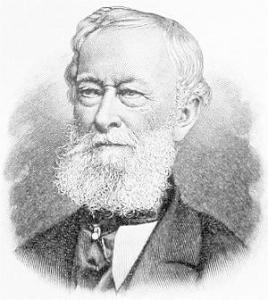
Weaponry, to be sure, was an old Ruhrgebiet tradition
the swordsmith’s ancient seat was Solongen
He decided to approach Berlin’s General War Department
It was to be delivered to the Spandau arsenal outside Berlin in September 1847
p.66
Prussia had received Krupp’s first cannon. And it couldn’t have cared less
Samuel Morse perfected his telegraph, and he was to spend eight years hammering on Washington doors before the first strand of wire went up.
Nineteenth-century officer corps fought furiously against notions of America’s Richard Gatling, England’s Henry Shrapnel, and Germany’s Count Ferdinand von Zeppelin.
Three centuries before Alfred Krupp’s birth Leonardo da Vinci had dreamed of breech-loading fieldpieces.
The siege of Sebastopol
Bronze
Wellington had defeated Napolean with it
Would have nothing to do with cast steel cannon, because the old bronze guns had proved their superiority at Waterloo.
The premier was to be in England’s Crystal Palace. The British were about to hold the first world’s fair in 1851.
Queen Victoria
p.70
the Illustrated London News extolled “the magnificent steel cannons of Herr Krupp” as “the very coxcomb of great guns.”
Alfred was now in his fortieth year
Kruppianer marveled at the codger’s horsemanship
In 1849 he had perfected his cast steel axles and springs, signed a big contract with the Cologne-Minden Eisenbahn, and built a spring shop whose future was assured.
Nevertheless, the Garden House had its own peculiarities. Built right in the middle of the works, surrounded by hothouses sheltering peacocks, grapevines, and pineapples.
Germany was on the verge of the great industrial surge, which would, within half-century, sweep English supremacy aside
Alfred was installing heavier and heavier machinery, and the grunt of his steam hammers rocked the foundations of his home.
He displayed manly indignation, when his wife complained that a “loathsome Jew” had eyed her lewdly
“Ich bin wirklich allein nichts wert u. mir ist schlect zumute ohne dich” (I am really no good alone, and I am in poor spirits without you).
“Yesterday”, Alfred noted gleefully, “I received the decision that the gun was to be set up in the marble hall of the Potsdam Stadschloss. Today we did it with six artillerymen. The King said the Emperor of Russia should see it there.
The name of this very useful angel was Wilhelm Frederich Ludwig von Hohenzollern. Today he is remembered as Wilhelm I, “the old Kaiser”, predecessor of the Wilhelm II who led Germany to defeat in World War I…
Frederick the Great
He found that where he had supposed he had a heart he had a piece of cast steel.
Hohenzollern
Since the Berlin industrial exhibition of 1844, when an Elberfield spoonmaker had tried to pass off Kruppstahl as his own, Alfred’s passion for secrecy had become an obsession. “Please do not leave the works when I am away…..”and take the greatest care that an eye is kept on the people who come to the works outside working hours.”
Over in Bochum, Jakob Mayer, like Alfred, was requiring his workers to take oaths that they would never reveal his cast steel technique.
A line of jurors was about to wind past when the ingot, weighing a hundred thousand pounds, crashed through the exhibition’s wooden floor, plunged into the basement, and reduced everything below to a pulp. Alfred, hearing of the disaster, had a nervous breakdown. For once he wasn’t just Bertha’s visitor; he fled to Pyrmont to become a fellow patient.
Allegiance to bronze
Alfred…presented gift guns to Switzerland, Austria, and Russia.
Czar Alexander II
1n 1853…was soon selling fifteen thousand wheels a year.
In 1875 he recognized the tremendous contribution of this single invrention by designating three interlocked circles as his trademark.
The tire was a masterstroke. There was almost no competition; undoubtedly he was the inventor
Berlin recognized the patent on February 3, 1853.
Von der Heyt had been mortally offended. He vowed vengeance for this Schweinerei, and he was in a position to hurt Krupp grievously, for Prussia had replaced Austria as Europe’s model police state.
Note the crafty wording of Alfred’s message to the prince. He had refused to sell cannon “when I believed I could serve my native land thereby.”
Although, as in the case of production, I still pay some attention to guns, O have a desire to give up gun production.”
Die Scham von Olmitz (the shame of Olmitz).
The link uniting Krupp and Hohenzolllern was unbreakable. Alfred wanted to make guns, Wilhelm wanted to buy them.
Henceforth Krupp would be identified with the nationalistic aspirations of the Volk.
Chapter 4
More Efficient Than Brand X
“We must put all our energy into serving Prussia quickly” (Wir mussen Preussen mi taller Energie rasch bedeinen) and obtaining as rapidly as possible what is lacking, rifling machines and the like.”
I venture to ask whether you are willing, out of patriotic regard to present political conditions, to undertake not to supply any guns to Austria without the consent of the King’s government [Ohne Zusstimmung der Koniglichen Regierung Geschutze an Osterriech zu liefen]
I don’t have to ask Goethe or anybody else in the world what is right;-I know the answer myself, and I don’t consider anyone entitled to know better.
His work has always been his salvation. Yet it wasn’t much help now.
‘still frequently troubled by headaches’
All this managed from Nice
‘We must keep a watchful eye on the matter and let nothing slip through our fingers – if it is good, we must be first in the field.’
Rein a faire
Nothing doing
Essen as a visiting diplomat, described the firm as Staat im Staate’ (a state within a state).
April 1870. Paris and Berlin are squaring off
The Spaniards are expelled their nymphomaniac queen, Isabella II. Her successor has yet to be chosen, and Bismarck is quietly backing Prince Leopold, a Hohenzollern.
Prince von Hohenzollern
Sigmund Freud was still a Viennese youth
Fresh air had just about disappeared from Essen
He built the equivalent of the Albert Memorial
Alfred Krupp had reviewed the talents of all leading architects on the continent and decided the most highly qualified was Alfred Krupp
The privacy of the householder was to be sacred – his bedchamber would be guarded by three barriers of triple-locked doors
He could build his study directly over the stable, with shafts to waft the scent upward! And that is precisely what he decided to do, crowing, so to speak, on his private dunghill
Villa Hugel, the Hillside Villa: so, it would be known.
The interior is a mad labyrinth of great halls, hidden doors, and secret passages, and it is unwise to drink too much schnapps in Villa Hugel
He was approaching sixty
There wasn’t time to plant seedlings and await their growth; therefore, he would assemble majestic groves elsewhere and move them here. Whole avenues of trees were brought up and brought up in from neighboring Kettwig and Gelsenkirchen
And in April 1870, Alfred laid the cornerstone of the castle
On June 19 Prince Leopold von Hohenzollern, with Wilhelm’s approval, decided to accept the Spanish crown
A red rag on the Gallic bull
His plans for it were all based on the use of a specific building material -French limestone from the quarries at Chantilly, outside of Paris.
Chapter 5
Now See What Has Done our Army
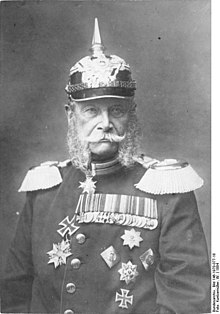
The Ems dispatch, by Wilhelm out of Bismarck, had reached Paris on Bastille Day, 1870
Guyot-Montpayroux trumpeted, “Prussia has forgotten the France of Jena and we must remind her!”
France declared war
In less than three weeks 1,183,000 Germans had donned Pickelhauben, spiked helmets.
Kate Amberly (who two years later was to give birth to Bertrand Russell) wrote on July 17,1872 “It makes one miserable to think of that lovely Rhine a seat of war.”
General Sherman’s brilliant use of railways in Tennessee
It was a rout, because after eight hours of hammering by Krupp cannon the French lines broke and retreated in wild disorder.
Chinese and Siamese can blow their enemies to bits well enough with these!
Chapter 6
Der Grosse Krupp

p.136
He was now permanently entrenched in der Hugel
A great iron fence surrounded the estate
Thus, while praying against war, he stoked the furnaces for it
England’s ‘Trade Marks’ Magazine
Kaiser Wilhelm I’s coronation
Alsace and Lorraine were rich in phosphorescent ore fields. And now, thanks to the Iron Chancellor, they belonged to Germany.
Hans Jencke
International activities
Bismarck p.149
Essen’s old city had increased from 7,200 to 50,000
Bismarck’s Kulturkampf
Sozialdemokratische Parti Deutschlands (SPD)
Ferdinand Lassalle
Disciple of Marx – began to organize workingmen in 1863.
The following year he was killed in a duel
The Great Krupp regarded him with contempt
‘Lassalle with his philosophy has sown devilish seed’
Generalreguativ
It is not too much to call it a blueprint for all German industry
Steps must be taken to undermine the ‘social danger on the horizon’
He persuaded the Reichstag to outlaw SPD societies, meetings, and newspapers.
There were more Krupp policeman than Essen policemen
No sign of mutiny
‘the Men of My Works”
Race
A special breed
“rote Gefahr” (Red Menace)
Demented anarchist named Emil Hodel tried to assassinate the Kaiser on May 11, 1878
Krupp agreed to stand for office as the local Nationalist candidate
Krupp had never even considered the possibility of defeat.
Rearmament
Peacetime army of 400,000
He demanded that all Social Democrats be discharged without notice
Inspectors
Alfred ordered the hiring of another to check wastepaper and ‘used toilet paper’ for seditious notes
Chapter 7
The Rest is Gas
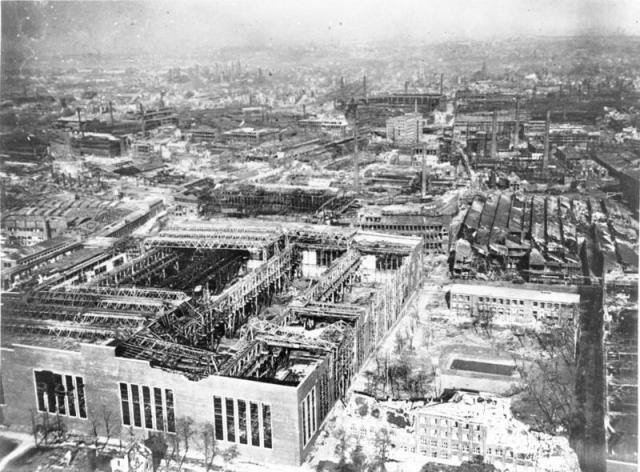
p.163
No fewer than fifteen conflicts involving France, Austria, England, Russia, Afghanistan, Tunis, Italy, Eritea, Sudan, Serbia, Bulgaria, Montenegro, Peru, Bolivia, Chile, Uruguay, Brazil, Argentina, Paraguay, Turkey, Burma, and China.
Spain was preoccupied with what was left of her New World colonies.
Even the United States was fighting Indians.
The Russo-Turkish War of 1877-1878
Little Women (1868)
Serbia – lost one king to assassins
During the 70’s they declared war on Turkey twice
Defeated in every battle, Belgrade was anxious to improve its artillery
King Carol I of Romania was coming to Berlin. The Rumanians, like the Serbs, were dissatisfied with their cannon, entering the Russo-Turkish War on the side of Russia.
the All-Highest in Berlin
Serbs – only the intervention of the Austrians saved them from complete extinction. With satisfaction Alfred noted ‘Bad customers.
Our first concern is to serve Kaiser and Reich
The Fatherland
Tokyo
Georg Clemenceau
Serbia, Japan, and Belgium
A pamphlet which Gross had written at Alfred’s direction, and which Meyer had published – Geshicte der Gusstahlkanone (History of the Cast Steel Gun)
He had planned to display the gun at the International Exhibition in Vienna.
One of those near eruptions which kept European diplomacy in ferment during four decades before Sarajevo.
Graduates of the Kriegsakademie at Lichterfelde, Prussia’s West Point
Here in Prussia every effort was made as recently as 1668 to abandon cast steel and go over to the English make.
Only I have the right to supply guns to the state.
The All-Highest
Ausgeschlossen
Chinese and Siamese
The Cannon King
The navy
Like most nineteenth century captains of industry Alfred was gifted with an instinctive flair for showmanship.
At Meppen, in Hanover province near Osnabruck
In the end he signed one hundred and twenty separate long-term leases
Achtung! Gefahrenpunkt! The Gefahrenpunkt (Dangerpoint)
Alfred never abandoned hope of becoming Britain’s armorer.
Panzerkanone
The stationary tank
Dusseldorf
Franz Liszt (1811-1886)
Douglas MacArthur in 1941
Seventy-five-year-old Cannon King succumbed to a heart attack alone in the castle with his servants
In Paris it was Bastille Day, the French nation was overjoyed. P.187
Le Matin: “French artillery is superior to the German on all points’
This was read with indignation by twenty-eight-year-old Freidrich Wilhelm Viktor Albert, the Hollenzollern who was destined to become remembered in history as the Kaiser Wilhelm.
Chapter 8
Prince of the Blood
Die Mitglieder der deutschen Gesandtschaft in Peking (China) 1900.
UBz: v.l.n.r.: Legationssekretär Dr. Gustav von Bohlen und Halbach (der spätere Chef der Krupp-Werke), der Gesandte Dr. Mumm von Schwartzenstein, dahinter unbekannt, Legationsrat Freiherr von der Goltz und Legationskanzlist Dobrikow.
p.189
philanthropist
my fortune is my curse. Without it I would have dedicated my life to art, literature, and science.
Fin-de-siecle
Alfred: should Fritz fail to produce male issue, he would prefer public ownership to having the firm fall into the hands of women.
Ordnung: order
A quarter-century before John Fiske popularized the word paranoia in the Atlantic Monthly Alfred was a full-fledged paranoid- Germany’s greatest, perhaps, until the champion of the New Order appeared and infected a nation.
The first point is the nature of accountancy, finance, and calculation. You must study these until you feel completely at home with them (In Diesen Dingen must Du immer vollstandig zu Hause sein)
The heir’s twenty-first birthday
Once the old man drew up an elaborate report “On the Prevention of Gas at the Base of Projectiles, the Guiding and Centering of the Projectile, and the Lining of its Casing or Powder Magazine with Plate, as well as one on Progressive Spiraling”
Old Krupp was direct, young Krupp was oblique
Marga…she was wholly ignorant of the more exotic aspects of sex, and later this innocence would magnify the great tragedy in her own life and her husband
Johann Wolfgang von Goethe
Hogwash
In truth he was under tremendous strain
Gustav Nachtigal
The first demands for a powerful German navy.
Fritz became the best-informed man in Essen
A mission of Japanese economists, engineers, and officers came to the Ruhr after a disappointing reception in Paris.
p.205
Marga – Alfred remained his daughter-in-law’s implacable enemy to the end. Nothing she did pleased him, and in his eye her worst blunder was giving birth to a daughter in March 1886-Christening the infant Bertha Antoinette didn’t help.
On March 9, 1888, the first Kaiser died, and the humane Kronprinz became Kaiser Friedrich III.
His reign lasted exactly ninety-eight days
Riddled with cancer he succumbed on June 15th and the flame of German liberalism which flickered hopefully, was extinguished when Freidrich’s handsome, mustachioed , twenty-nine-year-old son replaced him at the helm
Kaiser Wilhelm II
Pompous and vain
Wilhelmine Germany
First address was not to the people , but the military
“the King’s will”, he declared, “is the Supreme law of the land”
Krupp’s most influential patron, next to Adolf Hitler
The era of what was to become known as Wilhelmine Germany had begun
King Leopold of Belgium, King Albert of Saxony, King Carol of Rumania, and Sultan Abdul Hamid of Turkey.
“Abdul the Damned”
He had exterminated Kurds, Lycians, and Circassians in Asia Minor, Greeks in Crete, Arabs in Yemen, Albanians on the Adriatic Coast, and Druses in Lebanon, and now he had fixed his blood-colored eye on the Armenians.
Fritz referred to him as “Wohltater des Turkenvolkes” (benefactor of the Turkish people)
p.206
ein Direktorium, a board
a technical school arose to train apprentice Kruppianer
“owned by Freidrich Krupp”
His sly skills
Essen empire, Krupp-Panzer had become a synonym for quality steel plate throughout Europe
Krupp’s growing fleet of steamships and barges
The coal had always been there
Kruppianer
Over five-million square feet – 127 acres – under roofs
Each year Essen’s shed’s devoured 1,250,000 tons of ore and regurgitated 320,000 tons of finished Kruppstahl
43,000 subjects
BEWEGLICHE HABE FRIED. KRUPP (personal property of Krupp)
Wilhelm Kaiser
Chapter 9
Oscar Wilde of the Second Reich
Krupp’s band blaring out Heil Kaiser Dir and Was blasen die Trompeten?
Gloria Victoria!
Ja, mit Herz und Hand
Fur Vaterland…
The Kaiser appointed Fritz a Geheime Kommerzienrat (privy councilor)
The Boxer Rebellion
The All-Highest himself had said it: the Germans were Huns
And the irony of it! (Und welcher Hohn) all the enemy’s cannon and shells come from our own country – they are all modern Krupp quick-fires
the battle of Iltis became a national legend
The Chicago’s World Fair of 1893
The Scientific American
The Spanish – American War
The Boers
The Sino-Japanese War
Albert Vickers
Sheffield
KPz (Krupp patent fuse)
But in the event of war between England and Germany the situation would become extremely ugly, Krupp would be profiting from Reich casualty lists.
The dismissal of Bismarck
Thr Franco-Prussian war
Wilhelm dreamed of a powerful German navy, and in 1895, at the ceremonies formally opening the canal between the North and Baltic seas, he had asked Krupp to help him get one.
The Flottenverein (Navy League)
But Fritz could do more than back a navy. He could build one.
Krupp bought a shipyard in Kiel
Wilhelm’s private yacht, the magnificent gold and white Hollenzollern
A direct challenge to the British, who to some extent had brought it on themselves, frustrated by the reverses in South Africa, one of Victoria’s warships had seized the German merchant ship Bundesrath
Sea power which would confront
The perfection of the gyroscopic compass made submerged navigation possible, and Rudolf Diesel’s engine meant they could dispense with dangerous smoky gasoline.
The reverses in South Africa
Bundesrath
Germany’s first undersea boat
Das Unterseeboot-eins: The U-1
January 1, 1900
Aged thirteen and twelve, Bertha and Barbara lived spartan, isolated lives
Occasionally, however they were permitted to join their father on one of his yachts Maja and Puritan
The worst, for them, came in their tender years
They were about to become victims of their father’s misconduct, or, if one believes that all forms of sexual behavior are equally acceptable, of a Society which took a different view.
Fin de siècle
He is lost in his hobby, examining specimens
For all his wealth, he led a difficult life – an unnatural childhood, a demeaning apprenticeship, and then crushing responsibility
The Social Democrats
To the Marxist eye, Krupp was the quintessence of the evil capitalist.
His private kingdom included three private estates: Hugel, a lavish shooting box on the Rhine at Sayneck; and Meineck, a ledge in Baden-Baden which Marga had inherited from a distant relative.
Anton Dohrn, the German zoologist
Krupp had become an ardent pederast. P.229
Proteges
Giggles and squeals echoing within
The peculiar status of male homosexuality in the Second Reich. It was the vilest of offenses – and, paradoxically, the most prestigious
Wilhelmine’s Kultur’s emphasis on masculinity had produced a generation of perverts. Abroad sodomy was delicately known as ‘the German vice’
The most virile men in the empire wrote gushing letters to one another. The King of Wurttemburg was in love with a mechanic, the King of Bavaria with a coachman, and Archduke Ludwig Viktor – brother of Austro-Hungary’s Emperor Franz Joseph – with a Viennese masseur who knew him by the endearing nickname Luzi-Wuzi.
Mass fellatio orgies among officers of the elite Garde de Corps regiment.
During one party on the estate of Maximillian Egon zu Furstenberg, General Count Dietrich von Hulsen-Haeseler, the chief of the Reich’s military cabinet, appeared in front of the Kaiser dressed in a pink ballet skirt and rose wreath
Dropped dead of a heart attack
Still everyone agreed, he had danced beautifully
Blackmail its leaders
Meersheidt-Hullessen’s carefully alphabetized indexes describe behavior of the most deviates and the characteristics of their partners
the whole empire knew of Fall Krupp
Fritz’s wildest partying
Lotus-eating module of Capri
The exclusive Quisisana
A grotto was transformed into a terraced, scented Sodom.
Orgasms celebrated by skyrockets
photographed
Prints were hawked by a local vendor of pornography
The Konzerner was guilty of other lapses
From the pictures it was clear that some of his companions were mere children
Even worse, his grotto – ‘The Hermitage of Fra Felice’ – was regarded as semisacred – and he had dressed its caretaker in robes of a Franciscan monk, thus deeply offending the local clergy
Spring of 1902
Baroness Deichmann travelling with her eldest daughter, met him by chance on a steamer. So disheveled was he that she was under the impression that he “was living in two small rooms at a small hotel”….imagining that no one knew him there, and that all thought he was poor”.
‘shocked to see his pitiable condition’
It was a sad instance, indeed, of the inefficiency of great wealth and influence to make one happy
Lived a secret double life
p.233
lived a secret double life (ein Doppelleben fuhrte)
Fall Krupp
The whole empire knew
Chapter 10
Cannon Queen

Halbach’s settled at Remscheid on southern fringe of the Ruhr three centuries earlier
In the 1600’s had produced cannonballs from a nearby mine
In the second decade of the nineteenth century they had emigrated to Pennsylvania and acquired substantial holdings in the coalfields of Scranton.
After the Civil War one Gustav Halbach had married the daughter of Colonel Henry Bohlen, who had led a German-American regiment – the 75th Pennsylvania Volunteers – against the South.
Because the colonel died heroically in the second battle of Manassas, the groom honored his memory by hyphenating his own name, making it Bohlen-Halbach.
Then came the glorious rise of the new Reich. To Bohlen-Halbach its appeal was irresistible; he left the United States, for the home of his ancestors, taking with him his share of the family’s profits from Scranton coal.
Grand Duke of Baden eagerly welcomed both the returned son of the Fatherland and his bankroll; he ennobled him, changing his name once more to von Bohlen und Halbach, which was passed along to Gustav Jr., the middle-aged little man whose monarch had now ordered him to become ein wahrer Krupp. P.249
It sounds like the announcement of a successful business deal, and in a way, it was a male heir had just entered the Konzern’s inventory
One wonders what the fate of the Krupp dynasty would have been had Tilo married Bertha
In his forties he was to become one of Germany’s first Rotarians
Chicago’s Hull House
Zeppelins, Wrights, and Marconis, the world will be fused into one great whole, speaking one language, and pursuing one ideal, the good of humanity.
Chapter 11
A Real Krupp
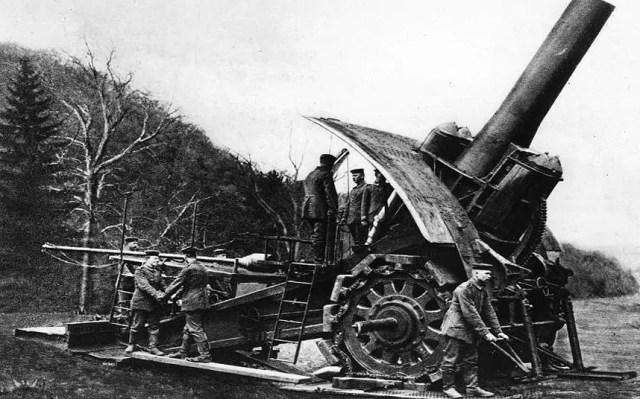
To suffer supervision by uniformed inspectors, who were entitled to enter their houses at any hour of day or night “to see the regulations laid down for the conduct and mode of life are strictly observed.”
The “stalwart sons of Vulcan”
Bertha and the Schneider’s owned as much of Austria-Hungary’s Skoda Werke as any Austrian
Smell of dungeons
The Russo-Japanese War
The Hamm Fireworks
The world’s greatest producer of diesel engines
Rustless (stainless) steel was the coming thing, patent in 1912
The Jarbuch der Millionaire reported that the third richest individual in the Reich was Baron von Goldschmidt-Rothschild, son-in-law of the the last male descendent of the Frankfurt banking house.
Goldschmidt-Rothschild had 163 million marks. Prince Henckel von Donersmark was second, with 254 million,
…and Bertha Krupp, with 283 million, was first.
Her annual income exceeded six million American dollars. And investors were bound to feel bullish; the arms market was getting better all the time.
Krupp 1812-1912, a huge book glorifying the achievements of house and firm
Climax the third day’s festivities with a feudal tournament – not a mock ceremony, but the real thing.
The Lothingren shaft had blown up near Bochum; one hundred and ten Kumpels were dead.
Alfried’s christening
After all, it had only been a game, she consoled him. Perhaps one day he would have a chance to serve the Reich in a real war.
The Moroccan crisis of 1911
One of the greatest victories in the history of foul play was Krupp’s seizure of a Brazilian contract from Schneider’s hands. p.172
The band played Deutschland uber Alles
The Ottoman Empire’s artillery had been forged by Krupp, and the dumm Turks kept losing
The outbreak of the Second Balkan War found Rumania on Turkey’s side
The “Plenipotentiaries of the firm of Krupp” (Bevollmachtigte der Firma Krupp)
in 1906 Count Ferdinand von Zeppelin began manufacturing dirigibles for the Reich at Frierichshafen. The years later Krupp electrified Frankfurt’s International Aircraft Fair by an exhibit of ‘anti-Zeppelin’ guns, which were then bought furiously by the three powers most in need of them: France, England, and Russia.
Picture ‘The Gusstahlfabrik’ 1912 p.276
“Der Krupp-Prozess” 1912/1913
‘the Kornwalzer affair”
Social Democrats
SPD
Barbara Tuchman: “Ten years ago Port Arthur had withstood a siege of nine months without surrender. World opinion expected Liege certainly to equal the record of Port Arthur if not to hold out indefinitely”. P.282
Heil dir im Siegenkranz and Siegfried’s wol’n wir Frankreich Schlage
A Krupp director named Wilhelm Muhlon had lost his mind
“six months before August Krupp received secret advice about the coming of the war from Berlin and thereupon preceded to extend the factories with the additional work” (daraufin seien die Werke sofort entsprechend umgestellt worden).
Chapter 12
The Last Love Battle
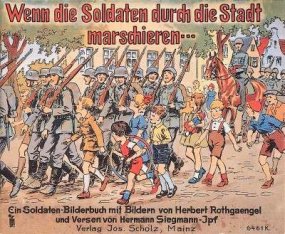
p.286
the thump of hobnailed boots
Iron First Class
Corporal Adolf Hitler of the 16th Bavarian Reserve Infantry
Fought for four years, suffered two grave wounds, and captured fifteen enemy single-handedly.
A Lieutenant Commander Schweiger, prowling off the Irish coast in his kruppsche U-20, torpedoed the Cunard liner Lusitania. Over 1,100 drowned, 138 of the American civilians
The payroll jumped to 118,000 and then to 150,000, including 20,000 women
Horne, Alistair “The Price of Glory”
“a royalty of a shilling of a shell”
Rolls Royce
As late as 1918 General John J. Pershing, U.S.A.
Snaky yellowish mists of mustard gas
Suppe
Keep the Home Fires Burning
Siegfried Sasoon:
…Pray you’ll never know
The hell where the youth and laughter go
Fitzgerald, F. Scott “Tender is the Night”
America’s entry into the war
Krupp had built up a fleet of 148 subs
He had his foreign Secretary wire the Mexican government, suggesting it invade the United States and recover Texas, New Mexico, and Arizona
Operation Kaiserschlacht (Kaiser’s battle)
A gale of gas and shrapnel
Sent in the United States Marines
Pas Fini
The Americans had saved Paris
The All-Highest
Hindenburg the Iron Cross with the crown in gold, the second such award in history (the first had gone to Blucher after the defeat of Napoleon)
What made the Pariskanone extraordinary was its range
Thirty-one miles
After 65 firings a barrel was useless and had to be replaced
Fokker pursuit planes
Saint-Gervaiss-L’Eglise
During mass, killing ninety -one worshippers and wounding over one hundred
It only made Germany more hated than ever
By late summer, everybody hated Germans
There was silence in the shed p.309
Krupp, Duisberg, Stinnes and Ballin
Gustav, their natural leader
There was a plan and the American army was its fulcrum, Pershing’s troops held ninety-four miles in the extreme right of the Allied line. In the center were the French, with the British to their left and King Albert of Belgium on the seam leading a combined group, including two American divisions.
p.312
Lille and the British were approaching Mons. Everything was slipping away from the Kaiser
That same day the British took Damascus; Turkey then bowed out. Even the Italians were attacking which meant Austria’s end was near
Webb Pershing renewed his advance the German’s last scribbly ditches caved in
Woolcott wrote in Stars and Stripes: “Their rearguard in France, resembled an escaping man who ‘twitches a chair behind him for his pursuer to stumble over.”
Woodrow Wilson
The Fourteen Points Edith Wharton
Andre Maginot
Bolshevik troops mounted an offensive against 5,000 American soldiers who had been unwisely diverted to Archangel in the hope of rescuing a fallen ally.
International anarchy
It began to rain, hard.
The “November Criminals”
Hindenberg, forgetting his own panicky pleas for terms, blandly told the country, “as an English general has truly said, the German army was stabbed in the back.”
In a Pomeranian military hospital
Temporarily blinded by a heavy gas attack the night before
A twice decorated German noncom learned of the capitulation from a sobbing pastor.
The minister wasn’t ready to quit, and neither was Adolph Hitler
‘I became aware of my own destiny….With the Jews there is no bargaining, but only the hard either/or. My own fate became known to me. I resolved to go into politics”
In Essen alone the Gustahlfabrik provided sustenance for 105,000 families
The Social Democrats now ascendant
The workmen were forming Arbeiter-Soldetenrate, proletarian council modeled after those which had been so successful in Russia the year before. Indeed, there was actually talk of a German revolution
Chapter 13
The Groaning Land

Hans Kohn called it the “sudden brutalization of politics” – had emerged
During one two-year period beginning in 1919 political assassins (Femen) committed at least 354 murders
On January 15th, 1919, Karl Liebknecht, Krupp’s most effective pre-war critic, was murdered on a Berlin sidewalk – shot in the back by police agents who were never brought to trial
Only in Amerongen, Holland, one of Wilhelm’s German biographers wrote bitterly, could the Kaiser block his ears against “the groaning of his land”
Over 70,000 in the Essen factories alone, would have to go, nearly half of them Poles
Krupp police, 52,000 passengers had departed by rail and another 18,000 on foot
We make everything. It was nearly true
Agriculture and textile machines, movie cameras, typewriters, tableware, water sprinklers, and optical and surgical instruments
The following December, Krupp put the first of two thousand locomotives on the tracks.
12-year-old Alfried
Alfred Hugenberg left to find the New German National People’s Party (the Green Shirts) – and the first wave of violence approached Essen
Rightists attempted to overthrow the seven-month old Weimar Republic General Walther Freiherr von Luttwitz, commanding officer of military units stationed in Berlin, seized the capitol and proclaimed Friedrich Wolfgang Kapp, an ultra-conservative politician, “Imperial Chancellor.
Versailles Treaty – U.S. senate defeated it for the second time
Gustav – he had officially been branded a war criminal at Versailles
Krupp was confident that German refusal to cooperate would kill that article, and he was right
Lewis Carroll
Orders were orders
Seigreich woll’n Frankreich schlagen
Germany’s fear of encirclement
Bluhnbach
They were now a large family: Alfried, thirteen, Claus, ten; Irmgard, eight. Berthold, six; Harold, four; and little Waldtraut. With the birth of Eckbert two years later the new generation would be completer
Alfried might have been an only sone. He was coached by special tutors, permitted to dine with his parents, taken on special tours of mines, and when in the Ruhr, driven to the Hauptvermaltungsgebaude for weekly indoctrination sessions
Young Fritz von Bulow
His idol was Baron von Richtofen (The Red Baron)
They all hated Villa Hugel
among themselves they called von Hugel ‘the tomb”
Bluhnbach on the other hand, was paradise
In 1922, he told his board a German officer had told him that Lenin had said, :The Steppe must be turned into a bread factory, and Krupp must help us.”
‘die Bajonette”
Thirty thousand -crowd at trial
French Kill 6 men, wound 39 others in fight at Krupp’s
‘bloody Easter in the Ruhr’
“Totschlagen!” (Murder!)
In June, the mark declined to 100,000 for the dollar, in July to 200,000 in August to 5,000,000. On October 23, the day of the final collapse, a dollar bill brought 40 billion marks in banks and 60 billion in the black market.
A worker still needed a wheelbarrow full of bills to buy a loaf of bread
p.335
the name of Adolph Hitler was heard outside of Bavaria for the first time
they crushed cobalt and tungsten carbide to powder, pressed it in 1,600-degree heat, and honed it with diamonds
Christened Widia (from wie Diamint), the steel was first exhibited at the Leipzig trade fair of 1926
It was used to cap the tower of the Chrysler building in Manhattan, where it has sparkled ever since.
The steady siphoning of funds from the Weimar’s Republic’s tax coffers
From Karl Joseph Wirth written to Gustav on August 9, 1940
Wirth’s congratulatory message is jarring to those who believe that Weimar was a noble experiment which was sabotaged by the Nazis
Wirth the leader of the German government
Measures relative to the disarmament of military, naval, and aerial forces as specified in the memorandum by the Allied Powers dated 21 January 1921
His word was no more reliable than Adolf Hitler’s
Government of the Principal Allies and Associated Powers
“with satisfaction the years of 1920 till 1923, when together with (Krupp) director Dr. (Otto) Wiedfeldt both of us were able to lay the new foundation for the development of the German armament technique
Herr President von Hindenberg
By releasing considerable sums of preservation of German armament technique
Wirth’s letter
In a Europe ruled by Germany’s New Order
The degree to which Krupp anticipated Hitler
Gustav carefully ‘schmiedete das neue deutsche Schwert‘: (forged the new German sword)
Chapter 14
We’ve Hired Hitler!

p.344
drawn into the magic circle of an established working community
snoopers (Schnuffler)
a widespread network of spies and denunciators
the Manchester Guardian
the Review of Reviews
Living Age observed that “The 1919-1920 balance sheet of Fried. Krupp contains the following memorable words: ‘During the reported year, and the first time in two generations, the Krupp works, according to the dispositions of the Treaty of Versailles, have produced no war materials’
their film couldn’t be developed. Somehow every roll had been overexposed
an infrared ray homed on their lenses
Spandau
p.347
a visit to the Ruhr, noted William L. Shirer, was ‘struck by the intense activity of the armament works, especially those of Krupp, chief German gunmakers for three quarters of a century.
‘no conceivable reason from the British point of view why Germany should not possess as many airplanes as France.’
Wilhelm von Bulow
In return for Krupp know-how, Moscow set aside tracts of land for the Germans.
Krupp
Best kept secrets of the decade
Eric Ambler’s early spy novels
Koch and Kienzle
Fritz Tubbesing
The first tank, for example was called and ‘agricultural tractor’
Toiling late, the men on the tenth floor developed eight types of heavy artillery, howitzers, and light field guns; a new, mobile 21-cm. mortar; and the tank family
In readiness
Admiral Paul Behncke
Chancellor Wirth
To circumvent, and thereby to break down, the regulations of the Treaty of Versailles which strangle Germany’s military freedom
The neutral soil of Sweden
Bofors
Denmark
Karl Pfirsch
The National Socialists came to power, Pfirsch’s official title was director of Krupp’s War Material Department
A.G. Siderius
Netherlands
Professional spies
Germans often insisted upon recording everything in the years between 1918 and 1945, even when their ledgers spelled their own doom.
The Hague
The risk must be run, however, if U-boat construction is to be further pursued at all
Dr. Edward Houdremont, professor of the science of iron production (Eisenhuttenkunde)
The firm now entered the period of what was known as schwarze Produktion, black production
International disarmament must be the general aim
The German’s own settlement with Russia at Brest-Litovsk had been far harsher – but rather the conversion of a nation’s leadership in habitual liars
(“3.7-cm gun for armored cars; 5-cm. gun for the armored cars; 7.5.-cm. heavy anti-tank gun, tank turretes ZW38, heavy field howitzer 18; heavy 10-cm. gun 18; gun carriage and limbers, heavy field howitzer 18 and 10-cm. gun 18; 21-cm. mortar 18…)
Of Essen’s 40,000 Kruppianer, only 18,000 were working, and they were on a three-day week.
Krupp was looking for a man on horseback
An ill-bred guttersnipe
‘that certain gentleman’ (jener gewisse Herr)
Adolf Hitler
Tilo’s Paris banquet
Reichstag elections of September 14, 1930 that changed. The Nazis emerged with 107 seats, second only to the Social Democrats.
A ‘big change’ (grosser Umschwung)
I.G. Farben
Fritz Thyssen
Nazi Party December 1931
p.360
Krupp’s conversion came late
Holding out as late as January 27, 1932 when Thyssen arranged a Hitler speech to the Schlotbarone in Dusseldorf’s Industrieklub.
And to the disgust of Tilo, – who thought Hitler a raving demagogue
Alfred’s insistence that an employer must be master in his own house. In Essen this was sacred wit. As its apostle Gustav had become one of the most anti-union industrialists in Europe.
Big business
In the words of a Konzern writer, ’’Er hat nichts gegen Hitler, warum sollte er etwas gegen ihn haben”(the firm had nothing against Hitler. Why should it object to the man)
November 6, 1932
Paul Joseph Goebbels had written in his diary on October 15th, “All the gentlemen of property and education are standing by the government”
Goebbels
“Deep depression is prevalent in the organization; many worries prevent any constructive work”
“We are now facing the decisive test”
“the financial situation of the Berlin organization is hopeless. Nothing but debts and obligations.
The past was difficult, and the future looks dark and gloomy; all prospects and hopes have disappeared.
August Heinrichsbauer, the coal baron
“The decisive offices in Berlin”, that “Hitler be appointed Chancellor of the Reich”
To combat Bolshevism
Clearly the industrialists had been scared
The extreme right and the extreme left
Papen
To “exclude the Communist Party, whose attitude is negative to the state
Eliminating prolixity, the message was clear – pick Hitler; the office will make him responsible; the alternative is chaos. If the Schroeder copy is accurate, the thirty-eight signers were led by Schact and Krupp.
Hindenberg had already offered Hitler the chancellorship
The National Socialist position remained precarious until Schleicher, in an act of incredible stupidity, alienated all men of “property and education”
Goebbels
Nazis
Gustav’s greatest contribution to the Nazi’s was yet to come
Papen
“Wir haben Hitler engagiert!” (We’ve hired Hitler!)
Hermann Goring
The Luftwaffe
The Prussian police
The Reichstag would be burned, and the Communists blamed for it, and he would collect enough money from German capitalists to underwrite the most expensive political campaign in the country’s history
Apart from his cabinet role, Goring was president of the Reichstag
SA arsonists
I.G. Farben directors and Albert Vogler
Vereinigte Deutsche Stahlwerke
“We are about to hold the last election”
“Private Enterprise cannot be maintained in a democracy” (privates Unternehmertum konne in der Demokratie nicht bestehen)
Those ideals in Nationalism and the strength of “authority and personality”
“regardless of the outcome” at the polls there would be ‘no retreat’/ if he lost, he would stay in office “by other means….with other weapons.”
“After Hitler had made his speech, the old Krupp answered Hitler and expressed the unanimous feeling of the industrialists in support of Hitler.”
“Und nun, mein Herren, an die Kasse!” (and now gentlemen, pony up!)
“In financing the terror election of 1933 “the leaders of big business made a substantial investment in the new government and thereby became full partners in the Third Reich.”
Goebbel’s ingenious propaganda devices
President HIndenberg the day after the rigged fire, which among other things curtailed freedom of the press, the right of assembly, and even the sanctity of private correspondence
The storm troopers left no nose unbloodied from the raid on SPD’s Karl Liebknecht Haus by Goring’s police to back street violence/
….not nearly enough Hitler needed (government seats) to legalize his dictatorship
The ‘Thousand -Year Reich”
Raise the banners! Stand rank on rank together.
Haunting anthem of the Nazi’s by Horst Wessel –
S.A. march on, with steady, quiet tread…
“Krupp financially paved Hitler’s road to power.”
Like most political accusations it was overstated and oversimplified – Krupp had been paving the way for whatever leader might rise.
He had considered several, and had in fact come late to the Hitler rally
Nevertheless, he had arrived in the nick of time, and he was about to make amends for his tardiness with enthusiasm.
Chapter 15
The Fuhrer is Always Right

Fritz von Bulow had succeeded his father.
Overhead the swastikas snapped viciously from a new flagpole
Hitlergruss, the Hitler salute
A chairman of the Reich Federation of German Industry
The new German state
In short, the factories, like the nation, needed a dictator. Obviously, his name should be Krupp.
Krupp was now the Fuhrer of German industry. His first act was to expel all Jews from the Reichsverband, which was then converted to the quaisi-official Reichsgruppe.
The Hitler Spende (the Hitler fund)
Rudolf Hess
Twofold- first was to support” the SA, SS, staffs, Hitler Youth, the political organizations…’the second was to free businessmen from harassment by party thugs.
The fund became the Nazi’s greatest private source of wealth. Krupp alone put up over six million Reichsmarks in it, plus another six million for other National Socialist causes
Mein Fuhrer
May I be permitted
Krupp-Hitler correspondence
Heil Hitler!
Gleichschaltung, conformity, or coordination.
No man was more gleichgeschaltet than Gustav
”Wo gehobobelt wird, da fallen Spane” (Where there is planing, shavings fall)
Tilo von Wilmovsky had joined the party, for reasons which are obscure. He later said that he hoped to reform it from within, – “um Schlimmeres zu verhuten” (to stop something worse from happening)
“Der Fuhrer hat immerecht!” (The Fuhrer is always right!)
Spring of 1934 named Gustav the Reich’s Fuhrer der Wirtschaft (leader of the economy)
Ernst Rohm
Hitler was not received at Villa Hugel. Bertha wouldn’t have it. For one thing, she was mortified.
In the ghastly night of long knives German Rightists tortured and murdered over four hundred fellow German Rightists including Rohm
It was a Schreckensherrschaft, a reign of terror
The German attitude was vastly different. A throb of admiration ran through the Reich. Here was a man who acted.
The new alignment, “which”, in Professor Schweitzer’s memorable phrase, “had now been cemented through the blood of the murdered victims”
The hoisting of the swastika flag over Hugel
The middle-class socialists had been doomed from the outset. The had wanted butter; Mein Kampf Nazis, guns.
Der Ameisenhaufen, the busy anthill.
The pace was terrific
Goebbels
Goerdeler
An advocate of free enterprise and an arch enemy of militarism
Goerdeler
Schact
The Fuhrer abolished the eight-hour day, making overtime cheap for employers
Our armaments are thus partly financed from the deposits of our political enemies.
The Fuhrer demands complete secrecy on the construction of U-boats
Meanwhile, Gustav noted, only 6 percent of Germany’s iron was being exported to ‘enemy countries’ like England, France, Belgium, Russia and Czechoslovakia.
Ernst Haux
“….in 1932-33 for the first time we ended the year with a small profit, and one could start to build some small reserve.”
p.378
Gott segne das Haus und die Firma Krupp
Wie bisher, so auch in alle Zukunft
Zum Heil der Werksangehorigen und
Des ganzen deutschen Volkes
God bless the House and Firm of Krupp
as hitherto, so in all the future.
For the Blessing of the employees and
Of the whole German people.
As the 1930’s advanced it continues to grow. One sixth, and then one-fifth of Germany’s national income was being spent on arms
“Kanonen-Muller”
Kruppsche Treibstoffwerk
Wane-Eickel
Renn patents were leased to Japan for installations in Korea and Manchuria
The Fuhrer sent word that he wanted a hundred new tanks by March 1934 and six hundred and fifty a year later
Third Reich’s “ringing fanfare of trumpets (schmetternde Fanfare)
It was the end of Versailles
The Luftwaffe was unveiled, to the dread of Europe.
The old imperial army mingling with the attire of the new army
Death’s Head Hussars
Silver black Iron Cross
September 4, 1939, they acclaimed the invasion of Poland
Hitler gave Krupp an entire country, Spain
The state -owned Hermann Goring’s steelworks
Gotterdammerung
Die Neuordnung
They joined the ranks behind Hitler whenever the threat was not far off. That was part of the Fuhrer’s genius.
The loyalty of Herrenvolk
Hitler first ruptured the borders of Versailles Germany at daybreak on March 7, 1936, when three battalions of German soldiers goose-stepped across the Rhine bridges, headed for Aachen, Trier, and Saarbrucken, and reoccupied the Rhineland buffer.
Heil Hitler Dir (formerly Heil Kaiser Dir), the Fuhrer, Rudolf Hess, and Karl Otto Saur sat on straight chairs then Krupp introduced the Fuhrer.
Tears started from the eyes of Gustav
He wanted the world to know the “he publicly honors our great leader Adolf Hitler, to whose service he pledges himself” (in aufrichtiger Verehung in dim Gelobnis treuer Gefolgschaft feiert er unsern grossen Fuhrer Adolf Hitler)
Bormann, Goebbels, Goring, Ribbentrop, Himmler, Hess, Neurath, Blomberg, Fritsch, Keitel, Raeder, Mackensen, Todt, Speer, Funk, Ley, and Sauckel – and for the leaders of friendly nations, notably Japanese conservatives and Benito Mussolini, who was first shown around by Hitler himself the last week of September 1937
Gustav extended himself in countless little ways, and some which weren’t so little. He contributed 20,000 Reichsmarks to Alfred Rosenberg’s Nazi propaganda in other countries, for example
Five months later Goring threw the Third Reich’s biggest party in Berlin
The Fuhrer, who liked to think of the new titles for people, named Baron von Wilmowsky Managing Director (Vorstandsmitglied) of the National Motor Road company (Reichsautobahn Gesellschaft), set up to handle the transportation problems which would arise upon mobilization, and both Gustav and Alfried became “War Economy Leaders” (Wehrwirtschafts-fuhrer)
Hitler also enjoyed drawing up Loyalty oaths to himself
He demanded the Krupps sign what he called a ‘Declaration of political attitude”: “I herewith declare that I stand by the National Socialist conception of the State….”
Storm troopers
Die Fahne hoch
Alfried and Claus
Martin Bormann
Our two sons….
Birthdays were always festive occasions among the movement’s elite; on one of Gustav’s Hitler awarded him the Golden Party Badge, making him the most decorated civilian of the Third Reich
Bavarian mountain villa at Berchtesgaden
Gasthof Zum Pommer
Alois Hitler ne’ Schicklgruber
…in that effeminate way he had, cocked his left wrist against his canted hip and extended a limp hand
Essener Allegemeine Zeitung
The point is important, for it demonstrates the nation’s greatest industrial family could and did defy the Nazis with impunity
Kristallnacht of November 9-10, 1938, the ‘night of broken glass’ when synagogues were desecrated, and Jews were stalked like animals in a nationwide pogrom…
Viennese Nazis collected Jews and led them off to clean SS latrines; Baron Louis de Rothschild’s Plossglasse palace was looted – later he bought his way out of Austria by signing his steel mills over to the Hermann Goring Works
A group of businessmen who venerated Heinrich Himmler and contributed millions to his “Aryan” research
Claus was on active duty as a Luftwaffe Oberleutenant
Until he crashed over the Hurtgen Forest on January 10,1940
Apart from the wholly owned subsidiaries in Rheinhausen, Magdeburg, Hamm, Annen, and Keil, Krupp held a controlling interest in 110 firms, including the Skoda Works…
Goring’s star, already high, had begun to soar; in the last few months he had been anointed as Feldmarschall and appointed economic dictator of the Reich.
Fifty-year-old industrial genius named Ewald Oskar Ludwig Loser, who bore an astonishing resemblance to Goring
Carl Goerdeler
Goerdeler had just resigned the mayoralty of Leipzig in protest against the Nazi pulverization of Mendelssohn’s statue
The inception of a strange intrigue which was to reach its climax in the attempt on the Fuhrer’s life
Gustav knew that Loser was a key figure in the shadow government which would be formed when the Fuhrer was purged.
The brightest star in the Krupp constellation of executives, the threat to Alfried’s future, had become as disloyal a German could be in the 1930’s and was, in fact, prepared to collaborate in the assassination of Hitler himself
Chapter 16
It Is an Honor to Be an SS Man

p.397
he belonged to the generation of Martin Bormann, Heinrich Himmler, and Reinhard (“der Henker”) Heydrich. Badur von Schirlach, Gauleiter of Vienna, was born the same year as Alfried, Adolf Eichmann, the year before.
He had also identified himself with its darkest fringe
Otto Dietrich
He was contributing to the Nazi Party with his allowance
The year before Eichmann donned the black shirt of the Schutzstaffel (SS) , Alfried joined the SS Fordernde Mitgliedschaft (sponsoring members) – the elite’s subdivision.
He was then a civil engineering student at Aachen Technical College
A rousing poem by Reichsfuhrer Himmler
Es ist eine Here, SS-Mann zu sein
Es ist eine Here, Fordendes Mitglied zu sein;
Tue jeder weiter seine Pflicht,
Wir SS-Mannner und ihr Fordernden Mitglieder,
Jeder an seiner Stelle:
Und Deutschland wird weider gross warden.
It is and honor to be as SS man,
It is and honor to be an FM;
Let us each of us continue to do his duty,
We SS-FM men at our posts:
And Germany will become great again.
He was good too; in six years he rose from second lieutenant (NFSK-Sturmfuhrer) to colonel (NFSK-Standartenfuhrer)
Otto Skorzeny
The German’s streak of Anglophobia had survived 1918. Gustav had sent Claus and Berthold to Oxford.
And indeed, the closer one examines Alfried the more one is aware of the wild contradictions in him. There is no pattern here. He comes close to being one of those Men of Mystery whom prewar journalists cherished, the Men Nobody Knew.
Perhaps no one ever knew Alfried
“You know, I’m not close to any of my brothers and sisters except Waldtraut, and she lives in Argentina now.”
Inside he lived quietly with five servants, often spending his evenings in solitude, drinking White Horse Scotch and chain-smoking Camels from a fluted gold cigarette case, a habit which dated from the early 1930’s.
His afternoons and holidays were devoted to expensive hobbies – sailing on his sixty -foot yacht Germania V from his hideaway on the North Sea island of Sylt, flying around in his private Jetstar, taping classical music, and photographing his travels.
He had supported Nazism from the outset as: “the only chance to put Germany on its feet again,” and he went to his grave declining to disown Hitler.
Ten city license numbers were reserved for his personal automobiles, and they all began with the letters ERZ, because Erz means “ore” on German.
Passing streets named after many of his ancestors p.401
Arndt, who started it all by exploiting the bubonic plague
A red Simson
Austro-Daimler
“the only way to stop us is to kill us all”
All exports to Poland are to be stopped immediately
In his diary for April 10th, 1943, he had written, “Old man Bohlen, now seventy-two and a half years old is already somewhat gaga” (verruckt)
1939
Hitler’s grey juggernaut roared across the border and took dead aim on Warsaw.
Studies at Balliolas
Gunter Grass later wrote sardonically in the Tin Drum, by ‘the Germantanks, stallions from the studs of the Krupps von Buhlon und Halbech, no nobler steeds in all the world.’
Alfried-Kanonen-Muller performance of 1939
The Panzers
German Luftwaffe
Three days after the Kremlin banquet at which Ribbentrop and Stalin divided up Poland…
His cousin Kurt (Wilmowsky) – his mid- Atlantic ship had been sunk – by a Krupp U-boat firing a Krupp torpedo.
Chapter 17
Crier Havolt!
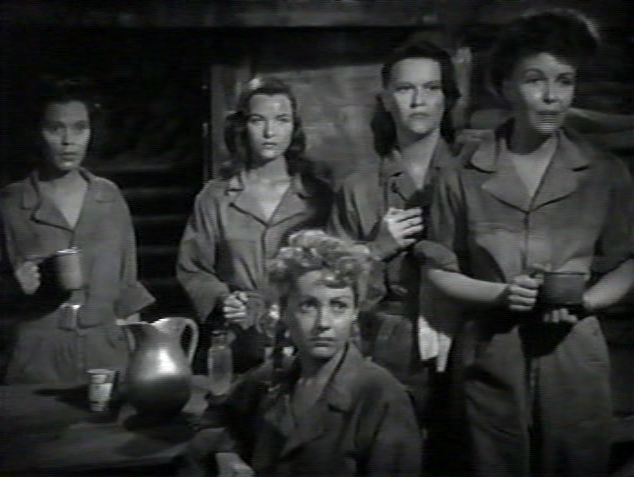
p.416
the Werhmacht
an army of Krupp tanks, as William L. Shirer discovered, was “unprecedented in warfare for size, concentration, mobility and striking power” a
Ardennes forest
“Stretched in three columns back for a hundred miles far beyond the Rhine”.
General Alfred Jodl scrawled in his diary, “Fuhrer beside himself with joy”.
Riemann kept a diary too, and in its own way is as valuable a contribution to history as the general’s.
They were, in short, responding to the medieval European call, “Crier Havolt!” – fourteenth century Teutonic command to pillage
Riemann quietly stepped out to reappear in Alfried’s life as a Nuremburg witness.
Thr Fuhrer had invited German tycoons to submit lists of properties lost in 1918, and Gustav had asked for restoration of his Lorraine holdings
The Vichy
The Armed Forces Operations Office (Wehrmachtsfuhrungsamt)
The Dutch
The Reichsvereinigung Eisen (Reich Iron Association or RVE)
The Reichsvereinigung Kohle (Reich coal Association – RVK)
Reich Minister Speer
Herr Speer
Albert Speer
Deputy chairman as one of RVE’s ‘three wise men’
Speer
The Dutch
Under the Dawes and Yung plans – and which Hitler had denounced as criminally unjust
Robert Rothschild was a problem. He need not have been.
p.421
Rothschild’s transfer of shares to his wife had been illegal, he explained; all transactions involving Jews after May 23, 1940, lacked validity
Alfred formally renamed the plant Krupp S.A. Industrielle et Commerce, Paris
They were actively supported by French Fascists
On the night of February 21, a gang of Vichy’s anti-Semitic Parti Populaire Francais swooped down upon the villa, kidnapped Rothschild from the Italians, and delivered him to Montluc prison in Lyon.
Damour and Sandre
The necessary forms in triplicate
Jew-baiting (Judenfolgung)
Rothschild was sent to the huge Nazi concentration camp in Drancy, northeast of Paris
Eichmann’s local deputy
Members of Death’s -Head detachments (Totenkopfverbande)
Storm troopers in this SS branch wore skull-and-bones shoulder insignia on their black tunics.
49,000 Jews
Auschwitz
ARBREIT MACHT FREI (work makes you free)
Rothschild had been gassed to enrich Krupp
Fleisch und Blut
Robert Koch, technical director of the Alsthom Societe’
BESCHLAGNAHMT (seized property)
“….You see, they were the masters and they felt they could do whatever they want”
“the payment of compensation must be refused on the part of the German Reich for all time.”
The mass production of submarines
SACM (Alsatian Corporation for Mechanical Construction)
SACM-Elmag
Herman Meir had withdrawn from reality to Karinhall
“provisional management”: (kommissarische Verwaltung)
After D-Day in Normandy Alsatian labor began vanishing into the hills at an alarming rate
1,250 concentration camp workpeople
Ernst Wirtz -head of the camp
Sentenced to eight years hard labor
…but certainly, Hitler’s conquests had made Krupp the greatest mogul in the chronicles of world trade.
He owned factories everywhere, a complex of shipyards in Greece, Russia, France, the Sudetenland, Norway, and Yugoslavia.
Had anyone suggested that the family would soon lose it all, the man would have been dismissed as a fool….They had faith in Sieg.
Yugoslavia’s Chromaseo Mining Company
…from 1942 onward illegal acts of spoliation and plunder were committed by, and on behalf of, the Krupp firm in the Netherlands on a large scale….
Called the Krupp men ‘robbers’
When Barbarossa begins, the Fuhrer told his ranking generals on the afternoon of February 3, 1941, ‘the world will hold its breath and make no comment!” (Wenn Barbarossa steigt, wird die Welt den Atem anhalten und sich still verhalten!)
Barbarossa
The Fuhrer decreed in early March that “The war against Russia will be such that it cannot be conducted in a knightly fashion. The struggle is one of ideologies and racial differences and will have to be conducted with unprecedented, unmerciful, and unrelenting harshness….Russia has not participated in the Hague convention and therefore has no rights under it.”
Of all the target’s on Russia’s map the most coveted was the vast, enormously rich Ukraine, the ‘plum of the golden pheasants’
The Ukraine was Stalin’s food belt, and with its iron fields, coal mines, and steel factories it was also his Ruhr.
After the peace, Alfred Rosenberg explained to the Reich’s industrialists in May 1941, its 40 million inhabitants would become subjects of ‘an independent state allied to Germany’ – in short, a colony.
The Mining and Foundary Works Company East Inc.
Alfried dominated BHO’s administrative board (Verwaltungsrat)
Thanks to that key position and to a piece of great good luck, he was probably the one man in Europe to make money out of Barbarossa.
The Reds
General I.I. Fedyuinsky withdrew his troops to Korosten
Semyon Timoshenko desperately rallied the buckling, concave front and center, and Moscow was saved
The Reich’s ablest tactician, Get von Rundstedt, and laboring opposite him was the USSR’s most inept, Semen Mikhailovich Budenny
The racing tank lines of Guderian and Hasso von Manteuffel butchered his supply lines, rolled up the rear, and, when Guderian executed a 90-degree spin, cut him off from Timoshenko.
On August 19, less than nine weeks after hostilities had begun, most of Ukrainian strongpoints had fallen
The second week of September, Budenny had telegraphed Moscow that he was abandoning the Ukraine. Stalin sent Timoshenko to relieve him, but seventy-two hours after the new marshal’s arrival Rundstedt had completed his encirclement of four Russian armies.
One third of the Red Army had been annihilated; a half-million Slavs were prisoners. It was the Fuhrer proclaimed “the greatest battle in the history of the world”
Both Soviet marshals flew out of the trap with Budenny’s political commissar, a lieutenant general named Nikita Khrushchev.
p.434
L.P. Korniets of the Ukrainian government
Alexander Werth -BBC and London Times
The transplantation of industry to the east “must rank among the most stupendous organizational and human achievements of the Soviet Union during the war”
At Dnepropetrovsk, the Wermacht were too fast for L.P. Korniets
The capitulation of Dnepropetrovsk made Krupp the sole proprietor of the gigantic Molotov works
The fall of Kramatorsrk
The capture of Debaltsevo
Life under the Communist dictatorship had been dreary and arduous for the Ukrainians, who considered themselves a separate nation
Stalin’s official slogan – “Zeit’ stalo legsche, zhit’ stalo veselei” (freely translated, “You never had it so good”)
In Kiev, Kharkiv, and Odessa the Little Russian (which is what “Ukrainians” means in Slavonic) spat it out like an oath.
They had greeted the Teutonic legions as liberators
The Nazi answer was to jail the priests, ban the paper, and ravage the land. Germans had their own ideas their dream of Lebenstraum by repopulating the area with Herrenvolk.
Slavs-all slavs – were alike, the astonished people were told. Like Jews, they were Untermenschen, and this smiling countryside was too good for subhumans.
Goring proposed that they “kill all the men in the Ukraine…and then send in the SS stallions”
Erich Koch, a Goring protégé’…was appointed Reich Commissar of the Ukraine.
An OKW report of July 13, 1943, mentions, “an intensification of countermeasures: among others, confiscation of grain and property; burning down of houses….tying down and mishandling of those assembled; forcible abortion of pregnant women.”
Cannot be accused of incompetence (Alfried). His problem was that his responsibilities had become enormous, and he could not be everywhere at once.
Loser balanced the books and was a superb administrator. Indeed, in his anxiety to shield his clandestine contacts with Allen Dulles in Switzerland he countersigned document after damning document, masquerading as an ardent Nazi that , to his subsequent astonishment he wound up in Nuremberg dock beside Alfried. Still his zeal was counterfeit he was not fuhrerstreu.
Krupp superiority might have won the war. In practice, Krupp inferiority contributed a great deal to its loss.
Kanonen-Muller – awarded the Kriegsverdienstkreuz for extraordinary proficiency in the design of new arms
Yet the blunt truth was that even Loser could not have sabotaged die Firma’s war effort as effectively as Muller did unintentionally.
The Luftwaffe; in six days bomber pilots dropped 50,000 high explosive and incendiary bombs on the city
Sevastapol
Reich’s Weapons Development Committee (Waffenentwicklungskommission) was too faithful a National Socialist for the good of National Socialism.
Pravda p.440
Erich Kanonen-Muller was altogether too inventive…
The Sherman
The Sherman was particularly good. However, by the time it reached Vladivostok in the summer of 1942, Russia T-34, superior to it in every respect, had been in production for a year and a half
Two-man brain trust, Dr. Ferdinand Porsche and his thirty -four-year-old son Ferry.
The inventor of the Mercedes S and the SS sports cars
The six -liter Auto-Union which is still the fastest car ever built
developed the Volkswagen and other products
He is too modest. The two Porsches spawned variegated subcultures of forty-five-ton Panthers, of useless, unlandworthy Leopards, for light reconnaissance, which consumed hundreds of factory man-hours in 1942; and Tigers, which did work, as by the law of averages they should have.
A preposterous supertank called the Tigerpanzer – weighing about 180 tons
A mammoth Jagdpanzer. Troops at the front called it der Elefant.
At Kursk
The least understood engagement of the war.
Walter Gorlitz wrote that though Stalingrad was the ‘Psychological turning point”, the ‘military crisis’ came at Kursk”
The rubble of Stalingrad
Lozovoya junction
Red Star
Hitler for his part, had complete faith in Krupp’s Panther, Elefanten, Jagspanzer and Tigerpanzer.
It was the greatest battle in history – 3,000 tanks on each side
“The Tigers are burning!”
Zitadelle had been a catastrophe – from Orel to Belgorod the scarred land was strewn with jagged fragments of Alfried’s finest steel.
Goebbels newspapers, Goebbels films, and Goebbels broadcasts, the Fuhrer’s triumph still seemed inevitable. Nazi Germany controlled more territory than the Holy Roman Empire at its peak.
American power was despised, and the alliance between Communist Russia and the capitalist democracies seemed doomed to disintegration anyhow.
Chapter 18
Alfried Commands the Kruppbunker
the Horst Wessel song exhorting the Herrenvolk…
Die Strassen frei den braunen Bataillonen!
Die Strassen frei dem Stumabteilungsmann!
p.449
Like his great-grandfather in 1870-1871, his grandfather in the fight for the first German Navy Law of 1898 and his father in 1914-1918, he was engrossed in his role as the empire’s gunsmith.
A portrait of Hitler
With its red-on-black slogan MIT UNSERUM FUHRER ZUM SEIG! (WITH OUR FUHRER TO VICTORY!)
Auschwitz had been mentioned. Krupp’s role there is indefensible to any modern standards; it was, among other things, in flagrant violation of German labor laws.
The Fuhrer had not asked him to take advantage of the victims of Auschwitz. He exploited them voluntarily.
Krupp built the Berthawerk in Silesia with Auschwitz Jews over the objection of government engineers.
The Hermann Goring Works were in a similar position.
Sauer – the ‘slave labor program’
Although Sauer and Speer were mentioned in Hitler’s last testament, which was largely a fulmination against world Jewry, Sauer at Nuremberg had nothing to gain by appearing as a prosecution witness.
The labor of a great many of Konzentrationslager was being utilized, which was known to me personally
Slave labor
The diet was entirely inadequate…. horsemeat or meat which had been rejected by veterinarians as infected with tuberculosis germs was passed out in these vamps
The TB rate was four times the normal rate. This was the result of inferior housing, poor food and an insufficient amount of it, and overwork.
The subversive Kleine Kreisse (Small Circle)
Carl Goerdeler
In the United States he talked to Cordell Hull, summer Welles, Henry Wallace, Henry Morgenthau Jr., and Senator Robert A. Taft, trying to persuade them that the Fuhrer was not bluffing – that he really meant to wipe them out.
No wonder, during the six months after his departure from Krupp he (Loser) was accessory to at least six attempts on Hitler’s life.
Code name Valkyrie
Thirty-six-year-old Count Klaus Philip Schenk von Stauffenberg.
Hitler’s Wolsschanze (Wolf’s Lair) at Rastenburg in East Prussia, where Stauffenberg’s briefcase was to be left two summers later.
Its invasion of the Soviet Union, the British and Russian thrust into Iran, and Rommel’s duel in the sun with Montgomery.
Bormann
‘a kind of company-owned training place’ for craftsmen
‘Gustav-Haus’
What the old Krupp wanted was an absolute industrial monarchy.
Hitler approved
In his harsh, inimitable voice he told Bormann, “Jawohl.”
8 am on January 10, 1943
Stalingrad
Soviet cannon
The Twenty-two Nazi divisions in the pocket were hopelessly outgunned.
When Paulus surrendered…
44-degree-below-freezing cold.
Siegfried’s funeral march
And ‘Ich hatt einen Kameraden‘
Wird mir die Hand noch reichen,
Wieweil ich eben lad’:
Kann dir die Hand nicht geben,
Bleib’ du im ew’ gen Leben
Mein gutter Kamerad!
His Hand he tries to reach me,
As I may charge renew.
My hand was never given,
But he will be in heaven
My comrade tried and true!
The Wolf in East Prussia
The Fuhrer:
The owner of the Krupp’s family’s wealth is entitled to use this fortune for the establishment of a family enterprise with a specially regulated succession.
Whoever be the owner of the enterprise shall carry the name Krupp before his family name.
p.462
Mein Fuhrer!
Assuring future generations of German men that they, like their forefathers, might enjoy ecstatic moments of Teutonic conquest
My Fuhrer
132 years of Krupp work, done by many generations of faithful followers
Since Hitler seized power in 1933 the Konzern’s assets had jumped from 72,962,000 marks to 237,316,093 marks.
He exulted on the fact that also on December 15, by command of Adolf Hitler, he had taken over his father’s duties as Nazi “Leader of the Plants”
Lex Krupp
Under a special authorization from Adolf Hitler, Fuhrer of the Reich. The Wolf had been slain; its Lair was destroyed; but one member of the old pack retained his claws.
His growing devotion to skat, a kind of Teutonic bridge game in which a player matches his wits against two opponents, fighting, so to speak, on two fronts. (Other admirers of skat included Adolf Eichmann and Wilhelm II.
Bayerische Motoren Werke (BMW) sports car
By 7:30p.m. the rakish BMW was parked outside Villa Hugel once again and Alfried was attacking the castle’s hoard of British Scotch
As the engineer behind the forst 88’s used in Spain, Alfried could gauge exactly when the raid was approaching its crescendo
RAF Mosquitoes
Herr Alfried always slept as peacefully as a child.
Skat partners
“the 800-acre Krupp plant bombarded from the air for the fifty-fifth time…” and on July 28, “The last raid brought about 100 percent stoppage of production in the Krupp works. Speer himself is much concerned and worried about it.
Goebbels
The building experts at Stadtbehorden calculate that it will take about twelve years to repair the damage.
Goebbels demonic façade
Downtown Cologne had been the bull’s-eye Between 14,000 and 15,000 people had been slaughtered.
Winston Churchill promised the Commons that Germany “will be subjected to an ordeal the like of which has never been experienced by a country in continuity, severity, and magnitude.”
Sir Arthur Harris: “the complete destruction of the four Ruhr cities”
That belt of walled cities which had bound the Ruhr since the Dark Ages, with Essen as the buckle. Essen and Dortmund suffered the most; the destruction in Bochum, Duisberg, Dusseldorf, and Hamm was less appalling. In the great raids heavy industry was battered least. The real targets were homes and stores.
The Nazis had started the atrocious form of warfare. Now they were to taste it with a vengeance.
‘the higher strategy’
The advocates of strategic bombings have been with us for half-century now, from the Argonne to Vietnam. World War II was the golden age of their faith.
May 16, 1943
Wing Commander Guy Gibson
Immediately 334 tons of water came hurdling down the Ruhr valley.
Many thousands of sleeping people perished that evening.
The urban Ruhr was being demolished ‘with a view of breaking German morale’
The failure of these theorists was total
But in Essen as he ultimately conceded, ‘morale bombing was completely ineffective against so well organized a police state as Germany.” The authors of the Survey – they included George W. Ball, John Kenneth Galbraith, and Paul H. Nitze – concluded that “the mental reaction of the German people to air attack is insignificant… the showed surprising resistance to the terror and hardship of repeated air attack, to the destruction of their homes and belongings, and to the conditions under which they were forced to live.”
They not only resisted; they were defiant.
Freshly chalked swastikas and the interlocking circles of Krupp.
Alfried Borbeck’s foundry
Freidrich-Alfred Hutte in Rheinhausen
Indeed, there was ‘no evidence that any bomb of the aforementioned 76 tons aimed at the Rheinhausen hit the plant”
Willi Schleiker – number three man in the Miniserium for Armament and War production – after Speer and Karl Otto Sauer – revealed that “as the bombings grew, so did German production, until on the very eve of defeat, when Germany had collapsed within, the Ruhr was producing more than ever before.”
By November 1944, when the Allies had already made their first breach of German soil, Germany was producing 1,800 tanks a month… Production rose and soared…..By mid-1944 airplane production had reached a peak of 3,750 aircraft a month.
The moral issue of bombing women and children (and Allied POW’s and concentration comps)
Major General J.F.C. Fuller, the most vehement of them, called the airs offensive a “massacre of civilian populations”
Chester Wilmot wrote that “in cities like Cologne and Essen there was nothing left to burn, and the blast bombs, which had caused such havoc when the buildings were intact….did little more than convulse the rubble”
As Hannah Arendt observed two decades later, “the saturation bombing of German cities” was “still the stock excuse for killing civilians”, even though the Nazi exterminations had begun long before.
They persuaded themselves that Germany’s fortunes would turn any day now.
It was like a Brecht play
“Ach so, er ist gut,” he said quietly. Dinner proceeded without further incident, followed by a game of skat which he won handily.
Chapter 19
Who Are These People?

p.480
Stripped of his Nazi duties Gustav von Bohlen had crept off to Austria
He was subject to hallucinations
“wer sind den eigentlich all diese Leute?’
Since Tilo had observed strangers gnawing bark from trees.
Alfred the Great’s wildest schemes for SPD punishment
To supply necessary labor from the concentration camp inmates
Now signposts outside Krupp shops proclaimed SLAWEN SIND SKLAVEN (Slavs are slaves)
Judenmaterial (Jewish livestock)
In German, the word to eat is Essen. The feeding of farm creatures is fressen, and that was the word used for slaves, often as they jumped from their boxcars in the terminal the first words they heard were “Keine Arbeit, kein Fressen” (No work, no feeding).
According to Adam Schmidt, a railroad worker:
“In the middle of 1941 the first workers arrived from Poland, Galicia, and the Polish Ukraine. They came crammed in freight cars. The Krupp foremen rushed the workers out of the train and beat and kicked them…. I watched with my own eyes while people who could barely walk were dragged to work.” (Mit eigenen Augen konnte ich sehen, das auch Kranke, die kaum gehen, zur Arbeit herangezogen wurden).
Jews at the bottom of the totem, wore yellow cloth tags and wherever practical heads of Jewish girls were shaved to form grotesque design.
SR for Soviet Russia
P for Poland
Other eastern workers OST
Names were forbidden; known only by numbers stitched in white on their garb.
Dehumanization was complete
Something which fused Nazi ideas to produce the Third Reich and its vitality… The tradition of the Krupp firm, and its “socio-political attitude, exactly suited the moral climate of the Third Reich.
“Fahrt mal dazwischen!” (Get them moving!)
To Herr von Bulow
I can supply the ten leather truncheons, or steel birches (Lederknuppel oder Stahlstabe).
Stucke – stock, cattle
Albert Speer’s desk
Over three-million U/S mothers and daughters, a third of them in their teens, were working in war industries, and English munitions factories had hired 2,250,000 girls.
German shops, meanwhile, had employed only 182,000- roughly the number of female cooks and maids in the country.
All the great roundups, they vowed, had been official acts of the German government. In theory this was true.
Alfried’s files are full of this.
Heinrich Lehmann – liaison man with the DAF (German Labor Front) and director of the firm’s new Arbeitseinsatz (labor procurement and recruiting).
The Konzern became known everywhere in the Netherlands as Pest Firma (a plague firm).
France had not seen a serf since the French Revolution; Germany since 1871. Even the Czars had abolished serfdom in 1861.
Brazil’s capitulation in 1888 had freed the last country in the Western Hemisphere, the Berlin Conference of 1885 and the Brussels Act of 1890 had brought most of Africa and Asia in line.
The Slavery Convention of 1926 and the Forced Labor Convention of 1930 had been judged historic achievements.
Nevertheless, here was Alfried, – the alumnus of three German universities – ordering chattels in thousand-head lots one hundred and sixty-one years after Joseph II had emancipated the last Hapsburg bondsman.
Language rules, Evacuation, Labor in the East, Special treatment, resettlement, and most memorably Endlosung (final solution).
There was trouble over the Jews.
General Franz Halder had mused in his diary that Polish Jews could be ‘cheap slaves.’
Goring had written Reinhard Heydrich, “I hereby charge you with making all necessary preparations…..for bringing about a complete solution (Gesamtlosung) of the Jewish question in the German sphere of influence in Europe…I request …the desired final solution (Endlosung) of the Jewish question”.
Endlosung was working, but the cost in ammunition was shocking
In the spring of 1942 Himmler ordered a German physician named Beckar to experiment with gas vans. these mobile units were abandoned (because of limited capacity and high fuel consumption) for Vernichtungslager (extermination camps), of which the most celebrated soon became Osweicim, a former Austrian barracks in the marshes of southern Poland, which would later be immortalized in its German rendition, Auschwitz.
Jews, foreign saboteurs, anti-Nazi Germans, gypsies, criminals, and antisocial elements” (Verbrecher und Asoziale)
Properly driven each could contribute a lifetime of work in the months before he was dispatched.
Alfried:
Subject: Employment of Jews
p.490
“Einrichtung einer Fertigungstelle fur Teile von automatische Waffen in Auschwitz” (construction of a manufacturing plant for automatic weapons parts in Auschwitz). Assured that “The Auschwitz concentration camp will supply the necessary labor,” the executive authorized two million marks for the project, whose plans were then inscribed “Approved (genehmigt) by the Direktorium on October 31, 1942.
Obersturmfuhrer Sommer …agreed to keep record of all the fit Jews picked up in the capital and sent to the east.
Rudolf Franz Hoss, the forty-three-year-old convicted murderer who now reigned over Auschwitz as Kommandant des KZL (Konzentrationslager, concentration camp) capitulated
Later at Nuremberg, Hoss declared that he had supervised the destruction of three-million people. “Der Rest wurde ausgesucht und fur Sklavenabeit in den Industrien der KZL verwendet,”, he added – “The rest were selected and used for slave labor in the concentration industrial plants.”
Erich Lutat
Learned to recognize the smell of burning human flesh
Paul Ortmann was appalled by the frequency with which the guards whipped inmates
The workmen were Poles, Dutchmen, Czechs, Frenchmen, and a great many Jews…. Many of the prisoners were in pitiful physical condition” (Viele Gefangene waren bermitleidenstwerter physicher Verfassung).
Auschwitz is a familiar name, but it was only one of many camps. Until the collapse of 1945, Krupp employed forced labor in nearly a hundred factories sprawled across Germany, Poland, Austria, France, and Czechoslovakia.
A remarkable acceleration in Krupp’s slave population.
As late as August 1943, the drafts were relatively small.
Deciding to impress 45,000 unskilled Russians for work in German steel mills and another 126,000, including several thousand POW’s, for mine labor
However, it has been agreed that people who are totally unsuitable can be exchanged.
He also ruled a slave empire whose population was roughly that of Knoxville today.
Fritz von Bulow
In the gathering Wagnerian murk of Hitler’s aging New Order, the name Krupp looked mightier than ever.
Effective as forced labor may have appeared – and opinions about that vary – it was doomed in the end, for the keepers became kept, caged by their growing uneasiness, suspicion, and, in some cases, feelings of guilt.
In the beginning it was seventeen…
Max Ihn, “Youths were employed…. from fourteen years on.” The Nuremberg tribal found that in 1943 twelve-year-old boys were being put to work not as apprentices but as laborers, and that “In 1944, children as young as six years of age were being assigned to work.”
Bulow explained that frequently he was obliged “to denounce foreign workers for the Gestapo…. because of absenteeism,” severity and strictness
The Gestapo
Guards who beat them with four-edged leather truncheons wore the name KRUPP on their badges, caps, and armbands.
Prisoners worked twelve hours a day seven days a week, were allowed no holidays, and were, of course, paid nothing.
The Reich had committed a colossal error. An extremely high percentage of these men were civic leaders, professors, and clergymen who had been arrested as temporary hostages, shipped to the Ruhr, through some incomprehensible error, and sent to Deschenschule because bunks were available there. By any standard of intelligence or achievement they were the most distinguished foreigners in Essen. Yet here they were, singled out for punishment. Their present jail, carefully conceived, skillfully built, and patrolled rigorously, was admirable in every respect save one, it was being used to cage the wrong men.
Chapter 20
The Gods Themselves Struggle in Vain

p.500
both felt barbed wire hurt worker morale
barbed wire already in use for this purpose must be removed unless no other wire can be procured.
Krupp ignored both the Fuhrer and Reichsfuhrer SS (Speer). An inspection in March 1943 revealed that the stakes around the Essen camps had been restrung and that the new wire was both thicker and more heavily barbed.
Drexel A. Sprecher: “Alfried’s exploitation of slave labor was worse than that of any other industrialist, including I.G. Farben. Nowhere else was there such sadism, such senseless brutality, such shocking treatment of people as dehumanized material.”
The reason, he suggested lay in Krupp’s one-man rule. “His power was absolute, and therefore absolutely corrupting.”
Ruhr girls as young as thirteen found it ‘daring and exciting’ to have sexual intercourse with prison inmates.
On March 5, 1943, Essen and the Krupp works received its first big bombing. Two years later, on March 11, 1945, the last great blow was to fall on both.
Over a hundred Polish corpses were counted, and then the order came down – in the future Jewesses would lie in the exposed ditch.
One Jewish girl who survived recalled that, “When there was an air raid, we were the only ones expressly forbidden to go into the air raid shelter…. without any sort of protection.”
Indeed, the inmates were not even provided with sand to extinguish phosphorous bombs
Air raid precautions are missing altogether
Railroad tunnels
It was a survival of youth.
The men who lagged and dropped out were the middle-aged and the elderly.
The tunnel
Das Idiotenhaus
The gods themselves struggle in vain against stupidity
A contented slave, they realized was a competent slave.
Fritz Sauckel, the Reich’s chief slaver
Krupp, unpersuaded, continued to run the sickest slave program in the Reich.
The food of the Russians working here is so pitifully bad that they are getting weaker and weaker every day.
Literally water with a handful of turnips, and it looked like dishwater.
In a generally weak physical condition….10 to 12 of the 32 Russians here are absent daily on account of illness
Cabbage leaves and a few pieces of turnip. This was Krupp’s famous ‘bunker soup’ (Bunkersuppe).
The warm meal consisted of soup, the cold one of bread, with jam or margarine.
Untermeschen
Prisoners from the east were Unteruntermenschen
Jewish girls: the German workmen saw how inadequately the girls were fed and not infrequently would sneak them something edible, out of pity.
An extraordinary weak condition
Totally inadequate
Four-fifths of tuberculosis and malnutrition, i.e. 80 percent
Pulmonary tuberculosis
Sergei Schosow
Sklavenarbeiter
For anti-social behavior – concentration camp
Hassel
A sadist
Under Hassel, careers were built on brutality
Beating eastern workers, male and female, with a wooden board, a rubber hose, and his fists.
A water hoses
Four -edged piece of wood
Buchenwald concentration camp
KZ
Buchenwald
Recalcitrant, Bulow ordered, were to be ‘brought before the Gestapo”
In such cases the Gestapo always passes death sentences.
Krupp’s 100,000 involuntary employees
‘work sabotage’
Chapter 21
NN
p.518
Am 23,10 1944
Starben Hier
Fur die Freiheit
61 Europaer
On October 23, 1944
Here perished
For freedom
61 Europeans
Frescoes by Correggio and Gaudenzio Ferrari had been provided with elaborate cushions to absorb bomb shock.
The Low Countries
Chapter 22
Noth kennt kein Gebot
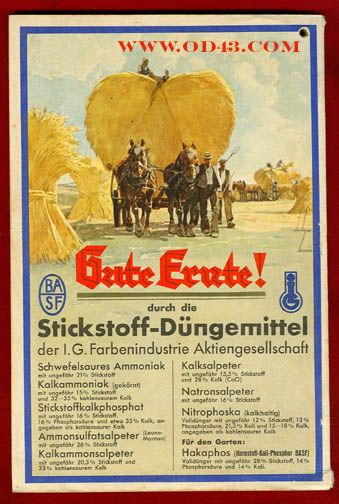
…that she had been arrested in Budapest during a Razzia (police raid), and that she was a Jewess.
The winner in the Auschwitz rivalry was Saxony’s Firma I.A. Topf un Sohne
This is to acknowledge receipt of your order for five triple furnaces, together with two electric lifts for raising the corpses and one emergency elevator. Also ordered by you were two practical installations, one for stoking and the other for moving ashes. [fur die Entfernung der Asche]
Now all that remained was the actual selection of individual slaves – which brings us to the fantastic ordeal of the Roth sisters.
To identify potential fugitives, Judenmaterial were required to wear the yellow Star of David.
Unbuttoned galoshes flapping in the bright sunshine of what was, for virtually all of Ruthenia’s Jewry, their last spring.
Hannah Arendt later wrote of Auschwitz, “the trains began arriving from Hungary right on schedule. Very few ‘able-bodied men’ among the passengers were selected for labor, and these few were put to work in Krupp’s.”
He was an expert with the dog whip
Reick
Although most of the Judinnen were between fourteen and twenty-five, one was in her thirties, and when he was informed that she could not keep up with the others he methodically whipped her to death that evening.
Oskar Reick was a member of the SS…his name does not appear on any Krupp bankroll
“Krupp can’t keep you here if you don’t work hard; if you don’t, he will send you back to Auschwitz.”
Then the offender would be hit with an iron bar until her body was covered with bruises.
The working conditions are established beyond question, and the responsibility for then lay not in Berlin, but at the great door of the three-hundred room castle auf dem Hugel.
We will always have the last five minutes
Concussion flatted the kitchen and the cellar became the girl’s permanent home.
Lacking nursing training, she acknowledged that she had not the faintest idea what scurvy is, what rickets are, or what hydrocephalic (wasserkopfig) meant.
The children were quite naked. They were fed a slimy gruel from bottles; many had ‘swollen heads’, and ‘there was no child at all whose arms or hands were thicker than my thumb.
A thousand years will pass, and Germany’s guilt will not be expunged.
Goethe’s last words: “Licht, mehr Licht! (Light, More Light!)
Toward the end of the war it was Reich policy in the Eat to exterminate babies of Polish and Russian women who had been working for German industry by injecting poison in their veins.
Chapter 23
Gotterdammerung
p.571
the climax was reached in the last summer of the war when death stalked the Fuhrer in his own remote Wolfshanze.
Alfried remained alone in Essen. Berthold had been appointed a staff office in Russia. Harald was adjunct to a German artillery colonel in Bucharest, and Eckbert lay entrenched in Northern Italy on the Reich’s Gustav Line. By now Gustav himself had permanently withdrawn to the Austrian Alps with Bertha, and messages between Bluhnbach and Villa Hugel were rare.
Uncle Felix’s mural is depicting the Chase for Food
even within the borders of pre-war Germany those bound to Alfried by blood had been separated by the war. Waldtraut was in Bremen with her shipbuilding husband, Irmgard mourned corporal von Franz. Alfried’s divorced wife Ameliese was rearing their six-year old son Arndt beside the quiet waters of the Tergernsee, outside Munich; Barbara Krupp Wilmowsky lived on the majestic grounds of Marienthal castle, over two hundred miles from Hugel and nearly three hundred from her sister.
Thus it was with incredulity that Alfried learned that his elderly aunt Barbara had been arrested by the Gestapo for high treason, thrown into a small cell in Halle-an-der-Saale’s common jail with a dozen teenaged prostitutes, and set to work slicing sausage skins while awaiting trial.
Neither had known of the plot against Hitler’s life, but that made little difference; the failure of Count Klaus von Stauffenberg’s bomb to exterminate the beast in the lair unleashed a massacre of members of the Offizierskorps, the aristocracy, and the conservatives of the old regime.
That Austrian corporal
Wanted der Osterreichische Gefreiter dead
It was enough for Himmler that Carl Goerdeler, Johannes Popitz, and Ulrich von Hassel, the three chief conspirators, had been frequent guests at Marienthal.
The guilt of their hosts was assumed.
i.e. guilt by association
of these 4,980 were shot, hanged, or tortured to death.
On February 2 Himmler, deciding Goerdeler and Popitz were useless to him, sent them to hang from meat hooks in Plotzensee prison
Barbara’s accuser p.574
Tilo von Wilmowsky was packed off to a concentration camp
The camp was Sachsenhausen on the Havel River; before three seasons had passed the stockade would become the grave for 100,000 people.
In his memoirs he afterward wrote, “It became completely obvious that Germany had collapsed!” (Deutschlands volliger Zusammenbruch wurde hier physisch greifbar!”)
Henceforth each reverse in the field promised personal grief for countless families and the Krupp’s were no exception.
Barbara’s humiliation had been the first blow, Tilo’s imprisonment the second, and the third came the night of August 26-27, 1944,
The Fuhrer’s troops were trapped and among the junior officers forced to surrender in the next forty -eight hours was Harald von Bohlen und Halbach.
A POW encampment
Harold Bohlen
On visits to Bluhnbach he noticed his father’s mind would “fade, come into focus and fade again.”
Yet no one knew then or ever whether he had understood. For six years his pathetic silence was to be broken only by occasional oaths and outbursts of inexplicable weeping.
Claus in a Luftwaffe grave, the baron in Sachsenhausen, Kurt von Wilmowsky torpedoed on the Atlantic, Irmgard’s young husband buried under Russian snows, Harald missing in action, Gustav stricken and speechless – one by one they were slipping away. The next blow was the loss of Eckbert, and there is something mysterious about it. P.579
Bertha found him buried in San Marino which had been occupied by British troops since September 1944.
Toward the end of that winter, when two feet of snow had blanketed the Reich and Germans without face masks had suffered constant headaches, Ukrainian women in unheated barracks were awakened at 4 a.m. (for no reason whatsoever) by icy jets of water.
If Teutonic sadism is a prodigy, so is Teutonic idealism
“Hier speicht Franz Fritzsche” (This is Hans Fritzsche) had become as familiar as Edward R. Murrow’s “This is London”. Fritz was trusted, and when he prophesied Gotterdammerung, his listeners knew they were for it.
One Krupp torturer Heinrich Hummerich: “At the beginning, this kind of punishment was rare, he said, “but as the end of the war approached it happened more and more often that people were seized and turned over to us
Werkschar
Off-duty guards constructed an ingenious device to humble exasperating slaves. “the Cage” (der Kafig)
The pictures show a windowless, heavy steel apparatus five feet high – four to six inches too low for an average adult to stand erect.
As General Taylor told the tribunal, “slave workers were crammed in a crouching position and left for periods of hours up to several days. A refinement of torture was to pour water during winter weather onto the victims through [the] air holes in the top of the cupboard.”
One of those gifted sadists
Elizabeth Roth
The reluctant runaway turned back, tremblingly re-entered the gap, and was never seen again by the others.in Hebrew, the Star of David
Unwittingly they had blundered into the city’s old Jewish graveyard – the one place where no one would look for living Judinnen.
U.S. Long Toms
Of course, the most damning of these documents went up in the fire before the Americans arrived.
The significance of the burning of these documents is not to be overlooked.
Hitler had kept the Sportspalast roaring with laughter p. 591
They came from a country ‘whose conception of life’ Hitler had told Essen ‘are determined by a greedy shopkeeper’s outlook (habgiergigsten Kramergeist) and who love none of the loftiest expressions of the human spirit (die hochsten Auserungen des menschlichen Geistes), such as music.”
Afterwards Germans would spin tales of murder, rape, and plunder.
General Taylor
Columbia Law Review
Fielding, Gabriel “The Birthday King”
roman a clef
Chapter 24
I Am the Owner of This Property
p.595
New York Times
LIMITED GAINS MADE IN RUHR
A motley phalanx of twelve-year-old Werewolves, seventy-year-old members of the home guard (Volksturm)…
Fritzsche signed off, and a sad song which by then had become the anthem of the Reich: “Lilli Marlene”:
Vor der Kaserne,
Vor dem grossen Tor,
Steht ne Laterne
Und steht sie noch davor.
Dort wollen wir uns mal weiderseh’n,
Bei der Laterne wollen wir steh’n
Wie einst, Lilli Marlene
Wie einst…
In two years of air raids Alfried had not known a night of insomnia, and tonight he dropped off quickly.
Fritz Tubbesing
“Sind Sie Krupp” (Are you Krupp)?
“Ja, ich bin Krupp von Bohlen.”
“Sie sind verhaftet!” (You are under arrest!)
800 ROOM HOUSE OVERRUN BY U.S. TROOPS read a headline in the April 16 New York Times; Time wrote of “the High-walled Villa Hugel, secluded estate of powerful, mysterious Alfried [sic] von Bohlen und Halbach
“Nennen Sie mich Krupp. Wegen dieses Namens bin ich heier. Diese Zelle ist mein Anteil an dem grossen Krupp-Erbe” Call me Krupp. I am here because of that name. this cell is my share of the great Krupp inheritance).
Unaware that a 137-car freight train had brought 4,174 cases of French works of art into the Riech to adorn the homes of the wearers of the Golden Party Badge – said firmly – “
Singing Deutschland Uber Alles
Anton Bruckner’s Seventh Symphony
On April 30th, the Fuhrer appointed Grand Admiral Donitz as his heir.
“So long as we must continue to defend against you and fight you, the Americans are not fighting for themselves but only for the spread of Bolshevism in Europe” (sondern allein fur die Ausbreitung des Bolschewismus in Europa).
Lea than three hours later General Alfred Jodl and Admiral Hans von Friedeberg signed the instrument in a little red schoolhouse in Rheims.
A prolonged campaign in the rugged Alpine area of western Austria and southern Bavaria known as the National Redoubt.
The senile Schlotbaron was ignored; May passed, and the former hunting lodge of the archduke whose death had set off this thirty-year spiral of European warfare dozed on in the summer sun.
Colonel Charles W Thayer West Point ’33.
Chip Bohlen
Mark W. Clark, the four-star General who commanded all U.S. occupation forces in Austria.
Henry Morgenthau Jr. the American Secretary of the Treasury
Franklin Roosevelt
A late as October 1945 The State department was seriously considering the establishment of a Ruhr-Rhineland state, with the forcible eviction of the German population. London objected, but France thought the idea had merit.
Even in desolation the Ruhr spoke of Teutonic power.
The Allied blueprint for Germany, as drawn in Potsdam that August by Truman, Stalin, and Atlee, staggered the defeated tycoons.
Edward Loser, appointed Finanzdirector, introduced an imaginative public works project.
One casualty of progress would be the ancient Kettwig Gate Cemetery – there was no other direction in which the train terminal could expand – And so the coffins of Freidrich Krupp, Alfred Krupp, Fritz Krupp and Claus von Bohlen began their wanderings on November 10.
“Verbrannte Erde”, the Fuhrer had called it in Russia – “scorched earth”.
To be sure, the skills of 100,000 Kruppianer were intact; the British, lacking an SS, did not resort to final solutions.
Law 27 aimed at the eleven most powerful smokestack barons, chiefly Krupp, who had owned 55 percent of the Ruhr’s coal and 90 percent of German steel production.
Chapter 25
Krupp… You Have Been Convicted
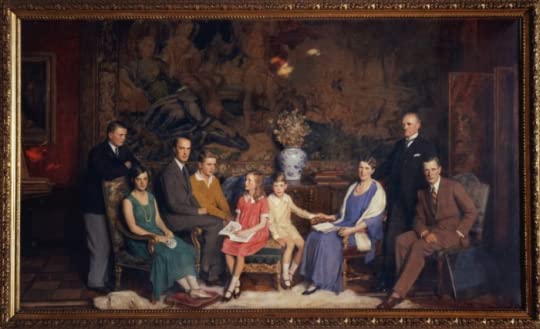
p.625
German girls selling themselves to soldiers for boxes of cereal
Berthold, as he later put it, was ‘wandering like a tramp through Germany.” Harald was behind his alias in a Rumanian POW cage. The whereabouts of Waldtraut and Irmgard were unknown.
Once more at Marienthal, welcoming home battle-scarred farmers and planning a fruitful harvest. Barbara’s daughter had no reason to think otherwise. Wilmkowskys had been caring for their Saxon peasants seventy-five years before Saxony became a kingdom. Where else would they be.
Gert von Klass has left us a poignant picture of how, as his relatives frantically searched for one another….
Gustav lay at a coaching inn by Bluhnbach.
You’re a Krupp, Krupp, Krupp,” the officer repeated, jabbing his forefinger at the once elegant, now fraying lapel, “and if you’re found within Essen’s city limits after sundown, you’ll be shot.”
Jean Sprenger -postwar sculptor
Alfred Jodl, for example, should have certainly been spared by a later tribunal. Generals far more culpable than he -such as Manstein, Kressling and Erich von dem Bach-Zelewski, who had led the bloody SS suppression of the Warsaw revolt – were freed within a few years.
Nuremberg crime trials
To the Germans if the war generation, the name Nuremburg is synonymous with disgrace – disgrace because the city cradled National Socialism, the dream which betrayed them, and because there the enemy imposed foreign justice upon them.
Frankfurt’s Die Neue Zeitung
“The entire prosecution,” wrote Eugene Davidson in his study of the International Military Tribunal, “was united on the desirability of trying a member of the Krupp family.”
Karl Donitz were to sit directly behind Goring and Hess, with Saukel, Seyss-Inquart, Speer, SD chief Ernst Kaltenbrunner, and Hitler’s crony Julius Streicher, among others to their left.
The court therefore ruled against an in-absentia trial for Gustav – though Martin Bormann was to be so tried and condemned to death should he be found.
“They stand before the record of this trial as bloodstained Gloucester stood by the body of his slain king. He begged of the widow, as they beg of you: ‘Say I slew them not.’ If you were to say of these men that they are not guilty, it would be as true to say that there has been no war, there are no slain, there has been no crime.
Trying Alfried after Goring’s suicide and the execution of Ribbentrop, Jodl, Keitel, Kaltenbrunner, Rosenberg, Frank, Frick, Streicher, Saukel, and Seyss-Inquart, had proved impossible, during the nine-month trial Germany, Europe, and the world had changed beyond belief.
Thousands of Nazis emigrated to Egypt or followed Otto Skorzeny’s improvised escape route through Spain to Argentina, which offered ‘political asylum’ to such SS fugitives as Dr. Fritz Mengele, who was charged not with holding political opinions but with the slaughter of thousands of concentration camp inmates.
Tu quoque (you, too)
Charged with the rape of Poland, a German could reply that the Soviet Union had joined in the rape. Accused of massacres, he had but to mention the Red Army’s mass murder of 11,000 Polish soldiers in the Katlyn forest.
The Krupp tribunal would be Justice H.C> Anderson of the Tennessee Court of Appeals, Justice Edward J. Daly of the Connecticut Superior Court, and Justice William J. Wilkins of the Superior Court of Washington.
Kranzbuhler and twenty -four advocates: held the degree of Doktor der Rechte
Alfried: After his conviction Germans angrily pointed out that the judges, the rules of procedure, the bailiffs, -even the flag behind the bench- were American.
No prosecution attorney in Nuremberg could put a man on the stand without first waiving the right to try him later for crimes of his own, and many individuals with damning evidence were themselves awaiting trial.
Two colleagues that Alfried was a war criminal and should be imprisoned, he would submit a dissenting opinion objecting to the confiscation of Krupp’s property; to him that was the violation of a sacred right.
There was, he warned, no way to avoid the stigmata of war crimes: ‘To the winner, the loser will always be an aggressor.”
Lacking any other living witness to his July 20th role except his wife, the man who had nearly died in a Prinz-Albrecht-Strasse dungeon under Himmler was now behind American bars (Loser)
To Berthold she expressed bewilderment: “Why do they attack Papa? What is this talk of blood? Why do foreigners feel so violently about Krupp?
“The top Americans in Germany were O.K., but the fire in the prosecution staff came from German Jews who had become naturalized Americans and then lawyers.
In a single half-hour two years earlier, Allied bombers had wiped out ancient Nuremberg: the steep pitched roofs, dormer windows, and dark narrow medieval streets.
It was here, on September 15, 1935, that the Fuhrer’s famous Nuremberg Laws had been promulgated, officially designating Jews as Untermenschen.
When the time came to make a statement, he would speak for all, and only Loser, the outcast, had decided to defy him.
Alfried’s trial, like Adolf Eichmann’s thirteen years later, lasted nearly nine months, longer than any ever held in the United States.
Cecilia Goetz
Miss Goetz found him (Krupp) endlessly fascinating. He was, she kept reminding herself “the German equivalent of Henry Ford II.
P646
The hoarse guttural intonations of the twentieth century’s greatest spellbinder
Das nervosa Zeitalter des 19. Jahrhunderts hat bei uns engultig seinen Abscluss gefunden! In den nachsten tausen Jahren findet in Deutschland keine Revolution mehr statt!
With us in the twentieth century’s age of nerves is ended! There will be no other revolution in Germany for the next thousand years!
The United States would see to it that the Ruhr remained Teutonic, that German industry was restored, and that all plans for an agrarian West Germany were abandoned. Byrne’s audience had roared its approval.
Essentially East Germany was one big farm, while West Germany was larger, more heavily populated, and richly endowed with natural resources. Powered by the Ruhr, it was the Reich’s reservoir of vigor, skills, drive, and industry.
The consequence was that Washington- which deserved little. Because the State Department also lacked a coherent German policy – won triumph after triumph.
“like a Chinese mandarin, a man who takes all the opportunities available under a dictatorship” and then finds it convenient “to pretend he was only an errand boy”
Krupp’s plant: guns had accounted for only 7 percent of production
Evaluation of the numbers were impossible p. 651
The train carrying five hundred Jewesses to Buchenwald, the Auschwitz factory, the training of Krupp women in SS methods at Ravensbruck, and the construction of the Berthawerk.
Krupp’s staff enraged, walked out of courtroom. In continental trials this was an acceptable form of protest. In America and Europe, it was illegal.
But it gave Krupp his pretext, and it persuaded millions of Germans that Nuremberg’s most celebrated defendant of 1948, like his father before him, was a martyr to the Fatherland.
He was being ‘shanghaied’
But the Germans remembered
Quietly reopening his Frankfurt office, he bided his time.
“the symbol of our House does not depict a cannon, but three interlocked wheels, an emblem of peaceful trade.”
“No One will be able to hold it against us that in the emergency of war we followed the path of duty, a path which millions of Germans had to take at the front and at home, and which led them to death (einen Weg, dem Millionen von Deutschen, sowohl an der Front wie auch zu Hause, folgen mussten und der zum Tode fuhrte).”
It was this fantastic mental block which permitted him to declare solemnly that he was ‘conscious of no violation of the laws of humanity.”
“On the counts of the indictment on which you have been convicted, the tribunal sentences you to imprisonment for twelve years and orders forfeiture of all your property, both real and personal.”
The New York Times asked “What is Krupp property? That is the key question.
Krupp, the Fatherland was sadly told, would emerge from prison a fifty-year-old pauper.”
In the picture they are playing skat. Alfried’s face is turned from the camera. They are playing for matches, and the size of his sticks shows that, as usual, he is winning heavily.
Chapter 26
Hoher Kommissar John J. McCloy

p.659
the first week of August Krupp and his convicted Direktorium were transported to Landsberg, one of the loveliest cities in southern Bavaria, and locked up in War Crimes Prison Number One, a medieval stronghold overlooking the river below. It was here that Adolf Hitler had been confined during Alfried’s youth after the unsuccessful Nazi putsch in Munich, here that the Fuhrer had written Mein Kampf.
Thus, the only book-length version of Krupp’s trail available in Germany has been, and at this writing still is, his uncle’s expanded account.
Powered by the germ cell of the Ruhr, the truncated Reich had surpassed the economic peak of 1936.
And all this, it must be remembered, was being accomplished with 30 percent of the old Deutsches Reich in Soviet hands.
A steelmaker remarked, “Marshall had nothing to do with it. This was a German miracle.”
A chemical manufacturer said, “WE got back on our feet because we worked hard. ERP had little to do with it.
Although 4,000,000,000 must have something to do with it, the Wirtschaftswunderland was not created by the dollar alone.
If one were to choose a single day which marked the beginning of the new Germany, it would be May 12,1949. That morning Russians, defeated by the airlift, ended their long blockade. Even as the first trucks and trains from the west entered the capital General Clay flew from there to a historic Frankfurt conference.
Since September seventy Germans without pasts had been meeting in a commandeered girl’s normal school in Bonn, drafting the constitution for a new nation.
Korea
“Wenn Deutschland bluht, bluht Krupp” (whenever Germany flourishes, Krupp flourishes).
John J. McCloy
p.670
Germany’s Black Tom saboteurs of 1916
De Gaulle in the spring of 1943
The cyclone that blew out of Korea in 1950
“For the Germans,” T.H. White later wrote, the Asian conflict “Brought quick, complete and unconditional profit….the post Korea boom drew German industry back into the world market at such prices that it was able to re-equip huge sectors of the run-down plant.”
In June 1950, the three Western allies held West Germany with seven undermanned divisions.
But France could not even field Tigers. They lacked spare parts.
Germany’s martial prowess and the Prussian militaristic tradition. In war a symbol can be more effective than an army corp. To the Ruhr, Professor Pounds wrote, “Krupp became a legend. Essen owed its existence as an industrial city to him, and even in 1950 the legend had political significance.”
Corsair strafers carrying Napalm and 500-pound bombs, and a tank collection comprising M-26 Shermans, M-46 Pattons, and M4A3 Shermans which provided a five -to-one superiority.
Inchon
Late in October, Peking entered the war, attacking Australian and Scottish battalions on the western side of the Taeryong River.
Representatives of the western powers, meeting in Brussels, chose Dwight D. Eisenhower as supreme commander of the Western European Defense Force….
Americans were doing 58 percent of the dying in Korea
On January 4th, 1951, the week the Reds retook Seoul
Krupp would not only regain his freedom; he would be rich again.
Meanwhile the hearths, mines, ore fields, and seventy-odd enterprises worth a half-billion dollars would once more be his.
In Washington Senator Joseph McCarthy nodded and smiled. “Extremely wise”, he commented
John J. McCloy’s momentous reputation
One of the first leaners was Mrs. Franklin D. Roosevelt. Disturbed by the reports from Landsberg, she wrote the high commissioner, “Why are we freeing so many Nazis?”
But they rarely pardon prisoners, and they never appoint an appellate court to review the decision of another appellate court. They cannot: it is illegal.
McCloy was genuinely disturbed by the Krupp verdict.
“I felt that he had expiated whatever he’d done by the time he’d already served in jail. Oh, I don’t doubt that he’d supported the Nazis early; he was a weakling.”
Alfried Krupp’s counsel was Earl J. Carroll.
Nuremburg
Carroll got Krupp out and his fortune returned, receiving for his five-year job a fee of, roughly $25 million.”
They hint at a figure somewhere between two and three million.
On Wednesday, January 31, 1951, Radio Frankfurt…a U.S-French regimental combat team trapped twelve miles north of Yoju…
McCloy had liquidated Alfried’s case by signing two documents, one to release him and the other to restore his property.
The confiscation of property was “repugnant to our American concepts of justice.”
Ewald Loser – anti Nazi in Krupp firm…survivor of Gestapo dungeon…released on June 1st after five months in Landsberg.
Winston Churchill rose in Commons to remonstrate in behalf of the loyal opposition, and Prime Minister Attlee mace a statement – a preposterous statement – that “There is no question a Krupp being allowed to assume either ownership or control of the former Krupp industrial empire.”
To Eleanor Roosevelt he (McCloy) wrote, “After detailed study of this case, I could not convince myself that Alfred (sic) Krupp deserved the sentence opposed on him.”
The truth seems to be that no one involved in the clemency decision had taken a close look at the record.
p.685
Everyone was keeping at least one eye on the Korean peninsula
We only knew the results. In throwing out the Nuremburg verdict the U.S. proconsul in Frankfurt had in effect reaffirmed Adolf Hitler’s special grant.
McCloy
The Fuhrer had dictated to one of his secretaries, Frau Gertrud Junge, “…the seed has been sown that will one day lead to the glorious rebirth of the National Socialist movement (zur strahlenden Wiedergeburt der natioanalsozialistischen Bewegung) of a truly united nation.”
“NO .aw can be called upon to defend the murder of Jews and gypsies, the enslavement and accompanying cruel treatment of masses of people, and the wide program…which determined who would be resettled and who would be enslaved or destroyed.”
Gloucester begged of the widow, as Krupp begged: “Say I slew them not.”
The murder of thirteen-year-old King Edward V and his younger brother in the Tower of London August 1483
The victim’s thirty-one-year-old uncle Richard III has been distorted by the lens of time.
Englishmen were convinced he had been responsible for the death s of the two princes in the Tower, “for which cause,” the Chronicles of London tells us, “King Richard lost the hearts of the people.”
In this Gloucester differed from Krupp
Feb 3, 1951
He heard a great shot, accompanied by the running of many feet, and discovered that he had become a national idol.
Chapter 27
The Germans Are Being Treated Like Niggers

- 689
Bertha Krupp was really the person whom Eleanor Roosevelt should have written. The exchange would be invaluable.
Alfried Krupp: “My life has always been determined by the course of history, but not by me.” (Mein Leiben ist immer vom Lauf der Geschlicte, nicht von mir selbst, bestimmt worden)
From Wahlsertal they drove to Berchtesgaden.
the victim of injustice rampant
Alfried was as Teutonic as the Black Forest.
An “outcast in his ruin” (ein Paria zwischen Ruinen)
The victim of ‘injustice rampant” (die Uberseigerung des Unrechts).
Korea
MacArthur
United Nations
Cold War
“Krupps Reich wird ewig bestehen” (‘There’ll’ always be a Kruppdom’)
The typical Kruppianer to be “industrious, efficient and an exceedingly knowledgeable worker, knowing fully what he wanted to accomplish.”
In Germany, as in India after the Raj, a prison record was a badge of pride.
Alfred and Vera Krupp marriage 1952
Louis Armstrong
Mugsy Spanier
Jean Sprenger -sculptor
Berthold Beitz
He had just ignited a slow fuse that would eventually demolish the ancient edifice which had survived the All-Highest, the French occupation, the Fuhrer, the Royal Air Force, and Nuremberg.
“Die Deutschen warden wie Nigger behandhelt!” (The Germans are being treated like niggers!)
Krupp control
He would retain his truck, locomotive, and shipbuilding interests. In compensation for his losses he would receive 25 million pounds sterling – 70 million dollars.
Krupp: “I have signed an undertaking to produce coal and steel and I stick to it” (ich werde mich daran halten).
They had in fact accepted a verbal commitment.
They seldom saw him. During that first year of the restoration Alfried and his wife were again absent on mysterious journeys.
Women’s status had changed vastly.
“All of them, from Krupp down, don’t think of it as a place for making profit. They’re convinced that they are a kind of state.” – editor of Die Welt am Sonntag
Alfried’s first Hugel reception for an African chief of state, Emperor Haile Selassie of Ethiopia
buglers sounded ‘Hail to the Prince’
also, Ethiopia’s Coptic Hymn, an optic air never intended for brass
with gusto the hundred-and-thirteen-year-old
Deutschland, Deutschland, uber alles, uber alles in der Welt!
Wenn es stets zu Schutz and Trutze bruderlich zusammen halt,
Von der Maas bis and die Memel, von der Etsch bis an den Belt.
Deutschland, Deutschland uber alles, uber alles in der Welt!
Also:
…zum Rhein, zum Rhein, zum Deutschen Rhein!
Wer will der Stromes Huter sein!
Lieb Vaterland, magst ruhig sein,
Leib Vaterland magst ruhig sein:
Fest steht und true die Wacht, die Wacht am Rhein!
Fest steht und true die Wacht, die Wacht am Rhein!
Halie Sellasie ate the lobster, caviar, and foie gras, drank the Moselle, and talked of his need for heavy industry
Frau Vera Krupp: Gossip columnists reported her surfacing in New York café society, emerging from Las Vegas gambling casinos, bathing in the California sun. Alfried’s wife had become a swinger before the word was known. Dhe preferred to dine with actors, mobsters, and the rich European expatriates. She had no desire to feast the Lion of Judah – and she was determined never again to be seen in the old castle overlooking the Ruhr.
Chapter 28
Heute die ganze Welt

p.723
Frau Hitler, Eva Braun
Within twenty-seven hours of the ceremony husband and wife had committed suicide
The Goebbel’s were an even worse example.
Magda Goebbels poisoned their six children, and then an SS orderly shot both parents at her husband’s command.
Frau Krupp’s marital scandal
Louis Manchon
That Hossenfeldt von Langer Wisbar Knauer Krupp von Bohlen woman
An immediate settlement of over five million dollars and a yearly alimony of a quarter-million dollars.
“Ichschatze meine Feiheit in Amerika mehr als sein Geld” (I prize my freedom in the United States more than all his gold).
The defendant did wilfully and without cause, withdraw from the marriage bed and has persistently refused to have matrimonial intercourse with the plaintiff.
A bed which at the time was over five-thousand miles away and in a country from which he, a convicted criminal was banned.
Harald’s miraculous reappearance after ten years in Russian prisons
She had been in Monte Carlo, the Lido, or the Strip.
A 528-acre ranch about twenty-five miles west of Las Vegas
Chet Luck the Lum of the Lum and Abner radio program
Vera agreed, and the estate cost Krupp slightly more than a million dollars
In 1959 three men forced their way into the house, tied up Vera and her foreman, and departed with a 33.3. carat, $250,000 diamond Alfried had once given her. What it was doing there, or how the thieves knew of it was never explained, but the crime did not pay; the jewel was recovered in Elizabeth New Jersey by Federal agents.
Howard Hughes, just as rich, and just as mysterious, took over the deed.
The Konzerherr lived alone with his chauffer, cook, butler, housekeeper, valet, cameras, darkroom, Porsches, BMW’s, cases of White Horse whiskey and crates of Camels – and despised them all.
“a most unhappy gentleman”
Paying state visits to Turkey’s Menderes, Ceylon’s Bandaranaike, and Indonesia’s Sukarno between calls on the capitals of Venezuela, Brazil, Argentina, Thailand, and the Philippines.
The Sahara Desert
The Artic Circle – peering down at some of the snowdrifts Eaton Cyrus owned
It was brilliant
Alfried now saw himself as a contractor to the world (Weltlieferant)
Except for King Paul of Greece and the Archbishop of Canterbury, they came from the emerging nations: Kieta of Mali, Badr of Yemen, Radakrishnan of India, Ahmandu of Nigeria, Kubitschek of Brazil, the Shah of Iran and, after Cameroon was a republic, President Ahmadao Ahidjo.
Krupp was wooing them all.
The white man’s burden had become a stigma
Therefore, he signed a pact with the East Asiatic Company, a Danish union of forty trading firm’s whose chairman was the King of Denmark’s cousin.
In what Krupp called “die unterentwickelten Lander” (the underdeveloped countries) the company maintained an office staffed entirely with natives.
President Truman’s Point Four program
Krupp called his own program Point Four and a Half.
The President’s was geopolitical, the Konzernherr’s commercial.
‘the trading partners of tomorrow”
p.730
the family flag had been planted in Java, South Africa, and Bolivia; and a Philippine steel factory, a Bosporus bridge, and a Turko-Persian railroad had reached the blueprint stage.
One of his machines, all steel and longer than a city block, could scoop up a mountain and dump it elsewhere.
New Delhi
Jawaharlal Nehru
Alfried’s visits to Tokyo, Rio, Bangkok, Cairo, Columbo, Ottawa and Ankara.
Afro-Asian statesmen depicted him as a savior and converged on Villa Hugel.
President Modibo Keita of Mali
The Mali federation had left Keita landlocked, cut off from food supplies; a massive shipment of Krupp trucks had saved him.
Those areas received Krupp, not as a competing exporter, but as a Samaritan.
Wo Hitler als Erobere versagt hatte, dort waren Krupp-Verkaufer erfolgreich.
Where Hitler’s soldiers had failed, Krupp’s salesmen succeeded. -Norbert Muhlen
Earl J. Carroll
McCloy
Krupp -an exceptionally gifted industrialist.
Berthold Beitz
In May 1953, while Beitz was still presiding over Germania-Iduna, Krupp rocked the world of big business by moving into East Pakistan.
Where was Krupp getting his capital?
“If we had been forced to open our books, we would have been finished. Our situation was far more desperate ten anyone could have guessed” (Unsere Situation war weit schlechter, als irgend jemand ahnte).
Krupp’s position as the nation’s most favored firm had rarely been more secure
Berthold Beitz
He disclosed that projects were under way in Spain, Greece, Pakistan, Iraq, Thailand, Chile, Sudan, and Iran in the production of trucks alone, Krupp was second only to Daimler-Benz.
Hard on the heels of Royal Dutch Petroleum, Unilever, and Mannesmann
Alfried’s personal fortune was estimated at 800 million dollars.
In Melbourne – “Jew Killer! Butcher!”
In Ottawa, his hotel was picketed by Black Watch veterans carrying placards reading, BACK TO NUREMBURG, WAR CRIMAINAL!
Fritz stunned Philadelphia’s exhibition of the ‘90’s with gigantic howitzers, and Alfried, following their example, attracted fresh attention by displaying a seventy-five-ton nuclear reactor vessel cover at the Hanover Fair of 1963.
In the 1940’s Life concluded then that ‘At least as much as Adolf Hitler, the Krupp family is responsible for the casualties of Allied soldiers in World War II.”
Time magazine described Alfried as ‘Herr Krupp, merchant of death.”
Newsweek wrote that Alfried ‘had had little to do with Hitler.’ Krupp’s fate, The Times of London stated, had been to be sentenced ‘in place of his ailing father.’
The bathyscaphe Trieste
Shielded by vacuum-degassed Cr-Ni-Mn steel, had made the deepest ocean descent in history, seven miles down, to the bottom of the Marianas Trench in the Pacific.
Krupp engineers had volunteered to raise the red granite obelisk of Pharaoh Sesotris I from thirty-eight centuries of muck for a token fee of 3,500 Egyptian pounds.
Blonde hostesses wearing the three rings on blue uniforms distributed brochures telling how Krupp had done it. A genial public relations man from Essen introduced the girls as “Krupp’s blue angels”
McCann-Erikson in New York, wrote the story of Krupp in a book called “Tu Gutes und rede daruber“ (“Do Good and Talk About It”)
His first three-stage rocket
First atomic pile
ATOMREAKTOR
Fifteen-megawatt test reactor KFA short for Kerforschungsanlage (Nuclear Research Plant)
Krupp ingenuity achieved a critical mass in 1967 over 100,000 graphite balls made from coke – there is almost no end for the uses of Krupp coke – shielded the uranium.
Krupp’s U-235 was provided by the U.S> Atomic Energy Commission
It was Harald, long ago given up as killed in action or executed
Harald pointed out that he had been a National Socialist just two years
He could not deny having met Hitler, Goring, Goebbels, and Himmler
Eastern slopes of the Urals
Clad in grimy coveralls and ill-fitting boots, Harald toiled for five years in the iron mines near Sverdlovsk
The fate of the other twelve hundred, some of whom had become his closest friends remained – and would remain-obscure
Harald had qualified as a junior lawyer (Rechtsbeistand)
Now all he knew of the law was that a man could be transported to a quarter-century of servitude because he had played foosball on the lawn while his father was entertaining the Fuhrer inside.
Wasag A.G., an Essen chemical company, and Gurid G.m.b.H., a Hamburg brake lining factory
All those on one side were gone: Claus, Eckbert, Gustav, and now Bertha
On the other side were the survivors: Alfried, Berthold, Harald, Irmgard, and Waldtraut
Chapter 29
Not a Stone Shall Be Sold

p.754
“I lost my mother’
MS Tilo von Wilmowsky
In flagrant violation of his agreement with three governments
Berthold Beitz
Krupps Stossel (Krupp’s pounder)
Johannnes Shroder
Alfried – he officially announced his own salary: a million marks (($250,000) a year
Beit’s novel behavior created the greatest sensation since Fritz Krupp’s indiscretion at Capri
That left Beitz alone with the Bar-b-q pit , Mugsy Spanier, the all-tile garage, and his family
Schroder affair
He could not have been farther wrong. Indeed, it is doubtful that any Krupp made a graver error in the four centuries of the bloodline
Familial-Archiv
Hanns Jenke
“I told Khrushchev, “Yes, we are capitalists, but we are three-hundred and fifty years old, and I am a self-made man.”
Beitz could not have written such lines p.763
Alfried’s Neuorginisation of 1958
The Organisationplan des Krupp-Konzerns
Integration was not the issue; he had sworn to the world that he would never produce any steel, good or otherwise.
“A cobbler”, he said in his favorite phrase, “must stick to his last” (Schuster bleib bei deinem Leisten).
America’s Colorado Fuel and Iron Corporation
70 million
Dusseldorf’s Aktienindex, the German equivalent of the Dow-Jones industrial average
September 1957
Krupp, a man of action, crossed his Rubicon
He had just appointed Herr Berthold Beitz chairman of Hutten- und Berkwerke Rheinhausen holding for sequestered properties
Jubilaum
“all my holdings have now been amalgamated into a single company”
American corporations listed on the New York Stock Exchange were owned by some twenty million shareholders: his firm, by one.
“We have a moral obligation, and I will not look for escapes”.”
In fact, he was looking for little else.
When he was presumably divesting himself of heavy industry, he was secretly acquiring vast new forges, furnaces, and shafts.
The Common Market had retained certain built-in benefits which European cartels had always enjoyed, and which were unknown in the United States
i.e. exempt from turnover taxes
p.770
Realites wrote: the only reason Paris accepted the Schuman Plan was that the French had no doubt whatever that France would lead an economy of a united Europe. They thought they would swing more weight than Herr Krupp!
The Market comprised the Five- Italy, France, and the three Benelux countries: Belgium, the Netherlands, and Luxembourg.
Chapter 30
Most Powerful Man in the Common Market
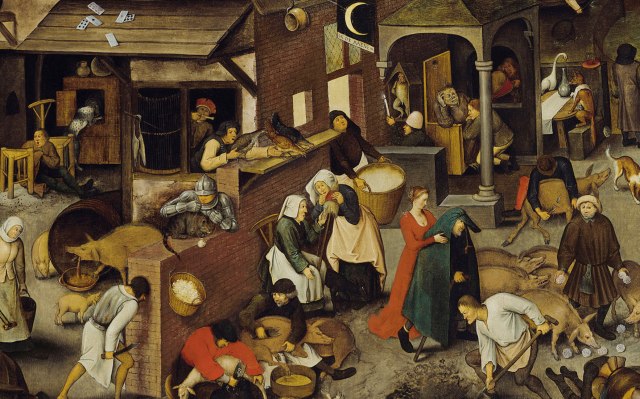
p.273
Alfried Krupp entered the Common Market as its richest individual and most powerful single industrialist.
Three out of every four ships entering and leaving Rotterdam
His exhibits at industrial fairs
Les Innovations Mechaniques
A tremendous double deal – not quite the same thing as a double cross, though it was that too
The monarchic plural
The withdrawal of the Krupp signature
Britain
‘Apart from growing prosperous, he has done nothing in the past years to justify a change of mind.’
‘Herr Krupp has a mania for buying things’
Jacob Meyer’s Bochumer Verein in Bochum
To appreciate the dimensions of this incongruity one must cast back a century or more
At the Paris Exhibition of 1855, Mayer became the only serious rival in Ruhr history to the Kannonkonig’s boast that Kruppstahl was Prussia’s first cast steel
Vertical integration
Church bells
Jacob Meyer Gesterben
He had died young, without issue, leaving his fortune to the Lutheran Church
Beitz
Alweg Monorail, a transportation novelty, for the forthcoming Seattle fair
Controlled over half the stock, and that together he and Krupp held 75 percent of it
The Bochumer Verein ….has now taken the place of the former Fried. Krupp Gusstahlfabrik.
The Credit Suisse
Constantine the Great coal mine back into the fold and enable Krupp to supply 75 percent of its own coal mines
A grey steel bell, a wry tribute to the unlucky Jacob Mayer
‘Christ is Risen’ –Christ ist erstanden
Krupp
Over four billion marks
One billion dollars
More than John D. Rockefeller had accumulated in a taxless America
Rockefeller a devout Baptist
‘God’s gold’
He had begun to establish universities, scientific laboratories, and public parks
So thoroughly did he instill the concept of philanthropy in his son John D. Rockefeller Jr., devoted his entire life to it.
Gustav had never given a pfennig to anyone except the Fuhrer
Alfried, no man to break with tradition, kept his hoard
Thus, his fortune continued to reproduce itself
Flick, with 200 million, was then the richest German
Alfried was now one of five men in the world who could reckon their wealth in ten figures
Together with King Abdul-Aziz ibn-Saud of Saudi Arabia, Sheikh Sir Abdullah as-Salim as-Sabah, the Sheikh of Qatar, the Nizam-ul-Mulk of Hyderabad, and a taciturn American oilman named J. Paul Getty
He ruled a hundred and twenty factory towns
p.782
neokruppianer
that new breed, successor to the Fuzzy-Wuzzies and Gunga Dins
there was a magic about the man; it touched everyone around him
Beitz
Waldorf-Astoria in May 1957, was seated in the place of honor beside Vice-President Richard M. Nixon
Against all odds, had more than tripled his $300,000,000 annual turnover under Hitler
Producing 21,041 tons a day – coal
Spain
U-235
A third map appeared, of Canada
Algoma Steel
Alfried murmured that he was thinking of buying the Riviera
A bid for the Cote d’Azur
Might sweep up everything – beaches, parasols, hotels amusement parks, the lot
‘Er ist, wer er ist, der Mann’ (He is the whole show)
‘a man very mush turned in upon himself, who loves solitude and does not like people around him’
Beitz
Commissioned Jean Sprenger to produce a bust of Alfried for his office
Beitz was to act as owner
Salesmanship
Der Americaner
He had come to loathe it
Designed a modernistic two-story, two-block-long office building adorned with a few arty figures…naked women, or dolphins and buffalo, or slightly profane angels and images of the Virgin Mary’
Bonn vetoed the plans
A national shortage of building materials
Gustav’s memorial, like Alfried’s on the hill, may still be eyed by those tourists who are loath to believe that taste in yesterday’s Fatherland was just as grotesque as todays.
Thyssenstahl
And the heirs of I.G. Farben
Nuremburg-sized Krupp banner atop the dome provided
The Fuhrer’s exhilarating twelve-year Totentanz
Power
Quality
Titanium LT-31 steel for a giant steam turbine, another turbine three times as large (already sold to a Cincinnati company) and an intricate refrigerated shipping container for meat and fruit (sold to the Guinea State Railway)
A truck-mounted crane 200 feet high for very heavy duty
The President of the Cameroons
Time’s cover story on Alfried
Fried. Krupp of Essen had become one of the twelve largest firms in the world and the only owned by a single individual
Benjamin B. Ferencz, the Nuremburg prosecutor
An independent kingdom
In 1923, issued Kruppsche currency
In the Hauptverwaltungsgebaude members of the Direktorium spoke proudly of ‘das kruppsche aussenpolitische Programm’ (Krupp’s foreign policy)
reparations
Bonn itself was barred, yet in 1953, in a display of sovereignty, it had acknowledged crimes against the Jewish people to the International Court of Justice in the Hague and agreed to pay Israel six billion marks over a period of twelve years
If Bonn could why -why shouldn’t – Essen?
Krupp could afford it. And Krupp owed it; unlike Adenauer and Erhard, he had enriched himself with slave labor, paying no wages, substituting filth for rations, and treating his conscripts as ‘ Stucke’
Ferencz – as counsel for the Conference on Jewish War Material Claims Against Germany he had represented Israel before the World Court in the early 1950’s and won $1,500,000,000 judgment against Bonn
I.G. Farben – they had agreed to pay five thousand marks ($1,000) to each Jewish Sklavenarbeiter
Heinrich Himmler – the most terrifying murderer of the lot, who had impressed men meeting the Fuhrer’s clique for the first time after the 1933 takeover as mild-mannered and gentle.
‘a man of kindly manner’
Die Zwangsarbeit judischer KZ-Lager Insassen im Krupp Konzern (The Force Labor of Jewish Concentration Camp Inmates Within the Krupp Combine)
p.790
making good the damage done (Schadenesatz fur seelische und korperliche Leiden)
Beitz
Esressung! (blackmail!)
Frencz was asking for the Farben sum, $1,250 which seems absurdly small in the light of the victim’s ordeals
Two and a half billion dollars
Suits from the Gentiles
At the very least this would cost fifty million dollars, not to mention the hideous public relations scar
John J. McCloy
How many Krupp Jews had survived?
1945, those remaining indicated a maximum of 1,200 men, women and children had outlived Krupp’s Third Reich and were alive today
At $1,250 each, the Farben figure, this would cost Krupp a million and a half dollars
‘to heal wounds suffered during World War II (zur Heilung der Wunden des zweiten Weltkrieges beizutragen)
What could have been a disastrous rout was converted into a public relations triumph
Excessive commissions
$1,250 each, but their checks were for $750
Conference on Jewish War Material Claims
KRUPP SIGNS TO PAY JEWS
And presently two thousand survivors appeared from the Berthawerk alone
384 were alive, and under the terms of his promise “to heal the wounds of World War II” all were entitled to cash.
Administration reduced from $750 to $500 and then ran out of funds
“Krupp has never acknowledged what he did to me and has never given me anything”
Conference on Jewish War Material Claims
‘greedy Jews”
One-fifth of one percent of the family fortune
The Berthawerk and its Funfteichen barracks
Stucke
Concentration camp inmates because of the catastrophic labor shortage (des katastrophalen Arbeitskratsmangels)
Jewish community
Superior organization
Before his death Hitler had written: “Centuries will pass, but from the rubble of our monuments and cities the loathing for those responsible will always turn to the ones we have to thank for all this: International Jewry and its helpers! (dem internationalen Judentum und seinen Helfern!)
Chapter 31
You Can See the Ones in the Light
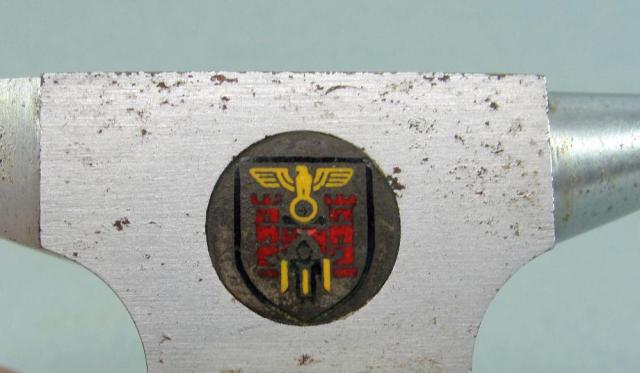
Like a Haydn melody….
Exotic weaknesses
President Heinrich Lubke of West Germany
Our German people
the sesquicentennial
p.796
the hundred and fiftieth anniversary of the day Friedrich Krupp had founded “eine Fabrik zur Verferttigung des Gusstahls und aller daraus resultierenden Fabrikate” a “factory for the manufacture of cast steel and all the products issuing therefrom.”
It was to be the most stirring German function since the Fuhrer’s award of thirteen Feldmarschall’s batons after the fall of France.
Hermann Goering
Arndt Krupp –‘destined to continue the tradition of the House of Krupp’
He reviewed a motion picture, ‘Die Drei Ringe: Krupp Heute’
Alweg Monorail
To be reassembled, reviewed the script for the awarding of papal decorations to himself and Baron von Wilmowsky
The firm’s payroll
Over five hundred Kruppianer were honored guests
Of three castes: the workers, the white-collar employees, and the executives – all of them patriotic company men
tearing the Mehlem Diktat to shreds
like Siegfried
Brecht’s “Threepenny Opera”
“It’s us, the little ones, who pay, but what about the Bonzen who gave the orders? They sit in their castles on the Ruhr and get richer and fatter!”
Copies of the German documents which had convicted Krupp
In Lexington Kentucky….stacked in a barn loft
Erich von Stroheim films
One-copy editions of Humor bei Krupp, a collection of witty sketches her grandfather had doodled in the margins of his letters
Third rate, nineteenth century vaudeville
The Wilmowskys
But now we have it, with a German general sitting in Washington! (He referred to Hans Speidel, who had been Rommel’s chief of staff and held a NATO post in the late 1950’s.)
Christine Keeler
“You know we have a special god for envy. His name is Loki. No other people have that.”
The Wilmkowsky’s eviction from Marienthal
As the Fuhrer’s only boyhood friend wrote in retrospect, “Everywhere he saw only obstacles and maliciousness…He was forever taking up cudgels against something and out of sorts with the world (mi taller Welt uberworfen)… I never saw him take anything lightly.”
The Weimar years
The future Fuhrer in his Landsberg cell dictated to Hess:
“I grasped the infamous mental terror (infamen geistegen Terror) this party wields…”
The rank and file…p.803
It would be hard to find a more brilliant exposition of fascist psychology
With his immense inner resources, Krupp came closer to Stoicism
Winston Churchill II and Arnold von Bolen, both in the finest Karl May tradition
Britain’s Profumo scandal
Tibesti Mountains
Winston Churchill, “My African Journey”
The grandson’s forthcoming series as “In the Steps of My Grandfather”
Ahead lay Kenya, Tanganyika, and Zanzibar – lands that Churchill, out of a habit picked up in public school, kept referring to as “British Eat Africa”
A Parisian proverb “L’adversitie fait l’homme, et le bonheur les monstres; adversity makes men; good fortune makes monsters.”
At the age of seven the designated Krupp-to-be learned that every close male relative was either a captive, a fugitive, or a certified madman
Convicted his father to unspeakable charges…
His mother consoled him with the fiction that the real criminal had been his grandfather. Somehow it did not help.
Mady Rahl
Copacabana beach
The Rio festival
Bayreuth
Cote d’Azur
And in the interior of Brazil, where Arndt eventually bought his own estate, with a private airfield for visiting guests
His appearances in Essen were chiefly confined to Alfried’s annual Jubilaum
Eleventh direct descendant of the original Arndt
The Krupp-to be’s ‘first business trip’
Mother and son spent much more time in Brazil
Alfried’s Brazilian Steelworks
He was languishing on his estate south of Rio
Counting his private airstrip, the park modelled after Versailles, the stables- Brazil’s largest – and the dwellings for a hundred and eighty servants, including a score of gardeners, Arndt’s manor covered forty-three square miles, eight times the area of Capri.
“Heraldry”
“Agronomy”
To “establish an agricultural model enterprise in South America.’
To adopt a Bavarian verdict, “Arndt is as conceited as a peacock.”
p.812
Gina Lollobrigida
A Munich model Eva Gassner
Her only souvenir of the expedition was a set of earrings which had been designed by her escort
“rice, pigs, dairy products, maize, honey, and poultry.”
It was fashioning designs for costume jewelry which were executed by French craftsmen
The ‘steady companion’ of Mady Rahl
Johannes (Prince Thurn and Taxis), Hattie (Princess Auersperg), and Ruppie (Prince Hohenloe)
At the poolside
More than Gemutlichkeit it was Uberschwenglichkeit, gushiness
The goal of work shall be the general welfare; work then is blessing, work then is prayer
Young Baroness von Holzschuher mentioned no work, no welfare, and certainly no prayers.
Milieu-de-seicle
Stern, Paris-Match, Epoca and Look
Popular mythology to the contrary, au milieu de seicle class barriers remained, and at the top the gap had widened
By January 24, 1967, that had become difficult. Arndt was in his thirtieth year. Die Zeit, Abendzeitung, and Der Spiegel would be watching his every move
One imperial highness, dozens of princes, and countless aristocrats (Eine kaiserliche Hoheit, mehrere konigliche Hoheiten, Prinzen zu Dutzenden)
Humplmayr’s
There were fancy floral arrangements, there was formal dress, and rare caviar was served from two-pound tins [Kaviar in Kilobuchsen]
Empress Soraya
Prince von Thurn and Taxis
Cannes, Sun Valley, Central Park West, The West End, le Boulevard Saint-Germain, the dolce vita of Via VentiSettembre, and of course, the agrarian mutations of Rio.
Princess Saroya, at seventeen she had been married to the Shah of Iran
In March 1958, her husband threw her out ‘for the good of the country’; his army was ordered to destroy every portrait and photograph of her, inside the palace, and out.
Lily Dache
Prince Rupprecht zu Hohenlohe-Langenburg, Prince Johann Georg von Hohenzollern and Princess Brigitta, Count and Countess Hans-Veit Toerring-Jettenbach, and Baron Camillo von Thalhammer
Mady Rahl
Wer ist Wer? [film]
James Graser
Hidegarde Neff…Ysabel (Diamond Lil)
Style had brought along her own butler, to be served exclusively by him
One guest noticed an assortment of ‘homosexuelle Modezeichner [fashion designers] aus ganz Deutschland’
For he’s a jolly good fellow
For he’s a jolly good fellow
Germany’s first postwar film, Morder sind unter uns (Murderers are Among Us)
Neville Chamberlain
lesbische Fraulein
Alfried had ‘almost single-handedly kept Adolf Hitler’s war machine rolling.’
Wagner: Tannhauser, Lohengrin, Die Meistersinger vin Nurnberg, Tristan und Isolde and appropriately Die Gotterdammerung
- 820
“his only son Arndt, who reached maturity long ago, demonstrated that he lacks both the inclination and the ability (das er nicht geneigt und kaum fahig ist) to lead the firm, now or ever.”
At a nightclub in Nice during 1965 he lost a platinum ring with a fourteen-carat solitaire worth 40,000.
His yacht, Antinous
Waltraud’s Argentinian estate and then in the North Sea fogbanks off Sylt, where Alfried’s Germania V would anchor
Fortune flatly declared that Arndt “showed not the slightest talent or inclination for becoming the sixth head of the firm.”
“eine sorgenfreies Leben fuhre” (lead a carefree life)
…A weakling [ein krankelnder Knabe]
1967 Newsweek was also correct in identifying the great-grandson as “the richest man in Europe – the sole owner of 150 factories and mines turning out 3,573 products.”
But capitalists can accumulate fantastic debts.
In 1875, with all his shops flourishing, Alfred had been forced to shoulder 30,000,000 marks in obligations, the funds to be provided by a syndicate of financiers under the arrangement of
the Prussian State Bank. The Bundesrepublik’s largest creditor.
For all his inventory of absorption towers, refineries, steel mills, chemical plants, shipbuilding and locomotive construction yards, truck, bridge, and turbine shops – not to mention wine cellars, merchandise marts, and bins containing nuts and bolts of every size used anywhere in the world – in spite of all this, Krupp owed nearly 700 million dollars. He was indebted to 263 German banks and insurance companies.
Beaufort’s scale stood at force twelve for Alfred Krupp. His eleven-generation dynasty faced total ruin.
Chapter 32
The Flag Follows Trade
Berthold Beitz
Blundered incredibly
Johannes Schroder
p.824
Going after Krupp himself was unthinkable. Therefore, he had substituted the name Will Shleiker
Schadenfreude (malicious gloating)
The middle of 1966
The deterioration of steel prices, the crisis in coal mining, the decline in sales, rising costs
KRUPP HUTTENWERKE
BLIEBEN OHNE GEWINN
KRUPP STEELWORKS
WITHOUT A PROFIT
Berthold Beitz
“Mann musse as der nationalen Zuverlassigkeit des Herrn Beitz zweifeln” (One must doubt the national reliability of Herr Beitz)
In 1939 Joachim Ribbentrop had signed a nonaggression pact with the Soviet Union, privately confiding: “That we will advance militarily up to Moscow is, I believe, unquestionable.”
Mein Kampf
Alfried Krupp kept a copy of his party bible on his bedside table to the day of his death, and Joachim Ribbentrop rarely made a move without checking the dog-eared pages of his copy.
The Fatherland’s schizophrenic attitude towards the east.
The Kremlin
Beitz, “Those people actually have fingernails as clean as ours!” Adenauer , shot back, “Why not wear a red carnation in your lapel, Herr Beitz?”
Nobody in government was going to argue with a Krupp
The General Director did not close down the highly profitable Essen coal mines Amalie and Helene until 1965-66 (Erst 1965/66 liess Beitz die unrentablen Essener Zechen Amlie und Helene stillegen)
In addition to the truck factory, are coal and steel holdings, the Bremen shipyards, and the Fried. Krupp Universalbau.
“Berthold Beitz supersalesmanship in East Europe” was putting “the Krupp family out of business for keeps.”
The production of the “Concord” the Anglo-French supersonic jet airliner.
In U.S. magazines, headed KRUPP – SYMBOL OF LEADERSHIP IN INDUSTRIAL PROGRESS
Alfried’s flair for adventure had not entirely vanished
A long sea voyage, sailing the Germania V to Bremen and taking films along the way.
Racing cars
West -Germany’s autoeroticism
Porsche 911
“My great-grandfather made locomotive parts; we shall go on making locomotives”.
Karl Schiller
Firma’s South American steelworks
With that, Alfried took off for an African safari, giving Beitz full powers
Krupp held on to his properties, and the coal-steel part of his business accounted for fully half of the $12,500,000 loss in 1966
Arndt added, “I have long been familiar with what the Fords did with their enterprise, and I have always admired their decision.”
Ford Foundation staff
Formal merger with Bochumer Verein
The new company would be called Fried. Krupp Huttenwerke A.G.; it was to constitute the first step toward a Krupp Foundation
His antagonism to stock companies largely arose from his fanatical yearning for secrecy, and there could be no alleinige Inhaber in a foundation.
Secrets are our capital [Die Geheimnisse sind unser Kapital].
the last of the line Alfried had decided that it was his duty to do one more-something big- for Germany.
In 1958he pushed the firm’s Ostblock business to ten million dollars.
Moscow was his most eager customers
“the Soviet Union has entertained good trade relations with the Krupp firm inn Essen in the past.”
Khrushchev was a maverick
Leipzig posters continues to identify the world’s warmongers a WALLSTREET, ROCKELFELLER UND KRUPP.
Maxim Gorky Theater
An elaborate display of Krupp photographs in the lobby of the German History Museum
One caption read Alfried Krupp auf der Anklagebank. In the Nuremberg dock a skilled artist had transformed the guard’s helmets from American to Russian and Negro GI complexions had been airbrushed white.
As an admirer of Bismarck
Late in 1960 he [Beitz] made the most disastrous decision in Krupp history; gazing across Russia’s vast spaces feeling the Bismarckian spell, he reached out to return the embrace of the great polar bear
The Hauptverwaltungsgbaude rejoiced, and Krupp, having already sanctioned die Firma’s role in the fatal move, shared the Direktorium’s enthusiasm
Under Wilhelmine imperialism, he reminded then, trade had followed the flag.
Now the Konzern would reverse it
In the new Reich schoolboys would learn “Die Fahne folgt dem Handel”
Chapter 33
Krupp ist tot!
p.839
Konrad Adenauer
Berthold Beitz
Capital immediately followed with “Das war Krupp” – an obituary, in effect, of the 380-year-old dynasty:
On December 31, 1968, Krupp will cease to exist [am 31s. Dezember 1968, wird es die Einzelfirma Fried. Krupp nicht mehr geben] by then it will have been transformed from a private company, solely owned by one man, to a foundation. The last word will belong, not to a board of directors, but to an administrative council.
Dusseldorf’s Aktienindex was down to 109.3 – to find a Dow-Jones parallel one must reach way back – and in a single month the shares dropped 6.1 percent
Chancellor Kiesinger
Heinrich Bruning’s remedy for the Great Depression: additional taxation, restrictions on business, and altered social services.
For the force which had swept Hitler to power had been set in motion by the failure of the Kreditanstalt, the great Austrian banking house in the summer of 1931
Beginning with Beitz’s eastern adventures a kind of attrition had set in
Alfried wasn’t even Europe’s biggest steelmaker anymore; Phoenix-Rheinrohr and August Thyssen-Hutte had merged and bypassed him.
He was now doing over 200 million dollars business in the east annually, and all of it was ruinous
Every Russian kopeck, Polish aloty, Czech koruna, Rumanian leu, Bulgarian lev, Chinese yuan, Yugoslav dinar, Hungarian forint, and Albanian lek
With six more strokes of his pen Krupp closed four Essen coal mines, the Bremerhaven docks, and the Dortmund shaft of the Krupp-Dolberg factory. These cutbacks were expected to save 20 million dolllars a year
Lucius Clay
The firm of Fired. Krupp is indebted to 263 creditor banks for 2.5. billion marks (625 million dollars) [Auf den Konten von 263 Glaubiger-Banken steht die Firma Krupp mit 2.5 Milliarden Maek in Debet]
Alfried was the greatest failure in the history of European finance. Yet privately he remained a billionaire
Counting dependents, nearly half-million people – the rough equivalent of jobless men in Bundesrepublik – depended on his prosperity.
Karl Schiller, Dr. Aufgaben und Versuche zur neuen Ordnung von Gesellschaft und Wirtschaft (1953)
And Sozialism und Wettbewerb (1955)
Revealing a remarkable understanding of the new Europe and the future of German industry.
Chef der Dynastie had departed for the dark continent once more to shoot beasts.
In Klein Bonna an dem Rhein
Wer sind zur Zeit ein bisschen knapp bei Kasse-
In klein Bonna an dem Rhein
Das Wirtschaftswunder wird ja immer blasser
Die Haushalt, sagte Franz-Joseph Strauss, hangt an ‘nem dunnen Faden
Die Bauernaun Beamten steigen auf die Barrrikaden
Doch Krupp bekommt Entwicklungsgeld, sonst geht die Firma baden.
In little old Bonn by the Rhein
We’re a trifle hard up at the time-
In little old Bonn by the Rhein
The Wirtschaftswunder’s passed its prime
The budget, Strauss says, hangs by a thread,
Clerk-and-farmer barricade’s lie ahead,
Krupp might get hurt too – but gets cash instead.
He got cash, and Die Firma was saved, but at a price Alfred the Great couldn’t have imagined in his wildest castle-stalking nightmares
“I have thus decided to transform the firm into a stock corporation over a foundation.”
Abpruptly the Jubilee was over
Gunter Vogelsang
“Beitz is no longer the boss”
The testament’s three executives would be Beitz, Arndt, and Dedo von Schenk, a member of the Konzern’s legal staff
“Gluckauf”
Alfried’s second wife, the last woman to receive the name of Krupp, died in Los Angeles at Mount Sinai Hospital; her collection of Russian art was auctioned off in New York in May 1968
His son was entitled to siphon off his $500,000 a year
‘Brot und Spiele’ (bread and circuses)
The author of the decree, Arndt’s true patron and the real source of his affluence, was Adolf Hitler, Fuhrer of the Third Reich.
Epilogue
Silver in an Old Mirror
p.863
Star of David
The bomb-blasted wasteland of the Ruhr
Elizabeth and Ernestine Roth
Alfried’s former slaves “They burst into tears; they weep….”
John J. McCloy
After President Kennedy’s assassination; as a member of the Warren Commission
Arthur Rumann
Speer himself
Fritz von Bulow
An dieser Stelle
Stand das Geburthaus
Von Alfred Krupp
Geb. 26.4.1812
Gest. 14.7.1887
In this place
stood the birthplace
of Alfred Krupp
born April 26, 1812
died July 14, 1887
The glorification of Bismarck
Fritz and Wilhelm ruled over the Ruhr at the turn of the century
Two-thirds of a century since Margarethe, hurriedly released from her insane asylum
Koch and Kienzle
One by one Krupp bulldozers leveled most of Alfried’s wartime concentration camps for new housing developments, and no one talked about the Jews anymore, partly because there were so few to attract attention
“If only Paulus had broken through at Stalingrad!”
Cave Gryppen
The griffin is a mythical beast, half lion, and half eagle. If one existed, it would be found in the Reich’s dark, haunting forests, symbols of the tortured Teuton soul since Tacitus first wrote of their vast swamps, their dense vapors, and their interminability. Of course, there is no griffin. It is only a dream of evil, a Grimm brothers’ nightmare.
Below Hugel, and if you hike a mile downstream, to the crest of Schwarze Helene, the view is spectacular
Back and back, past the Friedrich Krupps and the Anton and Georg and Wilhelm and Heinrich Krupps – and the Katherinas and Helenes and Gertruds, and Theodoras, the Krupp Valkyrie – back beyond the first glinting razor-sharp bayonets, the first slug-like cannonballs, the agony of the Thirty Years War and the Black Death – back past the early black-and-white Westphalian cottages and into other times, older than the written record of Essen’s original Krupp or even the Dark Ages; back to the jumbled terror of the Hercynian forest, when the Rhineland was a Roman outpost, and men believed in monstrous things, and the barbaric Ruhr lay dark under the moon, its oak and bloodbeech tops writhing in the evening wind like a gaggle of ghosts, and the first grim Aryan savage crouched in his garment of coarse skins, his crude javelin poised, tense and alert, cloaked by night and fog, ready; waiting; and waiting.
 tomreading
Leave a comment