The Analysis of Matter by Bertrand Russell
Chapter 1
The Nature of the Problem
The general theory of relativity
Quantum phenomena
The ‘Philosophical outcome” of physics
Aesthetic considerations
The word ‘entities’
The definitions of cardinal numbers, ratios, real numbers, etc.
The theory of finite integers
Weierstrass
Peano
The progression of finite cardinal numbers as defined by Frege
Connecting physics with perception
Galileo
Descartes
Berkeley
Hume
Leibniz quote pg. 8
The ‘qualitative series’
The colors of the rainbow, or by notes of various pitches
‘events’
Dr. H.M. Sheffer
‘Neutral stuff’
Holt’s “Concept of Consciousness”
Part I
The Logical Analysis of Physics
Chapter II
Pre-Relativity Physics
Galileo
Newton’s “Principia”
Georg Cantor
Maxwell, “Matter and Motion”
Einstein and Minkowski
Occam’s razor
Copernicus
Wittgenstein, “Tractatus Logico-Philosophicus”

For ‘absolute rotation’ we may substitute ‘rotation relatively to the fixed stars’
Hertz, “Principia der Mechanik”

Treatise comparable to Euclid from the point of view of logical beauty
Faraday and Maxwell
Maxwell’s proof
Hertz
Lobatchevsky and Bolyai
Riemann’s inaugural dissertation ‘Ueber die Hypothesen, welche der Geometrie zu Grunde liegen’
J.S. Mill
…in the hands of Einstein geometry has become identical with the whole of the general part of theoretical physics: the two are united in the general theory of relativity.
Pythagoras
Modern atomism
Chapter III
Electrons and Protons
Heisenberg 1925
Rutherford-Bohr
Helium nucleus
Theory of quanta
The Heisenberg theory
Psychological consideration
Chapter IV
The Theory of Quanta
Planck 1900
Constant h
Known as Planck’s constant
h is 6.55 x 10 to the negative 27th power
the photo-electric effect
Dr. Jeans quote p.31
Jeans, “Report on Radiation and the Quantum Theory”
Einstein 1905
Einstein, “Annalen der Physik” vol. xvii., p.146
Black-body radiation
The hydrogen spectrum
R is Rydberg’s constant
Bohr’s theoretical grounds
Ionized helium
Confirmed experimentally by Fowler
p.33
now if m is the mass of an electron, a is the radius of its orbit, and w its angular velocity we have
p= ma (2)w.
hence: 2(pi)ma (2)w =nh
hence, we obtain the frequency of the emitted light by the equation:
p.35
Wilson, “The Quantum Theory of Radiation and Line Spectra” phil. mag. June 1915
Sommerfield
Kepler’s second law
Sommerfield, “Atomic Structure and Spectral Lines”
The first thing to observe is that the quantum principle is really concerned with atoms of action, not of energy.
Circular orbits
Elliptic orbits
So far as quantum theory can say at present, atoms might as well be possessed of free will, limited, however, to one of several possible choices.
- Franck and P. Jordan, ‘Anregungvon Quantenspringen durch Stosse’, Berlin, 1926
- Jordan, ‘Kausalitat und Statistik in der modern Physik’, Naturwissenschaften Feb.4, 1927
A matrix
A Fourier series
Schrodinger p.46
Schrodinger, ‘Annalen der Physik’, 1926
King, Louis Vessot, ‘Gyromagnetic Electrons and a Classical Theory of Atomic Structure and Radiation”, 1926
Fowler, Mr. R.H., ‘Spinning Electrons’, Nature, Jan 15,1927
Chapter V
The Special Theory of Relativity
The merging of space and time into space-time.
When it is positive, the interval between the events is called time-like; when negative, ‘space-like’
The Lorentz transformation p.52
The Fitzgerald contraction p. 53
…this is the problem which has been solved by the theory of relativity p.54
Chapter VI
The General Theory of Relativity
The substitution of space-time for space and time
A new geometry of geodesics, which has come from Gauss’s study of surfaces by way of Reissman’s inaugural dissertation. Geometry and physics are no longer distinct, so long as we are not considering the parts of physics which introduce atomicity, such as electrons, protons, and quanta
And its importance to philosophy is perhaps even greater than its importance to physics.
St. Thomas, Kant, and Hegel are claimed to have anticipated it.
I do not profess to know exactly what its philosophical consequences will prove to be, but I am convinced they are far-reaching.
An ordinary set of co-ordinates – e.g. those which would naturally be employed in Newtonian Astronomy.
Professor Eddington considers an area of 9 x 10(10) square kilometers to be an infinitesimal of the second order.
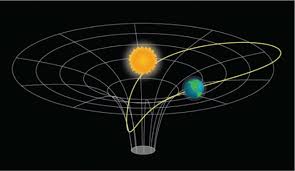
Einstein’s theory of gravitation
Gauss
Formula for ds(2)
Pythagoras
Euclid’s axiom’s
“We cannot step twice into the same rivers”, as Heraclitus says
“geodesic”
Geodesics
Chapter VII
The Method of Tensors
Distance between two events which both occurred at a certain instant, we shall be making a complicated comparison between the events, a bad clock, a certain worm – that is to say, we shall be making a statement which depends upon our co-ordinate system.
If I say, “strength is a desirable quality’, my statement can be put into French or German without change of meaning. But if I say, ‘strength is a word containing seven consonants and only one vowel’, my statement becomes false if translated into German or French. Now in physics co-ordinates are analogous to words, with the difference that it is much harder to distinguish ‘linguistic’ statements from others. This is what the method of tensors undertakes to do.
Eddington, “Mathematical Theory of Relativity”
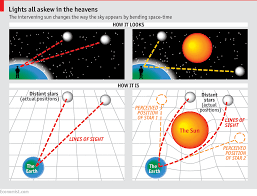
p.65
chronometer
the constancy of the velocity of light in vacuo
Galileo and Newton
electromagnetic phenomena
velocities
Principia Mathematica
Euclid
…on the ground that this proposition was evident even to asses. But in relativity geometry this proposition is false. In our triangle ABC, AB and BC are zero, while AC may have any finite magnitude
Pythagoras
Greek geometry
Euclid
‘equimultiples’
Integers, not irrationals
Mathematical induction, limits, and continuity
Chapter VIII
Geodesics
The importance of geodesics arises through the law that, in the general theory of relativity, a particle not subject to constraints moves in a geodesic. But let us first consider what a geodesic is.
The Alps
Greenwich observatory
A clock
A sort of law of cosmic boredom
Kropotkin’s dreams
Professor Eddington
Force
Our observer’s mistake is described as a ‘field of force’
Dr. Whitehead
Professor Eddington, “The Principle of Relativity” p.77
The structure of space-time
The Kantian one, how is knowledge possible?
Strings of events
Common sense achieves in this way a considerable measure of constancy in its objects.
But now that energy and mass have turned out to be identical, our refusal to regard energy as a ‘thing’ should incline us to the view that what possesses mass need not be a ‘thing’
p.84
Chapter IX
Invariants and their Physical Interpretations
The fundamental theorem of mechanics p.85
Electromagnetic equations as well as gravitation
Clocks and footrules
A string of truisms
Interpretation of Einstein’s Law of Gravitation
The North Pole
A vicious circle
Paris
Therefore, we invent physical laws to save the postulates
Weyl’s relativistic theory
Chapter X
Weyl’s Theory
Weyl, Hermann “Space, Time, Matter” (1922)
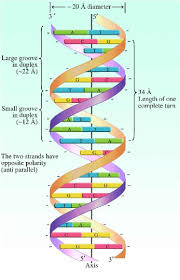
Eddington
The ‘gauge-system”
‘parallelogrammical’
Euclid’s first axiom: ‘Things which are equal to the same thing are equal to one another’
As it is, the combination of experiment and theory has produced one of the supreme triumphs of human genius. P100
Chapter XI
The Principle of Differential Laws
Stringency
Galileo
‘differential laws’
Differential equations
Bergson and J.S. Mill
The crude form of causality believed by Fijians and philosophers, of which the type is lightning causes thunder’
Heisenberg
Space-time
Euclid
Lobachevski and Bolyai
Eddington, concerned with structure, not with substance.
The compatibility of proximate relations
Empirical, not a priori
Chapter XII
Measurement
The problems of measurement
The British Museum p.109
Concerning limits
‘Projective Geometry’
Russell, B. “The Principles of Mathematics”

Ds²=∑gνdxμdxv
The number is אₒ
Gauss’s theory of surfaces
Analysis situs
The “interval”
Analysis situs
Analysis situs
A quasi-parallelogram
Chapter XIII
Matter and Space
Common sense
‘spirit’
‘gas’
‘ӕther’
The law of gravitation
The laws of electromagnetism
‘Empty space’ or ‘ӕther’
Now ½mv² is the kinetic energy
A helium nucleus
Jeans, Dr. “Atomicity and Quanta”
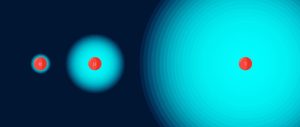
Ellis, Dr. C.D. in Nature, June 26, 1926, pp. 895-7
Lewis, Prof. G.N. Nature, February 13, 1926, p.236
Two atoms which collide
‘photons’
‘empty space’ is practically abolished.
In a ‘Pickwickian‘ sense
Bits of matter
Like wandering of thistledown
Like the parcels post
As magical as Santa Claus
Three papers by Einstein
Mr. L.V. King’s theory
Dr. Jeans
Eddington
Chapter XIV
The Abstractness of Physics
Space-time
Locke’s halfway house has therefore been definitely abandoned p.132
The physical world, it seems natural to infer, is destitute of colour.
‘energy’
even then the sort of sudden transformation contemplated by Bohr is very unlike the perception of a red patch: it is prima facie quite dissimilar in structure, and unknown as regards its intrinsic properties.
The three-card trick
A drop
Another drop
Minkowski
‘world-lines’
The tensor Gᵤͮ-½g ᵤͮG
If Dr. Johnson had known Eddington’s definition of matter, he might have been satisfied with his refutation of Berkeley.
Physiology and psychology
The less scientific sciences
Helmholtz
Mathematical logic
Psychology and physiology
PART II
Physics and Perception
Chapter XV
From Primitive Perception to Common Sense
‘phenomenalism’
To the paramount importance of structure in scientific inference p.141
A savage
A mechanic
Expectations
At a low mental level, however, it is hardly profitable to distinguish between a belief and a habit of action.
Memory
Experience
Between ‘space’
‘space’
It fails with blind men, and with men whose fingers have been anaesthetized.
Underestimating the depths of objects under water.
The cricket ball
A donkey’s bray
Common sense
Savages
The Chinese
Platonic ideas, universals
Language is governed largely by physiological causation.
Names
A four-dimensional continuum
A three-dimensional space
Reductio ad absurdum
What Dr. J.B. Watson calls ‘learned reactions’
Construction of a dynamo or a wireless station
Chapter XVI
From Common Sense to Physics
The seventeenth century
Dr. Whitehead, “Science and the Modern World”

The chapter ‘The Century of Genius’
Otiose
Vis viva
Kant
Spinoza
Leibniz
‘mirroring the universe’
‘windowless’
God’s “metaphysical perfection”
Locke ‘Essay”
Berkeley discarded the material world
Leibniz – a collection of mental events
Cartesians -supposed interaction between mind and matter
Berkeley – Epistemological argument – not influenced by this Cartesian theory
Kant- regarded Berkeley’s theory as a source of metaphysical importance
Hume – took Berkeley’s theory further (Berkeley limited by religion)
Hume’s criticism of the notion of cause at the root of science
The theory of relativity
Muscular physics is embodied in the idea of ‘force’
Newton
Vera causa
Galileo
Leonardo
Aristotle
Einstein
Billiard balls
Billiard balls
‘intelligible’
Sight-physics
Gravitation
‘force’
‘force’
Mass
Weight
Mirrors deceive animals and young children
Then there are more subtle matters, such as the Doppler effect and aberration
Infants
A headache
Stomachache
The crows and choughs that wing the midway air
Show scarce so gross as beetles. -Shakespeare
A fox
The most important postulate of science is induction
Validity of induction
Mr. Keynes
Keynes, J. Maynard, “A Treatise on Probability”
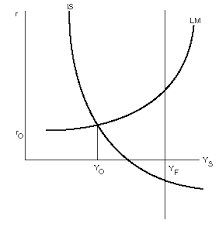
Nisbet, R.H. “The Foundations of Probability’ Mind, January 1926
An electron and a proton may sometimes combine so as to annihilate each other
Eddington
Stellar energy
Chapter XVII
What is an Empirical Science?
Assertoric
‘modality’
‘assertoric’
John Smith is bald
Aristotelian logic
Kant argued that 7 + 5 = 12 is synthetic
Wittgenstein, “Tractatus Logico-Philosophicus”
p implies q etc.
All tautologies
J.S. Mill
2 + 2 = 4
Socrates
‘synthetic’
A priori
‘introspection’
“perception”
‘experience’
Kant’s philosophy started from the question: How are synthetic a priori judgments possible
Kant is concerned with knowledge not mere belief
Sun and moon
Heraclitus – sun was new everyday
Kepler’s law
Law of gravitation
Epistemologically
Integration
Sun and moon
Justification
Justification
Chapter XVIII
Our Knowledge of Particular Matters of Facts
p.178
my purpose is epistemological
“Knowledge” and “belief’
The bird ‘knows’ something when it sees a man, though I shall not venture to say what it knows.
I have no right to begin by comparing my knowledge with that of a bird.
The ‘psychologist’s fallacy’
…how long it takes a fish to learn to recognize the man who feeds it
Chuang-Tzu’s fish story p.180
The pleasure of fishes
Orangeman
‘to hell with the Pope, and now for the -bump”
‘his master’s voice’
‘I thought the can was full of water’
‘thought’
Physiology
The watering-can
A jerk
‘error’
‘correctness’
At the bottom of a staircase
We might say (or an Irishman might) ‘I thought I was at the bottom because I wasn’t thinking”
A dog goes to the dining-room when he hears the dinner bell, and so do we.
In fact, however, we may be just as merely habitual as the dog.
Antecedents are pre-intellectual
The Great War and the earthquake of Tokyo took people by surprise
Analysis of matter
Our knowledge of physics
Perception
Perception based on experience
A Greek could know the multiplication table as well as we do, but he could not know the biography of Napoleon.
Chapter XIX
Data, Inferences, Hypotheses, and Theories p.187
‘data’
A ‘datum’
Einstein’s theory of gravitation
Typography
Say if someone omitted the z in Nietzsche expecting a z
A donkey braying
A donkey
An element of error
“interpretation”
To the question of inferences
Physiological inference
Differential equations or statistical averages
A thief
Berkeley
‘substance’
Have ‘minds’
Dr. Watson e.g. would admit that his own toothache can lead him to say, “I have a toothache”, whereas another person’s toothache will not lead him to say, “You have a toothache”, without some intermediate link.
The inference to other people’s “minds”
The causal theory of perception
Experimentium crucis
A priori
Rydberg’s constant
R = 1.09678.10⁵ cm⁻¹
While Bohr’s theory gives:
R = 1.09.10⁵ cm⁻¹
Rydberg’s constant
A range of temperature
Chapter XX
The Causal Theory of Perception
p.197
common sense
the sun
‘see the sun’
Epistemologically
Broad, Dr. “Perception, Physics, and Reality”
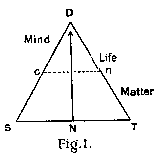
‘external objects’
A demonstration
Proof
Medley of events
Dr. Whitehead
Hegelian view
Russell, “Mysticism and Logic”

What Professor G.I. Lewis calls, “strict implication”, which is the relevant sense for our present discussion
Type of cogency
Dogmatically
A crowd of jackdaws
Shakespeare and Newton
The pen rather than with the eye
Squinting
There’s Jones
‘thoughts’
‘physical object’
‘really’
A conjuror…a waxwork man……. a gramophone inside, and arrange a series of little mishaps
Descartes’ ‘malicious demon’ is a logical possibility
‘physical object’
‘what do you smell?’
altitude
Russell, “Knowledge of the External World”

A camera and a Dictaphone
Dr. G.E. Moore
The phenomenalism
Descriptive geometry
e.g. in Euclidean geometry
Cleopatra’s needle
the whole of physics
Berkeley’s: ‘whatever is, is perceived’
The only thing rejected is the view that ‘ideal’ elements are unreal.
Idealism – of the Berkeleyan or German variety
‘Matter’, I shall contend is known only as regards certain very abstract characteristics…p.215
- The arrangement about a center
- The continuity between percepts and correlated events in other parts of the space derived from percepts and locomotion.
p.218
Chapter XXI
Perception and Objectivity
Common sense
Perception
A datum for inference
If I perceive a round red patch
‘perception’
‘fresh knowledge’
Full of bacilli
The earth’s surface
Fog, smoke, glass blue spectacles
The laws of perspective
Distorting glass
Hallucinations and dreams
Vagueness.
Vagueness diminishes the number of inferences we can draw
Jones
The percipient
Fatigue as well as alcohol
Gramophone record
As intermediaries’ conditions of the nerves between the leg and the brain.
H.G. Wells’ Martians
Spencerian Unknowable
The structure of stimuli
The stimuli
Physiology or psychology
Our knowledge
‘probable error’
A theoretical problem
Chapter XXII
The Belief in General Laws
The belief in general laws p.229
Experience
An argument
Hypotheses to regularize it
The Egyptian priesthood
Dr. Whitehead, “Science and the Modern World”
‘Fate in Greek tragedy’
‘A is always accompanied (or preceded or succeeded) by B’
Of physical continuity from the absence of continuity in percepts
“Mysticism and Logic”

A certain class of phenomena are subject to…p.232
Newtonian gravitation
The law of attraction
The simplest law
Professor J.B. Haldane
Astronomy and the atom
The atomic number
Poincare
Pythagoras
In that case, the apparent regularity of the world will be due to the absence of laws
A priori
A hypothesis
Physiology
A tautology
Chapter XXIII
Substance
“substance” p.238
A substance may be defined in purely logical terms as “that which can only enter into a proposition as subject, never as predicate or relation.”
Language
Subject and predicate
Uncivilized languages
Wittgenstein, “Tractatus Logico-Philosophicus”
Jeremiah xvii 9
Evanescent
Chinese
‘Braille”
“this is yellow”
“buttercups are yellow”
‘truth-functions”
I wish, as far as possible, to avoid metaphysics
‘Caesar loves Brutus”
By a three-term relation
“love”
As a substantive
The distinction between a substance and a relation
“Principia Mathematica”
Space-time for space and time…
A four-dimensional manifold of events
The common-sense ‘thing’
Time t+dt, an event:
x + f(x)+dt+f₂(x)dt²
a motion
strings of events
string
the Heisenberg theory
physics and perception
Dr. Whitehead
The three-card trick
The ‘thing’
Chapter XXIV
Importance of Structure in Scientific Inference
“Principia Mathematica” p.249
A three-term relation (between)
Euclidean space; so is, in the case of a four-term relation (separation of couples)
Newtonian gravitation
Chapter XXV
Perception from the Standpoint of Physics
To wit, an eye, an optic nerve, and part of a brain
Dr. Broad’s criticisms
Kegan, Paul “Scientific Thought”
e.g. by blue spectacles or by a microscope
the physical process in touch
to read ‘Braille’
it would be difficult for a blind man to acquire correct views as to the shape of an eel
sound is, in many ways, very analogous to light
Chapter XXVI
Non-Mental Analogues to Perception
‘mnemic’
The physical factor in perception
As it appears when separated from the mnemic factor
The Dictaphone and camera
There is therefore no theoretic difficulty in the view that the stimulus to a sensation of red is a vibration
The cinema
Photographic plate
Complete agnosticism
Part III
The Structure of the Physical World
Chapter XXVII
Particulars and Events
Thus, the light-wave has become a structure in the air, like a genealogical tree whose members are all imaginary
“the resemblance of blue and green is greater than the resemblance of blue and yellow”
From this one puzzle, that a motion seems to consist of motions – or as Kant says, that a space consists of spaces.
The cinema
A fortiori
The case of slightly different shades of color. Suppose we have a series of colors, A, B,C,D….
Watching a chameleon gradually changing colors
The cinema
Differences of neighboring terms are imperceptible while those of distant terms are perceptible
Inference
Water into hydrogen and oxygen
Electrolysis
Heisenberg’s theory
Which in effect, resolves the electron into a series of radiations
The parts
‘events’
Four dimensions
Space-time
Broad, Dr. C.D. “The Mind and Place in Nature”

‘this is red’
‘this is one of the class of entities that have exact color-similarity with x’; and “C is a color’ will be replaced by ‘C is the class of all entities having exact color-similarity with a given entity’
Structure
Chapter XXVIII
The Construction of Points
Dr. Whitehead
…a supplement to Occam’s razor: “What is logically convenient is likely to be artificial’
p.290
Dedekind
The square root of 2
Dedekindian and Cantorian continuity
‘what is logically convenient is artificial’
The Battle of Waterloo
‘event’
Partial overlapping
“Knowledge of the External World”
‘compresence’
- Any two members of the group are compresent;
- No event outside the group is compresent with every member of the group
A relation of three events
Analysis situs
Leopold Vietoris
“Haufungspunkt”
“Linienstuck”
Hausdorff
Stetige Mengen, Monatshafte fur Mathematik
Grundzuge der Mengenlehre
Together אₒ
- Urysohn
‘topological’
‘topological’ spaces
Urysohn, P. “Zum Metrisationsproblem”, Math Annalen 94 (1925)
Euclidean space
A group of five or more events is called ‘co-punctual’
Zermelo’s axiom is true
Dr. H. M. Sheffer
Mr. F.P. Ramsey
“region”
Space-time order
Chapter XXIX
Space-Time Order
p.303
analysis situs
neighborhood
Hausdorff, “Grundzuge der Mengenlehre” (Leipzig, 1914) chaps. vii. And vvii.
Macroscopic and microscopic
Of four integers
Four given points
- Compresence is symmetrical
- Defining ‘events’ as the field of compresence, every event is compresent with itself
- Events can be well ordered; or at least those compresent with a given event can be.
- Any two events have a relation which is a finite power of compresence. (This is required for mapping spacetime into zones.) in other words, the ancestral relation derived from compresence is connected.
‘collinear’
“co-superficial”
“co-regional”
Analysis situs
Hausdorff’s definition of “topological space”
אₒ
Poincare
Menger, Karl “Bericht uher die Dimensionstheorie” (1926)
Chapter XXX
Causal Lines
ds²
a more correct way to say that a particle is a geodesic (though not all geodesics are particles)
Dr. A. A. Robb
“co-punctual”
“modification”
Smell
Sound
Light
Planck’s constant
Atoms
Smell, sound, light
The third a cornerstone of physical theory
Radiation
Light from a fixed star
In vacuo
“causal lines”
Causal laws
What, then, constitutes a “causal line”? in other words, what constitutes an electron?
We must find some reality for the electron, or else the physical world will run through our fingers like a jellyfish
“electrons”
“protons”
A group of points, i.e. a class of classes of events
Heisenberg’s theory
When both groups are arranged about a center
Continuity
Extrinsic causal laws
Einstein’s theory of gravitation has thrown a new light upon these; but this is matter for a new chapter
Chapter XXXI
Extrinsic Causal Laws
Newtonian gravitation
Einsteinian gravitation
Such matters as emission and absorption of light
Einsteinian gravitation
Phenomenalism
Phenomenalism
Solipsism
The Heisenberg electron
Einsteinian theory of gravitation
Electromagnetic phenomena
Weyl’s theory
Leibniz’s windowless monads
Just as Jonah might have been swallowed by another whale
The interval between the emission and absorption of a light-ray is zero
Mutatis mutundis
h (Planck’s constant)
the parcels-post illustration
Heisenberg
Chapter XXXII
Physical and Perceptual Space-Time
To disentangle different levels of inference
A number of photographs
The laws of perspective
Locke’s dictum about secondary qualities
A mystic pantheism. P341
Jeans, Dr. “Atomicity and Quanta”
Chapter XXXIII
Periodicity and Qualitative series
The quantum
Periodicity
Wilson and Sommerfeld
Heisenberg
Space-time
Gestalt psychology p.345
“repetition”
The rainbow
A violin
Velocity of light
A homunculus
Frequency of light
“luminous events”
Chapter XXXIV
Types of Physical Occurrences
Events, rhythms, and transactions
Persistent material substance
Persistence of substance
Newton
Rigid Weierstrassian methods
A steady event
A “rhythm”
“frequency”
The Doppler Effect
Corrugated iron
Bohr-Sommerfeld theory
Foucault’s Pendulum
The Heisenberg theory
Spectroscopic phenomena
“frequency”
The Bohr theory
Brings us back to Maxwell’s equations
Transaction, steady events, and rhythms
A rhythm of breathing and heart-beating
Laws of harmony
We must find a meaning for “frequency”
Chapter XXXV
Causality and Interval
“interval”
As to what we mean by a causal relation
Radioactivity
Quantum changes
The bending of light in a gravitational field
Velocity of light in vacuo
The course of the light is not “really” bent, but is
really the straightest course geometrically possible
Chapter XXXVI
The Genesis of Space-Time
Space-time
As providing a four-dimensional order
As giving rise to the metrical concept of ‘interval’
“Compresence”
‘separation”
Dr. Jeans
Quantum phenomena
Helium
Hans Reichenbach
Chapter XXXVII
Physics and Neutral Monism
What the Physiologist sees when he looks at a brain is a part of his own brain p.383
A question of perceptual space, not the space of physics
A physical event
Events
In our heads
Psychology
Physics
At present it is not known whether an electron or a proton sometimes enter into a suicide pact or not, but there is certainly no known reason why electrons and protons should be indestructible
The apparently simple so often complex
Bergson
Bradley
Thorough-going monism
In the end, all truth is self-contradictory
While I respect Bradley more than any other advocate of interpenetration, he seems to me, in virtue of his ability, to have done more than any other philosopher to disprove the kind of system which he advocated
Euler’s diagrams
Berkeleyan or German
Phenomenalists, that, whatever else there may be, we cannot know it, is much more worthy of respect
Billiard-balls
Psychological laws, physiological laws, and chemical laws, which cannot at present be reduced to physical laws
The psychological laws of memory
Fluorescence
To memory
Mental events
Bibles
A psych-cerebral parallelism
Purview
Aesthetics
The thoughts of Shakespeare or Bach do not come within the scope of physics
The occurrence of black marks on the white paper
And no one can doubt that the causes of our emotions when we read Shakespeare or hear Bach are purely physical.
Thus, we cannot escape from the universality of physical causation
A radio-active atom
Chapter XXXVIII
Summary and Conclusion
Quantum principle
Reasons for dissatisfaction
In relativity, we are on surer ground
Relativity
The theory of relativity, to my mind, is most remarkable when considered as a logical deductive system
Eddington
Minkowski
Eddington
Four co-ordinates
Quadratic function
(time-like)
(space-like)
Geodesics
Weyl
Taken to embrace everything except quantum phenomena
The method of tensors
Hamiltonian derivatives
Intervals
Theorem of Pythagoras
Non-Euclidean geometry
Pythagoras
Whitehead, Dr. “Principle of Relativity”
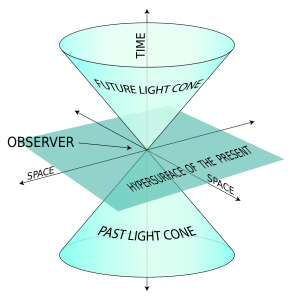
Perception
Psychology
Epistemological
The serious alternatives to the causal theory of perception are not common sense, but solipsism and phenomenalism
The solipsist position
Metaphysical
Hume’s skeptical criticism
At least a probability
Keynes, “Treatise on Probability”
Phenomenalism p.399
The half-way house
Red and green side by side
A Dictaphone or a photographic plate
Space-time
אₒ
Space-time
Physicists are quite prepared to find that matter can be annihilated.
This view is even put forward to account for the energy of the stars
The quantum
Events accompanied by Rhythm
Violin
Piano
Rhythms alone
Philosophy
FINIS
 tomreading
Leave a comment